


A trench coat is hanging by the closet door, ready for another cloudy commute, but its owner is wondering whether it belongs anywhere beyond spring errands. The answer is yes. The right trench coat outfit ideas can carry a woman from office mornings to Saturday brunch, from a gallery date to dinner, and from a wedding ceremony to a cool evening afterward.
Cedar & Lily Clothier makes that wardrobe logic easy to shop, with curated contemporary and designer clothing, including Vanessa Mooney and Lace the Label, alongside dresses, denim, trousers, jumpsuits, accessories, and outerwear. The boutique has storefronts at Utica Square in Tulsa and downtown Jenks, plus an online store at cedarandlilyclothier.com, so a trench can be styled with pieces selected for real work, weekend, and occasion wardrobes.
Table of Contents
- Why the Trench Coat Works for Every Part of Your Week
- Getting the Fit and Length Right Before You Style
- Work and Weekend Outfit Formulas
- Evening and Event Looks Built Around the Trench
- Layering and Fabric Choices Through the Seasons
- Statement Trenches Beyond Classic Camel
- Your Next Step to Building a Trench Wardrobe
Why the Trench Coat Works for Every Part of Your Week
The trench coat earns its hanger space because it changes personality without losing its shape. It can layer over a sweater in February, sit lightly over linen in July, sharpen trousers for Monday, soften denim for Saturday, and give a slip dress enough polish for Friday night.
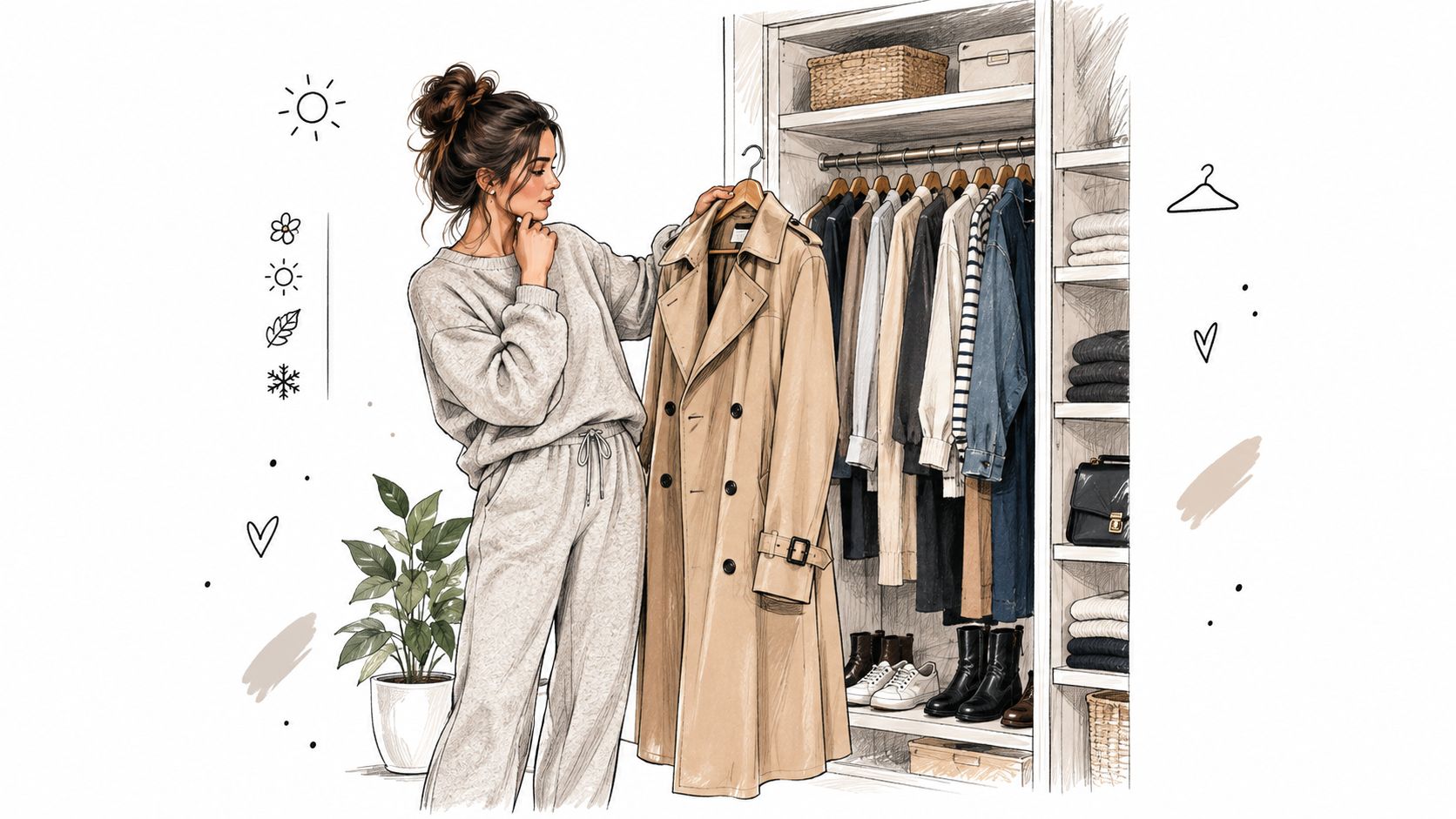
That versatility comes directly from the coat's history. The modern trench emerged during World War I as a practical military garment, and the term “trench coat” first appeared in print in 1916 in a tailoring trade journal. Its double-breasted front, storm flap, epaulettes, belt ties, and weatherproof fabric were designed for function, which is why the silhouette still looks structured and composed in unpredictable weather. The coat moved into city wardrobes after the war and has remained recognizable for more than 100 years. Its military-to-city history explains the trench's enduring shape.
One coat, five appointments
For an office commute, a camel trench over a fine knit, straight-leg trousers, loafers, and a structured tote looks intentional before the first meeting. The lapels frame the neckline, while a tied belt gives the outfit a clean finish.
For brunch, the same coat works unbuttoned over a vintage-style tee, straight-leg jeans, and white sneakers. Push the sleeves up slightly and knot the belt at the back. The coat keeps denim from looking too casual without making the outfit feel overdressed.
A gallery date calls for a stone trench over a column knit dress, ankle boots, and a small shoulder bag. Leave the coat open so the long lapels create movement and the dress remains visible.
For evening dinner, a darker trench over a slip midi dress and pointed slingbacks adds a polished outer layer without competing with the dress. Keep the belt tied in front for definition.
At a casual wedding, a trench over wide-leg trousers, a silk camisole, statement earrings, and refined heels offers coverage without the heaviness of a formal coat. The storm flap and cuff straps become visual details that make the outer layer feel considered rather than purely practical.
Styling rule: Treat the lapels, belt, cuff straps, and storm flap as adjustment points. They can sharpen, relax, lengthen, or soften the outfit.
The trench has also survived repeated fashion revivals. Style-history sources describe its movement from wartime utility to postwar classic, a decline in favor during the later 1960s and 1970s, and a rediscovery in the 1980s as wider silhouettes returned. The Smithsonian's trench coat history traces those major revivals. That record supports wearing it across dress codes instead of boxing it away after one season.
Getting the Fit and Length Right Before You Style
A trench outfit succeeds or fails before accessories enter the picture. The coat needs enough room for a sweater or blazer, but it shouldn't swallow the shoulders or drag the eye downward.
Start at the shoulders
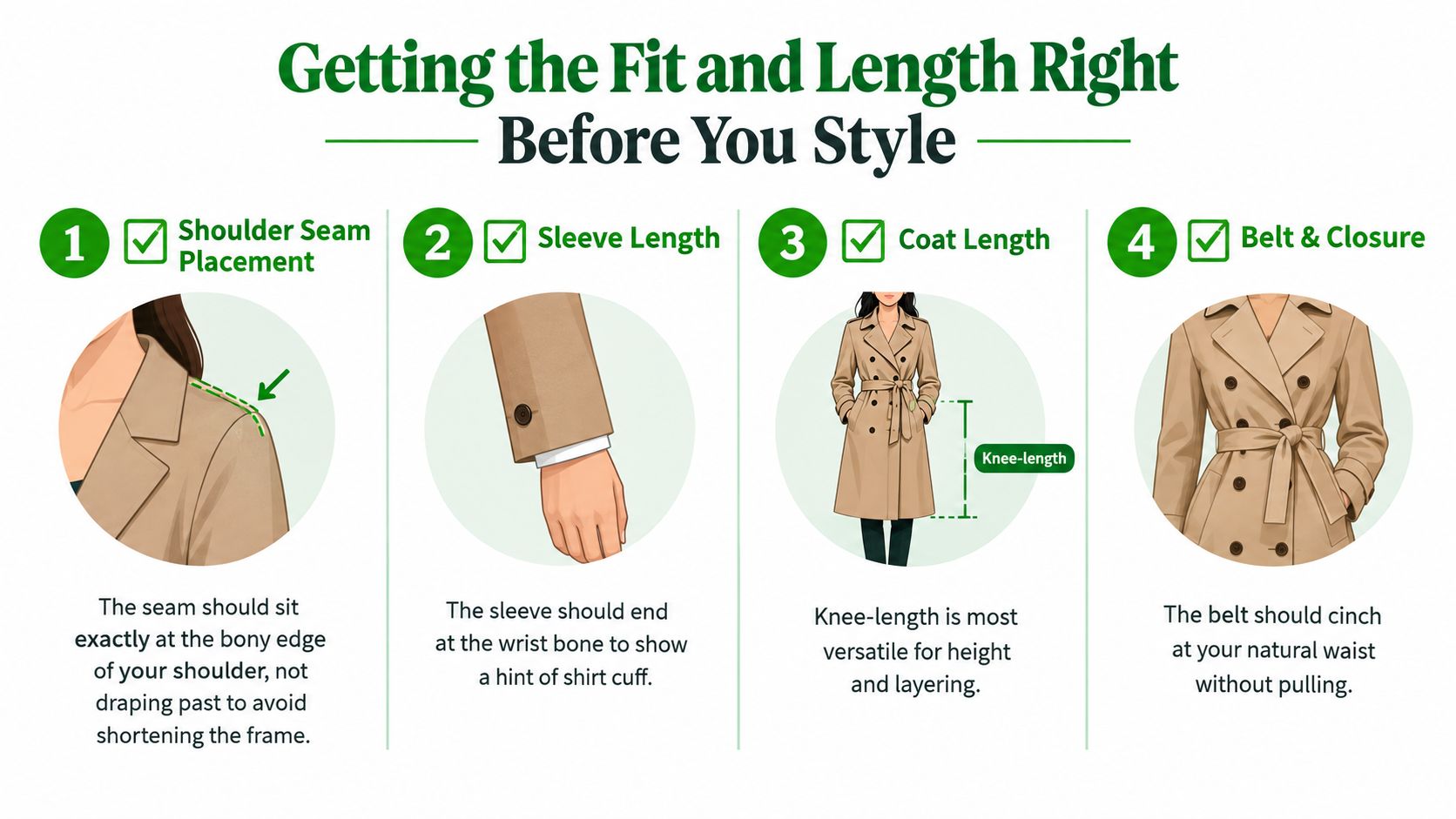
The shoulder seam should sit at the bony edge of the shoulder. If it drapes past that point, the coat looks borrowed and can shorten the wearer's visual proportions. A slightly relaxed body is useful, but an off-shoulder seam usually creates excess fabric where structure matters most.
Check the back while moving the arms. The coat should allow a knit or blazer underneath without pulling across the shoulder blades. A fitted-but-not-tight cut is the practical target, because a trench that only works over a thin shirt won't serve the rest of the wardrobe.
Check the sleeves and hem
The sleeve should finish around the wrist bone or thumb knuckle, leaving room to push it up without creating a thick bundle. That small adjustment changes the mood. A sleeve worn at the wrist reads polished, while a sleeve pushed up feels more relaxed and shows a watch or bracelet.
Length needs to respond to frame and proportion. A petite wearer often benefits from a shorter, mid-thigh shape that keeps the legs visible. For most women, knee-length is the most adaptable choice. Taller frames can carry a mid-calf hem, while ankle length works best on a tall, narrow build that can support the drama without looking overwhelmed. Guidance on trench proportions also recommends knee-length or mid-calf as versatile ranges, with shorter options for petite wearers and longer hemlines for taller figures. COS offers practical trench styling guidance on length and proportion.
Avoid having a dress or skirt end exactly at the trench hem. A visible edge at the same point can interrupt the silhouette. The dress should either sit clearly above the coat hem or extend beyond it with intention.
Use the belt as a proportion tool
Cinching the belt at the natural waist creates a defined, clean line. Leaving it looser over the hips gives the coat a straighter, more relaxed profile. Neither option is automatically better, but the choice should match the outfit underneath.
For a polished commute or event, tie the belt in front. For denim, sneakers, or an open coat, knot it at the back rather than letting it dangle. A dangling belt makes the outfit look unfinished, while a back knot keeps the coat controlled without forcing a formal waist.
Fabric changes the final impression. Stiff coated cotton holds a crisp structure and suits structured trousers, while a softer Tencel blend drapes more easily over dresses and relaxed denim. Shoppers comparing proportions and construction can also use this women's tailoring guide when deciding whether the coat's shape supports the rest of the wardrobe.
Work and Weekend Outfit Formulas
The quickest way to make trench coat outfit ideas practical is to compare the weekday version with its Saturday counterpart. The coat stays consistent, but the underlayers, shoes, bag, and belt change the message.
| Element | Work Formula | Weekend Formula |
|---|---|---|
| Base layer | Tucked shell or fine knit | Vintage-style tee or relaxed knit |
| Bottom | Straight-leg trousers | Straight or barrel-leg jeans |
| Shoes | Loafers or polished ankle boots | White sneakers or ankle boots |
| Bag | Structured tote | Slouchy shoulder bag |
| Trench styling | Belted in front for definition | Unbelted or knotted at the back |
| Color direction | Camel over navy or charcoal | Olive or stone with denim |
Three work combinations
A camel trench over a tucked shell, charcoal straight-leg trousers, loafers, and a structured tote is the strongest Monday formula. The camel warms the charcoal without making the outfit soft, and the tied belt gives the coat enough authority for a client-facing day.
For Tuesday, switch to a fine navy knit, camel trousers, and a dark leather loafer under the same trench. Keep the coat belted, but let the knit neckline show above the lapels. The result is coordinated without looking like a matching suit.
Wednesday can take a more relaxed route. Pair a stone trench with a black shell, navy trousers, pointed flats, and a compact top-handle bag. Stone feels lighter than camel and keeps a dark office base from becoming severe.
Three weekend combinations
A Saturday brunch outfit starts with a white tee, straight-leg denim, white sneakers, and an olive trench. Push the sleeves up and leave the coat open. Olive handles denim naturally and feels less predictable than camel.
For errands, try a cream knit, barrel-leg jeans, ankle boots, and a slouchy shoulder bag under a stone trench. Keep the belt tied behind the back so the wider denim shape has room to move.
A casual dinner can use a vintage-style tee, dark straight denim, ankle boots, and a camel trench worn open. Add a small scarf or textured earrings, then tie the belt loosely at the back if the temperature drops.
Cedar & Lily Clothier's curated trousers, tees, denim, and accessories make these formulas easy to build around an existing closet. For more office combinations, the boutique's business-casual outfit ideas for women can help refine the weekday side of the wardrobe.
Evening and Event Looks Built Around the Trench
A trench doesn't become casual just because it has military details. Its clean line can frame evening clothing beautifully, especially when the coat's length and belt treatment respect the garment underneath.
Dinner with a slip midi dress
For dinner, a knee-length camel trench works over a slip midi dress, pointed slingbacks, and a compact clutch. The trench should end at or slightly below the dress hem, not at the exact same point. Leave the coat open for the first part of the evening, then tie the belt in front when moving outdoors.
Jewelry should stay light and deliberate. A slim pendant or small drop earrings keep the satin-like surface of a slip dress visible, while a low to moderate heel keeps the outfit elegant without making the coat feel overly formal.
Cocktail dressing with a jumpsuit
A longer trench over a fitted jumpsuit creates a clean column. Add strappy heels, a satin scarf tied at the neck or around the bag handle, and a small shoulder bag. Wear the coat open so the jumpsuit remains the focal point, then secure the belt at the back for a controlled silhouette.
The longer coat works because the jumpsuit has a narrow line underneath. Avoid adding a bulky sweater or oversized scarf here. The outfit needs length and movement, not extra volume.
Prom or semi-formal dressing
A darker trench, such as black or deep burgundy, can sit over an A-line cocktail dress with ankle boots. Belt the coat at the natural waist, but don't pull so tightly that the dress's skirt bunches underneath. Small sculptural earrings and a compact bag provide enough shine without competing with the coat hardware.
For additional evening combinations and event dressing direction, Cedar & Lily Clothier's evening-wear guide offers a useful starting point.
Wedding guest polish
Wide-leg trousers, a silk camisole, statement earrings, and a trench create a strong wedding guest outfit when the ceremony may be cool. Choose a refined heel with a moderate height, a small structured bag, and jewelry with visible scale, such as a sculptural earring rather than several delicate layers.
The trench should fall to the knee or below and ideally extend past the widest point of the trousers. Leave it open during arrivals so the camisole and earrings show. At an outdoor ceremony, tie the belt loosely behind the back, preserving the outfit's shape without looking too businesslike.
Layering and Fabric Choices Through the Seasons
Seasonal trench styling starts with the fabric, lining, and layers underneath. Gabardine is a tightly woven, water-repellent fabric tied to the trench's modern history. Thomas Burberry developed it in 1879, and it was patented in 1888. Burberry describes gabardine as breathable while helping repel bad weather. The brand's heritage account explains gabardine's role in the trench coat.
The fabric's construction also matters in wet weather. Historical descriptions explain that gabardine fibers were waterproofed before weaving, unlike older oil-, rubber-, or wax-based rainwear, which could trap heat and air. The result was a lighter, more breathable approach to rain protection. The fabric construction is detailed in this history of the trench coat.
| Season | Trench Fabric | Underlayers | Accessories |
|---|---|---|---|
| Spring | Lightweight cotton gabardine | Knit tee, light sweater, cropped trousers | Loafers, slim scarf, crossbody bag |
| Summer | Unlined cotton or Tencel blend | Slip dress, tank, linen pants | Sandals, small shoulder bag, sunglasses |
| Fall | Mid-weight gabardine | Cashmere sweater, fine knit, straight denim | Ankle boots, scarf, structured tote |
| Mild winter | Lined wool blend or heavier gabardine | Turtleneck, heavier knit, structured trousers | Leather gloves, boots, warm scarf |
Spring needs room, not bulk
Choose a lightweight cotton gabardine trench from Cedar & Lily over a knit tee, cropped trousers, and loafers. Swap in a light sweater for cooler mornings, keeping the knit fine enough to prevent pulling across the arms. The coat should skim the outfit, not squeeze it.
Summer calls for air
For warm weather, choose an unlined or lightly constructed cotton or Tencel trench. Wear it over a slip dress, tank, or linen pants for cool evenings and air-conditioned interiors. Sandals keep the combination intentional and relaxed. Current fashion coverage also points to short trenches, open-drape styling, pencil skirts, matching trousers, slip dresses, sandals, and micro-shorts for spring and summer dressing. ELLE's spring 2026 trench coverage highlights these warmer-weather formulas.
Fall and mild winter need strategic warmth
A mid-weight gabardine trench handles a cashmere sweater, scarf, and ankle boots through fall. For mild winter, select a lined wool-blend trench over a turtleneck and heavier knit. A removable liner lets one coat work across chilly mornings and warmer afternoons.
For a full walkthrough of cold-weather combinations, see Cedar & Lily's guide to how to layer clothes for winter.
Keep underlayers close to the body. Fine-gauge knits, fitted turtlenecks, smooth camisoles, and slim blouses add warmth without creating shoulder bulk. A thick sweater can work, but try the trench over it before buying.
Statement Trenches Beyond Classic Camel
Camel is useful, but it isn't the only intelligent choice. A trench in leather, suede, chocolate brown, burgundy, black, or stone can act as the outfit's main statement rather than a background neutral.
Fashion roundups have identified dark earth tones, leather, chocolate brown, dark brown, black, camel, toffee, olive, and plum or oxblood as active directions for modern trench dressing. This trench outfit color guide discusses those nontraditional shades and materials. The important styling shift is to treat texture and color as the starting point.
Black leather for evening
A black leather trench sharpens a monochrome knit dress, pointed boots, and a small structured bag. Keep the belt flat and tied neatly at the waist, then choose silver or gunmetal hardware if the coat has cool-toned details. Avoid adding multiple glossy accessories. The leather already supplies enough visual weight.
Chocolate suede for softer contrast
A chocolate suede trench looks particularly good with cream knits, straight denim, and ankle boots. Choose a tan or cognac bag, then add a warm scarf rather than a black one. The belt should be tied loosely at the back, allowing the softer fabric to drape instead of forcing a rigid hourglass shape.
Burgundy for festive dressing
A burgundy trench can sit over black tailoring for holiday dinners or evening gatherings. Black heels and a compact black bag keep the color focused, while gold earrings add warmth. A front-tied belt makes the coat feel formal, but the jewelry should remain edited.
Stone for spring brightness
Stone is an excellent alternative to beige over white denim, a pale knit, and light-toned shoes. It brightens the outfit without introducing a strong color block. Choose minimal hardware and a soft leather bag in cream, tan, or muted gray.
A statement trench needs quieter companions. Let one element lead, then make the shoes, bag, and scarf support it.
Olive is another strong option with denim, cream, navy, and charcoal. For readers deciding whether warm or cool shades flatter their existing wardrobe, this guide to choosing colors can help narrow the palette before trying on a statement outer layer.
Your Next Step to Building a Trench Wardrobe
The most useful trench wardrobe starts with the life the coat needs to serve. A reader who commutes in fitted clothing should begin with a neutral coat that handles trousers and knit dresses. Someone who spends more time at brunches, dinners, and events may prefer a statement color or softer fabric that makes simple outfits feel finished.
Make the first purchase strategic
Identify the two occasions that appear most often in the calendar. Then choose one neutral trench in camel, stone, or black, followed by a statement option that reflects the wardrobe's direction, such as chocolate, burgundy, olive, leather, or suede.
The first coat should earn repeated wear. The second should add personality rather than duplicate the first. A neutral coat may cover work and weekend needs, while a dark or textured trench can handle dinner, events, and outfits built around simple dresses.
Test complete outfits before checkout
A mirror check isn't enough. Each coat should be tried with three complete combinations:
- Work: A tucked shell or fine knit, well-fitted trousers, loafers, and a structured tote.
- Weekend: A tee or relaxed knit, straight or barrel-leg jeans, sneakers or ankle boots, and a shoulder bag.
- Evening: A slip dress, jumpsuit, or wide-leg trousers with a camisole, heels, jewelry, and a compact bag.
Use the fit checklist from earlier. The shoulder seam should meet the bony edge, the sleeve should reach the wrist bone or thumb knuckle, and the hem should sit at or just below the knee unless the wearer's height supports a shorter or longer proportion. The belt should cinch without pulling, bunching, or forcing the coat out of shape.
Plan care with the purchase
A protective spray suited to the fabric can help guard the coat from everyday exposure, but the care label should always take priority. Hang the trench on a wide wooden hanger so the shoulders keep their form, and schedule seasonal cleaning before storage or at the beginning of the next wearing season.
Cedar & Lily Clothier can help shoppers compare fit, fabric, color direction, and layering needs in person. Women can visit the Utica Square location in Tulsa or the downtown Jenks storefront to see proportions and materials firsthand, or contact the team for personalized outfit pairings built around pieces already in the closet. The boutique's online collection also supports shoppers who prefer to review dresses, denim, trousers, jumpsuits, accessories, and outerwear from home.
A trench should stay visible, not boxed away for a narrow weather window. With the right fit and a deliberate mix of neutral and statement options, it becomes the layer that connects office dressing, weekend ease, warm-weather evenings, and special occasions.
Cedar & Lily Clothier offers curated women's clothing, accessories, and outerwear that can turn these trench coat outfit ideas into complete work, weekend, and event looks. Shop Cedar & Lily Clothier online, visit the team at Utica Square in Tulsa or downtown Jenks, and ask for styling help with fit, color, and outfits built around the wardrobe already owned.