

Tailoring is the secret art of taking a beautiful, ready-to-wear piece of clothing and making it truly yours. It’s how we bridge the gap between a standard size tag and your unique body, transforming something off-the-rack into a garment that feels like it was made just for you.
Even the smallest tweaks can completely change the comfort, function, and overall look of everything in your closet.
Why Tailoring Is Your Wardrobe's Secret Weapon
Have you ever found a dress you loved, but it gaped at the bust? Or a pair of trousers that were perfect in the waist but way too long? We’ve all been there. It’s a frustratingly common experience because clothing is designed to fit a standardized model, not the beautiful diversity of real women's bodies.
Tailoring is the answer. It’s that subtle, often invisible, touch that makes an outfit look polished and intentional. This isn’t about chasing some impossible idea of “perfection”—it’s about honoring your body and making your clothes work for you. When a garment fits just right, it moves with you, highlights your best features, and gives you that effortless confidence we all crave.
Beyond Just a Better Fit
Great tailoring is so much more than just taking something in or letting it out. Think of it as a strategic investment in your personal style and the long-term health of your wardrobe.
- It elevates quality. A well-tailored piece, no matter the price tag, instantly looks and feels more luxurious.
- It maximizes wearability. You're so much more likely to reach for something that fits you beautifully and makes you feel amazing.
- It’s a sustainable choice. Instead of giving up on an item that isn't quite right, tailoring lets you rescue and perfect it, which means less clothing waste.
This move toward quality and personalization is happening across the fashion world. The global market for tailoring services was recently valued at $9.68 billion and is expected to hit $13.26 billion by 2031. It’s a clear signal that women are shifting away from disposable trends and toward a more thoughtful, personalized closet.
Before we dive deeper, let's look at the core benefits in a quick summary.
The Transformative Power of Tailoring at a Glance
This table breaks down exactly why tailoring is such a game-changer for your closet and your confidence.
| Benefit | Impact on Your Wardrobe | Best For |
|---|---|---|
| Flawless Fit | Eliminates pulling, gaping, and bunching for a polished silhouette. | Every garment you own, from jeans to gowns. |
| Increased Confidence | When clothes fit perfectly, you feel more comfortable and poised. | Important events, work presentations, and daily life. |
| Enhanced Quality | Makes any item, high-end or high-street, look more expensive. | Investment pieces like blazers, trousers, and coats. |
| Wardrobe Longevity | Rescues and modernizes pieces, extending their life and wearability. | Reviving older favorites or adjusting pre-loved finds. |
| Personalized Style | Allows you to customize details to better reflect your unique taste. | Creating a signature look that is truly your own. |
As you can see, the right fit is about so much more than just measurements—it’s about feeling incredible in what you wear.
A Tool for Self-Expression and Confidence
Ultimately, tailoring empowers you to build a wardrobe that feels like a true extension of yourself. It's less about chasing trends and more about curating a collection of pieces that make you feel like the best, most authentic version of you.
When your clothes fit perfectly, you stop fussing with them and can focus on your day with poise. This is especially true when you're looking at how to build a capsule wardrobe, where every single piece has to fit flawlessly to earn its spot.
Tailoring transforms clothing from a simple covering into an extension of your personality. It’s the difference between wearing an outfit and owning your look.
Beyond just adjusting seams, tailoring helps you master the art of dressing for your body type, ensuring every single piece you own flatters you in all the right ways. It's a quiet luxury and, without a doubt, your wardrobe's most powerful secret weapon.
A Practical Guide to Common Clothing Alterations
Knowing what a tailor can actually do with a garment is the secret to unlocking a truly personalized wardrobe. While some pieces have their limits, you’d be surprised how many common fit issues are incredibly simple for a professional to fix. Let's move beyond a generic list and talk about the alterations that make the biggest impact on the key pieces in your closet.
These adjustments are about more than just a better fit; they're about confidence, polish, and making every piece you own feel like it was made just for you.
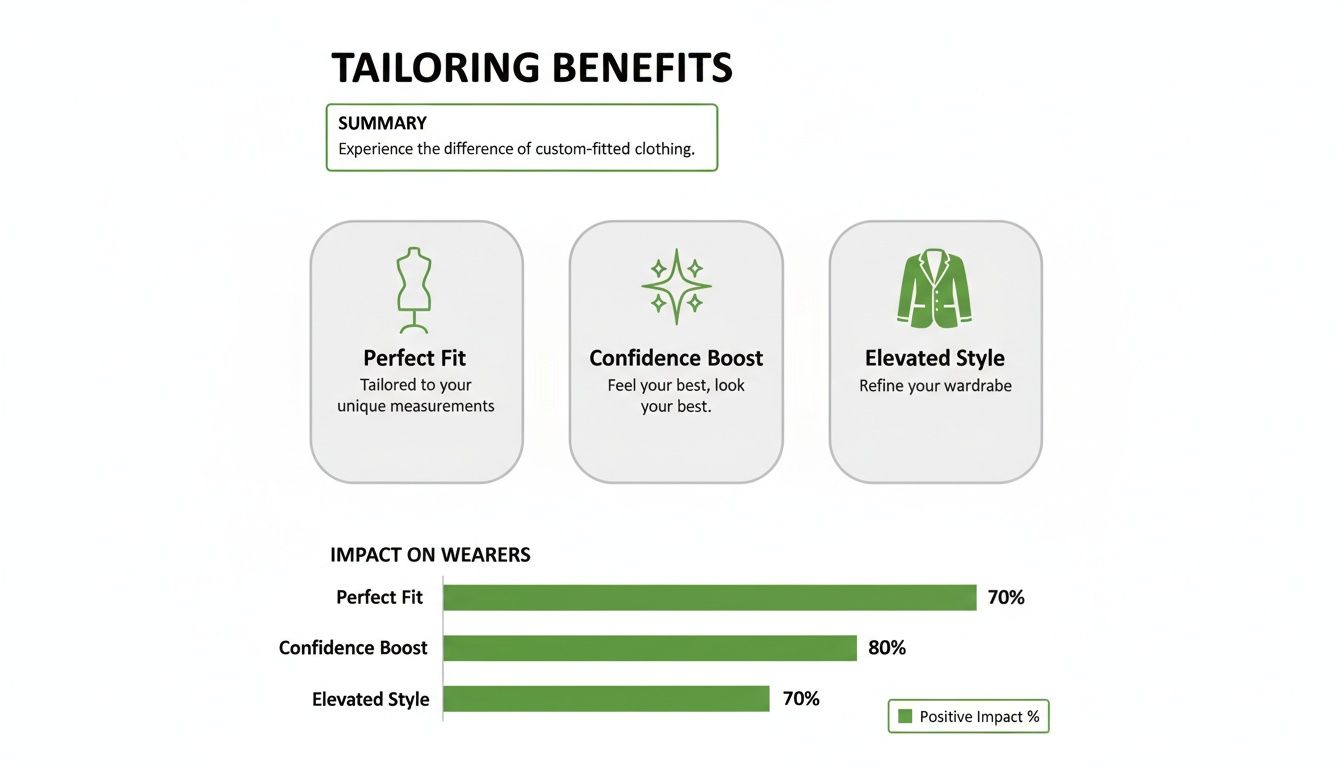
As you can see, the ripple effects are huge. When your clothes fit perfectly, it changes how you carry yourself.
Mastering Trousers and Denim
Getting the length of your pants right is absolutely non-negotiable for a pulled-together look. It's also one of the most common fit problems we see.
-
Hemming for the Perfect Length: This is tailoring 101. A tailor can create a beautiful, clean hem on any style, whether it’s a sharp straight-leg trouser or a flowy wide-leg jean. Crucial Tip: You must bring the exact shoes you plan to wear with the pants to your fitting. The break—where the hem hits your shoe—is completely different for a heel versus a sneaker.
-
Tapering the Leg: Have a pair of straight-leg jeans that feel a little... off? A tailor can easily slim them down from the knee to the ankle, creating a modern, tapered silhouette. It’s a fantastic way to bring older pieces back into rotation.
-
Taking in the Waist: Ah, the dreaded waistband gap. It’s a classic issue, especially if you have a curvier shape. A good tailor can eliminate it by taking in the waistband, usually by adding a couple of discreet darts or tweaking the center back seam for a snug, perfect fit.
Elevating Dresses and Skirts
Dresses are notoriously hard to fit off the rack because they’re designed for a generic body proportion. This is where tailoring really works its magic, turning a standard dress into your dress.
Getting a dress to perfectly complement your unique shape is an art form, something we dive into in our guide on how to dress for your body type.
-
Shortening Straps: If a neckline is plunging a little too low or the armholes are gaping, shortening the straps is a quick, game-changing fix. This simple tweak lifts the entire bodice, making everything feel more secure and look more flattering.
-
Adding Darts: Does that shift dress you loved on the hanger look a bit boxy on you? The answer is darts. By adding small, tapered tucks of fabric at the bust or waist, a tailor can contour the garment to your curves, creating a beautiful shape where there was none before.
-
Adjusting the Hem: Just like with pants, getting the hem of a dress or skirt to the most flattering length for your height is everything. A tailor can make sure your formal gown just skims the floor or that your new midi skirt hits at that perfect spot on your calf.
Refining Blazers and Jackets
A well-fitting blazer is the cornerstone of a chic wardrobe, but the fit has to be precise. Because they’re so structured, blazer alterations can be a bit more involved, but the payoff is enormous.
Common Blazer Alterations:
| Alteration | Why It Matters | Real-World Example |
|---|---|---|
| Slimming Sleeves | Removes that bulky, overwhelming feeling by getting rid of excess fabric for a sleek, modern line. | You scored a gorgeous vintage blazer, but the sleeves are too billowy. A tailor can narrow them for a sharp, current look. |
| Shortening Sleeves | This ensures the sleeve ends right at the wrist bone, letting a hint of your shirt cuff peek out. It's a hallmark of a high-end look. | The sleeves on your new power suit jacket cover your hands. Shortening them creates an instantly professional and intentional finish. |
| Taking in the Sides | Creates a defined waist and gets rid of a boxy, oversized look. This highlights your silhouette beautifully. | A blazer you bought online fits your shoulders perfectly but is too wide in the body. Taking in the side seams makes it look custom-fit. |
One word of caution: shoulder alterations on a blazer are a big deal. It's complex, costly work that involves deconstructing and rebuilding a core part of the garment. If the shoulders don't fit from the get-go, it’s usually best to pass on the piece unless you’re ready for a serious investment.
How to Prepare for Your First Fitting
Walking into a fitting for the first time can feel a bit like a mystery, but a little prep work makes all the difference. Think of it less as a simple drop-off and more as a creative collaboration between you and your tailor. Your goal is to show up ready to give them all the right information so every stitch and pin aligns with how you’ll actually wear your new favorite piece.
This is your moment to set the stage for a flawless final look.
Bring the Right Foundation Pieces
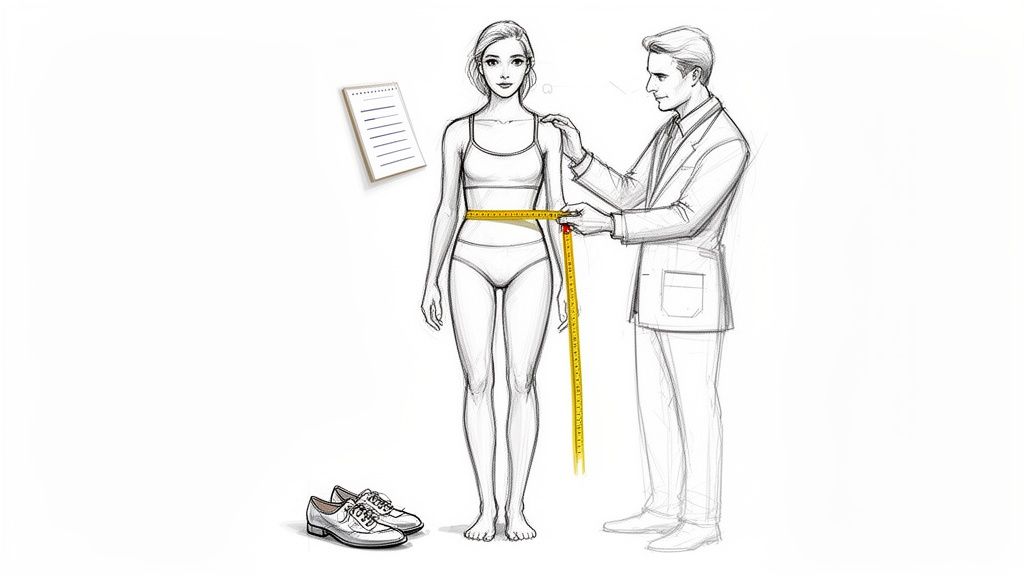
If you remember only one thing, make it this: bring the exact shoes and undergarments you plan to wear with the garment. This isn’t a small detail—it’s the foundation for getting the fit just right.
The shapewear you love can subtly shift your measurements, and the height of your heel completely changes how trousers break or a maxi dress drapes. Arriving in sneakers to hem a dress meant for your highest heels is a recipe for a hemline that’s inches too short.
Your Fitting Day Checklist
- The Garment: First, make sure it’s clean. It’s not only a common courtesy but also ensures no smudges or dirt get in the way of the marking process.
- The Shoes: Bring the exact pair you’ll be wearing. If you're torn between a flat and a heel, bring them both. You and your tailor can see how the hem works for each option.
- The Undergarments: Wear the specific bra, slip, or shapewear you have in mind for the final outfit. A push-up bra versus a simple bralette can dramatically alter how a dress bodice fits.
Learn to Speak the Language of Fit
It’s one thing to know something feels "off," but it's another to explain why. Your tailor is an expert in clothing construction, but they can't read your mind. Saying a piece feels "weird" or "baggy" is a good start, but getting specific is what leads to that perfect, custom-tailored result.
Instead of trying to describe a general feeling, pinpoint the exact issue you're seeing in the mirror.
Key Takeaway: The goal is to move from describing a problem ("this makes me feel frumpy") to requesting a solution ("can we slim the sleeves?"). This shared language builds a bridge between your personal style and your tailor's technical skill.
For example, don't just say a dress feels too big. Stand in front of the mirror with your tailor and point out what you see. Is it gaping at the bust? Is there a bit of extra fabric pooling at your lower back? Or does it just need a little more shape through the waist?
Turning Vague Feelings into Actionable Requests
Here’s a quick guide to translating those common fit issues into clear instructions your tailor will immediately understand. This kind of communication is what great tailoring for women is all about.
| If You Feel... | Try Saying This... |
|---|---|
| "These pants just feel sloppy." | "Could we taper the leg from the knee down for a slimmer silhouette?" |
| "This dress makes me look boxy." | "Can we add some darts at the waist to create more definition?" |
| "The top of this dress is gaping." | "I think the straps might be too long. Can we shorten them to lift the bodice?" |
| "These sleeves feel too bulky." | "Is it possible to slim the sleeves for a more streamlined look?" |
This level of detail lets your tailor work their magic exactly where it’s needed, making sure the piece you walk away with is the one you envisioned. A great fitting is a conversation, and by coming prepared, you become an active partner in creating a garment that truly makes you feel extraordinary.
Finding Your Perfect Tailor and Understanding the Costs
A truly great tailor is one of the best-kept secrets to a flawless wardrobe. They’re more than just a seamstress; they’re an artist who can make a good piece of clothing look like it was made just for you. This partnership is powerful, especially when you consider that women's apparel drives the global fashion industry. In a market this massive, a perfect fit is what truly sets you apart. You can explore more on the women's apparel market at Statista.com.
So, where do you find one of these clothing whisperers? That’s the most important first step.
Where to Look For a Tailoring Expert
The best tailors are often found through word-of-mouth, so start there. Ask that friend whose outfits always look impeccable for her secret. High-end boutiques and department stores are another fantastic resource—they either have phenomenal in-house experts or a list of trusted local tailors they send their own clients to.
Online reviews on Google or Yelp can also point you in the right direction, but you have to read between the lines. A generic five-star rating is nice, but a review that says, "She completely rebuilt the shoulders on my vintage blazer and it's perfect," tells you everything you need to know about their skill level.
Finally, know the difference between a basic alterations shop and a true tailor. Many dry cleaners offer hemming, and that's perfectly fine for simple jobs. But for anything complex, like resizing a lined jacket or working with delicate silk, you need a specialist whose main focus is tailoring for women.
What to Expect With Pricing
Let's be clear: tailoring costs aren't standardized. They can vary wildly based on your city, the tailor's reputation, and how intricate the work is. The price really just reflects the time and skill a garment requires. Hemming a pair of pants is one thing; completely reshaping a dress is another.
Here’s a quick look at what drives the cost up:
- The Fabric: Working with tricky materials like silk, chiffon, or anything with beading demands a huge amount of care and specialized skill, which costs more. Even denim and leather require special heavy-duty needles and machines.
- How It's Made: A lined blazer is worlds more complex to alter than an unlined summer dress. Your tailor has to carefully open the lining, make the adjustment, and then sew it all back together so you’d never know they were there.
- Where the Work Is Done: Taking in a simple side seam is pretty straightforward. Re-doing the shoulders, on the other hand, is one of the most difficult and expensive alterations because it means deconstructing and rebuilding the entire core structure of the garment.
Budgeting Tip: Always, always get a quote before you agree to any work. A good tailor will be upfront about the cost and can walk you through why one alteration is more labor-intensive than another.
Ballpark Costs for Common Alterations
While prices will always depend on your specific garment and tailor, this chart should give you a general idea of what to expect. Think of it as a guide to help you plan your wardrobe investments wisely.
| Alteration Type | Estimated Cost Range | What Influences the Price |
|---|---|---|
| Hemming Trousers or Skirts | $15 - $35 | Whether it’s lined; has a cuff or a vent. |
| Shortening Blazer Sleeves | $30 - $60 | Functional buttons, vents, and lining all add to the complexity. |
| Taking in a Waist | $25 - $50 | Simple darts are cheaper than reconstructing the entire waistband. |
| Slimming a Dress or Top | $30 - $70+ | Depends on the number of seams, lining, and the type of fabric. |
| Adjusting Shoulders | $75 - $150+ | This is a highly complex job that involves resetting sleeves and collars. |
Investing in a great tailor means your clothes don’t just fit—they flatter. Once you find that perfect professional and understand the value behind their work, you’re well on your way to building a closet that makes you feel incredible every single day.
Tailoring Tips for the Savvy Online Shopper
Let's be honest, shopping for clothes online is a thrill, but it can also feel like a total gamble when it comes to fit. The secret isn't just crossing your fingers and hoping for the best; it's learning to buy with a clear tailoring strategy in mind. When you know how to read between the lines of a product page, you can confidently click "add to cart" on pieces that are perfect candidates for a few simple alterations.
This approach turns online shopping from a game of chance into a smart, calculated move toward building a wardrobe that fits you flawlessly. It all starts with knowing your numbers.
Know Your Numbers Before You Browse
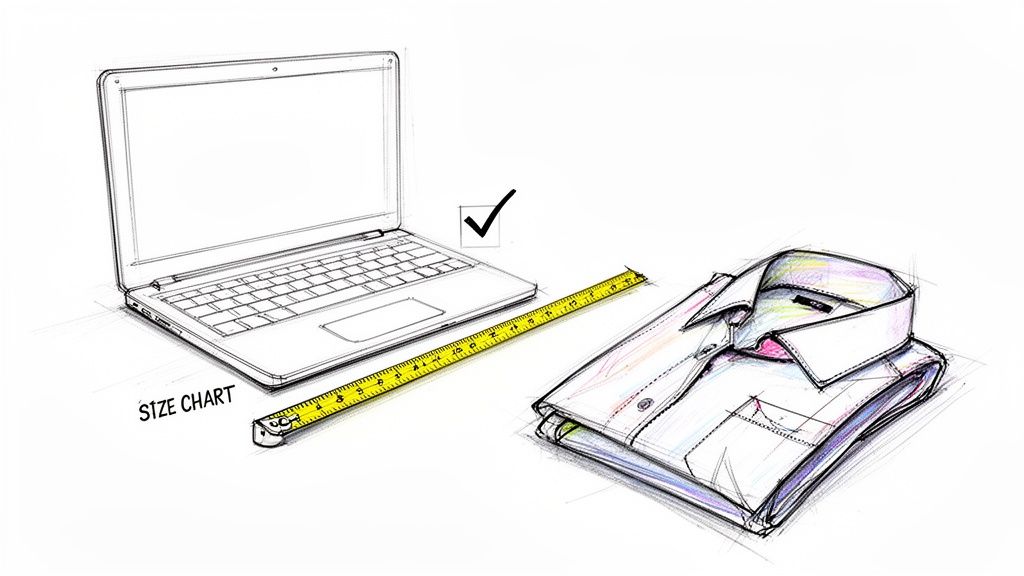
Before you even start scrolling, the most powerful tool you have is a soft measuring tape. Every brand's size chart is a little different, so knowing your own core measurements is absolutely essential.
You only need to focus on four key areas:
- Bust: Measure around the fullest part of your chest, keeping the tape nice and even.
- Waist: Find your natural waistline—usually the narrowest spot on your torso—and measure around it.
- Hips: Bring the tape around the fullest part of your hips and seat.
- Inseam: Starting from your inner upper thigh, measure down to where you want your pants to hit.
Jot these down and keep them handy. When you find something you love, pull up the brand's size chart and compare. If you find yourself between sizes, the golden rule of tailoring for women is to always size up. A good tailor can easily take fabric away, but they can’t magically add it.
Spotting Garments with Good Bones
Now, not everything you find online is a great candidate for alterations. The trick is to develop an eye for pieces with "good bones"—simple construction that a tailor can work with easily. Look closely at the product photos and read the descriptions for clues.
Items with clean, simple seam lines are your best bet. A classic sheath dress with basic side seams is much easier to take in than one covered in intricate panels or ruching. Unlined blazers and skirts are also generally simpler—and more affordable—to alter than fully lined pieces.
Here's a pro tip: An online purchase is most likely to be a tailoring success if it already fits well in the most structured area, like the shoulders of a blazer or the rise of a pair of trousers. Things like the waist or hem are much easier for a tailor to adjust.
Buy with Alterations in Mind
Start thinking like a wardrobe editor, not just a shopper. You’re looking for potential, not perfection right out of the box.
Let’s say you find a gorgeous silk blouse, but the only size left is one larger than you normally wear. Check the product details. If it has simple side seams and isn't overly complicated with darting, it's a fantastic candidate for being slimmed down to fit you perfectly.
The same goes for trousers. Focus on finding a pair that fits beautifully through the hips and seat. The length is almost always an easy fix. Getting the fit right in those key structural areas is the priority, because adjusting waistbands and hems is relatively simple for any good tailor. If you're looking for inspiration on where to find pieces with great potential, check out our guide to the best online boutiques for dresses.
When you combine your personal measurements with a keen eye for a garment's construction, you can make much smarter online purchases. This strategy gives you the confidence to find a great local tailor and transform that almost-perfect online find into a piece that looks and feels like it was made just for you.
Your Top Tailoring Questions, Answered
Even with a plan, it's totally normal to have a few questions before you hand over a beloved garment. We get it. To help clear up any last-minute hesitation, we’ve gathered the most common questions we hear about tailoring and answered them for you.
Think of this as your final check-in before creating a wardrobe that fits you flawlessly.
Is It Worth Tailoring Inexpensive Clothing?
Absolutely. The whole point of tailoring is to make a garment look like it was made just for you, no matter what the price tag says. In fact, a perfectly fitted piece from a more accessible brand can often look far more luxe than a designer item that hangs all wrong.
If you love the style, color, or feel of an inexpensive piece, spending a little extra on alterations is one of the smartest style moves you can make. It transforms the garment from "off-the-rack" to "uniquely yours," making it something you’ll actually reach for again and again.
How Do I Know If a Garment Can Be Let Out?
This is a fantastic question, and the answer lies in one crucial detail: the seam allowance. That’s the little bit of extra fabric tucked inside the seams of your clothes.
Higher-quality pieces—especially structured items like blazers, trousers, and gowns—are often made with more generous seam allowances, sometimes an inch or more. This gives a tailor enough fabric to work with to let the garment out. You can usually get a good idea by peeking inside the item along a main seam.
- Generous Seam Allowance (1 inch or more): Great potential for letting out.
- Minimal Seam Allowance (less than half an inch): Very little, if any, room to work with.
When in doubt, just ask your tailor. They can assess the seam allowance in a few seconds and give you a clear, honest answer about what’s possible before you commit to the work.
It’s a small detail that makes a huge difference in what your tailor can achieve.
What Should I Do If I Am Not Happy with the Alterations?
Any tailor worth their salt wants you to be thrilled with the final result. The single most important thing you can do is speak up during your final pickup.
Always, always try the garment on one last time before you leave the shop.
If something doesn’t feel or look quite right, say so right then and there. Politely and calmly explain the issue—maybe the hem is still a hair too long, or the waist feels a bit restrictive. A true professional will be more than happy to make a few final tweaks to get it just right. Clear, kind communication is the key to a wonderful long-term relationship with your tailor.
Can I Get Something Tailored on Short Notice?
It really depends on the tailor’s schedule and how complex the job is. A simple hem on unlined pants might be doable with a rush fee if they have an opening.
But more intricate work simply can’t be rushed. Altering a formal gown, deconstructing a lined blazer, or tailoring delicate fabrics like silk all require time and intense focus.
For any important event—a wedding, a big presentation, a gala—always plan ahead. Try to bring your garment to the tailor at least two to four weeks in advance. This buffer saves you from last-minute stress and gives your tailor the time they need to do their best work. Great tailoring for women is all about that perfect fit, and that starts with proper planning.
At Cedar & Lily Clothier, we believe the perfect fit is the foundation of confident style. Explore our curated collection of dresses, blazers, and designer denim that are beautiful from the start and perfect candidates for your trusted tailor.