


The invitation lands in your inbox at 9:12 a.m. It says gala, formal wedding, awards dinner, maybe a holiday benefit. Your first reaction is excitement. Your second is usually less glamorous: What exactly am I supposed to wear, and will I still feel good in it three hours later?
That's where most evening wear advice falls apart. It tells you what photographs well on a hanger. It rarely tells you what happens when you sit through dinner, walk across a cobblestone courtyard, dance after dessert, or need that same dress to earn its keep at another event next season.
Evening wear is not a tiny niche. The global evening wear market reached $21.4 billion in 2025, reflecting sustained demand for garments designed for galas, proms, and formal occasions, especially in North America and Europe, according to Market Intelo's evening wear market report. That number matters because it confirms what shoppers already know instinctively: this category is emotional, expensive, and worth getting right.
Your Guide to Finding Unforgettable Evening Wear
A beautiful dress isn't automatically the best evening wear. The best piece is the one that holds up from arrival to final photo. It flatters you standing still, and it still works when you're seated, moving, greeting people, and carrying yourself through a long night without constant adjusting.
I see the same pattern over and over. Someone chooses a gown because the color is stunning and the neckline is dramatic. Then the challenges begin. The skirt wrinkles awkwardly in the car. The bodice shifts at dinner. The shoes become a punishment. By the time the dancing starts, she looks polished but feels trapped. That's not success. That's a styling miss hidden behind expensive fabric.
What actually makes a piece unforgettable
The strongest evening looks have four things working together:
- Dress code accuracy so you don't look underdressed or theatrical.
- A flattering silhouette that supports the parts of your shape you want to highlight.
- Fabric intelligence so the garment performs for the event you're attending.
- Re-wear potential so the piece feels like a wardrobe asset, not a one-night expense.
The right evening outfit should never require you to suffer for elegance.
There's also a mindset shift worth making. Stop shopping for one event only. Shop for the role the piece can play in your wardrobe. A sharply cut midi cocktail dress can cover far more social territory than a precious gown that only works once and only indoors. A rich-toned formal dress with clean architectural lines can often be restyled with different jewelry, a wrap, or a blazer and feel new again.
The standard is simple
Ask one question before you buy: Would I choose this again after wearing it for a full evening?
If the answer is no, keep looking.
That's how you find evening wear that feels exceptional, not just decorative.
Decoding Evening Wear Dress Codes
Dress codes are not suggestions. They're the host's way of telling you how formal the room will feel. If you read them correctly, shopping gets easier fast. If you ignore them, even a gorgeous dress can look wrong.
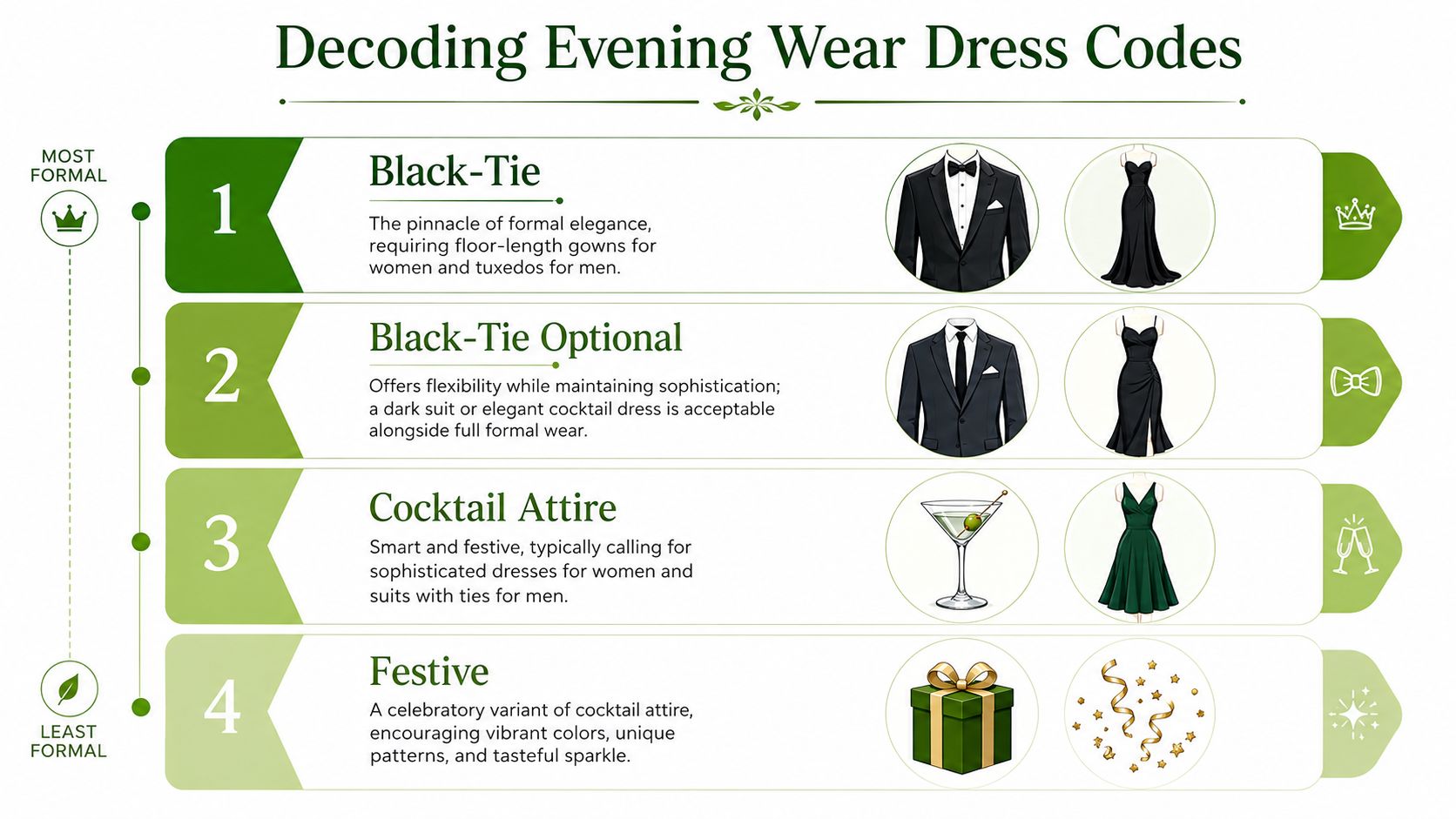
Black-Tie means commit
Black-Tie calls for formality with presence. This is the moment for a floor-length gown, polished fabrication, refined jewelry, and shoes that look elegant from every angle. If your dress reads “nice wedding guest” instead of “formal evening,” it's not enough.
Think controlled drama, not costume. A clean column gown, a full skirt with a structured bodice, or a sleek long dress in a rich neutral all work. Cheap shine, flimsy jersey, and overly casual hems don't.
Black-Tie Optional gives you room, not freedom
Many shoppers often find this confusing. Black-Tie Optional does not mean anything goes. It means you can choose between a full gown and a very elegant midi or ankle-length cocktail dress, as long as the styling remains polished.
I think of it as elegant flexibility with strict standards. If you choose the shorter hemline, the fabric, fit, and accessories must do more work. The dress should still feel intentional at night.
A useful reference for invitation wording and event expectations is this guide to understanding event dress codes.
Cocktail attire is the workhorse category
Cocktail is one of the most useful areas of evening dressing because it covers so many real events. In fact, cocktail dresses hold a 35% share of the women's evening wear market, which highlights their versatility for occasions between semi-formal and full evening dressing, as noted in this evening cocktail dress market guide.
That popularity makes sense. A great cocktail dress can handle a rehearsal dinner, gallery opening, company celebration, charity event, or wedding reception with a simple shift in accessories.
Practical rule: If the invitation says cocktail, a beautifully tailored midi dress will almost always serve you better than an overworked mini.
Festive means personality with polish
Festive is still polished. It just allows more expression. Color, texture, subtle sparkle, sculptural earrings, a more playful shoe. The line you can't cross is casualness. You want celebratory, not random.
Here's the fastest cheat sheet:
| Dress code | Best choice | What to avoid |
|---|---|---|
| Black-Tie | Floor-length gown | Casual fabrics, short hems |
| Black-Tie Optional | Gown or formal midi | Daywear shapes, under-styling |
| Cocktail Attire | Midi or knee-grazing dress | Office-only dresses without evening detail |
| Festive | Cocktail silhouette with personality | Loud gimmicks, novelty styling |
If you decode the invitation correctly, half the shopping stress disappears.
Finding Your Most Flattering Silhouette
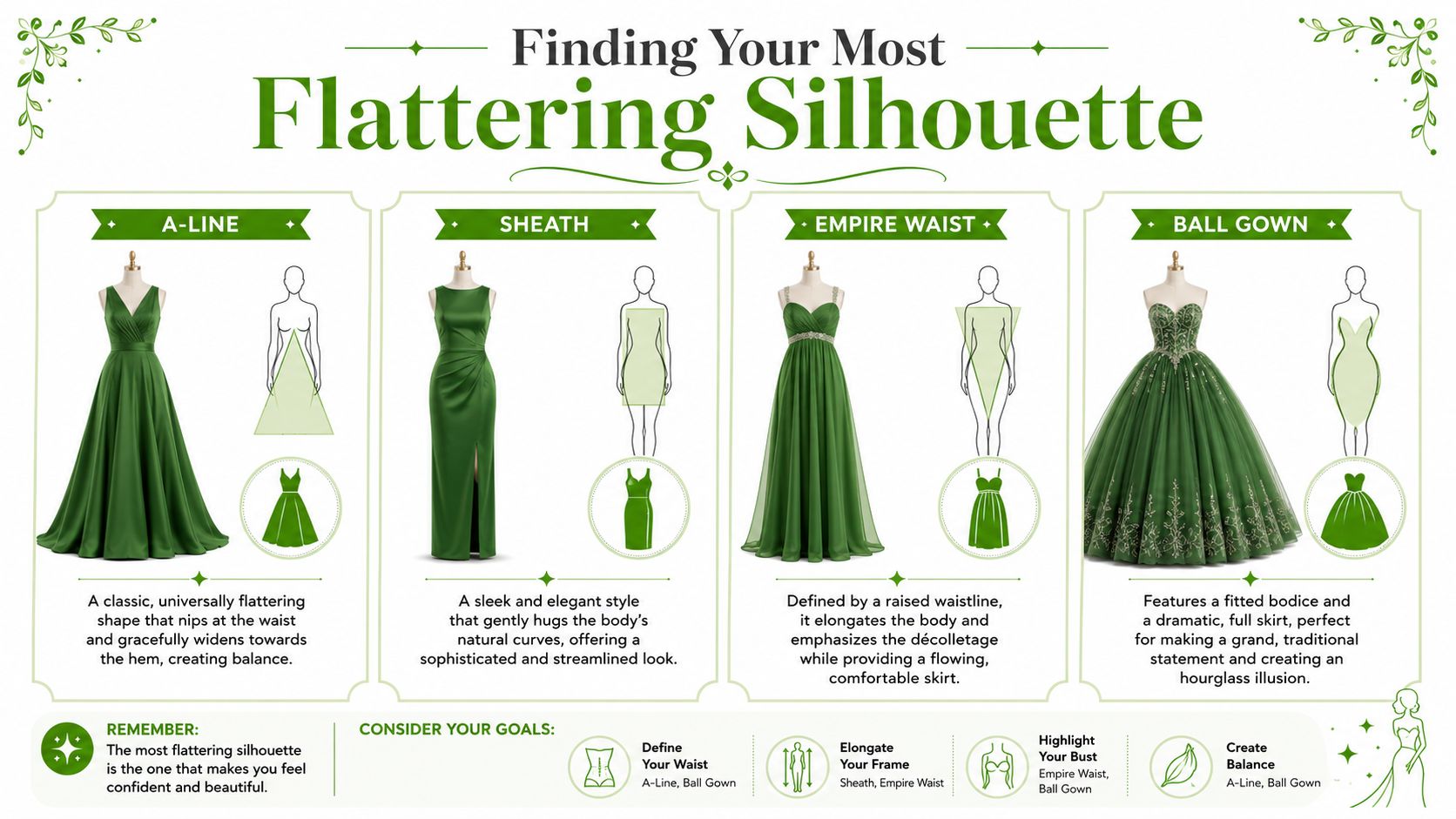
Silhouette matters more than trend. The shape of the dress determines what the eye notices first, how the garment moves, and whether you feel composed or self-conscious. Stop asking which silhouette is “right” for your body type. Ask what effect you want the dress to create.
Start with the line, not the label
An A-line creates balance. A sheath creates length. A ball gown creates presence. An empire waist lifts the eye upward. A mermaid shape celebrates curves and creates drama through contrast.
That means the most flattering silhouette is the one that supports your priorities. Maybe you want shoulders to look elegant and open. Maybe you want a waistline to feel defined. Maybe you want glide, not cling.
If you want a useful visual companion while thinking through proportion and venue, this resource on selecting your ideal dress for the setting is worth a look.
The silhouettes that consistently work
-
A-line
This is the safest excellent choice. It defines the waist and then releases over the hips, which creates balance without stiffness. If you want comfort, movement, and timelessness, start here. -
Sheath
A sheath is clean, direct, and elegant. It follows the body rather than exaggerating it. This works beautifully when you want an elongated effect or when the fabric itself is the star. -
Empire waist
This shape raises the waistline and lets the skirt fall with ease. It draws attention to the décolletage and can feel especially graceful for long dinners or events where comfort matters.
After you've narrowed the shape family, it helps to compare that instinct with more personalized fit thinking. This article on how to dress for your body type offers a helpful second lens.
Here's a short visual explainer to make silhouette selection easier in motion, not just in still photos.
When to choose more drama
A ball gown is right when the event can carry it. Large charity galas, formal winter weddings, major milestone evenings. It gives instant grandeur and creates an hourglass impression through proportion. It is not the best answer for every formal invitation, and that's exactly why it works when used selectively.
Mermaid and fit-and-flare shapes are more demanding. They're striking, but they require the right construction and the right wearer attitude. If you spend the whole night tugging the skirt or adjusting the bust, the dress is wearing you.
Choose the silhouette that lets you move like yourself, not one that asks you to perform all night.
A better fitting-room test
Before you commit, do three things in the fitting room:
- Sit down fully and stay seated a minute. Notice pulling at the hips, waist, and bust.
- Lift your arms as if greeting someone or dancing.
- Walk, turn, and step backward. Evening wear fails in motion before it fails in photos.
A flattering silhouette should feel intentional from every angle. It should sharpen your presence, not limit it.
The Art of Choosing the Right Fabric
You notice fabric for the first time about an hour into the night. The room is warm, dinner has started, the photos are over, and now you need the dress to keep up while you sit comfortably, cross a ballroom, and make it to the last dance without tugging at the skirt or peeling the lining off your legs. That is why fabric deserves as much attention as silhouette.
The right textile decides how a gown moves, how it feels on the body, how much it wrinkles, and whether it still looks polished at midnight.
Choose flow for movement and warm rooms
For outdoor receptions, destination weddings, and evenings built around dancing, lighter fabrics usually serve you better. Chiffon, georgette, and lightweight crepe move easily, release heat well, and look graceful in motion. A fabric buying guide for evening wear notes that lighter, more open constructions are often the better option for breathability and quicker drying.
Choose these when you want:
- easy movement on the dance floor
- less heat buildup during a long event
- a softer, less rigid look in photos and in person
They do have limits. Flowing fabrics will not give you a crisp, architectural bodice or hold dramatic volume on their own. If your goal is shape, you need more body in the cloth or stronger internal construction.
Choose structure for formality and repeat wear
Duchess satin, silk brocade, and taffeta bring authority. They hold clean lines, support fuller skirts, and make a room feel more formal the moment you walk in. They are especially good for black-tie events, winter galas, and venues with real scale.
Fluid fabrics such as charmeuse and soft crepe create a different effect. They skim rather than sculpt. They suit bias cuts, draped gowns, and events where you want glamour without stiffness, as outlined in this evening fabric guide.
This is also where long-term value gets clearer. Structured satin in a refined color can return for another gala with different jewelry, a new shoe, and a stronger lip. A very specific novelty fabric often gets worn once and then stays in the closet.
Comfort comes from the inside too
A beautiful outer fabric can still fail if the lining is wrong. For long evenings, look for a dress that glides when you sit and does not trap heat. Stretch crepe helps if you expect a lot of movement. A breathable lining matters just as much. Cheap polyester linings are often the reason a gown feels sticky and tiring halfway through the night.
Do a simple test before you buy. Sit down. Stand up. Walk a few steps. Then pinch the fabric and release it. Slow recovery usually means visible creasing or bagging at the hips, knees, or seat.
Use this quick fabric decision table:
| If your event is... | Choose... | Skip... |
|---|---|---|
| Outdoor and warm | Chiffon, georgette, lightweight crepe | Heavy satin, taffeta |
| Formal and architectural | Duchess satin, silk brocade | Limp fabrics that collapse |
| Long and movement-heavy | Stretch crepe, breathable lining | Rigid fabric with polyester lining |
One more detail matters. Fabric changes the whole styling strategy, especially jewelry, shoes, and even fragrance. If you want the finishing pieces to feel intentional, this guide on how to accessorize an outfit with intention is worth reading. For evening scent, richer fabrics pair beautifully with warm, resinous perfumes, and this complete guide to Tobacco Vanille is a smart reference.
The best evening wear earns its place in your wardrobe because it looks beautiful and works beautifully. That is the standard.
Styling From Head to Toe and For a Second Event
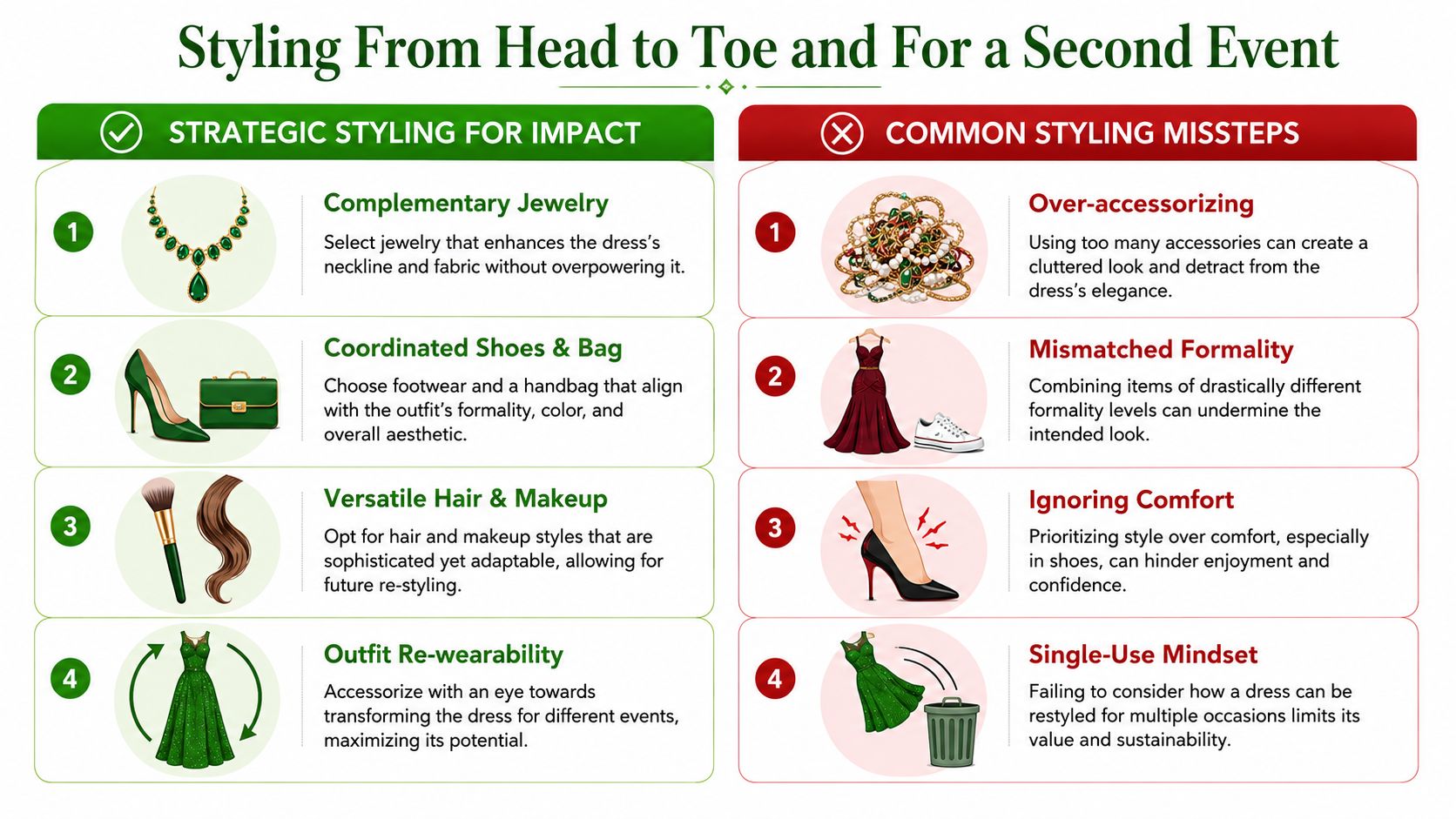
Accessories should finish the look, not compete with it. If your dress is the lead, everything else is casting. The strongest evening styling always feels edited. You notice the woman first, then the outfit, then the details.
Build the look from the neckline down
A high neckline wants restraint. Think earrings or bracelet, not a crowded neck. A strapless or open neckline gives you space for stronger jewelry, but only if the dress itself is clean. If the fabric shines, the jewelry should calm down. If the dress is matte and minimal, jewelry can carry more visual weight.
Shoes matter more than people admit. If you can't walk naturally in them, they are wrong for the event. The right evening shoe lengthens the line of the leg and supports your pace through the night. That usually means a manageable heel, a secure strap, and enough polish to hold its own next to formal fabric.
A structured bag is usually the smartest choice. It keeps the whole look intentional. Slouchy or oversized bags almost always break the spell.
For a sharper finishing approach, this guide to accessorizing an outfit with intention is a useful companion.
Treat fragrance like an accessory
Fragrance is part of evening dressing. It changes how finished you feel. For richer evening looks, especially in cooler weather, a warmer scent profile often pairs better with velvet, satin, brocade, and deeper color palettes. If you're considering that direction, this complete guide to Tobacco Vanille gives good context for a classic evening fragrance mood.
Re-wearability is not optional anymore
Most evening wear advice still acts like every formal purchase is single-use. That's dated. Current luxury direction favors deep, rich tones and architectural details because they transition across seasons and events, as discussed in this 2026 evening dress trends piece.
That means your styling strategy should include a second event before you buy the first.
Here are the smartest re-wear moves:
-
Buy the strong neutral or deep tone
Black, navy, espresso, dark emerald, and rich wine tend to travel better across occasions than novelty prints or overly seasonal shades. -
Look for adjustable drama
A dress with a removable wrap, simple neckline, or clean silhouette can swing formal or semi-formal with a change of earrings, shoes, and hair. -
Use layers to shift the occasion
A sleek cocktail dress worn alone for evening can look equally right with a blazer, refined heel, and smaller jewelry for a business-adjacent dinner or city event.
A smart evening purchase should have at least one clear second life the day you bring it home.
The styling mistakes that ruin expensive dresses
| Good styling choice | Common mistake |
|---|---|
| One focal jewelry decision | Necklace, earrings, cuff, and embellished bag at once |
| Shoes you can actually stand in | Painful heels that change your posture |
| Hair that supports the neckline | Hair and neckline competing for attention |
| A dress with re-wear potential | Buying for one photo only |
If you want the best evening wear, don't just ask whether it looks glamorous. Ask whether it can become yours more than once.
The Cedar & Lily Experience
The hardest part of buying evening wear isn't finding a dress. It's finding the right dress with the right guidance, in the right size, with enough clarity to make a confident decision before the event sneaks up on you.
A strong boutique experience solves practical problems that online filtering alone can't. You need someone who understands why one satin feels refined and another feels stiff, why one midi hem looks elegant and another cuts the leg awkwardly, and why the right event dress often comes down to proportion rather than trend.
Why curated selection matters
A curated boutique does the editing for you. Instead of scrolling through endless options that vary wildly in quality, you're looking at pieces chosen for fit, fabrication, and occasion relevance. That matters in evening wear because the category leaves very little room for mediocre construction.
Labels known for event dressing, including names like Elliatt and Favorite Daughter, are appealing because they often sit in the sweet spot between modern style and real-life wearability. That's where women tend to find pieces that feel current without being disposable.
Service should make the decision easier
Good service in evening wear should feel like private guidance, not pressure. You want fit advice. You want honest feedback on hem length, support, and proportion. You want someone to tell you when the dress is beautiful but wrong for your event.
That support matters whether you shop in person or online. Fast shipping, thoughtful packaging, easy exchanges, and clear communication aren't extras in this category. They're part of what makes the purchase feel trustworthy, especially when you're buying for a date-specific event.
The value of a boutique over a random cart
A boutique that understands occasion dressing gives you something larger retailers often don't: context. The staff knows the difference between “pretty dress” and “correct answer.” They can help you refine based on venue, dress code, fabric, and how you want to feel.
That's luxury. Not excess. Not noise. Precision.
The best shopping experience leaves you with fewer doubts, fewer compromises, and a dress you're excited to wear the moment you get home.
For evening wear, that level of attention is not indulgent. It's efficient.
Your Confident Conclusion
The best evening wear isn't the loudest dress in the room. It's the one that meets the occasion, flatters your shape, feels comfortable for the full event, and still deserves space in your wardrobe after the night is over.
If you want a clean decision framework, keep it simple.
The four-part filter that works
-
Decode the code
Match the invitation first. Formality comes before personal preference. -
Flatter your form
Choose the silhouette that creates the effect you want, not the one trend reports push. -
Feel the fabric
Fabric decides whether the dress behaves beautifully or becomes a burden. -
Finish the look
Accessories, shoes, bag, beauty, and re-wear strategy should all support the same message.
That approach changes everything. You stop panic-buying. You stop choosing dresses that only work in mirror selfies. You start buying with intention.
The right evening piece should let you focus on the event itself. The conversation. The toast. The photos. The dancing. The feeling of walking into a room and knowing you got it exactly right.
Confidence is the final layer of every great evening look. Choose the dress that gives you that, and you won't need to keep checking your reflection all night.
If you're ready to find an event-ready piece that feels polished, wearable, and worth owning beyond a single night, explore Cedar & Lily Clothier. You'll find a curated mix of refined dresses, accessories, and designer favorites, plus the kind of thoughtful styling support that makes evening wear shopping feel easy instead of overwhelming.