

The invitation is settled, the evening is approaching, and a silver sequin gown looks promising on the screen. The harder question is whether it will feel as good through dinner and dancing as it looks standing still. Before choosing earrings or deciding on a hem, a shopper should check the lining, attachment method and seam paths, because those details separate a wearable evening dress from a beautiful fitting-room compromise.
A successful purchase starts with the occasion, then moves to construction and movement. Sparkle is the easy part. Finding a gown that sits comfortably, allows sensible alterations and can be cared for properly takes a closer look.
Table of Contents
- Matching Sequin Length and Silhouette to the Dress Code
- Checking Lining, Base and Sequin Build Before You Buy
- Styling Shoes, Jewelry and Coats Around the Shine
- Fitting Room Checks for Sequin Movement and Drape
- Caring for and Altering a Sequin Gown Without Losing Shine
- Book Your Fitting at Utica Square or Jenks
Matching Sequin Length and Silhouette to the Dress Code
For a traditional black-tie gala, a floor-length silver sequin gown is the safest choice. Sequins suit formal eveningwear, while a full-length hem makes the level of formality clear. Some modern invitations allow embellished midi or ankle-length dresses, but check the host's wording before choosing a shorter cut.
For other occasions, match the hem and coverage to the invitation. These are practical starting points, not substitutes for a dress code stated by the host. The event dress-code guidance can help clarify what the occasion calls for.
Silver sequin gown length and silhouette by event
| Event | Length | Silhouette that works | Sequin coverage |
|---|---|---|---|
| Black-tie gala or formal evening reception | Floor-length | Column, fitted sheath or halter | Full-body or sequin-dense bodice |
| Cocktail or semi-formal evening | Midi or tea-length | Sheath, slip dress or A-line | Bodice or overlay sequins |
| Evening wedding guest | Midi | Structured sheath with clean neckline | Sequins as an accent rather than full coverage |
| Holiday dinner or dinner party | Knee to midi | Fitted wrap or A-line | Sleeveless top or partial sequins |
| Company gala or award dinner | Floor-length or midi | Column or straight-neck sheath | Full-body or bodice sequins |
Choose the shape before the sparkle
A column or fitted sheath creates a continuous line, while a halter draws attention to the shoulders. Both suit an evening look that feels polished rather than theatrical. For a holiday dinner, an A-line offers a softer shape, especially when the sequins are concentrated above the waist.
Coverage changes how the gown reads. Full-body sequins suit a formal evening where high shine is expected. For a smaller dinner, a sequined bodice or overlay adds interest while leaving room for accessories. A densely embellished skirt can feel visually heavy, so consider where the sequins sit as well as how much surface they cover.
Practical rule: Choose the level of formality first. A quieter finish is easier to reconsider than the wrong length.
When browsing evening gowns, ask how the sequins are attached, where the seams run, and whether the design leaves clear paths for alterations. Those details affect how the dress moves and how well its finish holds up with wear. Browse the evening gown collection and confirm length and construction on each product page rather than judging from photographs alone.
For an occasion that calls for less shine, the floral Lim Crem Maxi Dress offers a different direction, with a comfortable fit and day-to-night versatility.
Checking Lining, Base and Sequin Build Before You Buy
Before judging the sparkle, turn the gown inside out. The lining, base fabric and seam construction determine how it feels against the body and how well it handles wear. A full lining in a silk blend or polyester separates skin from the embellishment. An unlined mesh or tulle gown needs a separate foundation check. A slip can address transparency, but it may leave rough armholes or an irritating zipper edge unchanged.
The lining should move independently of the outer layer. During a fitting, check for twisting, bunching or fabric pulling upward as you walk or sit. Restriction underneath can disrupt the drape even when the outside looks smooth.
Build features to check on a silver sequin gown
| Feature | Look for | Red flag | Why it matters |
|---|---|---|---|
| Sequin attachment | Stitched or embroidered discs | Glued or heat-bonded discs | Stitching generally keeps embellishment in place better through repeated wear |
| Lining | Full lining in a silk blend or polyester | Mesh against skin without lining | A lining reduces scratchy contact and catching |
| Sequin density | Flexible, evenly covered surface | Dense panels that feel rigid | Coverage can add weight and make alterations harder |
| Seam zones | Disc-free paths at side seams, armholes and zipper | Discs crossing seam allowances | Clear paths allow cleaner sewing and adjustment |
| Base fabric | Woven or knit fabric with stretch where the cut needs it | Stiff fabric resisting the intended shape | The base determines how the gown drapes and moves |
Read the embellishment, not just the label
A technical guide to bead and sequin application describes densities of 4 to 12 attachments per centimeter. Higher density can increase coverage while adding stiffness, weight, snagging risk and alteration difficulty. Treat the range as a construction reference when comparing gowns, and assess how the surface feels and moves rather than judging quality by coverage alone.
For a gown intended for repeated wear, stitched or embroidered sequins generally offer a more secure attachment than glued ones. Look closely for skipped stitches, exposed edges and loose discs, especially around bends and closures. With an associate's permission, gently flex the fabric and see whether the embellishment stays seated. Avoid abrasive testing on merchandise.
Inspect the base fabric with the same care. Stretch helps only where the silhouette needs it; a rigid panel is unlikely to become comfortable after purchase. The guide to quality women's clothing offers a starting point for assessing workmanship.
Ask for the specific gown's lining and base details rather than assuming every style from a label uses the same construction. In person, ask an associate to show you the inside seams and zipper area. Those details can reveal whether the gown is built for the way you plan to wear it.
Styling Shoes, Jewelry and Coats Around the Shine
At a gala, the gown's surface and construction should guide every finishing choice. A silver sequin gown already reflects light across the body, so choose accessories that frame its lines without crowding the embellishment.
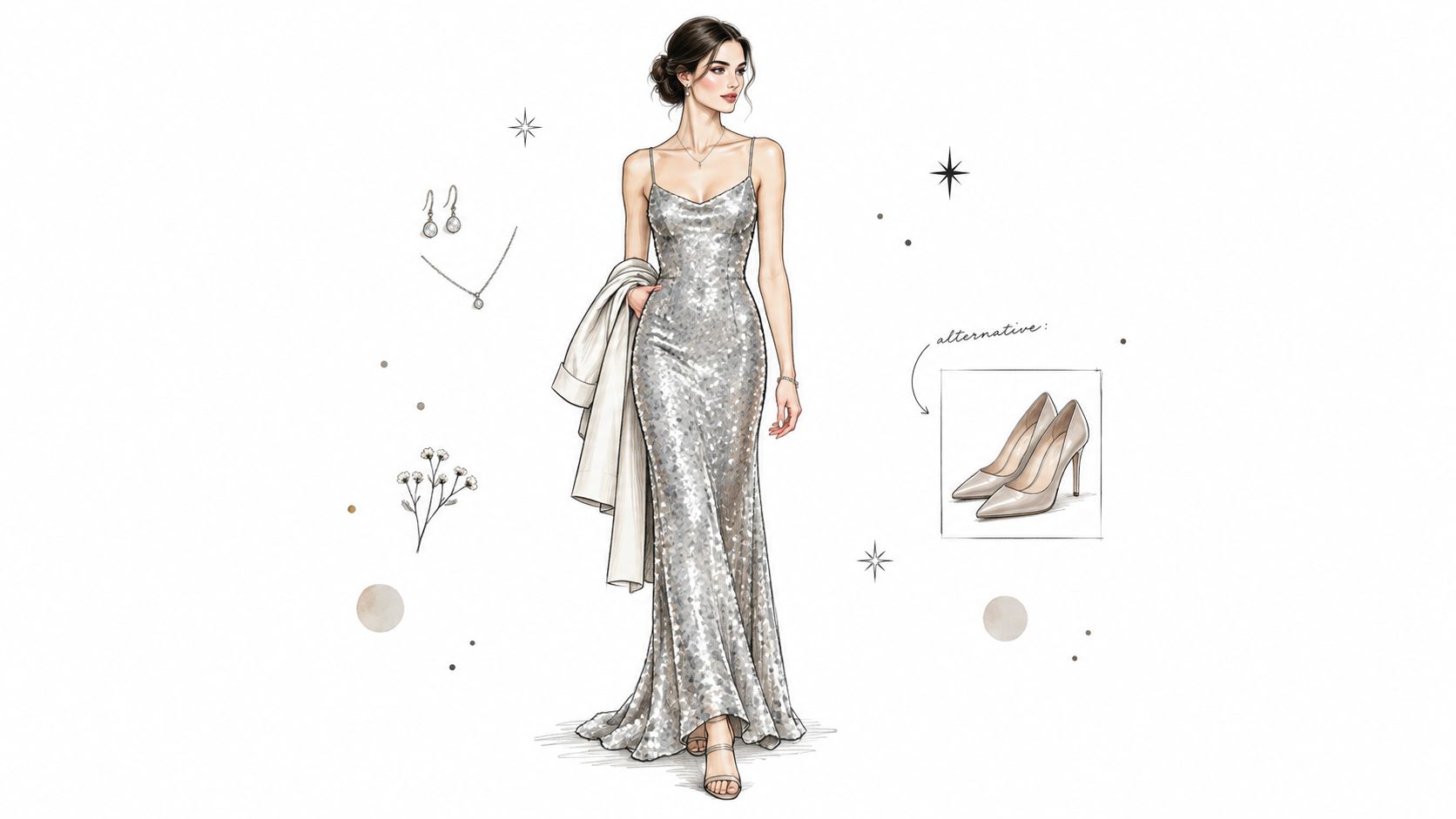
A restrained metallic sandal or a nude shoe close to the wearer's skin tone keeps attention on the dress. A pointed pump also works when its toe appears beneath the skirt. Glitter-covered footwear adds another textured surface and can compete with the sequins.
Give jewelry one clear job. Drop earrings can frame an open neckline, while a sleek cuff suits a bodice with more detail. Layered necklaces over dense sequins may hide the gown's design and catch on the surface, so check how the pieces sit together during fitting.
Keep the finishing pieces quiet
- Bag: A small satin or restrained metallic clutch suits evening proportions without the bulk of a large structured bag.
- Coat: Black, charcoal or deep navy wool provides a calm contrast. A structured blazer-length jacket works when its hem falls cleanly against the gown.
- Foundation: An unlined mesh dress usually needs a slip or suitable shapewear. Try it with the gown during the same fitting to check for visible edges or bunching.
For a December gala in Tulsa, a charcoal wool coat worn over the arms on arrival can complement a floor-length silver gown. A single drop earring as an asymmetric accent keeps the overall styling spare.
Pair a metallic gown with one matte layer, not another shine. A coat's finish matters as much as its color: smooth wool lets the sequins remain the focus, while a glossy fabric adds competing reflections.
For a cropped covering, the guide to bridal bolero fabrics and fit offers useful points on fabric and proportion. Apply those fit considerations to an evening jacket, then check that its seams and edges do not snag the gown. The accessorizing guide provides further pairing ideas for choosing pieces that work with the outfit's lines and finish.
Fitting Room Checks for Sequin Movement and Drape
A fitting room should test movement, not just appearance. Sequins can catch as fabric shifts, so a gown that looks smooth while standing may behave differently in a chair or on the dance floor.
Run a complete movement check
- Start with the intended shoes. The planned heel height changes how the skirt falls, so flats aren't a useful substitute for the final fitting.
- Sit down and cross the legs. Check whether the bodice gapes, the lining tightens or the skirt rides higher than expected.
- Raise both arms and reach forward. Watch the armholes and back seam for tension, especially if the wearer will dance or embrace guests.
- Walk, turn and stop naturally. Check for a small, safe clearance beneath the hem in heels, allowing for the gown's design rather than forcing a trailing style into an unsuitable length.
- Use the side and rear mirrors. Pulling at the hip or bust can be easier to see from these angles than from the front.
- Pass a hand gently over the surface, without dragging against the discs. Notice loose pieces or edges that catch on the lining, a bag or another part of the dress.
- Remain in the gown rather than changing immediately. Pressure at the waist or underarms deserves attention before purchase, not an assumption that it will become tolerable later.
Comfort should survive sitting, reaching and walking. A dress that requires constant adjustment hasn't passed the fitting.
Silver deserves a final inspection under the available lighting. Rippling seams and fabric sitting off-grain can interrupt the reflective surface, while unnecessary looseness may look less intentional than it would in matte fabric.
Before approving alterations, ask the associate how size exchanges work and whether tailoring affects eligibility. The answer should be clear before any permanent changes begin.
Caring for and Altering a Sequin Gown Without Losing Shine
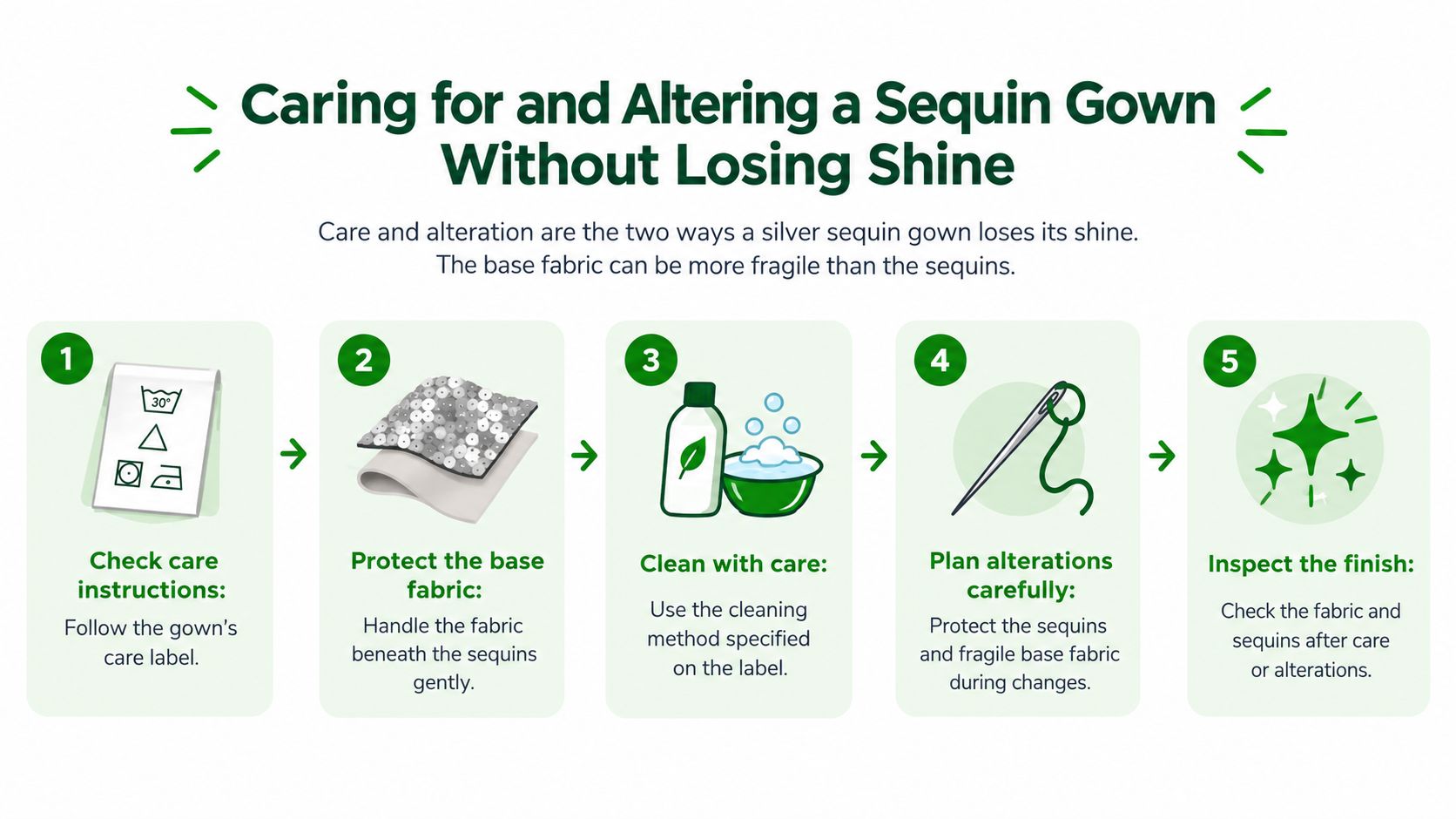
A dry cleaner who treats glued sequins like stitched ones can loosen the discs before the gown reaches the next event. Start by checking the care label and construction: the base fabric, lining and attachment method all affect how safely the dress can be cleaned or altered. A gown's surface alone does not tell the whole story.
Follow the label before choosing a method
- Check the care instructions. Identify the base fabric and whether hand cleaning is permitted. The embellishment alone does not determine the right method.
- Tell a professional cleaner that the gown has sequins, and ask how the attachment method affects their cleaning process. Glued discs can be vulnerable to certain solvents, so do not assume a standard process is suitable.
- Spot-test an inconspicuous area. Use a soft cloth with light pressure, and avoid rubbing across overlapping discs.
- If the label permits hand washing, turn the gown inside out. Use cool water and mild detergent, then swirl gently instead of scrubbing.
- Rinse without twisting. Press moisture between clean towels, then dry the gown flat, away from heat and direct sunlight.
- Store it loosely, with tissue or a smooth protective layer between embellished surfaces. Do not compress it beneath heavy clothing.
Avoid tumble drying, wringing, aggressive brushing and direct ironing. Heat and friction can damage sequins or loosen their attachments. Cleaning gently may take more time, but it reduces stress on both the discs and the base fabric.
Plan alterations around clear seam paths
Before approving a hem, waist adjustment or zipper change, ask the tailor to inspect the lining, seam allowances and sequin attachment. Discs should be cleared from the sewing path rather than stitched through indiscriminately. Keep any spare sequins for finishing or future repairs.
Sequin gown problems, causes and fixes
| Symptom | Likely cause | Fix |
|---|---|---|
| Loose or missing discs | Worn thread or failing glued attachment | Restitch or replace using saved spare sequins |
| Snagging at the hem | Discs in the hem seam path | Clear discs from the sewing line before hemming |
| Gap or bulge at the zipper | Sequins crossing the zipper tape | Clear and inspect the zipper path before adjustment |
| Dulled or patchy shine | Friction, dirt or brushing | Use label-permitted gentle cleaning; assess permanent damage separately |
| Hem too long in chosen heels | Hem set without the event shoes | Reassess the hem with the exact shoes |
| Bodice pulls at dense seams | Stitching through a sequin band | Assess a side-seam adjustment away from the dense area |
A side-seam take-in may disturb less embellishment than reshaping a heavily sequined bust, but the pattern and fit determine what is safe. For a clearer discussion of options, see this women's tailoring guide.
If an adjustment would cross a dense band, ask whether another seam offers a cleaner route. After the work, inspect the finish in motion, especially around the hem and closure.
Book Your Fitting at Utica Square or Jenks
A silver sequin gown can look fluid in a photograph and feel stiff once you move. At a fitting in Utica Square or downtown Jenks, you can inspect its weight, lining, closure and construction while trying it with the shoes you plan to wear. Those details reveal more than an image can.
Ask to see the inside of the gown and check how the sequins are attached near seams and closures. The attachment method, lining and seam paths affect comfort and how well the gown holds up with wear. An associate can help distinguish a sizing issue from a construction detail, so the front view alone does not drive the decision.
Bring the details that affect the decision
- The invitation: Its dress code helps narrow the suitable length, coverage and level of formality.
- The event date: Discuss timing for selecting the gown and arranging any needed tailoring.
- The planned shoes: Check the hem with the actual heel height.
- Existing accessories: Try a coat, clutch or favorite earrings with the gown before buying replacements.
Associates can also pull handbags, jewelry and outerwear from the current selection, helping you assess which pieces complement the gown and which add unnecessary shine. Use the Utica Square shopping guide to plan a Tulsa visit.
Online browsing can narrow your choices before an appointment. Contact the team to ask about current stock, size exchanges and whether a particular gown is available to try. Cedar & Lily Clothier offers curated designer and contemporary clothing, including Vanessa Mooney and Lace the Label. Visit online or at Utica Square in Tulsa or downtown Jenks to explore occasionwear and ask about silver sequin options. Bring the shoes and invitation to your appointment.