

When you hear the term "quality clothing," what comes to mind? For many of us, it’s a high price tag. But the best women's clothing brands—the ones whose pieces you’ll reach for year after year—are defined by so much more. Think of brands like Elizabeth Suzann, with its intentional, slow-fashion approach, or American Giant, celebrated for basics that are built to last. They’ve built their reputations not on fleeting trends, but on longevity.
True quality is an investment in your wardrobe’s future, plain and simple.
Defining Quality in Women's Fashion Beyond the Price Tag
Have you ever wondered why that $300 blouse still looks perfect after years of wear, while the $30 top you bought last season is already faded and misshapen? The secret isn't just the price; it's the substance behind it.
Building a lasting wardrobe is a lot like a chef creating a gourmet meal. A great chef knows that no amount of fancy technique can make up for poor-quality ingredients. In the same way, truly great style starts with exceptional materials and thoughtful construction.
Quality in fashion isn't about the logo on the label. It’s about the tangible, thoughtful details—the things you can see and feel—that determine how a garment wears, how it holds up, and how it makes you feel every time you put it on. This is what "investment dressing" is all about: choosing pieces that deliver real, lasting value.
This shift toward mindful consumption is making waves across the industry. The global women’s apparel market hit a value of about USD 1,035.2 billion in 2024, and it’s set to grow. A huge driver of that growth is a new generation of shoppers who are choosing durability and ethical craftsmanship over throwaway fashion. You can read more about these women's apparel market trends and see just how much this mindset is reshaping what we buy.
The Four Pillars of a Quality Garment
So, what should you actually be looking for when you shop? Learning to identify quality women's clothing means training your eye to spot the details that fast fashion so often cuts corners on. It's about getting back to the basics and understanding what makes a piece of clothing truly great.
It all boils down to a few key pillars.
These are the core principles that support a garment's longevity and timeless style. To make it easier to remember, we've broken them down into a simple guide.
| Pillar of Quality | What It Means | Why It Matters |
|---|---|---|
| Superior Materials | The fabric is the heart of the garment. Think natural, breathable fibers like merino wool, Pima cotton, silk, and linen. | These materials feel better against your skin, hold their shape, and wear beautifully over time, unlike many synthetics that can pill or trap heat. |
| Meticulous Construction | This covers the "how"—the stitching, the seams, the finishing. Look for tight, even stitches and patterns that match up perfectly. | Strong construction is the difference between a piece that falls apart after a few washes and one that looks just as good years from now. |
| Timeless Design | A truly high-quality piece isn't tied to a single season. It has a classic silhouette and a versatile nature. | It’s a piece you can style in endless ways, ensuring it remains a favorite in your closet long after the trends have moved on. |
| Exceptional Fit | The garment is cut and draped to flatter the body, not just hang on it. The darts, seams, and proportions are all intentional. | A well-fitting garment doesn't just look better—it feels more comfortable and gives you a boost of confidence every time you wear it. |
Getting familiar with these pillars is the first step in making smarter, more satisfying purchases.
By focusing on these fundamentals, you shift from being a passive consumer to a thoughtful curator of your own style. You start building a wardrobe that not only looks incredible but also feels like a smart financial and environmental choice.
The Ultimate Fabric Guide for Discerning Shoppers
Think of fabric as the soul of a garment. It’s what gives a piece its character—how it drapes, how it feels against your skin, and ultimately, how it will stand the test of time. Understanding the language of fabric is probably the single most powerful tool you can have in your shopping arsenal, turning you from a casual buyer into a savvy collector of pieces you’ll love for years.
Those little tags inside your clothes can seem like they’re written in a foreign language, but they tell a crucial story about what you’re really buying. It’s time to look past the brand name and get to know the materials that make or break a garment.
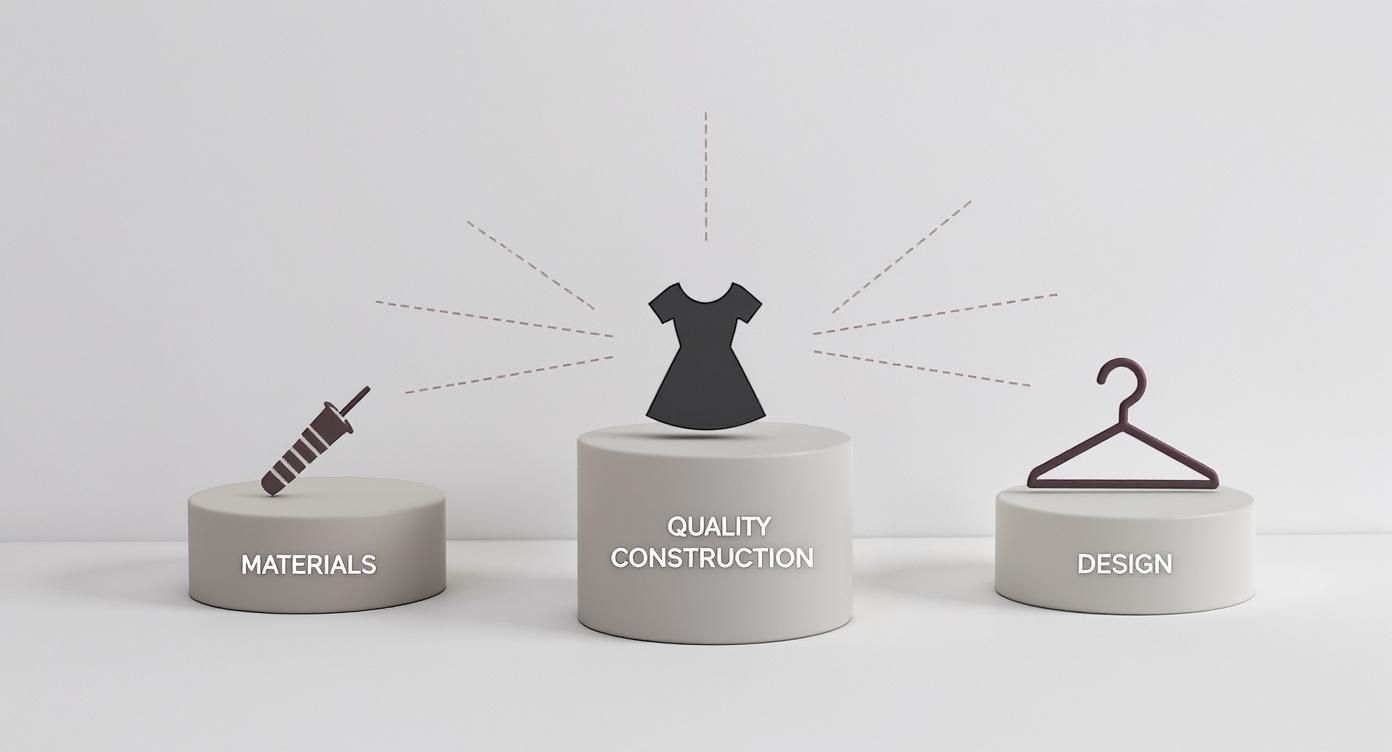
As you can see, great design and careful construction are essential, but it all starts with the fabric. That choice is the foundation for everything else.
Natural Fibers: The Gold Standard
Coming from plants and animals, natural fibers are the heart and soul of high-end clothing. They breathe, feel incredible, and have a certain life to them that synthetics just can't replicate. It's why they are the cornerstone of the collections we hand-pick at Cedar & Lily Clothier.
- Pima Cotton: This is not your average t-shirt cotton. Its extra-long fibers create a fabric that's noticeably softer, stronger, and far more resistant to pilling. It’s the difference between a shirt that looks tired after a few washes and one that becomes a beloved staple.
- Merino Wool: Forget any memories of itchy, bulky sweaters. Merino wool is a marvel of nature—it's incredibly fine and soft, but it's also a performance fiber. It keeps you perfectly warm when it's cold out and surprisingly cool when it's not, and it naturally resists odors.
- Silk: There’s a reason we’ve treasured silk for centuries. It’s a natural protein fiber known for its quiet strength and unmistakable luminous sheen. A beautifully made silk blouse is a true investment, adding a touch of effortless elegance to anything you pair it with.
- Linen: Born from the flax plant, linen is summer’s best friend. It’s supremely breathable and absorbent, and it has this wonderful quality of getting even softer and more beautiful with every single wash.
These fabrics connect us to a long history of true craftsmanship. It's why brands like Elizabeth Suzann build their entire ethos around using beautiful, natural materials meant to be truly lived in.
Semi-Synthetics and Synthetics, Explained
Now, not all manufactured fibers are bad, but it’s crucial to know the difference between fabrics engineered for a purpose and those created simply to cut costs.
Semi-synthetics like Tencel (also known as lyocell) and Modal actually start from natural sources—usually wood pulp—which are then processed into fiber. These are often celebrated for their sustainable production methods, and they feel amazing. They have a silky-smooth handfeel and a gorgeous drape, often giving you the best of both the natural and synthetic worlds.
On the other hand, you have fully synthetic fibers like polyester, nylon, and acrylic, which are derived from petroleum. While they certainly have their uses—adding durability or wrinkle resistance—they don't breathe well and can trap odors. A garment with a high polyester content is often a tell-tale sign of lower-quality, fast-fashion construction.
A simple trick I always use in-store is the 'scrunch test.' It’s your new best friend for spotting quality on the rack. Just grab a corner of the fabric and crush it in your hand for a few seconds. If it comes out a wrinkled mess, that’s exactly how it will look after you’ve worn it for an hour. A quality wool will spring right back, and a good linen will have a soft, lived-in rumple, not sharp, cheap-looking creases.
How to Spot Superior Craftsmanship and Construction
A beautiful fabric is just the starting point. The real heart of a garment—what makes it hang beautifully, move with you, and last for years—is how it’s put together. You don’t need to be a designer to see the difference between a piece that was rushed through production and one that was made with genuine care.
It’s a bit like being a detective for your own wardrobe. The clues are all right there in the details; you just have to know what you’re looking for. Once you learn to spot them, you'll be able to tell a fleeting trend from a future heirloom before you even head to the fitting room.
This eye for detail isn't just a niche interest anymore—it’s a global expectation. The Asia-Pacific region, for example, now holds about 41% of the women's wear market. This isn't just about buying more clothes; it's about a growing demand for beautifully designed apparel with high-quality finishing, proving craftsmanship is a language understood worldwide.
Inspect the Stitching and Seams
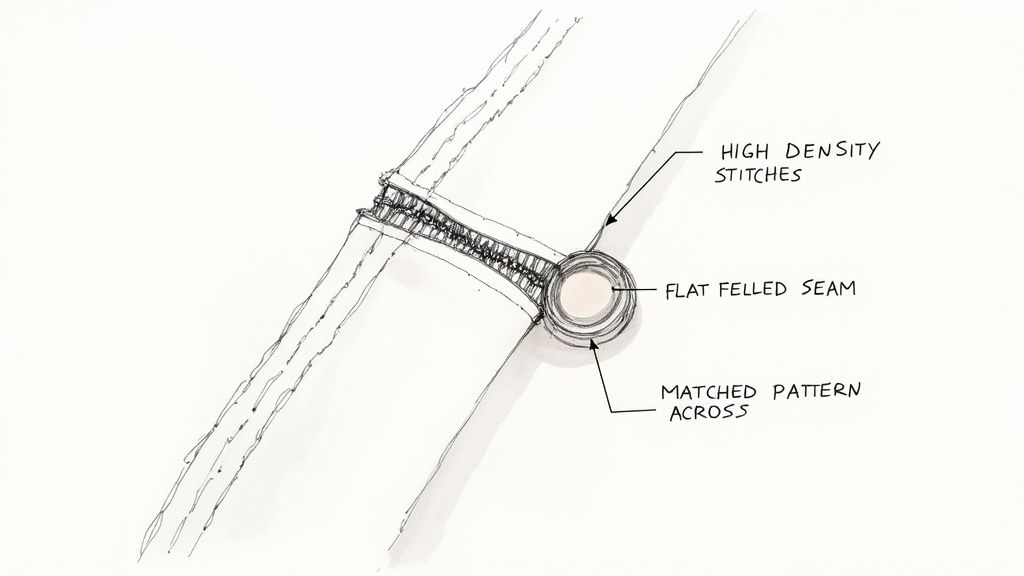
The first place I always look is along the seams. Give the fabric a gentle pull on either side. If you can see daylight or big gaps between the stitches, that’s a red flag. It’s a sign of low stitch density, and that seam will likely be the first thing to go.
A well-made garment will have tight, even stitching with a high number of stitches per inch (SPI). More stitches create a stronger, more resilient seam that won’t pucker or pull apart after a few wears.
Next, flip the garment inside out to see how the seams are finished. This is where you separate the good from the great.
- French Seams: You’ll find these elegant seams on silk blouses and other delicate pieces. The raw edge of the fabric is tucked away and completely enclosed, creating a flawless finish that looks as beautiful on the inside as it does on the outside.
- Flat-Felled Seams: These are the workhorses of the seam world. Found on great denim and sturdy outerwear, this technique involves folding one raw edge under the other and stitching it down flat. The result is an incredibly durable seam with two visible lines of stitching.
- Serged Edges: This is the go-to for fast fashion. A machine loops thread around the raw edge to prevent fraying. It does the job, but it’s a shortcut—a clear sign of speed over meticulous construction.
If you’re curious to learn more, understanding the foundational essential sewing techniques for high-quality garments can give you an even deeper appreciation for true craftsmanship.
Check for Pattern Matching
This is a dead giveaway. If a piece has a pattern—stripes, plaids, florals, anything—look at how it lines up at the seams. On a thoughtfully constructed garment, the pattern will match up almost perfectly across the shoulders, down the side seams, and along the front placket.
Aligning patterns takes more fabric and much more time during the cutting process, so it’s one of the first things manufacturers skip to cut costs. A blazer with a perfectly aligned plaid isn’t just a happy accident; it’s a deliberate choice and a clear hallmark of quality women's clothing brands that care about the finished product.
A quick glance at the side seam of a striped shirt can tell you everything you need to know about the brand's commitment to quality. If the stripes don't line up, the brand chose to cut corners.
Evaluate the Hardware
Finally, don’t overlook the supporting actors: the buttons, zippers, and clasps. These little details say a lot about a brand's investment in their pieces. Quality hardware feels substantial and works smoothly.
Look for zippers from trusted names like YKK, known for their durability. Buttons should feel secure, not wobbly, and are often sewn with a thread shank—that little bit of space between the button and the fabric that makes it easier to fasten. It’s a small touch that makes a world of difference.
Finding Your Perfect Fit and Why It Matters Most
You could be wearing the most beautifully made garment, cut from the most luxurious fabric in the world, but if the fit is off, it just looks… cheap. Fit is that invisible magic that takes clothing from something you just have on your body to a true expression of your confidence. It's the silent detail that broadcasts your personal style and turns a nice outfit into an unforgettable one.
A perfect fit doesn’t mean your clothes have to be tight. Not at all. It simply means the garment is beautifully proportioned to your body. So many of us get hung up on the number sewn into the tag, but let’s be honest—sizing is all over the place from brand to brand. The only numbers that truly matter are your own measurements. Knowing your bust, waist, and hip is the real first step to shopping smarter for quality pieces you’ll love.
Decoding Key Fit Points
When you’re trying something on, there are a few key spots that tell the whole story of how a piece was designed to hang. If you learn to look for these, you can tell almost instantly if a garment is right for you or if it’s a job for your tailor.
- Jackets and Blazers: The seam at the shoulder needs to sit right where your own shoulder ends. No exceptions. If it’s drooping down your arm, it's too big. If it’s pulling or riding up, it’s too small. This is the single most important fit point on any blazer.
- Trousers: You’re looking for a smooth, clean line from your hip all the way down. The "break"—where the hem of the pant hits your shoe—is a personal style choice, but you should never see fabric pulling tight across your thighs or seat.
- Dresses: A well-fitting dress should just skim your body. It shouldn't pull or create strange wrinkles, especially across the bust and hips. Pay attention to the waistline, too; for the most flattering look, it should sit at your natural waist.
Learning how clothes should fit your unique body is a skill worth mastering. For a deeper dive, our guide on how to dress for your body type has specific advice to help you play up your best features.
The Transformative Power of Tailoring
Let’s be real: almost no one can buy something straight off the rack and have it fit like it was made for them. That’s where a great tailor becomes your wardrobe’s secret weapon. Small tweaks—hemming a pair of pants to the perfect length or taking in the waist of a dress just a touch—can make an off-the-rack piece look completely custom. It’s a small investment that pays off big time in how you look and feel.
At Cedar & Lily Clothier, we believe the right fit is everything. Our concierge service is here to take the guesswork out of the equation. We help you find brands that work for your body and give you the personalized advice you need to feel absolutely spectacular in every single piece.
The Smart Economics of Cost-Per-Wear
One of the biggest shifts I see in smart, stylish women is when they stop looking at the price tag and start thinking about long-term value. It’s a complete game-changer for your closet and your wallet.
The secret? A simple little metric called Cost-Per-Wear (CPW).
It’s an easy calculation that reframes everything you thought you knew about a “bargain.” Here’s the formula: Total Price / Number of Times Worn = Cost-Per-Wear.
Let’s put it into perspective. You see a trendy, fun top for $50. It feels like a steal, right? But what happens when it shrinks, fades, or loses its shape after just one season? If you get ten wears out of it, your CPW is $5.00.
Now, imagine a timeless, beautifully constructed silk blouse for $200. It feels like a much bigger investment upfront. But because it’s a classic, you wear it 20 times a year for the next five years. That’s 100 wears in total, bringing the CPW down to a mere $2.00.
Suddenly, the more expensive piece is the smarter financial choice by a long shot.
Cost-Per-Wear Fast Fashion vs. Quality Investment
When you crunch the numbers, the argument for investing in quality women's clothing brands becomes crystal clear. A higher initial price often leads to massive savings over the life of the garment.
Let's look at a side-by-side comparison.
| Metric | Fast-Fashion Dress | Quality Brand Dress |
|---|---|---|
| Initial Price | $60 | $240 |
| Wears Per Year | 10 | 25 |
| Lifespan | 1 Year (10 total wears) | 4+ Years (100+ total wears) |
| Cost-Per-Wear | $6.00 | $2.40 |
The math doesn't lie. The quality dress, while four times the initial price, ends up being less than half the cost every time you wear it.
This way of thinking is catching on. As more of us shop online, we’re getting better at seeking out real, lasting value. In fact, women’s apparel now accounts for about 69% of all fashion e-commerce revenue, and a growing number of us are happy to pay more for brands that promise durability and ethical practices. You can find more fascinating figures in these global apparel industry statistics on UniformMarket.com.
Investing in fewer, better pieces doesn't just save you money; it simplifies your life. You build a reliable collection of items you truly love to wear, reducing closet clutter and decision fatigue.
This philosophy is the heart and soul of a truly functional, beautiful wardrobe. Instead of a revolving door of disposable clothes, you’re curating a collection of trusted friends you can always count on. If you're ready to embrace this "buy less, but better" mindset, learning how to build a capsule wardrobe is the perfect next step.
4. Caring For Your Investment: A Guide to Garment Longevity
So, you’ve invested in beautiful, well-made pieces from quality women's clothing brands. That’s the first step to a truly fantastic wardrobe. But the second step is just as critical: knowing how to care for them.
Proper garment care is what elevates a great purchase into a beloved, long-lasting part of your story. It’s how you protect that initial investment and ensure its beauty holds up for years, not just a season. Think of it this way: you wouldn't buy a luxury car and then skip the oil changes, would you? The same idea applies to your clothing.
Meticulous care protects the integrity of the fabric, keeps the fit just right, and ensures colors stay as vibrant as the day you brought them home. It’s the secret to maximizing that all-important cost-per-wear.
Smart Washing and Drying Habits
The care label inside your garment is its personal instruction manual—always, always give it a read first. That said, there are a few universal rules that can help almost everything in your closet live a longer, happier life.
One of the biggest game-changers is simply washing things less often. Items like denim or a great wool blazer don't need a full cleaning after every single wear. When it is time for a wash, reach for a gentle, pH-neutral detergent and stick to a cold water cycle. This is not only a win for the environment, but it dramatically reduces fading and stops delicate fibers from shrinking or breaking down.
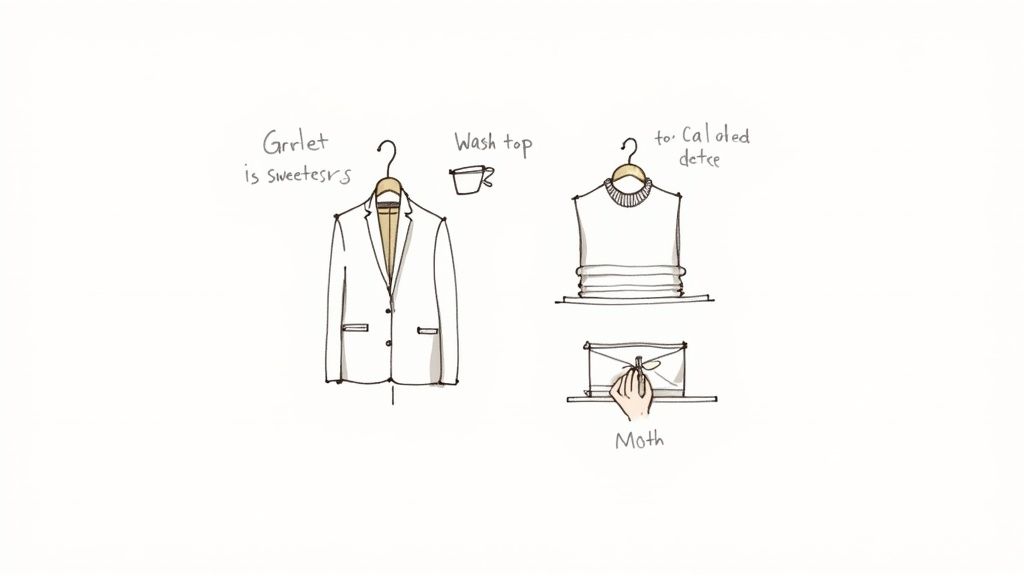
Pro Tip: Heat is the enemy of longevity. Avoid the high heat of a machine dryer whenever possible. Lay your sweaters flat to dry to prevent them from stretching out, and hang dresses, blouses, and trousers on a line or rack to preserve their shape and elasticity.
Proper Storage Is Key
Believe it or not, how you store your clothes is just as important as how you wash them. Jamming everything into an overstuffed closet is a recipe for permanent wrinkles, strained seams, and sad-looking clothes. A little organization goes a long way.
- Fold Your Sweaters: This is a big one. Never, ever hang heavy knits like cashmere or merino wool. The sheer weight of the garment will pull on the fibers, causing the shoulders to stretch and warp over time. For more specific advice, our guide on how to care for cashmere has everything you need.
- Use Quality Hangers: Ditch the flimsy wire hangers from the dry cleaner. Instead, opt for sturdy wooden or soft padded ones. They provide much better support for jackets, blazers, and blouses, helping them maintain their beautiful, intended shape.
- Protect from Pests: When you’re putting away natural fibers for the season, tuck in a few cedar blocks or lavender sachets. They’re a lovely, natural way to repel moths without resorting to harsh chemicals.
Taking the time for proper storage is one of the easiest ways to keep your favorite pieces in pristine condition. You can even dive into effective wrinkle prevention strategies with a few smart closet tricks. These simple habits aren't chores—they're how you actively protect your investment.
A Few More Questions About Quality Clothing
Stepping into the world of well-made clothing can feel like learning a new language. You start noticing things you never did before, which naturally brings up some questions. Here are a few we hear all the time, along with some straight-to-the-point answers.
How Can I Spot a Genuinely High-Quality Brand Online?
Shopping from a screen requires you to become a bit of a detective. It's easy to get swept up in the beautiful photos, but the real clues are in the details. Go straight to the product description. Quality women's clothing brands are proud of their materials and will tell you exactly what you're getting (like "100% Pima Cotton," not just "cotton blend").
Next, use that zoom feature like it's your best friend. Get up close and personal with the seams. Do they look straight and tight? If there's a pattern, does it line up where the fabric meets? Finally, scroll down to the customer reviews. This is where you'll find the unfiltered truth about how a piece really fits, feels, and—most importantly—how it holds up after a few wears and washes.
A brand's transparency is your best guide. If they're being cagey about the fabric composition or using fuzzy terms like "luxury blend," it's often a red flag. True quality is something a brand can't wait to show off, not something they hide.
Is It Really Better to Own a Few Great Pieces Than a Closet Full of Cheaper Clothes?
Without a doubt, yes. A thoughtfully curated wardrobe with fewer, better items will always win out over a closet bursting with fast fashion. Think about it: you'll spend less time staring at your clothes wondering what to wear, you’ll be able to create more stylish and cohesive outfits, and your favorite pieces will actually look just as good a year from now.
This isn’t just about minimalism; it's a strategic shift. You’re investing in a reliable collection of clothes you genuinely love and feel amazing in. In the long run, this saves you money, cuts down on closet clutter, and is a much kinder choice for the planet.
Ready to build a wardrobe you can count on? At Cedar & Lily Clothier, we’ve done the detective work for you, curating a collection of beautiful, well-made pieces designed to be loved for years. Explore our new arrivals today and feel the difference for yourself.