


The secret to keeping your cashmere looking and feeling incredible lies in how you wash it. The goal is always gentle handling to protect those delicate fibers. My go-to recommendation? Always, always hand wash in cool water with a pH-neutral detergent. This is the single best way to preserve the cloud-like softness and perfect shape of your favorite pieces.
Whatever you do, keep your regular laundry detergent far away and never, ever twist or wring the fabric.
The Right Way to Wash Your Cashmere
I get it—washing a piece of cashmere for the first time can feel a little nerve-wracking. But it’s actually a simple, almost meditative ritual once you know the steps. It’s the difference between a sweater that lasts a season and one that becomes a treasured part of your wardrobe for years.
The biggest mistake I see is improper washing. It’s the fastest way to ruin a beautiful garment. A recent survey found that a staggering 42% of cashmere owners have accidentally shrunk or warped their sweaters. The good news? That same study showed that hand washing in cool water with a wool-safe soap can slash the risk of damage by up to 75%. It really is the safest bet.
Choosing Your Cleansing Agent
Your everyday laundry detergent is public enemy number one for cashmere. Those formulas are packed with enzymes designed to break down protein-based stains (think grass or food), but cashmere fibers are also protein. Using them essentially strips the life out of the yarn, leaving it rough, brittle, and dull.
Instead, reach for one of these much gentler options:
- Specialized Cashmere or Wool Wash: This is your best bet. These soaps are perfectly pH-balanced to clean delicate protein fibers without causing any harm.
- Baby Shampoo: If you're in a pinch, a high-quality, mild baby shampoo is a fantastic substitute. It's gentle enough to clean effectively without stripping the natural oils from the fibers.
- Mild Soap Flakes: These can work, but you have to be careful. Make sure they are completely dissolved in the water first, as any lingering solid bits can cling to the fabric and be difficult to rinse out.
The Gentle Art of Hand Washing
This is where you have total control, ensuring your piece is treated with the care it deserves.
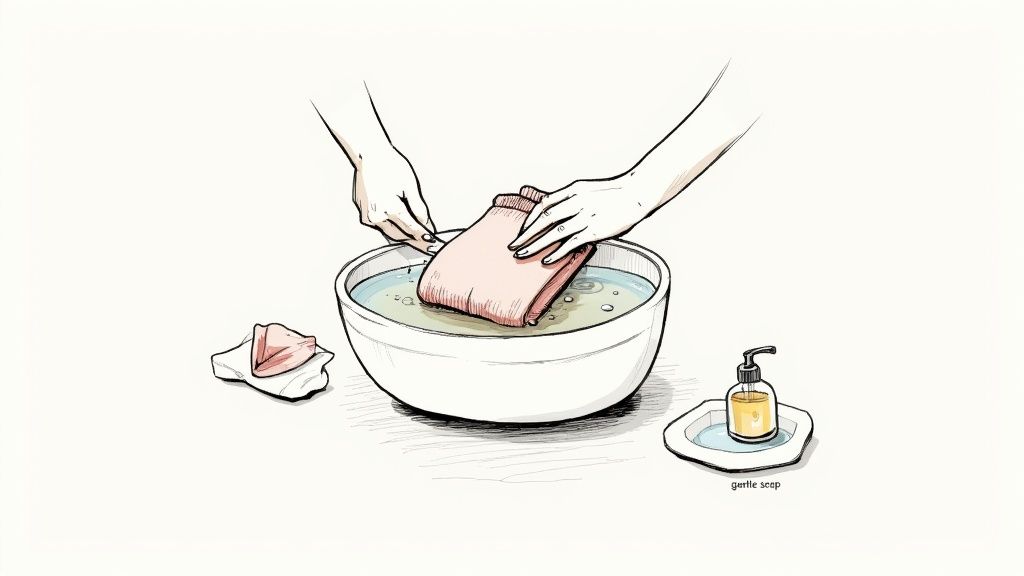
First, fill a clean sink or basin with cool to lukewarm water—think under 30°C (86°F). Add just a small capful of your gentle detergent and swish it around to create some soft suds.
Next, turn your garment inside out. This helps protect the outer surface from any friction. Something like our classic FRAME Cashmere Gathered Sweater will benefit from this extra bit of care. Gently submerge it in the water, and softly squeeze the suds through the fabric. Don't scrub or rub it!
Let it soak for about 10-15 minutes, but no longer.
For a quick overview, this table breaks down the key differences between washing methods.
Cashmere Washing At a Glance
| Care Step | Hand Washing (Recommended) | Machine Washing (Use with Caution) |
|---|---|---|
| Water Temp | Cool to lukewarm (under 30°C / 86°F) | Cold water only |
| Detergent | Specialized wool wash or baby shampoo | Specialized wool wash only |
| Technique | Gentle squeezing and soaking (10-15 mins) | Use a mesh laundry bag; no exceptions |
| Machine Cycle | N/A | Delicate, wool, or hand-wash cycle |
| Spin Speed | N/A (gently press out water) | Lowest possible spin speed |
| Risk Level | Very low; preserves fiber integrity | Moderate to high; risk of shrinking/stretching |
Ultimately, hand washing gives you the control needed to protect your investment for years to come.
When a Machine Is Your Only Option
Life happens, and sometimes the machine is the only realistic choice. If you absolutely must use one, make sure it’s a high-efficiency, front-loading model. The agitator in a traditional top-loader is far too aggressive for cashmere.
Key Takeaway: You must place your cashmere inside a mesh laundry bag. This isn't just a suggestion—it's essential. It prevents the delicate knit from catching on the drum and helps minimize the stretching that can happen during the spin cycle.
Choose the most delicate cycle your machine offers (it might be called "wool," "delicate," or "hand wash"), use cold water, and set the spin speed to the lowest possible setting. The idea is to mimic hand washing as much as possible. It’s similar to the logic behind knowing when you can steam clean a wool rug versus using a harsher method—delicate natural fibers demand a gentle touch.
Drying and Reshaping Your Garments
This next part is, in my opinion, the most critical moment in cashmere care. How you handle your sweater immediately after washing will determine if it returns to its perfect, cozy shape or ends up a stretched-out, misshapen mess.
Let's get two things straight right away: never put cashmere in a machine dryer and never hang it to dry.
The intense, tumbling heat from a dryer is a death sentence for those delicate fibers. It’ll cause irreversible shrinkage and leave your beautiful sweater feeling harsh and brittle. Hanging it is just as bad. The weight of the water will pull the entire garment downward, stretching the knit permanently and leaving those telltale distorted bumps on the shoulders.
The Right Way to Remove Excess Water
Your first move is to gently get as much moisture out as possible, but without any harsh squeezing or twisting. Wringing out a cashmere sweater is a surefire way to break the delicate fibers and completely ruin its silhouette.
Here’s the trick I swear by: lay a clean, thick towel on a flat surface. Your floor or a countertop works great. Place your damp cashmere garment on top and smooth it out. Then, starting from the bottom hem, gently roll the towel up with the sweater inside, kind of like you're making a sushi roll.
Press down firmly on the rolled-up towel. The towel acts like a giant sponge, absorbing a ton of the excess water without putting any stress on the fibers. When you carefully unroll it, your sweater will be just damp, not sopping wet.
Laying Flat and Perfecting the Shape
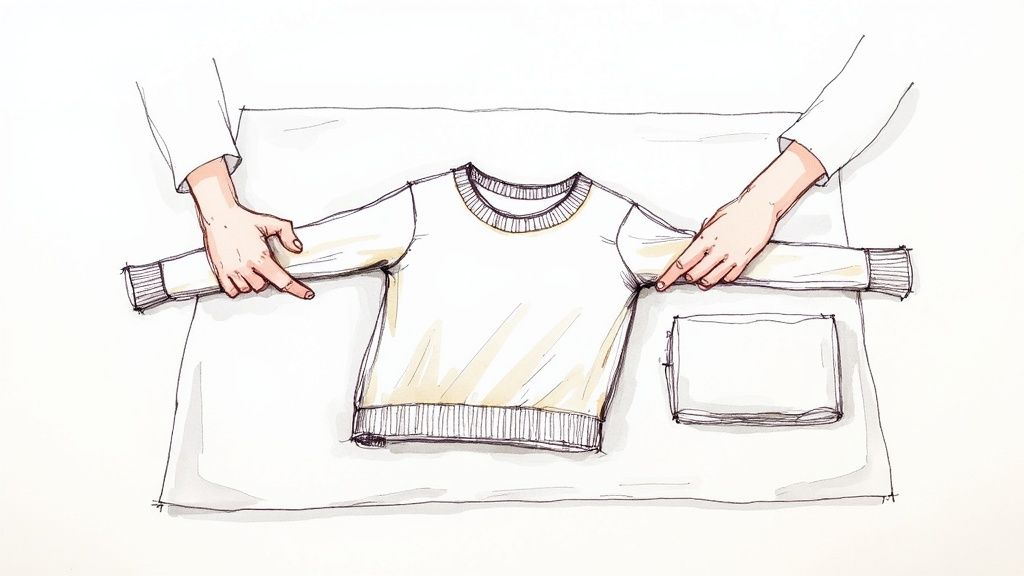
Now for the final, and most important, stage. Grab a fresh, dry towel or a mesh drying rack and lay your damp sweater out flat. Make sure you pick a spot that’s away from direct sunlight or any heat sources like a radiator or vent—those can cause yellowing or make it dry unevenly.
This is your chance to play stylist and guide the garment back to its original dimensions while it's still damp.
- Align the Seams: Gently pull the side seams and the seams along the sleeves so they’re straight and true.
- Smooth the Collar and Cuffs: Pat the collar, cuffs, and hem back into their proper shape. Make sure they’re lying flat and not curled under.
- Adjust the Body: Gently nudge and pat the torso and sleeves to match their intended length and width.
This gentle reshaping process is the real secret to making a sweater look brand new after every single wash. It ensures every part of the garment dries exactly as it should, preventing any weird puckering or stretching.
Now, just let it air dry completely. This might take 24-48 hours, so be patient. I recommend flipping it over about halfway through to make sure both sides dry evenly. Whatever you do, don't try to speed up the process. Patience here is what preserves the life and absolute luxury of your cashmere.
Keeping Cashmere Perfect Between Washes
The secret to truly beautiful cashmere isn't just about what happens on laundry day. It’s the little things you do between washes that keep your favorite pieces looking immaculate and feeling incredibly soft, season after season.
Let's talk about pilling—those tiny fuzzballs that pop up in high-friction spots like under the arms or where your purse strap rubs. It’s easy to think this means your sweater is low-quality, but that’s a common misconception. Pilling is just a natural characteristic of fine cashmere, where the shorter, delicate fibers twist together with wear.
The key is simply knowing how to manage it gently and consistently.
Removing Pills and Restoring Smoothness
When you spot those little pills forming, it’s time for some light maintenance. Whatever you do, never pull them off with your fingers. It’s tempting, I know, but you risk yanking out the delicate fibers and eventually creating a thin spot or even a hole.
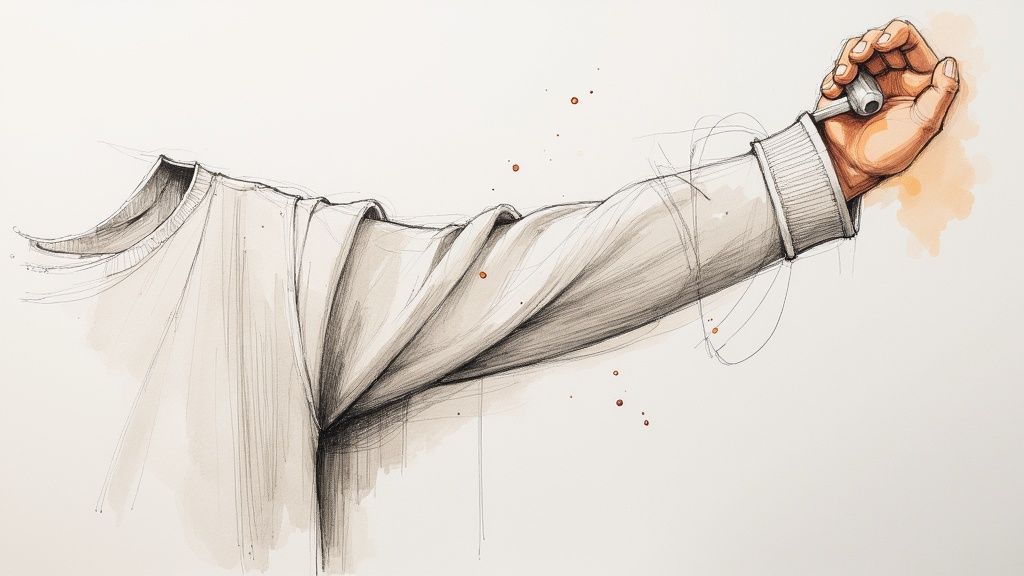
Instead, lay your garment on a clean, flat surface. The safest and most effective tools for the job are a specialized cashmere comb or a battery-operated fabric shaver.
- Cashmere Comb: Hold a small section of the fabric taut with one hand. With the other, gently glide the comb across the surface in one direction. You'll see the pills lift away and gather neatly on the teeth.
- Fabric Shaver: Move the shaver lightly over the pilled areas using small, circular motions. The trick is to avoid pressing down too hard, which could snag the yarn.
This quick grooming session instantly brings back that smooth, luxurious finish. A beautifully maintained piece, like the timeless Brodie Cashmere Maisie Stripe Crew Neck, really shines when it's kept smooth and pill-free.
A common myth is that pilling stops after a few washes. While it does lessen significantly as the loosest fibers work their way out, occasional de-pilling will always be part of a good care routine for cashmere.
First Aid for Snags and Spills
Life happens. Even the most carefully worn sweaters can run into minor mishaps. Acting quickly is the best way to keep a small issue from becoming a real problem.
If you catch a snagged thread, resist the urge to snip it off. Cutting it can cause the knit to unravel. Your best bet is to use a tiny crochet hook or a needle to gently pull the snagged loop through to the inside of the sweater, where it will be completely invisible.
For fresh spills, immediate action can make all the difference.
How to Handle Common Stains at Home
- Coffee or Tea: Gently blot the fresh stain with a clean, damp cloth. Never, ever rub—that just pushes the stain deeper into the fibers.
- Makeup: For powder makeup, try tapping it off first before touching it. For a liquid foundation mishap, blot the spot with a cloth dampened with a bit of micellar water or a gentle, oil-free makeup remover.
- Red Wine or Oil: These are the tough ones. Immediately blot the area. For wine, a little club soda can help lift the stain. For oil, sprinkle a bit of cornstarch on the spot to absorb it before it sets.
Think of these as immediate first-aid steps. You'll still want to wash the garment properly soon after. For stubborn or set-in stains, though, it's always best to trust a professional cleaner who specializes in delicate fabrics.
Smart Storage for Long-Lasting Softness
How you put your cashmere away for the season is just as crucial as how you wash and dry it. Think of it as the final, critical step in protecting your investment. Proper storage is your defense against the three biggest threats: pests, moisture, and distortion. It ensures your favorite pieces emerge from their hibernation just as pristine as when you put them away.
The number one rule? Always clean your cashmere before storing it. This is non-negotiable, especially for the off-season. Even tiny, invisible traces of skin cells, perfume, or food can be a feast for clothes moths. They aren't actually drawn to the cashmere fiber itself, but to the organic stuff on it. A clean sweater is an invisible sweater to them.
Choosing the Right Storage Environment
Where you store your garments can make or break their long-term health. So many people reach for those big plastic bins, but that's a common mistake that can lead to irreversible damage.
Plastic containers trap moisture, which is a huge problem if your storage area has any humidity fluctuations. This trapped moisture can cause fibers to yellow over time and can even lead to mildew. It's a surprisingly common issue—some studies show that as many as 65% of cashmere owners store their knits improperly in plastic or damp areas. The same research highlights that simply switching to breathable storage can slash moth damage by a staggering 80%.
Instead of plastic, reach for solutions that let the fibers breathe:
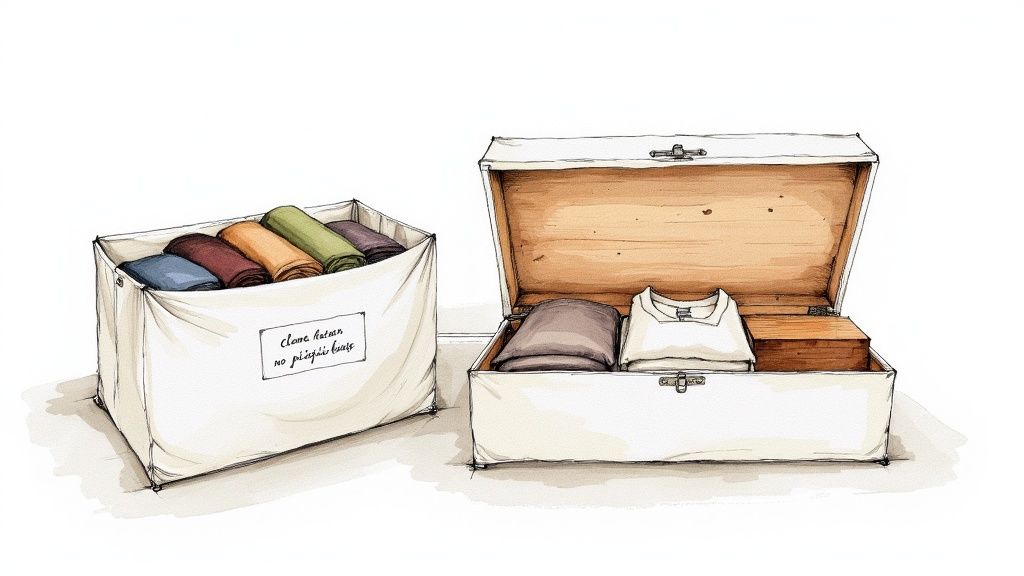
- Breathable Cotton Storage Bags: These are perfect. They keep out dust and pests while allowing for proper air circulation.
- Acid-Free Tissue Paper: Tuck sheets of acid-free tissue between your folded sweaters. It helps wick away any stray moisture and prevents color from transferring between garments.
- Cedar Chests or Drawers: Cedar is nature's moth repellent. It's a classic for a reason and leaves your cashmere with a fresh, clean scent.
A quick word of warning: never store your cashmere in a cardboard box long-term. The acids in the cardboard can actually leach into the fabric and cause yellowing, and some glues used in boxes can attract pests.
The Perfect Fold to Prevent Wrinkles
Hanging a cashmere sweater is the ultimate crime against knitwear. The weight of the garment, even when it’s perfectly dry, will stretch out the delicate knit. You'll end up with those sad, pointy bumps on the shoulders and a distorted shape. Folding is always the way to go.
To avoid deep-set creases, use a gentle folding method. Start by laying the sweater face down on a clean, flat surface. Fold each arm straight back across the body, then simply fold the sweater in half from the bottom hem up to the shoulders. This technique creates soft, gentle folds instead of sharp, pressed-in lines.
For travel, a piece like a versatile cashmere travel wrap can be gently rolled instead of folded to save space and minimize any wrinkling on the go.
Ultimately, following the best practices for storing clothes long term is key, reinforcing the need for a clean, cool, and dark environment. When you pair the right folding technique with a breathable, pest-repelling storage solution, your cashmere will emerge from its seasonal rest as soft and perfectly shaped as the day you put it away.
Knowing When to Call a Professional
Knowing how to properly care for your cashmere at home is wonderful, but sometimes, you just have to call in the experts. Being able to spot the difference between a minor spill you can handle and a potential catastrophe is the secret to keeping your most treasured pieces looking their best. A professional dry cleaner has access to specialized solvents and cleaning techniques that we simply can't match at home.
Think of it this way: you wouldn't try to fix a complex engine problem yourself. For certain pieces, the same logic applies. Take a structured cashmere blazer or coat, for instance. It relies on hidden tailoring and interfacing to hold that sharp, elegant silhouette. Dunking it in water, no matter how carefully, will wreck that internal structure, leaving you with a limp, shapeless mess.
When to Seek Expert Help
Some stains and garment types are immediate red flags. Don’t even think about a DIY solution for these—take them straight to a trusted cleaner who understands luxury fibers.
- Complex Stains: We're talking about ink, oil-based stains, red wine, and mystery spots that have already set. A pro can spot-treat these with incredible precision, removing the stain without harming the delicate fibers around it.
- Structured Garments: Anything with shoulder pads, interfacing, or a tailored lining (like a beautiful cashmere coat) absolutely needs professional cleaning to maintain its form.
- Delicate Embellishments: If your sweater has leather trim, beading, sequins, or intricate embroidery, don't risk it. Washing it at home could easily damage the details or cause colors to bleed.
Picking the right professional is just as important as deciding to go in the first place. Always ask if they have specific experience with cashmere. A good cleaner gets it—they'll know exactly how to handle the fiber gently and effectively.
In fact, getting your cashmere professionally cleaned from time to time can seriously extend its lifespan. A survey by the Drycleaning & Laundry Institute found that a surprisingly low 28% of cashmere owners use professional services. But here’s the interesting part: the study noted that professionally cleaned garments kept their signature softness and vibrant color for an average of 8 years, a big jump from the 4-year average for pieces only washed at home. You can see more details from the study at cognitivemarketresearch.com.
It can feel a little nerve-wracking to hand over a piece you love, but for the tough jobs, it’s the smartest move you can make to keep your cashmere beautiful for years to come.
A Few Lingering Cashmere Questions
Even with a solid plan, a few questions always seem to pop up right when you’re standing over the sink with your favorite sweater. It’s completely normal. Let's clear up some of the most common uncertainties so you can care for your cashmere with total confidence.
One of the biggest questions we get is about washing frequency. How often should you really wash cashmere? Unlike your everyday t-shirts, cashmere isn't meant to be washed after every single wear. In fact, washing it too often strips away its beautiful natural oils, leaving it less soft.
A good rule of thumb is to wash your sweaters after every three to four wears, or a bit sooner if it’s picked up a stain or just doesn't feel fresh. Between washes, just letting a piece air out for a day is usually all it needs.
Can You Iron or Steam Cashmere?
Wrinkles are another frequent concern. Let me be very clear: never let a hot iron directly touch your cashmere. The intense, direct heat is far too harsh and can easily scorch those delicate fibers. If you’re dealing with wrinkles, steaming is a much, much better choice.
Grab a handheld steamer, put it on the lowest heat setting, and hold it several inches away from the fabric. As you gently pass the steam over the wrinkled spots, you'll see them just melt away. No steamer? No problem. Just hang the garment in your bathroom while you take a hot shower. About 20 minutes in the steamy air will help the creases fall out naturally, without any risk of damage.
Our Go-To Trick: If you don't have a steamer, you can use your iron’s steam function. Hover the iron above the garment—never letting it touch—and use short bursts of steam. For a really stubborn crease, place a clean, white cotton cloth over the spot as a protective barrier before lightly pressing.
What Does "Dry Clean Only" on a Cashmere Tag Really Mean?
Seeing "Dry Clean Only" on a cashmere label can feel a little confusing, especially since we almost always recommend hand washing. What gives? Most of the time, that label is just the manufacturer's way of protecting themselves from liability if a piece gets damaged during a DIY wash.
For a simple, unadorned 100% cashmere sweater or scarf, hand washing is almost always safer and gentler than the harsh chemicals used at a dry cleaner. However, if you have a piece that's more structured (like a blazer), has delicate beading or embroidery, or is blended with other tricky fabrics, it's best to trust the professionals. It really comes down to using your best judgment for each individual garment.
At Cedar & Lily Clothier, we believe beautiful pieces deserve the best care. Explore our curated collection of luxury knitwear and timeless essentials, all designed to bring effortless elegance to your wardrobe. Discover your next favorite piece today.