


A favorite leather jacket has just come home from dinner, one sleeve turned inside out and a faint mark near the cuff. It's tempting to hang it up and forget about it until the next occasion. That small pause is exactly where good leather jacket maintenance begins.
A leather jacket doesn't need constant fussing, harsh cleaning, or a rigid calendar. It needs light attention matched to its finish, climate, and frequency of wear. A smooth lambskin jacket, a pebbled hide, and a suede layer won't respond to the same products or routine. The Cleobella Asher Leather Jacket, available through Cedar & Lily Clothier's designer leather jacket edit, deserves care that preserves its shape and finish, not a generic gear checklist.
Table of Contents
- The First Thing to Know About Caring for a Leather Jacket
- Daily and Weekly Habits That Prevent Bigger Problems
- Conditioning on a Schedule That Fits Your Climate
- Spot-Cleaning and Stain Removal Without Ruining the Finish
- Storing and Packing a Leather Jacket the Right Way
- Small Repairs You Can Handle and When to Call a Specialist
- Wear It More, Worry Less A Simple Closing Routine
The First Thing to Know About Caring for a Leather Jacket
Leather is a skin with pores, natural oils, and a finish that develops character over time. Maintenance should preserve suppleness, color depth, and structure, not make the jacket look unnaturally glossy or freshly scrubbed after every wear.
The most important rule is simple: clean only what needs cleaning. Conservation guidance for smooth leather recommends a stepwise approach that starts in a stable environment, removes loose dust with a soft brush directed toward a vacuum nozzle covered in gauze, and uses very light mechanical cleaning only for ground-in dirt. It also cautions against relying on traditional dressings and saddle soap as universal solutions, since residues can contribute to deterioration. This leather-care guidance supports a restrained approach.
Read the jacket before choosing the product
Start by identifying the surface:
- Smooth leather has a relatively even surface and usually tolerates careful wiping with minimal moisture.
- Pebbled leather has a textured grain that can hide dust but still collects residue around seams and folds.
- Suede and nubuck have a brushed nap and need dry tools rather than liquid cleaners or ordinary conditioners.
- Aniline or lightly finished leather shows more of the hide's natural character and can react quickly to moisture, oils, and color changes.
- Pigmented or coated leather has more surface protection, but that doesn't make it suitable for soaking or machine washing.
The care label always takes priority. No leather jacket should go into a washing machine or laundromat, because water and agitation can permanently damage tanned hide. The practical washing guidance for leather and suede jackets recommends gentle surface care instead.
Practical rule: The right routine is consistent, light, and specific to the hide in the closet.
Climate matters just as much. Dry winters and heated interiors can pull moisture from leather, while humid conditions can increase mildew risk and make over-conditioning more troublesome. The most polished wardrobe is easier to maintain when the jacket is treated as a delicate investment piece, not a washable textile.
Daily and Weekly Habits That Prevent Bigger Problems
The best leather jacket maintenance happens immediately after wear, before dust, sweat, lint, and makeup settle into the surface. A few quiet habits after a night out can protect the finish more effectively than an aggressive cleaning session months later.
The after-wear reset
When the jacket comes off, it should receive a quick inspection under good light. The routine is straightforward:
- Brush away surface dust and lint. Use a soft-bristle brush, moving gently across the jacket rather than pressing into the leather. A dry brush lifts grit before it works into the finish.
- Address small marks early. Blot a fresh mark with a clean cloth instead of rubbing it outward. Early, targeted attention reduces the need for deeper stain treatment.
- Empty every pocket. Phones, keys, receipts, and cosmetics add weight and can pull the lining, shoulders, and pocket openings out of shape.
- Use a broad hanger immediately. A padded, shaped, or wooden hanger supports the shoulders. A narrow wire hanger creates pressure points and can distort the silhouette.
- Let the jacket breathe. After heavy wear, leave it on the rack for a day before putting it into a crowded closet or wearing it again.
A jacket shouldn't be compressed against other outerwear while it still holds body heat or indoor odors. Airflow gives the lining and leather time to settle naturally.
A weekly surface check
For smooth finishes, a microfiber cloth that is barely damp can remove light surface residue. The cloth should never be wet enough to leave visible moisture behind. Suede and nubuck should receive a dry brush only, with the nap brushed in its natural direction.
Inspect the collar, cuffs, elbows, and pocket edges. Those areas experience the most contact and movement, so they reveal drying, darkening, loose threads, or early wear first. A jacket that receives this quick review rarely needs dramatic intervention.
For readers who also care for knitwear and other textured wardrobe pieces, the same light-touch discipline applies in this guide to avoiding pilling. The principle is consistent: remove surface trouble gently before it becomes embedded damage.
Conditioning on a Schedule That Fits Your Climate
Conditioner replaces some of the oils leather loses, softens stiff panels, and helps limit drying and cracking. Treat it as a response to the jacket, not a calendar ritual. The right timing depends on the finish, your climate, indoor heating, and how often you wear the piece.
Care guidance commonly places conditioning between three and six months, with some recommendations extending to six to twelve months for jackets worn rarely or kept in a more forgiving environment. A practical leather jacket care guide also emphasizes climate, wear, and exposure over one universal timetable.
A polished aniline jacket bought for occasional dinners needs a lighter routine than a sturdy everyday jacket worn through a dry winter. Dry climates and heated interiors deserve closer checks. Humid conditions usually call for more time between treatments, since excess product can leave residue, weaken the finish, and attract soil. A weekly-worn jacket may need conditioning when it feels stiff or loses flexibility. An occasional jacket may need it only before seasonal wear.
The same climate-aware approach applies to other leather pieces, including leather skinny jeans, which need gentler conditioning than a structured jacket.
A useful decision framework
| Climate / Setting | Worn Weekly | Worn Occasionally |
|---|---|---|
| Dry climate or heavily heated interior | Inspect often and condition when the leather feels stiff or loses flexibility | Check before seasonal wear and condition only if the surface shows dryness |
| Humid climate | Allow more time between treatments and watch for residue or mildew risk | Condition sparingly after inspection, especially before storage |
| Mild, moderate setting | A regular light routine can work well | Occasional care is usually enough when the jacket remains supple |
Test the product first. Apply a tiny amount to an inside seam or concealed hem, then watch how the leather responds. A suitable conditioner should absorb a small drop within minutes without making the area noticeably dark, blotchy, tacky, or stiff. Any color shift or uneven absorption means the product does not suit that finish.
Smooth, aniline, and pigmented leathers respond differently, so one conditioner will not behave identically across your wardrobe. Suede and nubuck need dedicated dry-care and protection products instead of standard liquid conditioner. This practical jacket-care schedule recommends using a small amount, working it evenly into seams and dry areas, and letting the jacket dry fully before storage or wear.
Over-conditioning is poor care. It can clog the surface, dull the finish, and make the jacket collect soil.
Spot-Cleaning and Stain Removal Without Ruining the Finish
A stain is not a reason to reach for the strongest household cleaner. It's a reason to identify the finish and the substance before touching the jacket.
Work on a protected surface with good light. Test every product on a hidden seam first, then wait long enough to check for color transfer, darkening, stiffness, or a change in texture. If the test area changes, stop.
The right first move depends on the mark
| Stain or issue | First move | Caution |
|---|---|---|
| Fresh food or light surface residue on smooth leather | Blot with a clean white cloth, then use a small amount of pH-balanced leather cleaner if the hidden test is safe | Never rub, saturate, or work cleaner into seams |
| Oil or grease | Blot excess without spreading it and seek specialist advice for a visible or set stain | Water can spread oil and create a larger mark |
| Water spot or ring | Gently dampen the full leather panel so the edge blends evenly, then air-dry | Spot-wetting only the ring can leave another edge |
| Dry dirt on suede or nubuck | Use a suede brush or suede eraser in one direction | Never soak the nap |
| Salt line | Wipe with a barely damp cloth and let the surface dry naturally | Repeated treatment can still leave discoloration |
| Ink, foundation, red wine, or unknown dark mark | Stop at blotting and contact a leather specialist | These stains can shift color quickly, especially on unfinished leather |
For smooth leather, a barely damp cloth should be followed by air-drying away from direct heat. Once the area is completely dry, conditioning may be appropriate if the finish passes the hidden test. For suede and nubuck, dry dirt responds to brushing or a suede eraser, but wet treatment can flatten or stain the nap.
Skip dish soap, vinegar, alcohol, bleach, baking soda, and household sprays. These products can strip oils, alter color, or spread the mark into a larger area. Deep scratches, dye transfer, grease, ink, and expensive or lightly pigmented jackets belong with a specialist.
The safest cleaning is minimal and targeted. Conservation practice favors removing loose soil without stretching fine skins or disturbing unstable surfaces, which is why patience often protects a jacket better than a forceful remedy.
Storing and Packing a Leather Jacket the Right Way
A jacket that returns from dinner damp, then disappears into a crowded closet, is already at risk. Store it dry, supported, and with enough air around it to protect its shape and finish.
After wearing it, give it 24 hours to air out before long-term storage. Empty the pockets, close the zippers, and fasten only the lowest snaps so the front stays relaxed. Use a broad, shaped, or padded hanger. Wire hangers place pressure on narrow points and can distort the shoulders of a softly shaped boutique jacket.
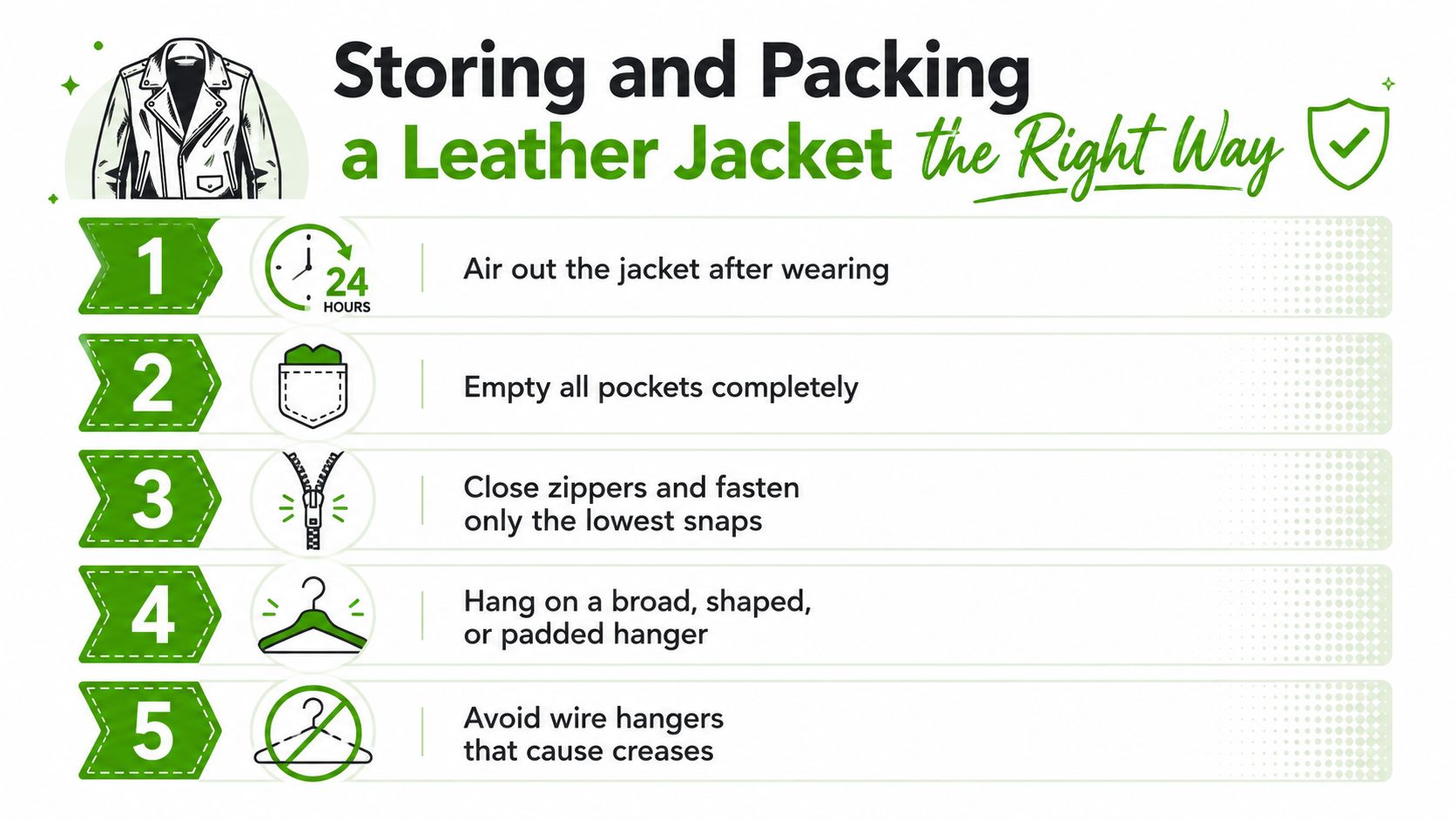
Closet storage needs breathing room
Choose a breathable cotton garment bag, never plastic. Leave space between jackets, and keep the closet cool, dark, and dry, away from radiators, direct sunlight, damp basements, and exterior walls. In humid climates, breathable storage, padded cedar hangers, and a closet with moderate humidity help limit mildew and deterioration, as noted in this humid-climate leather storage guidance. The same breathable-storage logic applies to delicate knitwear. Follow this guide on how to store cashmere sweaters for the parallel approach.
For travel, condition smooth leather only when its finish and wear require it, then let the product dry fully. Fold the jacket loosely with the shoulders aligned, turn the sleeves inward, and place it in a clean garment bag. Soft luggage is kinder than a tightly compressed suitcase. If it shares a case, place it on top, away from shoes and dense clothing.
A structured hanger restores the right shape at your destination. A thick jacket is often better worn than forced into an overfilled carry-on. Unpack it promptly and check for moisture, wrinkles, or color transfer. Acid-free tissue can support the sleeves, but remove it if it becomes damp.
For a broader moving checklist, the guide from Get n Go Removals Melbourne offers useful garment-packing context. Give suede and nubuck an added clean cotton outer layer so the nap does not collect dark dye or lint.
Small Repairs You Can Handle and When to Call a Specialist
A loose button or stiff zipper doesn't automatically require professional attention. The safe approach is to handle only small cosmetic or mechanical fixes and stop before the jacket's structure or finish is at risk.
A missing top button can usually be replaced with the original style, matching thread, and a few careful hand stitches. The work area should be secured, and a thimble helps when the needle meets resistance. A simple fallen hem can be tightened with color-matched polyester thread, but the stitches must stay relaxed. Pulling too firmly creates puckers that are difficult to disguise.
For a stiff zipper, brush away lint from the teeth and apply a tiny amount of zipper lubricant to the teeth only. Work the pull slowly. The surrounding leather shouldn't receive lubricant, since residue can darken or dull the finish.
Know what not to improvise
- Avoid fabric glue and super glue. They can create rigid patches and visible shine.
- Skip staples. They puncture leather and leave weak points.
- Don't use a standard home sewing machine. The needle and feed mechanism can mark or stretch panels.
- Never puncture a panel to solve fit. Structural alterations need a tailor who understands leather.
- Don't force damaged hardware. A warped snap or zipper can tear the surrounding hide.
A leather specialist should handle split seams, torn linings, damaged zipper tape, broken snaps, warped hardware, peeling coating, deep scratches, and stains that have shifted color. A tailor is the better choice when the sleeve, cuff, shoulder, or hem needs structural alteration. This women's tailoring guide explains why fit adjustments should preserve the garment's intended shape.
Take the jacket in while it's still wearable. Small separations enlarge with movement, while fresh damage is easier to color-match and blend. Spare buttons, details about how the damage happened, and a photograph of the issue can help the specialist identify the leather and recommend the right treatment.
Professional care is especially sensible after smoke, mildew, extensive rain exposure, or an unknown stain. The jacket's finish should be identified before anyone applies a cleaner, conditioner, or protective treatment.
Wear It More, Worry Less A Simple Closing Routine
A leather jacket shouldn't spend its life protected from the life it was bought to join. Regular wear lets the jacket settle into the wearer's shape, while thoughtful after-care keeps that character from turning into neglect.
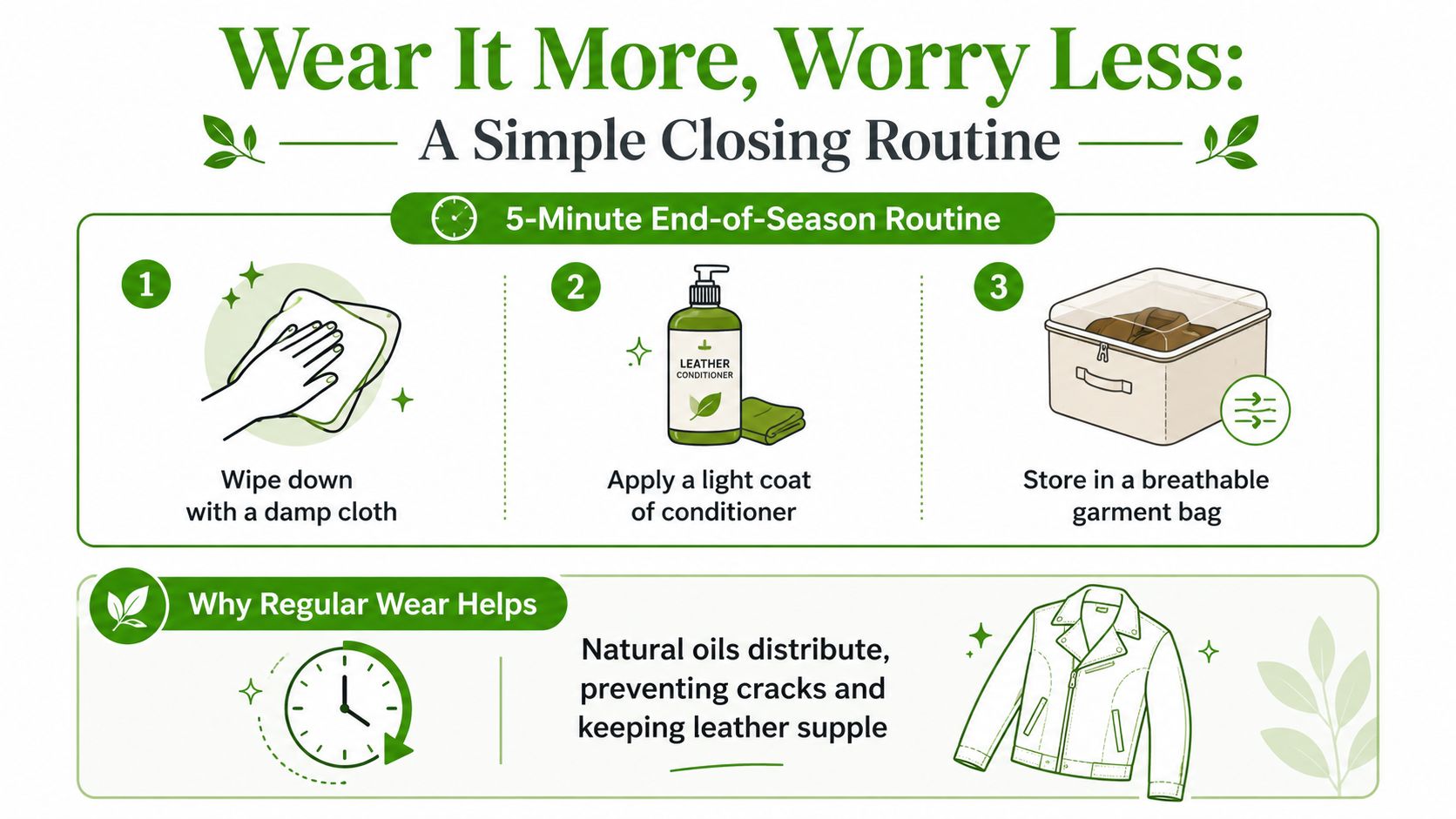
At the end of a season, a short reset is enough:
- Wipe the surface. Use a barely damp cloth on smooth leather, or a dry brush on suede and nubuck.
- Assess the finish. Look for stiffness, dullness, stress at the collar and cuffs, or signs that conditioning is needed.
- Store it properly. Empty the pockets, close zippers, use a broad hanger, and place the jacket in a breathable garment bag with room around it.
A monthly check can stay just as simple. Examine the hanging shape, remove surface dust, consider the climate and recent wear before conditioning, and glance at the closet environment for excess humidity. A soft shell or scarf can also reduce direct contact between the leather and body oils at high-contact points such as the collar and cuffs.
Heavy-use seasons benefit from rotation. Two jackets can take turns, giving each piece time to rest, recover its shape, and air out between wears. That approach suits a real wardrobe better than trying to preserve one jacket through constant cleaning.
The reward is practical. A well-kept leather jacket becomes the layer that works on a transitional morning, over a dress for dinner, or with denim for a last-minute weekend. The Cleobella Asher Leather Jacket offers the kind of polished outerwear that can move through those occasions, provided its care routine respects the leather rather than overworking it.
The lasting wardrobe piece is the one that gets worn, aired, checked, and stored with intention.
Cedar & Lily Clothier offers curated women's outerwear, including the Cleobella Asher Leather Jacket, along with fit guidance for building a polished work-to-weekend wardrobe. Visit the Utica Square boutique in Tulsa or the downtown Jenks location to see the leather and fit in person, or shop Cedar & Lily Clothier online and reach out for styling help.