

If you want to prevent pilling, the secret is simple: reduce friction and use gentle care.
This means turning delicate garments inside out before washing, always choosing a gentle cycle, and skipping the high-heat tumble dryer in favor of air-drying. It also means being mindful of things like a crossbody bag or a rough car seatbelt rubbing against your clothes all day.
Why Your Favorite Sweater Is Pilling
Have you ever wondered why that gorgeous new sweater starts to look a little fuzzy and worn after just a few wears? The culprit is pilling—those tiny, annoying balls of fuzz that pop up on the surface.
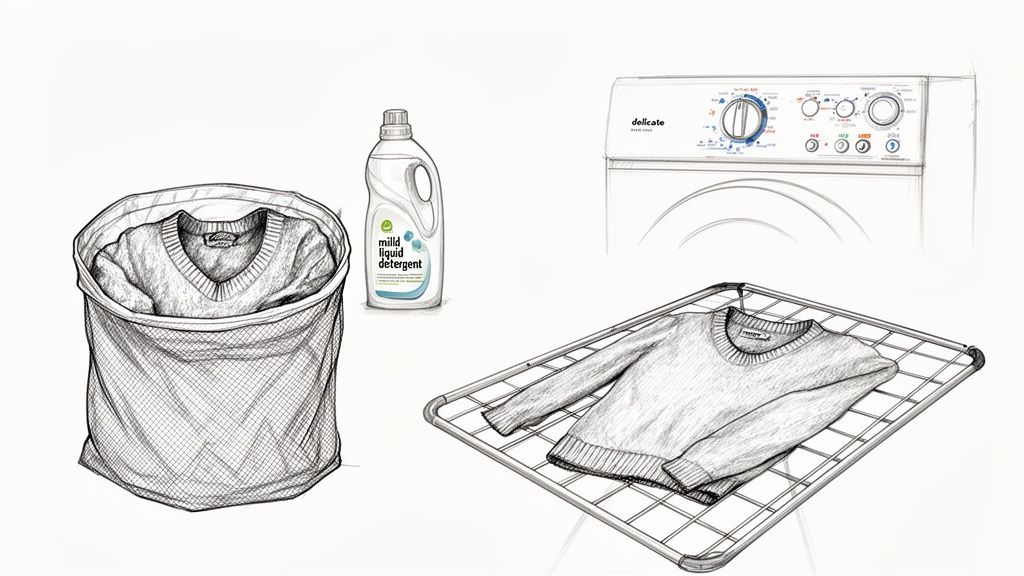
Pilling happens when the short or broken fibers in a fabric get tangled together, almost always because of friction. It's not necessarily a sign of poor quality, but a direct result of the fabric's natural structure and how it's handled. Everyday life, from a purse strap rubbing on your shoulder to sitting in a textured office chair, can speed up the process by breaking down those fibers and causing them to knot up.
The Science Behind Those Fuzzballs
Whether or not a garment is destined to pill comes down to a few key things:
- Fiber Length: Fabrics made from long, smooth fibers (like high-quality Pima cotton or merino wool) are far less likely to pill. Shorter fibers have more little ends that can easily work their way to the surface and get tangled.
- Weave Tightness: A tight, dense weave is your best friend. It holds fibers securely in place, giving them less room to move around and form pills. In contrast, the looser knits found in many of our coziest sweaters practically invite fibers to rub against each other.
- Fabric Blends: Synthetic fibers like polyester and acrylic are notoriously strong. So, when they do pill, the little fuzzballs don't break off. They cling stubbornly to the surface, making them much more noticeable.
This chart gives you a quick visual of how different common fabrics stack up in their potential to pill.
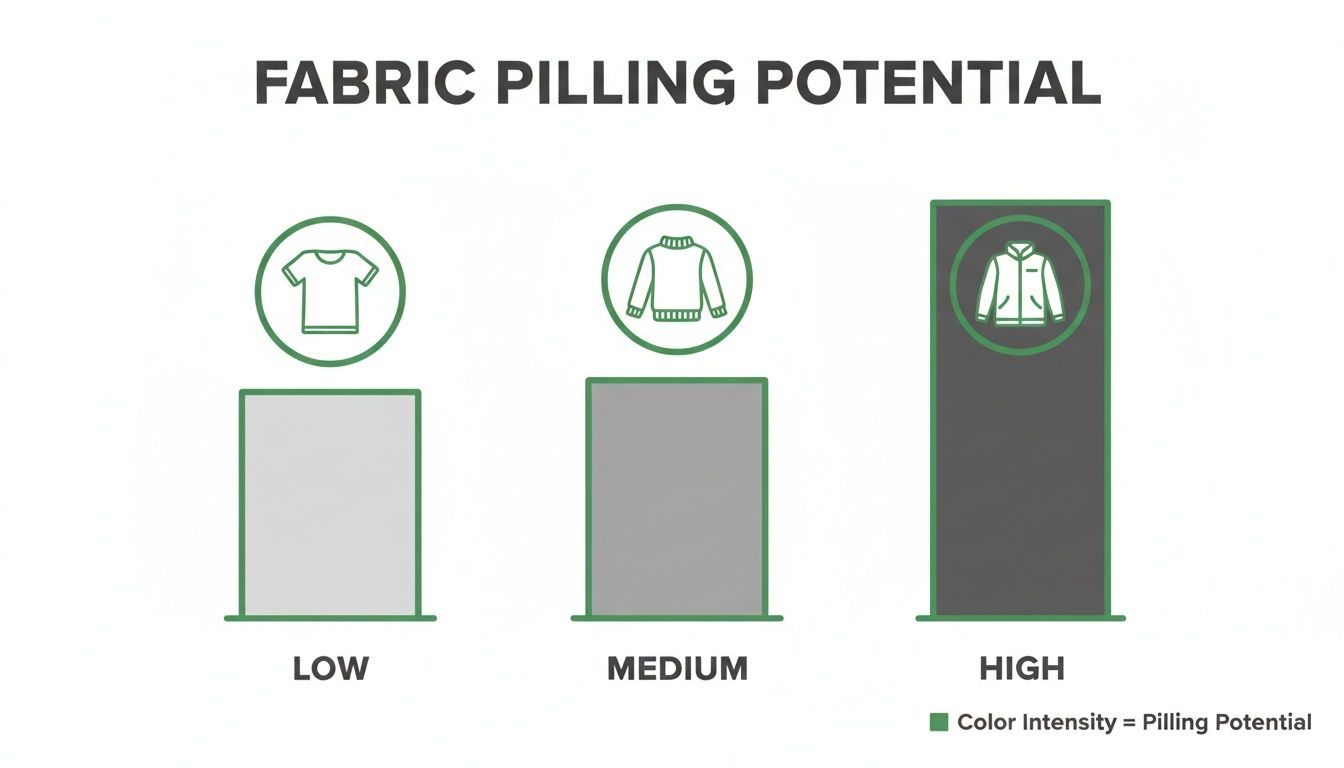
As you can see, a tightly woven cotton t-shirt is a pretty safe bet, while looser synthetic fleeces are almost guaranteed to pill with enough friction.
To help you shop and care for your clothes smarter, here’s a quick guide to some common fabrics and how they behave.
Common Fabrics and Their Pilling Potential
This quick-reference guide can help you understand which materials are more prone to pilling, helping you make informed purchasing and care decisions.
| Fabric Type | Pilling Likelihood | Key Reason |
|---|---|---|
| Wool (especially Lambswool, Angora) | High | Made of short, fuzzy fibers that easily tangle with friction. |
| Polyester & Acrylic Blends | High | Strong synthetic fibers that don't break off easily once they pill. |
| Cotton (Jersey, Fleece) | Medium | Shorter cotton fibers in looser knits can pill with repeated wear and washing. |
| Cashmere | Medium | Very fine, short fibers are delicate and prone to pilling without proper care. |
| Silk & Linen | Low | Composed of long, smooth, strong filament fibers that resist breaking. |
| High-Quality Cottons (Pima, Egyptian) | Low | Made from extra-long staple fibers that stay anchored in the weave. |
Knowing what to expect from a fabric can make all the difference in keeping your wardrobe looking pristine for years to come.
Why Fabric Quality Matters More Than Ever
Once you understand what causes pilling, you can shift from just reacting to it to actively preventing it. This is a huge step, especially when we think about sustainable fashion.
Globally, an astonishing 92 million tonnes of textile waste is generated each year. What’s even more shocking is that of all the fiber used for clothing, 87% is eventually incinerated or sent to a landfill. You can discover more insights about the global impact of textile waste on circ.earth.
For us at Cedar & Lily Clothier, this reality is exactly why we are so passionate about curating pieces from high-quality, durable materials. By choosing well-constructed garments, we help our clients build wardrobes that truly last, breaking the cycle of disposable fashion.
When you invest in clothes designed to resist pilling, they stay beautiful longer. They can take you from a professional meeting to a dinner out without ever showing signs of premature wear. That’s the kind of confidence we want every woman to feel.
Rethinking Your Laundry Routine to Prevent Pilling
Your laundry room can quickly become a battlefield for your most cherished fabrics. A harsh wash cycle is one of the fastest ways to break down delicate fibers, which leads directly to those frustrating little balls of fuzz.
The good news? A few small adjustments to your routine can protect your beautiful clothes and keep them looking pristine for years to come.
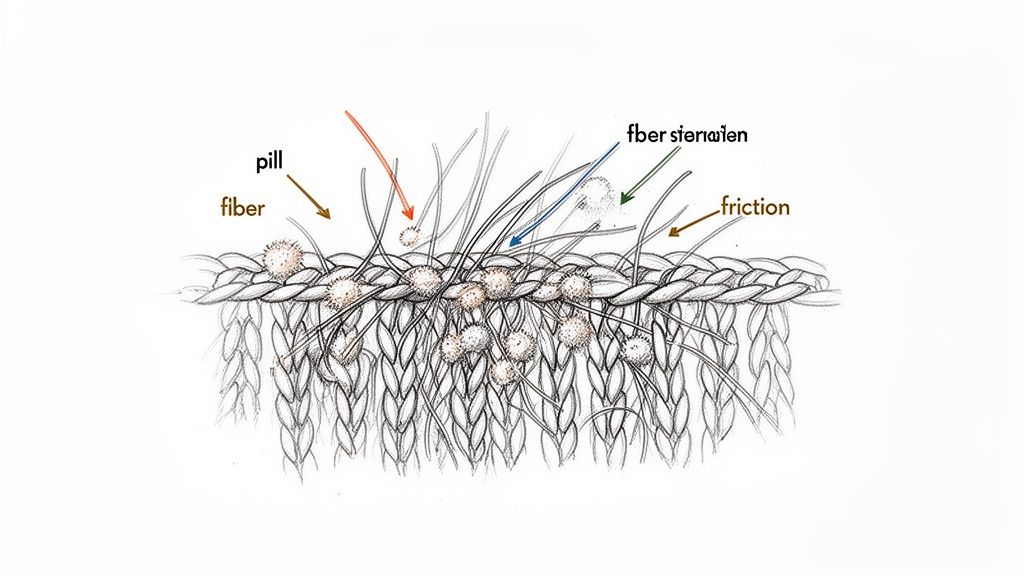
The most effective strategy is simple: reduce surface abrasion. Before you wash anything prone to pilling—think of your favorite sweaters, knits, or even performance wear—always turn it inside out. This one small action shields the "public-facing" side of the garment from rubbing against other clothes and the inside of the machine.
For your most delicate pieces, like a fine-knit merino wool top or a silk-blend blouse, a mesh laundry bag is your best friend. It acts like a protective cocoon, minimizing contact with rougher fabrics like denim or anything with zippers and buttons.
Choosing the Right Tools for the Job
The products and settings you choose are just as critical as your prep work. Think of your detergent as the first line of defense for your fabric’s fibers.
- Detergent Choice: Go for a mild, pH-neutral liquid detergent. Powdered versions can be more abrasive and sometimes don’t fully dissolve in cold water, leaving behind a residue that only increases friction.
- Fabric Softeners: It's best to skip the fabric softener on these garments. While they promise softness, they work by coating fibers with a waxy film. That coating can actually encourage loose fibers to clump together and form pills.
- Water Temperature: Unless you're dealing with serious stains, stick to cold water. Hot water can weaken and damage fibers over time, making them far more likely to break and pill.
Making these simple swaps creates a much gentler environment for your clothes—the key to preventing pilling before it ever starts.
Key Takeaway: A gentle laundry cycle isn't just about cleaning; it's about preserving the integrity of the fabric's weave. Every harsh spin and aggressive detergent is an opportunity for fibers to break and tangle.
Mastering the Wash and Dry Cycles
Once your clothes are prepped and you have the right detergent, it’s time to look at your machine's settings. For any garment you suspect might pill, the delicate or hand-wash cycle should be your go-to. These cycles use slower spin speeds and less agitation, which dramatically cuts down on friction.
But what happens after the wash is even more important. The high heat and constant tumbling of a machine dryer are a recipe for pilling. Heat damages both synthetic and natural fibers, while the tumbling action creates immense friction.
The absolute best solution is to air-dry whenever possible.
- Remove promptly: Take your clothes out of the washer as soon as the cycle ends to keep deep wrinkles from setting in.
- Gently reshape: Lay sweaters and other heavy knits flat on a clean towel or a drying rack. This prevents the weight of the water from stretching the fibers out of shape.
- Hang lighter items: Woven shirts and blouses can be hung on padded hangers to air-dry beautifully.
Skipping the high-heat dryer is probably the single most impactful change you can make. This is especially true for luxurious materials like cashmere, which requires very specific care. If you want to learn more, our comprehensive guide on how to properly care for cashmere garments offers detailed tips to protect your investment pieces.
A little extra time spent air-drying pays off with clothes that look newer for much, much longer.
Smart Habits for Wearing and Storing Your Clothes
We've all been there—you wear your favorite new sweater once, and suddenly those pesky little balls appear. But preventing pilling goes well beyond just what happens in the laundry room. It really comes down to how you wear and store your clothes every single day.
The main enemy here is friction. And often, it comes from places we don't even think about.
Consider that canvas tote bag you love or the strap of your work backpack. As you go about your day, those textures are constantly rubbing against your shoulder, creating thousands of tiny abrasions on the fabric. This is what breaks those delicate fibers and causes them to knot up into pills.
You’ll always see it happen first in high-friction zones, like under your arms or along your sides where your arms swing. Once you start noticing these little interactions, you can start preventing the damage before it begins.
Mindful Wearing to Minimize Friction
Protecting your clothes doesn't mean you have to stop carrying your favorite bag or give up your office chair. It’s all about making a few small, mindful adjustments that can dramatically reduce wear and tear over time.
- Rotate Your Accessories: If you’re wearing a delicate knit, try not to use the same bag with a rough strap every single time. A smooth leather or silky material will glide right over the fabric instead of catching on it.
- Create a Protective Layer: Heading out with a backpack or a crossbody bag? A simple silk scarf or a smooth jacket worn over your sweater can act as a fantastic buffer against that direct friction.
- Give Your Garments a Rest: Just like us, our knitwear needs a break. Letting a sweater rest for a day or two between wears gives the fibers a chance to relax and recover, preventing the cumulative stress that leads to pilling.
Think of these as small habits that interrupt the cycle of constant friction. They’re simple, but they make all the difference in keeping your cherished pieces looking smooth and beautiful.
Pro Tip: Always be wary of unlined outerwear. A gorgeous, but coarse, wool coat worn directly over a fine cashmere sweater can cause serious pilling in just a few hours. A quick check of a jacket's lining can save you a lot of headaches.
Smart Storage for Fiber Preservation
How you put your clothes away at the end of the day is just as critical as how you wear them. When it comes to sweaters and other knits, the golden rule is simple: always fold, never hang.
Hanging a knit garment places all of its weight on the shoulders. This stress slowly but surely stretches and weakens the fibers, making them much more likely to break and pill. It’s also the fastest way to get those dreaded hanger “bumps” and distort the garment’s shape for good.
Folding, on the other hand, keeps the weight evenly distributed and helps your sweater maintain its original form. For those of you with truly special pieces, our guide on how to store cashmere sweaters is filled with expert advice for preserving luxury knits.
For an extra touch of protection, think about storing your most delicate items in breathable garment bags. Adding natural moth repellents like cedar blocks or lavender sachets is another great move—they not only keep pests away but also absorb excess moisture, creating a healthier environment that helps natural fibers stay strong.
How to Safely Remove Pills and Restore Your Fabrics
Even if you follow every laundering and storage tip to the letter, a little pilling is bound to happen, especially on your most-loved knitwear. When those fuzzy little balls show up, knowing how to handle them is the key to bringing your garment back to life without causing any damage.
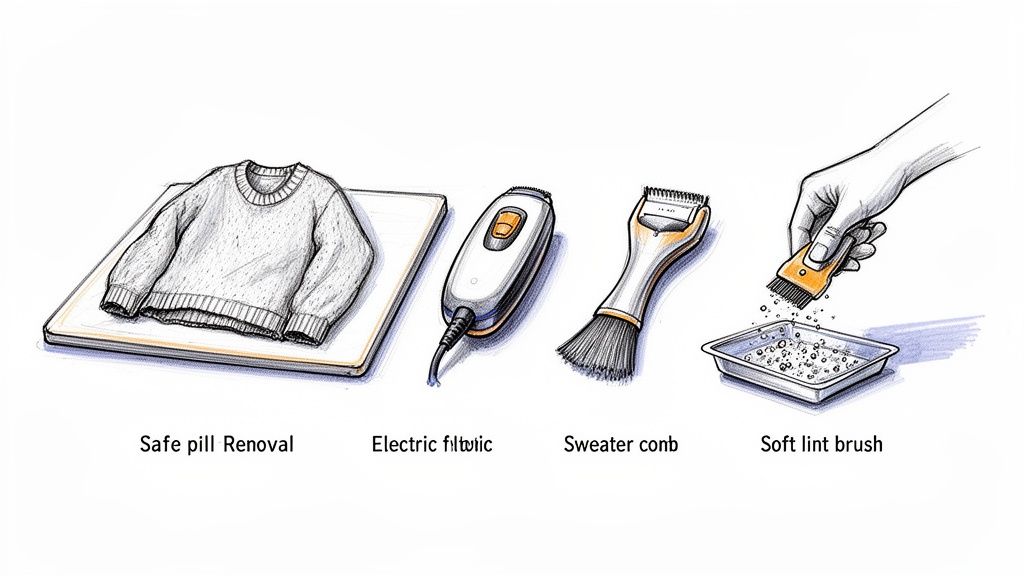
First things first: always work on a clean, hard, flat surface. A tabletop or even a clean spot on the floor is perfect. Lay the garment out and pull the fabric taut—gently, though, you don't want to stretch it out. This gives you a stable base and helps prevent any accidental snags while you work.
Choosing the Right Tool for the Job
Not all de-pilling tools are created equal, and picking the right one is crucial. The best choice really depends on the fabric you’re dealing with. Using the wrong tool can easily lead to a snag or, even worse, a hole.
-
Electric Fabric Shavers: These motorized workhorses are fantastic for sturdier, tightly knit fabrics. Think heavy cotton sweatshirts, synthetic blends, or even upholstery. They use a spinning blade behind a protective mesh to quickly shave off pills. For an effective option, you might find that specialized tools like a Singer Lint Remover do the trick beautifully.
-
Sweater Combs or Stones: When it comes to delicate, lofty knits like cashmere, merino wool, or angora, a manual tool is a much safer bet. A sweater comb or a pumice-like sweater stone puts you in complete control. You just gently glide it across the surface in one direction to catch and lift away pills without pulling at those fragile fibers underneath.
A Critical Warning: Whatever you do, never use a disposable razor or scissors to remove pills. I know it seems like a tempting quick fix, but it's incredibly risky. A disposable razor doesn’t have the protective guard of a proper fabric shaver and can easily slice right through the threads, creating a hole that’s a much bigger problem than a few fuzzballs.
Mastering Your Technique
Once you’ve got the right tool, it’s all about technique. Always work in small sections and use a gentle, light touch. If you're using an electric shaver, move it in a light, circular motion over the pilled areas without pressing down.
For a sweater comb, hold the fabric taut with one hand and gently brush the comb over the pills in a single direction. You’ll see them gather right on the comb’s teeth. Just be sure to clean the tool off as you go so it stays effective.
After you’re done de-pilling, a quick pass with a standard lint roller will pick up any remaining loose fuzz. The result? A garment that looks refreshed and almost new again. Taking the time to do this properly not only makes your clothes look better but also helps them last, so you can enjoy your favorite pieces for years to come.
Shopping Smarter for Pill-Resistant Clothing
Honestly, the best way to deal with pilling is to stop it from ever coming into your closet in the first place. When you know what to look for, you can start building a collection of gorgeous, lasting pieces that stay smooth and beautiful, season after season. It all begins on the shopping rack.
The first secret is in the fibers. Fabrics made from long-staple fibers are your best friends because they have fewer tiny ends to come loose and tangle up. Think of those incredibly soft Pima cotton tees or a high-quality merino wool sweater—their long, silky fibers are securely woven, which means far less pilling.
On the other hand, short-staple fibers are the main culprits. A quick glance at the fabric composition label is your first line of defense. If you're looking for a knit that will last, try to avoid blends with a lot of acrylic, polyester, or viscose.
Feel the Difference
Beyond just reading the label, trust your hands. A quality garment that's built to resist pilling will feel dense and substantial.
Gently stretch a small piece of the fabric. A tight, well-constructed weave will snap right back into place. If it feels loose, flimsy, or overly airy, that's a red flag. It means the fibers have too much room to wiggle around and rub against each other, which is exactly what causes those frustrating little balls of fuzz.
When you're out shopping, keep an eye out for pieces that specifically mention durability, like those made with high-quality anti-pil fleece covers, which are designed to prevent pilling from the start.
Key Takeaway: A tight, dense weave is one of the best signs of a durable garment. It keeps the fibers locked in, dramatically cutting down on the friction that leads to pills.
This hands-on test is such a simple but effective way to judge a piece before you buy it. Combine this with what you learn from the label, and you'll become a much more discerning shopper. For some of our favorite brands that truly deliver on quality, take a look at our guide to the best quality women's clothing brands.
The Industry Standard for Quality
Reputable designers take pilling very seriously, and there's a whole science behind testing for it. You’ll see a growing market for specialized machines like the Martindale pilling tester, which is all about rigorous quality control.
These machines mimic the natural wear and tear of daily life to see how a fabric holds up over time. For women who want to feel confident in their wardrobe, this behind-the-scenes commitment is what separates true luxury from fast fashion. It's a promise that your investment will continue to look and feel beautiful.
Your Questions About Fabric Pilling Answered
Even with the best wardrobe care, a few questions about pilling always seem to pop up. Understanding the nuances behind those little fuzzballs is the final step in truly mastering the art of preserving your clothes. Here are some of the most common questions we hear from our clients, answered.
Does Pilling Mean a Garment Is Low Quality?
Not necessarily. It’s a common misconception that any pilling immediately signals poor craftsmanship.
While it's true that low-quality fabrics made with short, loose fibers will pill like crazy, even the most luxurious materials—like fine cashmere—can pill a little at first. This is totally normal. It’s just the shortest surface fibers shedding after the first few wears.
The real tell is what happens next. On a high-quality garment, this initial pilling stops once you’ve gently removed it a couple of times. Persistent, widespread pilling that just keeps coming back, no matter what you do, is a much stronger sign of a poor-quality material or an unstable fiber blend.
Can You Permanently Stop Pilling on a Sweater?
Unfortunately, there's no magic wand to make a fabric completely immune to pilling, as it’s just a natural result of friction and everyday life. But you absolutely can manage it so well that it becomes a non-issue. A proactive approach is always your best defense.
By sticking to a gentle care routine—washing inside out, skipping the high-heat dryer, and being mindful of abrasion from bags or coats—you’ll prevent the vast majority of pills from ever forming. For the few that might appear, a quick, proper removal restores the fabric's beautiful, smooth finish.
Think of it less as a battle and more as occasional, minor maintenance.
The goal isn't to make a fabric immune to pilling, but to create a care system so effective that pilling rarely happens and is simple to fix when it does.
Is a Fabric Shaver or a Sweater Comb Better?
Both are fantastic tools, but they’re designed for different jobs. Using the right one is key to getting a perfect finish without causing any damage.
Here's how to choose:
- Electric Fabric Shaver: This is your go-to for speed and efficiency on sturdy, tightly knit fabrics. It works beautifully on things like cotton blends, synthetics, and even upholstery where you have a lot of ground to cover.
- Sweater Comb: A manual comb gives you delicate control, making it the safest choice for lofty, delicate knits like cashmere, angora, or fine merino wool. It gently coaxes the pills away from the fabric surface without snagging the fragile threads underneath.
Bottom line: If your closet is filled with high-end, delicate knitwear, a sweater comb is a must-have. For just about everything else, a good fabric shaver is a wonderfully convenient tool to have in your arsenal.
At Cedar & Lily Clothier, we believe a beautiful wardrobe is built on quality pieces that last. Explore our curated collection of designer fashion designed to stand the test of time and wear. https://cedarandlilyclothier.com