


Getting your cashmere ready for long-term storage is the single most important thing you can do to protect your investment. Before you even think about containers or repellents, a little prep work goes a long way.
The golden rule is deceptively simple: always store your cashmere clean.
It's tempting to put away a sweater you've only worn for a few hours, but even invisible traces of body oil, a spritz of perfume, or a tiny food particle can become a magnet for pests. Moths, especially, are drawn to these scents, turning your prized sweater into their next meal.
Getting It Perfectly Clean
You’ve got a couple of solid options here, and it really comes down to your comfort level.
For a completely hands-off, worry-free approach, professional dry cleaning is your best bet. Experts agree that a good dry cleaning session is one of the most effective ways to deter moths because it thoroughly removes the oils and dirt their larvae thrive on. If you want to dive deeper, you can find great insights on effective moth prevention strategies that will keep your entire collection safe.
If you prefer a more hands-on method, a gentle hand wash at home works beautifully. Just be sure to use a shampoo made specifically for cashmere or even a mild baby shampoo in cool water. Gently squeeze the suds through the fibers—never, ever wring or twist your sweater, as that will stretch and damage the delicate yarn.
Key Takeaway: Don't ever put away a cashmere sweater that's been worn, even just once. The goal is to make it as unappealing to pests as possible by eliminating every trace of dirt, oil, or fragrance.
Before you tuck your cashmere away for the season, running through a quick checklist ensures you haven't missed a critical step. This little bit of effort now prevents heartbreak later.
Pre-Storage Cashmere Prep Checklist
| Preparation Step | Why It's Critical | Pro Tip |
|---|---|---|
| Thorough Cleaning | Removes oils, skin cells, and food traces that attract moths. | Opt for a professional dry cleaner that specializes in delicate knits if you're unsure about hand washing. |
| Complete Drying | Prevents mildew and musty odors from developing in storage. | Be patient! A sweater can feel dry to the touch but still hold moisture deep in its fibers. Give it 24-48 hours. |
| Gentle De-Pilling | Removes pills that can worsen over time and attract dust. | Use a cashmere comb or fabric shaver, working gently in one direction to avoid snagging the yarn. |
| Final Inspection | Catches any missed spots, loose threads, or tiny holes before storage. | Hold the sweater up to a bright light to easily spot any thin areas or small holes that need mending. |
Taking these few steps turns storage from a gamble into a guarantee, ensuring your cashmere emerges soft, fresh, and ready to wear next season.
The Art of Drying Cashmere
Proper drying is just as crucial as the wash itself. Once you’re done washing, gently press the excess water out by rolling the sweater up inside a clean, fluffy towel.
Next, lay it out flat on a fresh, dry towel or a mesh drying rack. This is your chance to gently reshape it back to its original size and form.
And here’s the most important part: keep it far away from direct sunlight or heat sources like a radiator. Intense heat can cause the fibers to yellow or, even worse, shrink permanently. Just let it air dry completely, which might take 24 to 48 hours. Any lingering dampness is an open invitation for mildew, so patience truly is a virtue here.
Why You Must Fold and Never Hang Cashmere
Let’s get one thing straight: hanging a cashmere sweater is the fastest way to ruin it. It's a hard rule with no exceptions. Unlike a sturdy cotton shirt, the delicate, loose knit of cashmere just can't fight a constant battle with gravity. It will lose.
Over time, the sweater's own weight pulls those gorgeous fibers downward, stretching them out permanently. This is especially true around the shoulder area, where you’ll start to see those dreaded, pointy hanger bumps. Once that happens, the sweater's original silhouette is gone for good. Even a beautifully designed piece like a gathered cashmere sweater will lose its intended shape. Think of it like the advice in an expert guide on how to pack clothes; the goal is always to prevent damage from stress and pressure.
The Perfect Folding Technique
So, step away from the hangers. The only way to properly store cashmere is by folding it. A good fold creates a neat, stable shape that supports the fibers instead of stressing them out. This simple habit minimizes deep-set creases and helps your sweater maintain its natural form season after season.
This visual guide breaks down the ideal workflow, from that crucial pre-storage cleaning all the way to the final fold.
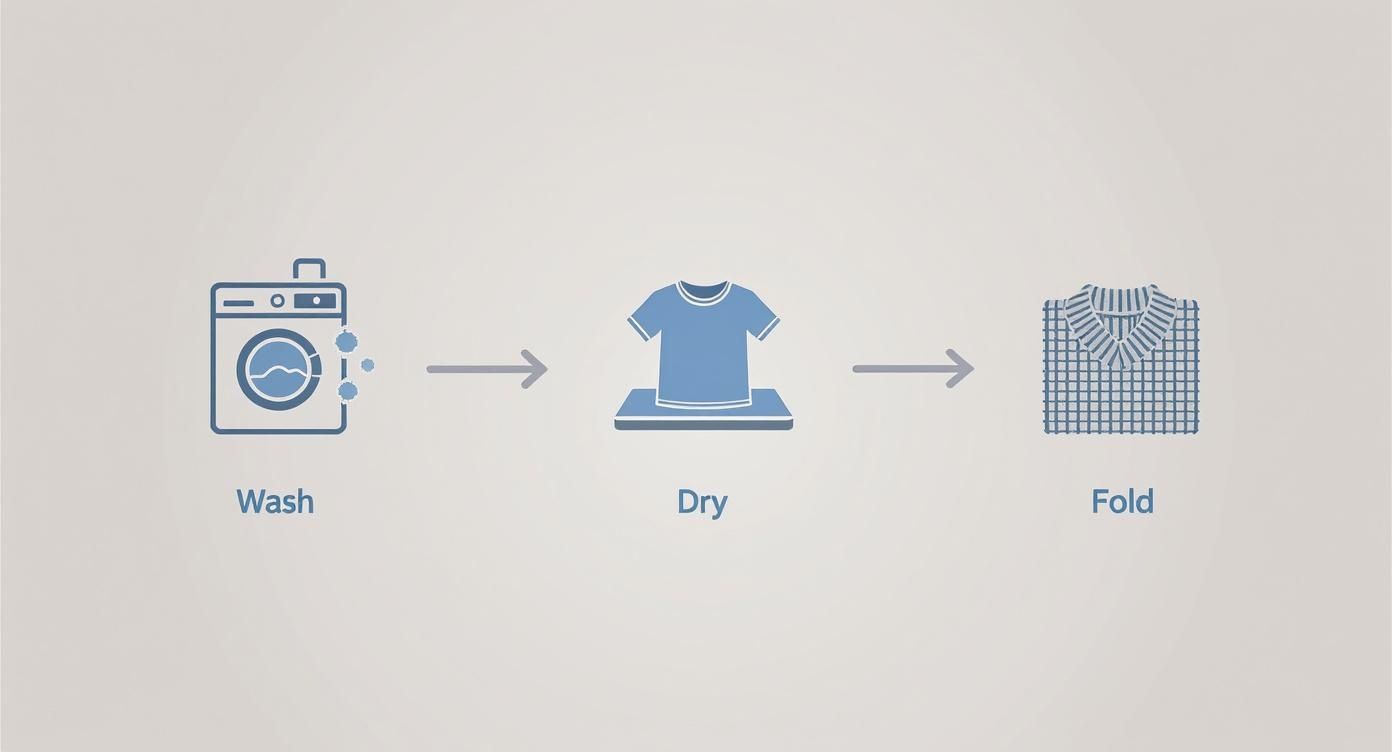
Getting this process right—clean, completely dry, and correctly folded—is the absolute foundation of proper cashmere care. It’s what separates a sweater that lasts for decades from one that looks misshapen after a year. You don't have to take my word for it; experts agree that hanging cashmere leads to irreversible shape distortion. In fact, you can see visible bumps or warping at the shoulders after just a few storage cycles.
Pro Tip: When you're stacking your folded sweaters, slip a sheet of acid-free tissue paper between each one. It works wonders to prevent the friction that causes pilling and also allows a bit more air to circulate.
Here’s my go-to folding method. It's quick, easy, and effective.
- First, lay your sweater face down on a clean, flat surface.
- Fold one arm straight across the body, keeping it horizontal.
- Next, fold the other arm over the first one. You should now have a nice, clean rectangle shape.
- Finally, fold the bottom half of the sweater up to meet the shoulders.
This creates a perfect, compact rectangle. It’s the ideal shape for stacking neatly in a drawer or on a shelf, ensuring your cashmere stays pristine and ready for the next time you wear it.
Choosing the Right Storage Environment
Where you store your cashmere is just as important as how you clean and fold it. Think of it as finding the perfect resting place for your favorite sweaters between seasons—a sanctuary that will protect them from their biggest enemies: pests and moisture.
The goal is a cool, dark, and dry spot with a stable temperature. This is precisely why places like attics and basements are a terrible idea. They're notorious for wild temperature swings and dampness, which is an open invitation for mildew to set in and ruin the delicate fibers for good. A high shelf in a bedroom closet is a much safer, smarter choice.

Selecting the Best Storage Containers
The container you pick is the final line of defense for your investment. It’s easy to grab any old bin, but some of the most common storage solutions can actually cause more harm than good.
The one word you need to remember is breathability. Cashmere is a natural fiber, and just like your skin, it needs to breathe. If you trap moisture inside with it, you’re asking for musty smells and mildew.
Let’s break down the best and worst options:
- Breathable Cotton Garment Bags: This is my top recommendation. They keep dust and pests out while allowing air to circulate freely. Just make sure you find ones with a good zipper for a solid seal.
- Acid-Free Storage Boxes: Another fantastic choice, especially if you need to stack them. I always line mine with acid-free tissue paper for an extra buffer against snags.
- Canvas Bins: These offer the same breathability as cotton bags but with more structure, which is great for preventing you from piling too many sweaters on top of each other.
Crucial Mistake to Avoid: Please, never use standard plastic bins or those vacuum-sealed bags for long-term storage. I know they seem efficient, but they're completely airtight. They trap every bit of ambient moisture, creating a humid little ecosystem that leads to yellowing, mildew, and an awful musty smell you’ll never get out.
And that compression from vacuum-sealing? It completely crushes the delicate fibers, destroying the natural loft that gives cashmere its signature softness. You might save a foot of shelf space, but you could ruin a beautiful sweater in the process.
Maintaining Ideal Conditions
Once you’ve found the right spot and the perfect container, the final piece of the puzzle is maintaining that environment. The ideal atmosphere comes down to keeping the temperature and humidity levels in check. To keep your cashmere from getting too dry or, worse, becoming a target for mold, it’s worth learning how to control humidity in your house.
Get this right, and I promise that when you pull your sweaters out on that first crisp day of fall, they’ll feel just as soft, fresh, and luxurious as the day you put them away.
Practical Strategies for Moth Prevention

It’s a heart-sinking moment for any cashmere lover: pulling out a favorite sweater only to find a tiny, disastrous hole. That’s the work of the common clothes moth, and your most luxurious pieces are, unfortunately, their favorite meal.
The real key is to get ahead of the problem. You have to make your closet an unwelcome place for these fabric-destroying pests before they even arrive.
It’s a common misconception that the adult moths you see fluttering around are the ones eating your sweaters. The real culprits are their larvae. Female moths seek out dark, quiet spots to lay their eggs on natural fibers rich in keratin—a protein found in cashmere. A drawer of clean, undisturbed sweaters is basically a perfect nursery.
Embracing Natural Deterrents
You can forget about those harsh, chemical-based mothballs that leave a scent you can never quite get out of your clothes. Effective moth prevention can be completely natural and actually smell wonderful. The idea is to use scents that moths can't stand but that are perfectly safe for your garments and your home.
Cedar is the undisputed champion here. The aromatic oils in cedar wood are a powerful repellent that helps mask the keratin scent, essentially making your cashmere invisible to moths looking for a place to lay eggs.
- Cedar Blocks or Balls: Tuck a few into the corners of your storage bins or drawers.
- Cedar Hanger Rings: While you should never hang cashmere, placing cedar rings on nearby hangers helps create a protected zone throughout your whole closet.
- Cedar-Lined Drawers: For the ultimate line of defense, consider lining your sweater drawers with cedar planks.
Lavender is another fantastic option. We love its clean, floral fragrance, but moths absolutely despise it. You can simply place a couple of dried lavender sachets inside each storage container for a fragrant protective barrier.
Keeping Your Defenses Strong
These natural repellents aren't a one-and-done solution. Their magic comes from the aromatic oils they release, and that scent fades over time. To keep your cashmere protected all season long, you'll need to refresh your deterrents on a regular basis.
Expert Tip: To keep your cedar potent, give the blocks or balls a quick rubdown with fine-grit sandpaper every three to six months. This exposes a fresh layer of wood and releases a new wave of that protective scent. Lavender sachets should be replaced at the start of each storage season.
What to Do If You Suspect Moths
If you do find a hole, you need to act fast to stop the problem from spreading. The first thing to do is isolate the sweater you found and carefully inspect everything that was stored with it.
Here’s a quick emergency response plan:
- Isolate and Inspect: Get the damaged item out of there immediately and check all other garments in the same drawer or box.
- Freeze the Pests: Seal the compromised sweater in a plastic bag and pop it in the freezer for at least 72 hours. The extreme cold will kill any eggs or larvae without damaging the delicate cashmere fibers.
- Deep Clean the Area: Vacuum the entire storage space thoroughly. Get into every corner and crevice where eggs might be hiding.
- Wash Everything: Gently wash all the sweaters that were stored in that area, even if you don't see any obvious damage on them.
By making your closet an unappealing place for moths and staying on top of it, you can rest easy knowing your cashmere is safe and ready for you when the temperature drops.
A Guide to Long-Term and Seasonal Storage
When the warmer months roll in, it’s time to give your cherished cashmere a safe place to rest until the chill returns. Think of this process as an insurance policy for your favorite sweaters—a few simple steps now guarantee they’ll emerge from their hibernation looking flawless and ready to wear.
One of the best habits you can get into is using acid-free tissue paper. As you fold your clean sweaters, just slip a single sheet between each one. It’s a tiny detail that makes a world of difference, preventing the delicate fibers from snagging, especially if you have sweaters with buttons or other embellishments. It also helps air circulate more freely.
The Mid-Season Check-In
Proper storage isn’t a "set it and forget it" kind of deal. I always recommend a quick check-in about halfway through the off-season. It’s a great opportunity to make sure the storage area is still cool, dark, and perfectly dry, and to refresh your cedar blocks or lavender sachets.
This is also the perfect time to give your sweaters a quick refold. By gently unfolding and then refolding them along different lines, you stop those deep, stubborn creases from setting in for good. It’s like letting the fibers relax in a new position.
Key Insight: Long-term storage isn’t just about tucking your sweaters away; it’s about actively preserving them. A mid-season check helps you catch any potential issues—like a bit of dampness or fading moth repellents—before they become real problems.
Bringing Your Cashmere Back into Rotation
That first crisp autumn day is always a little more special when you get to bring your sweaters out of storage. Taking a few moments to reintroduce them properly restores that signature softness and ensures they look their absolute best. And when you're investing in timeless pieces, it helps to know which are the best wardrobe staples for women that truly deserve this level of care.
Here's my go-to checklist for waking up your cashmere:
- Let Them Breathe: Unpack your sweaters and lay them flat on a clean surface, like your bed, for at least a few hours. This allows any faint storage scents to fade away and lets the fibers decompress.
- Give a Quick Inspection: Look over each sweater for any pilling that might have popped up. If you spot any, just gently glide a cashmere comb over the area to smooth it out.
- Steam, Never Iron: If you notice any light wrinkles from folding, a handheld steamer is your best friend. The direct, intense heat from an iron is far too harsh for these beautiful, delicate fibers.
Every textile care expert agrees: the right container is non-negotiable. Your cashmere needs a breathable but sealed home, like a good-quality fabric bin. Tucking in some cedar is the final touch for freshness and pest prevention, making sure your sweaters stay in pristine condition, season after season.
Your Top Cashmere Storage Questions, Answered
Even when you have a solid plan for putting your cashmere away, a few nagging questions always seem to pop up. Getting the little details right is what separates good care from great care—and it’s what will make your favorite sweaters last for decades.
Let's tackle some of the most common dilemmas I hear. Think of this as the final polish on your storage strategy, turning good habits into an expert-level routine.
Can I Use Vacuum-Sealed Bags to Save Space?
I get it—the temptation to use vacuum bags is real, especially when you're short on closet space. But for anything other than a quick move, you should absolutely steer clear of them for long-term storage.
The intense pressure from a vacuum bag literally crushes the life out of delicate cashmere fibers. It destroys their natural loft and fluffiness, which is exactly what gives cashmere its incredible softness and warmth. After a few months of being flattened, that damage can become permanent, leaving your sweater looking sad and lifeless. Worse, those airtight bags can trap moisture, creating a perfect environment for mildew to grow.
Stick with breathable options like canvas bins or cotton garment bags. They allow air to circulate, which is essential for preserving the beautiful, delicate structure of the fibers.
How Often Should I Refresh My Moth Repellents?
Natural moth deterrents are a fantastic, chemical-free way to protect your woolens, but they aren't a "set it and forget it" solution. Their power comes from the aromatic oils they release, and those oils fade over time. Staying on top of a refresh schedule is key.
- Cedar Blocks and Balls: The protective oils in cedar are what moths can't stand. To keep them working, you'll want to refresh them every 6 to 12 months. All it takes is a quick scuff with a piece of fine-grit sandpaper. This exposes a fresh layer of wood and releases a new wave of that lovely, protective scent.
- Lavender and Herbal Sachets: These usually have a shorter effective lifespan, typically lasting for just one storage season. I make it a habit to simply replace them with fresh ones each time I pack my sweaters away for the year.
This simple bit of maintenance keeps your first line of defense against pests strong and effective.
Key Takeaway: Finding a moth hole is a clear sign you need to act fast. Immediately isolate the sweater, check all the surrounding garments, and then pop the damaged one in a sealed bag and into the freezer for at least 72 hours. This will kill any lingering larvae.
After that, you’ll need to do a deep clean of the entire storage area before putting anything back. For a more detailed guide on cleaning and general upkeep, our post on how to care for cashmere has everything you need to know.
Is It Safe to Store Sweaters Together?
Yes, you can definitely store your cashmere sweaters together, as long as you follow a couple of simple rules to prevent any accidental damage.
First, and most importantly, make sure every single sweater is clean before it goes into storage. When you start folding and stacking, place a sheet of acid-free tissue paper between each one. This little trick is a game-changer. It stops the friction that leads to pilling and prevents any rogue buttons or zippers from snagging the delicate knit of another sweater.
Finally, don't overstuff your storage container. Sweaters should be placed loosely, never crammed in. This gives them room to breathe, prevents deep wrinkles from setting in, and helps them keep their beautiful shape and softness.
At Cedar & Lily Clothier, we believe that beautiful clothing deserves exceptional care. Discover timeless pieces and designer favorites that you'll cherish for seasons to come by exploring our curated collection at https://cedarandlilyclothier.com.