


The invitation says cocktail attire, the venue is still unknown, and the dress already under consideration is a saturated emerald that looks polished in the fitting-room mirror. Then the practical questions arrive. Will the color look too bright at an afternoon wedding? Will flash turn satin into a glare? Is the silhouette elegant enough for a gala but relaxed enough for a work celebration?
A jewel tone cocktail dress can answer all three questions, but color alone doesn't make it appropriate. Fabric, hemline, lighting, photography, undertone, and the event's formality determine whether rich emerald, sapphire, ruby, or amethyst looks refined or misplaced. The most dependable choice is usually a polished knee-length through midi silhouette, styled with enough structure for the invitation and enough versatility to wear again.
Table of Contents
- Finding Your Perfect Jewel Tone Cocktail Dress
- Choosing the Right Jewel Shade for Your Skin Tone
- Matching Jewel Tones to the Event and Lighting
- Fabric, Silhouette, and Quality Considerations
- Styling Your Jewel Tone Cocktail Dress
- Maximizing Wear with Versatile Styling
- Shop Curated Collections in Tulsa and Jenks
Finding Your Perfect Jewel Tone Cocktail Dress
A woman may begin with an invitation to an office holiday party and end up with three possible wardrobes. A black dress feels reliable but predictable, a floor-length gown feels excessive, and a bright jewel tone looks promising until she imagines it under restaurant lighting. The right answer is often a saturated color in a clean silhouette, something that delivers presence without the ceremony of black-tie dressing.
The cocktail dress emerged as a distinct form during the 1920s, when changing social customs created demand for clothing suited to early-evening entertaining. The Metropolitan Museum of Art identifies the period around 1929 as a turning point, when women became more visible in public social life and cocktail gatherings generally took place between 6:00 and 8:00 p.m. The short evening sheath balanced polish, movement, and social flexibility, which explains why the category still sits between daytime dressing and formal eveningwear today. The Metropolitan Museum of Art traces the cocktail dress's early role.
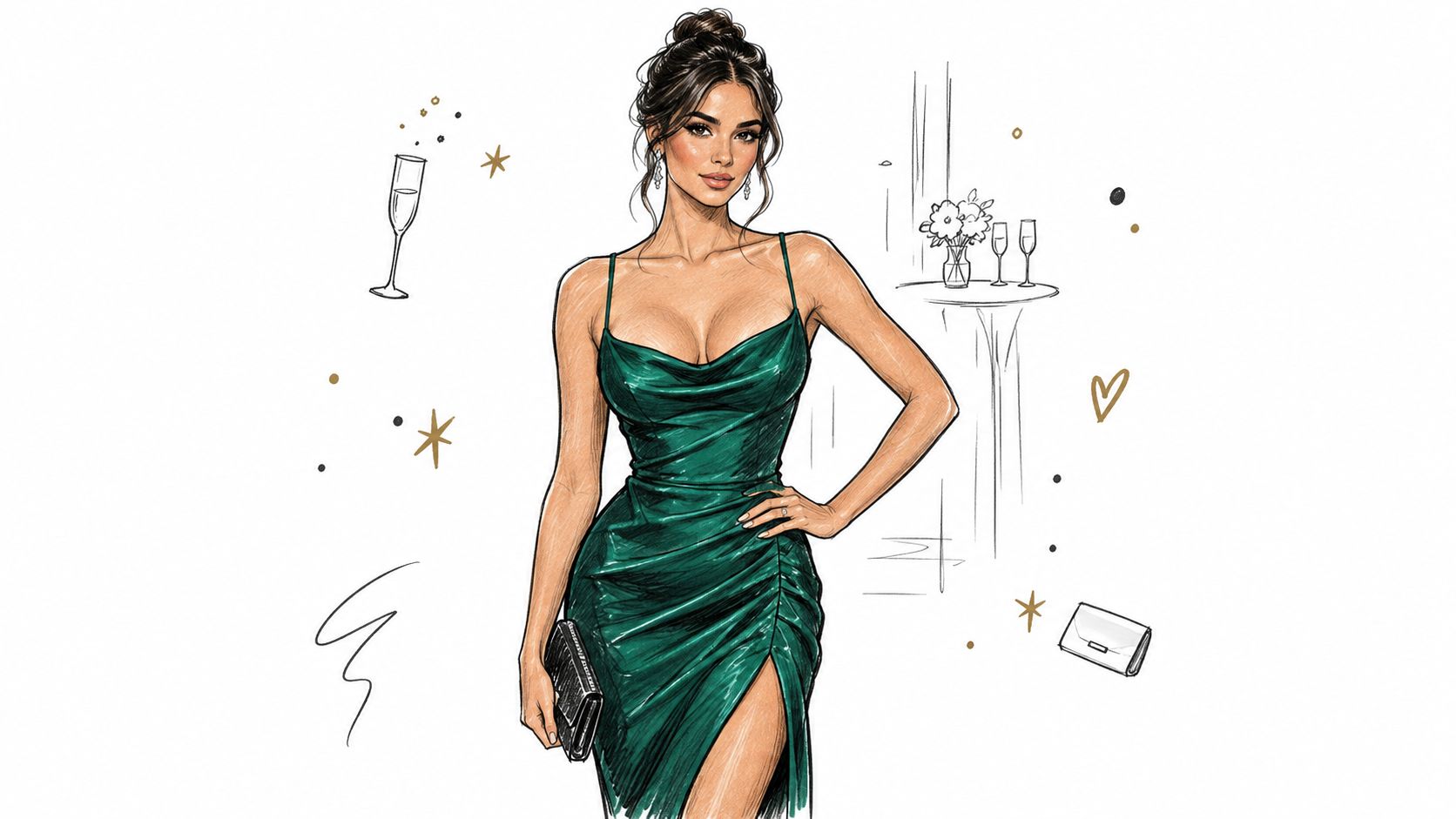
A contemporary cocktail wardrobe needs the same adaptability. A jewel-tone dress can move from an evening wedding to a professional celebration when its neckline, construction, and styling remain controlled. A practical guide to occasion dresses for women helps frame that broader choice, especially when the invitation gives a dress code but little else.
Practical rule: Let the color create the visual interest, then keep at least one other element restrained. A simple shape in emerald can look more sophisticated than an embellished dress in a quieter shade.
Choosing the Right Jewel Shade for Your Skin Tone
Skin undertone offers a useful starting point, but it shouldn't become a rigid color ban. The same emerald can appear blue and crisp in one fabric, yellow and warm in another, while a ruby satin may reflect enough light to change the apparent balance around the face.
Three undertone starting points
Warm undertones often harmonize with jewel tones that carry golden, red, or amber depth. Ruby, garnet, amber, and warm emerald can bring warmth to the complexion without making the dress appear dull. If a shade feels too orange, move toward a balanced ruby or a red with more depth.
Cool undertones usually respond well to sapphire, amethyst, blue-leaning emerald, and cool plum. These colors echo pink, blue, or violet in the skin and can create a clear, deliberate contrast. Neutral undertones have more latitude, so fabric, event timing, and personal preference can guide the final choice.
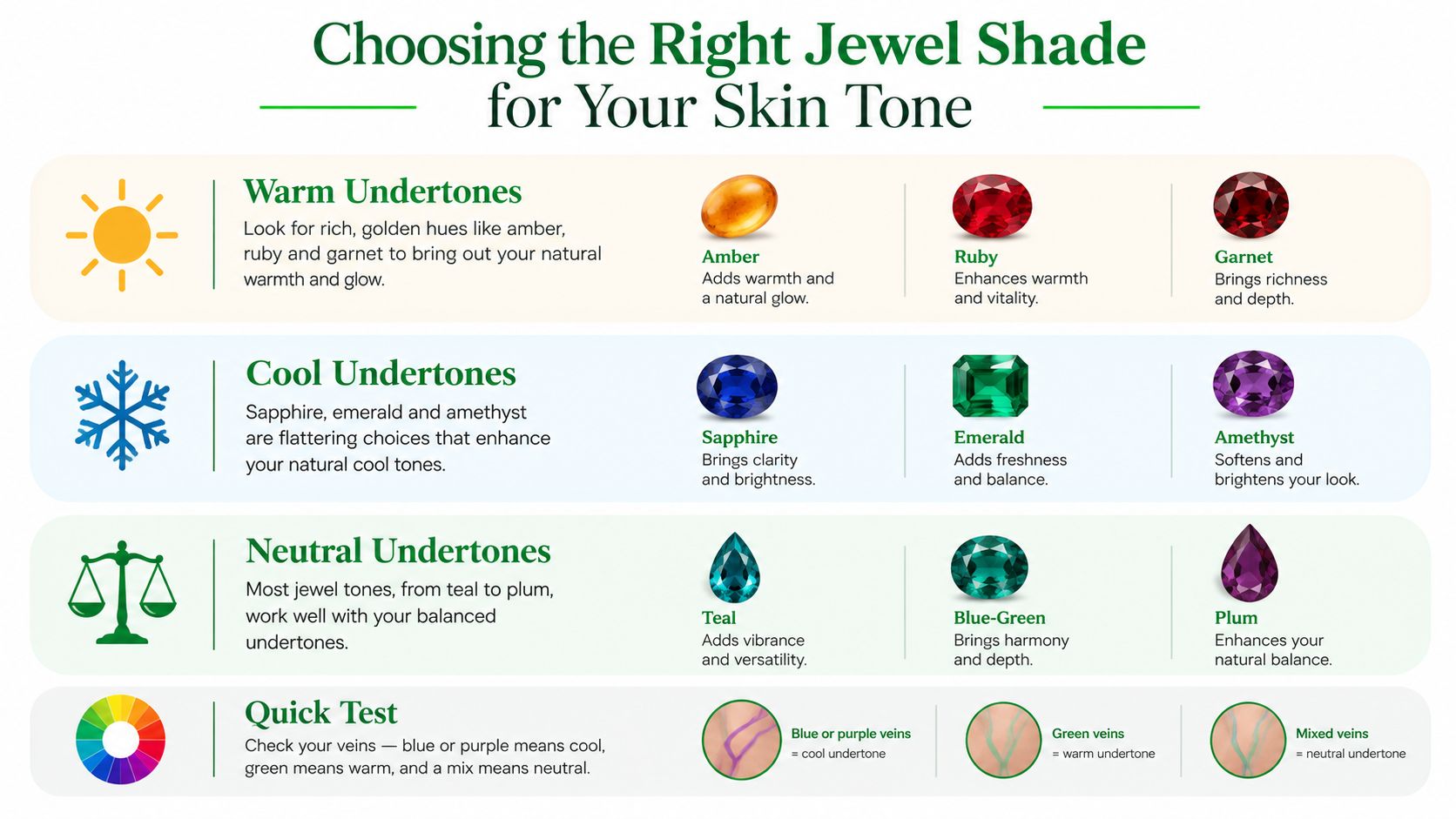
A quick test can narrow the field before a fitting:
- Check the veins: Green-looking veins often suggest warm undertones, blue or purple-looking veins suggest cool undertones, and a mixture may indicate neutral undertones.
- Compare metals: If gold feels more harmonious, warm shades may be a natural fit. If silver looks cleaner, cool shades may be more flattering. If both work, the undertone may be neutral.
- Use natural light: Hold the dress or fabric near the face in daylight. The right color should make the skin look rested, not gray, yellow, or overly flushed.
The guide to choosing colors that look best can help shoppers make that decision more intentionally. Still, the final test is the mirror under more than one light source. A shade that works beautifully in daylight may need different jewelry or makeup once the venue's warmer bulbs enter the picture.
Matching Jewel Tones to the Event and Lighting
A jewel tone changes character with the setting. Electric sapphire can feel lively at a daytime celebration, while dark sapphire crepe looks composed at an evening reception. Vivid ruby satin suits a gala where candlelight and camera flash heighten its drama, yet the same glossy surface may look overly reflective during an outdoor ceremony.
Read the invitation and the room together
Cocktail attire stops short of black tie. A full-length gown reads as black-tie dressing, while a polished knee-length or midi dress, a well-cut jumpsuit, or well-cut separates sit comfortably within the cocktail code. The invitation still sets the tone, and the venue clarifies how much shine, color, and structure will feel appropriate.
- Daylight or outdoor settings: Brighter emerald, cobalt, ruby, and teal look festive, especially in matte crepe or light chiffon. Direct sun can make glossy satin flare in photographs, so check the dress outside before committing.
- Warm restaurant lighting: Deeper emerald, forest green, garnet, and amethyst usually retain their richness under yellow bulbs. Very muted greens may turn dull or muddy once the room's warmer light dominates.
- Flash-heavy receptions: Matte or softly textured fabric photographs more evenly. Satin remains striking, but its brightest highlights should follow intentional seams instead of landing across the fullest part of the dress.
- Professional evening events: A darker jewel tone with clean tailoring communicates authority more effectively than heavy embellishment. Saturated color can provide expression while restrained construction keeps the look disciplined.
A quick phone-camera test helps. Photograph the dress in daylight, under warm indoor bulbs, and with flash. Check whether the shade stays rich, whether the fabric creates distracting hotspots, and whether the color overwhelms your face. This test often reveals more than a fitting-room mirror.
Wedding guests should also assess the surrounding palette. White remains the color traditionally reserved for the bride, while emerald, burgundy, sapphire, and related shades provide visible color without looking casual. Wedding guest cocktail guidance discusses jewel tones and the traditional white restriction.
Beauty should support the room and the camera. For a photographed celebration, practical preparation guidance on eyelash extensions for special occasions may help, particularly when the dress already supplies the strongest focal point.
Fabric, Silhouette, and Quality Considerations
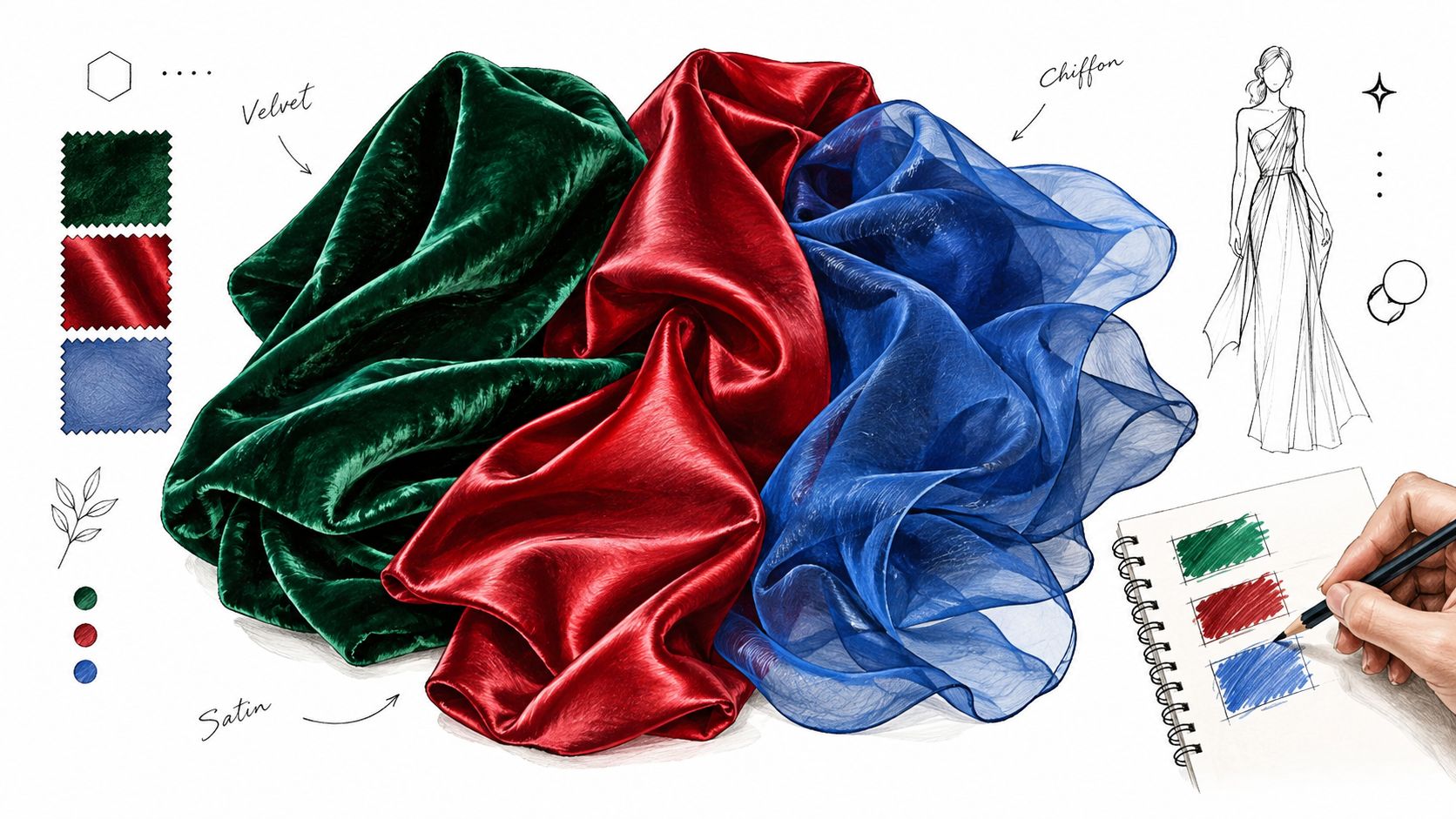
Color depth depends on what the fabric does with light. Velvet absorbs light, giving emerald, ruby, and sapphire a dense, almost mineral-like richness. Satin reflects light, creating movement and glamour, but it also makes every crease and flash highlight more visible. Crepe produces a quieter, modern surface, while chiffon softens a saturated shade through movement and translucency.
Judge the garment beyond the swatch
A quality dress should retain its visual depth through ordinary wear and care. International textile testing frameworks assess resistance to washing, rubbing, perspiration, water, dry cleaning, and artificial light. These exposures matter because highly saturated dyes can show fading or transfer more readily when a garment is repeatedly abraded, exposed to sweat, or cleaned. ISO's textile-testing catalogue outlines colorfastness methods under ISO 105.
Before purchasing, check the care label and ask whether colorfastness testing is available. Look especially for crocking, the transfer of dye onto skin, handbags, or light outerwear. A dress destined for daytime outdoor events also deserves attention to lightfastness.
The guide to quality women's clothing brands offers a useful mindset, but the fitting room remains decisive. Check seams, lining, zipper movement, hem behavior, and whether the fabric keeps its color when it stretches across the body. Rich color deserves a silhouette that hangs cleanly.
Styling Your Jewel Tone Cocktail Dress
The finished look should support the color, not compete with it. A jewel tone already supplies saturation, so accessories work best when they clarify the dress's direction.
Build the outfit in a deliberate order
Start with the shoes. Metallic gold warms ruby, garnet, and olive-leaning greens, while silver or pewter sharpens sapphire and amethyst. A skin-matched neutral creates a longer visual line, and a shoe in the same color family produces a sleek, intentional effect. Black can work with very deep jewel tones, but it may look heavy beside a bright emerald or vivid ruby.
Choose jewelry according to the neckline. A high neckline may need only earrings and a bracelet, while an open neckline can accommodate a fine pendant or a small sculptural necklace. Gold, silver, pearls, and clear stones can all work, provided the scale matches the dress's embellishment.
- For satin: Keep the jewelry clean and let the sheen do the work.
- For velvet: Add polished metal or crystal for contrast.
- For matte crepe: Use earrings or a cuff to introduce a controlled point of light.
- For lace or beading: Avoid adding texture everywhere. A simple bag and shoe prevent the outfit from becoming visually crowded.
A makeup look should balance rather than mirror the dress. Warm ruby can pair with bronze or peach tones, while sapphire and amethyst often look composed with taupe, mauve, or berry notes. A bold lip or a defined eye usually has more impact than pushing both to their strongest level. For more detailed guidance, explore accessories for outfit finishing ideas, then review how to accessorize an outfit before the final fitting.
Maximizing Wear with Versatile Styling
A dress earns its place in the wardrobe when it can change character. The same sapphire midi can look polished at a professional gathering with a fitted blazer, more relaxed for dinner with a softer outer layer, and formal at a gala with metallic accessories. The color remains recognizable, but the surrounding pieces alter its message.
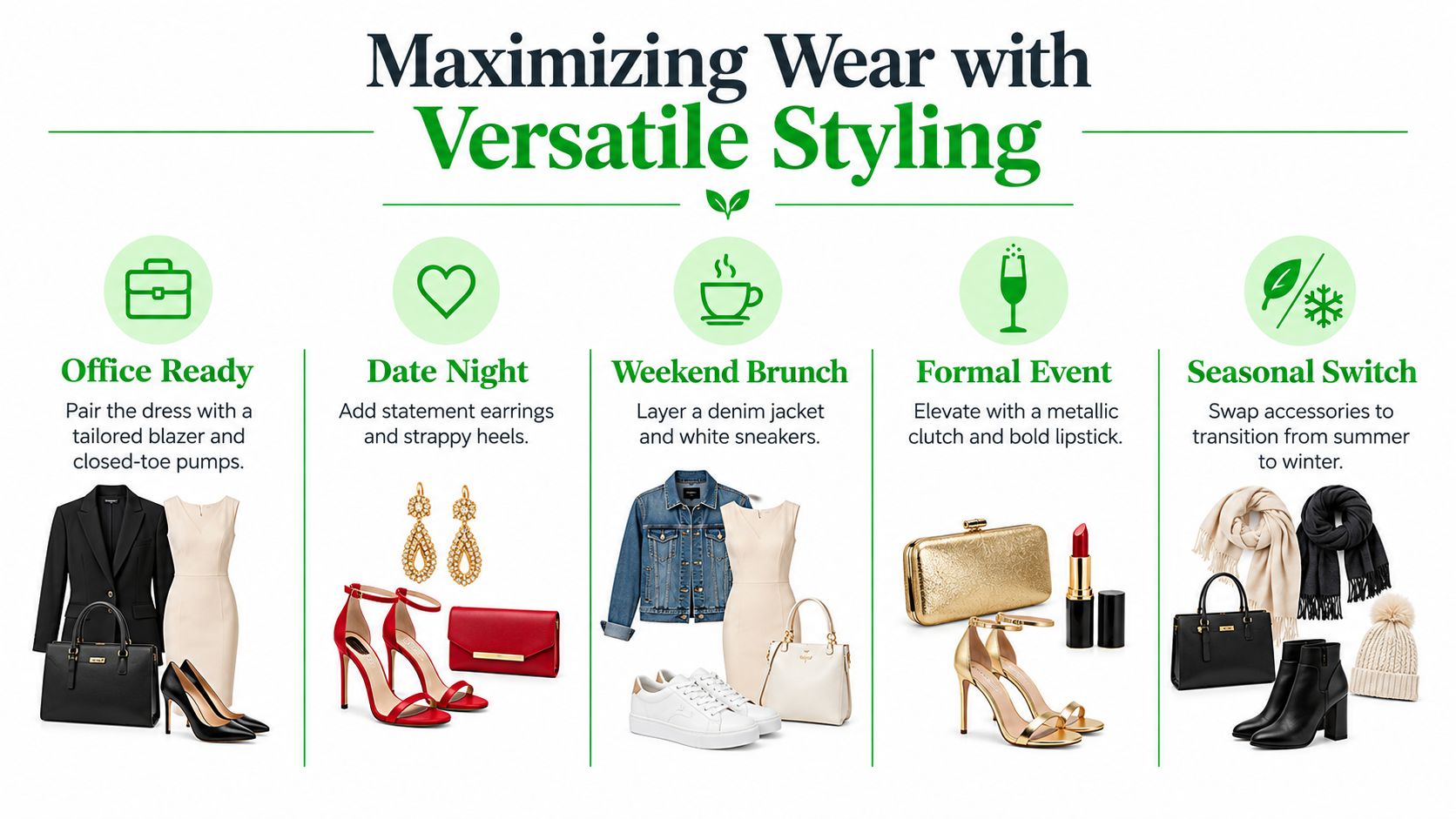
Compare the styling changes
| Occasion | Layer and shoes | Finishing direction |
|---|---|---|
| Office celebration | Tailored blazer and closed-toe pumps | Keep jewelry restrained and the bag structured |
| Date night | Strappy heels and statement earrings | Let one dramatic accessory lead |
| Weekend brunch | Casual jacket and clean sneakers | Choose a softer bag and minimal jewelry |
| Formal event | Metallic clutch and polished heels | Add a stronger lip or luminous earrings |
| Seasonal transition | Light outerwear for warmer months, coat or wrap for colder weather | Shift metal, texture, and hosiery with the season |
The dress's fabric and construction determine how easily these changes work. A simple crepe or softly structured satin can accept a blazer without bunching. A heavily embellished bodice may look exceptional at a gala but won't transition as smoothly to workwear. Alteration potential matters too. A hem that can be adjusted, straps that can be refined, or a waist that can be adjusted gives the garment a longer useful life.
Resale appeal also begins at purchase. The resale market is projected to reach as much as $360 billion by 2030, and surveyed shoppers report that 28% of their wardrobes already consist of pre-owned items, while affordability motivates 87% of U.S. resale users. These resale figures are reported in a discussion of repeatable cocktail dressing. They don't mean every shopper should buy for resale, but they do support choosing durable fabric, a wearable silhouette, and a color that can be styled more than once.
Busy schedules make repeatable outfits especially useful, and a practical edit of products for busy professionals can complement a wardrobe built around efficient styling.
Shop Curated Collections in Tulsa and Jenks
Online browsing can identify a promising color, but a jewel tone is a sensory decision. In person, the shopper can see whether emerald turns blue under boutique lighting, feel whether velvet is too warm for the venue, test how satin reflects movement, and check whether a midi hem sits at the most flattering point. Those details are difficult to judge from a product image alone.
Cedar & Lily Clothier carries curated designer and contemporary brands, including Vanessa Mooney and Lace the Label, alongside event-ready dresses and accessories. The boutique doesn't manufacture its own line, so the selection can focus on choosing and styling pieces from the brands it carries rather than presenting one fixed house silhouette.
Make the appointment useful
Bring the invitation, the shoes under consideration, and any outer layer that needs to work with the dress. A stylist can compare emerald with sapphire or ruby against the complexion, check the dress under different light, and assess whether the neckline and hemline suit the event's formality.
- For Tulsa shoppers: Visit the Utica Square storefront, where trying on several saturated shades can reveal differences that a screen hides.
- For Jenks shoppers: Shop the downtown Jenks location for hands-on fit guidance and local availability.
- For online shoppers: Browse the collection at cedarandlilyclothier.com, then reach out for help narrowing color, fabric, and styling options before ordering.
The Utica Square shopping guide can help local shoppers plan a visit. Cedar & Lily's two Oklahoma storefronts make it possible to compare fit and fabric directly, while the online store extends the same curated occasionwear selection beyond the fitting room.
Cedar & Lily Clothier offers curated jewel-tone occasion dresses, contemporary designer pieces, and styling guidance online and at its Utica Square and downtown Jenks boutiques. Shop the selection through Cedar & Lily Clothier, or visit in person to test the color, fabric, and fit before the next invitation.