
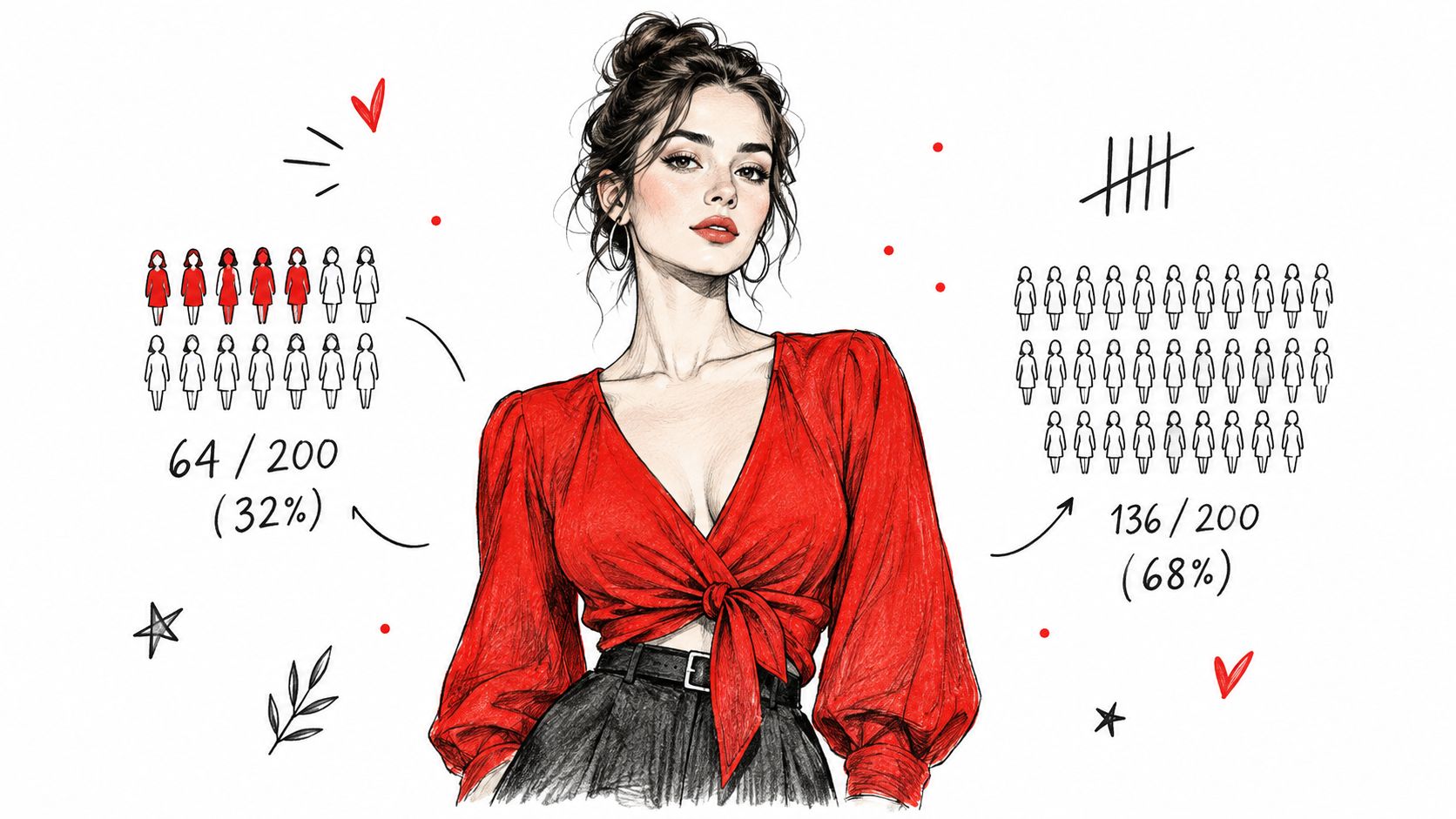
Only 32% of women in a 2016 observation displayed red in their clothing or visible accessories, according to research on red clothing and social context. For women's red tops and blouses, the useful question is which shade, fabric and fit will work with the wardrobe already at home.
I start with the red itself: a blue-red reads sharper under office light, while a warmer red sits easily with denim. The most versatile blouse feels comfortable through the shoulders and bust, gives the coverage you want, and can move from a weekday meeting to Saturday errands to dinner. A strong shade will not rescue a pulling button placket or fabric that feels wrong halfway through the evening.
Table of Contents
- Why Red Tops Read Differently From Every Other Color
- Choosing the Right Red for Each Setting
- Fabrics That Hold Color and Shape
- Fit Checks for Necklines, Sleeves and Size
- Styling Your Red Top for Work, Weekends and Events
- Pairing Red Tops Across Seasons
- Caring for Red Tops So the Shade Lasts
- Try Your Red Top in Person in Tulsa or Jenks
Why Red Tops Read Differently From Every Other Color
Red carries more visual weight than almost any other color hanging in a closet. One crimson blouse at a table full of navy and gray reads as a deliberate decision, which is why buying one deserves more thought than buying another white shirt.
A concrete example: a clear red silk blouse, straight-leg black trousers, a camel coat. At a client lunch, the outfit looks intentional. On Saturday with relaxed denim and flats, the same blouse feels easy. With a satin skirt and earrings, it handles dinner out. The shade stays constant across all three settings; the silhouette and supporting pieces decide the message.
Decide What the Color Should Do
A red blouse surrounded by sharply cut neutrals reads composed in a professional setting. The same blouse reads relaxed when the pieces around it soften. Silhouette, setting and fabric shape that impression first, and the color finishes the job.
Before shopping, these questions narrow the choice:
- Focus or support: Should the blouse be the first thing someone notices, or part of a quieter combination?
- Regular setting: Will it appear most often around colleagues, clients or friends?
- Preferred contrast: Does the existing wardrobe lean toward crisp black and white, softer oatmeal and camel, or denim and navy?
Practical rule: Choose clear, saturated red when the blouse should lead the outfit. Choose deeper or muted red when it should settle into a working wardrobe.
A red blouse earns its keep when it fits the wardrobe already at home. The right shade in a comfortable cut gets worn on repeat, while a poor match stays on the hanger no matter how good it looked in the store.
Choosing the Right Red for Each Setting
Saturated, mid-value reds are the strongest starting point for a visibly assertive blouse. A controlled study comparing red T-shirts found higher attractiveness ratings for high-chroma, medium-value red across four skin-tone and hair-color combinations. That's a specific perceptual finding, not proof that a particular blouse will flatter every wearer.
In practical terms, chroma means color intensity, while value describes how light or dark the color is. Clear crimson and ruby can provide intensity without disappearing into an almost-black shade. Burgundy, brick and dusty red deserve separate consideration rather than being treated as substitutes for true red.
Red Shade Families and Where Each Works
The following pairings are styling recommendations, not dress-code rules.
| Shade family | How it reads | Best settings | Pairs well with |
|---|---|---|---|
| True red or clear crimson | Bold, high-energy, high visibility | Date nights, evening events, holiday parties | Black, dark denim, camel |
| Ruby or raspberry-leaning red | Rich, jewel-toned, dressy | Weddings, gallery openings, evening dinners | Charcoal, navy, gold jewelry |
| Burgundy or oxblood | Deep, grounded, quietly confident | Office days, client meetings, autumn outfits | Navy, gray, oatmeal |
| Brick or rust-red | Warm, earthy, relaxed | Weekend brunches, daytime events, autumn layering | Denim, cream, tan |
| Muted or dusty red | Soft, low-contrast, understated | Everyday wear, warm-weather lunches | Ivory, white, stone |
For a conservative office, burgundy or oxblood can serve as an alternative to black without making the blouse the loudest element in the room. Clear red is still an option, but it benefits from a simpler neckline and restrained supporting pieces.
Check the Shade Against Real Clothes
Color intensity draws the eye, while a middle value keeps the red visibly distinct rather than extremely pale or dark. Lighting and screens can change that balance, so a product photograph is a starting point rather than a final verdict.
The boutique's guide to finding flattering clothing colors offers another way to approach the decision. For the final check, compare the blouse with everyday neutrals in daylight, ideally with the intended trousers or jacket nearby.
If the combination feels harsh against the face or existing bottoms, a deeper shade may be more useful. There's no need to force a brilliant red just because it looks compelling on a hanger.
Fabrics That Hold Color and Shape
A lined silk blouse can feel composed at an 8 a.m. meeting and stifling on a warm walk to the car. That is the central trade-off in any red top: coverage against ventilation. Lightweight, open weaves move air easily, while denser cloth gives more opacity and structure at the cost of holding heat.
Fiber content alone is a weak predictor of how a blouse behaves. Density, thickness and construction shape airflow, moisture handling and thermal comfort even between fabrics that share similar fibers, as described in research on fabric moisture management. For a blouse expected to carry desk-to-dinner duty, look for enough substance to stay pressed and opaque through a full day.
Red Top Fabrics Compared by Feel, Opacity and Use
These are shopping tendencies, with the actual garment and its care label taking precedence.
| Fabric | Feel and drape | Opacity | Best for | Care watch-out |
|---|---|---|---|---|
| Silk or satin-finish | Fluid, with a subtle sheen | Medium; lining helps | Evening events, dinners | Follow label; delicate handling |
| Crepe | Smooth, slightly textured, holds its shape | Good | Interviews, office days | Low heat only if permitted |
| Cotton poplin | Crisp, breathable, structured | Good in midweight | Office, weekend | Cool wash if permitted; may need steaming |
| Linen or linen blend | Airy, relaxed, textured | Varies; can be sheer | Summer weekends, daytime events | Wrinkles readily; check wash temperature |
| Viscose or rayon | Soft, fluid, easy drape | Medium | Desk to dinner | A gentle cycle may be specified |
| Jersey knit | Stretchy, close to the body | Medium to high | Everyday wear, layering under blazers | Check heat limits; wash inside out if appropriate |
“Satin” names a finish or construction; the fiber underneath can be silk, polyester or a blend. A satin-finish blouse therefore earns its own care and fit assessment, and habits borrowed from another silky-looking garment rarely transfer.
Look Beyond the Surface
Saturated red makes uneven wetting and perspiration marks easy to spot, so opacity, smooth seams and moisture handling deserve attention before color even enters the decision. Lining improves coverage, though it adds a layer that can run warm in summer.
A window test settles most doubts. Hold the blouse against bright light, then try it over the undergarment you plan to wear. If skin or undergarment color shows at the bust or upper arm, choose a heavier fabric or plan a fitted layer beneath.
For more on how one fabric category behaves across outfits, the boutique's guide to styling a silk short-sleeve blouse gives useful context. Readers shopping for sport specifically can find women's golf tops that fit through a dedicated guide; a dressy blouse is cut for a different job.
Fit Checks for Necklines, Sleeves and Size
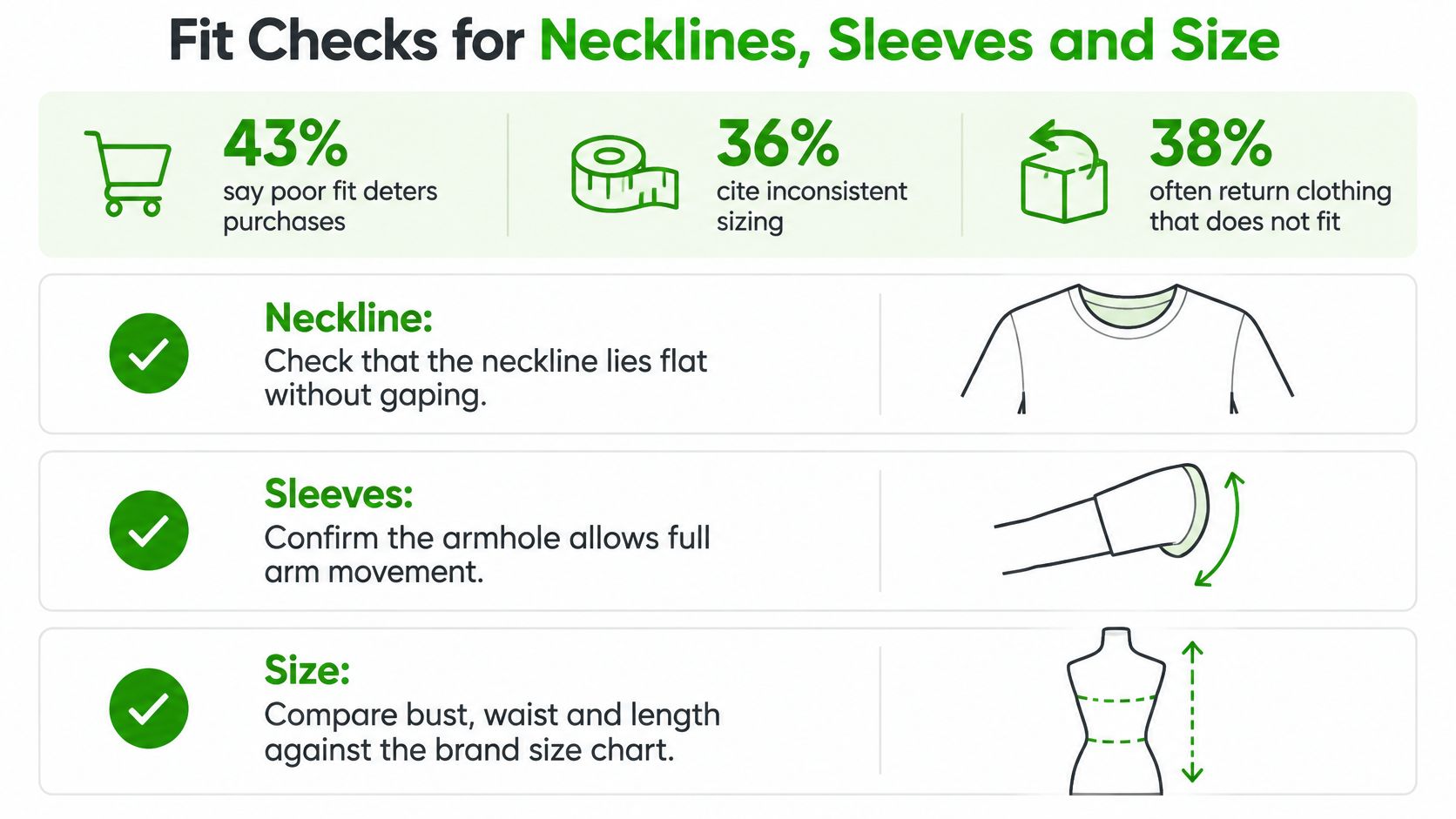
Fit deserves priority over color: 43% of consumers cite poor fit as a purchase deterrent, 36% cite inconsistent sizing, and 38% frequently return clothing because it doesn't fit; the same reporting says 81% would pay more for comfortably fitting garments, according to consumer findings on clothing sizing.
A saturated blouse makes construction details easy to notice. Pulling seams, a lifting hem or a strained button placket can distract from an otherwise appealing outfit.
Check the Blouse in Motion
- Shoulders: On a conventional set-in sleeve, the seam should sit near the shoulder edge. Deliberately dropped shoulders are a different design.
- Bust: Buttons should lie flat without horizontal pulling. Sitting and reaching forward reveal restrictions that standing still can hide.
- Sleeves: Long sleeves should finish around the wrist bone or slightly beyond, depending on the cut. Cuffs need enough room for movement under a blazer.
- Neckline: The edge should lie comfortably without gaping, and the shape should sit neatly inside the intended jacket lapels.
- Hem: Check both tucked and untucked proportions. A blouse that works tucked may feel too long or full when worn loose.
- Stretch: A non-stretch blouse needs movement allowance in its cut; it shouldn't rely on the fabric giving way.
Compare Measurements, Not Just Labels
Lay a well-fitting blouse flat and measure pit to pit, shoulder seam to hem, and sleeve length. Compare like-for-like garment measurements, remembering that a body-size chart isn't the same thing as finished garment dimensions.
For satin or non-stretch fabrics, consider the larger size if the bust pulls, then reassess the shoulders and cuff. Automatically sizing up can solve one problem while creating another.
A blouse should fit the body in motion, not just look correct during a still fitting-room pose.
Minor adjustments may help an otherwise suitable piece. The guide to tailoring for women can help distinguish a promising alteration from a cut that just isn't right.
Styling Your Red Top for Work, Weekends and Events
A red blouse earns closet space when it can shift tone with the pieces around it. The same shirt can read composed under a dark jacket, relaxed with denim, or formal with a cleaner neckline and sharper jewelry. The trade-off is range: the more distinctive the color, sleeve or embellishment, the fewer settings it will serve without adjustment.
For office-specific combinations, Cedar & Lily Clothier's guide to office-focused tops for work is a useful reference point. The practical split is between a dressy blouse, a relaxed daytime top and a stronger piece saved mainly for events.
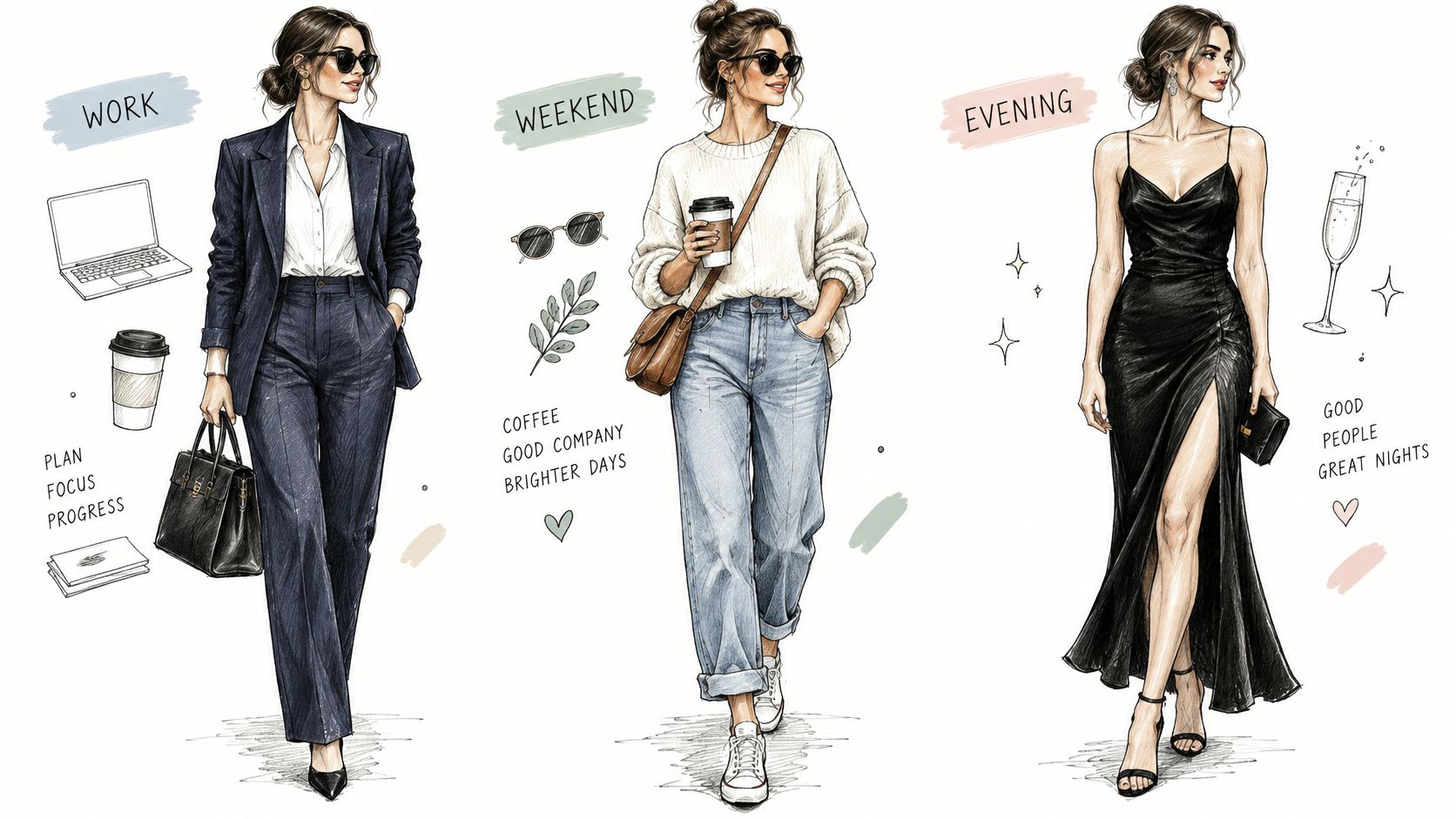
Work and Client Meetings
Pair burgundy or oxblood with a dark, well-cut jacket and fitted trousers or a pencil skirt. The deeper red sits closer to a neutral shirt while still giving the outfit intention, and the jacket creates a composed frame around the neckline.
For an interview or client meeting, start with crepe or an opaque poplin, then let workplace expectations set the final level of formality. Minimal jewelry usually keeps the message clear. If the blouse has a sheen, a matte jacket and quieter accessories keep it from reading evening-ready too early.
Weekends and Daytime Plans
Brick, rust and softened reds work well with dark-wash denim and a relaxed outer layer for brunch, errands or an informal gathering. A less rigid silhouette is easier here, especially if the blouse can be worn loose without swallowing the jeans.
Texture can do the work that a brighter shade would do at night. Embroidery, a softer drape or a gentle sleeve adds interest while keeping the outfit daytime appropriate. Check the full combination in motion, since a close outer layer can compress a fuller sleeve and change the whole line.
Dinner, Evening Events and Weddings
True red or ruby handles evening cleanly when the bottom stays dark and the jewelry looks deliberate. Let the neckline set the scale: an intricate collar often needs only earrings, while a simpler neckline can carry a necklace without crowding the face.
A coordinated dress or jumpsuit can feel simpler when a separate would require too much troubleshooting. A blouse still has value for someone who wants to change the mood with bottoms already in her wardrobe. For a wedding, ruby or muted red in a fabric with some structure is a considered starting point, provided the invitation and any couple-specific guidance allow it; evening timing alone does not make a dramatic blouse appropriate.
Occasion check: the right outfit respects the setting while still feeling like the woman wearing it.
Choose supporting pieces with the actual blouse in front of you. A jacket that looks right on a hanger can miss once the collar, sleeve volume and hem are working together.
Pairing Red Tops Across Seasons
A Monday blazer, a Saturday denim look, a Friday dinner: one red blouse can carry all three when the neutrals around it stay consistent. Navy, charcoal and gray cool the red down; camel, oatmeal and cream warm it. Black gives the sharpest contrast, which works well for evening but never has to be the default.
Seasonal dressing works better when fabric weight changes along with the color pairing. Cream trousers won't make a heavy blouse comfortable in warm weather, and a light top may need more than a dark color to carry it through winter.
Red Top Pairings by Effect and Season
The combinations below come up most often at the styling rack. Specific shades should be checked against current listings, since a navy or camel can skew warm or cool from one season to the next.
| Pairing partner | Effect on the outfit | Best season | Category to browse |
|---|---|---|---|
| Navy blazer | Polished and authoritative | Spring, fall | Blazers |
| Charcoal or gray layer | Sharp, professional, understated | Fall, winter | Blazers |
| Camel coat or jacket | Warm, classic, easy | Fall, winter | Outerwear |
| Dark-wash denim | Casual, relaxed contrast | Year-round | Denim |
| Cream, oatmeal or stone bottoms | Soft, lighter contrast | Spring, summer | Denim and tops collections |
| Gold or silver jewelry and belts | Dressed up, evening-ready | Year-round | Accessories |
For spring and summer, lighter-weight fabrics and cream or stone partners keep the combination visually light. In fall and winter, deeper red, a blazer and camel outerwear create a more substantial arrangement. The guide to layering clothes for winter covers the practical side, from base layers to coat fit.
Give the Same Blouse Different Jobs
A compact rotation makes repeat wear intentional:
- Monday: Add a navy or charcoal blazer and fitted bottoms. Keep the hem controlled so it doesn't bunch beneath the jacket.
- Saturday: Switch to dark denim and an outer layer with enough sleeve room. A relaxed tuck can change the proportion without changing the blouse.
- Friday dinner: Remove the daytime layer, add jewelry and choose a dark bottom with a cleaner finish.
The blouse doesn't need a new accessory for every outing. Consistent shoes, a familiar belt or simple earrings can keep these combinations connected to the wearer's existing style.
A blouse that works for a Monday blazer, a Saturday denim look and a Friday dinner earns its place in the closet. A striking top with no compatible jacket, bottom or underlayer stays an occasional piece, however appealing its shade.
Caring for Red Tops So the Shade Lasts
Highly saturated dyes can release color during laundering, and washing conditions influence that release, as discussed in research on dye discharge and washing fastness. The garment label comes first because red fabrics don't all respond to the same routine.
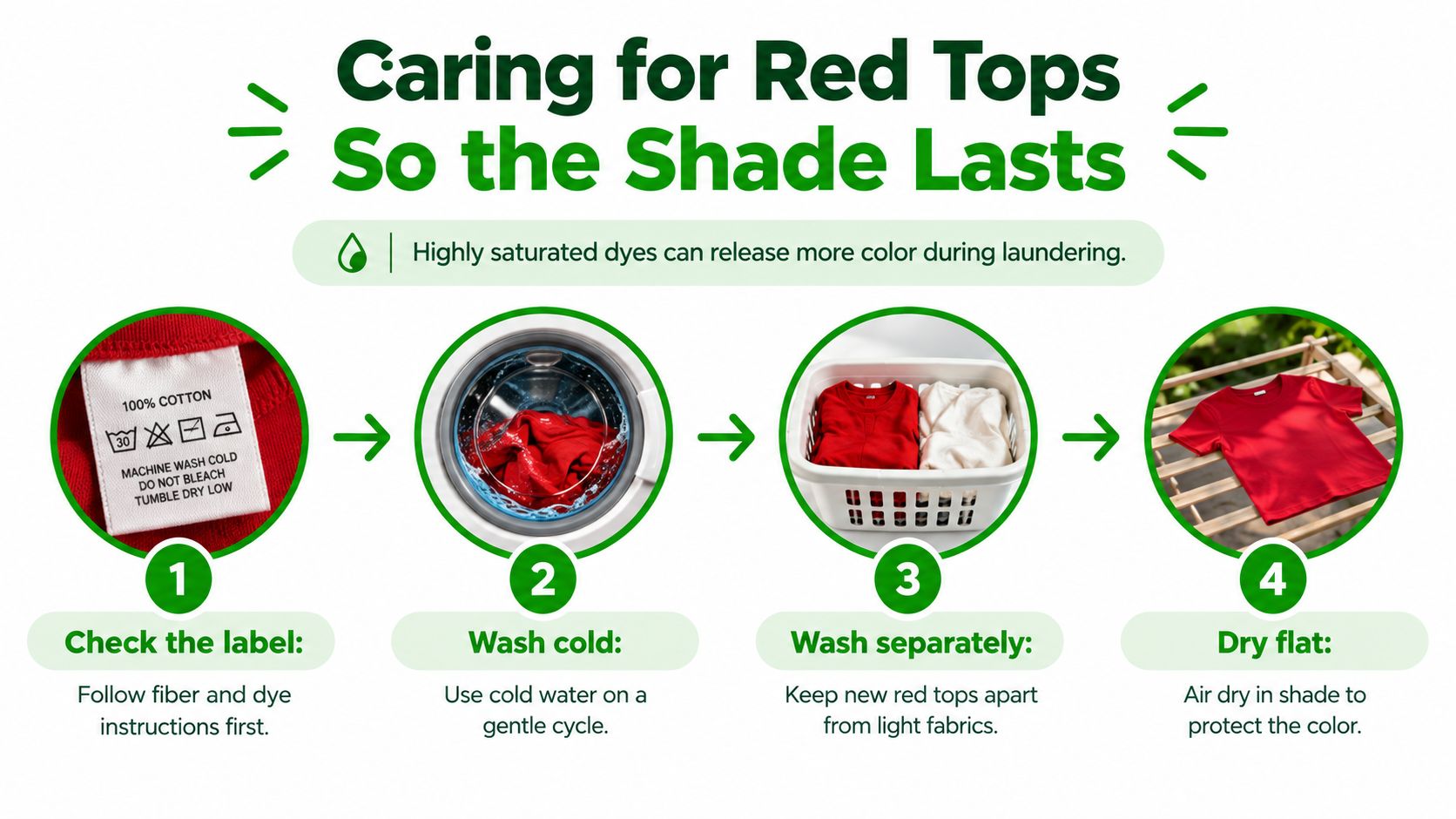
A Label-Led Care Routine
- Check the instructions. Confirm washing temperature, detergent guidance and drying method. A dry-clean-only blouse shouldn't be placed into a home-washing routine.
- Separate a new red top. For initial washes, keep a washable blouse alone or with compatible deep colors rather than pale garments.
- Choose the permitted temperature and cycle. Cool water and a gentle cycle may be appropriate, but the label decides. Standardized testing conditions aren't a home-care recommendation.
- Reduce unnecessary abrasion. Turn the blouse inside out when suitable and use the recommended detergent. Mild detergent isn't automatically right for every specialty fabric.
- Skip unapproved additives. Avoid bleach and unnecessary fabric softener unless explicitly permitted. Extra products aren't a substitute for correct washing.
- Follow the drying direction. Dry flat or hang in shade when allowed. Neither hanging nor tumble drying is suitable for every blouse.
- Press carefully. Use the label's heat setting on the reverse where appropriate, or steam only if the fabric permits it.
- Store thoughtfully. Keep the blouse away from direct sunlight. If dye transfer remains a concern, avoid contact with pale clothing and seek care guidance.
Care principle: A color-preserving routine must also protect the blouse's shape, finish and construction.
Repeated dye release, visible transfer or changes after cleaning deserve attention before the next wear. Guessing at a stronger wash or hotter dryer can create another problem rather than solve the original one.
Try Your Red Top in Person in Tulsa or Jenks
Red is the shade most likely to disappoint on a screen. A blouse that reads as a clean cherry online can arrive leaning orange or pink, and coverage that looked opaque turns sheer in daylight. Holding the fabric up, checking it against your skin and moving in it settles those questions in minutes.
Cedar & Lily Clothier keeps Oklahoma storefronts at Utica Square in Tulsa and in downtown Jenks, alongside its online store. The rails carry designer and contemporary labels rather than an in-house line, with weekly arrivals across tops, blazers, denim and outerwear. Associates can check local availability, suggest pairings and flag when a size runs smaller or looser than the tag implies.
Make the Visit Useful
Bring one neutral you already wear, the trousers, denim or jacket the blouse needs to sit beside, since a familiar reference makes shade and proportion easier to judge. Say what the top is for. Office dressing, a wedding and a casual dinner each ask for a different neckline, coverage and finish, and naming the occasion lets an associate pull a short rail instead of a full one. Then request the whole fit check at once: shoulder placement, sleeve movement when you reach forward, and how the hem behaves tucked and untucked.
A fitting room also exposes the trade-offs a product page hides. A heavier crepe holds shape for work but can feel warm by evening, while a lighter weave drapes well for weekends yet may need a layer under office lighting.
If you shop online, apply the same checks to fabric weight, opacity and fit notes before ordering. Free shipping applies to orders of $250 and above, and size exchanges leave room to refine the fit after delivery.
Cedar & Lily Clothier offers curated designer and contemporary clothing with personal styling help for choosing a red blouse and the pieces to wear alongside it. Visit Cedar & Lily Clothier online, or stop into Utica Square in Tulsa or downtown Jenks to compare shades, feel the fabrics and find a fit that works beyond a single occasion.