

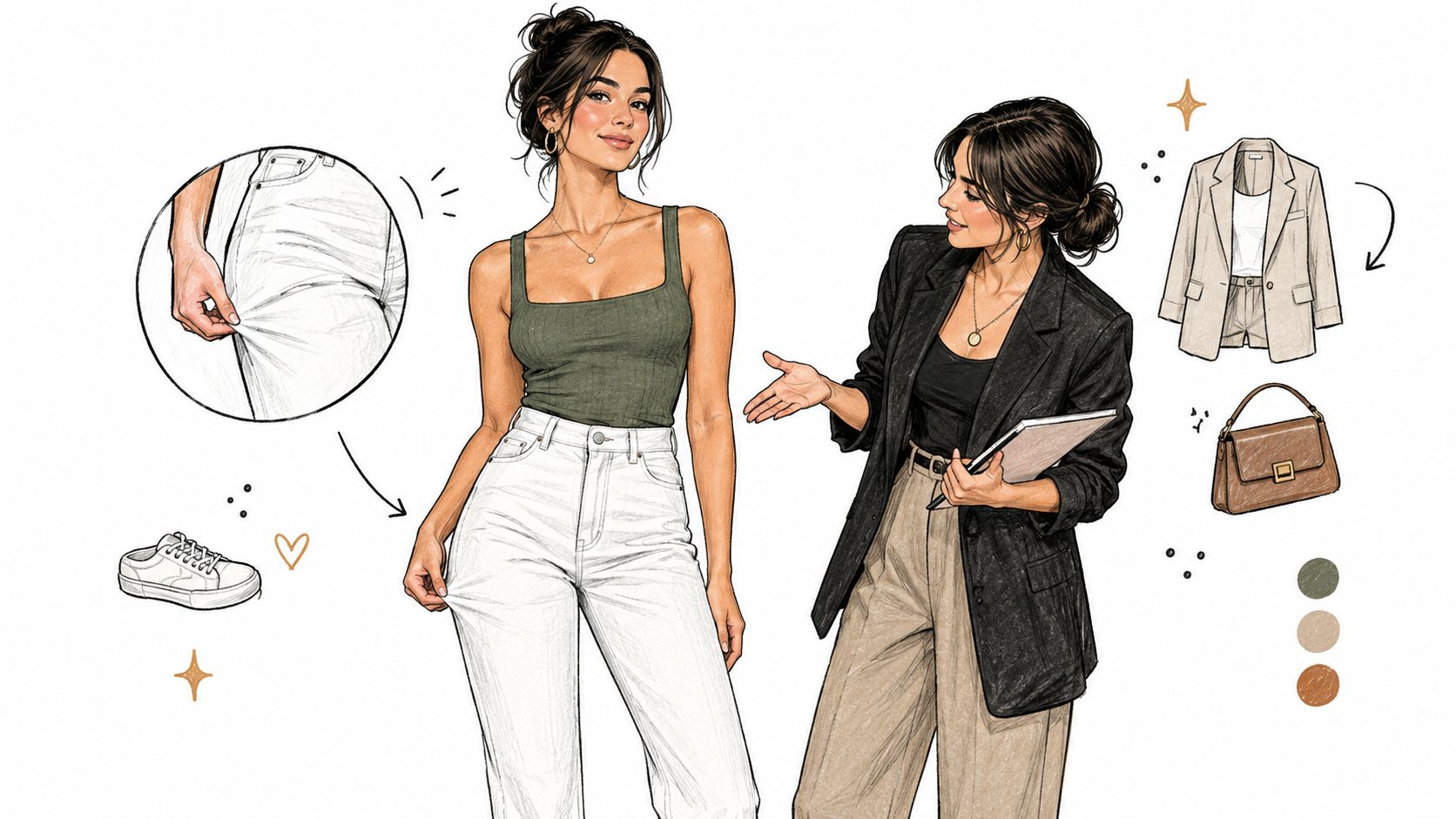
The fitting-room moment is familiar. A shopper pulls on white denim jeans, checks the front, turns sideways, and starts wondering whether the fabric is opaque enough, whether the waistband will relax, and whether one coffee spill will end the relationship. Those concerns are sensible. White denim exposes poor fabric, imprecise fit, and careless finishing faster than blue denim does.
The right pair solves those problems before styling begins. A polished white jean should feel substantial without feeling stiff, move comfortably without losing its shape, and work with the wardrobe already used for office days, weekends, dinners, and occasions. Cedar & Lily Clothier's curated denim and contemporary clothing selection gives shoppers a chance to assess those details online or in person, with fit guidance available at the Tulsa and Jenks boutiques.
Table of Contents
- Why White Denim Feels Risky (And How to Wear It Right)
- Understanding Fabric Opacity and Quality
- Choosing the Perfect Fit and Stretch
- Styling White Jeans for Every Occasion
- Care and Maintenance Secrets
- Shop the Collection at Cedar & Lily
Why White Denim Feels Risky (And How to Wear It Right)
A shopper who avoids white denim usually isn't afraid of the color itself. She's afraid of the details the color reveals: visible pocket bags, cling through the hip, a waistband that cuts in, or a stain that turns an easy outfit into a maintenance project. Blue jeans can disguise small compromises. White jeans ask the fabric and construction to earn their place.
That pressure is also what makes a well-chosen pair look so refined. White denim jeans sharpen a simple blouse, make a blazer feel lighter, and create a clean foundation for accessories. For color ideas that keep the outfit balanced rather than stark, Cedar & Lily's guide to neutral color combinations offers useful direction.
A workwear beginning
White denim has a more meaningful history than its spring-and-summer reputation suggests. In 1872, tailor Jacob W. Davis contacted San Francisco merchant Levi Strauss with an idea for reinforcing work trousers at stress points with copper rivets. The first riveted trousers used white cotton duck, not the indigo denim that later became standard, and Davis and Strauss received the U.S. patent for the rivet-reinforced design on May 20, 1873. The history is documented by the San Francisco Arts Commission's account of Levi Strauss.
White duck was selected for function. It was sturdy and tightly woven, while blue denim eventually became dominant because indigo helped conceal dirt and wear. Over time, jeans moved from workwear for miners, laborers, farmers, and railroad workers into mainstream dress, then became associated with youth culture and rebellion during the 1950s and 1960s before entering broad consumer fashion in the 1970s, as the same historical source explains.
Practical rule: White denim earns investment-piece status when its fabric and fit feel intentional, not merely seasonal.
Commercial interest has supported that staying power. Lyst reported that searches for white denim rose 42% from the beginning of March 2019, while sales of white jeans nearly surpassed blue-jean sales during the final week of May that year. The report also recorded an 11% year-over-year rise in overall online denim searches and approximately 13 jeans searches per second worldwide in its dataset, with denim ranking as the third-most-searched fashion category. Those figures come from FashionUnited's report on Lyst's denim findings.
The practical conclusion is simple: white denim isn't a fragile novelty. It's a modern interpretation of an original riveted-trouser material, and the best versions can carry a woman from polished workwear to relaxed weekend dressing.
Understanding Fabric Opacity and Quality
Opacity comes first. A flattering silhouette can't rescue white denim that becomes sheer under natural light or shows every pocket edge. Shoppers should inspect the front rise, seat, and upper thigh while standing and sitting, because tension changes when the body moves.
White denim is generally created by bleaching cotton bull denim rather than applying a conventional colored dye. Manufacturers may use controlled caustic and hydrogen-peroxide systems, adjust bath temperature, and add optical brighteners that counter yellow undertones by converting ultraviolet energy into visible blue fluorescence. The result is not one universal white. Peroxide concentration, alkalinity, temperature, and brightener selection can shift the fabric toward optical white, a warmer white, or ecru. The finishing process is described in Sourcing Journal's explanation of white denim production.
What the hand feel reveals
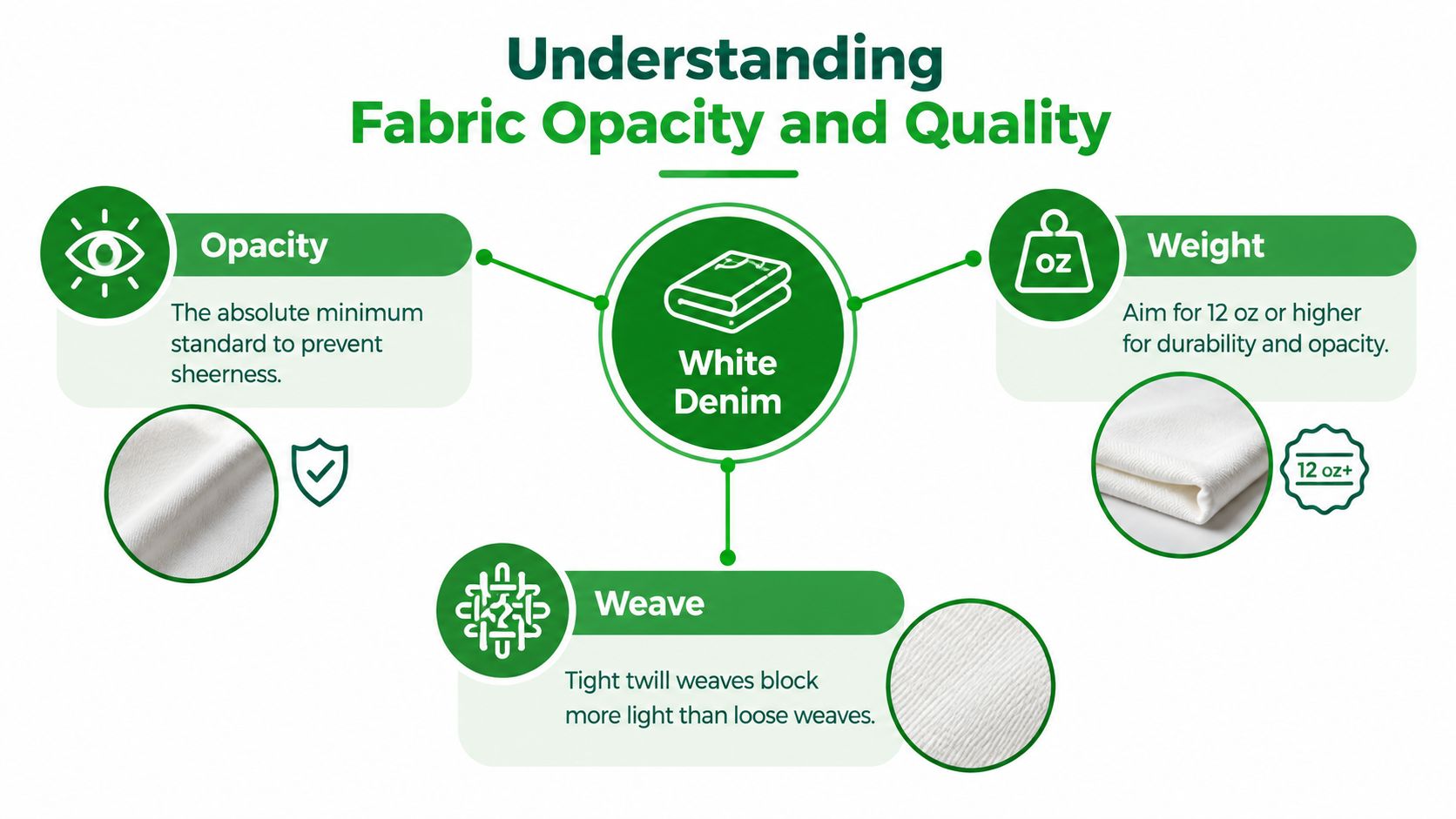
A quality pair usually has a dense, even hand feel. It shouldn't feel paper-thin, overly slick, or loose at the pockets. A tight twill weave blocks more light than a loose weave, and a balanced fabric can provide coverage without creating unnecessary bulk.
The shopper's inspection should include:
- Front coverage: Check the fabric in direct light, then sit and bend the knees. Sheerness often appears when the denim stretches.
- Pocket construction: Look for pocket bags and lining that sit smoothly rather than creating visible shapes beneath the white fabric.
- Surface uniformity: Optical brighteners can produce a crisp appearance, but their effect may decline with ultraviolet exposure and repeated washing. Textile research also reports that brighteners can reduce light fastness in some fibers, so prolonged sun exposure deserves caution.
- Shade accuracy: Compare optic white, clean white, warm white, and ecru against the tops and jackets already in the wardrobe. A warmer white can look more integrated with beige, camel, and ivory, while a bright white creates sharper contrast.
Responsible finishing requires better questions
Sustainability can't be judged from a color name or a recycled-fiber claim alone. Denim washing and finishing can be a production hotspot, and a life-cycle assessment identified industrial washing as the main contributor to impacts for the jeans studied. A systematic review reported that newer approaches, including enzymes, ozone, laser, and recycled materials, can reduce water and chemical consumption by as much as 60%, although comparisons remain difficult when studies use incomplete or inconsistent boundaries. The evidence appears in Springer Nature's review of denim impacts and emerging finishing methods.
The most responsible purchase is one that gets worn repeatedly. Shoppers can ask about washing technology, wastewater treatment, fiber blend, durability, recycled content, and the life-cycle boundaries behind sustainability language. A durable pair that remains opaque, comfortable, and attractive has a stronger practical case than a garment that looks appealing only at first try-on.
For more guidance on judging light-colored garments, Cedar & Lily's discussion of white skirts and tops provides a useful companion perspective.
Choosing the Perfect Fit and Stretch
White denim requires a stricter fitting-room routine because every seam and tension line is visible. The ideal pair feels secure at the waist, follows the hip without pulling, and keeps a clean line through the thigh and knee. Stretch should support movement, not replace good patternmaking.
Read the fiber label
Start with the composition. Cotton provides the familiar denim structure, while elastane or spandex contributes flexibility. Textile-engineering research reports that adding approximately 3% spandex to cotton can create roughly 15% stretch, and blends containing 1% to 5% Lycra can provide body-conforming comfort and ease of movement. The same research identifies a tradeoff: increasing elastane can improve stretchability and tensile behavior while reducing tear strength and recovery. The findings are detailed in this textile-engineering study of cotton and spandex blends.
More stretch isn't automatically more flattering. A very flexible pair may feel wonderful for a few minutes, then relax at the waist, seat, or knees. A nearly rigid pair may hold a sharp silhouette but demand more patience while moving, sitting, and traveling.
Test recovery, not just comfort
A denim review identifies elastic recovery as a central distinction between rigid and stretch denim. Reported elastane content can range from 1% to 10%, while total fabric stretch can range from approximately 15% to more than 80%, depending on the elastane level and weave. Reported good-quality denim recovery falls around 80% to 95%, according to this review of stretch denim fabric.
In the fitting room, the shopper can use a practical sequence:
- Stand naturally. The waistband should sit flat without digging in, and the front pockets shouldn't gape.
- Sit down. Check whether the rise stays comfortable and whether the fabric pulls sharply across the fly or hip.
- Walk and bend. Notice whether the knees collapse immediately or the denim returns to its original line after movement.
- Check the back view. White fabric should skim the seat rather than cling to every contour or create horizontal stress lines.
- Consider the post-wash fit. Washing can increase dimensional shrinkage, fabric weight, thickness, and fractional cover, especially as elastane content rises. A controlled study using cotton and cotton/elastane denim found these changes after five wash cycles at 30°C for 40 minutes under ISO 6330-based household laundering. The study is available through Materials.
The right amount of stretch is the amount that lets the wearer move freely and still leaves the jeans looking composed at the end of the day.
A pair that feels slightly firm but comfortable can be a better investment than one that feels loose and luxurious in the fitting room. For a broader denim evaluation, Cedar & Lily's guide to choosing the perfect jeans can help shoppers compare rise, leg shape, and everyday wear needs.
Styling White Jeans for Every Occasion
White denim jeans can move across dress codes, but the styling needs to change with the setting. The most effective approach is to choose one clear direction, fitted, relaxed, or evening-focused, instead of combining several competing statements.
For polished workwear
A straight or gently wide white jean creates a clean base for a structured blazer and a refined top. A tonal ivory blouse keeps the outfit quiet and elegant, while navy, black, or a deep neutral adds definition. Pointed flats or a low heel lengthen the line without making the outfit feel formal for its own sake.
For the office, the fabric matters as much as the silhouette. Choose a pair with enough coverage to remain professional under bright indoor lighting, then keep accessories restrained: a structured handbag, simple jewelry, and a belt that echoes the shoe. Cedar & Lily's guide to wearing a blazer with jeans offers further outfit direction.
For weekends and travel
The same white jeans can feel relaxed with a soft knit, a tucked-in tee, or a lightweight overshirt. Sneakers and a shoulder bag make the look practical, while a sandal and layered jewelry create a more finished lunch or gallery outfit. A cropped or ankle-length hem works especially well with flats, whereas a full-length leg creates a longer line with heels or wedges.
A denim jacket can add texture without making the outfit look too coordinated. If the jacket includes fur trim or another special finish, caring for a fur-trim denim jacket is a useful resource before combining it with a frequently worn white base.
For dinner and occasions
White denim can support an occasion outfit when the rest of the look provides enough polish. A satin-effect blouse, sculptural earrings, and an elegant heel shift the jean away from casual territory. For a softer result, pair warm white denim with cream, champagne, or blush. For stronger contrast, black accessories create a graphic evening look.
The comparison is useful:
| Setting | White denim direction | Finishing pieces |
|---|---|---|
| Workday | Straight or wide leg with a tailored jacket | Refined blouse, belt, structured bag |
| Weekend | Ankle or relaxed silhouette | Soft knit, sneakers, shoulder bag |
| Dinner | Clean full-length or slim silhouette | Statement jewelry, dressy blouse, heel |
| Occasion-adjacent | Substantial, polished fabric | Coordinated neutrals and elevated accessories |
A white jean shouldn't compete with an event dress, but it can be an excellent choice for a casual rehearsal dinner, a stylish daytime celebration, or an upscale evening that doesn't require formalwear. The key is choosing denim with strong coverage and pairing it with pieces that clearly communicate intention.
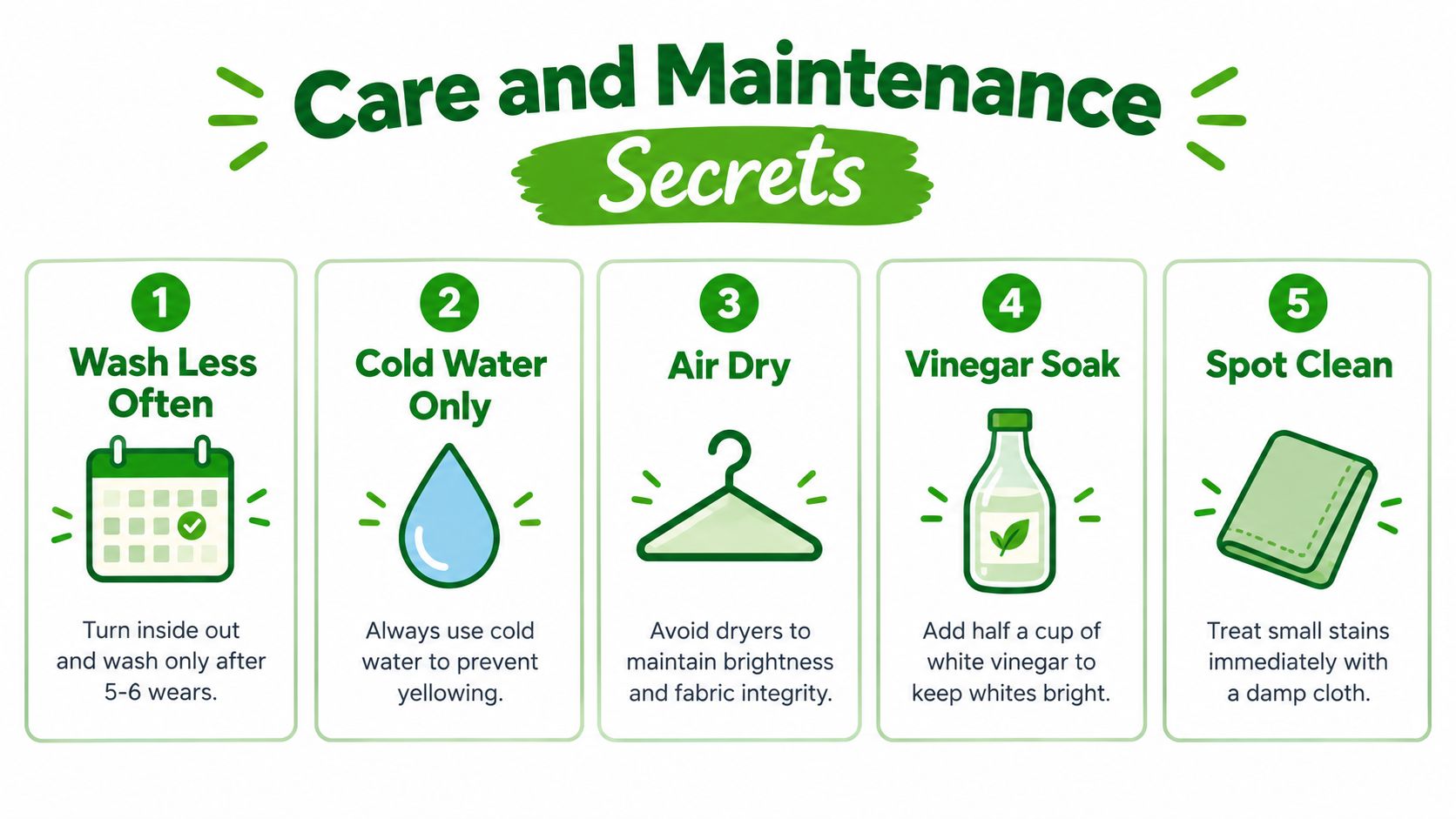
Care and Maintenance Secrets
Frequent washing feels like the responsible response to visible marks. For white denim, it can shorten the garment's useful life. Research on jeans care found that repeated laundering removes mass, accelerates color loss, and reduces tensile strength. Jeans washed about every two days deteriorated more than jeans washed roughly every 20 days over an equivalent 60 days of wear, as reported in the International Journal of Consumer Studies research on laundering frequency.
The better routine is selective cleaning. Air the jeans between wears, treat small marks promptly, and reserve a full wash for accumulated body oils, heavier soil, or odors that airing doesn't resolve.
Match the treatment to the stain
Food and makeup marks usually call for immediate, localized attention rather than aggressive full-garment treatment. A cool damp cloth can lift a fresh surface mark before it sets. Body oils may need a careful wash according to the care label, especially around the waistband and pocket openings.
Chlorine bleach isn't a default whitening solution. White isn't synonymous with bleach-safe, particularly when the garment contains elastane or has a coating or special finish. Oxygen-based products may be appropriate for some washable fabrics, but shoppers should follow the label, test cautiously where possible, and avoid assuming that a stronger product is safer.
Keep temperature and drying under control
Denim finishing research found that treatment temperatures around 40°C to 45°C for 30 to 35 minutes balanced strength, softness, and shrinkage in cellulose-enzyme washing. Higher temperatures, particularly 55°C to 65°C, produced a more noticeable reduction in color shade, while approximately 70°C did not continue the effect because enzyme activity weakened. The industrial context differs from household laundering, but the lesson is clear: hotter isn't automatically cleaner or better. The measured findings are available in this denim-finishing study.
For household care, cool or lukewarm washing is the sensible default unless the label says otherwise. Turn the jeans inside out, use a mild detergent suitable for the fabric, and avoid unnecessary high-heat tumble drying. Heat can alter stretch fibers and affect fit, while prolonged direct sun may work against the appearance created by optical brighteners.
Care standard: Treat the stain first, wash the garment second, and use heat only when the care label requires it.
Airing and spot-cleaning won't replace laundering forever, but they reduce needless stress on the fabric. For related garment-maintenance guidance, Cedar & Lily's article on avoiding pilling offers helpful habits for preserving a polished wardrobe.
Shop the Collection at Cedar & Lily
The right purchase brings together coverage, recovery, comfort, and versatility. Before checkout, a shopper should confirm that the fabric remains opaque while seated, the waistband lies flat, the denim recovers after walking, and the shade works with existing neutrals. She should also know the care label before the first wear and have a stain plan that doesn't rely on constant washing.
Cedar & Lily Clothier carries curated designer and contemporary women's clothing, including denim, blazers, tops, outerwear, accessories, and occasion pieces. The collection includes brands such as Vanessa Mooney and Lace the Label, with online shopping at cedarandlilyclothier.com and personal fit assistance at the Utica Square boutique in Tulsa or the downtown Jenks storefront.
The advantage of trying white denim in person is practical. Shoppers can check opacity under real light, sit and move in the fitting room, compare optic white with warmer shades, and build the complete work-to-weekend outfit with guidance from the Cedar & Lily team.
Cedar & Lily Clothier offers curated denim and polished wardrobe pieces for workdays, weekends, and occasions, with styling help available online and in person. Visit Cedar & Lily Clothier, or stop by Utica Square in Tulsa or downtown Jenks to find white denim jeans that fit beautifully and deserve regular wear.