


A familiar wardrobe problem arrives before a dinner reservation or a casual Friday: the jeans feel comfortable, but they don't look polished enough for the occasion. Skinny denim can feel restrictive, while a dramatic flare can overwhelm an otherwise refined outfit. Slim bootcut jeans for women solve that tension with a close, structured fit and just enough movement at the hem to make an outfit feel intentional.
The right pair can move from a structured blazer at work to a silk blouse at dinner without looking costume-like. The key isn't following a trend blindly. It's choosing the right rise, knee break, fabric recovery, inseam, and footwear proportion, then styling the jeans with pieces that bring the silhouette into focus.
Table of Contents
- The Modern Slim Bootcut Silhouette
- Mastering Proportion and Fit
- Fabric Blends and Construction Details
- Choosing the Right Cut for Your Body Type
- Polished Outfit Formulas for Every Occasion
- The Fitting Room and Care Checklist
- Refine Your Denim Collection with Cedar & Lily
The Modern Slim Bootcut Silhouette
A polished denim wardrobe should handle a client meeting, an early dinner, and a weekend gathering without changing its point of view. Slim bootcut jeans for women do that through a close line at the waist, hips, and thighs, followed by a controlled opening below the knee. The hem creates movement without the sweeping volume of a dramatic flare, so the silhouette looks refined rather than theatrical.

What makes the current cut different
Slim bootcut jeans occupy the space between straight-leg denim and a traditional flare. Straight-leg jeans maintain a fairly even width from the knee to the hem. Flare jeans widen more visibly, often beginning higher on the leg. Slim bootcut denim stays narrow through the thigh and knee, then opens modestly to accommodate boots, pumps, and other polished footwear.
That measured release makes the cut particularly useful for professional dressing. The hem works with a blazer, fine-gauge knit, or tucked blouse, while the restrained shape keeps the outfit focused on the wearer. A dramatic flare calls for stronger styling, and a skinny jean creates a tighter, sharper line. Slim bootcut denim supplies definition with enough ease to keep the overall look composed.
The 2026 interpretation is slimmer through the thigh and quieter at the hem, giving the shape the versatility of a wardrobe staple. Guidance on Vogue's bootcut styling coverage likewise discusses cigarette-leg and skinny-bootcut proportions within the current fashion conversation. For a boutique wardrobe, the takeaway is practical: choose a hem that supports your footwear instead of competing with it.
Why the shape keeps returning
Bootcut denim remains useful because its familiar upper line pairs with several shoe profiles. A polished heel lengthens the leg, a sleek boot reinforces the intended shape, and a low-profile flat keeps the outfit understated. The inseam must be adjusted to the selected shoe so the hem falls cleanly and does not bunch.
Women's jeans first appeared in the 1930s, and denim has continued through distinct style eras, including renewed interest in bootcut shapes during the 1960s and the 2000s. A historical overview of denim's evolution places bootcut within that broader design cycle rather than treating it as a brief novelty.
The fitting-room test is straightforward: check whether the opening below the knee looks deliberate with the shoes already in your wardrobe. If it does, the silhouette earns a place in a polished work-to-weekend rotation. This comparison of straight-leg and bootcut jeans clarifies the distinction before you choose your pair.
Mastering Proportion and Fit
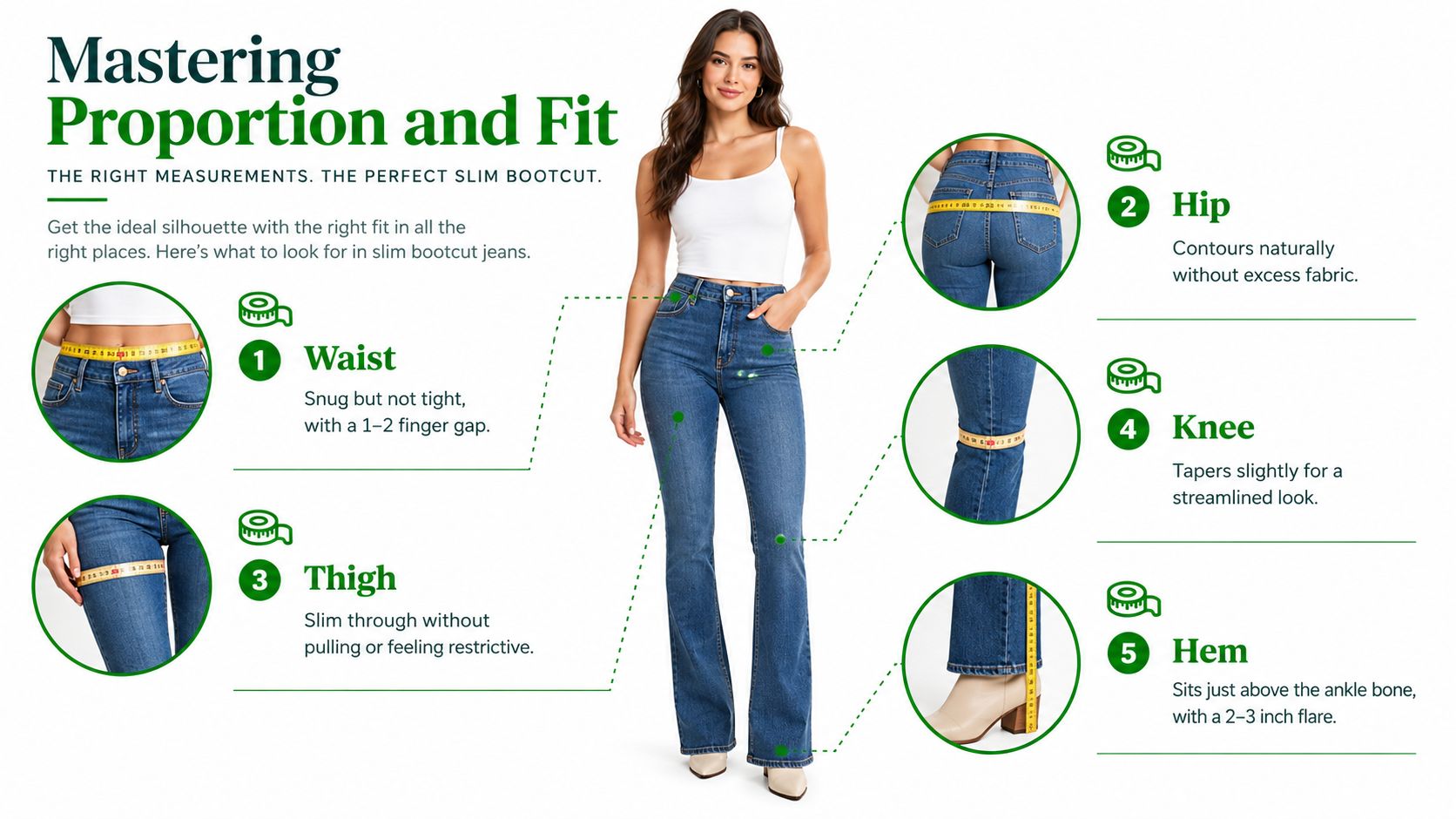
A polished slim bootcut jean should sit right to your proportions, not merely close to your size. The waistband must stay secure without gaping, the upper leg should follow the body without horizontal pulling, and the hem should form one uninterrupted line over the shoe. Because the cut shifts from a narrow thigh to a modest opening, small fit errors are easy to see.
Start with the waistband and rise
The waistband should sit firmly while standing and remain comfortable when seated. Gaping at the center back usually means the waist is too large or the cut does not suit your waist-to-hip ratio. Digging signals a poor size or rise choice, even when the hips and thighs appear smooth.
Front rise controls the outfit's visual balance. A higher rise lengthens the appearance of the legs and gives a tucked blouse a secure, polished foundation. A mid or lower rise suits a shorter torso line and works well with cropped jackets. Petite shoppers should check where the rise lands. Excess fabric through the front can compress the frame. This practical bootcut styling guide also highlights the role of inseam and front rise in petite proportions.
Judge the leg line in motion
The thigh should look smooth without appearing painted onto the body. Pulling across the hip or upper thigh disrupts the fitted line and can make the hem seem more dramatic. The knee should stay close to the leg without sharp horizontal strain lines.
Test the jeans while walking and sitting. A good pair keeps its clean line through both movements.
The hem determines whether the silhouette looks deliberate. A full-length bootcut should nearly graze the ground, leaving about a 0.5-inch gap with flat shoes, as outlined in a detailed bootcut fit guide. It should cover much of the shoe while staying clear of the floor. A short hem weakens the leg-lengthening effect. Excess length creates heavy folds over the toe or drags at the back.
Fitting-room rule: Test the hem with the shoes you will actually wear, not the footwear nearest the mirror.
Measurements vary widely within the bootcut category. One style may list a 10 1/4-inch high rise, 32-inch inseam, and 17 3/4-inch leg opening, while another may list a 31-inch inseam, 16-inch leg opening, and 11-inch front rise. These real-garment measurements show why the word “bootcut” cannot determine the finished proportion. Rise, inseam, and opening must be assessed together.
Use this guide to choosing the perfect jeans before a premium-denim fitting, then judge the pair on your body, with your footwear and intended wardrobe in mind.
Fabric Blends and Construction Details
A slim bootcut can look polished in the fitting room yet lose its authority after a full day if the fabric collapses at the knee or stretches across the seat. Choose denim that flexes comfortably for sitting and walking, then returns to its original shape. Fabric composition directly affects both comfort and the clean proportions required for professional and occasion-ready dressing.
The stretch range that protects the silhouette
For everyday wear, a blend with about 2% to 5% elastane or spandex usually offers the strongest balance. Below 2%, denim behaves more like rigid fabric and may require a longer break-in period. Within the 2% to 5% range, it allows movement while preserving the slim line through the hip, thigh, and knee.
Recovery determines whether that polished line lasts. Stretch lets the fabric move, while recovery helps it regain its original shape. Without enough recovery, the thighs loosen at high-stress points, the knees bag, and the seat begins to sag. The altered shape can disrupt the relationship between the knee and hem, making the flare sit unevenly over footwear. This stretch-denim guidance explains how elastane content affects break-in, comfort, and shape retention.
Read the composition as a design plan
A refined blend gives each fiber a practical role:
- Cotton supplies structure and the familiar denim hand.
- Lyocell adds softness and fluid drape, helping the fabric skim the body rather than cling.
- Polyester can support durability and stability.
- Elastane provides comfort and recovery through the hips, thighs, and knees.
One stretch-denim example uses 51% cotton, 39% lyocell, 5% polyester, and 5% elastane. The garment details for this stretch-denim example show how structure, drape, and stretch can work together in a closer-fitting silhouette.
Construction completes the effect. A classic five-pocket design, clean waistband, stable fly, and full-length inseam support a controlled, boutique-ready finish. The slim bootcut should skim the hips, hold a consistent line through the knee, and open gradually at the hem. Bulky pocket placement or an unstable waistband can interrupt that proportion, even when the denim feels soft.
Turn the jeans inside out before buying. Read the care label, inspect the seams, and check for uneven topstitching or visible stress. Comfort fibers deserve careful washing, and denim with weak finishing will not perform like a lasting wardrobe piece. The boutique jeans collection provides a useful reference for judging denim as both a fabric choice and a wardrobe decision.
Choosing the Right Cut for Your Body Type
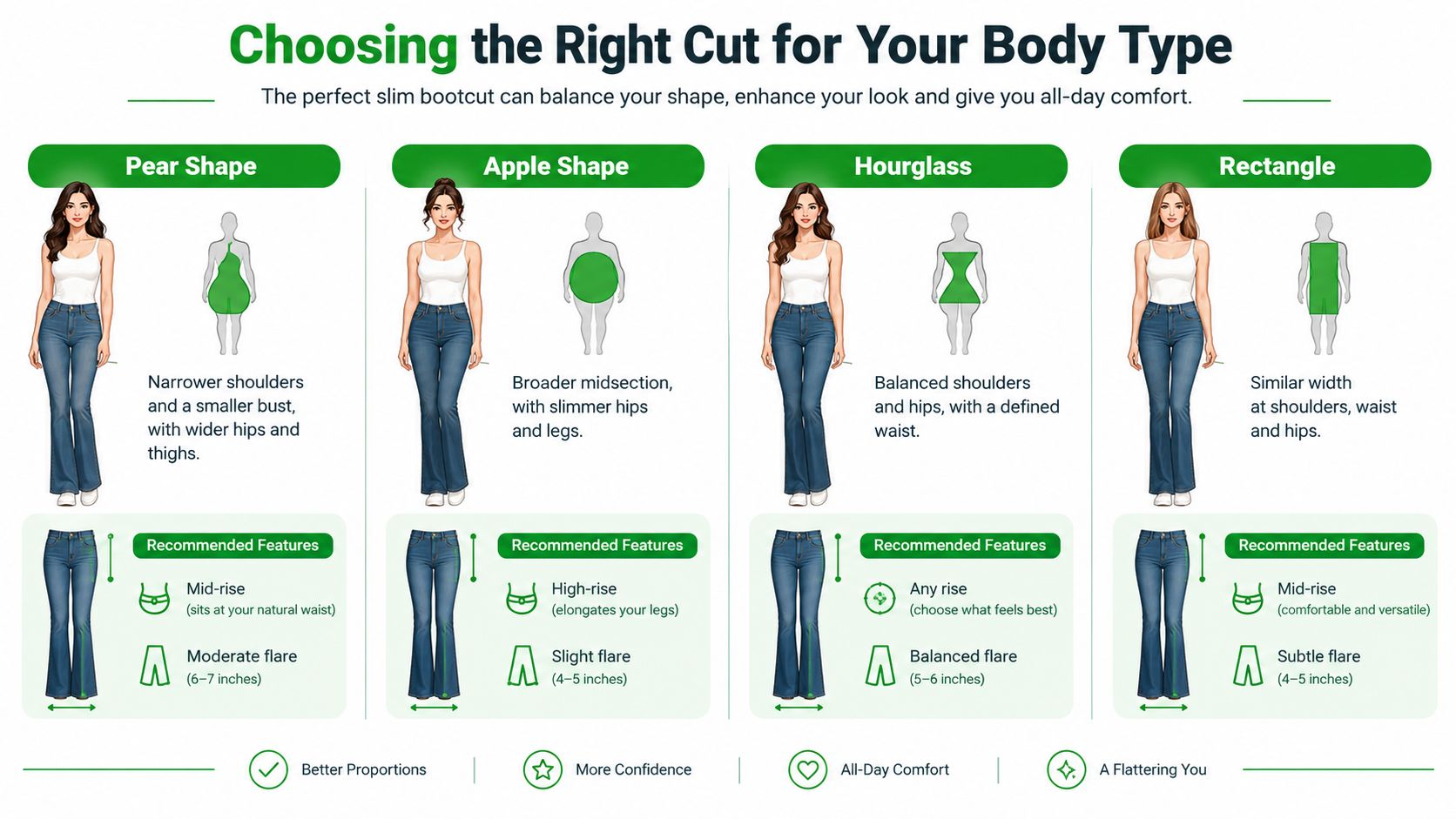
A polished slim bootcut begins with proportion, not a body-shape label. Rise, inseam, thigh ease, and hem opening should work together to support the wearer's natural lines. The right pair creates balance, follows the body without distortion, and looks composed in professional and occasion-ready wardrobes.
Balance the upper and lower silhouette
The shape is fitted through the hip and thigh before flaring slightly from the knee to the hem, which can balance the shoulders and hips while emphasizing curves. A denim fit guide on bootcut construction illustrates this construction clearly. For a refined result, choose a hem opening that provides movement without overpowering the slim upper leg.
For a pear-shaped frame, select denim that follows the hip without pulling and keeps the flare moderate. A structured upper layer or lighter top can draw attention upward, while a dark, uninterrupted leg line keeps the lower half sleek. Check the back pockets as well. Their placement should support the shape rather than add unnecessary width.
An apple-shaped frame benefits from a secure higher rise that creates a smooth foundation beneath a blouse or knit. Keep the hem restrained, and choose tops that fall cleanly over the midsection instead of clinging. A stable waistband matters here because shifting fabric can break the line of an otherwise polished outfit.
An hourglass frame can suit several rise options when the waistband follows the natural waist and the hip fit preserves the curve. Choose a balanced flare that echoes the body's proportions without exaggerating them. The denim should shape the figure, not flatten it.
A rectangle frame often benefits from a rise and top combination that defines the waist. A subtle hem opening introduces movement while keeping the silhouette controlled enough for formal settings.
Make inseam decisions by height and shoe
Petite shoppers should prioritize a rise that sits neatly below or on the belly button and an inseam that avoids excessive stacking. Too much fabric at the ankle overwhelms the subtle flare, while a hem ending above the shoe interrupts the intended vertical line.
Taller women can often choose a longer inseam for an elegant sweep over heels or boots. The hem should meet the shoe cleanly, never pool across the floor. A longer leg line looks especially refined when the proportions above it remain tidy.
The fitting-room test is movement. Sit, walk, turn sideways, and inspect the back view. If the waist shifts, the hips pull, or the hem twists, choose another cut. For more guidance, use these principles alongside the garment's actual measurements in this resource on dressing for different body types.
Polished Outfit Formulas for Every Occasion
Slim bootcut denim earns its place in a polished wardrobe when every supporting piece respects the silhouette. Keep the upper half neat or softly structured to balance the wider hem. Controlled volume works well when tailoring, fabric, or a precise tuck keeps it from overwhelming the figure.
For the office
Choose a dark-wash slim bootcut with a silk blouse and structured blazer for the most reliable professional formula. A full tuck defines the waist, while a front tuck works when the blazer already provides shape. Pointed-toe shoes or sleek boots continue the line from the hem and make the outfit appropriate for a polished work setting.
A refined belt can sharpen the waist without crowding the look. Keep jewelry aligned with the blouse neckline, and let the denim remain the foundation. For a softer office combination, pair the jeans with a fine knit and structured jacket. This preserves the clean proportion while reducing formality.
The finish depends on restraint. Keep the wash dark, the layers clean, and the footwear simple.
For brunch and refined weekends
Weekend dressing should feel relaxed while the denim remains the most polished element. A contemporary knit, fitted cardigan, or crisp button-front top adds ease without making the outfit careless. Finish with a compact shoulder bag and understated jewelry for errands, brunch, or an informal gathering.
A cropped jacket works particularly well because it ends near the waist, keeping the jeans' slim upper block visible. Longer cardigans also suit the cut when they fall cleanly and avoid placing excess fabric across the hips. Choose a defined shoulder or a smooth, lightweight knit to maintain the vertical line.

For dinner and occasions
Evening plans call for deliberate contrast. An elegant bodysuit or fluid blouse creates a clean tucked line, while statement heels give the hem a clear purpose. Add a blazer with refined texture to carry the outfit from a restaurant to a small event without making the denim appear too casual.
Cedar & Lily Clothier carries curated contemporary and designer pieces, including Vanessa Mooney and Lace the Label, that pair with a polished denim foundation. Keep accessories selective. One noticeable earring, a compact evening bag, or a defined shoe is usually enough to complete the outfit.
Styling principle: The more subtle the bootcut opening, the more freedom the outfit has to carry texture, shine, or statement accessories above the waist.
One pair can serve three distinct wardrobes. Office tailoring makes the denim sharper, knitwear relaxes it, and evening separates give it occasion value. That range makes the cut a dependable choice for a professional wardrobe that also needs to work after hours.
The Fitting Room and Care Checklist
A fitting room should test more than a mirror pose. Slim bootcut jeans need to perform while the wearer sits, walks, bends, and changes shoes. A pair that looks excellent standing still but pulls across the lap or twists at the hem won't become a reliable wardrobe staple.
Try-on checks that matter
- Waist: Sit down and stand again. The waistband should stay secure without digging or creating a gap.
- Seat and hips: Check the side and back views for horizontal pulling, collapsed pockets, or excess fabric.
- Thigh and knee: Walk several steps. The fabric should move with the body while keeping the upper leg visually smooth.
- Hem: Test the jeans with the intended boots, flats, or heels. The hem should meet the shoe cleanly.
- Overall line: Turn sideways and assess whether the rise, hip, knee, and opening create one continuous silhouette.
The inseam should be measured from the crotch seam to the hem rather than guessed from height alone. A practical guide to measuring inseam length can help shoppers arrive prepared, though the final decision still belongs in the fitting room with footwear.
Preserve stretch and drape
Premium stretch denim should be washed inside out in cold water and air-dried whenever possible. Heat can put unnecessary stress on elastane, while rough washing can affect the surface and the soft drape of lyocell. Washing less frequently also helps the fabric retain its color and shape.
When the jeans need refreshing between washes, airing them out is often preferable to immediately sending them through a full cycle. They should be folded or hung without forcing the knee into a sharp crease. Careful handling protects the recovery that keeps the slim thigh and subtle hem looking intentional.
Refine Your Denim Collection with Cedar & Lily
The right denim purchase starts with seeing the fabric, rise, and hem in person. Cedar & Lily Clothier offers curated women's clothing online and at its Oklahoma storefronts, including denim, blazers, tops, accessories, and occasion-ready pieces for polished work-to-weekend wardrobes.
A boutique stylist can compare rises, check inseam length with your preferred shoes, and select tops that balance the slim bootcut line. Local shoppers can visit the Utica Square location in Tulsa or the downtown Jenks storefront to assess fit and fabric firsthand. Online shoppers can browse new arrivals, request styling guidance, and build a complete outfit around the jeans.
Start with one slim bootcut pair that fits your proportions. Then give it range with a refined blouse, fitted knit, structured blazer, and well-chosen shoe. The same denim can move from the desk to dinner with minimal adjustment when each supporting piece has a clear role.
Cedar & Lily Clothier provides curated denim and polished wardrobe pieces for workdays, weekends, and special occasions, with styling guidance available online and in person. Visit Cedar & Lily Clothier to shop the collection or receive help finding a slim bootcut pair that fits your proportions.