

You're in the fitting room with two pairs of jeans over one arm. The straight leg looks polished with the loafers already on your feet. The bootcut looks unexpectedly balanced over the ankle boots, but the hem seems less forgiving. In the mirror, the difference isn't really about trendiness. It's the shape of the fabric at the shoe.
That's the useful way to approach straight leg vs bootcut jeans. The right pair depends on how the hem meets the footwear already in the closet, how the rise fits the torso, and whether the jeans need to move from work to weekend without constant adjustment. Both silhouettes deserve a place in a well-edited wardrobe, but they solve different dressing problems.
Table of Contents
- The Real Question Behind Straight Leg vs Bootcut Jeans
- Silhouette and Fit Explained Side by Side
- Hem, Rise, and Inseam Numbers That Matter
- Choosing by Body Type and Proportions
- Fabric, Stretch, and Rise Options That Change Everything
- Work to Weekend Outfits for Both Silhouettes
- Try-On Tips and Where to Shop in Oklahoma
The Real Question Behind Straight Leg vs Bootcut Jeans
A customer comparing these cuts usually asks which one is more flattering. That question is too broad to be useful. A better question is: which hem works with the shoes, proportions, and daily schedule already in rotation?
Straight-leg jeans create a clean, dependable line. They're the easy choice for sneakers, loafers, ballet flats, and ankle boots because the leg stays consistent down to the hem. Bootcut jeans make a more deliberate decision. They fit closely through the upper leg, then open below the knee so the fabric can sit over a boot shaft without bunching.
The distinction matters most at the ankle. A straight hem can look neat with a flat shoe and still stack naturally over a low boot. A bootcut hem needs enough length and width to fall over the footwear rather than hovering awkwardly above it. That difference can make one pair feel finished while the other looks like it belongs to a different outfit.
Four questions settle the choice
- How should the silhouette behave? Straight leg offers a vertical column. Bootcut creates a controlled flare that balances the lower half.
- What measurements matter? Hem opening and inseam become more important as the leg widens below the knee.
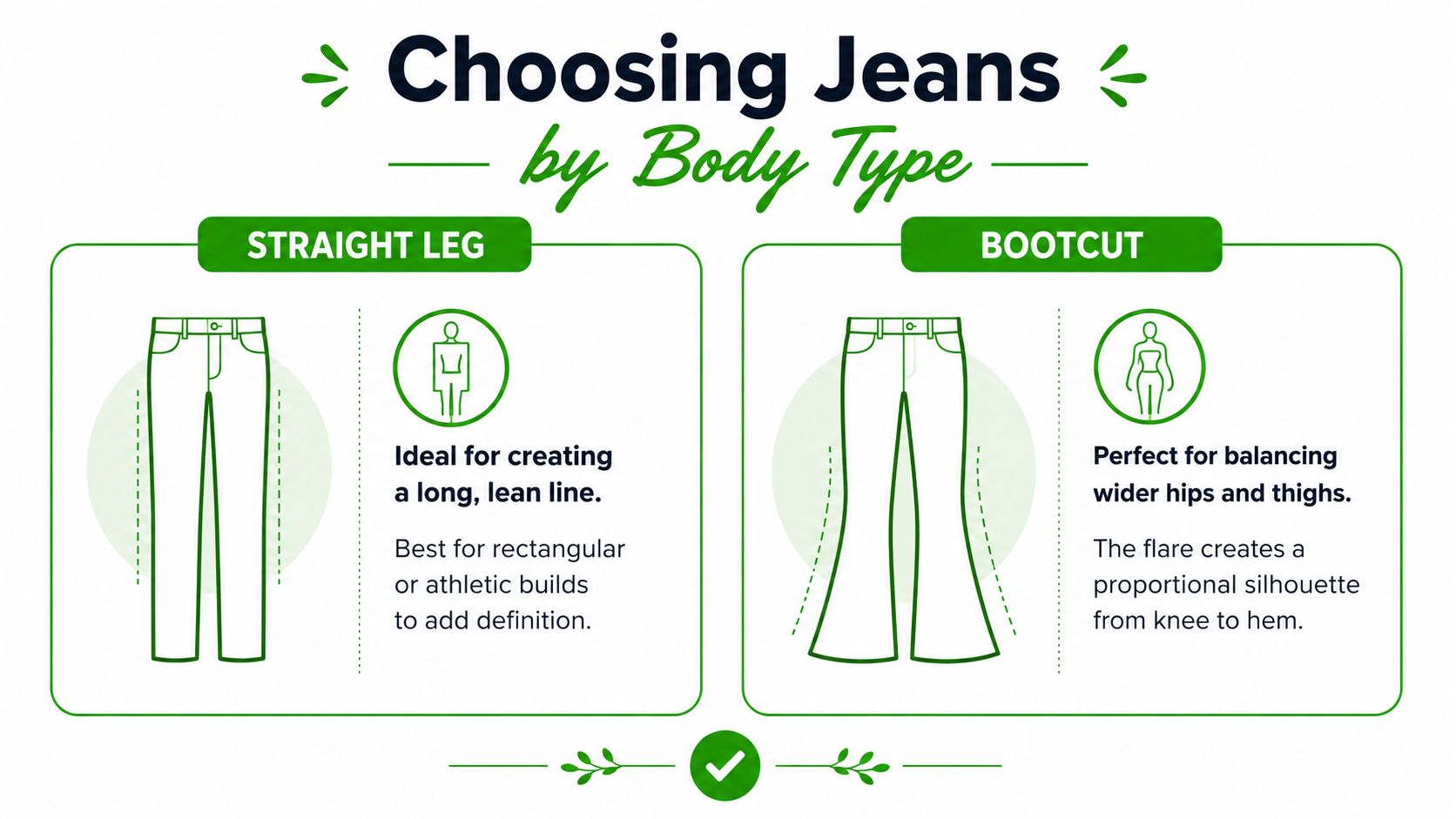
- What does the body's geometry need? A bootcut can balance fuller hips and thighs, while a straight leg can preserve a narrow, uninterrupted line.
- How much styling work is acceptable? Straight leg is usually the lower-maintenance option. Bootcut rewards a footwear plan.
Bootcut also deserves a more current reading. Its history reaches from functional workwear for cowboys and laborers to a major fashion presence in the early 2000s, while modern versions often use a subtler flare and a more refined rise. This history of bootcut jeans shows why the style shouldn't be dismissed as a dated relic.
For the Cedar & Lily shopper moving between Frye boots, ankle booties, sneakers, and loafers, the decision is practical. Straight leg is the clean neutral. Bootcut is the footwear partner. The better pair is the one that supports the shoes she wears.
Silhouette and Fit Explained Side by Side
The easiest way to understand the difference is to follow the leg from hip to hem. Straight-leg jeans maintain a consistent width from the thigh or knee to the ankle, creating a uniform column without tapering or flaring. Bootcut jeans stay fitted through the hip and thigh, then open subtly from below the knee downward, producing a wider hem designed to clear boots. A detailed fit guide on straight jeans reinforces that consistent-width construction as the defining feature of the straight silhouette.
| Fit point | Straight leg | Bootcut |
|---|---|---|
| Hip and thigh | Skims or fits close, depending on fabric | Usually fitted |
| Knee | Remains close to the leg's established width | Marks the beginning of the opening |
| Lower leg | Continues in a straight line | Flares subtly toward the hem |
| Visual effect | Clean vertical column | Balanced line from hip through footwear |
| Best footwear relationship | Flats, loafers, sneakers, ankle boots | Cowboy, riding, knee-high, and chunky boots |
A straight leg draws the eye down one uninterrupted seam. That's why it looks so composed with clean lines. The hem doesn't compete with a pointed loafer or flat. It finishes the line.
Bootcut works differently. The opening below the knee creates room for a boot shaft and prevents the denim from collapsing around the ankle. The name comes from that original function, accommodating boots worn by Western workers and riders, as described in this comparison of bootcut and straight-leg denim.
The details that change the impression
The back pockets and yoke also contribute to the silhouette. On a straight leg, the clean lower line keeps the seat and pockets from feeling visually interrupted. On a bootcut, the gentle bell shape adds width at the ankle, which can make the hips and thighs appear more balanced by comparison.
Both styles commonly appear in mid-rise and high-rise versions. The rise determines where the waistband meets the torso, while the leg shape determines how the outfit finishes below the knee. A high-rise straight leg can look especially sleek with a tucked blouse. A high-rise bootcut can create a longer-looking leg line when worn with a heeled boot.
For a deeper look at how the straight silhouette functions in a wardrobe, the straight-leg jeans guide for women offers useful styling context. The key distinction remains simple: straight leg keeps the width steady, while bootcut changes the hem geometry to serve the shoe.
Hem, Rise, and Inseam Numbers That Matter
Measurements help prevent the most common denim mistake, buying the right waist and the wrong hem. A straight leg has a wider tolerance because its parallel shape still looks intentional with a little stacking. Bootcut is less forgiving because the flare needs to land in the right place over the shoe.
A denim measurement guide places straight-fit ankle openings at approximately 14 to 16 inches, while bootcut openings are approximately 16 to 18 inches, reflecting the extra room required over boots. This leg-opening measurement guide explains how to compare the hem before a purchase.
| Measurement | Straight leg | Bootcut |
|---|---|---|
| Front rise | Choose mid-rise or high-rise based on torso length | Choose mid-rise or high-rise, with enough security through the hip |
| Back rise | Should sit smoothly without gapping | Needs firm contact through the seat and waist |
| Knee circumference | Stays relatively consistent with the leg | More fitted before the lower-leg opening |
| Hem opening | About 14 to 16 inches | About 16 to 18 inches |
| Inseam approach | Can work at ankle length or with mild stacking | Usually needs a longer, shoe-specific length |
| Cuffing | One clean cuff can work on a cropped straight leg | Avoid cuffing because the flare can distort |
Match the inseam to the shoe
A 29-inch straight-leg inseam can work with a flat bootie when the hem finishes neatly around the ankle. A 30-inch bootcut inseam can clear a 1.5-inch heel without bunching when the cut and rise are proportioned correctly. Those examples aren't universal size rules, but they show why the same wearer may need different lengths in different silhouettes.
Bootcut guidance commonly recommends 28, 30, 32, or 34 inches depending on height, with the hem worn below the ankle and above the floor when paired with shoes. This bootcut size guide makes the length requirement clear. A bootcut that's too short loses its intended covering effect. One that's too long drags or pools.
The practical tolerance is narrow. A shopper can usually assess whether the inseam is roughly half an inch too short or too long before the proportion begins to look wrong, but footwear can change the result. The guide to measuring inseam length helps establish a starting point before trying on.
Choosing by Body Type and Proportions
Body-shape advice works best when it describes visual balance rather than issuing rigid rules. The question is where the eye lands, and whether the hem supports the proportions above it.
A pear-shaped or hip-heavy figure often benefits from bootcut denim. The flare adds visual weight below the knee, so the thigh doesn't become the widest point of the outfit. That creates a more even hip-to-hem relationship, especially with a fitted top or a blazer that ends near the hip.
Straight leg works beautifully on straight, narrow, or rectangular frames because it preserves a long, uninterrupted line. The shape adds definition without introducing a flare that may disappear against a narrow lower leg. A structured waistband and a clean dark wash can make the entire outfit feel composed rather than boxy.
Use rise and hem together
An apple or full-midsection shape generally benefits from a supportive high-rise straight leg. The higher waistband can create a smoother transition through the torso, while the straight hem keeps attention moving vertically. Bootcut can also work, but the knee should not feel so tight that it becomes the visual focal point.
Petite women usually get the strongest result from a straight leg in a true ankle or cropped inseam. Long bootcuts can pool at the floor and overwhelm the shoe unless altered. Tall women have more flexibility with both cuts, and bootcut can create especially appealing hem drama over tall boots.
Proportion rule: The hem should support the frame, not dominate it. A wider opening needs enough height, footwear, or upper-body structure to feel intentional.
The rise matters as much as the leg. A rise that's too short can create waistband pressure or a muffin-top effect. One that's too long can leave a dropped-waist gap. Torso length should guide the choice more than a label such as “high rise” or “mid rise.” The body-type dressing guide can help shoppers think through balance without treating body shape as a restriction.
The most reliable fitting-room test is simple. Stand in the shoes that will be worn most often, turn sideways, and check whether the rise stays smooth while the hem creates balance. If the outfit feels proportioned, the silhouette is doing its job.
Fabric, Stretch, and Rise Options That Change Everything
The same cut can look entirely different depending on the denim. Fabric controls whether the leg holds its architecture or collapses into the body. That matters more with bootcut jeans because the flare needs enough structure to remain visible.
Rigid denim, including 100% cotton, holds a crisp shape and gives a bootcut hem stronger definition. It can feel firm at first and usually takes time to soften. Mid-stretch denim with approximately 2 to 3% elastane offers more comfort through the hip and thigh while retaining useful recovery during a long day. Super-stretch denim at 4% or more can feel easy to wear, but it may soften the distinction between the knee and flare in a bootcut.
| Factor | Straight leg | Bootcut |
|---|---|---|
| Rigid denim | Keeps a structured column | Holds the flare with authority |
| Mid-stretch denim | Balances polish and movement | Supports comfort through the fitted thigh |
| Super-stretch denim | Can create a close, smooth line | May reduce the visible flare |
| Mid-rise | Reliable everyday placement | Easy with ankle boots and casual tops |
| High-rise | Supports tucked shirts and blazers | Lengthens the line over heeled footwear |
| Lighter denim | Feels relaxed and breathable | Creates a softer, less dramatic opening |
| Heavier denim | Looks substantial and tailored | Gives the flare more presence |
Choose weight for the job
A lighter 7 to 8 ounce denim suits warmer weather and a softer drape. A 9 to 10 ounce fabric gives bootcut jeans enough body for a defined flare without feeling overly rigid. An 11 to 12 ounce denim offers a weightier, more substantial feel that can work well for winter straight-leg dressing. The Western denim comparison also notes that cotton and stretch blends change how both silhouettes move and retain shape.
Rise selection should follow the torso. Low-rise jeans can work for shorter torsos and cropped straight-leg outfits. Mid-rise is the dependable default for many wardrobes. High-rise works especially well with tucked knits, fitted shirts, and blazers, while an ultra-high rise suits a longer torso that can carry extra vertical coverage.
Fabric rule: Heavier denim commits to the silhouette. Lighter denim forgives more fit variation.
For shoppers building a practical work-to-weekend wardrobe, mid-stretch denim often offers the best balance. A rigid bootcut can be worth choosing when the goal is a strong, defined hem. A soft straight leg is often more forgiving for long days, travel, and repeated shoe changes. Cedar & Lily Clothier's mid-rise denim selection provides a useful starting point for comparing rise and styling needs.
Work to Weekend Outfits for Both Silhouettes
Straight leg gives polished outfits a clean foundation. Bootcut earns its place when your footwear needs room and visual weight. Build the outfit around the hem and the shoe first, then choose the top layer.
The polished work uniform
A dark-indigo straight leg with a camel or charcoal blazer creates a sleek column without feeling rigid. Add a tucked silk shell, then finish with a pointed-toe bootie or polished loafer. The consistent hem keeps the shoe visible while the blazer supplies structure.
This combination handles meetings, lunch, and an informal dinner. The jeans stay quiet enough for statement jewelry, and the blazer gives denim a deliberate finish. Choose a clean dark wash for work. Heavy distressing and strong fading make the outfit look more casual.
For a practical wardrobe, repeat the same straight leg with a fine-gauge sweater, a crisp shirt, or a fitted knit. Keep the hem neat over loafers and ankle boots. A straight-leg outfit guide can help you build more combinations around this cleaner silhouette.
The weekend boot outfit
Bootcut jeans belong with footwear that has a shaft or a noticeable heel. Pair a medium-wash bootcut with a fitted vintage-style tee and an ankle boot for an easy weekend uniform. In cooler weather, switch to a chunky cardigan and wear a mid-calf or tall riding boot beneath the flare.
The hem should fall over the boot, never stop above it. That length lets the flare do its job, preventing bunching at the ankle and creating one continuous line from hip to heel.
Use a shorter, closer-fitting jacket when the bootcut has a pronounced flare. A longer cardigan works better when its hem finishes near the upper thigh instead of ending at the widest part of the leg. For broader footwear coordination, custom shoe styling for men offers useful guidance on boot proportion and outfit balance, even when you are styling women's denim.
The Evening Event Look
Straight leg jeans can work for evening when the fabric and styling feel intentional. Choose a black or coated pair with a satin blouse, statement earrings, and a heeled mule or strappy sandal. The narrow hem keeps the line controlled under a blazer or longer evening layer.
White denim serves a similar role at a warm-weather event. Pair it with refined texture and considered accessories, then limit other casual details. If the jeans have a relaxed fit, let the blouse and jewelry provide the sharper finish.
Choose straight leg when the top layer and accessories need a quiet foundation. Choose bootcut when the shoes should shape the outfit and carry more visual presence.
Try-On Tips and Where to Shop in Oklahoma
A good fitting-room session should answer more than whether the waist closes. The jeans need to work with the shoes, rise, knee, and hem together. A shopper can use the following checklist before ordering online or taking a pair to the mirror.
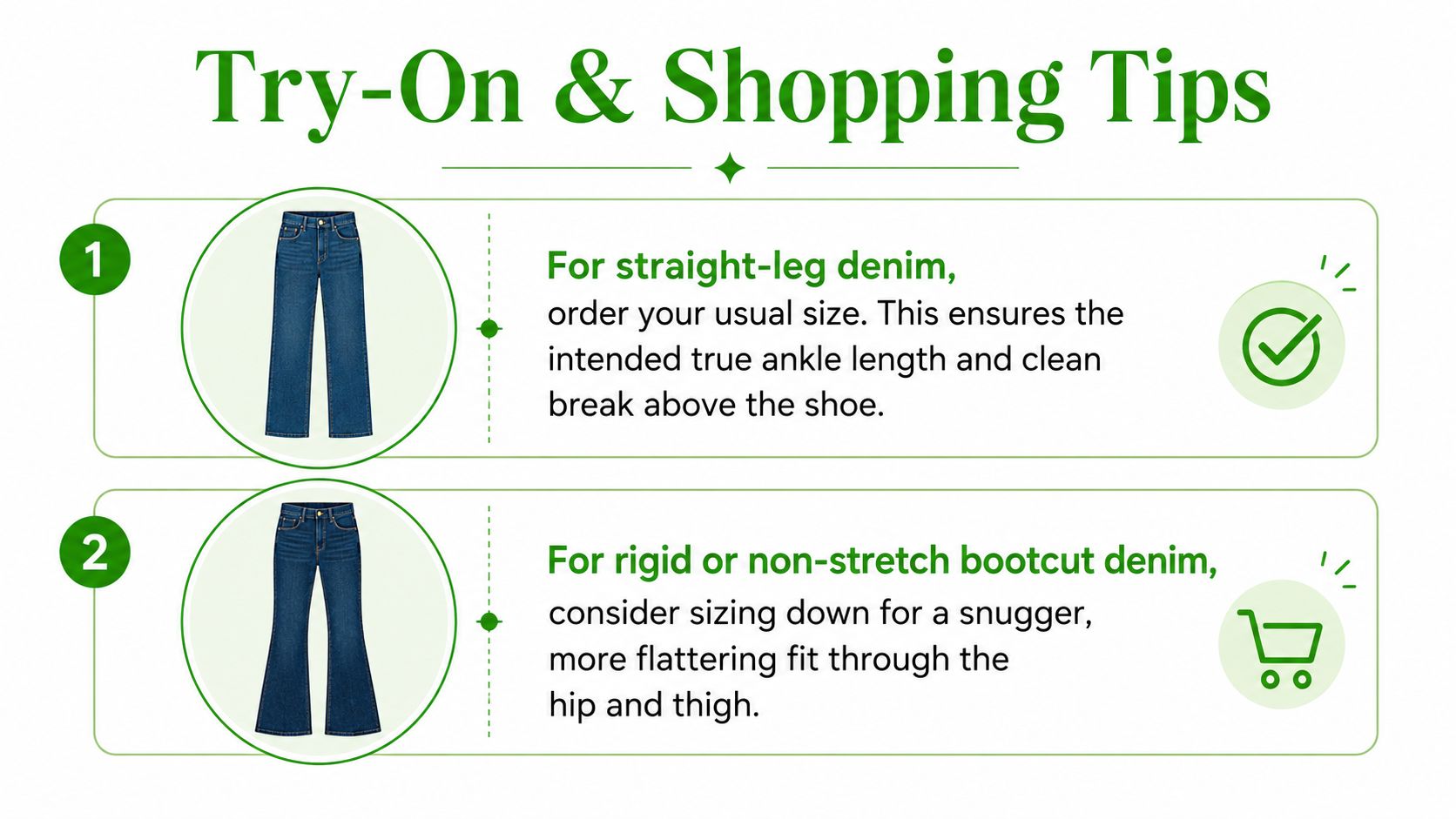
- Start with the usual straight-leg size: The intended ankle length and clean break often depend on keeping the original proportions.
- Assess rigid bootcut denim carefully: A snugger fit through the hip and thigh may be appropriate when the fabric has little or no stretch, but the waistband shouldn't pinch or gap.
- Watch the knees: Pull-back lines can signal that the thigh or knee is too tight, especially in a fitted bootcut.
- Check the waistband: Gapping at the back can indicate the rise or cut doesn't match the torso and seat.
- Bring the actual footwear: Try straight leg with loafers, sneakers, and ankle booties. Try bootcut with the tallest boot shaft and the heel height intended for regular wear.
- Inspect the hem from every angle: Straight leg should finish neatly or stack deliberately. Bootcut should cover the boot without dragging on the floor.
- Confirm the inseam before tailoring: A tailor can shorten a hem, but changing bootcut length can alter the way the flare meets the shoe.
The local advantage is being able to test the complete outfit rather than guessing from a product photo. Cedar & Lily Clothier offers women's clothing through its online store and two Oklahoma storefronts, at Utica Square in Tulsa and in downtown Jenks. Shoppers can see the fit and fabric in person, ask for styling help, and compare the hem over the shoes they already own.
Online shoppers should check the denim listing for rise, hem opening, inseam guidance, and recommended boot pairings before checkout. Restock notifications can help when the preferred inseam sells through, and a virtual consultation can make remote fitting more personal. Tulsa-area shoppers can plan a visit to Utica Square or downtown Jenks, while out-of-state customers can use the online store and contact the team for assistance with sizing and footwear selection.
Cedar & Lily Clothier carries curated women's denim and styling pieces for polished workwear, everyday dressing, and occasion-ready wardrobes. Visit the team at Utica Square in Tulsa or downtown Jenks to compare straight leg and bootcut hems over the shoes that live in the closet, or shop Cedar & Lily Clothier online and reach out for personalized styling help.