


The wedding invitation is open on the counter, a work trip is coming up, and a ruched midi dress is tempting because it looks polished without feeling precious. The question isn't whether it photographs well. It's whether it will still feel comfortable after a day at work, dinner with friends, or a long evening on your feet.
A good ruched midi can earn its place well beyond one event. The hem falls between the knee and ankle, usually around mid-calf, while the gathered fabric adds shape and movement. The right combination of cut, fabric, and fit can take the same dress from a blazer at the office to a refined shoe and clutch for a celebration.
Table of Contents
- Why the Ruched Midi Earns a Spot in Your Closet
- What Ruching Actually Does to a Midi Dress
- Fabrics That Make Ruching Sing or Sag
- Fit Checks That Actually Predict How It Will Wear
- Outfit Formulas for Work, Weddings, and Date Night
- Care and Storage to Protect the Drape
- Shopping With Cedar & Lily From Browse to Wear
Why the Ruched Midi Earns a Spot in Your Closet
She's trying on a ruched midi before a wedding, then wondering whether it could work for an interview or travel day, too. That's the right test. A dress that only makes sense for one invitation has a narrower place in the closet than one that can handle a desk, a dinner table, and a dance floor.
The midi length helps. It offers more coverage than a shorter hem while staying lighter and easier to move in than a floor-length gown. Because “midi” describes the hem rather than the dress's formality, the same length can feel relaxed or dressy depending on its fabric, construction, color, and accessories. A matte, lined style can read composed under a blazer; satin with a refined heel feels ready for an evening event.
Ruching gives the silhouette its particular character. Controlled gathers add texture and can flex as the body moves, instead of relying on stiff embellishment to make the dress feel special. The folds also show up beautifully in photos, but they need to sit smoothly rather than pull or bunch.
There's a reason the midi has persisted beyond a passing trend. Its history includes shifts in hemlines and attitudes toward women's clothing, while its lasting appeal comes down to a useful balance of movement, coverage, and polish. For anyone planning a celebration, practical ideas for hosting and guest logistics can also be found in these helpful guides for Australian hosts.
Use this as a fitting-room checklist: understand the gathers, judge the fabric, and test the fit in motion. For hands-on help, Cedar & Lily Clothier has storefronts at Utica Square in Tulsa and downtown Jenks, where a stylist can help assess the dress on the body, not just on the hanger.
What Ruching Actually Does to a Midi Dress
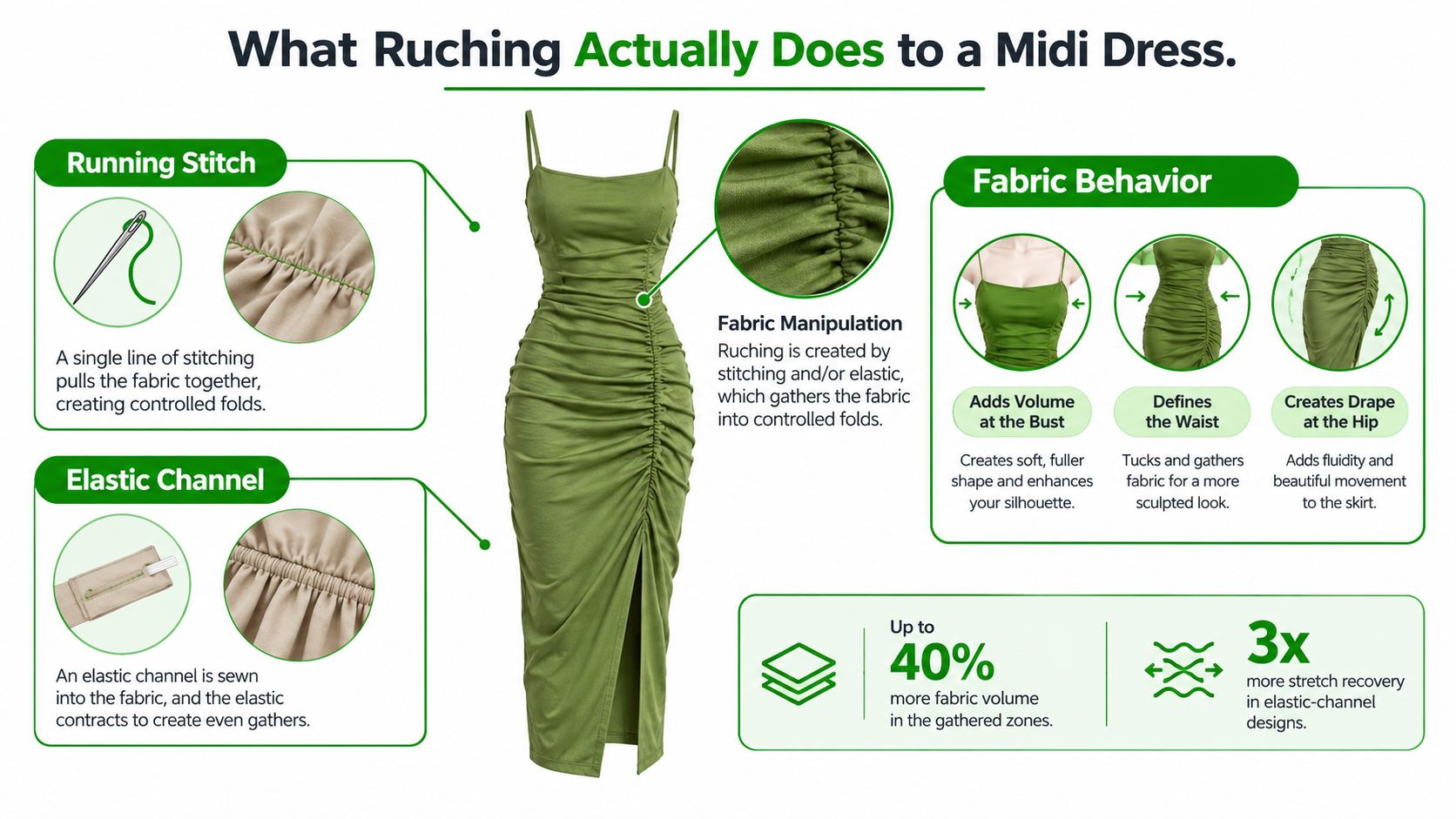
Ruching isn't a decorative line of folds. It's a fabric-manipulation technique: stitching or an elastic channel draws fabric together along a line, turning extra length into controlled gathers. The amount of contraction changes the effect. Deeper gathering makes a denser, more textured area; lighter gathering leaves a softer drape.
Placement changes the line
Side-body ruching can shape the waist-to-hip transition. Vertical gathers can draw the eye down the body and influence how the skirt falls as the wearer walks. Shoulder ruching adds softness and volume higher up, while center-front gathers can create a more elongated visual line.
Construction matters as much as placement. Elastic-channel ruching can give as the wearer sits or bends, then recover when she stands. Fixed gathers or pleats hold their position more firmly, so they may feel less adaptable through the day. Neither is automatically better: the best choice depends on how close the dress fits and how much movement the design needs to accommodate.
Fitting-room test: Sit, stand, and walk before deciding. If the folds twist, pull at a seam, or stay stretched out after movement, the construction isn't behaving well on the body.
Fabric changes the result, too. The same gathers in a substantial crepe look more sculpted and contained; in lightweight jersey, they may cling more closely and show every fold. A ruched midi should be judged while moving, not only in a still mirror. For a useful primer on hemline and silhouette, see this guide to what a midi dress is.
Fabrics That Make Ruching Sing or Sag
Fabric decides whether ruching looks composed or collapses into cling. Before focusing on color, check how much the cloth stretches, whether it's lined, and how the gathers settle after a gentle pull. A good fabric doesn't need to hide the body; it needs to keep its shape comfortably as the wearer moves.
| Fabric | Weight & Stretch | Opacity | Best For | Care Level |
|---|---|---|---|---|
| Crepe | Usually medium weight, with limited to moderate give | Stronger when lined | Polished workwear and occasions | Check label; often needs careful steaming |
| Ponte | Substantial knit with comfortable stretch | Often opaque | A smooth, structured feel for day-to-evening wear | Usually practical, but follow garment label |
| Stretch jersey | Light to medium weight, often high stretch | Varies; can become less opaque when stretched | Casual styling and flexible comfort | Gentle handling helps protect gathers |
| Satin or charmeuse | Fluid, with limited stretch unless blended | Depends on lining and finish | Weddings and evening dressing | Delicate; avoid rough handling |
| Chiffon or organza overlay | Airy, lightweight, and typically not stretchy | Sheer without a lining | Soft movement and layered occasion looks | Delicate; check care label |
Crepe is the dependable workhorse when the goal is a body-skimming finish without a clingy feel. Lining can add coverage and help the gathers sit smoothly. Ponte and double-knit fabrics feel more substantial, so they tend to offer a steadier shape. They're strong choices for a dress expected to move from daytime plans to dinner.
Lightweight, high-stretch jersey is less forgiving than it may appear. It can emphasize seams, underwear lines, and body contours rather than disguising them. Satin and charmeuse bring a refined sheen for celebrations, while chiffon and organza overlays add airiness but need a suitable lining when coverage matters.
For another useful fabric comparison, consult this guide to the best fabrics for summer dresses. In the fitting room, stretch a gathered area gently and let it go. Check whether it recovers, hold the fabric toward a light to assess opacity, then take a short walk and see whether the folds settle or twist.
Fit Checks That Actually Predict How It Will Wear
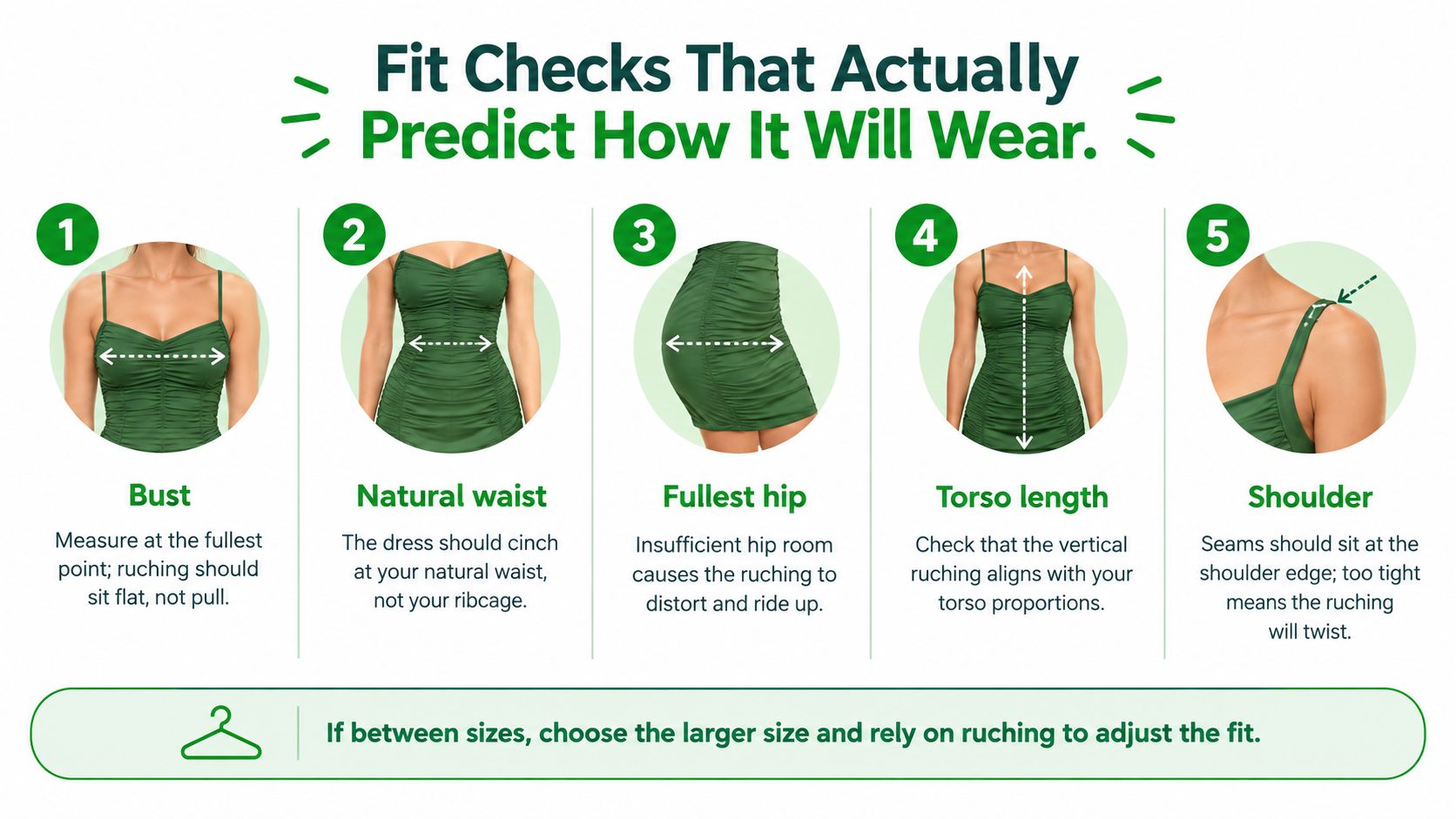
Don't choose a size from one measurement or rely on “size up if between sizes” as a universal rule. Compare the dress's chart with bust, natural waist, and fullest hip, then account for torso length, shoulder placement, stretch, and lining. Sizing research found that 28 of 63 women, about 44%, fell between available sizes for at least one measurement across three brands, a reminder that a single number rarely predicts the whole fit (Sizebay's apparel-sizing analysis).
Check the points that change the drape
- Bust: The fabric should lie smoothly without pulling across the fullest point or shifting the neckline.
- Natural waist: The gathered section should sit at the waist, not ride up toward the ribs or slide down.
- Fullest hip: Too little ease can flatten the folds and pull the side seam; too much can make the ruching collapse into bulk.
- Torso length: Check whether the waist placement and vertical gathers align with the wearer's proportions.
- Shoulders: Seams should sit neatly at the shoulder edge. A tight shoulder can tug the bodice and distort the gathers.
A ruched midi doesn't automatically conceal shape. Clingy knit with heavy gathers may emphasize contour, while structured or lined fabric can create a smoother, more supported finish. Look for even folds and straight side seams; uneven tension can make gathers twist or create stress lines.
Then test the dress in motion. Sit, reach, bend, and walk. The gathers should move with the wearer and return to an orderly shape, without the waist channel migrating or the hem changing position in a way that feels awkward. For a quick measurement refresher, these phone-based waist sizing tips can help before ordering. Tailoring can refine a garment, but it can't fix every construction or proportion issue; this guide to tailoring for women offers more context.
Outfit Formulas for Work, Weddings, and Date Night
A ruched midi earns repeat wear when the styling changes with the occasion. The dress should do the visual work; accessories and layers should make it appropriate, not compete with its gathered detail.
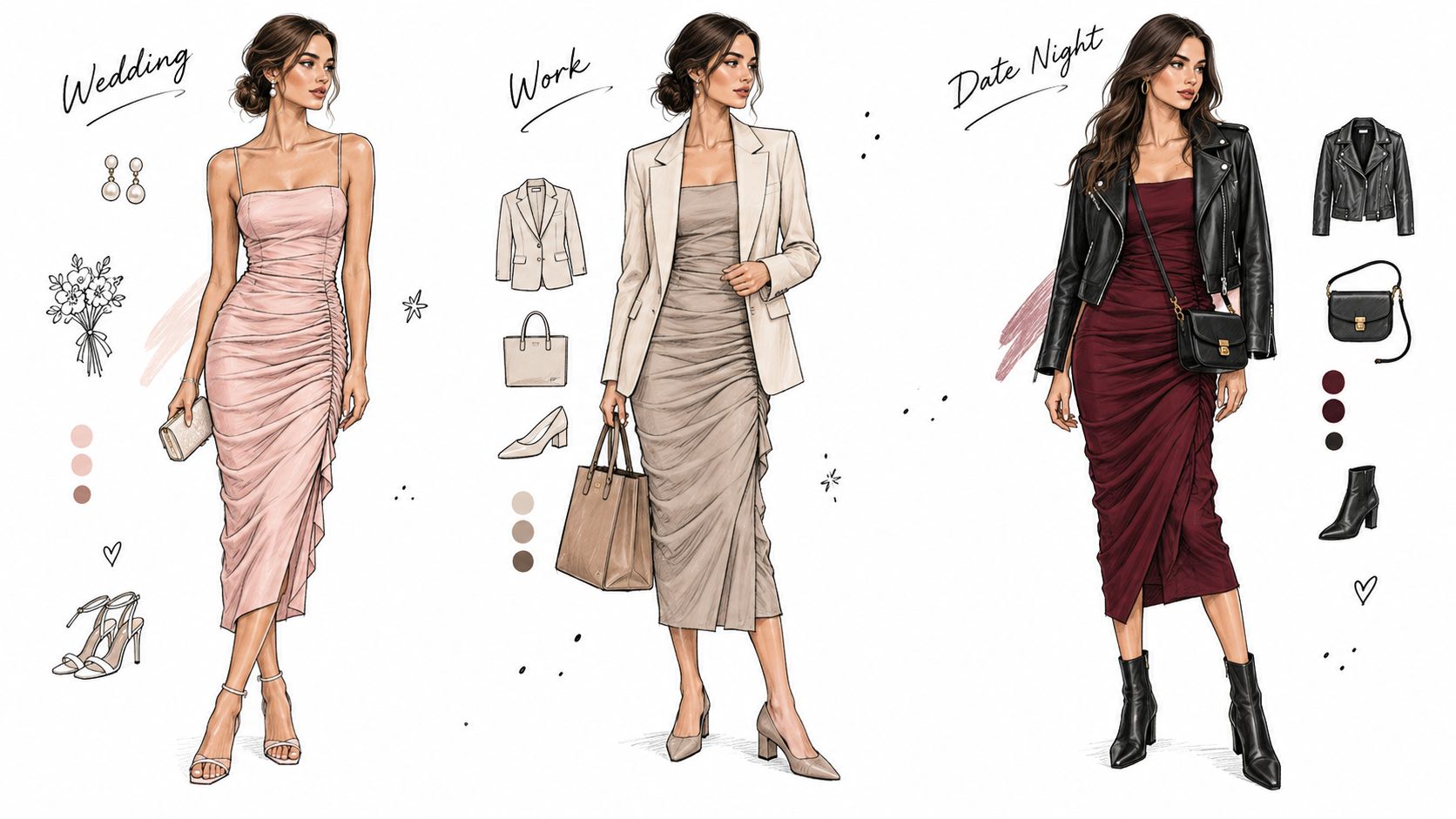
Three ways to wear one silhouette
- For work: Choose a matte, lined ruched midi in a neutral shade. Add a fitted blazer, low block heel or pointed-toe flat, a structured tote, and minimal gold jewelry. Keep the layer clean and the accessories quiet so the gathers remain the focus.
- For a wedding or cocktail event: A satin or crepe midi feels celebratory without requiring a full-length gown. Pair it with a refined strappy heel, compact clutch, and one statement earring. For semi-formal celebrations, the venue and time of day should guide how dressy the outfit feels; a midi is a considered middle ground when a full-length look would be too formal. A shoe guide for midi dresses can help settle the final choice.
- For date night or dinner: Look for softer, less concentrated ruching and add a cropped cardigan or leather jacket. Choose shoes that are comfortable enough for walking between plans, not just standing for a photograph.
A few styling choices make the transition easier. A belt can compete with waist gathers, so skip it unless the dress has a smooth, clearly defined waist. Opaque hosiery or a slip can add coverage without flattening the drape. Choose outerwear that clears the hem, which keeps the proportions tidy when the jacket is open.
Jewelry should follow the neckline and the dress's own detail. If the neckline is already busy or the gathers are prominent, one considered accent usually looks sharper than several competing pieces. For shoppers considering a bolder accessory for a formal occasion, this guide to bulk choker necklaces for prom offers ideas for thinking through statement jewelry.
Care and Storage to Protect the Drape
A ruched dress needs care that matches its fabric. Resilient knits and delicate lined eventwear shouldn't be treated as though they have the same cleaning needs. The garment's care label comes first, especially when an outer fabric and lining respond differently to water or heat.
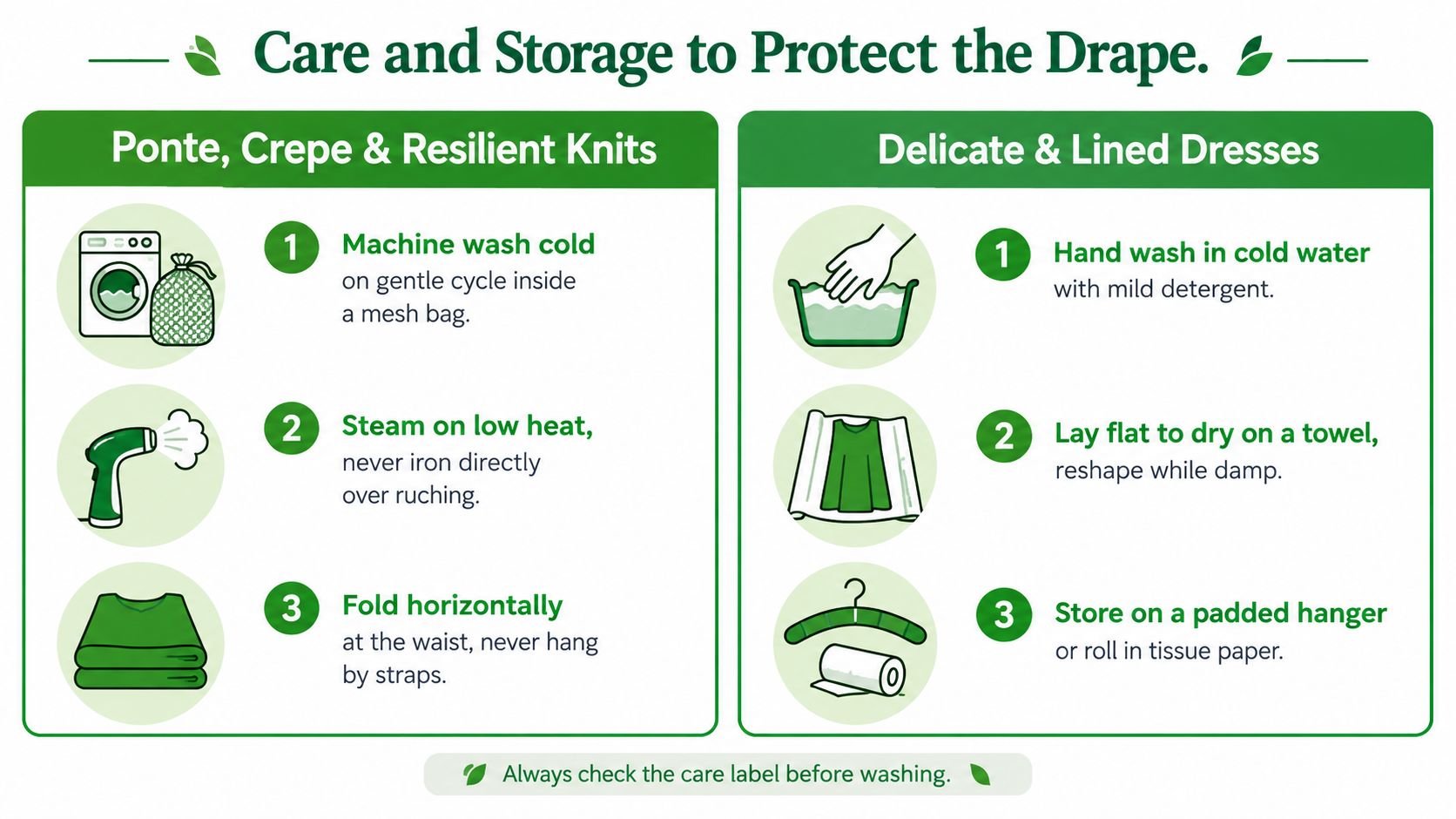
For ponte, crepe, and resilient knits, use a gentle approach that won't stretch out the gathered areas. If the care label allows machine washing, turn the dress inside out and use a mesh bag. Steam on low heat rather than pressing an iron directly on the ruching. Fold the dress at the waist when storing it, and avoid hanging a delicate knit by thin straps if its weight could pull them out of shape.
For satin, silk, and lined event fabrics, check the label before cleaning and use appropriate professional care when needed. Air the dress after wearing it before storing it away. A padded hanger can support the shoulders; a breathable garment bag helps protect the surface without trapping the dress in a sealed space.
Before each wear, check the gathered seams for loose threads and test whether any elasticized area springs back after a gentle stretch. Catching a problem early is easier than dealing with a seam opening during an event. For delicate silk pieces, follow this guide to caring for silk clothing.
Travel needs a little planning, too. Fold the dress carefully or roll it loosely so the gathers aren't crushed under heavier items. A ruched midi that's stored and cleaned thoughtfully keeps its drape ready for the next occasion, rather than becoming a one-time purchase.
Shopping With Cedar & Lily From Browse to Wear
Start with the calendar, not the color. List the occasions the dress needs to cover, then take bust, natural-waist, and fullest-hip measurements. Consider whether the priority is a work-ready layer, wedding guest polish, or one versatile piece that can do both.
Shortlist the styles and fabrics that suit those plans. Cedar & Lily Clothier carries curated designer and contemporary brands, including Vanessa Mooney and Lace the Label, alongside new arrivals in dresses and other wardrobe pieces. The boutique is a retailer, not a maker of its own clothing line, so the experience is about choosing well from a considered assortment.
Shopping in person can make the decision easier. At Utica Square in Tulsa or downtown Jenks, shoppers can feel the fabric weight, compare sizes, walk in the dress, and get fit advice from an associate. That's useful when a ruched panel looks different in motion than it does on a hanger.
For online orders, Cedar & Lily offers easy size exchanges, fast shipping, free shipping on orders over $250, and complimentary gift packaging on orders over $100, with a handwritten note for gifting. Before checkout, confirm the garment measurements, stretch placement, lining, and care label so the dress fits its intended role.
Choose the dress that feels good at the first try-on and still works when the day changes. Then shop online, arrange a fitting at either Oklahoma storefront, or reach out for one-on-one styling help.
Cedar & Lily Clothier offers a curated selection of dresses and personal styling support online and at its Utica Square and downtown Jenks boutiques. Shop the Cedar & Lily Clothier collection for a ruched midi that feels right for your calendar, or visit in person for fit guidance before you decide.