


Taking care of your silk pieces might feel daunting, but it's really much simpler than you'd think. It all boils down to three golden rules: use a pH-neutral detergent, wash in cool water, and always air-dry away from direct heat.
Once you get the hang of these fundamentals, you’ll find it easy to keep your favorite blouses, dresses, and scarves looking just as luxurious as the day you brought them home. It’s about protecting an investment, one beautiful piece at a time.
The Essentials of Silk Care
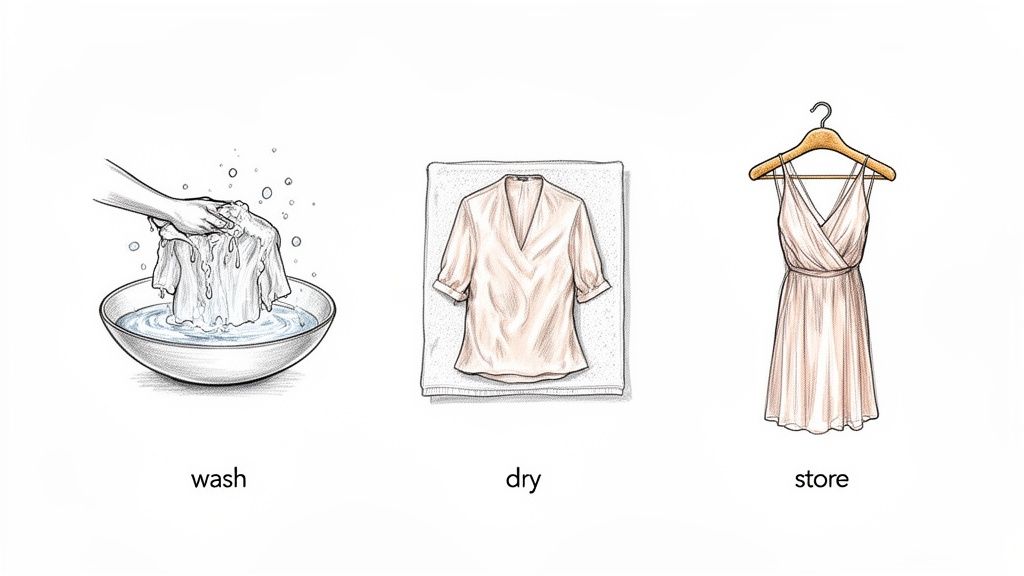
Silk has a reputation for being high-maintenance, which makes a lot of people nervous about washing it at home. But once you understand what it is—a natural protein fiber—you'll feel much more confident. Unlike hardy cotton or synthetics, silk is incredibly sensitive to high heat, harsh chemicals, and rough handling, especially when it's wet.
This sensitivity is exactly why a gentle touch is non-negotiable. Your goal isn't just to get it clean; it's to preserve the very structure of the fabric. That means steering clear of the common culprits that can cause serious damage:
- Enzymatic Detergents: Most laundry soaps are packed with enzymes designed to break down protein stains like grass or blood. Since silk is a protein, these detergents will literally eat away at the fibers.
- High Heat: Hot water and tumble dryers are silk's worst enemies. Heat can shrink the fibers, warp the shape of your garment, and strip away that beautiful, signature sheen.
- Rough Agitation: A machine's aggressive spin cycle or any vigorous scrubbing can easily snag, stretch, or set permanent wrinkles into the delicate fabric.
Protecting Your Investment
Thinking about proper care becomes even more important when you consider the real value of high-quality silk. The global silk market, valued at a massive USD 12.97 billion in 2025, is expected to soar to USD 28.76 billion by 2034.
This incredible growth just highlights why treating your pieces from Cedar & Lily Clothier with care is so essential. The delicate fibers, mostly from mulberry silkworms which make up 78.90% of the market, need that gentle touch to keep their strength and luster. If you're curious, you can explore more data on the growing silk market to see just how valuable this material is.
A common mistake is lumping all "delicates" together. Silk is fundamentally different from wool or rayon, and it demands its own specific routine to prevent irreversible damage.
To make things a bit easier, I've put together a quick cheat sheet with the most important do's and don'ts.
Quick Silk Care Cheat Sheet
This table is your go-to guide for those "what do I do?" moments, whether you're dealing with a sudden spill or just getting ready to wash your favorite silk blouse.
| Care Step | Do This | Avoid This |
|---|---|---|
| Detergent | Use a pH-neutral, enzyme-free soap specifically for delicates or silk. | Standard laundry detergents, bleach, and fabric softeners. |
| Water Temp | Always use cool or cold water (around 30°C / 86°F). | Hot water, which can cause shrinkage and fading. |
| Washing | Gently hand-wash in a clean basin or use a mesh bag on a delicate machine cycle. | Vigorous scrubbing, twisting, or wringing the fabric. |
| Drying | Roll in a clean towel to absorb excess water, then lay flat or hang to air-dry. | Direct sunlight, radiators, and tumble dryers. |
| Ironing | Use the lowest heat setting (the "silk" setting) and iron while slightly damp. | Ironing when bone-dry or using high heat. Use steam instead if possible. |
Keep these tips in mind, and you'll be well on your way to keeping your silk looking flawless for years to come.
Your Guide to Reading Silk Care Labels and Prepping for a Wash
Before you even think about washing your favorite silk blouse, stop and look for that tiny care label. Think of it as a cheat sheet straight from the designer—it’s their direct advice on how to keep the piece looking its best. Ignoring it is the fastest way to turn a beautiful investment into a sad laundry mistake.
That little tag tells you everything you need to know about how the fabric was made and how it will hold up to cleaning. Getting this first step right is the secret to successful silk care.
What "Dry Clean Only" Really Means
When you see "Dry Clean Only" on a silk tag, take a deep breath. It's a strong suggestion, but not always a hard-and-fast rule. Often, manufacturers put this on the label to play it safe and protect themselves if someone ruins a garment at home. This is especially true for structured pieces like a tailored blazer or a dress with intricate beading.
For simpler items like a silk camisole or a scarf, you usually have a bit more wiggle room for gentle hand-washing. But for anything complex, deeply colored, or made from mixed materials, sticking to the dry cleaner’s is your safest bet to prevent shrinking, warping, or color bleeding.
What about a "Dry Clean" label (without the "Only")? That usually means dry cleaning will give you the most pristine result, but you can get away with careful hand-washing if you know what you're doing.
The Five-Minute Spot Test You Can't Skip
Before you submerge the whole garment, you have to do a spot test. This quick check is your insurance policy against a laundry disaster, showing you exactly how the fabric's dye will react to water and soap.
- Find a hidden spot on the garment, like an inside seam or the hem allowance.
- Dampen a white cloth or a cotton swab with cool water and just a tiny drop of your silk-safe detergent.
- Gently press the damp cloth onto the test area. Don’t rub! Just dab and see if any color comes off onto the cloth.
- Let the spot air-dry completely. Check for any change in the color, texture, or shine. If it looks the same, you’re good to go.
This is absolutely crucial for vibrant, dark-colored silks, which are much more likely to bleed.
How to Pre-Treat Stains on Silk
When it comes to spills, you have to act fast. The longer a stain sits on silk, the deeper it settles into those delicate fibers. The first rule is to always blot, never rub, a fresh spill with a clean, dry cloth to soak up as much as you can.
From there, different stains need different approaches.
- Oily Stains (Makeup, Salad Dressing, etc.): We’ve all been there. Lightly dust the spot with cornstarch or talcum powder and let it sit for about 20-30 minutes. This little trick helps draw the oil out of the fibers. After, just gently brush the powder off before washing.
- Protein Stains (Sweat, Food Spills): Mix a few drops of a pH-neutral silk detergent in cool water. Dab the solution onto the stain with a clean cloth, working from the outside in to keep a ring from forming.
- Tannin Stains (Coffee, Tea, Wine): A little white vinegar is your best friend here. Mix equal parts white vinegar and cool water, then carefully dab the solution onto the stain before you wash the garment.
Remember, pre-treating is about gently lifting the stain, not scrubbing it into oblivion. Harsh chemicals and especially chlorine bleach are the enemies of silk—they will literally dissolve the fibers and cause permanent damage. A little prep work is all it takes to make sure the wash is a success.
The Right Way to Wash Silk Garments
So, you’ve prepped your silk, and now it's time for the main event: the wash. This is the moment that really defines how well your silk will hold up over time. Whether you're a fan of hand-washing or you need the convenience of a machine, getting the technique right is what keeps that beautiful, soft luster we all love.
Taking those few extra minutes to read the label, do a quick spot test, and pre-treat any marks is honestly the secret to a successful wash.
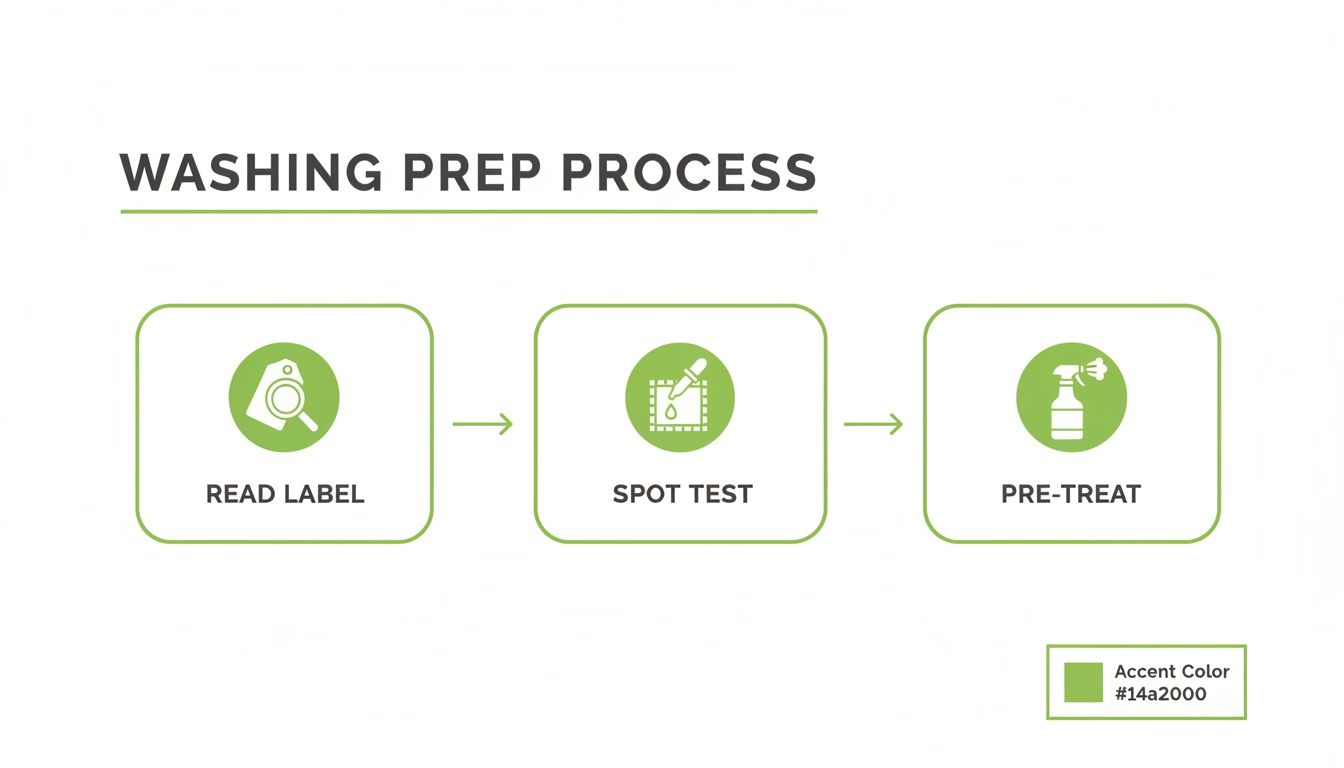
These three simple steps are your best defense against common mishaps like colors bleeding or stains setting in for good. It just sets your beautiful garment up for a safe and gentle clean.
The Art of Hand-Washing Silk
When in doubt, hand-washing is almost always the safest route for silk. It puts you in complete control, minimizing any risk of the snags, stretching, or rough agitation that a machine can inflict on those delicate fibers. All it takes is a gentle touch and the right supplies.
Start by filling a clean sink or basin with cool to lukewarm water—and never, ever hot. High temperatures can cause that gorgeous silk to shrink and lose its signature sheen. Add just a tiny amount of a pH-neutral detergent made for delicates. A little goes a very long way here; using too much soap can leave a dull film on the fabric.
Swirl the water to get a light froth going before you submerge your garment. Let it soak for just a few minutes, and for more heavily soiled pieces, no more than 30 minutes. Gently swish the fabric through the water. Remember to avoid any harsh scrubbing, twisting, or wringing, as wet silk fibers are incredibly vulnerable and can be permanently damaged.
Using a Washing Machine Safely
While hand-washing is the gold standard, let's be realistic—sometimes life gets busy. You absolutely can machine wash some of the more durable silk items, but you have to be strict about the process. This is particularly true for everyday workhorses like a sturdy silk slip dress. For a deeper dive, check out our guide on The Essential Guide to the Silk Slip Dress.
First things first: always place your silk piece inside a fine-mesh laundry bag. Think of it as a protective bubble, preventing it from getting snagged on the machine's drum or tangled up with other clothes.
Next, choose your machine’s most delicate cycle. This is usually labeled "Delicates," "Hand Wash," or "Gentle." The water must be set to cold, and you'll want to use the absolute lowest spin speed possible. A fast spin cycle is just too much force for the fibers and will lead to stretching and deep-set creases.
Understanding how silk differs from other delicates is key to its longevity. While they all appreciate a gentle touch, silk has its own unique needs.
Washing Method Comparison Silk vs Other Delicates
| Care Aspect | Silk | Wool | Rayon (Viscose) |
|---|---|---|---|
| Water Temp | Cold to lukewarm (under 30°C/86°F) | Cold only (prevents felting) | Cold only (shrinks easily) |
| Detergent | pH-neutral, enzyme-free | Wool-specific (e.g., Lanolin-based) | Mild, gentle detergent |
| Agitation | Minimal; gentle swishing | Minimal; soak, don't rub | Very minimal; extremely weak when wet |
| Wringing | Never wring; gently squeeze | Gently squeeze; roll in a towel | Do not wring; support weight when wet |
| Drying | Air dry flat or on a padded hanger | Air dry flat away from heat | Air dry flat or hang carefully |
This quick comparison shows why you can't just lump all your "delicates" together. Silk's sensitivity to enzymes and temperature, for example, is something you don't have to worry about as much with wool. Being mindful of these little differences makes all the difference.
When to Call a Professional Dry Cleaner
So, when should you just step away and let a professional handle it? The "Dry Clean Only" tag is your most obvious clue, especially for tailored pieces or anything with embellishments where water could completely ruin the shape.
You should seriously consider a professional for:
- Structured Garments: Think tailored blazers, lined dresses, or anything with internal construction that could get warped by water.
- Heavily Embellished Items: If your piece has beading, sequins, or delicate embroidery, always leave it to the experts.
- Deep, Stubborn Stains: For tough stains like red wine or ink, a professional has access to solvents that can lift the stain without damaging the fabric.
- Vibrantly Dyed Silks: The first time you wash a piece with deep, saturated color, a dry cleaner can eliminate any risk of the color bleeding.
When it comes down to it, the decision is all about risk. If a garment was a significant investment or holds sentimental value, professional dry cleaning gives you peace of mind and the best possible outcome.
Drying Silk and Removing Wrinkles Safely
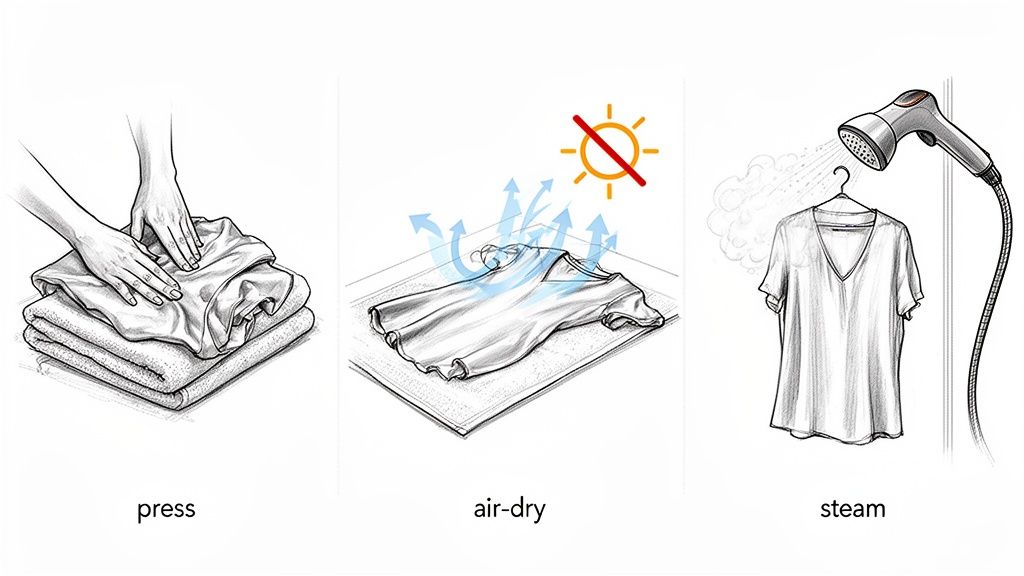
The journey to keeping your silk pristine doesn’t stop after the wash. How you dry and finish your garments is just as critical, and frankly, this is where so many well-intentioned owners make irreversible mistakes.
Think of a tumble dryer as silk's worst enemy. The intense, direct heat can shrink, warp, and dull those beautiful fibers in a single cycle. Proper drying is a much gentler, more patient process that protects the fabric’s integrity, ensuring your favorite pieces keep their shape, luster, and buttery-soft feel.
The Best Way to Air-Dry Silk
After washing, your silk is going to be holding onto quite a bit of water. Your first instinct might be to wring it out, but that twisting motion can easily snap the delicate, wet fibers and cause permanent stretching. The goal is to get the excess moisture out without applying any harsh pressure.
Start by laying the wet garment flat on a thick, clean white towel. Carefully roll the towel up with the silk inside, pressing gently to let the towel absorb the water. Unroll it right away and get it ready for air-drying.
You’ve got two great options here:
- Lay It Flat: This is the gold standard, especially for heavier items like silk sweaters or structured blouses. Laying them flat on a fresh, dry towel or a mesh drying rack prevents the weight of the water from pulling on the shoulders or seams.
- Hang with Care: For lighter pieces, like a camisole or scarf, a padded, non-slip hanger is your best friend. Just promise me you'll never use those thin wire or sharp-edged plastic hangers—they can leave permanent bumps and puckers in the shoulders.
Always, always dry your silk away from direct sunlight and heat sources like radiators. Prolonged UV exposure can cause the natural fibers to yellow and break down over time. It's a sad truth that improper care is a leading cause of textile damage.
It's wild to think about, but improper care causes 40-50% of all damage to luxury textiles each year. To extend the life of your gorgeous Cedar & Lily pieces, remember that Mulberry silk thrives with this kind of specialized routine. Drying it flat on a towel in the shade is key, as direct sun can degrade the proteins in silk by as much as 30% annually.
Steaming vs. Ironing: Which Is Better for Silk?
Once your silk is almost completely dry, you’ll probably notice a few wrinkles. While both steaming and ironing can smooth them out, one method is significantly safer and more effective for this delicate fabric.
Steaming is, without a doubt, the preferred choice. A good handheld steamer uses gentle, moist heat to relax the silk fibers without making any direct, high-heat contact. It’s a fantastic way to get rid of wrinkles while also refreshing the fabric and restoring its natural, beautiful drape. It’s quick, efficient, and carries a much lower risk of scorching or creating those dreaded shine marks.
If you absolutely must use an iron, you have to be extremely cautious. Follow these rules without exception:
- Turn the garment inside out to protect the outer surface.
- Set your iron to the lowest heat setting, often labeled "Silk."
- Place a pressing cloth (a clean piece of white cotton works perfectly) between the iron and the silk.
- Never iron silk when it is bone-dry; it should still be slightly damp.
Finishing Touches for a Flawless Look
Whether you've steamed or ironed, giving your garment a moment to cool down and set is the final, crucial step. Hang your freshly pressed silk short-sleeve blouse in a spot with good air circulation for about an hour before you put it away or wear it. To get more ideas on styling this timeless piece, you can explore our guide on caring for your silk short-sleeve blouse.
This cooling-off period helps the fibers lock into their smooth, wrinkle-free state, ensuring your piece looks crisp and polished for longer. It’s a small step that makes a world of difference in the final look.
Long-Term Storage for Lasting Beauty
Taking care of your silk goes way beyond just washing and drying. The final, and arguably most important, step is how you put it away. Simply tossing a silk dress into a crowded closet until next season is a recipe for heartache. The right storage strategy is your best defense against damage from light, pests, and humidity.
To really protect your investment, you need to create a safe haven for your silk, especially when you're packing it away for months. This means picking the right spot and using the right materials to head off the common issues that can ruin delicate fibers over time.
The Right Environment for Storing Silk
The perfect storage spot for your silk is cool, dark, and dry with plenty of air circulation. This rules out most attics and basements, which are known for their wild temperature swings and dampness—conditions that can lead to mildew or make silk fibers turn brittle. A closet on an interior wall is a much safer bet.
Your main goal is to shield the fabric from everything the environment can throw at it. One of the biggest mistakes I see is people storing silk in plastic garment bags. Plastic is a moisture trap, which can cause yellowing and create the perfect breeding ground for mildew. It will completely ruin the fabric.
The best defense for your silk garments is a breathable storage solution. Always opt for cotton garment bags, as they allow air to circulate freely while keeping out dust and light.
Folding Versus Hanging Your Silk Garments
When it's time to put your silk away, you have a choice: fold it or hang it? The answer really depends on the garment’s structure and weight.
- Hanging: Lighter pieces like blouses, camisoles, and dresses are best kept on a hanger. But please, never use those thin wire or plastic hangers! They create nasty shoulder dents and can stretch the fabric out of shape over months. Instead, invest in some good-quality padded or velvet-flocked hangers that offer gentle, even support.
- Folding: For heavier items like silk-knit sweaters or anything with a lot of beading or embellishment, folding is the way to go. The sheer weight of these garments will cause them to stretch and lose their shape if you leave them hanging for an entire season.
Here’s a pro tip for folded items: use acid-free tissue paper between the folds. It’s a total game-changer. This creates a soft cushion that stops those sharp, permanent creases from setting into the fabric.
This little trick is becoming more common as the fashion industry starts focusing more on making clothes last. A 2022 report pointed out Europe's push for traceable, ethical silk, which goes hand-in-hand with preservation techniques. Using acid-free tissue paper, for instance, prevents creases that would later need 15% more stress from ironing. Similarly, industry studies show that using proper padded hangers can add 2-3 years to a garment's life just by preventing shoulder damage. You can discover more insights about the global silk market and see how the focus is shifting toward sustainable care.
Tips for Traveling with Silk
Traveling with silk doesn't have to mean arriving with a wrinkled mess. With a couple of smart packing tricks, your outfits can be ready to wear the moment you unpack. It's all about minimizing creases from the get-go.
Instead of folding your silk, try rolling it. Lay the garment out flat, smooth away any wrinkles, and then roll it snugly (but not too tight!) from the bottom up. For a little extra protection, you can roll it around a layer of tissue paper. This technique creates soft curves instead of hard, set-in lines.
If you’re looking for more advice on caring for other fine fabrics, take a look at our guide on how to care for cashmere, which shares a lot of the same principles for gentle handling.
A Few Common Silk Questions, Answered
Even with the best game plan, taking care of silk can sometimes leave you second-guessing. What do you do about that mysterious water spot on your favorite blouse? Is it really okay to hand-wash a piece that says “Dry Clean Only”? It’s completely normal for these questions to pop up.
Think of this section as your personal troubleshooting guide. We’re getting straight to the point on the most common silk care dilemmas we hear about, so you can solve the problem and get back to enjoying your beautiful clothes.
Can I Just Use My Regular Detergent on Silk?
That’s going to be a hard no. Using standard laundry detergent is probably the fastest way to ruin a silk garment, and the damage is often irreversible.
Here’s why: most detergents are packed with powerful enzymes designed to break down protein-based stains like grass or food. Since silk is a protein fiber, those enzymes will literally start to eat away at the fabric itself. It’s a recipe for disaster.
This process completely compromises the silk’s structure, leading to:
- Brittleness: The fibers weaken, making the garment prone to tearing and snagging.
- Dullness: That gorgeous, natural luster gets stripped away, leaving the fabric looking flat and lifeless.
- Roughness: Instead of feeling smooth and buttery, the silk will become coarse and stiff to the touch.
Your best bet is to always use a pH-neutral detergent specifically made for silk or delicates. These gentle formulas clean the fabric without stripping away its natural oils. If you’re ever in a real pinch, a tiny drop of mild baby shampoo can work—it’s also designed to be gentle and pH-balanced.
How Do I Get Water Stains Out of Silk?
It’s one of the most frustrating things that can happen—a single splash of water dries and leaves a noticeable ring. The mark isn't from the water itself but from the minerals left behind when it evaporates. This is exactly why dabbing the spot with more water usually just makes the stain bigger.
You have two solid options here. The first is to gently dab the area with a clean white cloth dipped in a 50/50 solution of white vinegar and water. The vinegar's mild acidity helps dissolve those mineral deposits without harming the silk.
Honestly, though, the safest and most effective method is simply to re-wash the entire garment. A full, gentle hand-wash ensures the whole piece is treated evenly, so there’s no chance of creating a new, larger water mark. It might feel like more effort, but it’s the only way to get that flawless, even finish back.
The key is to treat the entire surface, not just one small spot. Spot-treating with water alone is what causes those dreaded "tidemark" rings on silk.
Is It Better to Steam or Iron Silk?
When it comes to getting wrinkles out, steaming is almost always the better and safer choice. A steamer uses gentle, moist heat to relax the fabric's fibers, letting wrinkles simply fall out. There’s no risk of scorching the material or creating those shiny patches that can happen with a hot iron. It’s fast, effective, and preserves the beautiful, natural drape of the garment.
If an iron is all you have, you have to be extremely careful.
To do it safely, these rules are non-negotiable:
- Turn it Inside Out: This protects the outer surface from direct heat.
- Use the Lowest Heat: Most irons have a "silk" setting. Never go above it.
- Use a Pressing Cloth: A clean, white cotton cloth between the iron and the silk is your best friend. It acts as a protective barrier.
- Iron While Damp: Never, ever iron silk when it's bone-dry. The moisture helps protect the fibers and makes wrinkle removal much more effective.
Can I Hand-Wash a “Dry Clean Only” Silk Item?
That "Dry Clean Only" tag can feel like a final verdict, but it’s not always a strict command. Manufacturers often use it as a precaution to protect themselves if something goes wrong during at-home laundering. For many simple silk pieces, a careful hand-wash is a perfectly safe alternative.
Generally, you can get away with hand-washing things like silk scarves, simple camisoles, or pillowcases.
But you should always trust a professional dry cleaner with:
- Structured Pieces: Blazers, lined dresses, and tailored trousers can completely lose their shape if washed in water.
- Vibrant Colors: Deep reds, rich blues, and dark blacks are more likely to bleed. A pro knows how to set the dye properly.
- Embellished Garments: Anything with beading, sequins, or delicate embroidery needs an expert’s touch.
If you decide to hand-wash, always start with cool water—never hotter than 30°C (86°F)—and use that pH-neutral, silk-specific detergent. Textile experts point out that hot water can shrink delicate fibers by up to 10-15%. Afterward, air drying is an absolute must; a tumble dryer can slash a silk garment's lifespan by 50%. You can learn more about trends and properties of silk fabric to better understand its delicate nature.
At Cedar & Lily Clothier, we believe caring for your luxury garments should feel empowering, not intimidating. Explore our curated collection of timeless silk pieces, knowing you have the expertise to keep them beautiful for years to come. Visit us at https://cedarandlilyclothier.com.