


By about 1550, lace had become a developed luxury textile, and today a lace pants set turns that heritage into a polished two-piece with a lace top and matching or coordinating trousers. It can be dressed down for daytime or refined for dinner, celebrations, and other elegant occasions.
The familiar wardrobe dilemma usually arrives in front of a full closet. A woman has a workday, a dinner reservation, or an event immediately afterward, yet nothing feels polished enough for every part of the schedule. A lace pants set solves that problem when the fit, lining, and styling are considered as carefully as the lace itself.
The appeal isn't only visual. Coordinated separates create the presence of a complete outfit while allowing practical changes throughout the day. A fitted blazer and understated shoes can make the set feel composed at work, while a change to refined jewelry, a smaller bag, and evening footwear can shift the same pieces toward occasion dressing.
Table of Contents
- The Lace Pants Set Defined
- Choosing the Right Fit and Size
- Styling for Day and Night
- Layering and Undergarment Essentials
- Care and Tailoring Tips
- Why a Lace Pants Set Makes a Great Gift
- Where to Find Your Perfect Lace Pants Set
The Lace Pants Set Defined
A client meeting in the morning, a gallery visit in the afternoon, and dinner after sunset call for clothing that can keep its composure through every change of setting. A lace pants set handles that schedule with more flexibility than a dress. Trousers provide movement and coverage, while a matching top creates the visual unity of a one-piece outfit. Start the day with a structured jacket and restrained accessories, then remove the jacket and change to evening shoes and jewelry. The outfit changes character without requiring a second look.
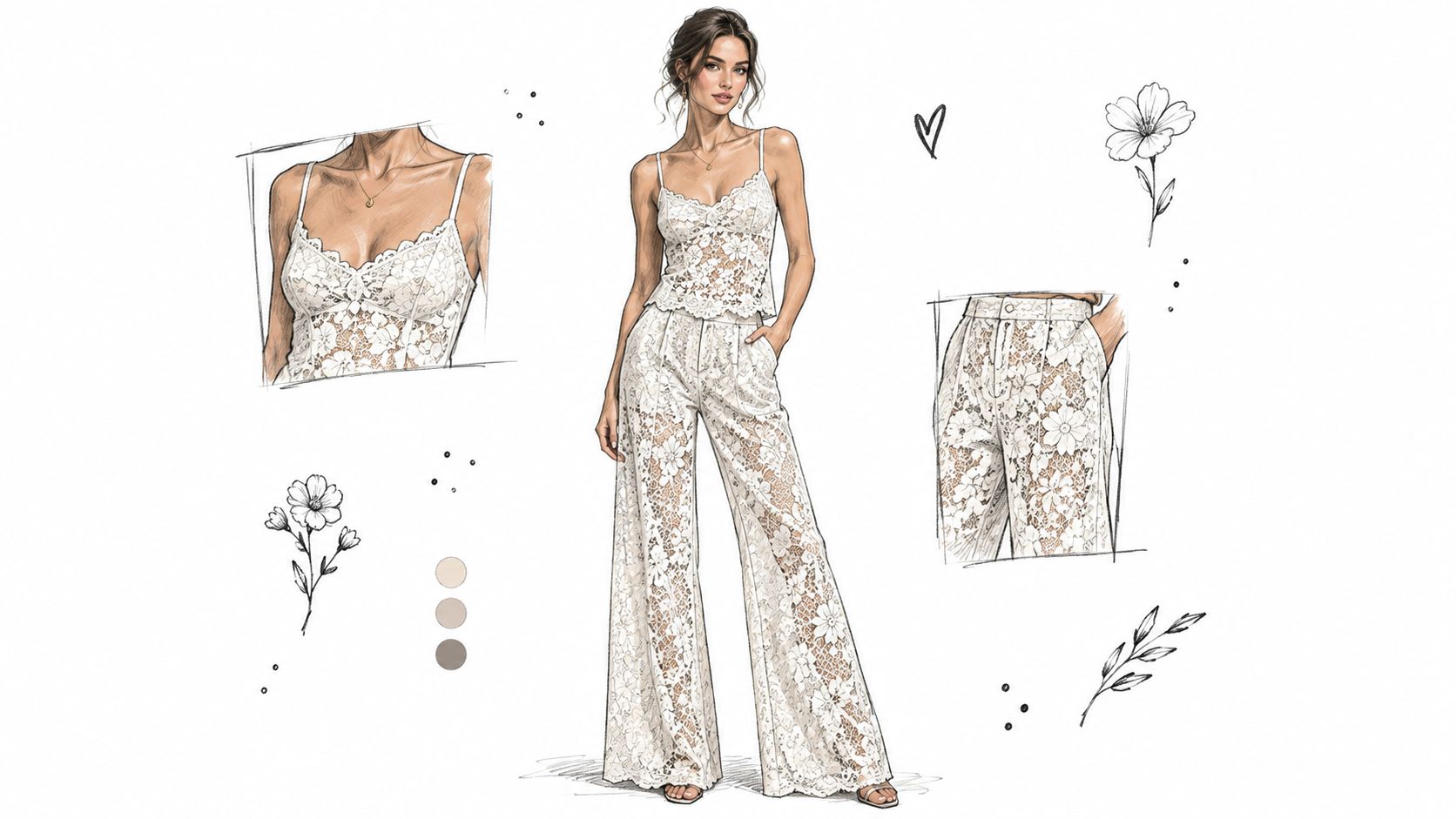
A luxury textile with a long memory
Lace carries a longer fashion history than its romantic image suggests. Needle lace emerged in Italy and bobbin lace in Flanders, with both major forms produced by about 1550, according to Britannica's history of lace. By 1600, lace had moved beyond modest decoration for undergarments and had become an expensive fabric and commercial article worn by men and women.
That history explains why lace trousers rarely look like ordinary casualwear. Their openwork surface suggests formality, femininity, and ceremony, even when modern construction makes the garment easier to wear. The textile also rewards careful buying. Historical lace could demand approximately 15 hours of work per meter, while some individual accessories required at least 4 hours, a level of labor that helps explain the material's enduring association with value.
Why coordinated separates feel modern
A modern lace set joins historic craftsmanship with practical dressing. Machine-made net became widespread after 1800, making lace more accessible as prices fell. The handmade industry was broadly declining by 1920, yet lace continued into contemporary fashion through scalable production and varied fiber blends.
The design must balance softness with structure. Wide-leg trousers create graceful movement, a straight leg gives the outfit a cleaner workwear direction, and a camisole-style top feels lighter than a high-neck blouse. The history of coordinated suits and separates places this format within a broader dressing tradition: matching pieces look polished together and remain useful apart.
Inspect the set before buying it. Lace can snag on rough jewelry, catch on bags, and reveal uneven tension when the garment is pulled across the body. Check the lining in daylight, confirm that the waistband stays flat while sitting, and choose a finish that will not demand constant repair. A restrained color and reliable construction will serve more occasions than a dramatic set that works only in photographs.
Choosing the Right Fit and Size
Lace reveals poor fit quickly. If trousers pull across the hip or upper thigh, the motifs distort, the lining can show more clearly, and seam stress becomes visible. If the garment is too loose, fabric pools at the seat and knees, taking away the clean finish that makes a coordinated set look luxurious. Check the trousers with both your daytime flats and evening shoes, since the hem and break should work across the occasions you plan to wear.
Start with the controlling measurement
Apparel sizing is not standardized, so a nominal size should never make the decision alone. Technical garment guidance defines ease as garment measurement minus body measurement. That difference determines whether trousers feel fitted, skimming, or relaxed. Lace trousers need enough ease through the hip, upper thigh, rise, and sitting area for comfortable movement. Excess room creates drag lines and adds visual bulk.
Use this fitting process:
- Measure the body over close-fitting undergarments. Record the waist, hip, rise-related comfort, and inseam requirements without pulling the tape tight.
- Compare finished garment measurements. The product chart should separate body measurements from the actual waist, hip, rise, and inseam measurements of both pieces.
- Use the largest controlling measurement. For trousers, the hip or rise often determines the correct purchase size. A waistband can sometimes be adjusted. A restrictive hip rarely becomes comfortable or elegant.
- Test movement. Sit, walk, climb stairs, and cross your legs. These movements expose problems that remain hidden while standing still.
- Check balance. Twisting, diagonal drag lines, or a rotating side seam can signal pattern imbalance rather than only the wrong size.
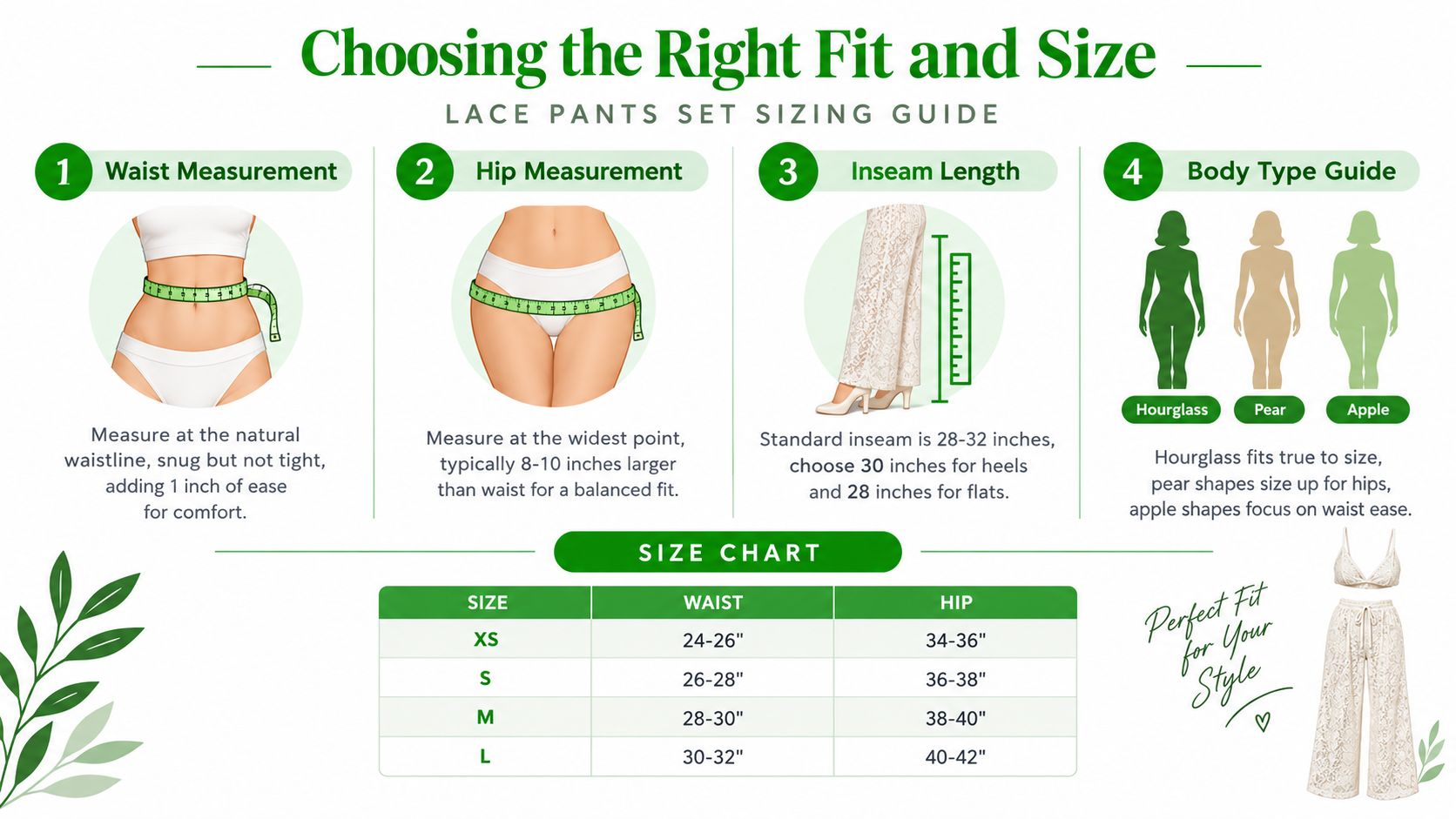
Match the silhouette to the proportion
A pear-shaped figure generally needs the trousers to govern the size, with the top altered or balanced separately if the set permits it. An hourglass shape often benefits from a defined waist and trousers that skim rather than cling. A straighter proportion can carry a wide-leg silhouette beautifully when the top has enough shape to keep the outfit from looking flat. Fuller-bust proportions need close attention to neckline, armhole, and top length. See our guide on how to dress for your body type to match the silhouette to your proportions.
Fit deserves priority because size or fit was cited as a leading reason for online apparel returns by 53% of surveyed respondents, according to return-rate reporting from KODIF. The same source places fit-related problems at as much as 70% of fashion returns. The practical lesson is clear: accurate garment measurements matter more than a familiar label.
Practical rule: If the trousers pull across the hips, the set is not fitted correctly, even when the top looks perfect.
Fiber affects fit, recovery, and care. Nylon and polyester lace generally offer stronger tensile performance, elasticity, and abrasion resistance than more delicate rayon- or modal-dominant constructions, so they suit trouser areas exposed to friction. Inspect motif consistency, gently stretch the lace in both directions, and confirm that it recovers without visible distortion. Ask how the separate pieces should be washed and stored before buying, because mismatched care can change their texture or shape over time.
Styling for Day and Night
A lace pants set becomes versatile through controlled changes, not through adding every accessory in the wardrobe. The daytime version should reduce visual intensity, while the evening version can allow the lace texture to take center stage.
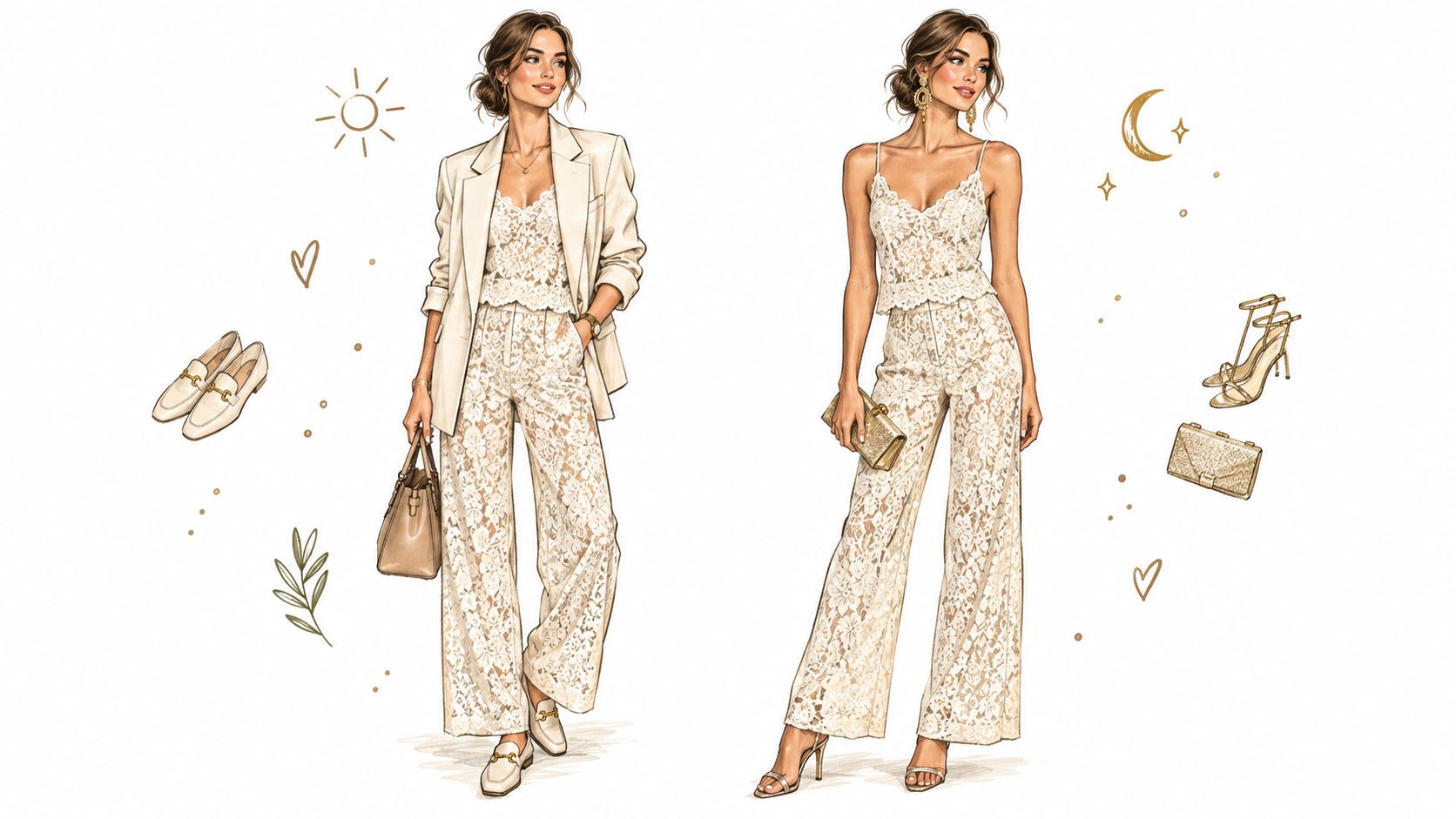
The daytime formula
The best daytime approach starts with a quiet foundation. A lace top layered over a smooth camisole, paired with low-profile flats or a refined loafer, gives the set a polished but approachable character. A structured blazer creates a clean frame around the lace and makes the outfit appropriate for workwear when the lining offers dependable coverage.
The trousers should remain the focal point, so accessories needn't compete. A medium-sized handbag, restrained jewelry, and a neat belt can anchor the look. If the trousers are wide-leg, a jacket that ends near the high hip or upper thigh usually preserves proportion better than a very long, loose layer.
The day-to-night dressing guide supports the central styling principle: a successful transition relies on a few deliberate swaps rather than a complete change of clothing.
The evening switch
An evening transformation can take place in a few steps:
- Remove the daytime blazer. This reveals the lace top and restores the set's feminine texture.
- Change the shoe. A pointed heel or elegant sandal lengthens the trouser line and immediately raises the formality.
- Reduce the bag. A compact clutch or small shoulder bag feels more natural after dark than a large work tote.
- Add one strong jewelry choice. A sculptural earring or luminous necklace is more effective than several competing pieces.
- Adjust the beauty details. A richer lip, softly defined eye, or swept-back hair can make the same clothing feel evening-ready without looking overdone.
The setting should determine how far the styling goes. A wedding guest can introduce shine through accessories, while a rehearsal dinner may call for a softer sandal and a smaller amount of jewelry. A gala can support more dramatic earrings, but the outfit still needs a lining and waistband that remain comfortable through prolonged sitting and movement.
The decision that matters most
A lace pants set isn't automatically versatile because it has two pieces. It earns that description when each piece works with other wardrobe staples and when the fabric can withstand the intended schedule. A lined trouser with a clean waistband has more day-to-night potential than an unlined style that requires constant adjustment.
Layering and Undergarment Essentials
Transparency is the detail that determines whether lace looks polished or unfinished. The correct underlayer should support the garment's color, coverage, and shape without creating visible lines that compete with the lace motif.
A camisole is the most useful foundation for a lace top. It smooths the torso, gives the openwork texture a clear background, and allows the neckline to remain intentional. The best color usually follows the garment's lining or creates a considered tonal contrast. A starkly different underlayer can make the lace appear patchy, while a close tonal match keeps the surface looking refined.
Coverage for the trousers
The trouser lining deserves the same scrutiny as the top. Daylight, direct sun, and flash photography can reveal more than indoor fitting-room lighting. A shopper should walk toward a bright window, sit down, bend slightly, and check whether the lining remains aligned with the lace shell.
The following checks provide a practical standard:
- Waistband: It should lie flat without digging in or rolling beneath the lace.
- Hip and seat: The lining shouldn't ride upward when the wearer walks or sits.
- Hem: The lace edge should remain graceful rather than catching against hosiery or footwear.
- Top overlap: The camisole or inner layer should stay tucked and shouldn't peek below the lace top unless that contrast is intentional.
A blazer is the bridge between office and evening. Worn over the complete set, it controls exposure and adds authority. Removed later, it lets the lace read as the primary texture. A cropped jacket sharpens wide-leg trousers, while a longer structured layer can balance a fitted trouser and a shorter top.
Choosing undergarments by occasion
For work, a smooth camisole with a clean neckline and a supportive, smooth foundation creates the safest result. For dinner, a slightly lower or more delicate camisole can work if the overall coverage remains intentional. For a formal event, the underlayer should be tested under movement and photography rather than judged only in a mirror.
A lace ensemble looks expensive when every layer appears chosen, not improvised.
A well-chosen camisole for women can also be worn under blazers, sheer blouses, and open cardigans, which increases the wardrobe value of the purchase. The goal isn't maximum coverage at all times. It's confident coverage that lets the lace remain beautiful.
Care and Tailoring Tips
Lace needs garment-specific care. The word “lace” doesn't identify a single fiber or construction. Lace can be made from linen, silk, cotton, wool, rayon, nylon, polyester, elastane, metallic yarn, or blends, and the shell, lining, waistband, trims, and dye may react differently to water and heat.
The sewn-in care label should govern every decision. A practical guide to lace fabric and construction reinforces why polyester lace care can't automatically be applied to silk or embellished lace.
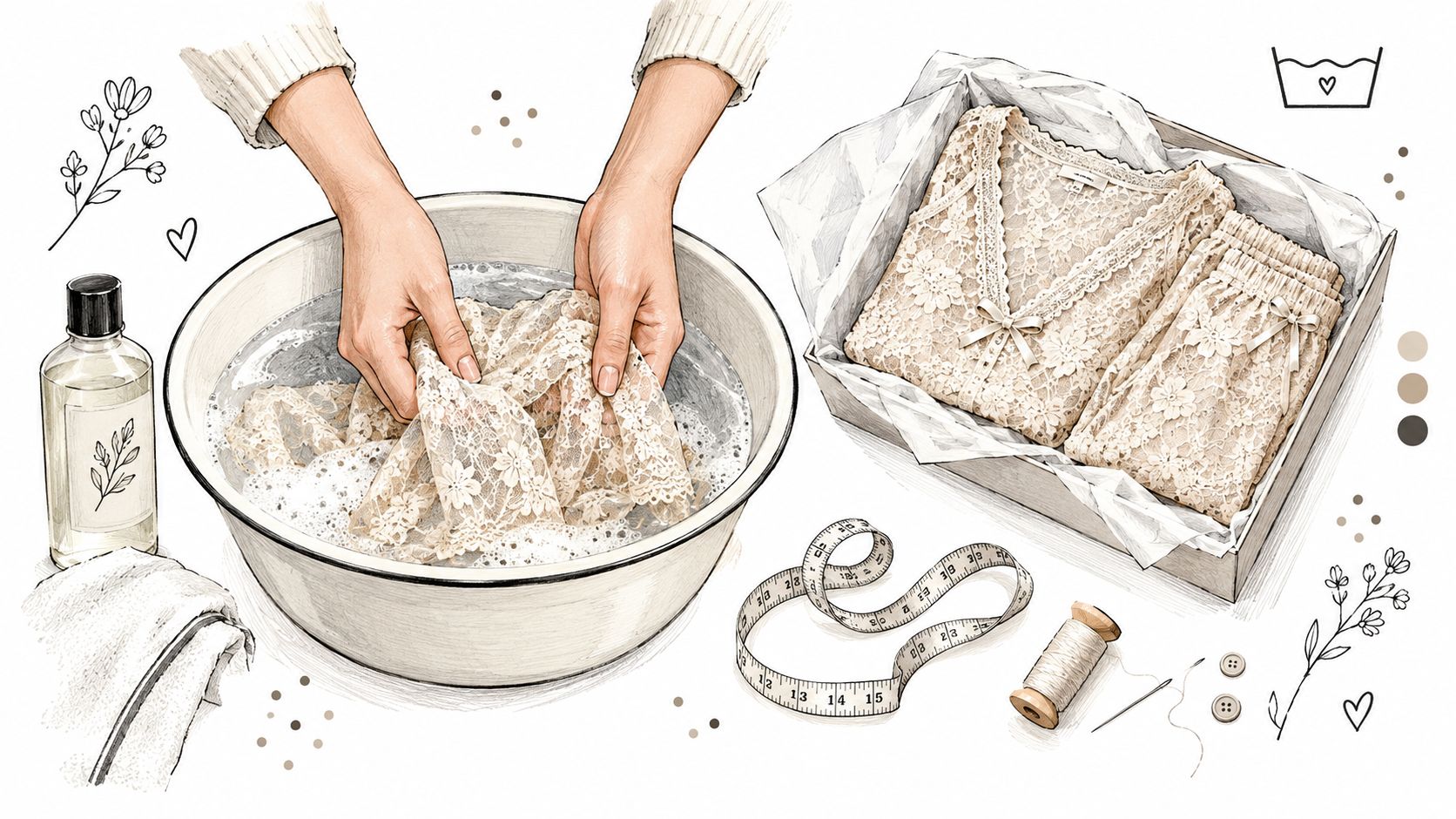
A safer care routine
Cold washing in a mesh bag and air-drying reduce mechanical stress and heat exposure when the label permits washing. The garment should be turned inside out, kept away from rough surfaces, and removed promptly after the cycle. Hanging a heavy wet lace garment can distort the shoulders or waistband, so drying flat may be preferable for delicate constructions.
Fragile lace can be harmed by snagging, heat, moisture, and unsuitable chemicals. Care guidance recommends avoiding strong alkalis and chlorine bleach, while solvents, acids, and water should be treated cautiously. The lace stain-care reference recommends testing a hidden area before treating a visible mark.
Alterations that make sense
Tailoring is worthwhile when the main fit is correct and the adjustment is technically modest. Waist suppression, a small hem change, or a controlled strap adjustment may improve wearability. Major changes through a lace motif, lining, or complex waistband can disrupt pattern alignment and may cost more than the garment justifies.
A tailoring guide for women can help shoppers understand which adjustments preserve the original design. Before alterations, the wearer should bring the shoes and undergarments intended for the outfit. Trouser length changes dramatically with footwear, and the lace edge should be finished without losing the border or scalloped detail.
Store the set with enough space to prevent snags. Fold delicate trousers over smooth tissue or use a garment bag that won't catch the openwork surface. If a snag appears, it should be secured quickly rather than pulled, since a small loose thread can affect the surrounding motif.
Why a Lace Pants Set Makes a Great Gift
A lace pants set makes a thoughtful gift because it offers the recipient a complete outfit with the flexibility of separates. It feels more personal than a single accessory, yet it can be easier to style than an isolated statement garment. The giver can choose a restrained color and a versatile silhouette, then allow the recipient's shoes, jewelry, and layering pieces to determine the final mood.
The strongest gift choices prioritize usability. A set with a comfortable waistband, dependable lining, and a top that doesn't require complicated undergarments will be worn more often than one designed only for dramatic entrances. A neutral or softly saturated shade can move between dinner, celebrations, travel evenings, and polished social occasions.
Comparing the practical options
| Gift choice | Strength | Limitation |
|---|---|---|
| A fully matching set | Gives an immediate, complete outfit | Requires careful sizing in both pieces |
| A coordinated but not identical pair | Offers more flexibility with existing wardrobe pieces | Color and texture need closer coordination |
| A lace top with tailored trousers | Often easier to integrate into workwear | Loses some of the visual impact of a full lace ensemble |
| A wide-leg lace trouser with a simple top | Creates movement and a strong evening silhouette | Hem and lining require close inspection |
Fit remains the central concern. If the giver knows the recipient's preferred trouser size, rise, inseam, and top proportions, a set can be a successful surprise. If those details are uncertain, a gift card or in-person styling appointment allows the recipient to evaluate transparency, movement, and comfort without pressure.
Care is part of the gift
A beautiful set deserves a care plan. The recipient should receive the garment with the label instructions intact and should know whether the lace shell, lining, and waistband call for different handling. A hidden-area test is sensible before stain treatment, and a gentle cleaning method is safer than assuming every lace garment belongs in a standard wash.
A lace pants set also makes sense for a woman building a more versatile occasion wardrobe. The top can work with a structured skirt or trousers, while the lace trousers can soften a simple knit or polished blouse. That flexibility gives the gift a practical role beyond the event for which it was first chosen.
Where to Find Your Perfect Lace Pants Set
The right lace pants set shouldn't be chosen from a product photograph alone. The decision depends on how the lace feels, where the lining falls, whether the waistband stays comfortable, and how the proportions look in motion. Those details are difficult to judge when the garment is viewed only on a screen.
A specialist boutique offers an advantage because the shopper can compare silhouettes in person. A fitted trouser, a fluid wide-leg shape, and a more structured top each create a different impression, even when the lace pattern appears similar. Trying on the full set also reveals whether the top and trousers work together in scale, opacity, and length.
What a strong wardrobe edit includes
A useful collection should give shoppers choices across more than one setting:
- Work-to-dinner pieces with layering potential and controlled coverage.
- Wedding and celebration options with enough texture to feel special without becoming costume-like.
- Evening silhouettes that respond well to heels, compact bags, and expressive jewelry.
- Separate-friendly designs that can be worn with existing wardrobe staples.
- Giftable options supported by thoughtful packaging and practical fit guidance.
Cedar & Lily Clothier carries curated designer and contemporary brands, including Vanessa Mooney and Lace the Label, and offers the kind of personal styling support that makes a detailed fit decision easier. The boutique has Oklahoma storefronts at Utica Square in Tulsa and downtown Jenks, where shoppers can see the fabric, assess the lining, and test movement before purchasing.
Online shopping remains useful when the product measurements and care details are clear. Cedar & Lily Clothier also offers an online store, fast shipping, complimentary gift packaging on qualifying gifts, and support for shoppers who need help selecting a size or styling direction. For local customers, an in-person visit adds the reassurance of real fabric and attentive guidance.
A lace pants set is a strong wardrobe purchase when it works beyond one evening. The best version transitions from a blazer and understated shoe during the day to refined accessories and evening footwear later, while the fit and care requirements remain manageable.
Cedar & Lily Clothier offers curated designer and contemporary fashion, including Vanessa Mooney and Lace the Label, with personal styling support online and at its Utica Square and downtown Jenks boutiques. Shop the Cedar & Lily Clothier collection or visit the team for help finding a lace pants set that moves beautifully from day to night.