


You can absolutely wash most cashmere at home, either by hand in cool water with a gentle detergent or by using your machine’s delicate cycle with the sweater tucked inside a mesh bag. The secret is simple: avoid high heat and rough handling. Get that right, and your luxury knitwear will stay soft and keep its shape for years.
Why Proper Cashmere Care Is A Skill Worth Mastering
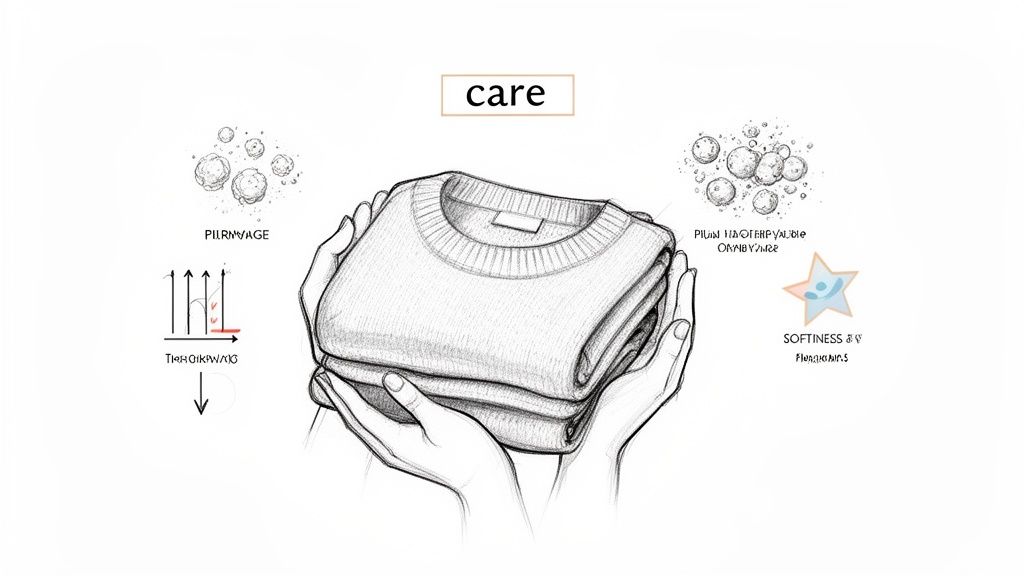
Learning how to wash cashmere isn’t about memorizing a strict set of rules. It’s about protecting a valuable investment. Every sweater, scarf, or throw is made from incredibly fine fibers—around 15-19 microns thick—which give the fabric its famous softness and warmth. But that delicate structure is also its biggest weakness.
Understanding The Delicate Fiber
Unlike tough cotton or synthetic fabrics, cashmere fibers are easily ruined by common laundry mistakes. High heat, aggressive spinning, and harsh detergents can cause damage that you just can't undo.
Here’s what you’re up against:
- Shrinking: Hot water makes the fine fibers clench up and lock together, permanently shrinking your garment.
- Stretching: Wringing, twisting, or hanging wet cashmere is a recipe for disaster. It pulls the fibers out of shape, leaving you with a baggy, distorted mess.
- Pilling: Friction is the enemy. Vigorous washing or rubbing against other clothes causes those short fibers to tangle into tiny balls, or pills.
- Loss of Softness: Your standard laundry detergent is too aggressive. It can strip cashmere of its natural oils, leaving it feeling stiff and dull.
The global cashmere clothing market hit USD 2.80 billion in 2023 and is only getting bigger, fueled by our love for timeless, quality pieces. Proper washing is how you protect that investment. Textile experts warn that hot water can cause lower-quality cashmere to shrink by as much as 20-30%. You can explore more market insights about cashmere's growing popularity.
A Quick Guide To Safe Washing
Getting the technique right turns a nerve-wracking chore into a simple, satisfying ritual. It’s what keeps your favorite pieces looking beautiful, season after season.
Before we get into the nitty-gritty, here’s a quick look at the two safest ways to wash your cashmere at home. This simple comparison can help you decide which approach is best for your garment and your schedule.
Cashmere Washing At A Glance
| Step | Hand Washing Recommendation | Machine Washing Recommendation |
|---|---|---|
| Preparation | De-pill and spot-treat any stains first. | Place the item in a mesh laundry bag to prevent snags. |
| Water Temp | Use cool water (below 30°C/86°F) to prevent shrinking. | Set the machine to its cold water setting. |
| Cycle/Action | Gently swirl the garment for 2-3 minutes. Avoid rubbing. | Select the "delicate," "wool," or "hand wash" cycle. |
| Detergent | Use a small amount of pH-neutral cashmere or wool wash. | Use a minimal amount of a high-efficiency (HE) delicate soap. |
| Spin Speed | Do not wring. Gently press out water with a towel. | Use the lowest spin speed possible (under 600 RPM). |
| Drying | Reshape and lay flat on a towel or mesh rack away from heat. | Reshape and lay flat to dry immediately after the cycle ends. |
Ultimately, both methods work beautifully when done with care. Choosing one over the other often just comes down to personal preference and how much time you have.
Getting Your Cashmere Ready for a Wash
The secret to a beautifully clean cashmere sweater actually starts long before it ever gets near the water. Think of it as prep work—a few minutes spent inspecting your garment now will save you from common headaches like set-in stains or accidental discoloration later on. It truly makes all the difference.
First, lay your sweater out on a clean, flat surface, like your bed or a table, and just give it a good look. You're searching for those little fuzzy balls, usually under the arms or along the sides where your bag might rub. Those are pills, and they’re just a natural result of the shorter fibers on the yarn tangling up from friction.
It's so tempting to just yank them off with your fingers, but please don't! That can easily create a hole or thin out the yarn. A much better way is to use a tool made for the job, like a cashmere comb or a delicate fabric shaver. Just lay the garment flat and gently glide the comb across the pilled spots. Always move in one direction to neatly lift the fuzz away without snagging the beautiful knit underneath.
Tackle Stains Before They Get Soaked
Next up, do a quick scan for any spots or stains. Did a little drop of coffee hit the cuff? Maybe a smudge of makeup on the collar? It is absolutely critical to deal with these now, because once you submerge the whole sweater in water, that stain can set in for good.
For most little spills, spot-treating is your best friend. Here’s my go-to method:
- Create a barrier. Slip a clean, white cloth (an old t-shirt scrap works great) inside the garment, right under the stain. This stops the stain and detergent from bleeding through to the other side.
- Apply a dot of detergent. Grab a cotton swab or just use your fingertip to dab a tiny amount of a wool-safe, pH-neutral soap directly onto the spot. A little goes a long way.
- Blot, don't rub. Take another clean, damp cloth and gently blot the area. Resist the urge to scrub, as that will just rough up the delicate fibers. I always work from the outside of the stain toward the center to keep it from spreading.
This targeted approach is so much gentler and more effective than dousing the entire sweater in a harsh pre-treatment spray.
The Final Pre-Wash Steps
Once you've handled the pilling and stains, there are just two last checks that are completely non-negotiable. First, the obvious but often-skipped step: read the care label. I know, I know, but it’s your ultimate guide. While most cashmere is perfectly happy being hand-washed, some pieces with a lot of structure (like a blazer) or delicate embellishments might truly be "dry clean only."
Finally, if your sweater is new or a particularly vibrant color, take a minute to test for colorfastness. Find a hidden spot, like an inside seam or the bottom hem.
Dip a white cloth in a bit of water and your detergent, then gently press it against that hidden spot. If you see any color transfer onto the cloth, the dye isn't stable. Washing it at home is a recipe for a faded, splotchy mess. That piece is a definite candidate for a professional dry cleaner who has the right tools for handling tricky dyes.
The Art Of Hand Washing Cashmere
When it comes to keeping your cashmere looking and feeling its best, nothing compares to a gentle hand wash. I know it might sound a little nerve-wracking, but the process is surprisingly simple—almost therapeutic, really. Think of it less as a chore and more as a ritual to protect your favorite pieces and keep them impossibly soft.
You're essentially giving your sweater a calm, cool bath. The whole point is to loosen dirt and oils without shocking the delicate fibers with aggressive heat or friction.
Setting The Stage For Success
First, get your station ready. A clean basin, sink, or even a bathtub will do the trick, just make sure there’s no leftover cleaning chemical residue. Fill it up with cool to lukewarm water. Hot water is the number one enemy of cashmere, and it's what causes that dreaded shrinking, so stay away from it.
Next, choose your detergent wisely. You'll want a pH-neutral wool and cashmere wash or another type of specialized delicate soap. Standard laundry detergents are far too harsh; their alkaline formulas can strip the natural lanolin from the fibers, leaving your garment feeling brittle and dry over time. Just add a little to the water and give it a swish to create a light, sudsy solution.
Before you even dip your sweater in, a little prep work goes a long way. This quick visual guide walks you through the pre-wash essentials.
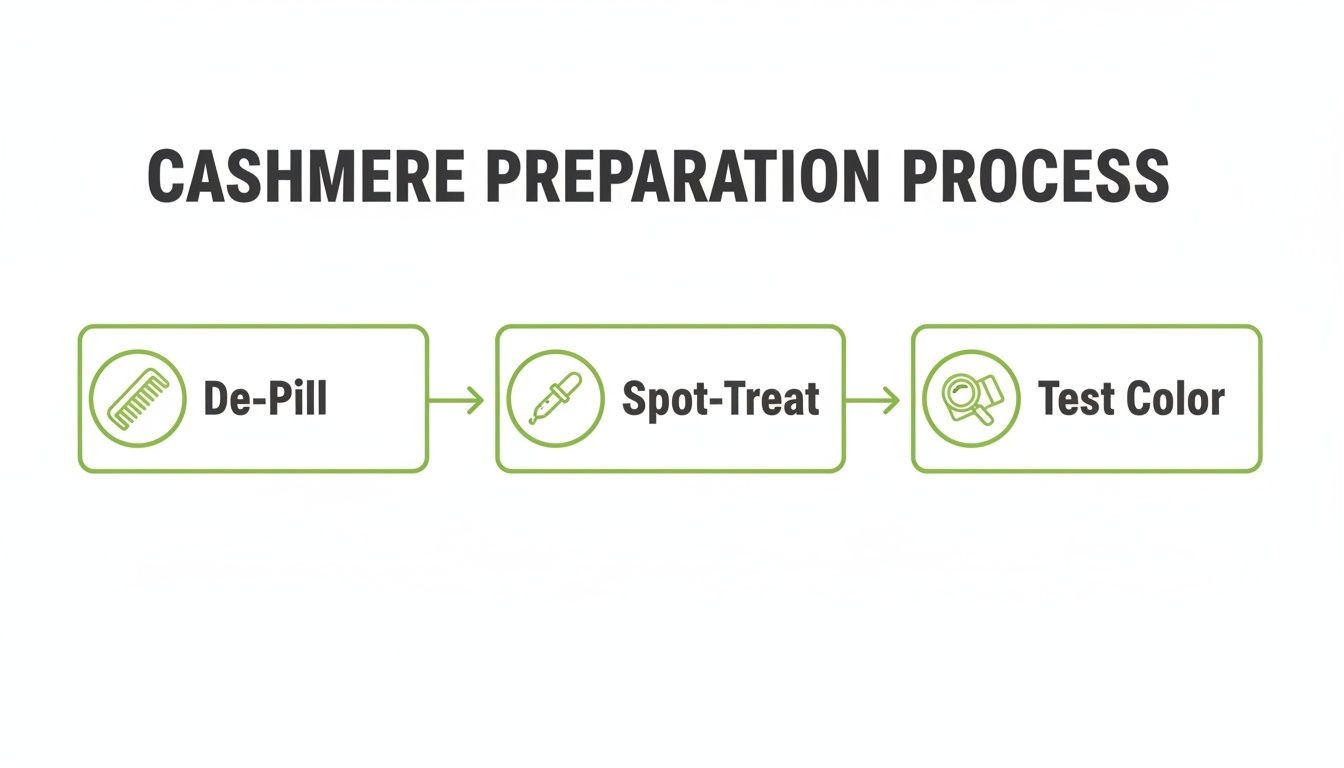
Running through these steps—de-pilling, spot-treating, and color testing—is the best way to prevent common mishaps before they happen.
The Gentle Wash And Rinse
Alright, it's time for the main event. Fully submerge your cashmere in the soapy water, gently pressing down until it’s soaked through. Now, just let it be. Let it soak for about 20-30 minutes. This is where the magic happens; the detergent will lift away dirt all on its own, no harsh rubbing required.
Once the soak is done, carefully lift the item from the basin, making sure to support its full weight to prevent stretching. Drain the soapy water and refill the basin with fresh, cool water to rinse.
Gently press the garment against the side of the sink or basin to work the suds out. You might need to do this a couple of times with fresh water until it runs clear. Whatever you do, do not wring or twist it. That’s the quickest way to break down those delicate fibers and completely ruin the shape of your sweater.
What makes cashmere so special is its incredible ability to insulate, trapping air 7 times better than wool. But that delicate structure is also what makes it so vulnerable. A staggering 65% of shrinkage happens when the water is over 40°C. Sticking to cool water not only prevents this disaster but also helps preserve that signature softness. Studies show hand-washed items retain 95% of their softness after 50 cycles, compared to just 70% for machine-washed ones.
These principles of gentle care aren’t just for cashmere. If you have other luxury fabrics, learning the right techniques, like how to wash silk pillowcases, can help you keep everything feeling brand new.
Using Your Washing Machine Without Disasters
While hand washing will always be our first recommendation, we get it—sometimes life just calls for the convenience of a machine. The good news is that you can use your washer without turning your favorite sweater into a felted mess, but you have to be incredibly careful. Think of it less like a regular load of laundry and more like a delicate science experiment.
First things first: you absolutely need a mesh laundry bag. This isn't just a suggestion; it’s your cashmere’s first line of defense. The bag creates a protective cocoon that stops the delicate fibers from snagging on the machine drum or getting aggressively twisted with other items. Without it, you’re just inviting friction and pilling.
Dialing In The Right Settings
Your washing machine’s control panel holds the fate of your garment. Your mission is to find the gentlest cycle possible. Look for settings like 'Delicate,' 'Wool,' or even a dedicated 'Hand Wash' cycle. These options are designed to minimize agitation and use slow, careful movements that come closest to washing by hand.
Water temperature is the next critical choice. The rule is simple: always use cold water. Even lukewarm water can shock the fibers, causing them to contract and shrink permanently. It’s a heartbreaking mistake that’s nearly impossible to undo.
Finally, you have to tame the spin cycle. A powerful spin will wring out water, but it will also stretch and warp your beautiful knit. Set the spin speed to the lowest option available, making sure it’s under 600 RPM. This will gently press out excess water without pulling the sweater out of shape.
Improper washing is a huge issue in the textile industry, known to increase pilling by as much as 60% and costing luxury boutiques millions in damage claims. While a dedicated wool cycle with a low spin is the best machine practice, 80% of experts still recommend manual washing for maximum fiber integrity. For more details on this topic, you can find in-depth market research on cashmere care trends.
Choosing Your Cashmere's Company
Who your cashmere hangs out with in the wash matters just as much as the settings you choose. Never, ever toss it in with heavy-hitters like jeans, bath towels, or anything with zippers, buttons, or hooks. That hardware will act like tiny wrecking balls against the delicate knit.
The best approach is to wash your cashmere item all by itself. If you must wash it with other pieces, make sure they are lightweight, similarly colored delicates. This keeps friction to a minimum and prevents your sweater from getting crushed. Of course, some modern cashmere is specifically designed to withstand a gentle machine wash, which is a game-changer. For more on that, you can check out our guide on how to spot and care for machine washable cashmere.
The Final Steps: Drying And Storing Your Knitwear
The journey to perfectly clean cashmere doesn't end when it leaves the water. Honestly, what you do after the wash is just as crucial for keeping your knitwear soft, luxurious, and perfectly shaped. Get this part right, and your investment pieces will look incredible for years.
The biggest mistake I see is people wringing or twisting their sweaters to get the water out. This is a surefire way to stretch and ruin those delicate fibers. There’s a much better, safer way to handle it.
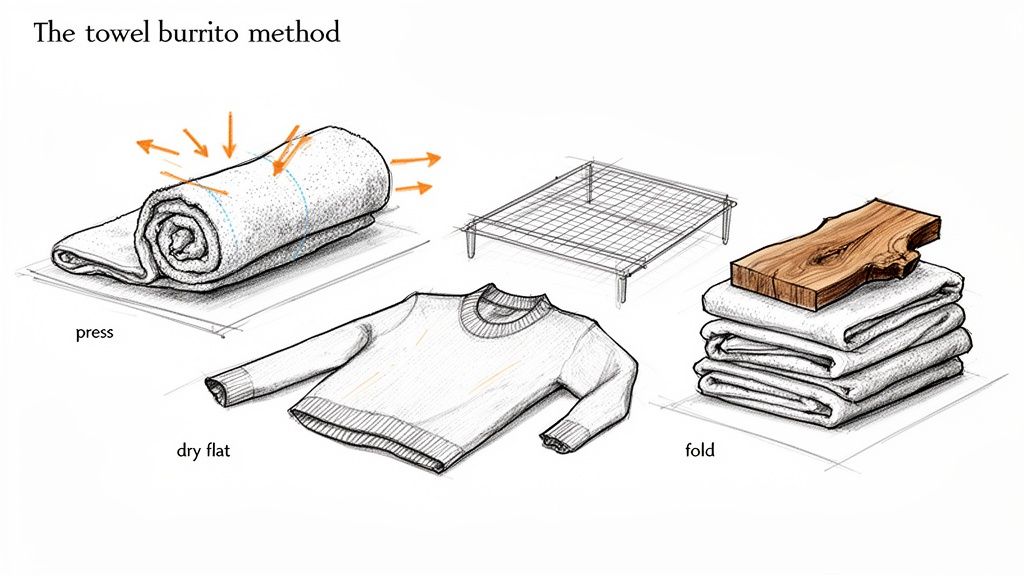
The Towel Burrito Method
Once you've finished the final rinse, gently gather the sweater and support its full weight as you lift it out. Don't let it hang and stretch. Lay it flat on a clean, thick towel.
Now, gently roll the towel up with the sweater nestled inside, creating what I like to call a "towel burrito." Press down firmly along the entire roll to squeeze the excess moisture right into the towel. The key is to press, not twist.
Key Takeaway: The goal here is to remove as much water as possible without any harsh pulling or wringing. This gentle pressing method protects the delicate knit structure from getting distorted while it's at its most vulnerable.
Unroll the towel, and your cashmere will feel damp rather than soaking wet—the perfect starting point for the next step.
Reshaping And Air Drying
It's time to lay your garment flat to dry. A mesh drying rack is ideal, but a fresh, dry towel on a flat surface works just as well. Just make sure it’s away from direct sunlight or heat, which can cause shrinking or fading.
Before you walk away, take a moment to carefully reshape the sweater back to its original dimensions. Gently coax the hem and cuffs into place and smooth out the shoulders and body. A few seconds spent on this now will prevent it from drying in a strange, misshapen form.
Proper air circulation is everything for even drying and preventing that musty smell. A mesh rack is fantastic because it lets air flow all around the garment. If you're using a towel, it’s a good idea to flip the sweater over after a few hours to help it dry evenly.
Long Term Storage Solutions
Once your cashmere is completely dry—and I mean 100% dry—it’s ready to be put away. If you remember nothing else, remember this: fold, never hang. Hanging a cashmere sweater will cause the shoulders to stretch out from the garment's own weight, creating permanent bumps and distortion.
For stowing it away between seasons, keep these tips in mind:
- Breathable Containers: Store your folded pieces in a breathable garment bag or even a clean cotton pillowcase. Stay away from plastic bins, as they can trap moisture and lead to mildew.
- Natural Moth Repellents: Moths just love natural fibers like cashmere. Tuck some cedar blocks, rings, or sachets of dried lavender into your drawers or storage bags to keep them at bay.
- A Cool, Dark Place: Your cashmere will be happiest in a cool, dark, and dry spot, like a dresser drawer or a closet shelf. Attics and basements are risky due to their wild temperature and humidity swings.
Perfecting your storage technique is a huge part of the care process. For a deeper dive, check out our complete guide on how to store cashmere sweaters to keep them pristine. To truly ensure your cashmere remains flawless, consider adding some expert tips for long-term garment care to your routine.
Common Questions About Cashmere Care
Even with the best instructions, I find there are always a few lingering questions when it comes to caring for a fabric as treasured as cashmere. From "how often is too often?" to the dreaded "can I save my shrunken sweater?"—let's walk through some of the most common concerns I hear.
Getting these details right is what gives you total confidence in your care routine, turning it from a chore into a satisfying ritual.
One of the biggest uncertainties is how frequently you should be washing your knitwear. Unlike a cotton t-shirt, cashmere absolutely does not need to be washed after every single wear.
The natural fibers are wonderfully breathable and have inherent antimicrobial properties. This means they resist odors far better than synthetic fabrics. A good rule of thumb is to wash your sweater after about three to five wears, unless, of course, it's visibly soiled. Over-washing is a surprisingly common mistake that can really stress the delicate fibers over time.
Choosing The Right Cleanser
Another question that comes up a lot is whether you can use a common household alternative, like baby shampoo. While it’s certainly gentler than a standard laundry detergent, it's still not the ideal choice.
Regular detergents contain enzymes designed to break down tough stains, but these are too harsh for cashmere. They can strip the natural lanolin from the fibers, leaving your beautiful sweater feeling brittle and dry. A dedicated, pH-neutral wool and cashmere wash is always your safest bet. These formulas are made specifically to clean gently while preserving the fiber's integrity and that signature softness we all love.
I've seen the "hack" about using hair conditioner to soften cashmere. While a tiny amount can sometimes help relax shrunken fibers in an emergency, it can also leave a residue that weighs the garment down. For the best long-term results, stick to products actually designed for the fabric.
When Accidents Happen
So, what about the ultimate nightmare: accidental shrinkage? If your favorite sweater has taken a trip through a hot wash cycle, don't panic just yet. There’s a potential fix, though I'll be honest, it’s not a guaranteed miracle.
You can try this rescue method:
- First, soak the shrunken garment for about 30 minutes in a basin of cool water mixed with a few tablespoons of gentle hair conditioner. This can help relax the tightly constricted fibers.
- After soaking, gently squeeze out the excess water—but do not rinse it.
- Lay the sweater flat on a clean, dry towel.
- Now, carefully and patiently stretch the garment back to its original shape and size. Work section by section, being firm but gentle.
- Allow it to air dry completely flat, away from direct heat or sunlight.
This technique can often salvage a piece that has only shrunk slightly. Of course, preventing damage in the first place is always the best strategy. A little knowledge goes a long way, especially when it comes to common issues like those pesky little fabric balls. To learn more about this, explore our complete guide on how to avoid pilling and keep your knitwear looking smooth.
At Cedar & Lily Clothier, we believe that caring for your wardrobe is just as important as choosing it. Discover our collection of timeless pieces and find your next investment-worthy favorite today. Shop New Arrivals.