


The invitation is sitting on the counter. The closet is full. Every dress feels either too expected, too tight in the wrong place, too bare, too fussy, or not like the woman wearing it anymore.
That's usually the exact moment evening jumpsuits for women start to make sense. Not as a backup plan. Not as a trendy detour. As the smarter choice for the woman who wants to look formal, feel comfortable through dinner and dancing, and stop tugging at an outfit all night.
A good evening jumpsuit solves real problems. It gives shape without requiring a full skirt, coverage without looking heavy, and polish without the sameness of another event dress. The trick is choosing the right silhouette, the right fabric, and the right hem for the actual occasion on the calendar.
Table of Contents
- The Invite Is on the Counter and You Don't Want a Dress
- Why the Evening Jumpsuit Has Earned Its Place in Formal Dressing
- Silhouettes That Read as Eveningwear
- Fabrics That Make a Jumpsuit Look Formal
- Fit Checkpoints That Make or Break the Look
- Accessories That Move a Jumpsuit From Cocktail to Black Tie
- Matching the Jumpsuit to the Occasion on Your Calendar
- Find Your Evening Jumpsuit at Cedar & Lily
The Invite Is on the Counter and You Don't Want a Dress
There's a very specific kind of outfit panic that happens before a wedding, gala, holiday party, or formal dinner. The dress code says evening. The closet says “almost.” Nothing feels wrong enough to toss, but nothing feels right enough to wear.
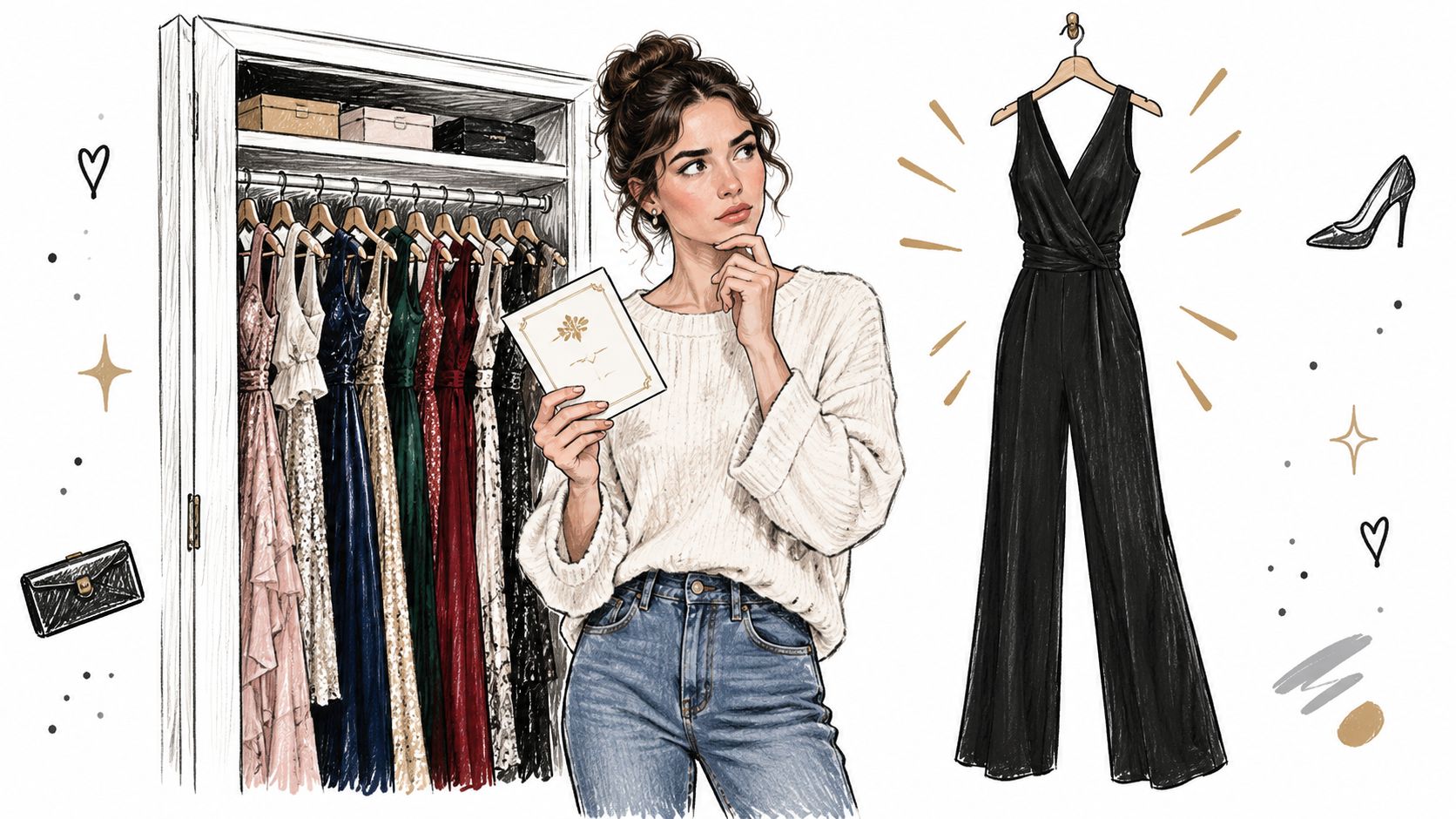
That's where the jumpsuit earns its place. It gets a woman out of the dress rut without dropping her into something that reads casual or experimental. When the cut is clean and the fabric has proper weight, it looks intentional, grown-up, and event-appropriate.
What usually worries her most
Most women aren't asking whether they like the idea of a jumpsuit. They're asking whether it will look formal enough, whether it will flatter the part of their body they're thinking about, and whether they'll spend the night adjusting it.
Those are the right questions. A formal jumpsuit has to do three jobs at once:
- Match the room: A cocktail wedding needs different polish than a black-tie fundraiser.
- Solve a fit concern: Short torso, fuller hip, broad shoulder, waist definition, arm coverage. The shape has to answer the concern.
- Finish like eveningwear: Shoes, jewelry, bag, and outer layer decide whether it feels dressed or unfinished.
A jumpsuit works best when the woman chooses it for the occasion first, and the trend second.
For readers who want a broader foundation before shopping, how to wear a jumpsuit well is a useful place to start. Then it becomes much easier to shop with a sharp eye instead of hopeful guessing.
Why the Evening Jumpsuit Has Earned Its Place in Formal Dressing
The evening jumpsuit isn't new, and that matters. It became a recognizable fashion category in the 1950s, gained broad popularity in the 1960s, and the late 1960s and 1970s are described as its prime years for both daywear and eveningwear. A museum-documented example confirms how firmly it had entered high fashion by the end of that decade. Hubert de Givenchy produced an evening jumpsuit in Fall/Winter 1968, as noted in Vogue's history of the jumpsuit.
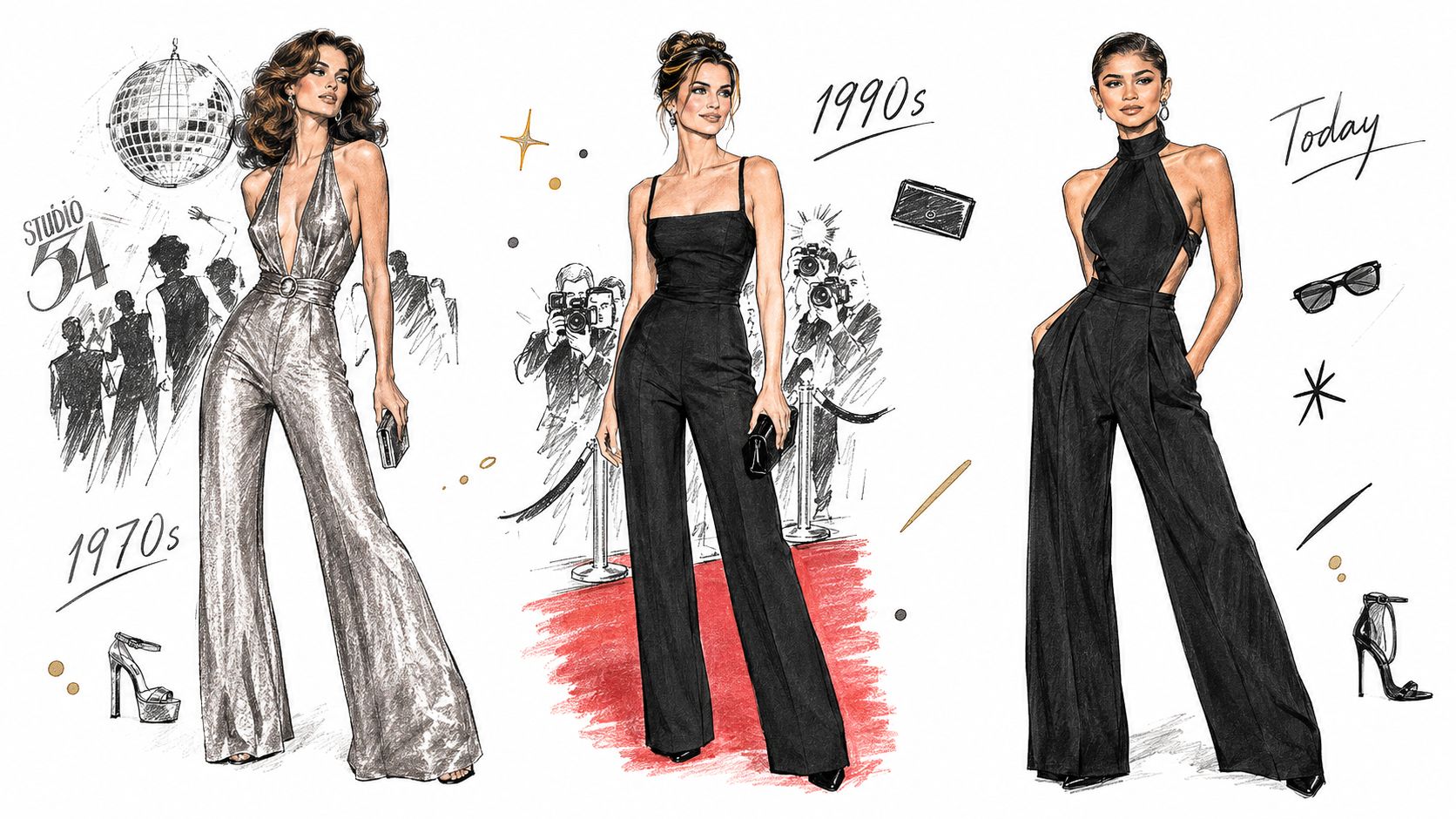
That timeline matters because it shows the shift from utility dressing into true formalwear over roughly two decades. The evening jumpsuit didn't sneak into occasion dressing as a novelty. It earned its place.
Why it works now
A woman considering one today usually wants three things. She wants to sit through dinner without fighting a waistband, move through a crowded reception without carrying a skirt, and look polished in photos without wearing another predictable gown.
A well-cut jumpsuit does all three.
- It handles movement well: walking, stairs, dancing, mingling.
- It stays clean visually: one uninterrupted look from shoulder to hem.
- It feels current without trying too hard: especially in dark tones, rich neutrals, or a true evening finish.
The category also has real staying power in the market. One recent report values the global jumpsuits market at $4.96 billion in 2025 and projects $9.1 billion by 2034, with women accounting for 52.3% of revenue and online stores representing 44.2% of distribution, according to Dataintelo's jumpsuits market report. That doesn't tell a woman what to wear to a gala on Saturday night, but it does explain why formal jumpsuits keep showing up in occasionwear edits and event dressing.
A better question than “Can she wear one?”
The useful question isn't whether a jumpsuit is allowed. It's whether the one in front of her looks formal enough for the room.
That's why evening wear ideas that actually fit the event matter more than broad trend talk. The right silhouette makes the whole decision easier. The wrong one makes even expensive fabric look underdressed.
Silhouettes That Read as Eveningwear
Some jumpsuits look polished. Fewer look formal. The difference is shape, length, and how deliberately the silhouette handles the body.
The wide-leg full-length jumpsuit
This is the closest thing to a gown replacement. For galas, black-tie weddings, and large evening receptions, this is the silhouette that carries the most authority.
It works especially well for women who want to skim the hip, lengthen the leg, or soften a fuller lower half. The fabric falls straight instead of clinging, so the body looks long instead of segmented. It also helps women with a longer rise because the proportions feel balanced instead of pinched.
Best styling shorthand: sleek hair, a strong earring, and a heel that disappears under the hem.
Practical rule: If the event would usually call for a long dress, the jumpsuit should be wide-leg and full length, not cropped and not narrow.
The V-neck halter or camisole shape
This one is the cocktail-hour hero. It's strong for semi-formal weddings, holiday parties, and dressy dinners where a woman wants a little edge without looking too bare.
A V-neck is especially useful on a fuller bust because it opens the upper body instead of crowding it. A halter can also balance a fuller hip by drawing the eye upward. For smaller busts, a camisole cut looks clean and elegant, especially with sharper tailoring through the waist.
This is not the shape for a woman who hates showing shoulders and will spend all night tugging. If she wants coverage, she should skip it and choose a long-sleeve or one-shoulder option instead.
The long-sleeve crepe jumpsuit
This is the smartest answer for a polished dinner, winter wedding, charity event, or any room where she wants arm coverage without drifting into matronly territory.
Long sleeves bring visual weight to the top half, so they're excellent on women who want to balance fuller hips or smooth the upper arm area. Crepe keeps the line crisp, which matters. If the fabric is too soft, sleeves can look sleepy instead of refined.
The best version has a defined waist, a straight or wide leg, and no officewear details. No utility pockets. No visible drawstrings. No casual cuffing.
The pleated or paper-bag waist jumpsuit
This is softer and less severe. It fits rehearsal dinners, intimate evening celebrations, and dressy restaurant events better than strict black-tie rooms.
It can be flattering on women who want a little forgiveness through the midsection because the blouson effect softens the waistline. It also helps a short torso when the waist detail sits slightly higher and creates the illusion of longer legs.
The caution is simple. Too much pleating, too much fabric at the waist, or a tapered ankle that's too casual will push the look into daytime territory fast.
- For broad shoulders: choose a deep V or a softer camisole line.
- For fuller hips: choose a wide leg with clean drape.
- For a short torso: avoid thick waistbands and crowded bodices.
- For arm coverage: pick long sleeves in a structured fabric, not flimsy jersey.
A woman doesn't need ten options. She needs the one silhouette that suits both her body concern and her invitation.
Fabrics That Make a Jumpsuit Look Formal
Fabric decides formality faster than color does. A perfect cut in the wrong fabric still looks underdressed. A simpler silhouette in the right fabric can walk straight into a formal room and belong there.
Industry and retailer guidance consistently pairs crepe, satin, and velvet with eveningwear because they give a jumpsuit structure, drape, and the kind of surface that reads refined under evening light, as seen in formal jumpsuit fabric guidance.
Start with crepe
Crepe is the workhorse. It has enough structure to hold a line and enough fluidity to move well through the leg. That combination is why it works so reliably for weddings, galas, and dinners.
For the woman worried about her midsection, crepe is usually the safest pick. It doesn't cling the way a shinier fabric can, and it helps the torso stay crisp instead of collapsing.
Satin is for light and drama
Satin is about luminosity. It catches chandeliers, candlelight, and flash photography beautifully. That's why it works so well for evening events that lean glamorous.
But satin is less forgiving. It shows every pull, every pocket outline, and every poor fit decision. If a woman worries most about hip emphasis or lower-tummy definition, she needs satin in a fluid cut, not a tight one.
For readers weighing sheen against softness, silk gowns for women also show why surface finish matters so much after dark.
Velvet and embellishment have a specific job
Velvet belongs to colder months and richer rooms. It adds depth immediately and gives a jumpsuit visual substance. It's excellent for holiday events, winter weddings, and formal dinners where a matte crepe might feel too restrained.
Beaded or embellished finishes should be reserved for rooms that can handle them. A black-tie gala, a charity event, a major holiday party. Not every dinner needs sparkle from shoulder to hem.
| Formal Jumpsuit Fabrics Compared | Drape | Evening Light | Wrinkle Behavior | Care & Wear |
|---|---|---|---|---|
| Crepe | Structured but fluid | Matte and refined | Holds up well through long wear | Easy to rewear, dependable for frequent occasion dressing |
| Satin | Fluid and body-skimming | Luminous and glamorous | Can show creasing more easily | Best when fit is precise and handling is careful |
| Velvet | Soft with visual weight | Rich depth rather than shine | Generally forgiving in wear | Strong choice for cooler seasons and evening depth |
| Beaded finish | Depends on base fabric | High impact in formal light | Less about wrinkling, more about weight | Needs careful handling, storage, and cleaning |
The easiest way to make a jumpsuit look expensive is to stop fighting the fabric. Let crepe tailor, let satin glow, let velvet add depth.
For black-tie settings, formal guidance is straightforward. Full length, evening fabric, no cotton, no linen, no jersey, and no visible stretch, according to black-tie jumpsuit guidelines.
Fit Checkpoints That Make or Break the Look
A jumpsuit can be expensive, elegant, and still wrong. Fit is where most evening jumpsuits for women either become chic or become a costume.
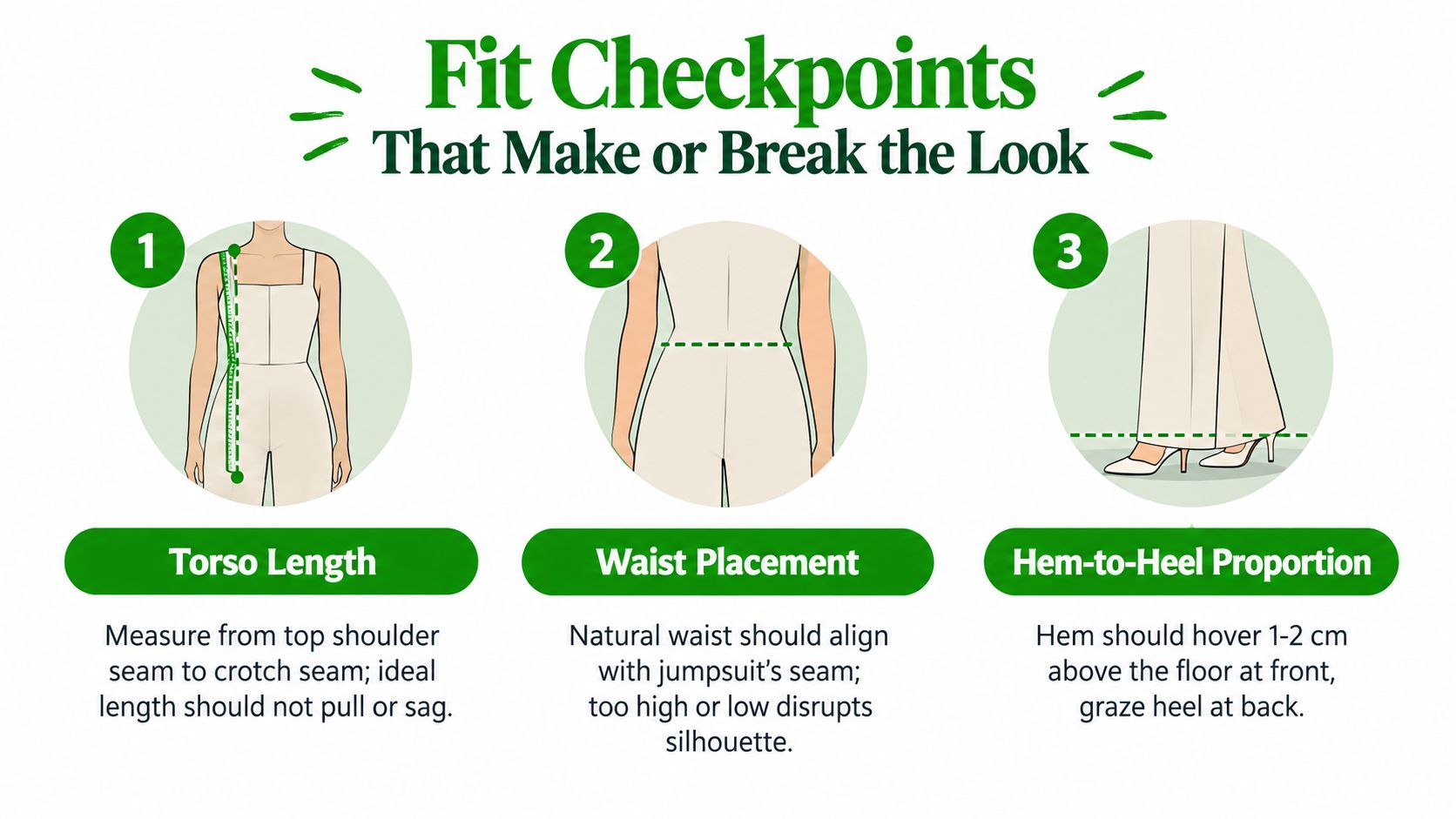
One styling guide puts it: the garment needs to fit in three places first, torso length, waist placement, and inseam with heel height. It should sit at the natural waist, the torso shouldn't pull, and wide legs should kiss the floor without dragging when worn with the planned shoes, as outlined in this jumpsuit fit guide.
Torso length comes first
If the torso is wrong, nothing else matters much. A short torso in the garment causes pulling at the shoulders or crotch when sitting or lifting the arms. A too-long torso creates sagging and steals shape from the waist.
Expert guidance for formal jumpsuits also notes that the torso must be long enough to avoid pulling, while the leg should graze or cover the heel by about 2 to 3 cm for an uninterrupted line, according to this fit reference for jumpsuits.
A simple fitting-room check works well:
- Stand naturally: the front should lie cleanly without drag lines.
- Sit down: no sharp pull across the torso or crotch seam.
- Raise the arms: the body of the jumpsuit shouldn't yank upward.
Waist placement changes the whole proportion
A natural waist is the safest place to start. It defines shape, helps disguise the midsection, and usually gives the leg the longest possible line.
An empire waist can help a woman who wants less emphasis through the stomach. A slightly dropped waist can work on a long torso, but it needs care. Too low and the whole look starts reading casual.
A jumpsuit should look anchored at the waist, not floating around it.
Hem and heel are not small details
Formal jumpsuits often fail. The hem must be set to the exact shoe. Not a similar heel. Not a heel she might wear. The exact one.
For black tie and other formal evening settings, a women's jumpsuit should be full length and hemmed to the exact shoes she plans to wear. That's the difference between intentional and unfinished.
A clean fitting-room checklist keeps things practical:
- Shoulder seam: it should sit where the shoulder ends, not slide down the arm.
- Strap or sleeve gap: there shouldn't be loose space at the underarm or bust edge.
- Pocket placement: side pockets should lie flat, not flare open across the hip.
- Waist seam: it should hit the body's intended waist point, not ride above or fall below it.
- Front hem: it should clear the floor neatly.
- Back hem: it should skim the heel without dragging.
Women shopping by measurement rather than guesswork usually get better results. Size guidance commonly centers on bust, waist, hip, and inseam, and one guide recommends sizing to the largest measurement while confirming torso length and inseam. It also lists sample ranges such as XS with bust 32 to 33 inches, waist 24 to 25 inches, and hips 34 to 35 inches in this jumpsuit size chart.
For women planning alterations, tailoring for women is often what turns a good formal jumpsuit into the right one.
Accessories That Move a Jumpsuit From Cocktail to Black Tie
Accessories do more work with a jumpsuit than most women expect. A gown arrives with built-in drama. A jumpsuit needs finishing.
Shoes do the heavy lifting
The shoe sets the tone first. A strappy metallic sandal makes the look lighter and more evening-facing. A sleek pointed pump gives it control and polish. A delicate heel works for weddings and cocktail events. A cleaner, sharper pump often suits a corporate gala better.
If the leg is wide, the shoe should extend the line instead of interrupting it. If the leg is tapered, the shoe can be more visible and more directional.
- For black tie: choose a refined heel with visual lightness.
- For cocktail weddings: choose a sandal or pump that feels polished, not office-ready.
- For dinner events: choose a shoe that grounds the look but doesn't overpower it.
Match jewelry to the neckline
A halter or bare shoulder line usually wants earrings, not a necklace. A high neckline or long sleeve can handle a cuff or sculptural earring. A V-neck can take a pendant if the line stays clean.
Most women over-accessorize jumpsuits because the one-piece shape feels simple on the hanger. On the body, it rarely needs much.
Earrings first. Then stop and reassess before adding anything else.
Clutch and outerwear matter more than people think
A structured minaudière or small hard-case evening bag sharpens a formal jumpsuit immediately. A softer pouch works for cocktail settings and intimate dinners where the look can be less architectural.
Outerwear should support the line, not compete with it. A tuxedo jacket works. A clean cropped wool coat works. A limp shawl usually doesn't. Neither does anything bulky that erases the waist.
For women refining the final layer, how to accessorize an outfit helps narrow the choices before the outfit starts feeling overdone.
Matching the Jumpsuit to the Occasion on Your Calendar
A jumpsuit only works when it suits the room. The same black one-piece can look perfect at a gala and underdressed at a wedding if the silhouette and fabric miss the mark.
Recent market coverage also points to the gap many shoppers still face. Formal jumpsuits account for 31.2% of jumpsuit revenue, women drive 52.3% of market revenue, and formal pieces often sit around $120 to $350, yet shoppers still need clear guidance on when a jumpsuit reads formal enough and how styling changes that, according to this formal jumpsuit market and styling overview.
Use the calendar, not the trend
| Evening Jumpsuit Match-Up by Occasion | Silhouette | Fabric |
|---|---|---|
| Black-tie wedding or gala | Wide-leg, full-length, clean halter or one-shoulder | Crepe or fluid satin |
| Semi-formal wedding or rehearsal dinner | Soft tailored wide-leg | Matte crepe or light suiting fabric |
| Holiday party or cocktail event | Fitted tapered-leg or cleaner narrow silhouette | Velvet or subtle embellished finish |
| Charity dinner or awards night | Plunging back or elegant wide-leg evening shape | Liquid satin or tonal beaded finish |
The venue should decide the hem mood too. Ballroom or hotel settings want a longer line. Restaurant dinners can handle a touch less drama. Outdoor evening events need enough length to look formal, but not so much that the wearer spends the night protecting the hem.
The easiest occasion calls
A woman can simplify the choice quickly with a few direct rules:
- If the invitation feels formal-formal: choose full length, wide leg, and an evening fabric.
- If it's celebratory but not strict: choose a soft shape that still defines the waist.
- If the room is festive: velvet or subtle embellishment makes more sense than severe minimalism.
- If she'll be photographed heavily: choose the cleanest line possible and hem it perfectly.
That last point decides more than people admit. A jumpsuit that hits the shoe correctly looks expensive. One that floats awkwardly above the foot or puddles on the ground looks borrowed.
Find Your Evening Jumpsuit at Cedar & Lily
A woman shopping for an evening jumpsuit doesn't need more vague inspiration. She needs a fitting room, the right shoes, and someone honest enough to say when a silhouette isn't serving her.
That's where an in-person try-on is worth the time. At Cedar & Lily Clothier, shoppers can see fabric in real light, test whether a neckline works on their frame, and check whether the waist hits where it should. Those details are hard to judge on a screen and easy to fix when the garment is physically on the body.
What to bring and what to test
Bring the event shoes. Bring the earrings if they're already chosen. Bring the coat if the event is in cooler weather.
Then check these things in order:
- Torso comfort: sit down and lift the arms.
- Waist position: make sure the seam lands intentionally.
- Leg line: look at the hem with heel.
- Formality level: ask whether the fabric reads evening in person, not just in product photography.
If shopping online is the better route, the smarter move is to narrow by silhouette and fabric first, then compare measurements rather than relying on usual dress size alone. Evening jumpsuits reward precise fit more than almost any other occasion category. Small tailoring changes matter.
For local shoppers, visiting Utica Square in Tulsa or downtown Jenks makes the decision much easier because fit and fabric can be judged immediately, with personal styling help built in.
Cedar & Lily Clothier offers curated occasionwear, jumpsuits, accessories, and in-person styling help for women who want a formal look that fits their body and their event. To shop evening-ready pieces online or visit the boutiques at Utica Square in Tulsa or downtown Jenks, explore Cedar & Lily Clothier.