


The invitation is open on the counter, the venue looks beautiful, and the dress code says “formal.” A long white dress seems like the obvious answer until practical questions appear. Will the fabric turn transparent in daylight? Will the silhouette look bridal? Can the dress work again after the event, or will it stay in the closet?
Elegant long white dresses succeed when fabric, fit, length, and context agree. A gala may call for a floor-length gown with refined structure, while a summer dinner may suit a breathable maxi with simpler accessories. A rehearsal dinner may welcome white if the couple approves, but a traditional wedding usually requires a different color entirely.
Cedar & Lily Clothier approaches the choice as a boutique styling decision, not a color search. The collection includes curated contemporary and designer brands, including Vanessa Mooney and Lace the Label, rather than an in-house manufactured line. Shoppers can compare drape, lining, neckline, and hem in person at Utica Square in Tulsa or downtown Jenks, or browse the online store at cedarandlilyclothier.com.
Table of Contents
- Introduction to Elegant Long White Dresses
- What Makes a Long White Dress Feel Elegant
- Fabrics Silhouettes and the Opacity Test
- Where to Wear White and Where to Pause
- Styling Your White Maxi From Day to Evening
- Keeping White Elegant With Proper Care
- Find Your Perfect White Dress at Cedar and Lily
Introduction to Elegant Long White Dresses
You find a long white dress for a garden party, resort dinner, or evening celebration, then pause at the same practical questions. Will daylight reveal too much? Could the silhouette look bridal? Can the dress earn more than one wearing, or will cleaning and storage make it an expensive closet piece?
White carries ceremonial meaning in Western bridal fashion. Queen Victoria's white wedding dress in 1840 helped establish the color's popularity, and historical accounts describe white and lace as customary bridal choices by the mid-19th century. The association remains strong: a survey cited by Ohio State News found that 83% of brides wore white in 2018.
That history does not make every white maxi a bridal dress. The setting, silhouette, fabric, and styling work together like signals. A relaxed linen shape with practical lining speaks differently from a structured gown with a train, even when both are white.
A useful starting point
Ask three questions before choosing accessories:
- Is the fabric opaque? Check the lining, seams, and back coverage in daylight, then sit, walk, and bend in the dress. White fabric can look covered on a hanger and reveal more once it stretches over the body.
- What does the dress code permit? White may suit a dinner, garden event, or resort setting, while a traditional wedding can reserve the color for the bride. Confirm the invitation and, where appropriate, ask the couple.
- What is the total cost of ownership? Consider laundering, storage, footwear, and whether the dress can work for more than one setting.
Cedar & Lily Clothier offers curated contemporary and designer dresses selected for drape, lining, neckline, and hem. Shoppers can assess those details in person at Utica Square in Tulsa or downtown Jenks, with in-store fit help, or browse the online store at cedarandlilyclothier.com.
What Makes a Long White Dress Feel Elegant
Elegance has less to do with decoration than with control. A long white dress feels polished when the eye can follow a clear line from shoulder to hem, the fabric falls without fighting the body, and the construction looks intentional from close up.
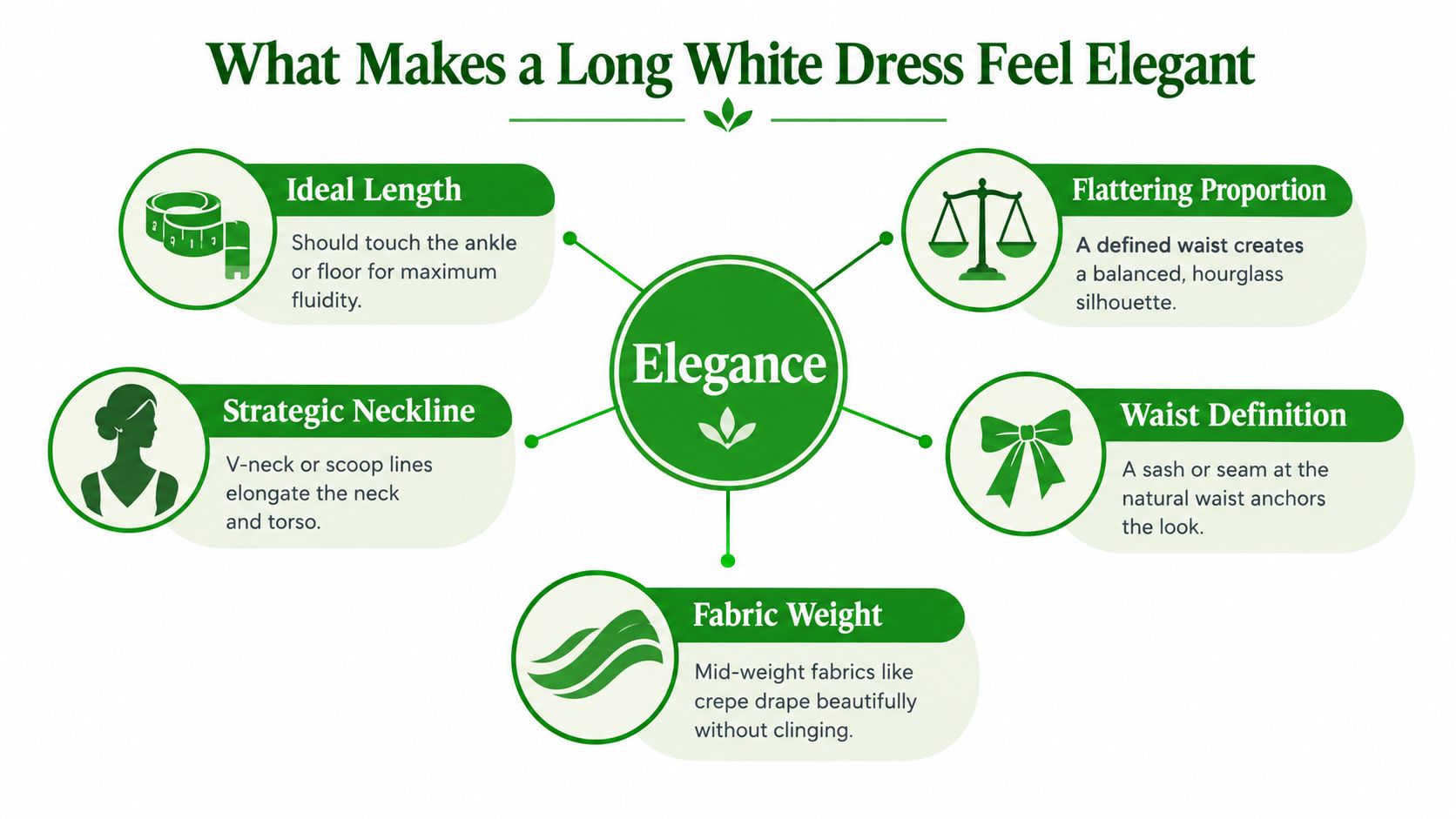
Length establishes the first impression. An ankle-grazing maxi feels lighter and more useful for walking, while a hem that skims the floor creates stronger evening formality. The right length works like the foundation of a building. If it sits awkwardly, every other detail looks unsettled.
Five details that shape the result
Proportion matters before trend. A defined waist can balance a fuller skirt, while a clean column shape creates a long, uninterrupted line. Neither is automatically more flattering. The useful question is whether the dress gives the body a visual point of structure.
The neckline guides attention upward. A V-neck or scoop can visually lengthen the neck and torso, while a higher neckline can create a more covered, architectural effect. The neckline should also suit the event. A deep opening may feel appropriate at an evening celebration but less comfortable for a professional daytime setting.
Waist placement changes how the skirt begins. A seam at the natural waist creates definition without needing a belt. A sash gives more flexibility and can soften a flowing silhouette. An empire line creates a different effect, with fabric beginning higher on the torso and falling away from the body.
Fabric weight controls movement. Mid-weight crepe can hold a smooth line, while chiffon creates airier motion. Lace adds texture, but its open pattern can require careful layering. White reflects light strongly, so seam finishing, hems, and lining become more visible than they might in a dark dress.
Practical rule: A dress should look composed before accessories enter the room. If the fabric pulls, the lining twists, or the waist disappears in motion, jewelry won't solve the underlying fit issue.
A fitting-room check can be simple. Stand naturally, walk several steps, sit down, raise the arms, and turn sideways. Look at the dress under more than one light source. Elegant long white dresses should preserve their shape through movement, not only while standing still.
Fabrics Silhouettes and the Opacity Test
Color alone doesn't determine whether a white dress is see-through. Silk, chiffon, and fine lace can transmit light because of their fiber structure or open construction. Fabric weight, lining, and underlining usually matter more than the shade itself.
Silk may offer a fluid, luxurious drape, but a lightweight version can need careful layering. Chiffon creates graceful movement and often works well for evening or warm-weather dressing, yet it commonly depends on a lining. Lace provides visual richness, while cotton poplin offers a crisper, more opaque feel. Broderie anglaise brings texture and breathability, but its cutwork requires a thoughtful underlayer. Crepe can create a smooth, formal line and often feels more substantial against the body.
The light test
A quick test can prevent an expensive mistake. Hold the dress or a fabric panel near a bright window or light source, then place a hand behind it. If the silhouette of the hand is visible, the garment needs lining. Guidance from Misciano's white-dress sewing resource recommends a light test and explains that underlining plus lining is the more reliable route to true opacity in white garments.
The test should happen at the bodice, skirt, side seams, and any panel with gathers. A dress may look opaque across the torso but become transparent where the fabric stretches over the hips. The same check applies to white slips, camisoles, and detachable layers.
A practical comparison
| Fabric or Silhouette | Opacity and Lining Need | Best Occasions | Care Notes |
|---|---|---|---|
| Silk slip | Light silk may need a full slip or lining | Evening dinners and refined celebrations | Protect from snags and follow the care label |
| Chiffon A-line | Usually needs a lining, especially in the skirt | Rehearsal dinners, parties, and evening events | Steam gently and avoid rough surfaces |
| Lace column | Depends on the open pattern and backing | Formal dinners and dressier occasions | Check the underlayer for shifting |
| Cotton poplin wrap | Often more substantial, but test the skirt and overlap | Daytime gatherings and warm-weather occasions | Treat visible marks promptly |
| Broderie anglaise tiered maxi | Cutwork requires an intentional lining | Resort settings, garden parties, and daytime events | Separate washing helps protect the white |
| Crepe column or A-line | Mid-weight crepe can offer smooth coverage | Formal events and work-to-evening dressing | Steam or professionally clean according to the label |
The silhouette changes how a fabric behaves. An A-line leaves room for movement, a wrap offers adjustable shaping, a slip follows the body, a column creates a narrow vertical line, and a tiered maxi adds volume. For a deeper explanation of how transparency changes styling choices, the guide to sheer fabric dresses offers useful context.
Where to Wear White and Where to Pause
An elegant long white dress can suit galas, summer soirées, resort dinners, art openings, and dressier daytime events. It may also work for a rehearsal dinner when the couple has approved white. Let the invitation, venue, and host's expectations guide the choice rather than relying on one styling rule.
A black-tie invitation commonly supports a floor-length or long formal evening gown for women, as outlined in formal wedding guest attire guidance. A long white dress can meet that length requirement, but color still needs careful consideration. For a gala or non-wedding formal dinner, a sculptural neckline, refined jewelry, and a small evening bag can make the outfit feel deliberate.
The wedding guest exception
Guests at Western weddings should generally avoid white, ivory, cream, champagne, and shades close enough to be mistaken for white. Some etiquette guidance treats this as a firm rule unless the couple specifically requests an all-white dress code. Wedding attire etiquette guidance explains why these shades are traditionally associated with the bride.
Photography adds another concern. Beige and very pale neutrals can appear white in bright outdoor light or flash photography, so a clearly non-white color is the safer choice. Wedding guest advice from The Knot likewise recommends avoiding outfits that could photograph as white.
Ask first: If white appears on the invitation, wedding website, or requested palette, confirmation from the hosts is more reliable than guessing from the dress code alone.
For non-wedding events, styling can keep a white dress from looking bridal. Textured cotton, a fitted jacket, a colored shoe, or a structured bag creates visual separation. Skip veil-like overlays and pearl-heavy accessories when you want the dress to read as eveningwear or occasionwear rather than ceremony attire. A tan, black, or metallic belt can also break up one continuous white line.
The same test applies in the fitting room. Look at the dress under bright light, sit down, walk, and check whether the fabric or lining changes the impression from non-bridal to bridal. The event dress codes guide can help match formality, venue, and styling without relying on color alone.
Personal preparation matters too. For an open-sided or high-slit style, NYC Laser Hair Removal Westbury offers a practical resource on leg laser hair removal. Planning ahead may make try-ons and event preparation feel easier, while the choice remains entirely personal.
Styling Your White Maxi From Day to Evening
A white maxi can follow the rhythm of a full day. Start with comfortable shoes and a light layer for errands or lunch, then change the accessories and outer layer before dinner. The dress acts as a clean canvas, while each addition sets the level of formality.
The daytime formula
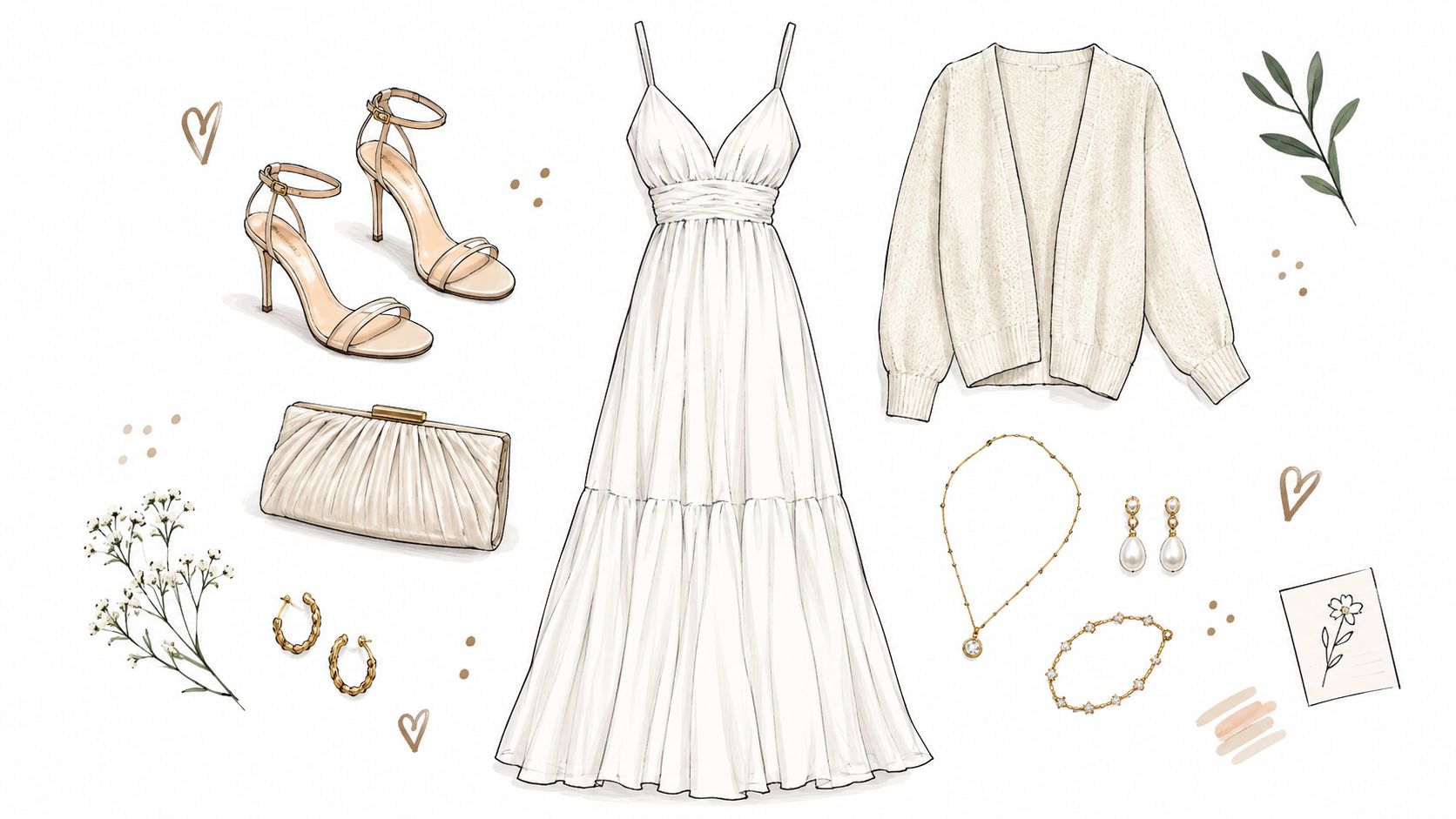
Choose cotton poplin, broderie anglaise, or another breathable fabric with reliable coverage. Flat sandals, leather slides, or clean low-profile sneakers make the silhouette feel relaxed. A cardigan, cropped denim layer, or lightweight blazer adds shape and gives the outfit a practical finish.
A woven tote or soft shoulder bag suits daytime better than a jeweled clutch. Keep jewelry selective: small hoops, a simple chain, or a watch supports the dress's clean line without distracting from it.
Try the dress as you would wear it in real life. Sit, walk, reach for a bag, and check the hem. A wrap or A-line shape often allows easier movement than a narrow column. With a full skirt, confirm that the lining stays in place as you walk. Coverage should remain dependable in changing light, especially if you plan to move from outdoors to an indoor venue.
The work-to-dinner adjustment
A white dress can suit a professional setting when the neckline, coverage, and structure match the workplace. A blazer in navy, black, taupe, or another muted tone creates contrast and frames the dress. Closed-toe flats or modest block heels keep the outfit grounded.
A polished long-sleeve blouse in a neutral tone can also build a separate white-and-neutral outfit around a long white skirt. The long-sleeve blouse provides a dressier layer without requiring one dress to work for every setting. This approach also helps clarify the dress code: the maxi remains the focal piece, while the blouse creates a more refined combination.
The evening formula
Change the pieces that signal formality. Low heels or refined sandals lengthen the line, and a small clutch gives the outfit a clearer evening direction. Gold or silver earrings, a cuff, or one sculptural necklace can draw attention to the neckline.
A shawl or fitted jacket adds warmth and coverage. For a slip dress, choose an opaque underlayer that feels secure. With a lower neckline, a refined camisole or shaped bodysuit can preserve the line without appearing improvised.
The maxi-dress styling guide offers further outfit-building ideas. Keep the final look edited. White already has visual presence, so one strong accessory usually appears more polished than several competing pieces. Fresh styling should also account for ownership: check lining, opacity, and fit before buying, then ask Cedar & Lily Clothier's in-store team for help comparing silhouettes.
Keeping White Elegant With Proper Care
White asks for a more deliberate ownership routine because stains, dye transfer, and yellowing show quickly. The purchase decision should therefore include the care label, the fabric's wrinkle behavior, and the amount of effort required after each wear.
Separate washing protects white from color transfer. For washable cotton and linen, independent care guidance recommends oxygen-based bleach when appropriate for the fabric and label. Chlorine bleach can damage fibers or create unwanted discoloration, so the care instructions should lead every decision.
A care routine that protects the investment
- Treat marks early: Blot rather than rub, then follow the garment's care instructions before a stain settles.
- Wash separately: Keep white dresses away from dark or strongly dyed garments.
- Use breathable storage: A fabric garment bag allows air circulation and helps prevent mustiness.
- Limit direct sunlight: Extended exposure can contribute to yellowing, even when the dress is stored clean.
- Protect the shape: Use a suitable hanger for structured pieces, and fold delicate knits or heavily embellished garments when the label recommends it.
Fabric choice creates trade-offs. Cotton poplin may feel substantial and crisp, but it can show creases. Chiffon moves beautifully but depends heavily on its lining and may snag. Crepe often gives a smooth formal appearance, while lace and broderie anglaise make texture part of the design. No fabric is maintenance-free, so the best choice is the one whose care routine fits the wearer's actual life.
White dresses are increasingly positioned as pieces for more than one warm-weather event. Current fashion coverage describes white dresses as suitable beyond summer, including maxi styling for fall and winter, which makes care and storage more important for shoppers planning repeated wear. A carefully cleaned dress can return with a blazer, boots, or a seasonal coat rather than disappearing after one occasion.
For delicate silk, the silk clothing care guide offers additional handling guidance. Professional cleaning may be the safest choice for silk, intricate lace, structured linings, or stains that remain after gentle spot treatment.
Find Your Perfect White Dress at Cedar and Lily
Choosing an elegant long white dress becomes easier when you treat the fitting process like a checklist. Begin with the event and its dress code, then compare silhouettes, inspect opacity and lining, check the hem with your intended shoes, and consider how you will wear the piece again. White looks beautiful, but its true cost includes care, alterations, and whether it can work beyond one occasion.
Cedar & Lily Clothier is a women's boutique with storefronts at Utica Square in Tulsa and downtown Jenks, plus an online store at cedarandlilyclothier.com. Its assortment includes curated designer and contemporary dresses and wardrobe pieces selected for occasion dressing, workwear, and everyday wear.
Opacity deserves an in-person check whenever possible. Store lighting can reveal whether the lining stays aligned as you walk, sit, or turn, while a product image may conceal sheerness. For a relaxed, handcrafted direction, the white crochet maxi dress edit helps compare openwork texture with smoother formal fabrics. Ask whether the dress reads bridal, non-bridal, or adaptable before committing to a ceremony, gala, rehearsal dinner, vacation, or polished everyday plan.
Online shoppers can use fast shipping, free shipping on orders $250+, complimentary gift packaging over $100, and easy exchanges. Local shoppers can compare proportions and receive fit guidance from the boutique team. Cedar & Lily's in-store help can clarify lining, hem length, shoes, and finishing layers before purchase.
Shop Cedar & Lily Clothier online or visit a boutique to find a white dress that suits the occasion and earns repeat wear.