


You're standing in front of your wardrobe with a sheer dress that looks beautiful on the hanger, yet you're wondering whether it will work for a client meeting, a wedding, dinner, or a weekend gathering. The question isn't whether sheer fabric dresses are wearable. It's how deliberately you control the transparency.
A sheer layer can look polished, romantic, architectural, or relaxed depending on what sits beneath it, where the fabric appears, how the dress fits, and how it behaves under real lighting. The most successful outfit doesn't maximize exposure. It balances coverage, movement, setting, and personal comfort so the dress feels intentional from every angle.
Making Sheer Fabric Dresses Work in Real Life
A sheer dress doesn't have to look revealing to look considered. A lined bodice with translucent sleeves creates a different impression from an unlined skirt, while an organza overlay over slim-cut trousers can feel more polished than a fully transparent dress worn without structure. Treat transparency as one design feature among several, alongside color, proportion, texture, and fit.

Start with the finished outfit
Before deciding that a dress is “too sheer,” identify where the transparency sits. A sheer sleeve may need no additional layer. A transparent midsection may call for a camisole or bodysuit. A see-through skirt can be softened with a slip, opaque shorts, or a fitted trouser underneath.
Color changes the effect, too. Darker and lighter coloration can influence how transparent a fabric appears, alongside yarn fineness and weave openness, so a dress that looks modest in a product image may read differently in daylight or under strong indoor lighting. This guide to sheer fabric construction explains why fiber name alone doesn't determine opacity.
Use a simple coverage test before you buy or leave home:
- Look at the dress in the lighting where you'll wear it.
- Check whether your skin tone or underlayer pattern is readable through a single fabric layer.
- Sit, walk, raise your arms, and turn sideways.
- Add the intended underlayer, then repeat the check.
- Take a photograph, especially if the event includes flash photography.
Practical rule: Choose the amount of transparency you can move through comfortably, not the amount you can tolerate for a mirror photo.
A successful sheer outfit lets you focus on the occasion rather than adjusting the dress. If you're constantly pulling down a hem, checking a neckline, or worrying about a visible seam, the styling solution hasn't been finished yet.
Understanding Chiffon, Organza, Tulle, Mesh, and Lace
Fabric choice gives you the first major control over a sheer dress. Chiffon falls softly and moves close to the body, making it useful for flowing skirts, draped sleeves, and fluid overlays. Organza is also translucent, but its crisper hand helps it hold volume, making it better for sculpted sleeves, bows, ruffles, and architectural layers.
Tulle has a light, netlike appearance and can create airy volume when layered. Mesh is a broad category with an open construction that may vary in openness and stretch, so two mesh dresses can offer noticeably different coverage and support. Lace is defined less by a smooth surface than by its decorative pattern. The motif, spacing, and backing determine whether the final dress feels subtly textured or visibly transparent.
Sheer Dress Fabrics at a Glance
| Fabric | Typical Visual Character | Best Styling Direction |
|---|---|---|
| Chiffon | Fluid, soft, and softly translucent | Flowing layers, relaxed movement, romantic evening dressing |
| Organza | Crisp, gauzy, and structured | Sculpted sleeves, polished overlays, statement volume |
| Tulle | Light, airy, and netlike | Layered skirts, soft volume, formal or playful styling |
| Mesh | Open, geometric, and variable | Controlled panels, fitted layers, modern everyday looks |
| Lace | Ornate, patterned, and decorative | Romantic overlays, detailed sleeves, event dressing |
For movement, chiffon is usually the natural starting point. For shape, organza gives you more visual definition. Tulle can add a floating quality without making the dress feel heavy, while mesh works well when you want transparency placed in specific panels. Lace offers detail that can moderate the starkness of a plain sheer surface.
The same category can also suit very different wardrobes. A chiffon maxi worn over a smooth slip creates an easy occasion look, while a lace top under a blazer can make transparency feel office-ready. For another example of how a fluid sheer fabric can be styled, explore these floral chiffon maxi dresses.
How Fabric Construction Shapes Fit and Movement
A fabric's name gives you a useful starting point, but it doesn't tell you everything about the finished dress. Transparency depends on finer yarns, weave openness, and coloration. A tighter or more compact construction may look more covered, while an open construction can reveal the pattern of an undergarment or the tone of the skin more clearly. That's why shoppers should inspect the actual dress, not rely only on a product photograph.
Drape depends on another group of behaviors. Textile research identifies in-plane shear and bending as important to the way woven fabric conforms to a three-dimensional body form, with shear rigidity closely connected to drape and perceived stiffness. Research on fabric shear and draping helps explain a familiar fitting-room difference: crisp organza can hold an architectural sleeve away from the body, while soft chiffon falls and contours more fluidly.
Use the fitting room as a movement test
Begin with the dress standing still. Check whether seams sit where they should, whether the lining stays aligned, and whether the transparent areas match your intended level of coverage. Then test the dress in the actions your day will require.
- Walk naturally: Watch whether the skirt separates, clings, or shifts in motion.
- Sit down: Check the hem, waist, and any sheer panel that crosses the hips or thighs.
- Raise your arms: Notice whether sleeves pull, armholes widen, or the bodice rides upward.
- Turn sideways: Look for unexpected exposure at the back, waist, or side seams.
- Check lighting: View the dress in daylight and in the stronger lighting you expect at the venue.
A swatch can help when shopping online. Hold it over a similar-colored surface, then over a contrasting surface, and inspect it under the lighting you'll use most often. If the dress is meant for a formal event, test the complete outfit, including its underlayer, shoes, and accessories, rather than judging the sheer fabric alone.
Styling Sheer Dresses for Work, Events, and Everyday Wear
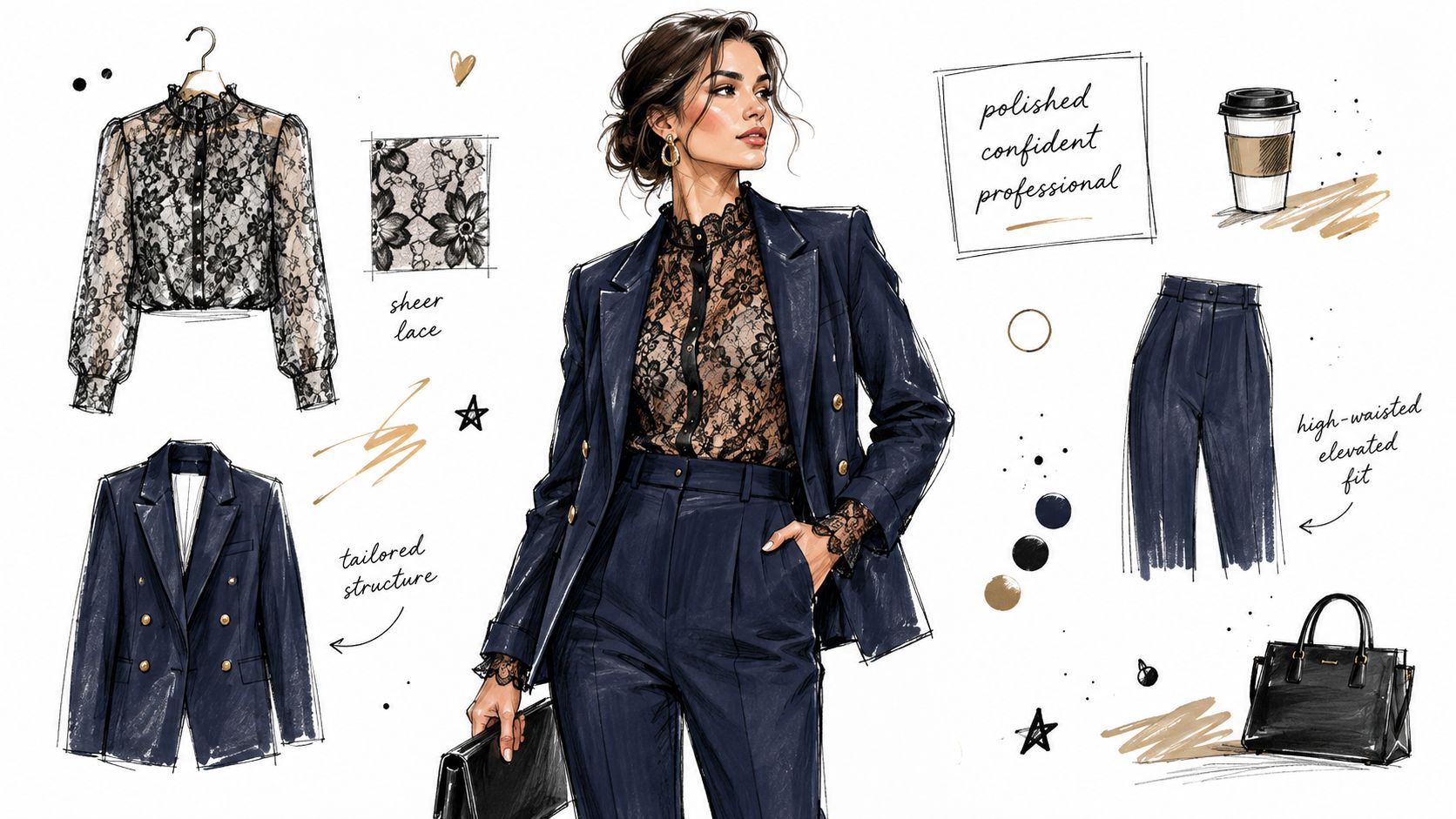
A work outfit needs visual order before it needs drama. For an office, start with a sheer dress that has a controlled silhouette, then add an opaque slip, camisole, fitted trousers, or a structured blazer according to where the transparency appears. A sheer sleeve beneath a blazer can preserve the texture of the dress, while a transparent skirt may work more comfortably over slim trousers than over a short underlayer.
Match the formula to the venue
For a client meeting, keep the base smooth and the outer layer fitted. A neutral slip, closed-toe shoes, and a blazer can make chiffon or lace feel composed without eliminating its texture. For a less conservative workplace, sheer sleeves or a lace yoke may provide enough interest on their own.
A wedding or formal event gives you more room to use volume, pattern, and sparkle, but the underlayer still needs to coordinate with the neckline and hemline. Choose a slip or bodysuit that follows the dress's proportions, and check whether the venue, ceremony, and reception call for different levels of coverage. An outfit that works for an evening celebration may need a more restrained foundation for a daytime ceremony.
For polished event dressing guidance beyond sheer pieces, browse occasion dresses for women and compare the dress shape with the formality of your invitation.
Everyday styling should reduce decisions. Try a sheer midi over a simple opaque base with a denim jacket and flat shoes, or wear a transparent blouse-dress over a fitted column dress with a relaxed cardigan. Keep jewelry edited if the fabric already has lace, beading, or a strong geometric mesh.
The final check belongs to the camera, not just the mirror. Bright windows, venue spotlights, and flash photography can reveal underlayer edges or patterns that seem invisible in softer light.
A short fitting video can also help you assess movement before committing to a look.
Choosing Coverage, Underlayers, and a Flattering Fit
A shopper named Maya recently tried on a beautiful sheer midi for dinner. Standing still, the dress felt elegant. Once she sat down, the lining shifted and the visible edge of her underlayer landed across the most transparent part of the skirt. The dress wasn't wrong for her. It needed a different foundation and a better fit through the waist.
That distinction matters. Slips, camisoles, bodysuits, shorts, shapewear, and built-in linings are tools, not rules. A slip can provide continuous coverage beneath a flowing skirt. A bodysuit can keep a fitted torso smooth. Shorts can offer security under a shorter or layered hem, while shapewear only works if its edges stop where the dress becomes opaque.
Build the underlayer from the dress outward
Choose a base that supports the dress's intended line. Smooth, close-fitting pieces tend to disappear more effectively than textured lace or bulky seams. Avoid patterns that compete with the outer fabric, and check whether the underlayer changes the dress color or makes a soft fabric fall differently.
If you're comparing options for a close-fitting style, this resource on the best underwear for tight dress 2026 can help you think through construction and visible edges without treating one underwear style as universal.
Fit should be judged in motion and proportion. A defined waist can create shape in a fluid dress. An A-line or softly flowing cut can provide ease without looking oversized. Structured shoulders or sleeves can balance a lower half with more volume, while a simpler upper section may keep an ornate lace skirt from feeling busy.
Confidence comes from knowing what will stay in place when you sit, walk, reach, and remove a layer.
Try the dress with the undergarments and shoes you'll wear. Sit for several minutes, walk at a normal pace, and check whether you can remove a blazer or jacket without disturbing the neckline. The right dress is the one that respects your boundaries while still giving you the silhouette and texture you came for.
A Practical Framework for Buying the Right Sheer Dress
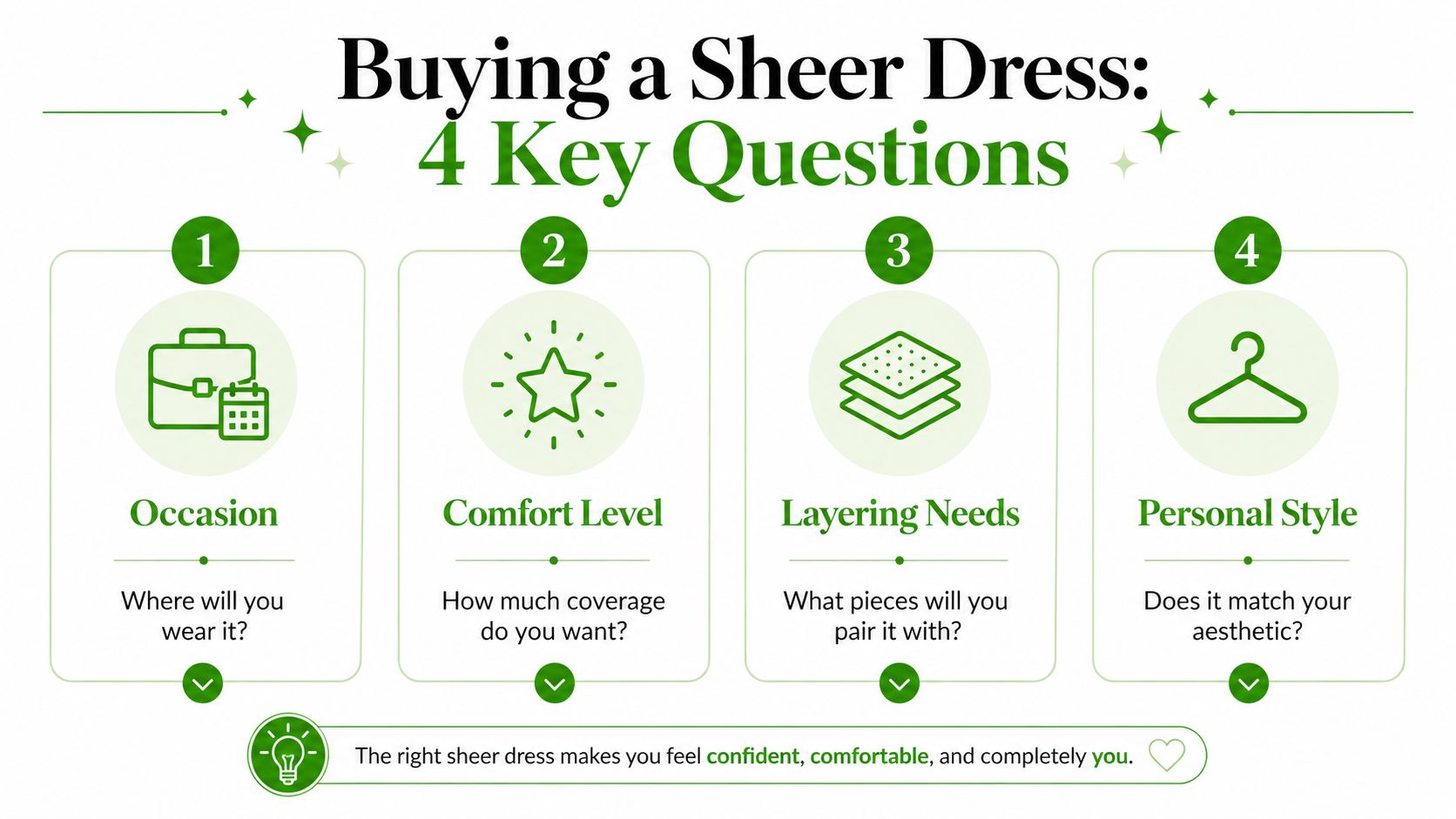
A large boutique assortment becomes easier to browse when you ask four questions in order. Don't begin with the fabric name. Begin with the life you need the dress to fit.
The four-question check
Where will you wear it? Start with the dress code, venue, schedule, and likely lighting. A transparent overlay may suit a dinner or evening party, while a client meeting may call for a lined body and sheer detail limited to the sleeves.
How much coverage do you want? Decide before you fall in love with the silhouette. You might prefer a fully lined dress, a skin-toned foundation beneath a sheer layer, or a deliberate transparent panel. None is more fashionable than the others. The useful choice is the one you won't keep second-guessing.
Which fabric behavior supports the outfit? Choose softness when you want fluid movement, crispness when you want shape, and patterned construction when you want detail to do the visual work. Consider the rest of your wardrobe, too. A dress that needs several layers may be less useful in warm or humid conditions than a simpler semi-opaque design.
Does the fit work in motion? Test sitting, walking, turning, and reaching. Check the dress in natural light and in photographs, because the camera can expose underlayer lines or transparency that the fitting-room mirror doesn't emphasize.
A simple purchase sequence
- Confirm the setting.
- Plan the underlayer.
- Test movement and lighting.
- Consider repeat wear and care.
Recent trend coverage points toward layered sheers, monochrome styling, and transparent fabric used as a design element rather than an all-over reveal. Marie Claire's coverage of spring and summer 2026 sheer styling reflects that moderated direction. The most practical purchase is usually the one that gives you more than one styling route.
Caring for Sheer Fabrics and Shopping with Concierge Support
Sheer garments need thoughtful handling because delicate surfaces can lose their shape, snag, crease, or show damage more readily than a dense fabric. Start with the care label. Don't assume chiffon, organza, mesh, lace, and tulle share the same cleaning requirements, and don't apply a favorite laundry routine to a new dress without checking the garment's instructions.
Protect the fabric according to its behavior
Crisp sheer materials benefit from storage that prevents crushing and preserves the intended shape. Avoid forcing structured sleeves or organza volume into an overcrowded space. Let the garment hang or rest according to the care directions, with enough room that embellishments, folds, or raised details aren't pressed against neighboring pieces.
Lace and mesh need protection from sharp jewelry, rough bags, exposed fasteners, and abrasive surfaces. Put on rings, bracelets, and watches carefully, and check handbag hardware before carrying it against a sheer sleeve or side panel. If a snag appears, don't pull it. Isolate the garment and ask a qualified cleaner or alterations professional what can be done.
| Check | What to Confirm | Why It Matters |
|---|---|---|
| Care label | Cleaning and storage directions | Prevents damage from unsuitable treatment |
| Transparent areas | Coverage in intended lighting | Helps avoid surprises at work or events |
| Seams and edges | Smooth construction and secure finishing | Reduces visible lines and snag concerns |
| Fit in motion | Sitting, walking, and reaching comfort | Confirms the dress works beyond a static pose |
| Support options | Built-in lining, cups, or planned underlayer | Prevents last-minute wardrobe problems |
| Service availability | Try-on, fit guidance, exchanges, and delivery details | Makes online or occasion shopping more manageable |
Cedar & Lily Clothier's associates can help with fit guidance, local availability, try-on decisions, and alterations availability, while online shoppers can use the personal shopping experience for additional styling context. The boutique offers fast shipping, free shipping on orders of $250 or more, complimentary gift packaging over $100, handwritten notes, and easy size exchanges, as stated in its service information.
For a remote purchase, send precise questions before ordering. Ask where the dress is lined, whether the sheer areas remain transparent under bright light, how the fabric falls when layered, and whether the intended underlayer changes the fit. Those answers can prevent a beautiful dress from becoming an impractical one.
Building Your Sheer Dress Wardrobe with Confidence
Sheer dressing doesn't require one universal exposure rule. It requires a sequence of decisions that respects the setting, the fabric, the finished silhouette, and your own comfort. Historical fashion records show that transparent dress has returned repeatedly across modern Western fashion, including the period examined by the Fashion Institute of Technology from 1900 to 1970. The FIT fashion-history study places sheer garments in a recurring design tradition rather than treating them as a short-lived novelty.
Use that perspective practically. Select the occasion first, then choose the coverage you want. Test how the fabric behaves in motion, plan the underlayer around the dress rather than around a generic underwear rule, and check the complete outfit in the lighting where you'll wear it. Finally, follow the care label and store the garment in a way that protects its structure and surface.
A versatile sheer wardrobe might include one flowing piece for movement, one structured overlay for polished layering, or one lace style that adds texture without requiring maximum transparency. The most useful dress isn't necessarily the sheerest. It's the one that gives you several confident ways to wear it.
Cedar & Lily Clothier offers curated designer dresses and personal fit guidance for polished workwear, weddings, galas, and elevated everyday dressing. Visit Cedar & Lily Clothier to browse sheer and occasion-ready styles, arrange an in-store try-on when available, or request concierge support online.