

Champagne silk reads elegant or bridal depending on four calls: contrast, lining, lighting and cut. A midi that looks soft beige at brunch can turn near white under ballroom downlights, and that shift decides wedding guest approval more than fashion ever will.
Champagne silk is a warm, pale gold-beige silk that suits wedding guest, cocktail and formal events when length and finish match the dress code. The dress-code table below shows which combinations work. The key question is whether this dress has enough definition, coverage and structure for the invitation, the wearer and the setting.
Table of Contents
- What Champagne Silk Is and Why It Flatters
- Matching Cut and Length to Each Dress Code
- Lining, Opacity and Seams That Keep Silk Looking Finished
- Shoes and Jewelry That Keep Champagne Silk Elegant
- Day-to-Night Styling Without Looking Washed Out
- Stain First Aid and When to Use a Cleaner
- Humidity, Storage and Carrying It to the Event
- Find Your Champagne Silk Dress in Tulsa or Jenks
What Champagne Silk Is and Why It Flatters
A champagne silk dress works across many daytime and evening occasions, but weddings need an extra colour check. A pale, luminous dress can look bridal even when its product photograph looks distinctly beige.
Champagne isn't a single standardized fashion shade. It combines soft gold, light yellow and beige, with a published reference of approximately RGB 247, 231, 206 and HEX #F7E7CE in Design Your Way's champagne colour guide. That reference helps compare photographs, but it doesn't establish how a finished garment will look.
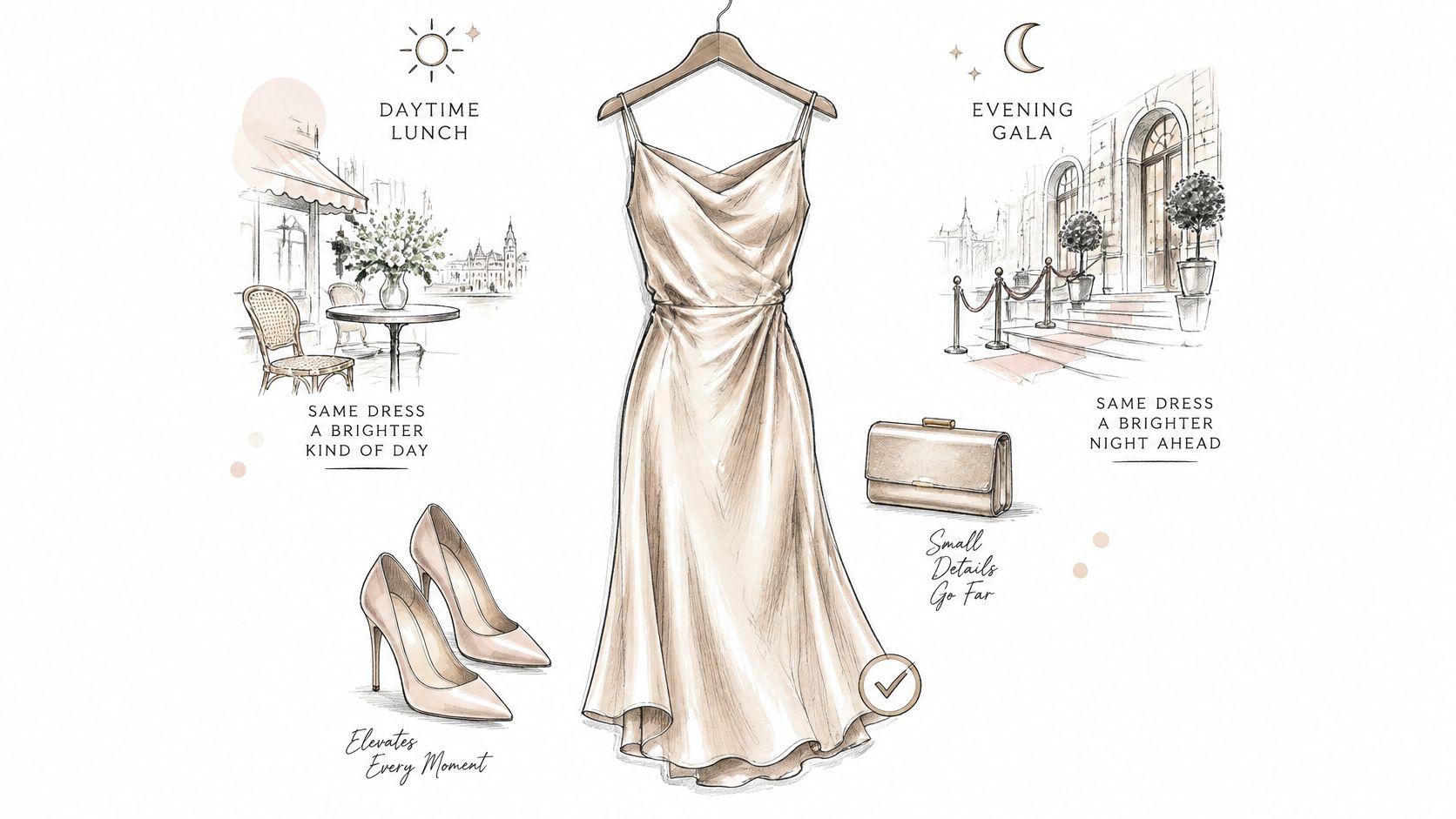
Silk reflects light directionally, so the same fabric can look warm and creamy in one setting and cooler or more metallic in another. Champagne often has the softness of candle-glow rather than the sharper impression of bulb-glare. That's a useful distinction from white, although very pale champagne can still approach ivory in photographs.
Undertone Matters More Than the Colour Name
Golden champagne often complements golden or olive skin because the warmth feels connected rather than separate. A pink-neutral champagne can sit more comfortably beside rosy or neutral colouring. Fair skin doesn't automatically require a cooler shade; the important question is whether the fabric leaves the face looking clear or slightly drained.
- Warmth check: A yellow-gold cast should look intentional, not make the complexion appear sallow.
- Definition check: The neckline should remain visible against the skin rather than disappear into it.
- Finish check: A flattering colour can still feel too reflective if the surface creates broad, bright highlights.
The In-Store Lighting Test
The useful test is to hold the fabric near the face in daylight and again under warm indoor lighting. The better shade is the one that lets the wearer look like herself, rather than making the dress the brightest thing in view.
A mirror assessment should include the whole silhouette, not just a swatch at the wrist. Hair colour, neckline and exposed shoulders all affect how much contrast the outfit needs.
Shopping rule: The label identifies the colour family. The fitting-room comparison decides whether that particular champagne works.
Matching Cut and Length to Each Dress Code
Length and silhouette establish formality more reliably than colour. The invitation wording comes first, followed by the venue and time of day. A garden ceremony, restaurant cocktail party and evening gala can all accommodate silk, but they don't call for the same dress.
Champagne Silk Cut and Finish by Dress Code
| Dress code | Best length and silhouette | Silk finish that suits it | What to avoid |
|---|---|---|---|
| Daytime wedding guest | Midi or tea length, slip or wrap silhouette | Soft matte or light-sheen silk | Full bridal-style gowns in very pale champagne |
| Evening wedding guest | Midi or floor length, bias-cut or fitted bodice | Medium to high sheen silk | Heavy beading or embellishment that competes with the couple |
| Cocktail party | Knee to midi, structured bodice or strapless | Medium sheen silk | Floor-length shapes unless the invitation allows them |
| Black tie or gala | Floor-length gown, clean silhouette | High-sheen charmeuse or satin-faced silk | Daytime slip shapes and casual fabrics |
| Work-to-dinner | Midi, with sleeves or room for a blazer | Matte silk crepe | Thin strap cuts worn without layers |
| Everyday brunch or dinner | Mini or midi slip | Soft matte silk | Heavy embellishment or stiff structure |
For daytime wedding guests, a softly moving midi usually feels more appropriate than a dramatic train or heavily embellished bodice. Tea length also leaves room for practical footwear when the venue includes lawns, gravel or outdoor steps.
An evening wedding can support more sheen and a longer silhouette. Cocktail dressing generally benefits from a clearer waist, a considered neckline or a structured bodice rather than extra length alone.
When a Midi Works and When It Doesn't
The L'Agence- Caprice Strapless Midi Dress offers a concrete strapless-midi shape to consider for special-occasion shopping. Its name and product description establish the silhouette and occasion focus, not a champagne colour or silk composition; those details need confirmation before purchase.
For black tie, the safer choice is a gown. Vogue's black-tie dress-code guide describes women's attire as generally a long dress and names silk alongside velvet, chiffon and lace as evening-appropriate fabrics. A simple daytime slip doesn't become a gala dress merely because it's made from silk.
Work-to-dinner dressing sits at a different level of formality. A matte midi with sufficient coverage and room for a blazer is easier to adapt than a dramatically cut, high-shine evening silhouette. A mini can work for casual dinner or brunch, but it shouldn't be treated as the default for a professional setting.
For ambiguous invitations, the boutique's event dress-code guide helps distinguish the occasion before a shopper commits to a silhouette.
Wedding etiquette remains the final filter. If the couple excludes bridal-looking colours, very pale champagne isn't a clever exception. A deeper shade or a clearly contrasting colour is a better purchase than a dress that needs an explanation.
Lining, Opacity and Seams That Keep Silk Looking Finished
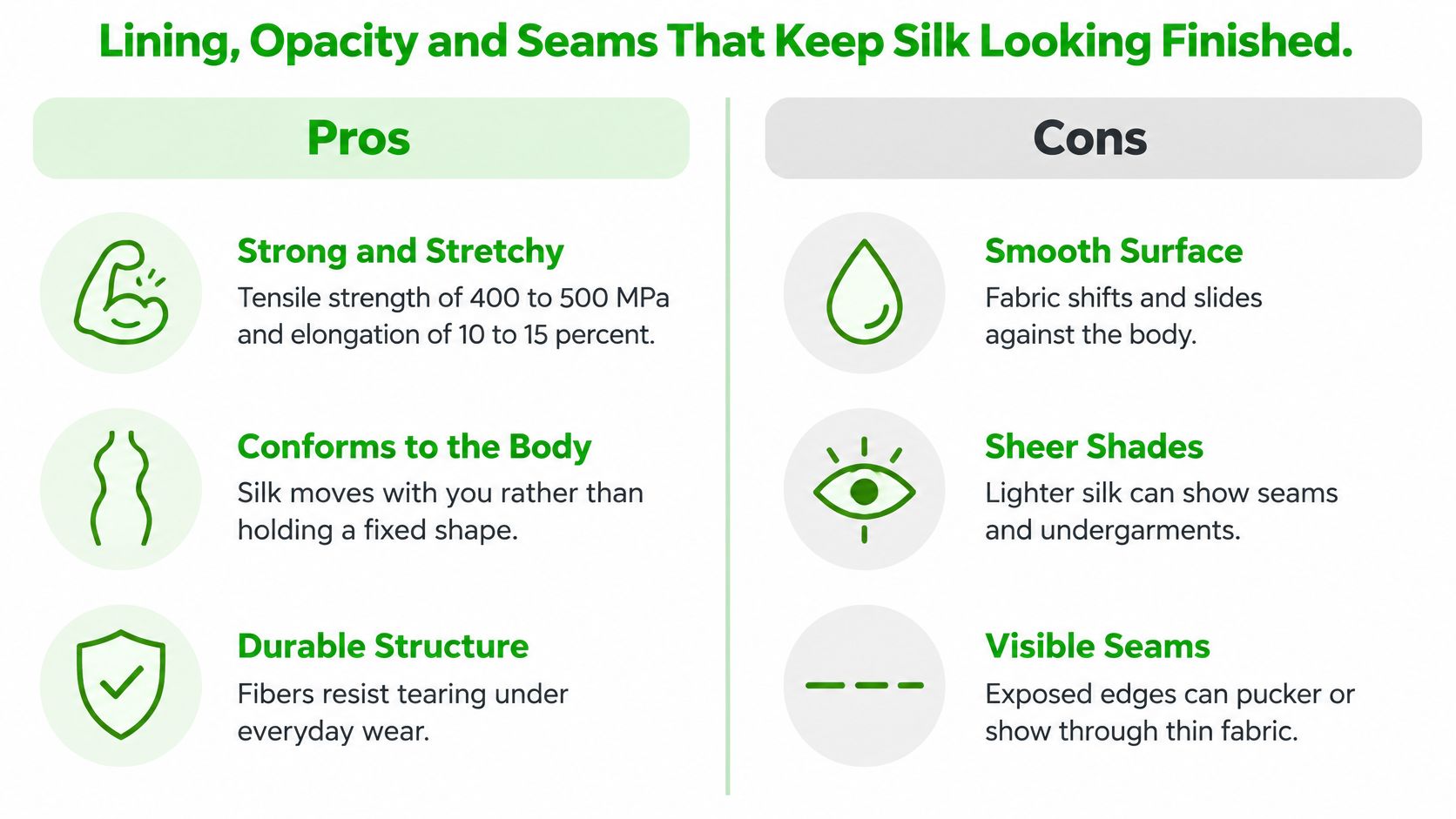
Silk can be resilient without being forgiving of poor construction. A textile review published by Taylor & Francis places typical silk tensile strength near 400–500 MPa, with elongation commonly around 10–15%. That combination helps explain its ability to conform to the body, but it doesn't make a delicate dress immune to strain.
The smooth surface that creates silk's lustre also makes puckering, uneven dye and pressure marks easier to notice. A successful purchase depends as much on the interior as the outer fabric.
Construction Checks in the Fitting Room
- Lining colour: Champagne or skin-compatible nude lining generally preserves depth. Stark white can make the outer fabric look paler than intended.
- Stress points: Straps, waist joins and zipper ends need secure stitching or reinforcement. A seam that pulls while standing still won't improve during dinner.
- Surface condition: Flat, glassy patches can indicate excessive pressing. Ordinary directional shine should change as the garment moves, rather than remain as a fixed mark.
Support Should Come From the Garment
With a strapless midi, the important questions concern bodice lining, internal support and whether the top edge stays in position without being painfully tight. The outer silk shouldn't be expected to provide all the support by itself.
A seated fitting matters, too. Horizontal pulling at the hips, a zipper that ripples or seams that twist toward the front suggest a fit problem rather than a need for stronger shapewear.
A dress should skim because its cut allows movement, not because the wearer has to remain still.
A lined dress usually conceals seam allowances and underwear more successfully, with a more composed outline. The trade-off is additional weight and potentially less of the floating movement associated with an unlined slip.
An unlined dress can look beautifully fluid, but undergarment edges and small fit discrepancies are more exposed. The guide to sheer-fabric dresses helps separate deliberate transparency from insufficient coverage. Lining should solve the intended opacity problem without turning a fluid dress into a stiff one.
Shoes and Jewelry That Keep Champagne Silk Elegant
A pale dress can blend into skin, so accessories should either echo a chosen metal or create deliberate contrast. Several unrelated metallic finishes, a bright bag and an elaborate shoe can make a simple dress feel unresolved.
The strongest approach is restrained: a consistent metal, a defined accent colour and a decision about whether the shoe should blend or stand apart. Tonal blush, nude and taupe continue the leg line; black and espresso give the silhouette a firmer edge.
Metal, Shoe and Contrast Pairings by Shade Undertone
| Shade and skin undertone | Metal that flatters | Shoe colour | Contrast accent |
|---|---|---|---|
| Warm golden champagne | Yellow gold | Nude or gold strappy heel | Emerald or chocolate clutch |
| Cool pink-neutral champagne | Rose gold or silver | Taupe or blush pump | Powder blue or black |
| Olive-toned wearer | Brushed gold | Espresso or bronze | Emerald |
| Fair skin with pale champagne | Rose gold or pearl | Black or deep chocolate pump | Black |
| Deeper skin tones, bold evening | Yellow gold or statement gold | Metallic gold or black | Emerald or ruby |
These are starting points, not restrictions on what a complexion can wear. Pearl appears here as a soft jewellery finish rather than a metal, and its effect is gentler than a crisp silver or gold accent.
Accessories Should Respect the Neckline
Drop earrings and a metallic clutch can be enough for evening, especially with a cowl or strapless neckline. Daytime usually benefits from studs and a structured bag that gives the fluid dress some visual balance.
- Keep hardware coherent: Bag clasps, earrings and visible shoe buckles should feel related, even when they aren't an exact match.
- Leave breathing room: A detailed neckline rarely needs a substantial necklace.
- Use pearls selectively: With very pale champagne at a wedding, pearls can reinforce a bridal impression rather than provide definition.
For shoppers considering multiple necklace lengths, the guide to layered necklace sourcing with HonHo Wholesale Jewelry provides a focused resource on multi-strand arrangements. The practical styling question remains whether the lowest strand sits cleanly above the neckline without catching on the fabric.
The boutique's accessorizing guide offers broader outfit-balancing advice. In store, the team can help assess jewellery and bag proportions alongside the shoes a shopper plans to wear, rather than choosing each accessory in isolation.
Day-to-Night Styling Without Looking Washed Out
Champagne silk reads elegant when contrast does the work. Lining, coverage and cut decide whether the dress looks intentional at noon or only after dark, and a dark layer, a defined shoe or a grounded bag supplies that contrast.
Who What Wear's dress-trend coverage describes silk and satin extending beyond traditional formalwear. Don't try to make every slip dress office-ready; choose one whose coverage and finish already suit daytime, then adjust the surrounding pieces for evening.
The Daytime Formula
A matte midi, structured chocolate or black blazer and loafer or block heel make a practical starting point. For a Tuesday client lunch, that combination looks settled: blazer closed without pulling, block heel stable enough for walking, silk falling clean from the shoulder.
Hosiery can be sheer or opaque in a tone close to the wearer's skin or the outfit's palette, provided it doesn't create a distracting band at the ankle. The blazer needs enough room to close without dragging the dress upward. If the silk bunches around the waist whenever the jacket moves, the combination will not hold up through a full workday. Silk shows friction fast, so a lining that stays put matters as much as the outer color.
- For professional settings: Adequate neckline coverage and a stable hem matter more than adding a jacket to an unsuitable dress.
- For pale complexions: A deeper layer near the face can provide definition.
- For deeper complexions: More assertive jewellery or a saturated bag can support a stronger evening direction without requiring a dark jacket.
The Evening Formula
For dinner, the jacket can come off if the dress provides appropriate coverage on its own. A metallic clutch, drop earrings and a change of shoe create a cleaner evening finish without requiring a second outfit.
That transition works best when the daytime bag and shoes were the most practical elements, rather than when the dress itself was too casual. Strong accessories refine proportion and shine, yet missing structure or opacity will still show at night.
A repeat-wear purchase needs more than an evening photograph. It needs a believable daytime outfit that the wearer would choose.
For a daytime wedding with a relaxed setting, a fitted layer and refined flats can remain part of the look. An evening guest might prefer a deeper wrap or camel or black outerwear, selected to accommodate the dress rather than compress it.
The day-to-night outfit guide offers additional transition ideas. Shoppers can browse the online store's blazer and outerwear assortment, then ask the Utica Square or downtown Jenks team to assess current layering options in person. Trying the layers together is more reliable than assuming matching colour names will produce a coordinated outfit.
Stain First Aid and When to Use a Cleaner
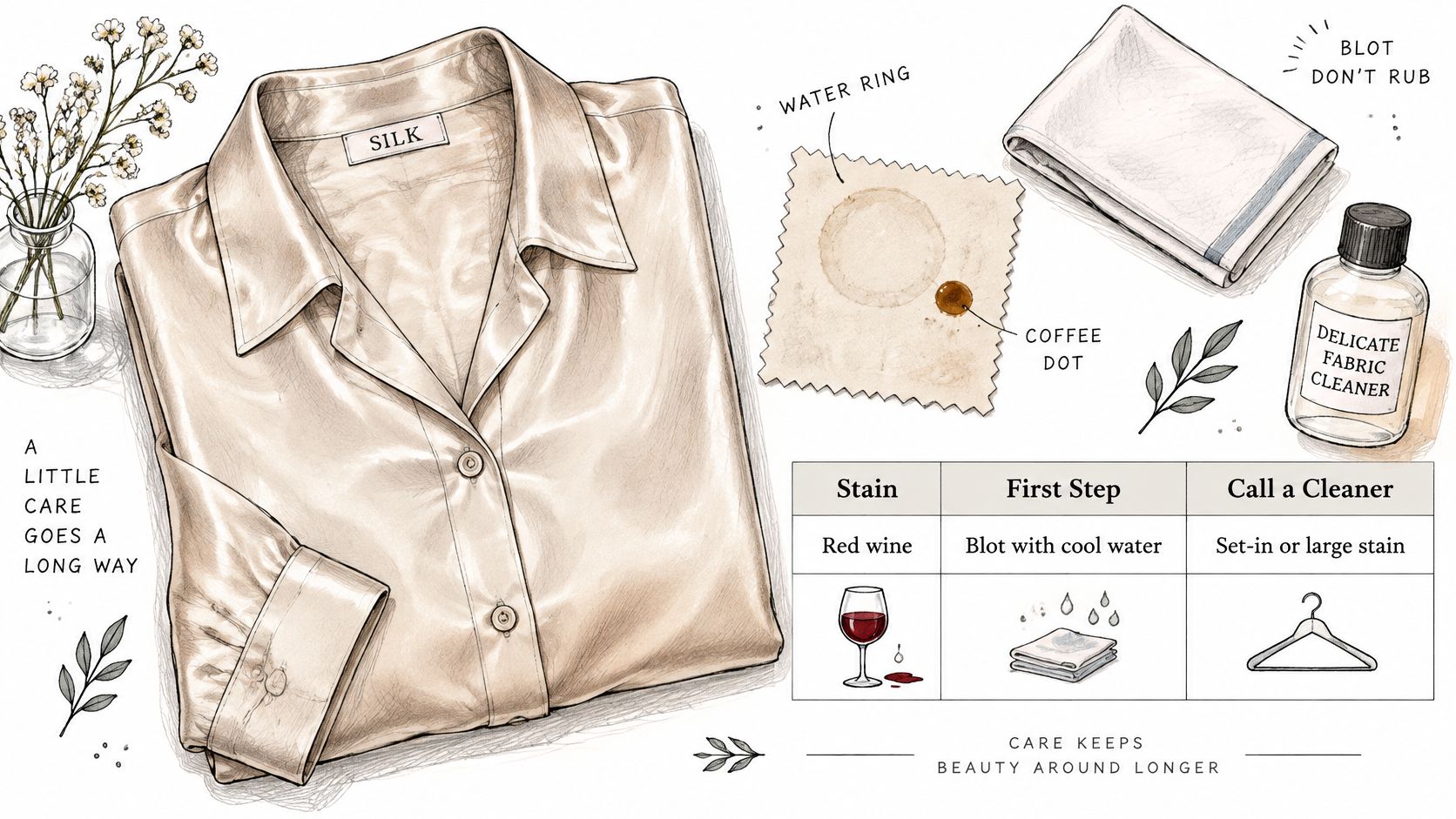
On pale champagne, makeup, food and oil show fast because they break an even surface. Blot early, stay cool and dry, and resist the urge to turn a small mark into a wide ring.
Before any washing the label permits, Wirecutter's silk-care guidance recommends testing an inconspicuous interior hem or side seam with a damp cotton swab, and visible dye transfer means the garment should go to a dry cleaner. A dry-clean-only label still applies after that test. For an event dress, that call matters. A bridal read often comes from overcleaned, pressed-flat silk as much as from cut, so prompt professional care protects both color and finish.
Stain First Aid and Cleaner Decisions
The home treatments below apply only when the care label permits them and the hidden-area test shows no transfer. Embellished or unusually constructed dresses need professional assessment rather than experimental spot treatment.
| Stain or situation | First home step | Send to a cleaner when |
|---|---|---|
| Foundation or makeup | Blot with cool water on a cotton swab, never rub | The mark spreads or leaves colour transfer |
| Deodorant or antiperspirant | Blot with cool water and mild detergent on a swab | Residue or a ring remains after an initial attempt |
| Red wine or food | Blot at once with cold water; don't apply heat | The stain persists after an initial attempt |
| Oil or grease | Absorb with cornstarch or talc before any liquid; don't rub powder into the weave | Any oil reaches the lining or embellishment |
| Water ring | Let it dry flat; don't repeatedly wet the surrounding area | The ring remains visible when dry |
| Unknown stain | Stop and don't apply heat | Always |
| Label says dry clean only | Air the dress; spot-treat only where the label expressly allows | Always for stain treatment or cleaning |
Work small. A cotton swab keeps moisture and detergent where the spot sits. Rubbing spreads pigment and polishes silk into a shiny patch that reads louder than the original stain.
Washable Doesn't Mean Low-Risk
For washable silk, the sequence is cold water, a gentle silk-suitable detergent and gentle hand washing. The dress should not be twisted or wrung. Press out excess water with a clean towel, then dry flat with ventilation, away from direct sun and the dryer.
Skip bleach, enzyme detergents and aggressive rubbing. Keep heat conservative throughout, since champagne shows scorch and shine easily.
Low steam is generally preferable to direct ironing when the label permits it, but keep the steamer off the fabric and clear of spitting droplets. Persistent creases are not a reason to raise heat without checking the label first. I recommend steaming from the lining side on a low setting for lined dresses, then letting the dress hang and cool before wearing.
Dry cleaning after every wear is not automatically necessary. An unstained dress may only need airing, while repeated home treatments can create more trouble than a prompt professional visit.
For a discussion of professional processes, readers can compare garment care methods with CleanOnline, from CleanOnline, North York's Premium Dry Cleaners. The boutique's silk-clothing care guide offers additional garment-care context.
Humidity, Storage and Carrying It to the Event
A bias-cut champagne slip that looks crisp in an air-conditioned fitting room can cling, soften and pull at the seams during a humid August wedding in Tulsa. The cut depends on unsupported drape, so moisture changes how it hangs, how it wrinkles and whether the champagne tone reads smooth or uneven under event lighting.
A technical paper on silk's moisture behaviour gives standard moisture regain as approximately 9–11% and notes that silk can lose roughly 15–20% of its tensile strength when wet. Moisture softens the fibre, increasing wrinkle and dimensional sensitivity, while dry conditions preserve a firmer hand. That trade-off matters for champagne silk because a slack, damp surface shows shading and pressure marks more readily than a darker matte fabric.
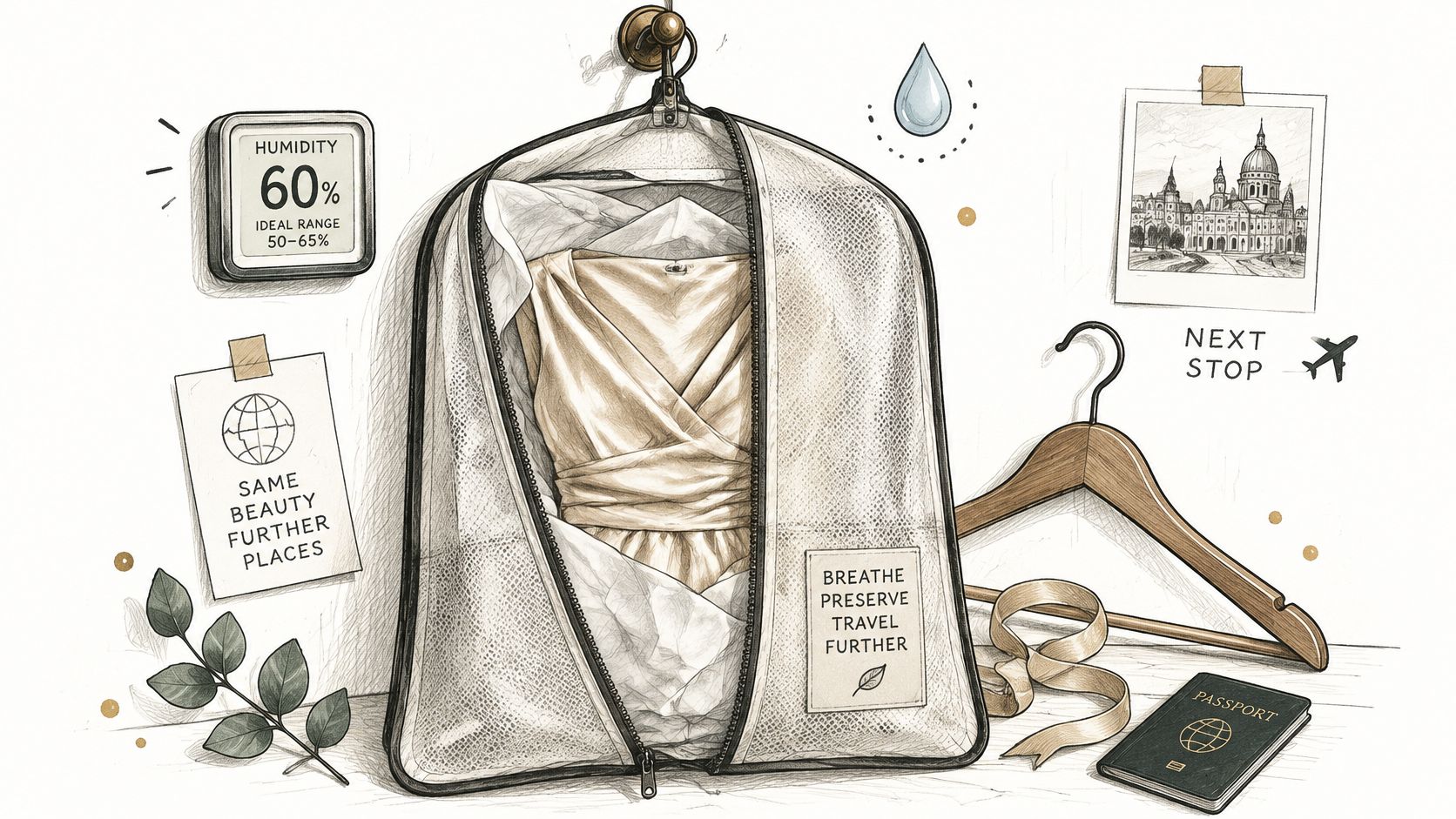
Storage Between Occasions
- Use a padded hanger. Very delicate straps or heavy bias-cut dresses may need additional support or flat storage to prevent stretching.
- Choose a dry location. Steamy bathrooms and damp closets are poor holding areas because they keep the fibre relaxed and crease prone.
- Use a breathable garment bag. Plastic can trap moisture rather than protect the fabric properly.
- Keep direct light away. A shaded closet preserves the champagne tone better than an exposed bedroom rail.
Packing for the Event
- Fold loosely along seams. Soft tissue between folds can reduce hard creases across the body of the dress.
- Carry a garment bag. The dress should not be compressed beneath shoes or toiletries.
- Let the dress hang on arrival. Give it time in a dry room to release travel creases within the cleaning limits already set for the garment.
Bias-cut and minimally lined dresses deserve particular care because tension can concentrate in unsupported areas. A damp garment should not hang from narrow straps under its own weight, and a travel stain calls for blotting and prompt professional advice rather than improvised washing.
Find Your Champagne Silk Dress in Tulsa or Jenks
Start with the occasion, then narrow to colour, fabric and fit. A shopper who knows the required length and level of formality can compare dresses more efficiently than someone searching only for champagne. Contrast, lining, lighting and cut decide whether the result reads elegant or bridal, so settle those calls before buying.
Cedar & Lily Clothier is a retailer of curated designer and contemporary brands, including Vanessa Mooney and Lace the Label. The online assortment provides a starting point for browsing dresses and brands. Current silk composition, champagne shades and sizing should be confirmed with the team rather than assumed.
Before Committing
- Match the invitation: Choose the appropriate length and silhouette from the dress-code table.
- Inspect the construction: Confirm lining, support and a comfortable seated fit.
- Complete the outfit: Account for the intended shoes, bag, jewellery and outer layer.
At Utica Square in Tulsa and in downtown Jenks, shoppers can see the fabric directly, compare fit and discuss sizing before buying.
With Oklahoma storefronts at Utica Square in Tulsa and downtown Jenks, plus an online store, the boutique offers curated occasionwear and personal fit guidance. Visit Cedar & Lily Clothier to browse the current assortment or reach out for styling help with a champagne silk dress and the pieces to wear alongside it.