


The invitation is on the refrigerator, the venue looks polished, and the closet is full of dresses that almost work. On a petite frame, a regular-size dress can have the right width while the shoulder seam falls past the shoulder, the waist sits too low, and the hem lands at the widest part of the calf. The result feels less like a deliberate outfit and more like a dress wearing its owner.
Semi-formal petite dresses should be judged by proportion before size or trend. A useful definition is a dress with a hem between the knee and mid-calf, a waist seam at the natural waist, and straps or sleeves scaled to a shorter torso. The right choice depends on three verticals, torso length, mid-skirt placement, and the hem-to-shoe ratio. Those points matter whether the event is a wedding, rehearsal dinner, work-to-evening gathering, or polished daytime celebration.
Table of Contents
- The Petite Semi-Formal Dilemma
- Why Petite Fit Is a Vertical Problem
- Hem Lengths That Work for Petite Frames
- Silhouettes and Details That Flatter
- Fabric and Heel Pairings
- Alterations Worth the Tailor
- Where to Shop and Try Them On
The Petite Semi-Formal Dilemma
A woman around 5'2" to 5'4" often starts with the same hopeful process: pull a few dresses, add heels, and assume the extra height will solve the fit. It rarely does. Heels can lift the body, but they can't move a dropped waist seam upward or correct a shoulder that extends beyond the natural shoulder point.
Semi-formal dressing sits between casual and formal, so the dress needs polish without the weight of a full evening gown. A knee-length, midi, or tea-length dress in a fabric with structure, drape, or subtle shine is usually the right starting point, as outlined in Cedar & Lily's semi-formal attire guide for women. For petite shoppers, the question isn't whether the dress is attractive. It's whether the dress places every visual landmark where the body needs it.
Stylist's rule: A smaller size won't fix a long torso pattern. Petite fit changes the vertical architecture of the garment.
The most reliable approach is straightforward:
- Check the torso first: The shoulder, bust, waist, and neckline must sit in the correct relationship.
- Choose the hem for the event: A knee-length dress may suit a daytime ceremony, while a carefully selected midi can look more refined for an evening reception.
- Control the silhouette: A defined waist and restrained skirt volume preserve the frame instead of burying it.
- Match fabric to footwear: The fabric's weight determines how much lift the shoe needs.
- Spend alteration money carefully: Hem, waist, and strap adjustments usually matter more than elaborate reshaping.
- Use a real fitting room: At Cedar & Lily Clothier, shoppers can compare fit and fabric at Utica Square in Tulsa or downtown Jenks, including the Market at Jenks area, with styling help from the team.
The modern petite customer is also far from an afterthought. One industry report estimates the global petite apparel market at $18.4 billion in 2024, with a projection of $32.7 billion by 2033 and a 6.5% CAGR (petite apparel market report). That scale makes the fit gap especially frustrating. Petite shoppers need occasion dresses designed around proportion, not standard dresses shortened as an afterthought.
Why Petite Fit Is a Vertical Problem
Petite clothing isn't just regular clothing made narrower. It adjusts vertical proportions, including sleeve length, torso length, rise, inseam, waist placement, knee placement, and sometimes shoulder width, as explained in this petite versus regular sizing guide. A petite dress can therefore fit through the bust and hip while still placing the waist, straps, and hem in entirely different locations from a regular-size dress.
Research on women 5'2" and under identifies excess length in sleeves, skirts, pants, and crotch depth, along with misplaced pockets and darts, as recurring concerns (petite apparel fit research). That finding changes the fitting-room order. The first question shouldn't be, “Does the number on the tag match?” It should be, “Does the garment's shoulder-to-waist line match the wearer's body?”
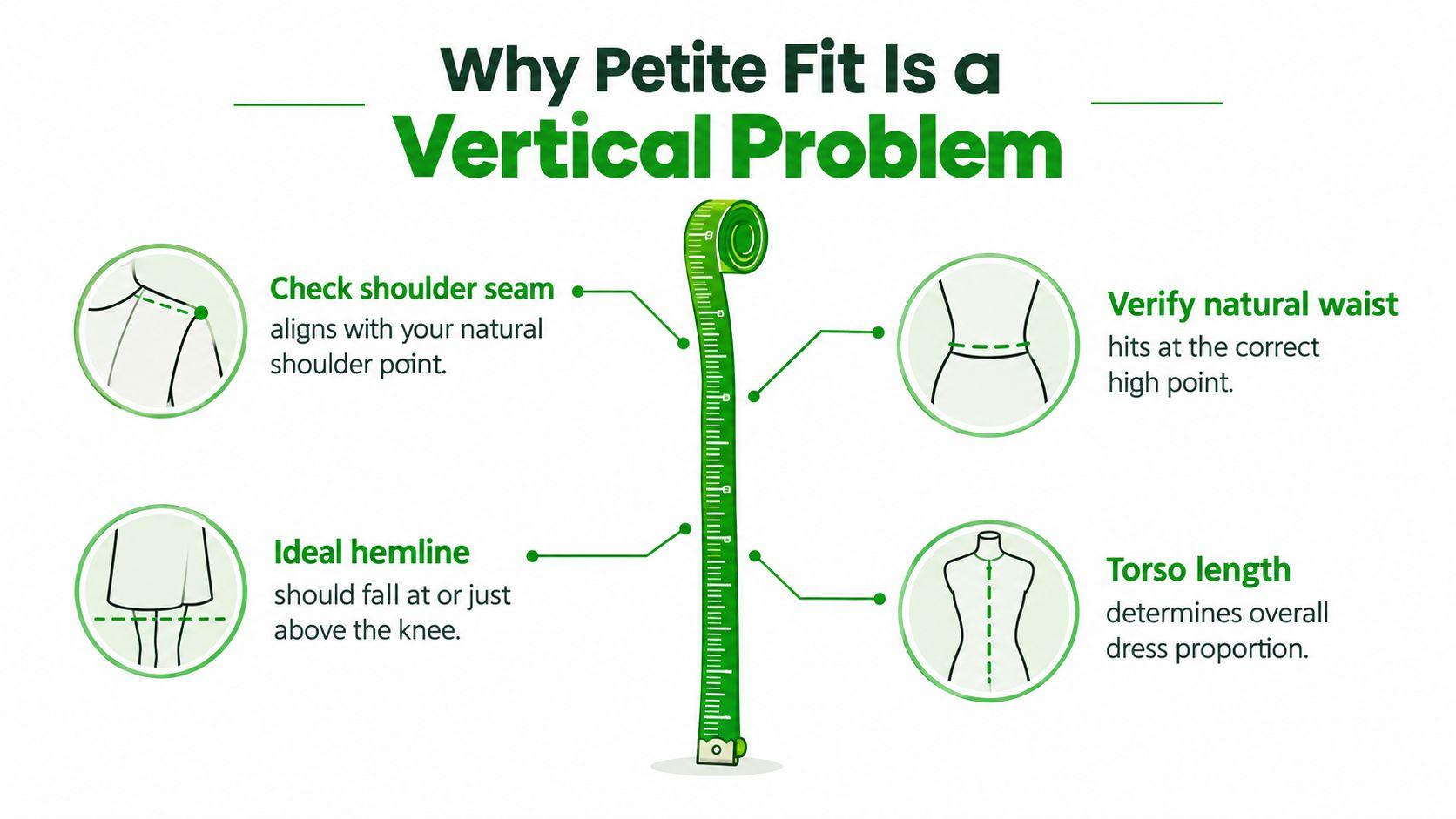
The four points to check
Start at the shoulder seam. It should meet the natural shoulder point rather than extending down the arm. Next, assess the distance from the shoulder seam to the natural waist. A target around 14.5 to 15 inches is useful for the petite frame described here, but the body should decide the final placement, not the label.
Then check the waist-to-hem measurement. A dress that finishes just below the knee on one wearer may fall into the widest part of the calf on another. Sleeve cap to elbow matters for three-quarter sleeves, while strap drop is critical on sweetheart and scoop necklines because a strap that's too long pulls the entire bodice downward.
A simple home test
Use a soft tape measure and record three personal points:
- Shoulder to natural waist: Measure from the top of the shoulder near the neck to the narrowest part of the torso.
- Natural waist to preferred hem: Measure down the front of the body while standing in the shoes intended for the event.
- Torso and strap relationship: Note where a neckline sits when the strap rests naturally on the shoulder.
A regular size can still fail on a 5'3" body if the shoulder sits two inches beyond the bone or the waist seam drops toward the hip. Body shape adds another layer. One petite body-shape study found measurements aligned more closely with a size 16 petite standard and a pear-like silhouette, while many participants fell outside industry silhouette definitions (petite body-shape research). Petite fit has to account for both length and circumference, not just a shorter hem.
For shoppers reviewing a broader fit guide, Cedar & Lily's advice on dressing for body type provides a useful companion. The central principle remains simple: control the torso, the mid-skirt, and the hem-to-shoe ratio.
Hem Lengths That Work for Petite Frames
Hemlines decide whether a petite dress looks intentional or interrupted. A petite sizing guide recommends that mini dresses finish around mid-thigh, knee-length styles sit at or just above the kneecap, midis land at the narrowest part of the calf, and maxis skim the floor without dragging (petite dress hem guidance).
A 5'3" frame can wear all four lengths, but each needs a clear purpose. The most common mistake is accepting a midi hem wherever it happens to fall. If it cuts across the widest part of the calf, the leg line looks shorter. The fix is decisive, either lower the hem by about two inches or shorten it to just below the knee.
| Hem Length | Position on 5'3" Frame | Heel Height | Best For |
|---|---|---|---|
| Mini | Above mid-thigh | About 2 to 3 inches | Cocktail parties, especially with tights |
| Knee length | At the bottom of the kneecap or just above | About 2 inches | Daytime weddings and polished work events |
| Midi | Between the bottom of the knee and mid-calf, ideally at the calf's narrowest point | About 3 inches | Rehearsal dinners and evening receptions |
| Floor-grazing maxi | Skims the floor with the event shoe | About 2 to 3 inches | Black-tie-adjacent evening occasions |
Mini and knee length
A mini works best when the upper body has enough structure to balance the shorter skirt. High-waisted construction, a squared neckline, or subtle cap sleeves keeps the dress from feeling too abbreviated. It can fall flat at a conservative daytime ceremony if the hem reads more party than occasion.
Knee length is the dependable choice for daytime. The hem should reveal the kneecap area rather than stop several inches below it. That small difference protects the leg line while keeping the dress polished.
Midi and maxi
The midi requires the most attention. A bias-cut satin midi can look elegant on a petite frame when the waist placement is right and the hem avoids the calf's widest point. A tea-length crepe dress needs the same discipline, especially if the fabric has enough weight to hold a defined shape. Further guidance on identifying the proportion of this length appears in what a midi dress is.
The old rule that petites should avoid long dresses is too blunt. Floor length can create one uninterrupted column when the waist is raised and the hem is adjusted to the shoe, a point also reflected in recent petite trend coverage that treats maxi lengths as viable for shorter frames. For a semi-formal evening, a floor-grazing maxi often succeeds where an awkward mid-calf hem doesn't.
Silhouettes and Details That Flatter
A petite semi-formal dress should guide the eye vertically from neckline to hem. The right choice depends on torso length, waist placement, and the space between hem and shoe. Start with a defined waist, a controlled skirt, and an open neckline. Extra decoration cannot correct a dress that divides the body at the wrong point.
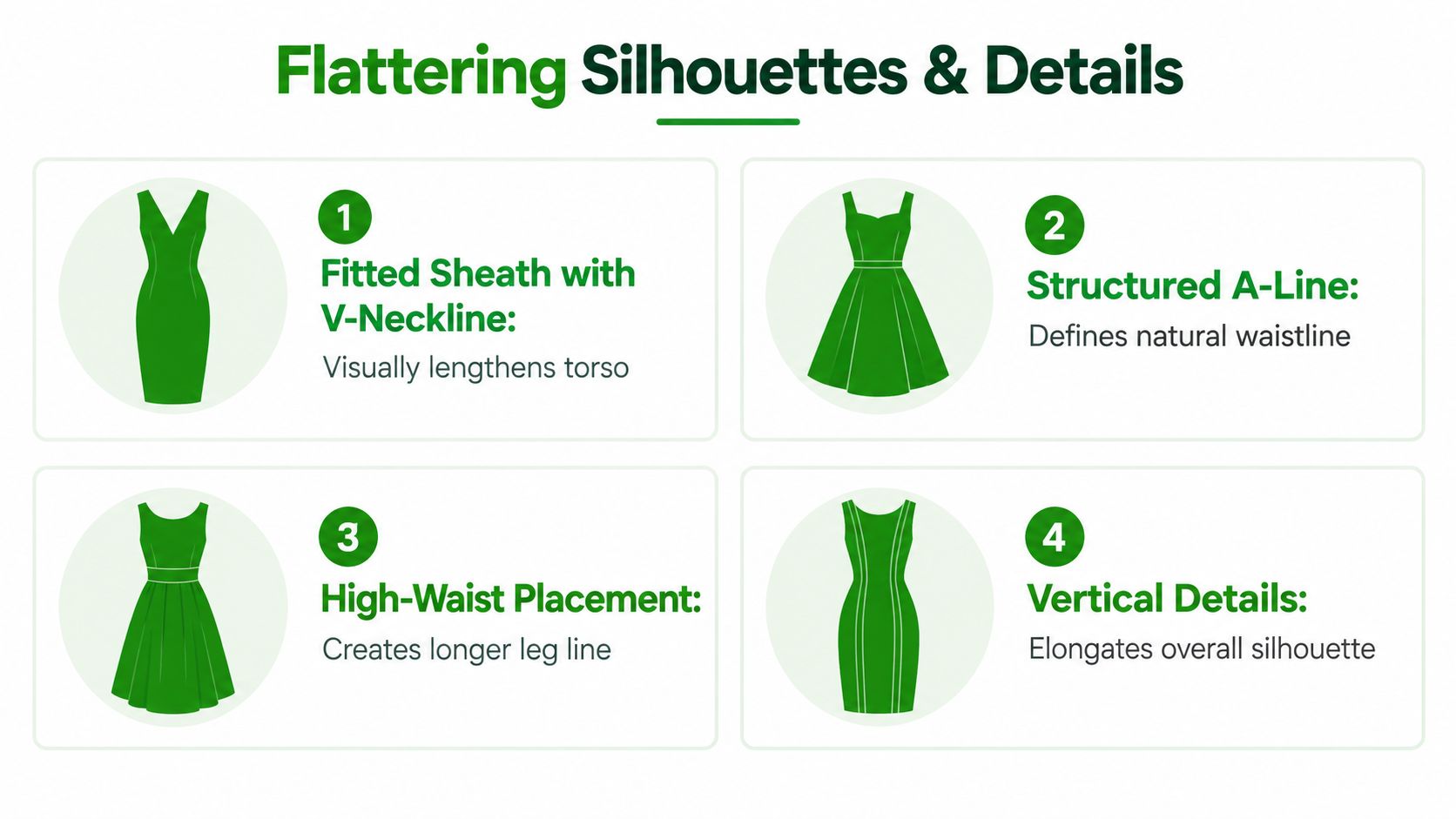
Four shapes worth trying
The fitted V-neck sheath keeps the body's width controlled. Its V neckline draws attention down the torso, while crepe or lightweight structured fabric holds a smooth line. Try a fitted crepe sheath at Cedar & Lily when you want a polished dress that does not overwhelm a shorter frame.
The structured A-line should meet the natural waist or sit slightly above it. A dropped waist places the visual break too low and shortens the legs. Choose a structured fit-and-flare midi with a skirt that skims rather than balloons. The controlled flare described in this guide to fit-and-flare dresses gives movement without adding a wide horizontal block.
The high-waisted mini shows more leg while keeping the outfit suitable for cocktail parties and evening gatherings. Look for subtle shoulder definition, cap sleeves, or a squared neckline to balance the shorter hem. The waist should sit cleanly above the natural waist, not drift downward through the bodice.
The column midi with a slit creates a narrow vertical shape. The slit should reveal the leg as you move, not become the dress's main feature. Choose one clean opening or another vertical detail instead of a wide ruffle or oversized embellishment.
Neckline and waist decisions
V-neck, scoop, and sweetheart necklines open the chest and lengthen the upper-body line. High halters and heavy cowl necks can make the neck look shorter, especially on a bodice that already runs long. Set the waist at the natural waist or approximately one finger above the navel. A seam below that point usually works against petite proportions.
Check the straps and armholes in the fitting room. Thin straps keep the shoulder area light, while a structured armhole gives a sleeveless dress a cleaner finish without excess fabric. Three-quarter sleeves can overwhelm a shorter arm if the shoulder seam sits too far out. Judge sleeve length with your arm relaxed, not held rigidly beside the body.
Keep skirt volume close to the body. A tulip hem or slight flare usually shows the figure more clearly than a full circle skirt. For a cool evening or outdoor venue, add a light layer that protects the vertical line. A shaped Seattle artisan evening wrap provides coverage without introducing bulky horizontal volume.
Fabric and Heel Pairings
Fabric changes the visual scale of a dress. Crepe and lightweight scuba hold a sheath's shape without adding unnecessary bulk, making them practical for a polished semi-formal event. Chiffon and georgette move beautifully, but their hems need enough lift to avoid pooling or creating a dragging impression.
The shoe isn't an afterthought. It completes the hem-to-shoe ratio. A nude or metallic block-heel sandal can support a structured sheath, while a pointed-toe pump in a close skin-tone shade carries the leg line through a fluid midi. The working rule is simple: the chosen fabric and shoe should expose at least an inch of ankle, unless the dress is intentionally floor length.
| Fabric | Best Dress Silhouette | Recommended Heel Height | Recommended Heel Style |
|---|---|---|---|
| Crepe | Fitted sheath | 2 to 3 inches | Block-heel sandal |
| Lightweight scuba | Structured sheath or fit-and-flare | 2 to 3 inches | Clean block heel |
| Chiffon or georgette | A-line or flowing midi | At least 3 inches | Pointed-toe pump |
| Bias-cut satin | Column midi or slip silhouette | About 3 inches | Structured heeled sandal |
| Mikado or taffeta | Structured A-line | About 2 inches | Refined pump or sandal |
| Velvet | Streamlined sheath or fit-and-flare | About 2.5 inches | Closed-toe heel bootie |
Satin deserves particular care. A bias cut photographs beautifully, but it follows every curve, so a structured heeled sandal gives the slip enough visual grounding. Mikado and taffeta can handle a lower heel because their structure supplies presence without requiring extra height.
Velvet works especially well for fall and winter events in deeper tones. A closed-toe heel bootie around 2.5 inches keeps the dress and leg in balance without making the shoe feel too delicate for the fabric.
Practical rule: The heel should support the dress's line, not compete with it. If the shoe creates a heavy break at the ankle, the hem needs another look.
Alterations Worth the Tailor
A dress that is almost right can become excellent with the right three alterations. Anything beyond those adjustments deserves a hard look before the tailor's bill grows.
The hem comes first
The hem should be marked while wearing the shoes intended for the event. For a midi, the preferred point is the narrowest part of the calf, not the ankle bone. For a floor-grazing style, the skirt should skim the floor without dragging. The tailor needs to see the actual shoe, because a change in heel height changes the entire finish.
Raise the waist
The waist seam should sit at the wearer's natural waist, not at a designer's assumed waist. Taking in the waist or raising the seam often does more for petite proportion than changing the skirt shape. It restores the relationship between bodice, waist, and leg line without requiring a new dress.
Shorten straps or shoulder seams
Straps or shoulder seams can often be shortened by half an inch to an inch. That adjustment keeps a sweetheart or scoop neckline in place and prevents the bodice from sagging. A small correction at the shoulder can improve the entire dress because the neckline, bust, waist, and skirt begin from the right starting point.
Worth the money: Hem, waist placement, and strap length are the three adjustments that most directly change vertical proportion.
Several alterations usually aren't worth forcing. Reshaping the neckline, recutting the armhole, or shortening sleeves by more than an inch can require substantial recutting and may not look natural afterward. If a dress needs that much intervention, the starting pattern is probably wrong.
Tulsa-area tailoring costs can vary by garment and construction, so shoppers should ask for a quote rather than assume a fixed price. Allow about a week before the event, and bring the shoes and undergarments that will be worn. Cedar & Lily stylists can mark pinches in store and suggest a tailor near Utica Square or Jenks; their women's tailoring guide offers additional preparation advice.
Where to Shop and Try Them On
You find the right semi-formal petite dress by checking vertical proportion before reacting to a photograph. Online images rarely show whether the waist sits too low, the shoulder seam extends too far, or the hem leaves the wrong gap above the shoe. Compare the size chart with three measurements: shoulder to natural waist, natural waist to intended hem, and the fullest body measurement the dress needs to accommodate.
The online route
Use a fit-first sequence:
- Measure before browsing: Record the points that control torso length, waist placement, and hem position, not only bust, waist, and hip.
- Check the model's proportions: Review the model's height and the listed dress length. Estimate where that hem will fall on your own frame.
- Read the return policy: Confirm whether returns remain possible after alterations, since hemming changes the garment's condition.
- Handle borderline sizing carefully: If you fall between sizes, order two only when the return policy allows it. Choose the size that fits the shoulders and waist with the least intervention.
The online selection at Cedar & Lily Clothier includes curated designer and contemporary labels, with dresses for occasions and work-to-evening wardrobes. Product measurements are a starting point. Contact the boutique team to ask about fit and local availability, especially if the waist placement looks uncertain or the listed length may overwhelm your frame.
The in-store route
A fitting appointment works best when you bring the items that determine the finished proportion:
- Bring the shoes: Heel height controls whether the hem grazes, breaks, or drags.
- Wear the intended undergarments: Strap placement and neckline stability can change with different support.
- Bring venue photos: A garden ceremony, hotel reception, and restaurant dinner may require different fabric weight and hem polish.
- Ask for three checks: Have the stylist assess waist placement, the hem-to-shoe gap, and strap fit.
Cedar & Lily Clothier has two Oklahoma storefronts, Utica Square in Tulsa and downtown Jenks, where shoppers can assess fabric and fit in person and receive styling help. Book a weekday fitting, or shortlist three dresses to compare side by side. That approach reveals which dress gives you the cleanest torso-to-hem line instead of leaving the decision to a size label.
Cedar & Lily Clothier offers semi-formal dresses and styling support for petite shoppers who need the right torso, waist, and hem proportions. Visit the boutique online, or stop by the Utica Square location in Tulsa or the downtown Jenks location with your event shoes in hand.