
Yellow-dress searches surged 656% year over year during May–June 2025, according to WomensClothes.com's trend report published through PR.com. That's a reason to take the color seriously, not a reason to buy the first yellow dress in a search result. For prom, the right yellow depends on its warmth, intensity, and fabric, plus the lighting where the celebration takes place.
Table of Contents
- Start With the Right Kind of Yellow
- Match Yellow Shades to Skin and Venue
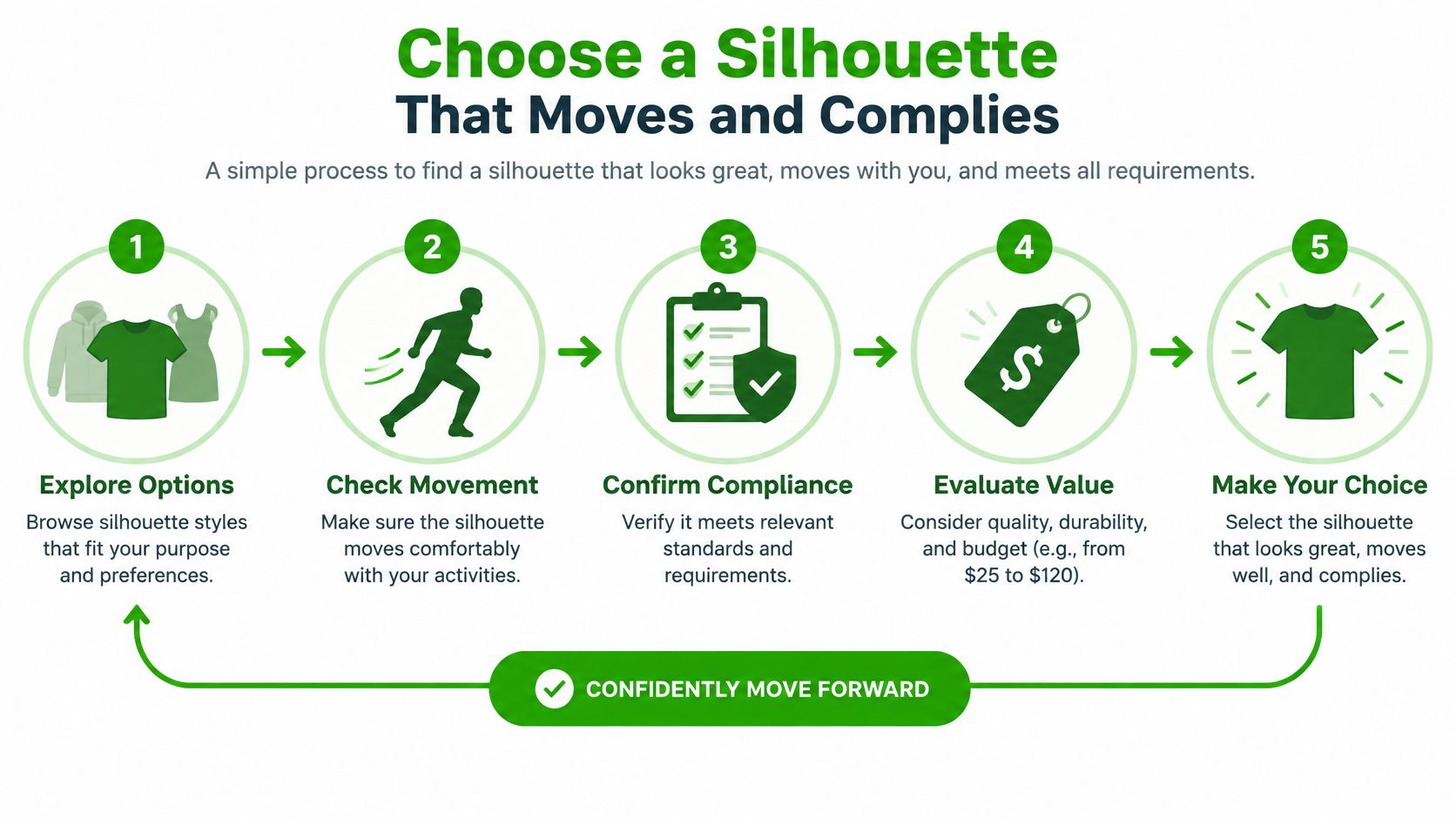
- Choose a Silhouette That Moves and Complies
- Check Fabric Dye and Venue Light
- Pair Shoes Jewelry and Makeup With Yellow
- Book a Fitting or Order the Dress
Start With the Right Kind of Yellow
A shopper saves a photograph of a pale yellow gown, then tries on something labeled the same color and finds it surprisingly sharp. Nothing has gone wrong with her coloring. The dresses aren't the same yellow.
Yellow prom dresses work when shade, fabric, and setting agree. A color name on a product page can't establish that agreement, and a beautiful photograph can't replace seeing the fabric beside the wearer's face.
Consider the difference between a softly draped butter-yellow dress and a glossy lemon gown. Both belong in a yellow search, but they create very different impressions. Butter can feel restrained and romantic; lemon makes the color itself the statement.
Choose the Family Before the Dress
The useful shortlist includes butter, lemon, marigold, saffron or gold, mustard, and chartreuse. Starting with a family makes browsing more productive than treating every yellow result as interchangeable.
At the extremes, pale butter can lose its distinction under warm ballroom bulbs, while saturated lemon can look almost neon beside white shoes. Neither is automatically a bad choice. Each needs the right setting and supporting details.
Stylist's rule: The best yellow is the one that keeps the wearer visible, rather than making the dress the only thing noticeable.
A sensible purchase starts with the shade chart, continues through coverage and movement checks, and ends with a fabric-and-light assessment. Accessories come after those decisions, not before them. The chart is a shortlist tool to use before falling for a product photograph.
Match Yellow Shades to Skin and Venue
Choose a starting row before shopping. These are styling recommendations, not restrictions on who can wear a color; the actual dress beside the face gets the final vote.
Yellow prom shades by coloring and light
| Shade | Best coloring | Formality | Lighting risk |
|---|---|---|---|
| Butter | Cool or fair with pink undertones | Soft formal | Washes out under warm ballroom bulbs |
| Lemon | Warm or golden undertones | High impact, less formal if neon | Glare in flash; tires against white |
| Marigold | Warm, olive, or medium-deep | Evening formal | Holds under warm indoor light |
| Saffron or gold | Deep or warm | Most formal of the yellows | Metallic sheen shifts in flash |
| Mustard | Olive and deep warm | Quieter, garden or daytime | Can look muddy in cool fluorescent light |
| Chartreuse | Cool olive | Statement, less classic | Can read green under some LEDs |
Separate Color Family From Intensity
Hue means the color family, such as lemon, gold, or yellow-green. Lightness describes how pale or deep the fabric looks, while chroma describes how vivid or muted it is. A pale yellow can still look surprisingly sharp if its chroma is high.
Butter is the starting point for someone seeking softness rather than spectacle. Against fair, pink-toned coloring, a gentle butter shade can create a delicate formal look, but a nearly cream version needs enough definition to remain visibly yellow.
Lemon is the more assertive alternative. Warm or golden coloring provides a useful starting match, although a fluorescent-looking fabric can make even a beautifully cut dress feel less formal. The recommendation is clear lemon, not highlighter yellow.
Marigold adds orange warmth and depth. It's a strong first choice for warm, olive, or medium-deep coloring, especially when the event calls for an evening look rather than a pastel garden mood.
Decide How Much Statement Feels Right
Saffron or gold is the dressiest direction in this palette. Deep or warm coloring can carry its richness beautifully, but metallic gold needs careful assessment because reflected highlights change the apparent color.
Mustard is quieter and earthier. Olive and deep warm coloring are useful starting matches, particularly for daytime or garden settings; for a traditional evening prom, the cut and finish need to supply the polish.
Chartreuse is a deliberate statement, not a substitute for classic yellow. Cool olive coloring is a good starting point, provided the wearer likes its green edge rather than hoping it will disappear indoors.
In a 2023 experiment involving 96 participants, yellow hues were associated with joy and yellow-green hues with relaxation, according to the published study record. Those associations make shade a mood cue, not a promise that a dress will change how someone feels.
For a broader undertone comparison, ClothME's guide can help shoppers find clothing colors for your skin tone. Cedar & Lily Clothier's guide to which colors look best offers another starting point for narrowing the palette.
For a shape reference, the L'Agence- Caprice Strapless Midi Dress is a special-occasion option with a strapless neckline and midi length. Its listing shouldn't be treated as confirmation of a particular yellow shade; color selection still requires checking the actual option.
The chosen row remains a shortlist. The actual dress must pass its fabric and light checks before purchase.
Choose a Silhouette That Moves and Complies
The school or event handbook takes priority over general prom advice. A dress can look elegant and still fail the event's coverage requirements, so the written rules belong in the fitting room.
Published policies illustrate how specific those requirements can become. The examples below draw on school formal-dress guidelines, including a slit limit of 3 inches above the knee and restrictions on exposed midriffs, plunging necklines, and low backs; shoppers must use their own event's wording rather than treating these examples as national rules.
Coverage checks drawn from published school policies
| Area | Example limit | What does not fix it |
|---|---|---|
| Slit | Some schools cap it at 3 inches above the knee | A wrap over the slit |
| Midriff | No exposure at the front or sides | Pinning the gap |
| Neckline | No plunge; some policies say not cut below the bust line | Tape or a necklace |
| Back | Some policies say not below the natural waist | A shawl, sweater, or coat |
| Whole dress | Must comply as worn | Any cover-up added at the door |
Follow a Fitting-Room Sequence
- Read the written code before trying dresses. Save the rules on a phone or bring a printed copy. Note how the event defines slits, midriff exposure, neckline depth, and back coverage, including any approval process for uncertain styles.
- Reject a clear coverage mismatch. A dress that needs constant adjustment to meet the rules isn't a sound purchase. Pinning, fashion tape, or a wrap shouldn't become the plan for gaining admission; permanent alterations need approval and enough time to be completed properly.
- Choose length for the venue and shoes. A midi can look composed in a gym or hotel setting without bringing a floor-length hem into the decision. A maxi needs clearance while walking and dancing in the intended shoes, while a mini belongs on the shortlist only when the event permits it.
- Choose the line rather than chasing a body-type rule. An A-line or softly skimming column lets bright color read across a continuous shape instead of gathering in tight patches. A defined waist can clarify proportions on a shorter frame, while a long column can emphasize a taller line.
The fitting process should balance appearance with practical wear.
Test the Dress in Motion
- Walk, sit, raise both arms, and dance. The wearer should take normal steps rather than careful fitting-room shuffles. Sitting reveals whether a skirt rides up, a slit opens farther than expected, or the bodice presses uncomfortably against the ribs.
- Check every support point. Straps, zipper, and bust should stay in place without repeated pulling. A strapless dress needs secure internal support, and the wearer must be able to breathe comfortably when seated rather than accepting tightness as proof of a good fit.
- Arrange alterations before committing to the event date. Hem, strap, and bust adjustments should be discussed together, with the intended shoes present. A last-night home fix leaves no room to discover that shortening a strap changes the neckline or that the hem still catches during movement.
Cedar & Lily Clothier's guide to dressing for body type can help describe a preferred silhouette without turning proportions into rigid rules. The useful question is whether the dress creates the desired line while remaining comfortable.
A dress that only works while standing still doesn't fit the occasion.
Check Fabric Dye and Venue Light
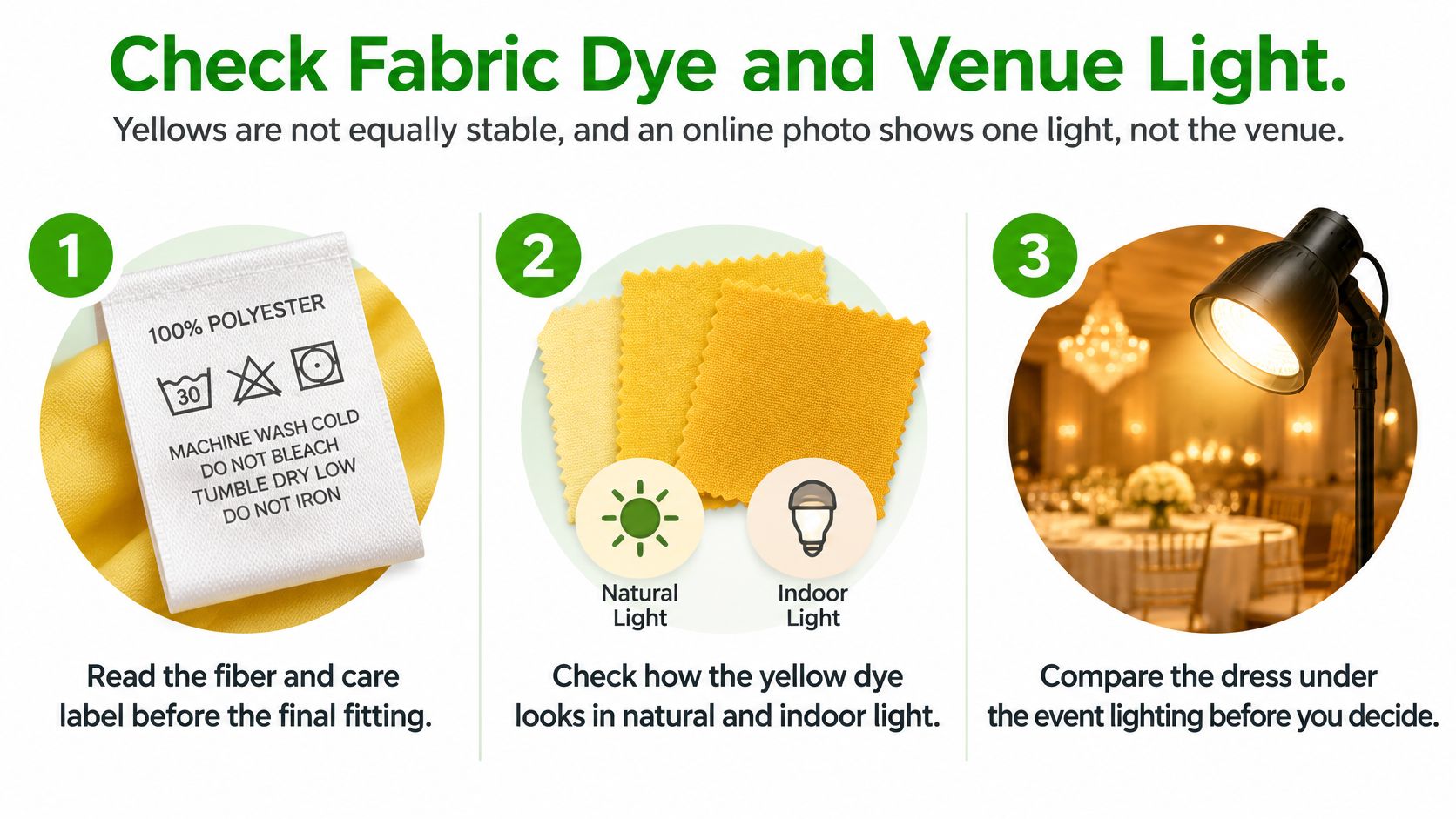
Yellow fabrics aren't equally stable, and an online photograph shows one lighting setup, not the venue. A good color match can still be a poor purchase if the fabric shows uneven dye, transfers color, or needs care the wearer can't safely provide.
The first check happens before the final fitting. Rejecting a questionable fabric costs nothing. Discovering it after alterations have been paid for costs plenty.
Inspect Before Testing
- Read the label. Identify the fiber content and cleaning instructions. Satin describes a weave and crepe describes a fabric structure or texture, so neither word alone establishes the fiber or its care requirements.
- Inspect stress areas. Look closely at seams, the hem, and underarms for uneven color, pale rub marks, or surface abrasion. Inspect the lining as well as the outer fabric.
- Request a controlled spot test. A professional can assess a matching swatch or hidden seam with a white cotton cloth lightly dampened only with an approved cleaning solution. A shopper shouldn't apply liquid to a store garment without permission.
- Avoid improvised treatment. Skip bleach, hot water, unapproved steam, and a last-minute home wash. A care label that requires professional cleaning isn't an invitation to experiment.
Under AATCC 61-2010 accelerated laundering, yellow pigment had the weakest washing resistance among the pigments studied, while yellow-dyed polyester was the only tested substrate without significant washing-related color change, according to the textile-testing paper. Natural yellow dyes carry their own fading risk: turmeric, fustic, and marigold are especially prone to light damage, and the mordant used tends to predict fading more than the dye itself or the length of exposure.
These findings call for conservative handling, and no polyester dress should be assumed colorfast. A well-finished polyester satin or crepe earns a place on the shortlist, but fiber, dye, finish, and care instructions still need to agree. A naturally dyed dress with uncertain care requirements is the wrong candidate for improvised steaming before prom.
Give the Actual Dress a Light Test
Compare the garment in daylight, warm indoor light, and a phone photograph with flash. Keep the background and camera position consistent, leave filters off, and include the wearer's face rather than photographing only the skirt.
Color-perception work distinguishes hue, lightness, and chroma, supporting a swatch-based assessment rather than reliance on a color name alone, as discussed in the apparel color-perception study. High-chroma lemon should keep its assertive character under each light. Lower-chroma butter should read softer, never dirty or faded to nothing. A yellow that holds up in the boutique can still flatten under the dimmer, warmer light of an evening venue, which is exactly the light the dress will live in.
For shoppers comparing fabric behavior, Cedar & Lily Clothier's dress-fabric guide provides useful background on choosing material for the setting. The purchase decision should still rest on the garment in hand.
Pass or fail: If the yellow turns green or muddy in the light closest to the venue's, choose another shade. Makeup isn't a correction for the wrong fabric color.
Pair Shoes Jewelry and Makeup With Yellow
Yellow needs definition, not a matching accessory set. A fashion-design paper on color application describes yellow as the brightest visible color, notes its limited visual weight, and discusses the powerful contrast of black with yellow and the visual fatigue possible beside white.
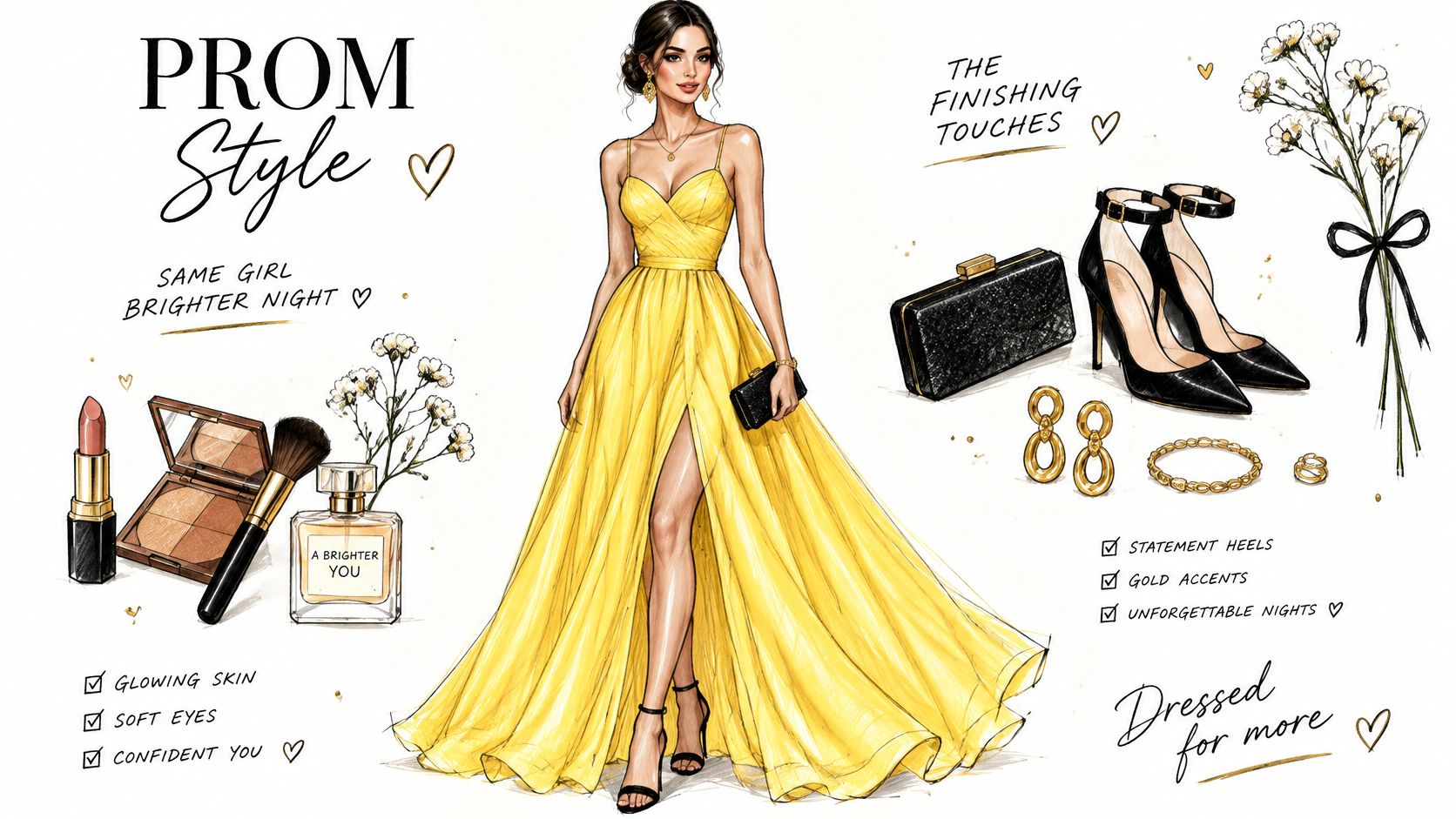
That makes a darker or metallic anchor a strong styling choice. Black strappy shoes can give lemon or marigold a deliberate edge, while a deep metallic finish adds definition without introducing another bright color.
Build Contrast Without Overloading the Dress
Nude shoes aren't automatically wrong, but they can disappear beneath butter yellow and make the lower half of the outfit look unresolved. A visible metallic edge often gives a pale dress a more finished result.
White needs greater restraint. An all-white bag and white heels beside saturated lemon can create competing bright areas rather than a clear focal point. A small white detail is different from surrounding the dress with white.
Jewelry should answer the bodice. An embellished neckline needs little more than earrings, while a plain column can support a stronger necklace or a more noticeable earring, not necessarily both.
- Warm yellow. Gold is a natural starting point beside marigold and saffron.
- Cooler yellow. Silver or crystal can look cleaner beside butter or a cool lemon.
- Detailed bodice. Reduce jewelry scale and leave the neckline readable.
- Simple dress. Choose a deliberate focal accessory rather than adding several small distractions.
The finished outfit should look considered without becoming overmatched.
Compare a Complete Look With a Miss
A marigold midi, black strappy heel, small gold earrings, and warm nude lip is a coherent evening combination. Each element has a job: the dress supplies color, the shoe supplies contrast, and the jewelry adds a controlled highlight.
The opposite approach is a lemon gown with white heels, a white bag, and very pale cool makeup. That combination risks looking glaring and underdefined, especially when every element is competing to be the lightest part of the photograph.
Makeup should complement the dress's temperature without copying its color. An icy pink lip can feel disconnected from marigold; soft rose or warm nude can keep a butter-yellow look balanced. A contrasting metal hair clip is usually more effective than a yellow accessory intended to match the dress exactly.
Cedar & Lily Clothier's accessorizing guide can help refine the balance. A small safety kit can include strap supplies and a stain-treatment pen only when its use is approved for the fabric; uncertain stains should be blotted gently and left for professional care.
Book a Fitting or Order the Dress
Stop browsing once shade, coverage, movement, and light all hold up. A yellow dress can look rich in fitting-room light and still turn flat under gym fluorescents, so buy for the room where it will be worn.
Cedar & Lily Clothier is a women's clothing boutique with Oklahoma storefronts at Utica Square in Tulsa and downtown Jenks, plus an online store. It sells curated designer and contemporary brands.
Make the Visit Useful
For local shoppers, seeing fit and fabric in person is the clearest advantage. Cedar & Lily Clothier's team provides personal styling and fit guidance, so arrive with a defined color direction: marigold for warmth, butter for softness, lemon only if the venue light will not bleach it.
A productive appointment needs a few practical reference points:
- Dress-code notes. Bring the actual event requirements, including any approval instructions.
- The preferred shade. Save a reference photograph and treat it as a direction, since screens shift yellow undertone and chroma.
- Intended shoes. Bring the pair that will determine hem clearance and walking comfort.
- The event date. Discuss alteration timing before committing to a dress that needs work.
- A total spending limit. Include shoes, alterations, accessories, and other prom expenses so the dress does not consume the whole budget.
For families setting that total together, Atlanta Party Ride's a prom spending guide for parents provides a broader planning reference. Keep enough room to finish the outfit properly.
Confirm the Order Details
Cedar & Lily Clothier carries Mini, Midi, and Maxi dress lengths and designer lines including Lace the Label, Drew, and LoveShackFancy. Online shoppers can browse the dress and designer collections, then confirm the listed color, measurements, and options instead of assuming every occasion style comes in yellow.
Fulfillment belongs to the individual item. LoveShackFancy's Story Dress is available for pickup at the Jenks store and is usually ready in 24 hours; treat that timing as item-specific. Before ordering, check the product page for shipping terms. The boutique advertises fast shipping, free shipping on orders $250+, and complimentary gift packaging over $100.
Returns can be requested through the Shopify portal or by contacting onlinesupport@cedarandlilyclothier.com, with eligibility and timing confirmed before purchase. Cedar & Lily Clothier's prom-dress shopping tips can help organize the final order. Leave room for a size exchange and a professional hem adjustment.
The best purchase is the dress that looks right, meets the rules, and lets its wearer enjoy the evening without managing the outfit.
Cedar & Lily Clothier offers curated occasion dresses and personal styling help for choosing a yellow prom look with the right shade, fit, and finish. Local shoppers can visit Utica Square in Tulsa or downtown Jenks with their dress-code notes and preferred shade, or visit Cedar & Lily Clothier to browse online and order with time for fit adjustments.