


A padded shoulder blazer is a structured jacket with built-in shoulder padding that creates a broader, straighter upper silhouette, originally introduced by Elsa Schiaparelli in 1931 and revived multiple times since. Its modern appeal depends less on extreme width than on the relationship between shoulder structure, fabric, sleeve shape, and your natural proportions.
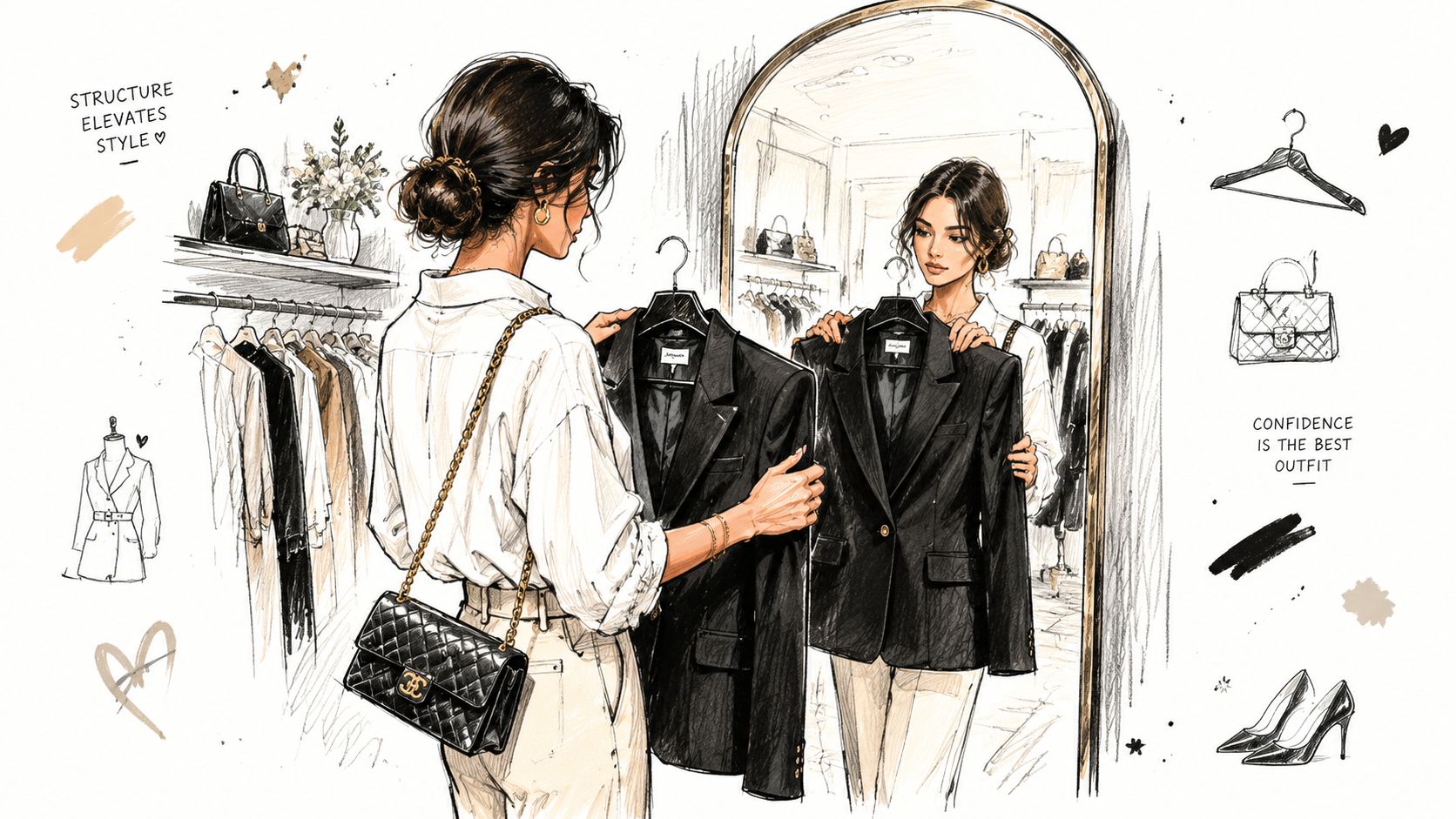
You may have felt that moment in a boutique. A blazer catches your eye because its shoulders look decisive and beautifully clean, but once you hold it against yourself, you wonder whether it will read as polished or overwhelming. The answer usually isn't found in the shoulder pad alone. It's found in how the pad is shaped, where the shoulder seam sits, how the fabric falls, and whether the rest of the jacket supports the silhouette.
That makes the padded shoulder blazer more useful than a passing fashion headline suggests. It can sharpen a work wardrobe, lend authority to a simple dress, or bring definition to softer outfits. The key is learning to recognize intentional structure rather than confusing it with excess bulk. For a broader introduction to women's blazer silhouettes, see this guide to blazer jackets for women.
What Is a Padded Shoulder Blazer
A padded shoulder blazer is a structured jacket with padding inserted at the shoulder area to create a broader, straighter upper-body line. The pad is part of the garment's internal construction. It isn't an accessory placed on top of the shoulder, and in a well-made blazer, you shouldn't be able to see a separate object or feel a harsh interruption beneath the fabric.
An unstructured blazer usually follows the body more softly. Its shoulder may collapse slightly, ripple naturally, or extend only as far as your own shoulder point. A padded version introduces an internal scaffold. That scaffold lifts the outer edge of the shoulder, supports the sleeve head, and gives the jacket a more deliberate architectural profile.
The visual effect
The most noticeable change is one of proportion. A straighter shoulder can make the waist appear more defined, give a fluid dress greater presence, and help a simple T-shirt and trouser combination look considered. The effect can be subtle, with a lightly supported shoulder that prevents droop, or dramatic, with a strong horizontal line and a fuller sleeve head.
The difference between modern and dated often comes down to restraint. A softly padded blazer in a current cut can look refined and versatile, while a very stiff, oversized version may suggest costume if the length, fabric, or styling doesn't balance it.
Practical rule: Judge the shoulder while the blazer is buttoned and unbuttoned. If the line remains clean without pulling across the chest or collapsing at the sleeve, the structure is doing useful work.
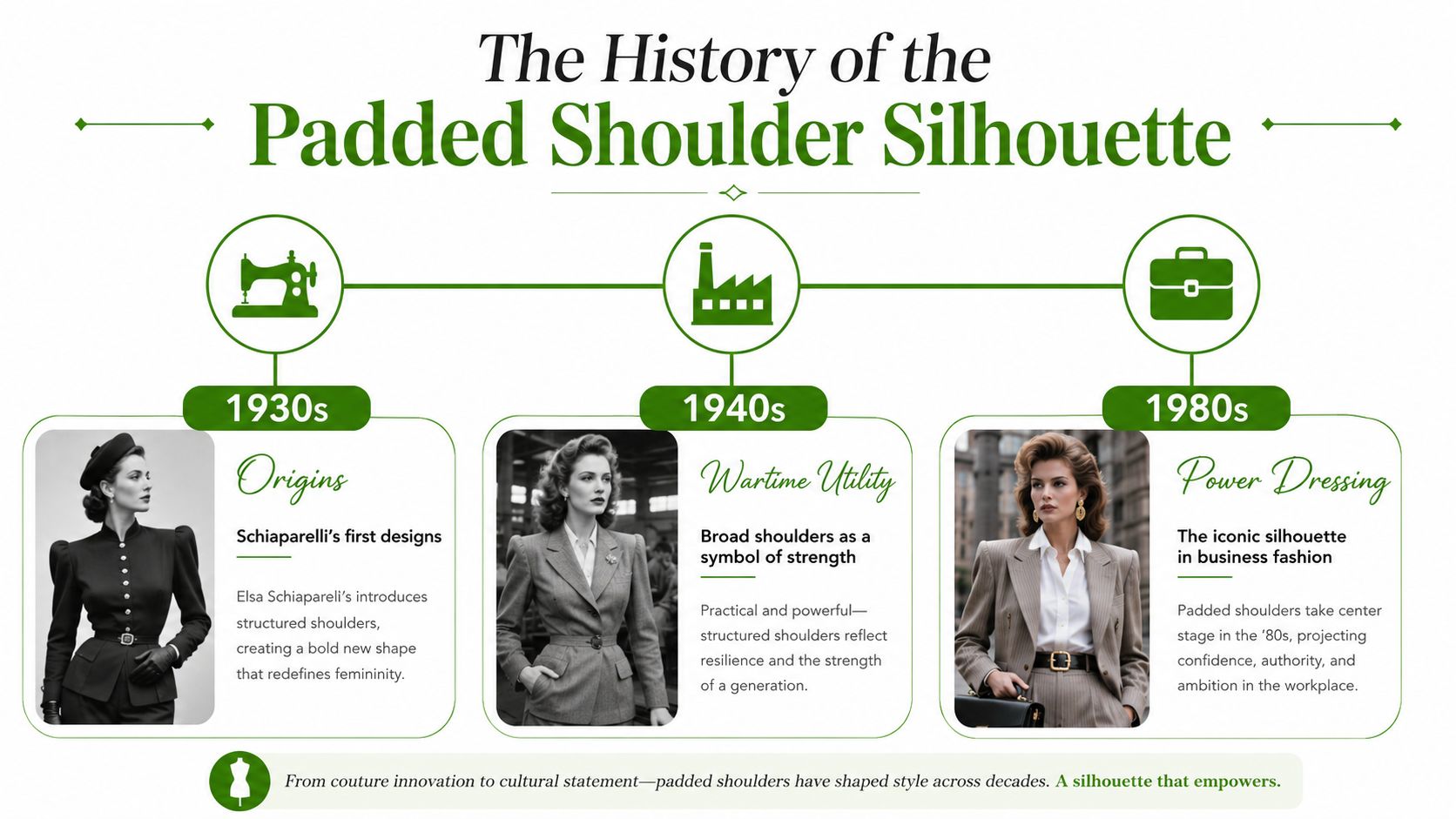
The silhouette also has a surprisingly long story. Shoulder padding became associated with women's fashion through 1930s couture, practical wartime tailoring in the 1940s, and the unmistakable corporate wardrobe of the 1980s. Understanding that history makes it easier to see the garment as a recurring tailoring device, not merely a nostalgic reference.
The History Behind the Silhouette
Shoulder padding has appeared in structured clothing long before the contemporary blazer. Historical accounts connect padded or enlarged upper-body shapes with 17th- and 18th-century court dress and uniforms, where tailoring helped create rank, formality, and physical presence. The broader concept also appears in later military and sporting clothing, showing how designers repeatedly use the shoulder to make the body look stronger or more commanding. Fashion history on shoulder pads) traces this longer development and places the modern blazer within that wider tailoring tradition.
From couture to popular culture
The key modern women's-fashion milestone came in 1931, when Elsa Schiaparelli introduced shoulder padding in her designs. By the following year, Joan Crawford's screen appearance helped bring the look to a mainstream audience, giving the broader shoulder a glamorous, highly visible cultural role. The silhouette wasn't merely decorative. It changed the visual proportions of women's tailoring by making the upper body appear more linear and assertive. These milestones are documented in the Oxford Research Centre in the Humanities history of shoulder pads.
The 1940s gave the shape a different meaning. Wartime clothing shifted toward boxier, more practical tailoring, and the broader shoulder became associated with utility, strength, and a more militarized profile. Jackets and blazers could look more substantial without relying on ornate decoration. A supported shoulder also helped clothing hold its shape during a period when practicality and visual authority mattered.
The power-dressing peak
The silhouette reached its most recognizable corporate expression in the 1980s, during the era of power dressing. Fashion historians describe that peak as extending from the late 1970s into the early 1990s. Exaggerated shoulders became a defining feature of women's business wear because they projected authority in professional environments where women were still establishing greater visibility and influence.
That context explains why the style continues to carry symbolic weight. Broad shoulders can suggest capability, composure, and command before the wearer says a word. Contemporary versions can retain that confidence while using softer padding, less rigid fabrics, and more relaxed proportions.
How Padded Shoulder Blazers Are Constructed
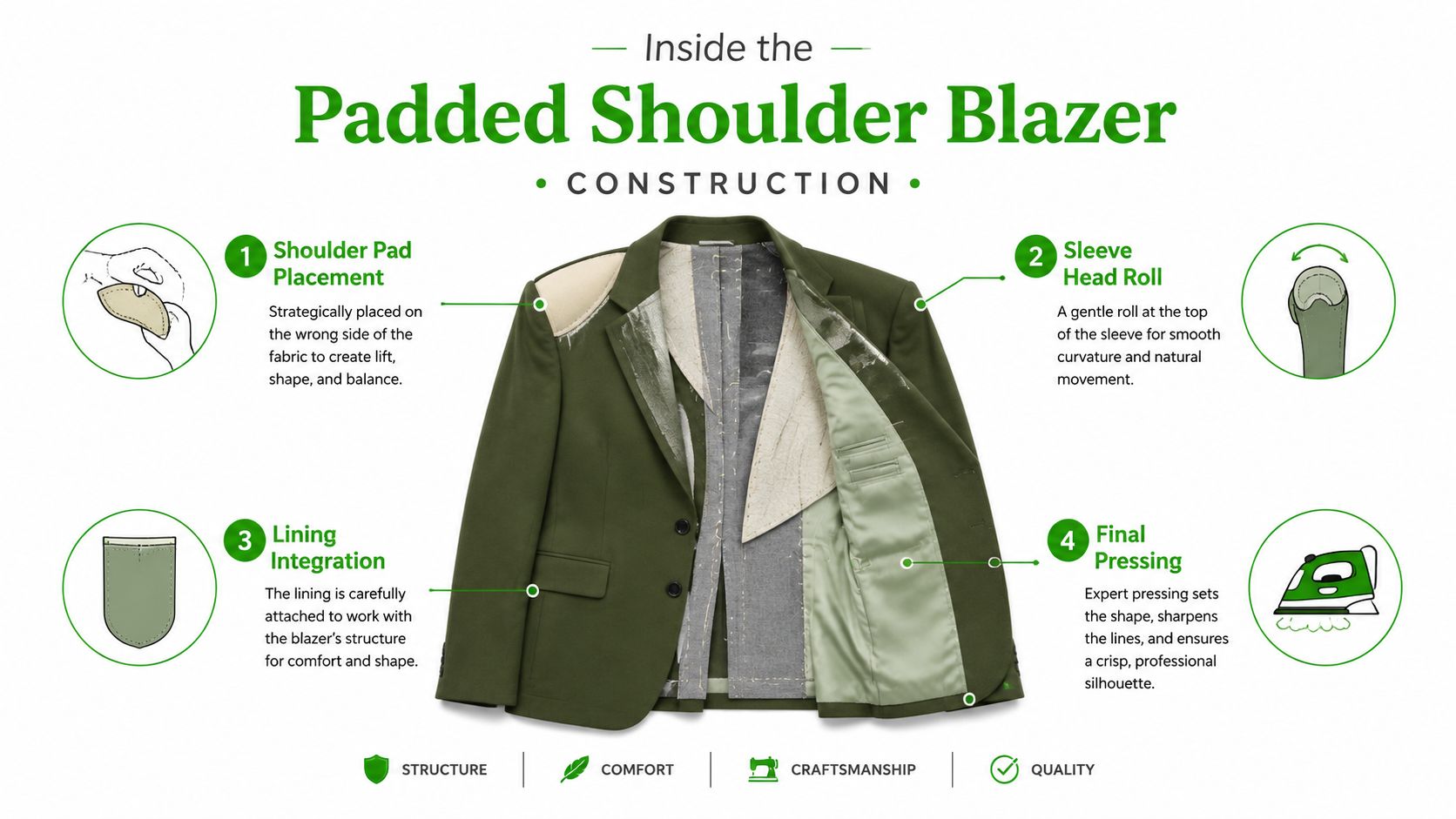
The shoulder pad sits on the wrong side of the garment, meaning the inside surface that faces the body. Its straight edge aligns with the armscye seam, the curved seam where the sleeve joins the jacket body. The tailor secures the pad to the shoulder seam allowance and armscye seam allowance, then places the lining over it so the structure remains enclosed between the outer shell and the inner layer. This construction method is described in a tailoring demonstration of shoulder pad placement.
Think of the pad as a small internal scaffold. It raises the shoulder line, but it shouldn't force the sleeve into an unnatural position. The pad slightly extends into the sleeve area to fill the shoulder cap and keep the outside edge crisp. When the placement is correct, the jacket looks firm without appearing to push the arm forward.
What sits inside the shoulder
Padded shoulder pads commonly use layered materials such as felt, fiberfill, or volume fleece. These layers are stitched together with broad stitches so they can create a gradual transition rather than a hard ridge. The longest side typically faces the front of the body, following the natural contour of the shoulder and chest.
This small directional detail affects comfort and appearance. If the pad is reversed, badly trimmed, or too thick at the wrong point, the blazer may feel stiff near the neck or develop a visible shelf at the shoulder. The outer fabric can also reveal the problem through puckering or an uneven sleeve head.
What to inspect before buying
Try the blazer on with your arms relaxed, then reach forward as though you're taking something from a desk. Check whether the shoulder seam ends near your natural shoulder point. The sleeve should hang cleanly from that point rather than twisting toward the front or dropping far beyond the arm.
Alterations deserve particular care. If a tailor moves the shoulder seam, the pad must also be repositioned. Otherwise, the jacket can look pushed forward even when the chest and waist measurements seem correct. For a closer look at fit decisions, consult this women's tailoring guide.
Choosing the Right Fit and Fabric
A successful padded shoulder blazer balances four variables: shoulder width, pad thickness, sleeve head volume, and fabric behavior. Start with the shoulder point. The seam should meet your natural shoulder or extend only enough to create the intended shape. A shoulder that reaches too far outward can make the jacket look borrowed, while a seam that sits inward can produce pulling and wrinkles.
Pad thickness controls intensity. Light padding gives a clean line and subtly supports the garment. Medium padding creates a defined structured effect without dominating the outfit. Heavy padding creates a strong statement and usually needs equally deliberate styling beneath it.
The sleeve head matters just as much. A pad may be substantial, but if the sleeve cap is soft and poorly supported, the shoulder can look disconnected from the arm. Quality construction creates a gradual passage from shoulder to sleeve, with no abrupt ridge or collapsed hollow.
Fabric and Fit Comparison for Padded Shoulder Blazers
| Fabric Type | Best For | Season | Silhouette Intensity |
|---|---|---|---|
| Wool | Office tailoring and polished separates | Cooler months and transitional dressing | Holds a defined shape |
| Tweed | Textured workwear and refined daytime outfits | Cooler seasons | Adds visual structure and surface interest |
| Cotton | Relaxed tailoring and lighter everyday wear | Warm weather and transitional dressing | Usually softer and less formal |
| Silk blends | Events, dinners, and fluid layering | Mild weather or indoor occasions | Drapes softly, with less rigid definition |
Fabric changes the experience over the course of a day. A dense wool can preserve a sharp shoulder and resist collapsing, but it may feel more substantial on the body. A lighter silk blend can glide over a dress and create elegant movement, though it won't usually deliver the same firm architectural edge.
Recent 2026 style coverage describes the current direction as softer and more wearable than the extreme power shoulder, following a renewed interest in structured shapes after the 2025 Met Gala. Who What Wear's 2026 blazer trend coverage reflects that shift. For most wardrobes, moderate padding offers the widest range because it works with denim, crisp trousers, dresses, and occasion pieces without making every outfit feel theatrical.
Styling the Padded Shoulder Blazer for Work and Events
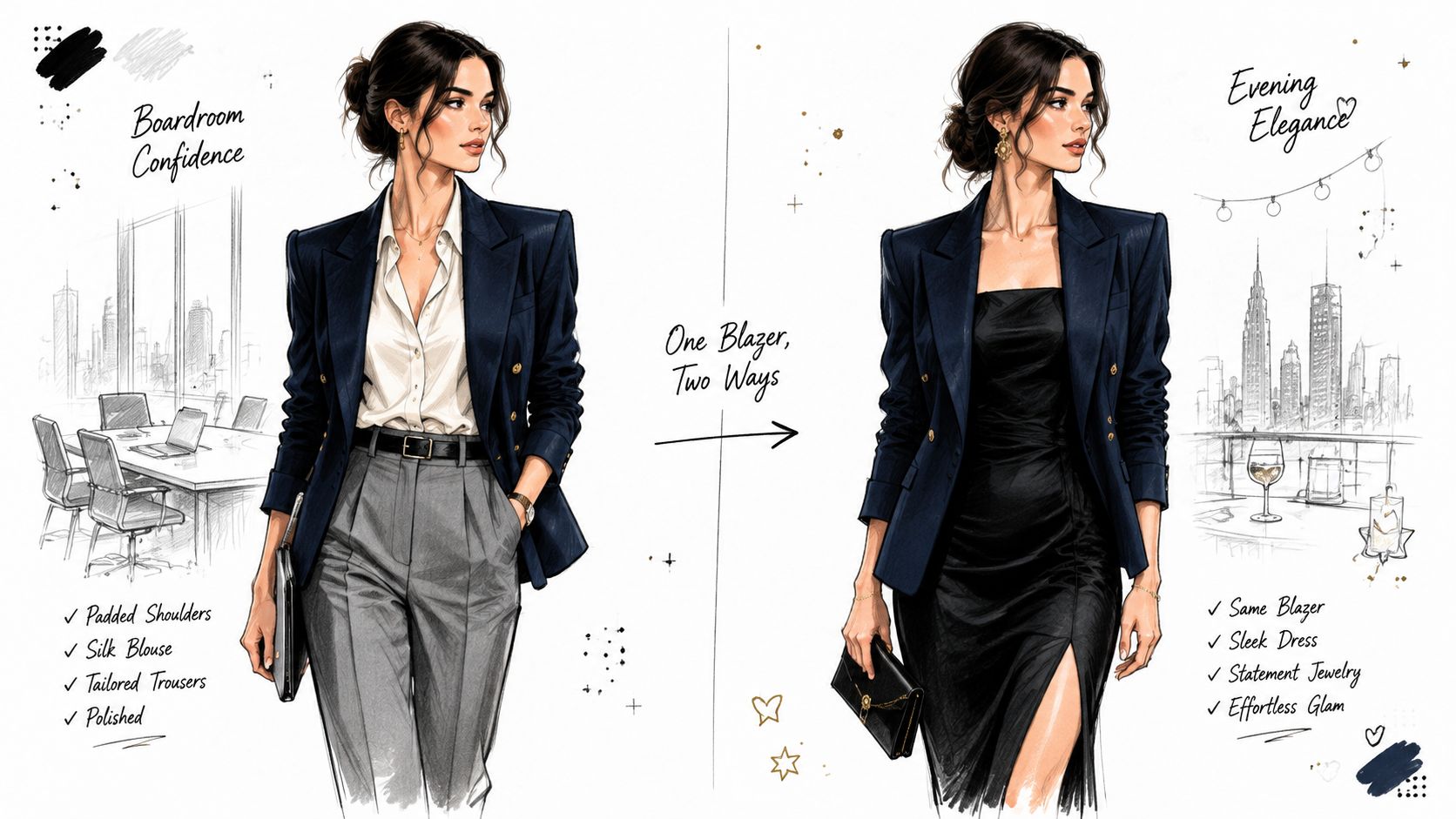
A navy or charcoal padded shoulder blazer can anchor a work outfit with very little else. Start with well-fitted trousers, a crisp blouse, and simple leather shoes. Keep jewelry restrained so the shoulder line remains the main design feature. The outfit feels composed because the blazer supplies shape while the blouse and trousers provide a clean visual frame.
For a less formal office, wear the same jacket with a fine knit top and straight-leg denim. Choose a top that sits close enough to the body that it doesn't compete with the sleeve head. If the blazer is already broad and boxy, an excessively loose base layer can make the entire outfit look shapeless.
From desk to dinner
The blazer becomes evening-ready when you change the layer beneath it. Wear it over a slip dress, leaving the jacket open so the fluid fabric contrasts with the structured shoulder. Alternatively, pair it with wide-leg trousers and statement heels, then add one intentional accessory such as a sculptural earring or a compact evening bag. The contrast between softness and structure keeps the outfit modern.
Proportion principle: When the shoulders carry visual weight, keep the lower half streamlined or make the width deliberate and balanced. The outfit should look composed from head to toe, not widest only at the top.
Modern styling also reduces retro associations. Muted colors, clean trouser cuts, slim knitwear, and contemporary footwear make the shoulder feel current. Avoid combining strong shoulder padding with every other nostalgic detail at once, such as highly exaggerated sleeves, rigid accessories, and an overly formal silhouette.
For additional combinations, explore these blazer outfit ideas for women. A styling demonstration can also help you see how changing the base layer alters the same jacket.
Caring for Your Padded Shoulder Blazer
A structured blazer needs more careful handling than an unlined, relaxed jacket because the internal padding can shift, flatten, or distort. Start by using a broad, shaped hanger that supports the shoulder area. A thin wire hanger can create pressure points and may encourage the jacket to lose its intended contour.
Hang the blazer after wearing it so the fabric can settle and air out. Before storing it, empty the pockets and fasten the front if the jacket's shape benefits from that support. Folding is best reserved for short periods during travel. If you must fold it, place the shoulders together gently and avoid compressing the pad under heavy garments.
Cleaning and storage habits
Dry cleaning should follow the care label and the actual condition of the blazer rather than an automatic schedule. Over-cleaning can place unnecessary stress on fabric and internal components, while delaying cleaning after a visible spill can allow a mark to set. Tell the cleaner that the garment has structured shoulders so it receives appropriate handling and pressing.
Store the blazer in a breathable garment bag, not a sealed plastic cover for long-term storage. Leave enough room around it to prevent the shoulders from being crushed against neighboring clothes. Keep the closet dry and away from direct sunlight, which can affect color and weaken exposed fibers over time.
Signs that need attention
Check the blazer in a mirror every few wears. Uneven shoulder lines, a sleeve that twists forward, fabric puckering near the armscye, or a pad that feels lumpy can indicate that the internal structure needs professional attention.
Care reminder: Don't try to flatten or reshape a shoulder pad with a household iron. A tailor can inspect the pad, shell, lining, and sleeve head together, then correct the source rather than pressing the symptom.
A well-maintained blazer can remain a dependable wardrobe cornerstone. Its usefulness comes from the quality of the structure, so protecting that structure protects the investment.
Selecting the Right Proportion for Your Body Type
There isn't one correct padded shoulder blazer for every figure. The most flattering version creates a relationship between the shoulder line, waist, hip, and jacket length. Use body-type labels as practical starting points, not strict rules. Your comfort and the impression you want to project matter just as much as conventional proportion advice.
Hourglass proportions
If your shoulders and hips already feel balanced and your waist is defined, choose moderate padding with a jacket that acknowledges the waist. A single-button closure, gentle shaping, or a clean seam can preserve your natural line. Avoid excessive width unless you intentionally want a more editorial effect, because too much structure can obscure the balance that makes the silhouette distinctive.
Rectangle proportions
A straighter figure can use shoulder structure to create definition. Look for a blazer with moderate shoulder width, a shaped waist, or a hem that finishes at a visually useful point on the hip. A slightly nipped jacket can suggest contrast between the upper body and waist without relying on extreme padding.
Pear proportions
Broader shoulders can balance fuller hips by distributing visual attention upward. Choose subtle or moderate padding, then keep the lower half clean with straight trousers, a simple skirt, or an uncomplicated dress. Cedar & Lily Clothier's blazer fit guidance also points shoppers with narrower shoulders toward subtle shoulder pads for a more balanced silhouette.
Apple proportions
A longer blazer with gentle shoulder support can create a clean vertical frame. Look for fabric that skims rather than clings, and avoid a pad so firm that it makes the upper body appear separated from the torso. Wearing the jacket open can create two vertical lines through the center, while a simple, low-bulk layer underneath keeps the overall shape calm.
Decision rule: Broader shoulders work best with a defined waist or balanced hips. Narrower frames usually benefit from moderate padding that adds presence without overwhelming the body.
Longevity also deserves consideration. Independent market reporting projects the fashion shoulder pads market to reach USD 4.18 billion by 2034, while jackets and blazers represented 48.0% of the market in 2025, according to Intel Market Research's market report. Those figures don't guarantee that every dramatic blazer will remain relevant, but they do suggest the category extends beyond a one-season novelty.
For a lasting purchase, favor sound shoulder placement, a comfortable sleeve pitch, moderate padding, and fabric you'll wear across settings. A blazer that works with work trousers, denim, dresses, and event outfits has a stronger place in your wardrobe than one that depends on a single trend moment.
Cedar & Lily Clothier offers curated women's blazers and polished wardrobe pieces selected for work-to-weekend dressing, with fit guidance available online and in its Oklahoma boutiques. Visit Cedar & Lily Clothier to explore structured layers, event-ready styling, and personalized assistance for finding the shoulder proportion that feels distinctly yours.