

The dress looks right on the screen, and the invitation is already on the calendar. Then come the practical questions: whether the skirt has a lining, what happens when the wearer sits down, and whether the outfit will feel as considered at the venue as it does in the mirror. A mesh mini dress works best as a wardrobe base, with its coverage, supporting layers, and accessories chosen together.
Table of Contents
- Why Mesh Mini Dresses Need a Thoughtful Outfit Plan
- Choose the Right Mesh Mini Dress for the Plan
- Build the Right Undergarment Layer
- Style the Dress for Dates Nights and Work
- Carry the Look Across Seasonal Changes
- Refine the Fit and Finish
- Shop Your Mesh Mini Dress Locally or Online
Why Mesh Mini Dresses Need a Thoughtful Outfit Plan
A restaurant reservation can make a sheer mini feel like an obvious choice until the evening includes a bright patio, a high barstool, or a walk between venues. Those details deserve attention before the handbag and jewelry. The strongest outfit starts with an appropriate underlayer, a clear understanding of the lining, and an outer layer suited to the setting.
The dress alone isn't the complete outfit. Mesh leaves more of the supporting wardrobe visible, so a bra edge, slip neckline, or shorts hem becomes part of the composition rather than something automatically hidden.
Start With the Entire Evening
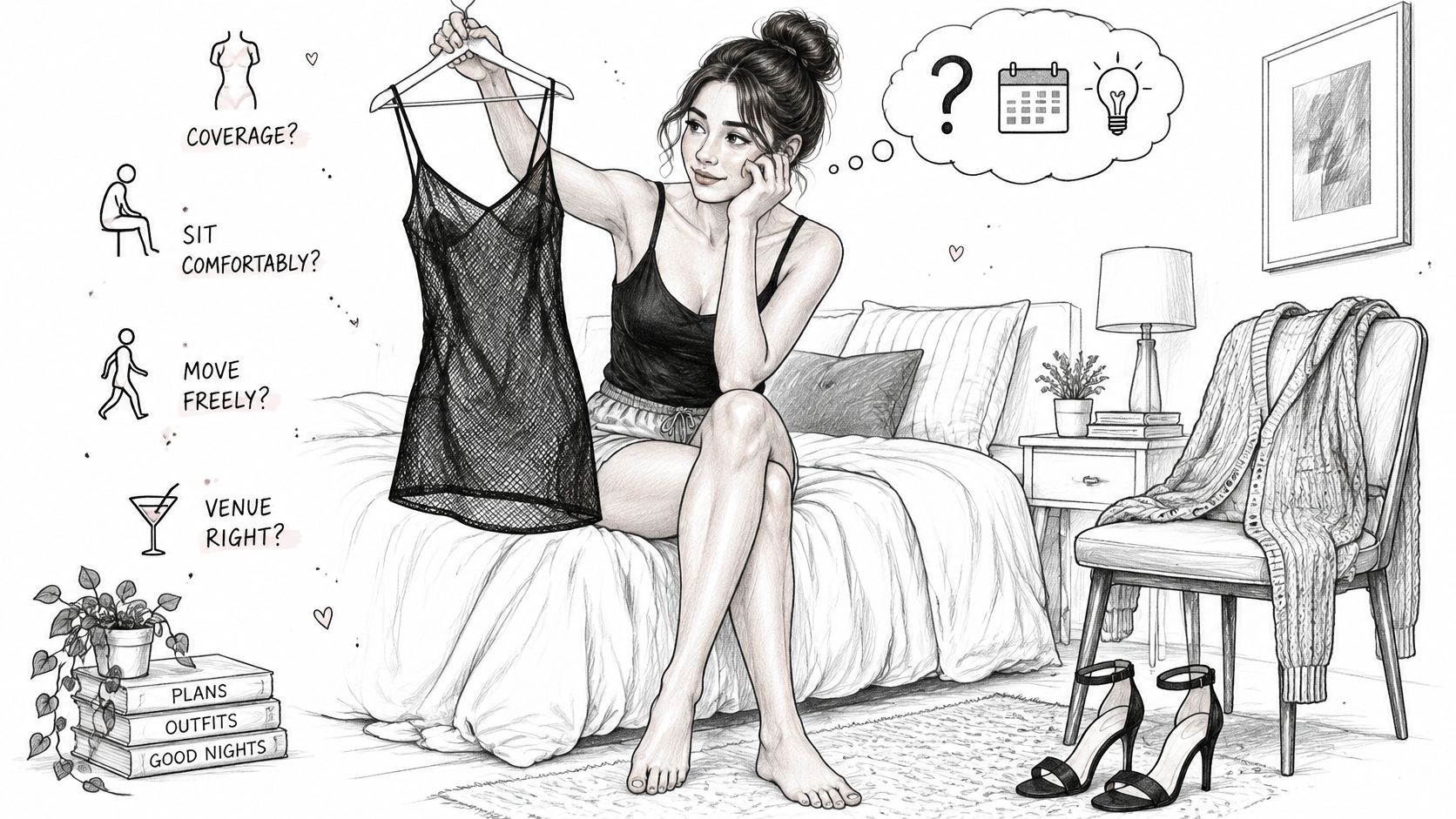
A shopper deciding between dinner and dancing needs a different plan from someone attending a seated reception. Lighting, movement, and lining placement all affect perceived coverage; a fitting-room impression isn't enough to settle the question. The practical distinction between partial lining and dependable coverage is especially important with sheer clothing, as outlined in this transparency and layering guidance.
The outfit should support the most demanding part of the evening, not just the arrival photograph. A dress that requires constant adjustment isn't the right choice for an occasion involving dancing, stairs, or frequent sitting.
Practical rule: The right mesh outfit lets the wearer concentrate on the occasion instead of monitoring the dress.
Cedar & Lily's curated mini-dress selection offers starting points for this evaluation, including elegant, versatile designs discussed below. A product photograph can establish interest, but the purchase decision should depend on how the complete outfit will work.
That approach leaves room for personal style. A tonal foundation can make the dress look restrained; deliberate contrast can make it more expressive. Neither choice replaces the need for suitable coverage.
Choose the Right Mesh Mini Dress for the Plan
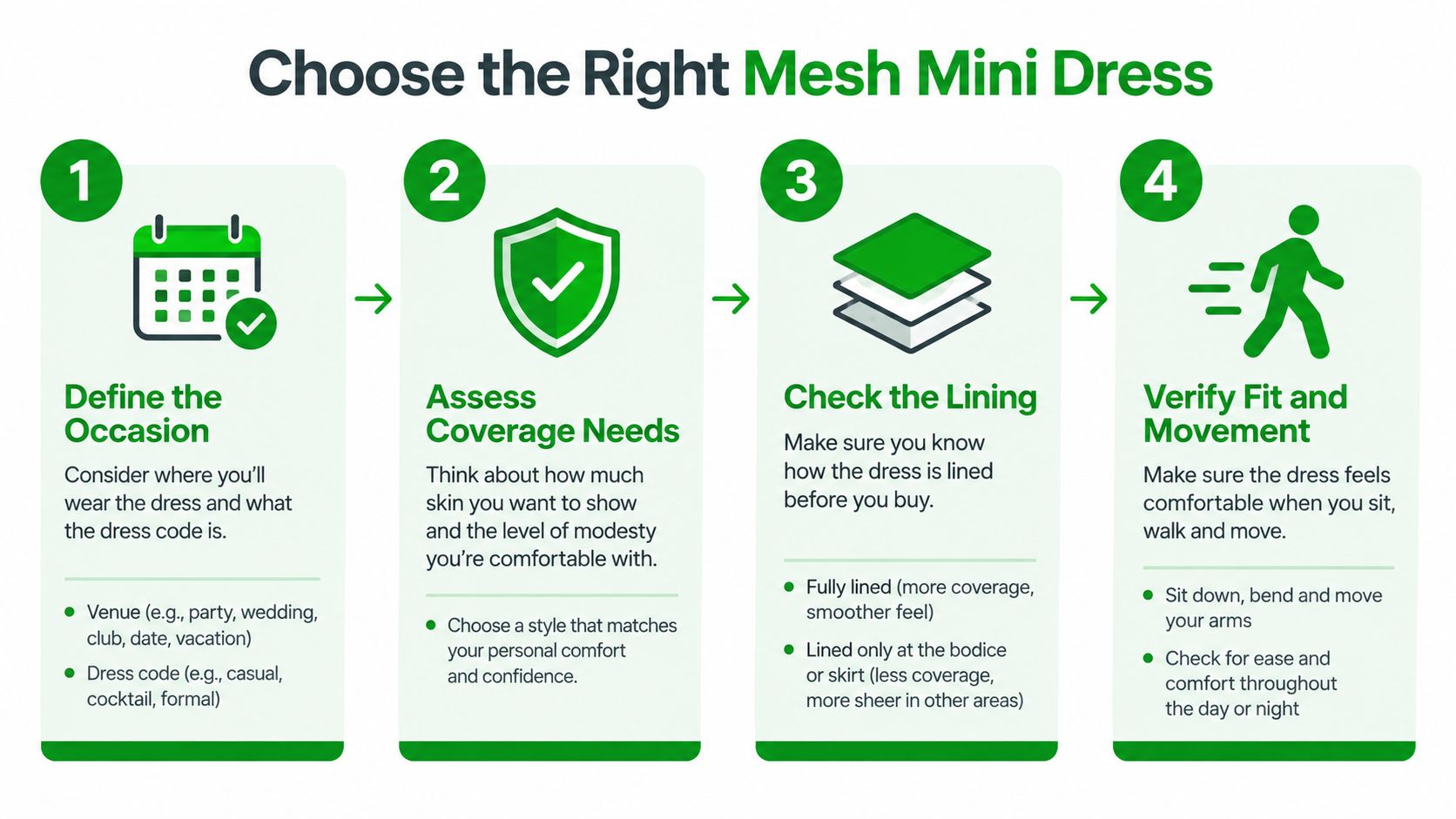
Occasion comes before silhouette. A cocktail gathering, an outdoor lunch, and a professional reception don't call for interchangeable levels of exposure. Before purchasing, the shopper should establish the venue, expected dress, and whether the outfit must work without a jacket.
Read the Construction Before Choosing a Size
A fully lined dress and a dress lined only through the skirt solve different wardrobe needs. Product descriptions should identify where the lining begins and ends; photographs should be checked for sheer side panels, open backs, and exposed areas above or below the lining.
Fabric construction matters just as much. Woven mesh is generally more stable, while knitted mesh is typically stretchier; stretching open mesh can enlarge its openings and affect both coverage and hem position, according to this explanation of mesh constructions. Stretch isn't permission to choose a smaller size.
A useful purchase sequence is:
- Establish required coverage. The wearer should know which areas must remain covered without relying on outerwear.
- Confirm the shell and lining separately. A generous outer layer doesn't guarantee a comfortable lining.
- Compare actual measurements. Bust, natural waist, full hip, torso length, and desired hem position provide more useful information than a size label alone.
- Consider the intended shoes. The finished proportion should suit the footwear planned for the occasion, rather than whichever pair happens to be nearby.
Shop the Silhouette Without Assuming the Fabric
The Majorelle Mini Dress by Especia is an elegant, versatile mini-dress option with a flattering silhouette. The Kennedi Mini Dress by Amur offers another refined choice described for its versatility and comfortable fit.
Neither description establishes mesh construction, opacity, lining placement, or stretch. These pieces belong on a mini-dress shortlist, not on an assumed list of sheer garments. Shoppers interested specifically in mesh should ask the team to confirm fabric details before purchasing.
That distinction prevents an attractive photograph from becoming an inaccurate expectation. It also leaves room for a non-sheer mini to be the better purchase when the event requires simpler coverage.
At Utica Square in Tulsa or downtown Jenks, shoppers can inspect the fabric and fit in person. Bringing the planned underlayer makes that visit more useful than evaluating the dress in isolation.
Build the Right Undergarment Layer
“Lined” doesn't necessarily mean fully opaque. The lining's placement, color, neckline, and hem all need separate attention. A short lining beneath a longer mesh skirt creates a different effect from continuous coverage, even when both garments carry the same description.
Color should be chosen deliberately. A close skin-tone match can reduce visual interruption, while black beneath lighter or more open mesh may become more noticeable through contrast. A dress-tone layer creates a coordinated effect without necessarily disappearing.
Coverage Options Serve Different Purposes
A full slip is the clearest starting point when continuous torso and skirt coverage is the priority. Its neckline should stay behind the intended dress neckline, and its hem should look intentional rather than accidentally exposed. A slip that's too narrow or poorly positioned can undermine an otherwise polished outfit.
A bodysuit suits a look with a deliberately defined torso layer. It doesn't automatically solve skirt coverage, so the lower half still needs evaluation. For dinner or an evening event, the visible outline should feel like part of the design.
Shorts address lower-body coverage but leave the bodice unresolved. A camisole handles the opposite problem. Either can work with partial lining, provided the transition between the existing lining and added layer looks considered.
Mesh Mini Dress Underlayer Options
| Underlayer | Best For | What To Check |
|---|---|---|
| Skin-tone slip | A visually quiet foundation and continuous coverage | Skin-tone match, neckline, skirt width, and hem alignment |
| Black slip | A deliberate dark foundation | Contrast through the mesh and whether the outline is intended |
| Dress-tone bodysuit | A coordinated, visible base | Neckline, leg openings, and remaining skirt coverage |
| Smooth shorts | A dress with adequate bodice coverage | Waistband, leg opening, and visibility below the lining |
| Camisole | A lined skirt with a sheer upper section | Bra coverage, straps, and the junction at the waist |
| Bra-and-short combination | An intentionally exposed evening look | Venue suitability, secure fit, and comfort with visible separation |
Match the Foundation to the Occasion
For professional settings, an underlayer should establish substantial coverage rather than suggest it. If the resulting outfit still depends on a jacket remaining closed, an opaque dress is the stronger recommendation.
For a formal event, a continuous foundation generally looks more deliberate than unrelated pieces showing through the bodice and skirt. The venue's expectations still decide whether a mini is appropriate at all.
Warm-weather dressing calls for a comfortable foundation, not automatically the smallest one. Movement-heavy plans require layers that remain positioned without repeated adjustment. Adhesive products aren't a substitute for full coverage, and their edges shouldn't be assumed invisible.
Cedar & Lily's guide to sheer fabric dresses offers further context for building a considered foundation. The final decision should happen with the complete outfit on, while seated and under ordinary lighting, not with the underlayer assessed separately.
Style the Dress for Dates Nights and Work
A mesh mini dress can support several moods, but it doesn't belong at every event. The setting determines the outfit, especially when short length and visible sheerness appear together. Accessories should finish an appropriate choice, not try to rescue an unsuitable one.
Date Night and the Dance Floor
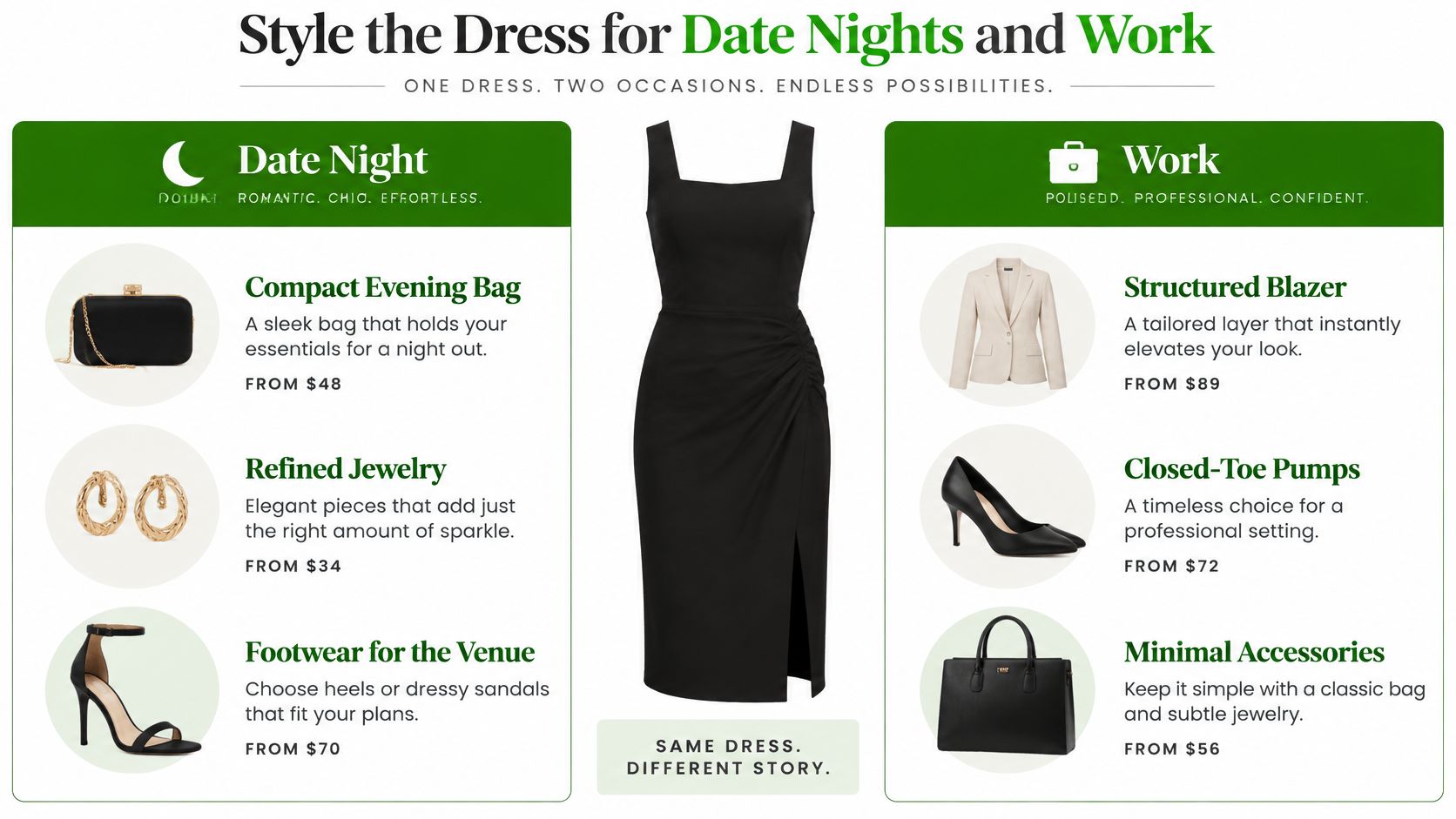
For dinner, a strong formula is a considered base layer, a compact evening bag, refined earrings, and footwear chosen for the route. A seated restaurant reservation may suit a different shoe from an evening involving several blocks of walking. Hair tucked behind the ears or worn up can keep the neckline and jewelry visually clear.
The boutique's handbags and jewelry provide useful finishing categories to explore alongside a dress. A compact bag should hold the evening's necessities without forcing the wearer to carry additional loose items. Jewelry should support the neckline rather than compete with the mesh pattern.
For a club setting, security matters more than delicacy of styling:
- The foundation stays positioned. The wearer shouldn't need to rearrange layers after every movement.
- The bag closes securely. A manageable shape is preferable to an oversized style on a crowded dance floor.
- The shoes suit the night. Comfortable walking and dancing take priority over a purely photographic choice.
- The transit layer is planned. A jacket or coat belongs in the outfit from the beginning.
Cedar & Lily's date-night dressing guide can help narrow the mood before accessories are selected.
Daytime and Work-Adjacent Plans
For a gallery visit or lunch, a blazer, polished flats, structured handbag, and restrained jewelry can give the mini a more composed daytime treatment. The foundation should remain intentional when the blazer comes off. Sleek hair and a simple bag keep the combination focused.
Work requires a firmer boundary. Company expectations and personal professional obligations come first; a blazer doesn't make an exposed mesh bodice or unsuitable hem workplace-appropriate. Where sheer details are permitted, a substantial opaque layer and suitable length are essential.
A jacket can change the styling. It can't change the dress code.
A work-adjacent dinner may allow more flexibility than the office itself. Even then, the shopper should consider colleagues, clients, and the venue rather than treating “after hours” as unrestricted.
For venue-based celebrations, Texas Old Town's event attire guide for venues is a useful planning resource alongside the actual invitation. The host's stated requirements should govern the final choice.
The boutique's elegant mini-dress options can serve as starting points when their actual appearance suits the occasion. If the necessary coverage would conceal nearly the entire design, a different dress is the more coherent purchase.
Carry the Look Across Seasonal Changes
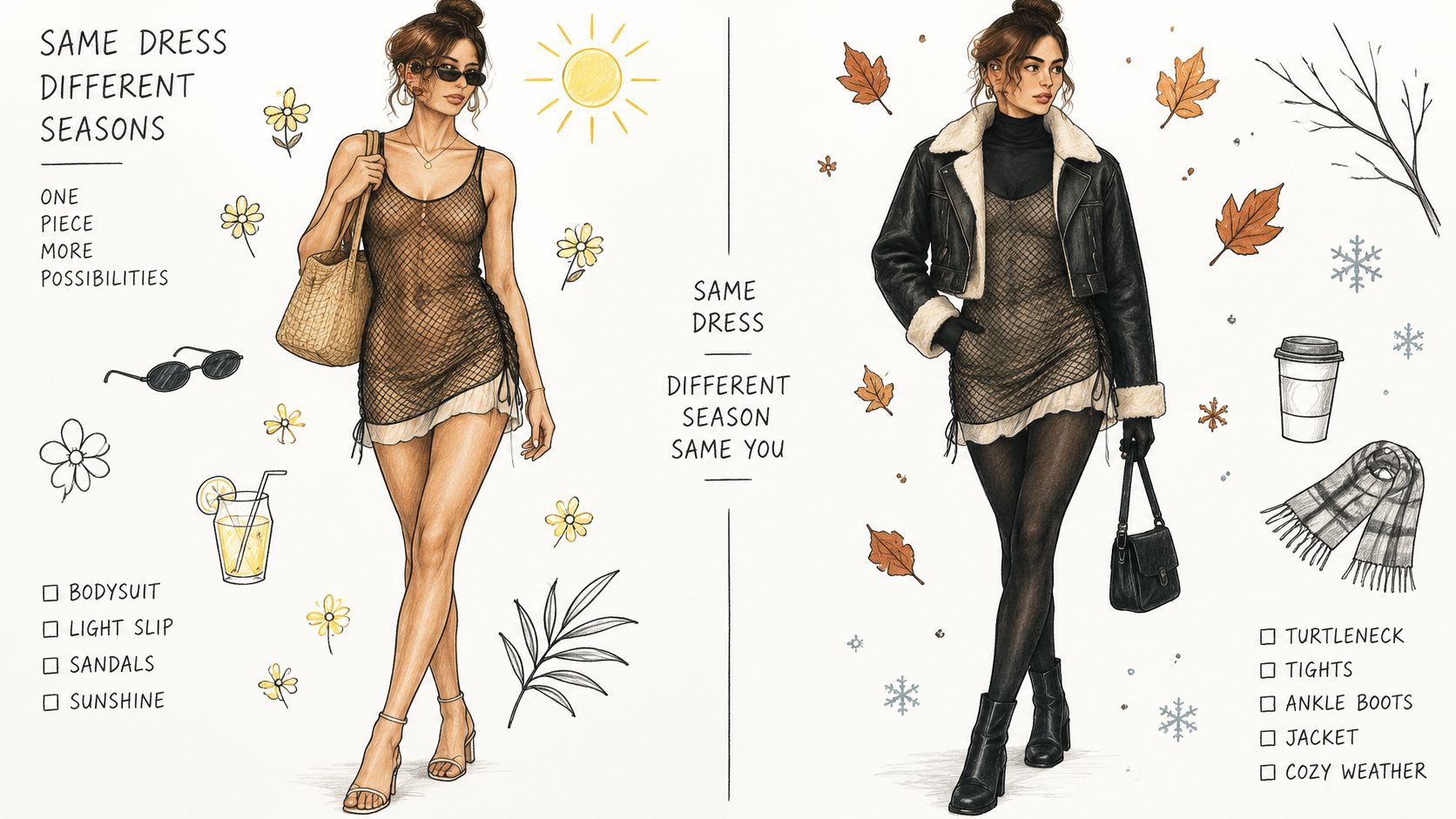
Seasonal styling should change the visible layers, not rely on mesh to provide warmth it hasn't been shown to offer. A summer outfit can emphasize a light foundation and open footwear; a cooler-weather version needs substantial pieces that work independently of the dress.
Warm Weather Versus Cool Weather
For warm weather, a tonal bodysuit or coordinated shorts can create a visibly layered outfit, while a light slip offers a more continuous foundation. Open-toe shoes and a compact handbag keep the styling uncluttered. Outdoor plans should pass the daylight check established earlier.
Cool-weather dressing benefits from a different proportion. A compatible long-sleeve base, opaque hosiery where desired, boots, and a fitted coat can turn the short silhouette into part of a layered outfit. Dark or tonal foundations can keep the result cohesive without pretending the mesh has become an insulating fabric.
| Seasonal Direction | Outfit Formula | Styling Priority |
|---|---|---|
| Warm-weather evening | Suitable foundation, open-toe shoes, compact bag | A clean outline without unnecessary layers |
| Cool-weather outing | Compatible long-sleeve base, boots, coat | Coverage supplied by substantial garments |
| Transitional daytime | Crisp blazer, ankle boots, structured handbag | Clear proportions and a polished finish |
| Transitional evening | Jacket, compact bag, streamlined jewelry | An outer layer that belongs with the outfit |
Make the Outer Layer Part of the Purchase
A blazer ending near the dress hem creates a different proportion from a long coat. The shopper should view both from the side as well as the front, particularly when the jacket conceals most of the dress. The outfit needs to make sense on arrival and after outerwear is removed.
Cedar & Lily carries blazers and outerwear that can be considered alongside its dresses. Its winter layering guide offers another reference for coordinating substantial layers.
Care should follow the garment label and fiber content. Where machine washing is permitted, a cold, gentle cycle and reduced abrasion are sensible handling choices; delicate mesh shouldn't automatically receive the same treatment as a denser everyday garment. An outfit that suits the calendar should also suit the owner's realistic care routine.
Refine the Fit and Finish
The most useful final fitting is a rehearsal, not a static mirror check. The shopper should wear the planned foundation and shoes, then assess the dress as an outfit. That makes it easier to distinguish a styling adjustment from a genuine fit problem.
Test Proportion and Movement
The listed shoulder-to-hem measurement deserves attention before an online purchase. A mini generally ends above the knee, but its position depends on the wearer's height and the garment's cut, as explained in this mini-dress length guide. Comparing the listed measurement with a familiar dress is more useful than trusting the category name.
During a try-on, the wearer should walk, sit, raise the arms, and take stairs if practical. The outer mesh and lining should be observed separately: one may move while the other stays in place. Changing into the intended footwear also reveals whether the finished proportion feels right.
Finished garment measurements matter more than nominal size, and ease must allow for movement and the fabric's recovery, according to garment assembly and fitting guidance. Visible pattern distortion, persistent pulling, or an independently riding lining deserves a size or style reassessment.
The boutique's body-proportion dressing guide can support silhouette choices without treating any body shape as the only suitable one.
Check Contact Points Before Leaving
Jewelry settings, watch clasps, bag hardware, and textured jackets deserve a snag check. Smooth finishing is preferable wherever an accessory repeatedly touches open mesh.
Appearance alone can't establish durability. ASTM D3939 addresses Mace snagging testing, while ASTM D4966 covers Martindale abrasion testing; these standardized methods are useful verification points, not a universal guarantee for every dress, as outlined in ASTM textile testing resources.
The final checklist should cover:
- Lining and coverage: The intended areas remain covered.
- Fit and movement: Sitting and walking don't require repeated adjustment.
- Undergarments: Edges and transitions look deliberate.
- Footwear and outerwear: Both work with the finished proportion.
- Accessories: Contact surfaces are checked for catches.
- Event requirements: The hem and exposed areas suit the invitation.
- Care: The owner understands the label before the first wear.
Shop Your Mesh Mini Dress Locally or Online
A useful shopping appointment begins with the occasion, not a demand for a particular trend. A shopper who brings the invitation, planned foundation, and preferred shoes gives an associate a clear starting point. The result may be a mesh mini dress or an opaque alternative that needs less adjustment.
Choose the Shopping Route That Answers the Questions
Cedar & Lily Clothier is a women's clothing boutique carrying curated designer and contemporary brands, including Vanessa Mooney and Lace the Label. It's a retailer, not a manufacturer of its own clothing line. Its online store and Oklahoma storefronts offer different ways to explore the assortment.
Online shoppers can start with product descriptions and request clarification about fabric, lining, and measurements before ordering. The boutique's perspective on shopping online boutiques for dresses offers a complementary reference for that process.
For local shoppers, Utica Square in Tulsa and downtown Jenks offer the opportunity to examine fit and fabric directly. Personal styling help is particularly useful when the question isn't whether a dress fits, but whether the complete outfit suits a specific event.
Arrive With Clear Priorities
- The occasion: Venue, dress expectations, and planned activities.
- The foundation: Any slip, bodysuit, or other layer already selected.
- The fit priorities: Preferred hem position, coverage, and areas needing room.
- The finishing pieces: Shoes, bag, or jacket the outfit needs to accommodate.
A focused conversation makes the next purchase more purposeful. The right dress should work with the wearer's plans and existing wardrobe, rather than require an entirely different evening.
Cedar & Lily Clothier offers curated mini dresses, blazers, handbags, and jewelry with personal styling help for occasion dressing. Shoppers can visit Cedar & Lily Clothier online or stop into Utica Square in Tulsa or downtown Jenks to explore dresses and build a considered outfit around the right fit, coverage, and finishing layers.