


A slip dress can look perfect on the hanger and unexpectedly difficult five minutes before leaving the house. The satin catches at the hips, the neckline feels too exposed for daytime, and a pair of delicate shoes can make the whole outfit look more like lingerie than clothing. The solution isn't to abandon the dress. It's to treat it as a base layer and anchor its fluid shape with one deliberate, structured contrast piece.
That approach makes the same dress useful for errands, the office, dinner, and changing weather. A fitted tee, blazer, denim jacket, leather jacket, substantial boot, or structured bag gives the soft silhouette enough authority to feel finished. At Cedar & Lily Clothier, the curated assortment includes dresses, blazers, outerwear, accessories, and contemporary designer pieces for women building polished work-to-weekend wardrobes, with shopping available online and at two Oklahoma storefronts.
Table of Contents
- Why the Slip Dress Works So Well Right Now
- Choosing Fabric Fit and Length You Will Actually Wear
- Layering Formulas for Day Office and Evening
- Undergarments Tailoring and Fit Fixes That Keep It Polished
- Shoes Bags and Jewelry That Anchor the Drape
- Care Seasonal Wear and Your Next Step at Cedar and Lily
Why the Slip Dress Works So Well Right Now
The slip dress feels modern because it sits between two visual languages. Its smooth fabric and bias-cut drape suggest lingerie, while the right jacket, shoe, or bag makes it read as polished outerwear. That tension is the reason the dress can move from a relaxed daytime look to an evening outfit without losing its identity.
Its history supports that flexibility. Vogue used the term for a sheer dress worn over a slip in 1934, and Madeleine Vionnet's bias-cut work in 1927 established the draped construction that still shapes the garment today. The slip dress moved from lingerie to outerwear in the 1990s, with Calvin Klein's spring-summer 1994 show helping define the decade's minimalist look. Kate Moss brought attention to a sheer version in 1993, and the style returned with the broader 1990s revival in the late 2010s and 2020s. Vogue's history of slip dressing shows why the piece still works as a bridge between softness and polish.
The anchoring formula
A slip dress worn completely alone can be beautiful for evening, but it asks for precise fit, confident styling, and the right setting. For everyday wear, the more dependable formula is simple:
- Start with the slip dress: Keep the base sleek and let its drape remain visible.
- Add one structured contrast: Choose a blazer, cropped jacket, sturdy knit, or shirt.
- Ground the hem: Use sneakers, boots, block heels, or another shoe with enough visual weight.
- Finish with restraint: A structured bag and focused jewelry prevent the outfit from becoming overly delicate.
The mistake is adding layers without deciding what they're doing. A soft dress, soft cardigan, delicate shoe, and unstructured bag can make the outfit look unfinished. One stronger piece gives the rest of the look a clear direction.
Stylist's rule: The dress supplies movement. The outer layer supplies authority.
This is why the slip dress deserves a place in a considered wardrobe rather than being saved for one type of event. It can work with a white tee and denim for daytime, a fitted knit and blazer for work, or refined outerwear and heels for evening. Readers can also explore timeless fashion for women for the wider wardrobe philosophy behind choosing pieces that keep earning their place.
By the end of the styling process, the goal is clear: choose a slip dress with the right drape, correct the fit before leaving the fitting room, then use one structured anchor to take it through the day, night, and changing seasons.
Choosing Fabric Fit and Length You Will Actually Wear
The best styling advice can't rescue a slip dress with poor fabric, weak support, or the wrong length. The purchase decision comes first. A well-chosen dress should skim the body, move smoothly, and give the wearer enough coverage to style it beyond one occasion.
Start with the cut
Bias cut is the most reliable construction for a slip dress because the fabric runs diagonally across the body. That direction allows the material to drape over the hip instead of hanging stiffly or clinging in a straight line. Non-bias satin can look rigid in one area and overly clingy in another, while bias construction creates the fluid movement associated with the silhouette.
Fabric weight matters too. Silk around 16 to 19 momme, or a heavier viscose satin, gives the dress more body and can reduce transparency compared with a very lightweight fabric. Chiffon, polyester satin, and charmeuse are also associated with the slip dress, but their smooth, lightweight surfaces need balancing through fit and layering. Slip dress history and fabric guidance offers useful context on how these materials became part of the modern outerwear version.
For readers interested in the mechanics behind clothing shape, this guide to how to drape a bodice and skirt provides helpful visual context. Understanding drape makes it easier to see why two dresses in similar colors can behave very differently on the body.
Use the fitting-room test
A dress should graze the body without looking baggy. Too much volume erases the elegant line, while an overly tight fit creates drag lines and makes the garment feel trapped at the waist or hips.
Use this quick sequence:
- Check the straps. Adjustable shoulder straps should let the neckline sit securely without gaping.
- Raise and lower both arms. The bodice and hem should slide smoothly rather than catch.
- Walk and sit. Watch whether the fabric pulls across the hips or twists around the body.
- Inspect the side view. The dress should skim rather than press tightly against every curve.
- Check transparency in natural movement. If the fabric becomes noticeably sheer when it stretches, the dress may need a lining or a more considered base layer.
A rough underlayer can grab the satin and produce visible drag lines. An overly tight dress creates the same issue from the outside, so sizing up isn't always the answer. The cut and fabric density need to work together.
Choose length by lifestyle
A midi slip dress is the more adaptable choice for daytime, work-adjacent dressing, and seasonal layering. It gives sneakers, ankle boots, and block heels enough room to change the mood without making the dress feel too formal. A mini can look sharp for evening, especially with boots or a cropped jacket, but it usually demands more attention from the rest of the outfit.
Readers comparing silhouettes can use this guide to what a midi dress is before shopping. In person, the Cerise Dress and Striped Wyatt Dress collections at Cedar & Lily can also help shoppers compare fabric behavior, neckline placement, and hem movement. The team can assess how a dress sits while standing, walking, and layering, which is far more useful than judging a satin garment only on a hanger.
Layering Formulas for Day Office and Evening
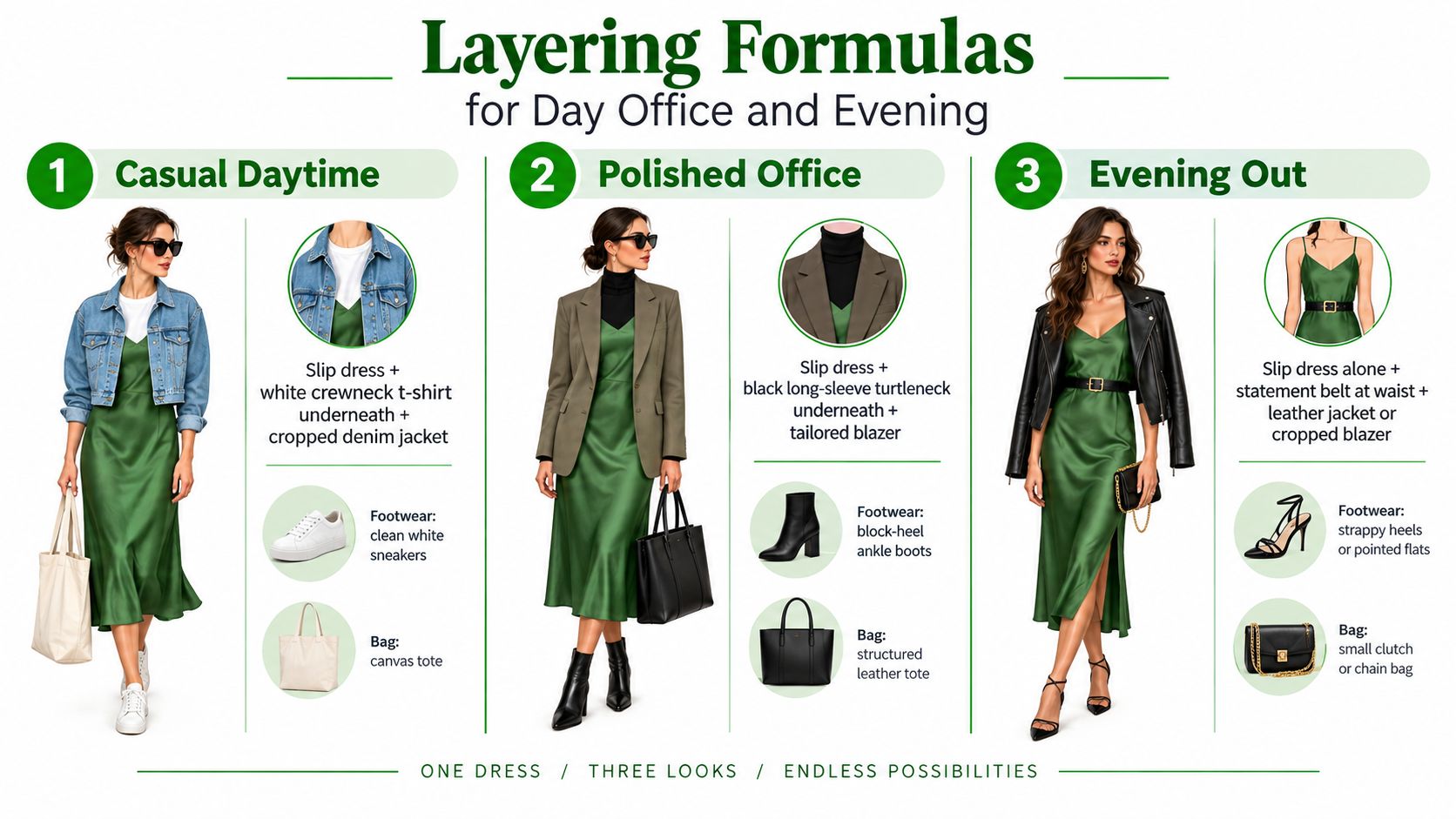
The fastest way to learn how to wear a slip dress is to stop treating it as one fixed outfit. Keep the dress as the base, then change the clothing layer and shoe according to the setting. Each formula below uses one clear contrast so the outfit feels intentional rather than improvised.
Casual daytime with a tee and denim
For lunch, errands, travel, or a relaxed weekend, place a fitted T-shirt underneath the dress. White gives the cleanest contrast, but a dark tee can make a printed or jewel-toned slip feel more graphic. The shirt should fit close to the body so it doesn't bunch beneath the bias fabric.
Add an oversized denim jacket or a cropped denim layer on top. The denim gives the satin a matte, sturdy counterpoint, while the cropped proportion keeps the waist and length visible. Finish with clean sneakers and a practical tote. This formula works particularly well with a midi because the casual shoe and jacket can soften the dress without making it look juvenile.
The daytime sequence is simple:
- Underlayer: Fitted crewneck tee.
- Outer layer: Cropped or oversized denim jacket.
- Footwear: Clean white sneakers or another trainer.
- Bag: Canvas or softly structured tote.
- Jewelry: Small hoops or one uncomplicated pendant.
A knotted hem can make the dress feel more casual, but it should only be used when the fabric and construction can handle the manipulation without pulling. A safer everyday adjustment is changing the jacket and shoe while leaving the dress's original line intact.
Polished office with a blazer
For a professional setting, the slip needs a layer that covers the lingerie reference and sharpens the shoulder line. A fitted tee or fine knit underneath, followed by a blazer, creates enough coverage without hiding the dress completely.
The tee should sit smoothly at the neckline. A fitted long-sleeve knit can work when the office is cooler, while a simple crewneck keeps the look crisp during warmer months. Choose a blazer with enough structure at the shoulder and lapel to counter the dress's fluidity. An oversized blazer can work too, but the hem should fall in a deliberate relationship to the dress rather than stopping at an awkward point across the hip.
Block-heel ankle boots are a strong office choice because they give the fluid skirt a grounded base. A structured leather tote reinforces the professional message. Keep the jewelry refined, especially if the blazer has a strong lapel or the dress has lace trim.
For colder months, the principles in how to layer clothes for winter apply here as well. The key isn't piling on garments. It's choosing layers that preserve the line of the dress and add warmth without trapping the satin.
Evening with a clean silhouette
Evening is the setting where the slip dress can stand on its own, provided the fit is secure and the styling remains edited. Keep the silhouette clean, then add heels, refined outerwear, and one focused jewelry statement. Strappy heels or pointed flats can lengthen the line, while a cropped leather jacket or structured jacket adds enough edge to keep the outfit from feeling too delicate.
A statement belt can define the waist if the dress has enough ease to accommodate it. It shouldn't pinch the fabric or create horizontal drag lines. For a more formal result, skip the belt and let the bias drape remain uninterrupted.
The strongest evening looks usually have fewer competing ideas. A sleek dress, structured jacket, pointed shoe, and small bag feel more expensive than a dress combined with several unrelated textures. Readers exploring broader beauty and styling routines may encounter anti-aging layering tips, but clothing layers follow a different rule: every added piece should clarify the silhouette.
Office-to-evening move: Remove the tee, switch the blazer for a cropped jacket, trade boots for heels, and keep the same dress visible.
Undergarments Tailoring and Fit Fixes That Keep It Polished
A slip dress often fails in the hidden details. The neckline gaps, the base layer catches, or the satin shows every seam. Those problems don't mean the garment is wrong. They usually mean the foundation needs to be changed or the fit needs a small correction.
Compare the foundation choices
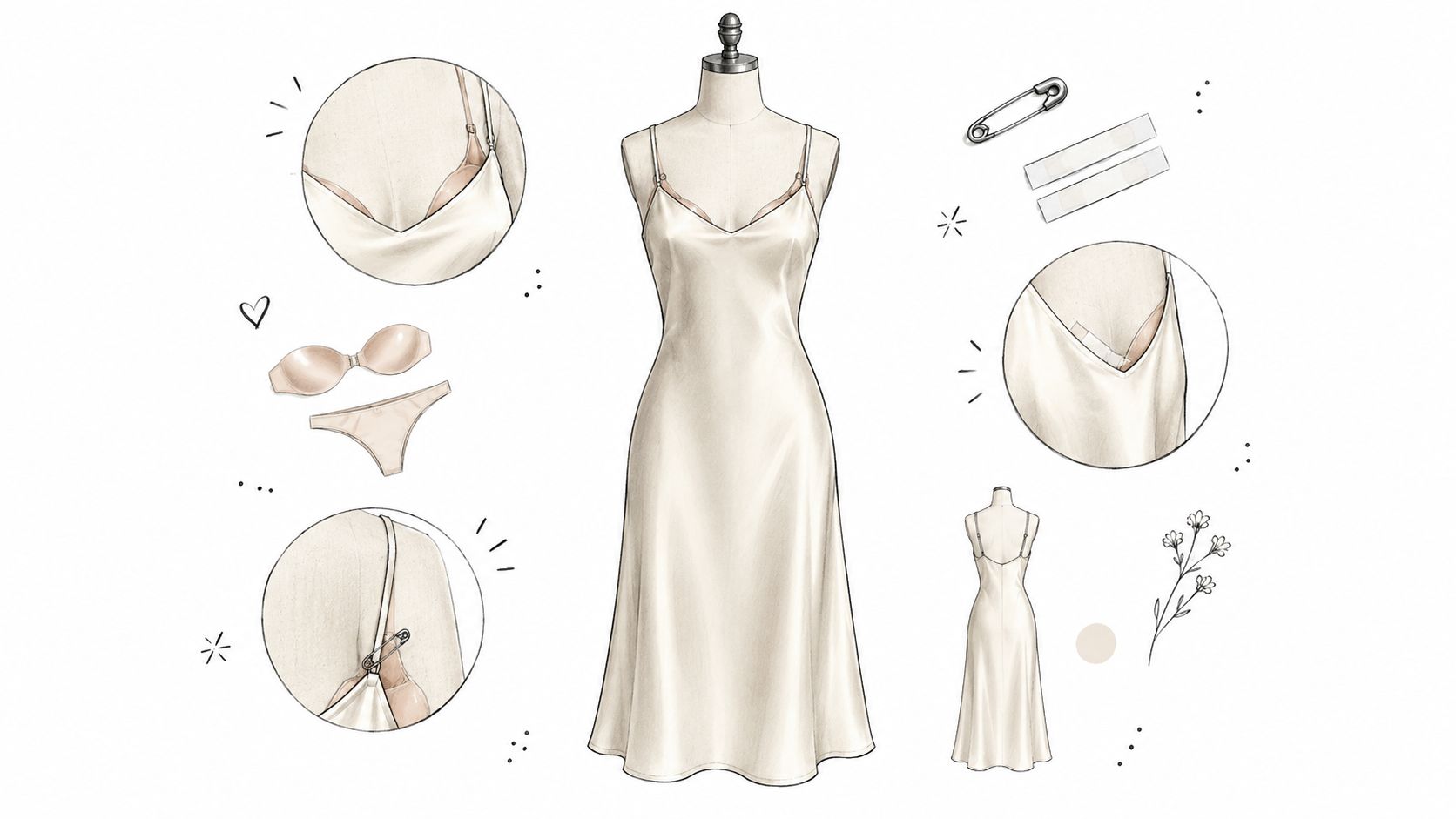
Smooth undergarments are the safest starting point under satin. They reduce visible edges and give the dress a cleaner surface. Textured lace, thick elastic, and bulky seams can interrupt the fabric's movement, especially when the dress is cut on the bias.
A fitted tee can solve coverage for daytime, but it isn't the right solution for every dress. If the neckline is narrow or the shoulder straps are delicate, a smooth camisole or carefully chosen underlayer may preserve the line better. The base layer should slide under the dress, not grip it.
The fabric test: If the satin catches when the wearer turns, the base layer is probably too rough, the dress is too tight, or both.
Adjustable straps deserve attention before any tailoring. A well-designed slip dress often includes them so the neckline can sit securely without gaping when the wearer leans forward. Straps that are too loose can make the bodice fall away, while straps that are too tight pull the front upward and distort the drape.
Know when a small alteration helps
A hem adjustment can make a dress look custom rather than merely close. A side seam alteration can help when the bust or hip fit is right in one area but too loose in another. The objective is not to make the dress tight. It should still move smoothly and graze the body.
The most useful fitting-room checks are practical:
- Lean forward: The neckline should remain controlled.
- Reach overhead: The straps and waist should stay comfortable.
- Turn sideways: The fabric shouldn't form sharp drag lines.
- Sit down: The hem and hip should remain wearable.
- Walk naturally: The skirt should move without twisting around the legs.
A slip dress purchased in person gives the wearer a better chance to catch these issues before committing. At Cedar & Lily's Tulsa and Jenks locations, shoppers can compare fabric, movement, and layering in real time, then ask the team whether a small fit adjustment would improve the result. More guidance on tailoring for women can help frame those decisions before a dress enters the closet.
Shoes Bags and Jewelry That Anchor the Drape
The last layer isn't clothing. It's the accessories that tell the eye where the outfit begins and ends. A slip dress has a floating quality, so the shoe and bag should provide enough weight to make the silhouette feel intentional.
Let the shoe set the mood
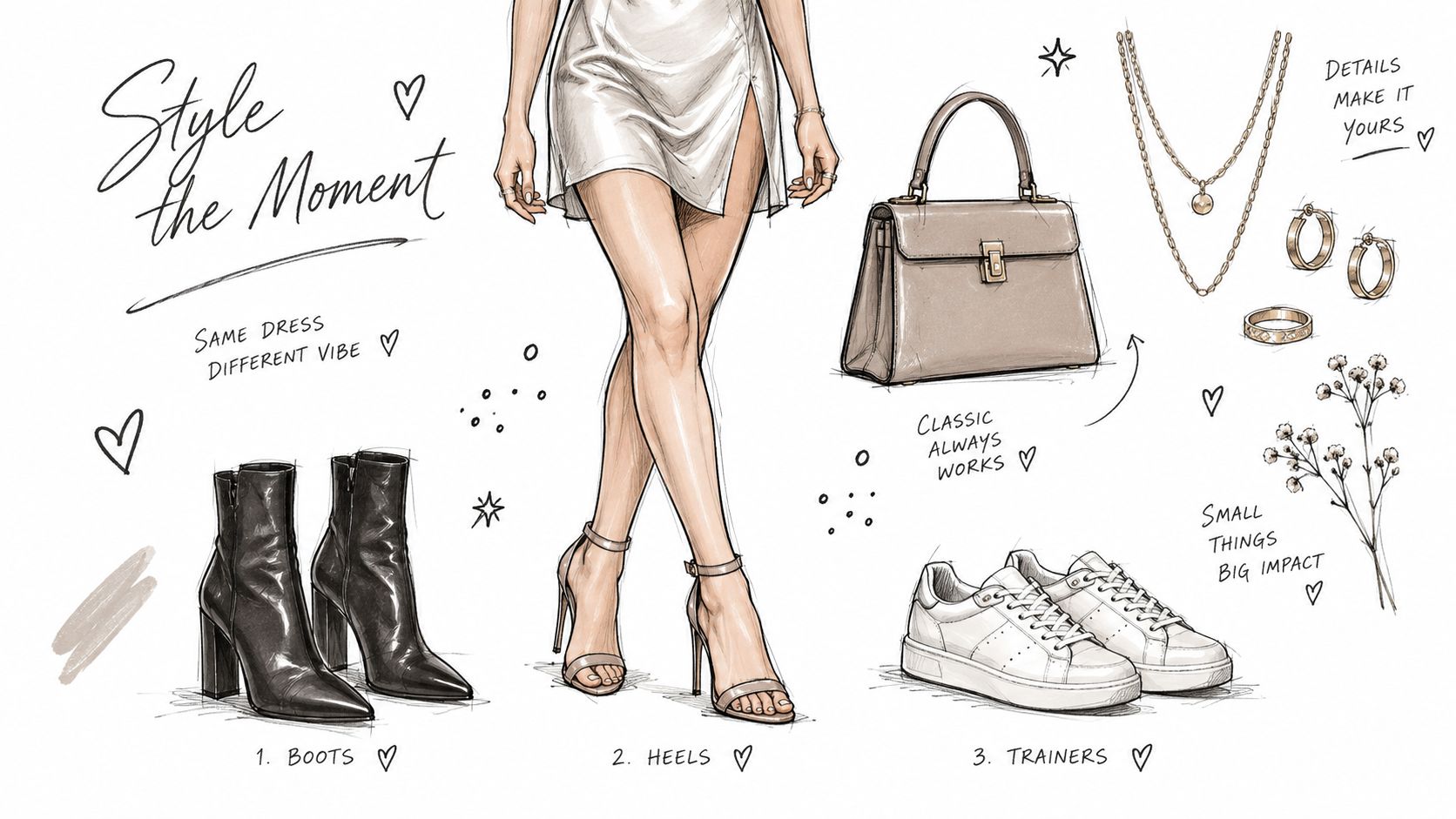
For daytime, clean sneakers make the dress approachable. They work best when the rest of the look has a clear casual anchor, such as a denim jacket or fitted tee. A delicate ballet flat can also work, but the bag or outer layer should then provide structure.
Ankle boots are the most useful bridge between casual and polished. A block heel adds stability and visual weight for the office, while a pointed or heeled boot moves the same midi toward evening. Chunkier boots can create a strong contrast with a delicate dress, but the rest of the outfit should remain quiet so the contrast feels deliberate rather than costume-like.
Strappy heels are the cleanest evening option when the dress already has enough structure through fit. Pointed flats give a similar refined effect without making the outfit feel overly formal.
Use the bag to build the frame
A structured tote makes a slip dress office-ready because it echoes the blazer's firmness. A smaller shoulder bag or chain bag works for dinner, especially when the dress and outer layer already have a clean line. A soft, oversized bag can make the outfit feel relaxed, but it shouldn't be paired with several other loose elements.
Jewelry should follow the neckline. A thin chain suits a simple scoop or cowl shape, while a stronger earring can replace a necklace when the dress has lace or a detailed neckline. Statement jewelry works best as one decision, not a collection of competing pieces.
The same principle applies to visual planning. Anyone creating outfit references through AI fashion photography should keep the dress, structural layer, shoe, and bag visible as separate choices. That makes it easier to identify which element is anchoring the drape instead of treating the full outfit as one indistinct image.
Make seasonal swaps with intention
Spring can bring a linen shirt worn open or tied carefully over the dress, with sneakers or flat sandals. Fall benefits from a leather jacket, ankle boots, and a more substantial bag. Winter calls for a fitted knit beneath the dress, opaque tights where appropriate, and a coat over everything.
Avoid adding every possible contrast at once. A leather jacket, heavy boot, oversized bag, stacked jewelry, and bold belt can overwhelm the slip's clean line. A more compelling look usually has one main contrast and one supporting anchor.
For additional finishing guidance, use how to accessorize an outfit as a reference point, then edit the result in a mirror. If the accessories are the first thing noticed, the outfit needs less. If the dress looks unfinished, add structure rather than more decoration.
Care Seasonal Wear and Your Next Step at Cedar and Lily
A slip dress earns its place when it remains easy to wear and easy to maintain. Satin and silk need gentler handling than sturdy everyday fabrics. Follow the garment's care label, wash gently when the label permits, and avoid treating delicate fabric like ordinary cotton.
Steaming is generally preferable to pressing directly with a hot iron because it relaxes wrinkles without flattening the surface. Hang the dress with support that won't stretch the straps, and avoid crowding it against rough or embellished garments. Before storing it for a season, make sure the fabric is clean and dry, then use a breathable garment bag rather than compressing it in a crowded drawer.
Build the dress across seasons
The most useful slip dress isn't limited to warm weather. In spring, an open linen shirt or light jacket adds coverage while keeping the bias line visible. In fall, a cropped leather jacket and ankle boots give the soft fabric a stronger frame. During colder weather, a fitted knit underneath, tights, and a coat can preserve the dress's shape while making it practical.
The fabric and fit decisions made at purchase will determine how well these changes work. A midi length gives more flexibility across footwear and outerwear, while adjustable straps and smooth construction make layering less frustrating. The right dress should support several outfits without needing to be reinvented each time.
Cedar & Lily Clothier carries curated designer and contemporary clothing, including dresses, blazers, outerwear, handbags, jewelry, belts, and other finishing pieces. The online store at cedarandlilyclothier.com offers access beyond Oklahoma, while local shoppers can visit Utica Square in Tulsa or downtown Jenks to feel the fabric, check the fit, and get personal styling help. The boutique also offers fast shipping, free shipping on orders $250+, and complimentary gift packaging on orders over $100, along with handwritten notes and easy size exchanges.
Cedar & Lily Clothier can help shoppers find a slip dress and the structured layers, shoes, bags, and jewelry that make it work from desk to dinner. Visit Cedar & Lily Clothier online, stop by Utica Square in Tulsa or downtown Jenks, and reach out to the styling team for fit advice.