


Heading off for a wedding, a much-needed vacation, or a big work trip should be exciting. But that excitement can fizzle out the second you open your suitcase to find your favorite dress looking like a crumpled mess. It's a frustrating moment we've all had, but thankfully, it's completely avoidable.
The secret isn't some expensive gadget; it's just about understanding why fabrics wrinkle in the first place and making a few simple tweaks to how you pack.
Think about it: wrinkles are just creases forced into a fabric by pressure and friction. When your dress is crammed into a suitcase, every fold becomes a potential battle line for a stubborn crease. The goal is to pack smarter, not harder, by eliminating those sharp folds and cutting down on the friction that happens when your bag is on the move.
The Foundation for a Wrinkle-Free Arrival
Before we jump into the nitty-gritty of folding versus rolling, let's cover a few core ideas. These are the fundamentals that make every other technique work. Once you get these down, you'll be able to pack any dress like a pro.
- Cut Down on Friction: When fabrics rub against each other, they create heat and static—a perfect recipe for wrinkles. Simple barriers, like tissue paper or even a plastic dry-cleaning bag, work wonders to keep fabrics gliding smoothly instead of grinding against each other.
- Ease Up on the Pressure: Overstuffing your suitcase is the number one enemy of a wrinkle-free wardrobe. Squeezing that one last thing in puts immense pressure on folded clothes, turning soft folds into sharp, set-in creases. A little breathing room goes a long way.
- Work With Your Fabric: You can't treat every dress the same. A stretchy jersey sundress is practically begging to be rolled up tightly, while a crisp linen sheath dress needs a more delicate touch. Knowing how your fabric behaves is half the battle won.
This guide is your new playbook for everything from packing casual maxis to protecting that irreplaceable formal gown. Master these principles, and you can officially say goodbye to frantic, last-minute ironing sessions in your hotel room.
Choosing the Right Packing Method for Your Dress
Not sure whether to roll, fold, or bag it? This quick-glance table breaks down the best packing technique for your specific dress, so you can make the right call every time.
| Packing Method | Best For Fabrics | Ideal Dress Style | Key Benefit |
|---|---|---|---|
| Rolling | Knits, jersey, synthetics, spandex blends, wool | Casual dresses, t-shirt dresses, sundresses, bodycon styles | Space-Saving: Compresses fabric without creating sharp folds, perfect for wrinkle-resistant materials. |
| Flat-Folding | Linen, cotton, rayon, silk, other delicate wovens | Sheath dresses, A-line, shirt dresses, structured styles | Minimizes Creases: Reduces stress on delicate fibers by using soft folds, often with tissue paper. |
| Garment Bag | Silk, chiffon, velvet, satin, heavily embellished fabrics | Formal gowns, cocktail dresses, business attire, bridesmaid dresses | Ultimate Protection: Keeps the dress completely flat and isolated from pressure and friction. |
Ultimately, the best method is the one that respects the fabric and structure of your dress. For a weekend trip with casual knit dresses, rolling is your best friend. For that once-in-a-lifetime event? A garment bag is non-negotiable.
Why Pre-Packing Prep Is Your Secret Weapon
The real trick to pulling a flawless dress from your suitcase starts way before you even think about how to fold it. So many of us get wrapped up in the best rolling or folding techniques, but we skip the single most important step: starting with a completely wrinkle-free dress.
Packing a dress that already has a few little creases is just giving those wrinkles a head start. The pressure and time inside your suitcase will only set them in deeper. Taking a few moments to properly steam or iron your dresses isn't just a suggestion—it's the whole game.
The Science of a Smooth Start
Every fabric is different, and knowing how to handle them is key. Using the wrong heat or technique can do more harm than good, sometimes even damaging the delicate fibers you’re trying to protect.
- For Delicate Silks: A steamer is your best friend here. If you must use an iron, keep it on the lowest heat setting and always use a pressing cloth between the iron and the fabric. Direct heat can easily scorch or leave a nasty shine on silk. For a deeper dive, learning the nuances of how to handle a silk slip dress will keep your favorite pieces looking beautiful for years.
- For Sturdy Cottons: Cotton is tough and can take higher heat and lots of steam. A great trick is to iron it while it’s still just a little damp. This helps release stubborn wrinkles much more easily, giving you that crisp, clean finish.
- For Tricky Linens: We all know linen wrinkles just by looking at it. The best way to tackle it is with high heat and tons of steam while the garment is still damp. It relaxes the fibers in a way that pressing dry linen never will.
Choosing Smarter Fabrics
Sometimes, the best offense is a good defense. The fabric your dress is made of can be your biggest ally in the fight against wrinkles. Modern textiles have come a long way, and today’s wrinkle-resistant fabrics are a traveler’s dream.
It's not just a niche market, either. The global demand for the anti-crease agents used to treat these fabrics was valued at USD 888.8 million and is on the rise. It shows just how much we all value low-maintenance, travel-ready clothing. You can read more about this trend on imarcgroup.com.
Dresses made from merino wool, Tencel, or even high-quality polyester blends are practically designed to bounce back from being crammed in a suitcase. When you start with the right materials, you’re setting yourself up for a wrinkle-free win before you even zip up your bag.
Mastering the Best Packing Techniques
Alright, now that your dresses are prepped and wrinkle-free, it's time to get them into your suitcase. This is where the real magic happens. The right packing method isn't just about cramming everything in; it’s about protecting the fabric from the pressure and friction that cause those deep, stubborn wrinkles. Picking the right technique for each dress is the secret to arriving in style.
Think of it like this: a smooth start, a smart choice of dress, and a well-prepped suitcase are the foundation for everything else.
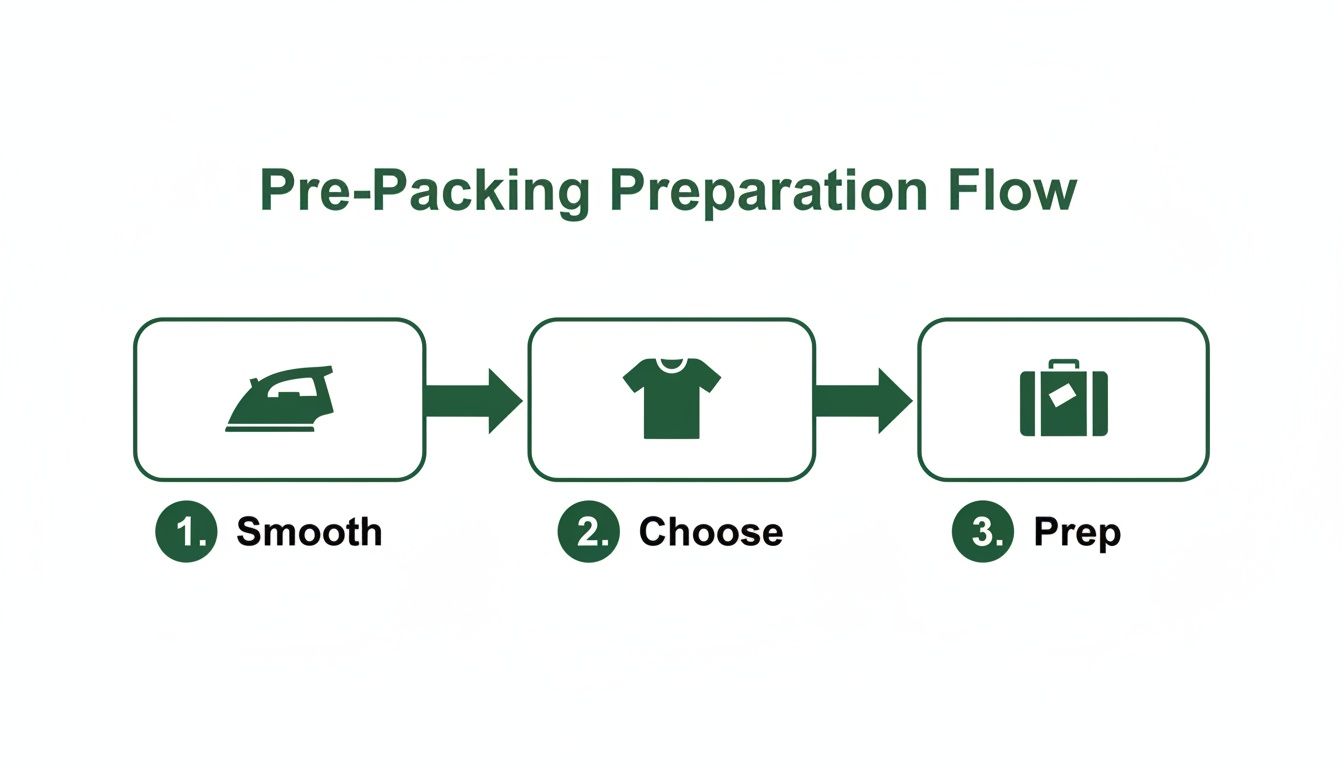
This little visual just reinforces that the work you do before you start folding or rolling makes all the difference.
The Art of the Perfect Roll
There’s a reason rolling is a traveler’s best friend—it’s quick, saves a ton of space, and works wonders for the right kind of dress. This is your go-to method for casual dresses made from knits, jersey, spandex blends, and other forgiving, wrinkle-resistant materials. The whole idea is to avoid creating hard creases by keeping the fabric in a soft, gentle curve.
Here’s how to nail the perfect roll:
- Lay your dress face down on a bed or clean floor and smooth out any little bumps.
- Fold the sleeves inward to create a simple, clean rectangle shape.
- If it's a maxi or longer dress, fold the bottom half up toward the waist.
- Start from the bottom hem and roll the dress up into a tight, neat cylinder. You want it to be snug, but not so tight that you're stretching the fabric out of shape.
This technique is a lifesaver for sundresses, t-shirt dresses, and basically anything with a bit of stretch. I like to place my rolled dresses side-by-side in a packing cube—it keeps them from unrolling and shifting around in transit.
The Flat-Fold Method with Tissue Paper
For your more structured or delicate dresses—think silk, linen, or anything with heavy beading or embellishments—rolling is a definite no-go. Instead, you’ll want to embrace the flat-fold method, and tissue paper is your secret weapon here.
Pro Tip: Acid-free tissue paper is essential for delicate fabrics. It acts as a soft buffer between the folds, drastically reducing the pressure that creates those sharp, hard-to-remove creases. You're creating a gentle bend instead of a harsh fold.
Start by laying a sheet of tissue paper right on top of the dress. Your goal is to fold it as few times as possible, always trying to follow the dress's natural seams. For example, fold the sides in, place another sheet of tissue paper down the center, and then fold it once at the waist. The paper creates a barrier that stops the fabric from rubbing against itself.
The Garment Bag Strategy for Precious Items
When it comes to your most valuable pieces—a formal gown, that perfect cocktail dress, or an irreplaceable silk slip—a garment bag isn't just an option; it's a necessity. It provides the best protection by keeping the dress flat and completely isolated from everything else in your luggage.
Once the dress is in the bag, gently fold the bag itself (not the dress!) into thirds. Then, just lay the folded bag flat on top of all the other packed items in your suitcase. While we're zeroing in on dresses, remember that good overall luggage organization can help everything arrive in better shape. You can find some great general tips on how to pack smart for any getaway that apply here, too.
These principles of protecting delicate garments extend beyond just dresses. The same gentle folding and layering techniques, for instance, are very similar to how you would properly store cashmere sweaters to prevent them from stretching or creasing over time. You can learn more about that here: https://cedarandlilyclothier.com/blogs/blog/how-to-store-cashmere-sweaters
How to Organize Your Suitcase to Prevent Wrinkles
I can't tell you how many times I've seen a perfectly packed dress ruined by a chaotic suitcase. You can fold or roll with military precision, but if you just toss things in afterward, you're asking for wrinkles. The secret is to think of your suitcase less like a big empty box and more like a puzzle where every piece has its place.
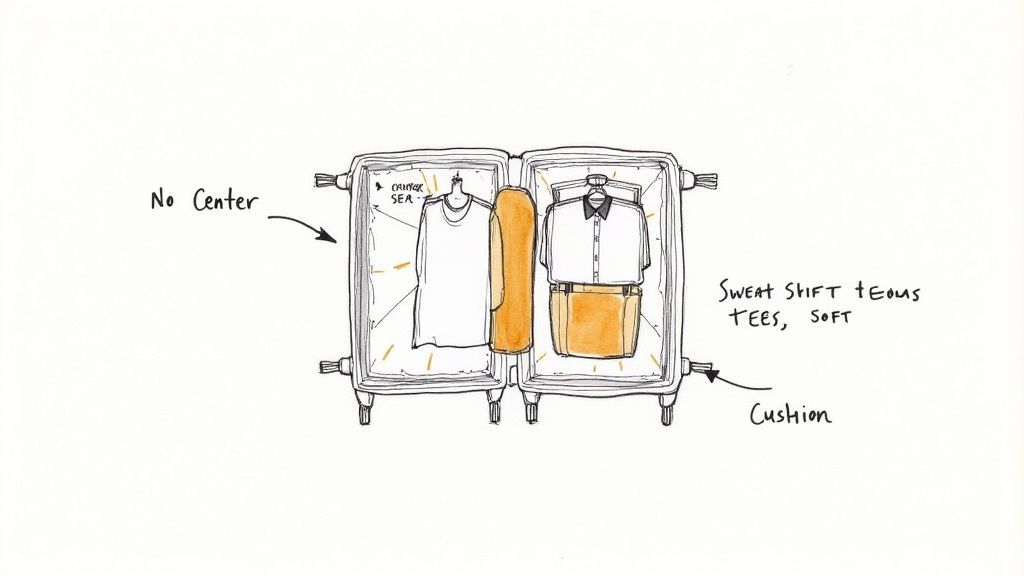
The first move is always to build a soft buffer. I grab my chunkiest, softest items—things like sweaters, knit tops, or even jeans—and use them to line the bottom and sides of the suitcase. This creates a cushioned foundation that absorbs shocks and keeps your delicate dresses from grinding against the hard shell of the luggage.
Finding the Sweet Spot for Your Dresses
Once you’ve built that nest, it's time to place your dresses. The absolute safest spot is right in the center, far away from the edges and zippers where all the pressure ends up. Lay your carefully folded or rolled dresses flat in that central zone.
But don't stop there. Now, you’ll create a top layer with more soft items—think t-shirts, pajamas, or scarves. You’re essentially making a "clothing sandwich" with your dresses tucked safely in the middle. This one trick dramatically cuts down on the deep-set wrinkles that happen when other items press down during transit.
My Key Takeaway: Always pack your dresses in the center of the suitcase, cushioned on all sides by softer garments. This minimizes direct pressure and friction, which are the real culprits behind travel wrinkles.
It’s also worth noting that your luggage itself can be a huge help. Looking into specific luggage features and specifications like compression systems or dedicated compartments can give you an extra edge.
Carry-On Versus Checked Luggage
The classic debate: to carry on or to check? When you've got an important dress in tow, the stakes are a little higher. Both have their pros and cons.
Carry-On Luggage:
- The upside? Total control. Your bag stays with you, so you don't have to worry about it being thrown around or squished under a pile of heavier suitcases. For a one-of-a-kind gown, this is my go-to for peace of mind.
- The downside? Space is tight. It’s easy to overstuff a carry-on, which creates more pressure on your clothes and can cause wrinkles.
Checked Luggage:
- The upside? So much more room! You can pack more loosely, which allows for better cushioning around your dresses.
- The downside? You give up all control the second it leaves your hands. It could be tossed, stacked, or squeezed, potentially undoing all your hard work.
Whether you're using a compact carry-on or a giant checked bag, the goal is the same: create a stable, cushioned home for your clothes. It’s no surprise that people want to keep their clothes looking sharp—the global market for clothing wrinkle care agents is expected to hit US$ 10,150 million by 2031. It just goes to show how much we all hate dealing with wrinkled clothes on arrival.
Quick Fixes for Wrinkles When You Arrive
Even when you pack with the best of intentions, a stray wrinkle or two can sometimes pop up. Don’t panic—you definitely don't need to haul an iron with you to get your dress looking flawless. A few simple tricks can smooth out those creases in minutes, getting you ready for that big event, dinner reservation, or day of exploring.
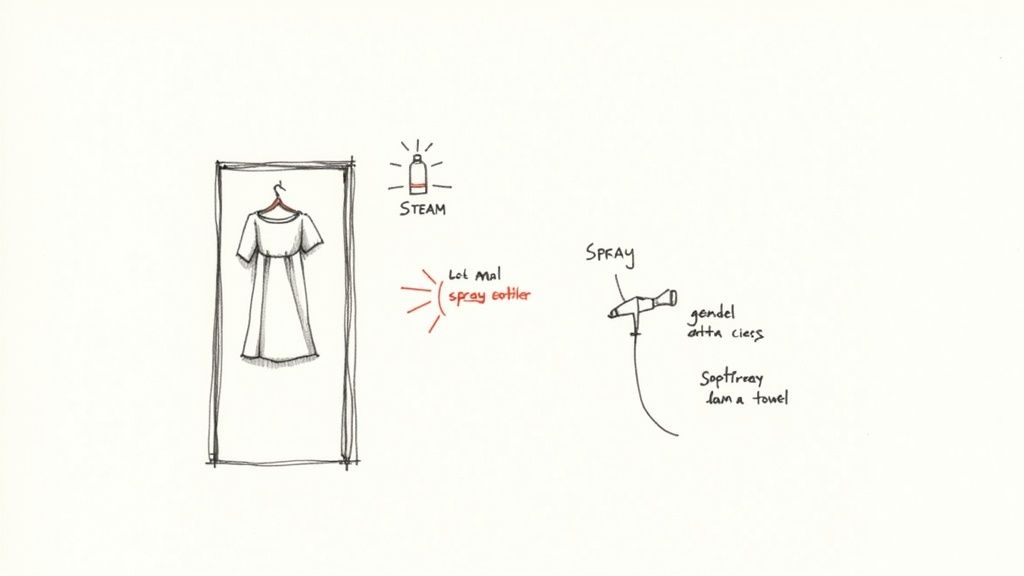
The oldest trick in the book is still one of the best: steam. Just hang your dress on a hanger from the shower rod or the back of the bathroom door. Crank the shower to its hottest setting, shut the door, and let the room get nice and steamy for about 15-20 minutes. The warm, humid air works wonders, relaxing the fabric’s fibers and letting most minor wrinkles just fall away.
Beyond the Bathroom Steam
While the shower method is a classic for a reason, it’s not your only option. Having a few other go-to solutions in your back pocket means you’re ready for any wrinkle emergency.
For a more direct approach, a good wrinkle-release spray is a lifesaver. These sprays lightly dampen and relax the fabric, letting you smooth out creases with just your hands. Give the wrinkled spot a light mist—you don't need to soak it—then gently tug the fabric until the crease vanishes.
It's no surprise that travelers are catching on. The global market for wrinkle release sprays hit USD 1.67 billion and is projected to reach USD 2.56 billion by 2032, all thanks to people like us looking for quick and easy fabric fixes on the go.
Traveler's Tip: Always test a new wrinkle-release spray on a small, hidden part of the dress first. This is especially important for delicate fabrics like silk or rayon, just to make sure it doesn't leave a mark.
In a real pinch? Your hairdryer can do double duty. Hang your dress up and spritz the wrinkled areas with a little water. Then, grab your hairdryer, set it to low heat, and hold it a few inches away. As the fabric dries, you'll see the creases disappear right before your eyes. This works especially well for durable fabrics, but it's also gentle enough for lighter materials, like those in a breezy linen off-the-shoulder dress, without risking any damage.
Quick Spot Treatments and Styling Workarounds
Sometimes you just need to tackle one small, annoying crease before you head out the door. These quick fixes are perfect for those last-minute touch-ups.
- Damp Towel Press: Lay your dress on a flat surface, place a clean, slightly damp towel over the wrinkle, and press down firmly with your hands for about a minute.
- Hair Straightener Hack: On sturdy cotton dresses, a clean hair straightener set to low heat can act as a mini-iron for stubborn collar or hem creases. Just be quick and careful!
- Styling It Out: When a wrinkle simply refuses to cooperate, it’s time to get creative. A well-placed belt, a chic jacket, or a beautiful scarf can easily hide the evidence. No one will ever know.
A Few Common Dress-Packing Questions
Even the most seasoned travelers run into a few tricky situations. Packing a dress so it arrives wrinkle-free often means knowing how to handle these specific challenges. Let's clear up some of the questions we get asked all the time about keeping dresses looking perfect from your closet to your destination.
We’ll tackle the big debates and give you clear, straightforward answers to help you perfect your packing strategy for any trip.
Is It Better to Roll or Fold Dresses?
Ah, the great packing debate. The truth is, there's no single right answer—it really comes down to the fabric of your dress. One method isn't better than the other; they just work for different things.
Rolling is absolutely the way to go for dresses made from knits, jersey, spandex blends, and most other synthetic, wrinkle-resistant materials. The whole point of rolling is to avoid creating those sharp, horizontal creases you get from folding. It’s perfect for your casual t-shirt dresses and anything with a bit of stretch. A nice, tight roll also saves a surprising amount of space and keeps hard folds from settling in.
On the other hand, folding is non-negotiable for structured or very delicate fabrics. Think crisp linen, starched cotton, silk, or anything with intricate pleats or beading. Trying to roll these materials would just crush their shape and leave you with a mess of tiny, stubborn wrinkles. The trick is to fold gently along the dress’s natural seams and place a sheet of acid-free tissue paper inside each fold to soften the crease.
How Do I Pack a Formal Gown Without It Getting Ruined?
Packing a formal gown requires a little more care and attention. Your safest bet, without a doubt, is a good garment bag. Start by laying the dress flat inside the bag, making sure all the fabric is smooth and untangled.
Once it's zipped up, gently fold the garment bag—not the dress itself—into thirds so it fits neatly in your suitcase. Always lay the folded bag on the very top of everything else you've packed so nothing can weigh it down or crush it. If you can, bring it as a carry-on. That way, you have total control. The second you get to your hotel, the very first thing you should do is unpack the gown and hang it up immediately.
Our Go-To Tip: A portable steamer is your best friend when traveling for a special occasion. Even with the most careful packing, a little bit of steam is the quickest way to release any minor creases that formed in transit.
Do Packing Cubes Actually Stop Wrinkles?
Yes, they really do! But it's not magic—packing cubes work by tackling the cause of wrinkles, not just the symptom. Most wrinkles happen when your clothes shift, slide, and bunch up inside your suitcase as it gets tossed around.
Packing cubes stop that movement completely. When you pack your rolled or folded dresses snugly into a cube, you create a compact, stable block that won't budge. This stability is what keeps your clothes looking smooth. Just be careful not to overstuff the cube. Squeezing too much inside can create new wrinkles from the compression. When used right, they're a fantastic tool for keeping your suitcase tidy and your dresses pristine.
At Cedar & Lily Clothier, we believe arriving in style should feel effortless. Our collection is curated for quality and beauty, with stunning pieces for any event on your calendar. Find your next travel-ready dress at https://cedarandlilyclothier.com.