


Figuring out your belt size is actually much easier than you think. The old rule of thumb is pretty solid: just measure where you plan to wear the belt and add two inches. This classic "waist size + 2" trick is a fantastic starting point and usually lands you right on the middle hole for a comfortable, perfect fit. It’s the secret to taking the guesswork out of the equation.
Your Guide to Finding the Perfect Belt Fit
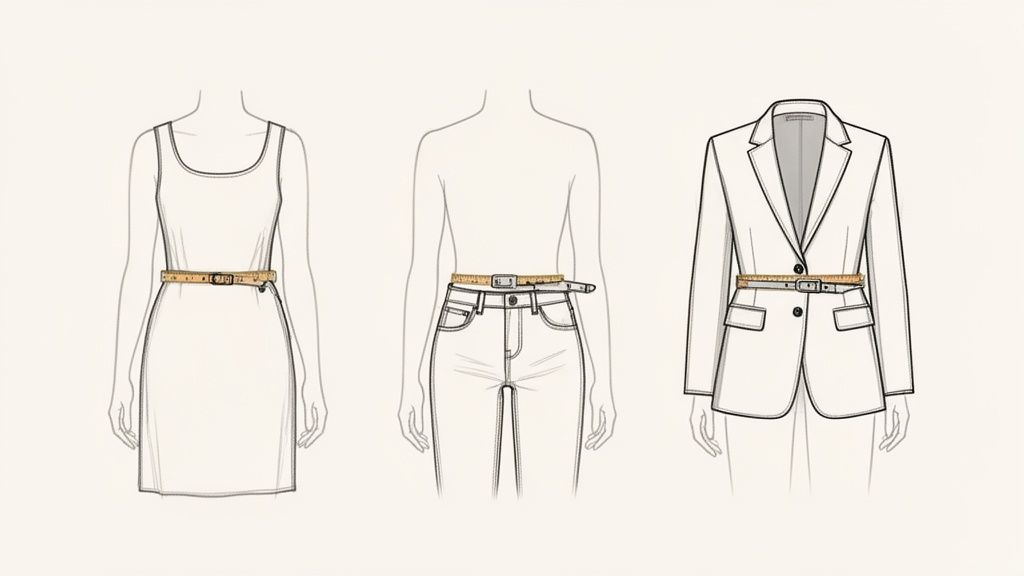
There's nothing more frustrating than a belt that throws off your entire outfit. But once you know your size, those confusing numbers and letters on the tags suddenly make sense. A perfectly sized belt is a true wardrobe hero, capable of cinching everything from high-waisted jeans to your favorite flowy dress. It's that final detail that makes a look feel polished and intentional.
This guide goes beyond the basics to give you the two most reliable methods I always recommend for finding your ideal size: measuring your body and measuring a belt you already own and love.
Why Accurate Sizing Matters
Knowing how to choose the right belt size is about more than just comfort—it’s about making sure your investment pieces look their absolute best. While belt sizing started with menswear in the 19th century, women's fashion adopted charts by the 1920s that added 2-4 inches to a waist measurement for a better fit. Even today, getting it right is a common struggle. A survey by fashion analysts actually found that 62% of returns for belts were due to incorrect sizing, which just shows how important a good measurement is.
A well-chosen belt does more than hold up your pants—it defines your silhouette, adds a point of interest, and completes your aesthetic. Getting the size right is the first step to unlocking its full potential.
Building a Cohesive Wardrobe
Once you've mastered these simple techniques, you'll feel so much more confident making your next purchase. My goal is to give you the knowledge to pick a belt that not only fits flawlessly but also elevates your personal style. It’s interesting to see how sizing principles apply to other accessories, too—if you're curious, this bracelet size guide is quite comprehensive.
Ultimately, understanding fit is a huge part of refining your look. If you're looking for more ways to build a closet you love, you might enjoy our guide on how to find your personal style.
Two Fail-Proof Ways to Find Your Perfect Belt Size
Getting the right fit is everything. It’s what takes an outfit from just okay to absolutely perfect. Instead of getting tangled up in confusing size charts or just guessing, let’s go over two simple, effective ways to find your exact size.
One method uses a flexible measuring tape right on your body, and the other uses a favorite belt you already own. Knowing how to do both gives you the confidence to buy the right belt for any outfit, whether you're cinching a dress at your natural waist or styling low-rise jeans on your hips.
Measuring Your Body
This is the most direct approach because you’re measuring exactly where you'll wear the belt. It's the perfect method if you don't have a go-to belt to use as a guide, or if you’re shopping for a belt to wear with a specific outfit, like a high-waisted skirt.
First, grab a soft, flexible measuring tape. It also helps to wear something similar to what you plan to pair with your new belt. The thickness of your clothes—think denim versus a silk dress—can make a small but important difference in the final measurement.
- Find Your Spot: Decide where the belt is going to sit. For a classic look with jeans, I recommend threading the tape right through the belt loops. If you’re styling a dress or a blazer, wrap the tape around your natural waist, which is usually the narrowest part of your torso.
- Get a Snug Fit: Pull the tape so it’s snug, but not uncomfortably tight. A good rule of thumb is to leave enough room to slide one finger between the tape and your body. This is exactly how a well-fitting belt should feel.
- Read the Number: Take a look at the measurement in inches where the tape meets. This is your starting point! Most brands, including us here at Cedar & Lily, suggest adding 2 inches to that number to find your perfect belt size. So, if your waist measures 32 inches, you’ll want to look for a size 34 belt.
Using a Belt You Already Own
If you have a belt that fits you just right, it’s the most reliable template you could ask for. This method is super quick and takes all the guesswork out of the equation because you’re simply replicating a size you already know works for you. Just be sure to measure it the right way.
A Quick Tip: Never, ever measure a belt from buckle-end to tip. The total length includes the buckle and all the extra material at the tail, which will lead you to buy a belt that's way too big.
Lay your belt out on a flat surface. Using your measuring tape, measure from where the leather folds over the buckle to the hole you use most often. That measurement, right there, is the belt size you should buy.
It’s that simple. If the distance to your favorite hole is 36 inches, you need a size 36 belt. This is my favorite trick for ensuring a new purchase will fit just as beautifully as a trusted favorite. For more general advice on getting your sizing just right, this guide on Як визначити свій розмір одягу offers some great tips.
Translating Your Measurement into the Right Purchase
Okay, you’ve got your measurement. Now, how does that number translate into the actual belt sizes you see online or in-store? It can feel a little confusing at first, but most brands use a simple, logical system that makes finding your perfect fit a breeze once you know the secret.
The most common rule of thumb in the industry is to add two inches to your measurement. So, if your body measured 32 inches, you'll want to look for a belt marked as a size 34. This isn't just a random number—that extra two inches is designed so the belt fastens comfortably on the middle hole, giving you a little breathing room to adjust either way.
This visual guide shows the two key ways to get your core number before you start shopping.
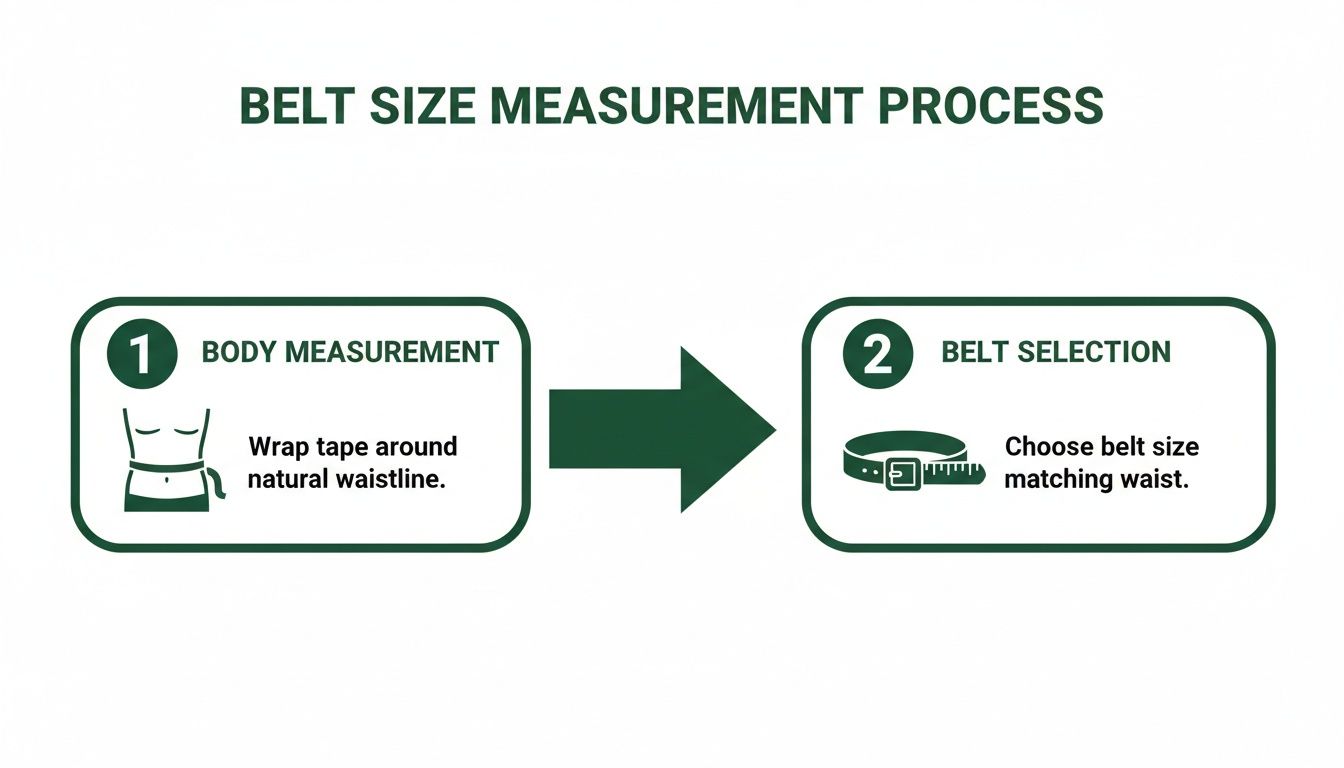
Whether you measure your body or a belt you already love, the goal is to have a precise starting point.
Aim for the Middle Hole
The whole point of finding the right belt size is to have it buckle perfectly on the center hole. Think of it this way: the middle hole is your sweet spot, and the other holes are there to give you flexibility for different outfits or the natural fluctuations we all experience.
Landing on that center hole gives you a few major wins:
- A Polished Look: You’re left with just enough "tail" to tuck neatly into your first belt loop, avoiding that long, awkward flap that can cheapen an outfit.
- Maximum Versatility: You have holes on either side to tighten the belt for high-waisted jeans or loosen it to wear over a chunky knit sweater.
- Better for the Belt: Using the middle hole distributes the tension evenly, helping the leather wear beautifully and preventing the strain that happens when a belt is always stretched to the very last hole.
A belt that fits on the middle hole is the ultimate sign of a perfect match. It means the belt was truly designed for your measurements, giving you both a flawless look and practical adjustability.
The "Between Sizes" Dilemma
So what happens when your measurement lands right between two sizes? It happens all the time, and the answer is simple: always size up. It’s incredibly easy for a cobbler or leather specialist to punch an extra hole in a belt that's a little too long. It's nearly impossible to add length to one that's too short.
Think about how you'll wear the belt, too. A beautiful, high-quality leather will naturally soften and may even stretch a tiny bit over time as it molds to your shape. Sizing up gives you that extra bit of grace.
Here are a couple of real-world scenarios:
- Cinching a blazer with a wide statement belt: Definitely size up. You'll need that extra length to accommodate the thicker fabric of the jacket.
- Styling low-rise trousers with a slim belt: You can probably stick closer to your exact size or just go up one size, since you won't be layering it over anything bulky.
Matching Belt Width and Style to Your Wardrobe
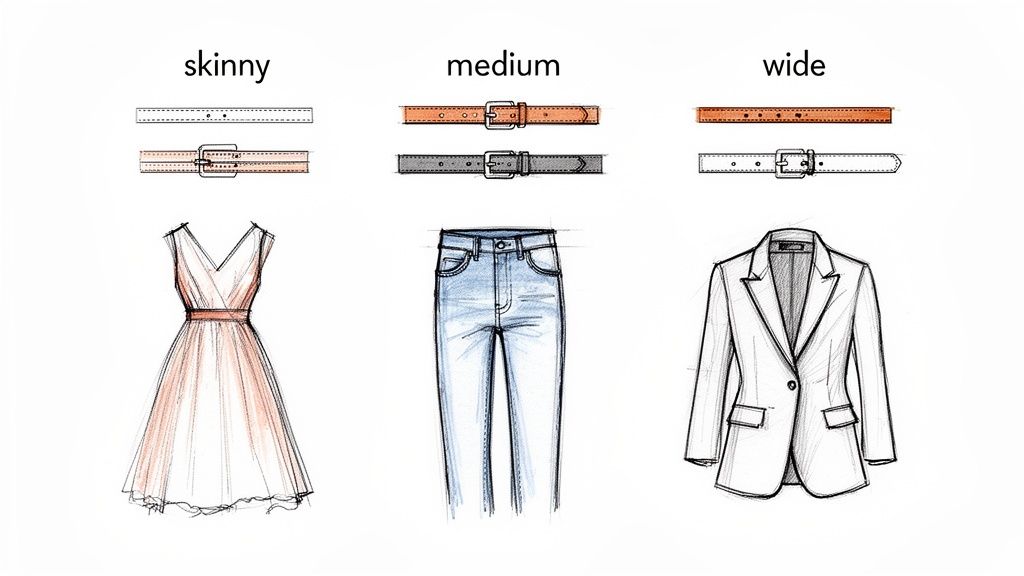
Knowing your belt size is just the start—the real magic happens when you understand how a belt’s width can completely transform an outfit. It’s the difference between an accessory that just holds up your pants and one that truly pulls your look together with intention and polish.
Think of belt width as your secret weapon for playing with proportion and defining your silhouette. Each width has its own personality and purpose, and getting it right is what elevates your style from good to absolutely fabulous.
Finding the Right Proportions
The first thing to consider is the visual weight of the belt against your clothing. A wide, chunky belt might completely overwhelm a delicate silk dress, just as a super-skinny one could get lost on a pair of structured, wide-leg trousers. It’s all about creating harmony.
Here’s a simple way I think about it when styling clients (and myself!):
- Skinny Belts (Under 1 inch): These are my absolute favorites for highlighting the natural waist without adding any bulk. They work beautifully to cinch a flowy dress, define a high-waisted skirt, or give shape to a long cardigan. It's all about that subtle, elegant definition.
- Medium Belts (1 to 1.5 inches): This is your everyday, can’t-go-wrong width. They're substantial enough for denim and trousers, fitting perfectly through standard belt loops, but still sleek enough to pair with more tailored pieces. Every wardrobe needs a few of these workhorses.
- Wide Belts (Over 1.5 inches): Ready to make a statement? A wide belt is your answer. It creates a bold focal point and is incredible for cinching blazers, coats, or sweater dresses to instantly create an hourglass shape. It’s a high-fashion touch that feels so powerful.
Your belt should always harmonize with your outfit, not compete with it. The right width complements the fabric, the cut, and the occasion, making your entire look feel more cohesive and thoughtfully put-together.
Coordinating Hardware and Style
Beyond the width, the little details are what truly make a difference. The buckle’s shape and the hardware’s finish—whether it’s polished gold, brushed silver, or matte black—should feel intentional. A great rule of thumb is to match the metal on your belt to your other accessories, like your jewelry, handbag clasp, or even the buttons on your jacket.
This simple coordination creates a seamless, polished look that feels incredibly chic. Imagine a classic gold-buckle belt paired with your favorite gold hoops—it’s a small detail that shows you’ve considered every element. If you're looking for more tips, our guide on how to accessorize an outfit is full of great ideas.
Finally, think about building a versatile belt wardrobe. Start by investing in a few high-quality leather belts in timeless neutrals like black, tan, and brown. From there, have fun with more playful, trend-forward pieces—maybe a woven style for summer vacations or a colorful suede belt to add that perfect pop of personality when the mood strikes.
What to Do When Your Belt Just Doesn't Fit Right
Even after measuring with the utmost care, sometimes a belt just doesn’t fit the way you imagined. Maybe a favorite belt from your closet feels a little off all of a sudden, or that brand-new purchase isn't quite hitting the mark. Don't worry—most common sizing hiccups are easy to solve with a few simple tricks.
Often, the problem isn't your measurement but the outfit itself. Think about it: the rise of your pants completely changes where a belt sits on your body. A belt that’s perfect for your high-waisted jeans will probably feel too snug with low-rise trousers, simply because your hips are wider than your natural waist. It's always a good idea to consider the specific garment you're pairing it with.
Making Small Tweaks for a Perfect Fit
So, what happens when a belt is just a little too loose or a tad too tight? Before you even think about sending it back, remember that a high-quality leather belt is surprisingly forgiving. Most of the time, a quick trip to a professional can sort things out.
A good cobbler or leather specialist is your best friend here. They can work wonders. If your belt is a little too long, they have a couple of options:
- Add a new hole: This is a fast, easy fix that stops you from having a super long belt tail flapping around.
- Shorten the leather: For a cleaner, more professional look, they can actually shorten the belt from the buckle end. This is a great trick because it keeps the original tip and hole spacing perfectly intact.
This kind of expert care can really extend the life of your favorite accessories. If you're curious about other ways to get that flawless, custom-tailored look, you might find our guide to women's tailoring helpful.
Dealing with Different Brands and Returns
One of the biggest headaches with sizing? The inconsistencies from one brand to another. Just like with jeans or dresses, there's no universal standard for belt sizes. A size “Medium” in one collection could easily be a “Large” in another, and the same goes for numbered sizing.
Before you hit that "buy" button, always—and I mean always—check the brand’s specific size chart. It’s the single best thing you can do to avoid the disappointment of a bad fit and the hassle of a return.
Here at Cedar & Lily, we get how crucial that perfect fit is. That’s why we provide detailed sizing info for all our pieces and are always here to help. If you're ever stuck between sizes or have a question about a certain style, our concierge service is just a message away. We love offering personalized advice to help you find that piece that makes you feel incredible. And of course, we have a smooth exchange process to make sure you end up with something you absolutely adore.
Still Have Questions? Let's Talk Belt Sizing.
Even after you've measured carefully, a few last-minute questions can pop up. It’s completely normal! You’re investing in a beautiful piece, and getting those final details right is what makes all the difference.
Let's walk through some of the most common uncertainties we hear from clients. My goal is to help you feel absolutely confident that you've chosen the perfect size.
Should I Just Buy the Same Size as My Jeans?
This is easily the most common question, and the answer is almost always a firm no. Think of your pants size as a starting point, not the final word. Most denim brands, especially here in the US, use what’s called vanity sizing—that number on the tag is often a bit smaller than the actual measurement in inches.
A great rule of thumb is to choose a belt that's one to two inches larger than your tagged pants size. So, if you live in your size 32 jeans, you'll almost certainly want a size 34 belt. When in doubt, always, always trust the tape measure over the clothing tag.
How Do I Know It's a Perfect Fit?
The secret to a perfect fit is all about where the buckle lands. You’ll know you’ve found the one when you can fasten the belt comfortably on the center hole.
- Why the middle hole? It’s your sweet spot. This gives you the versatility to go one hole tighter for high-waisted looks or one hole looser after a big lunch. It’s all about having options.
- What about the tail end? The tip of the belt should slide neatly through the first belt loop of your pants or jeans. This keeps everything looking clean and intentional, without an awkwardly long strap hanging down.
The goal isn’t just to find a belt that closes, but one that settles naturally on that middle hole. It’s the clearest sign that the belt is truly your size, offering both a flawless look and everyday practicality.
Help! My Measurement Is Between Two Sizes.
It happens all the time. You measure 35 inches on the dot—so do you go for a 34 or a 36? In this situation, our advice is simple: always size up.
It’s an easy and inexpensive task for any cobbler or leather specialist to add an extra hole if a belt is a touch too long. But adding length to a belt that’s too short? That's nearly impossible. Sizing up also gives you more styling freedom, making it easier to wear the belt over a chunky knit sweater or cinch a blazer.
Will My Leather Belt Stretch Out?
Yes, and that’s a good thing! High-quality, genuine leather has a bit of natural give. As it warms with your body heat, it will subtly mold to your shape for a truly custom fit. You can expect a beautiful leather belt to stretch about a half-inch to an inch over its lifetime.
Keep this in mind when you first try it on. A fit that feels perfectly snug right out of the box will relax into something that feels like it was made just for you after only a few wears.
At Cedar & Lily Clothier, we believe the perfect belt is a game-changer. If you’re still feeling unsure, our concierge team is always here to offer personalized sizing advice. We’d love to help.
Explore our curated collection of belts and find your perfect fit today at https://cedarandlilyclothier.com.