

“Dark wash looks dressed up” is useful advice, but it's incomplete. A dark denim dress can still look like workwear if the fabric is stiff, the seams are busy, or the styling stops at casual shoes. Formality comes from the entire garment, wash, weight, construction, finish, silhouette, and accessories, not from the word denim on the label.
That distinction matters for women shopping for a work gala, rehearsal dinner, gallery opening, or creative-formal event. A polished denim dress can be a smart choice in the right room, but it won't replace a gown for black tie. The fitting-room question is simple: does this particular dress look intentional enough for the invitation?
Table of Contents
- Why Denim Can Read as Formal
- Choosing Wash, Weight, and Construction
- Where a Denim Dress Belongs in the Dress Code
- Styling a Denim Dress for Work to Evening
- Three Looks for Real Occasions
- Fit and Care That Keep Denim Looking Formal
- Shop the Look at Cedar & Lily
Why Denim Can Read as Formal
Denim and formalwear aren't natural opposites. Denim began as a durable cotton textile associated with Nîmes, France, then developed a strong American identity through nineteenth-century workwear and demanding labor during the California Gold Rush. By the early twentieth century, it was widespread in U.S. workwear, but its fashion role expanded after World War II, when denim dresses gained popularity with full skirts and defined waists. Denim's fashion history explains why the fabric can carry both rugged familiarity and feminine polish.
The shift continued through the 1960s and 1970s, when denim became closely tied to youth and countercultural style. In the 1980s and 1990s, designers brought in sharper shoulders, fitted waists, and pencil-skirt proportions. Yves Saint Laurent's use of denim in a 1969 collection marked what the historical account identifies as the first designer denim appearance on the catwalk, a meaningful change in how the fabric was perceived.
The label matters less than the visual language
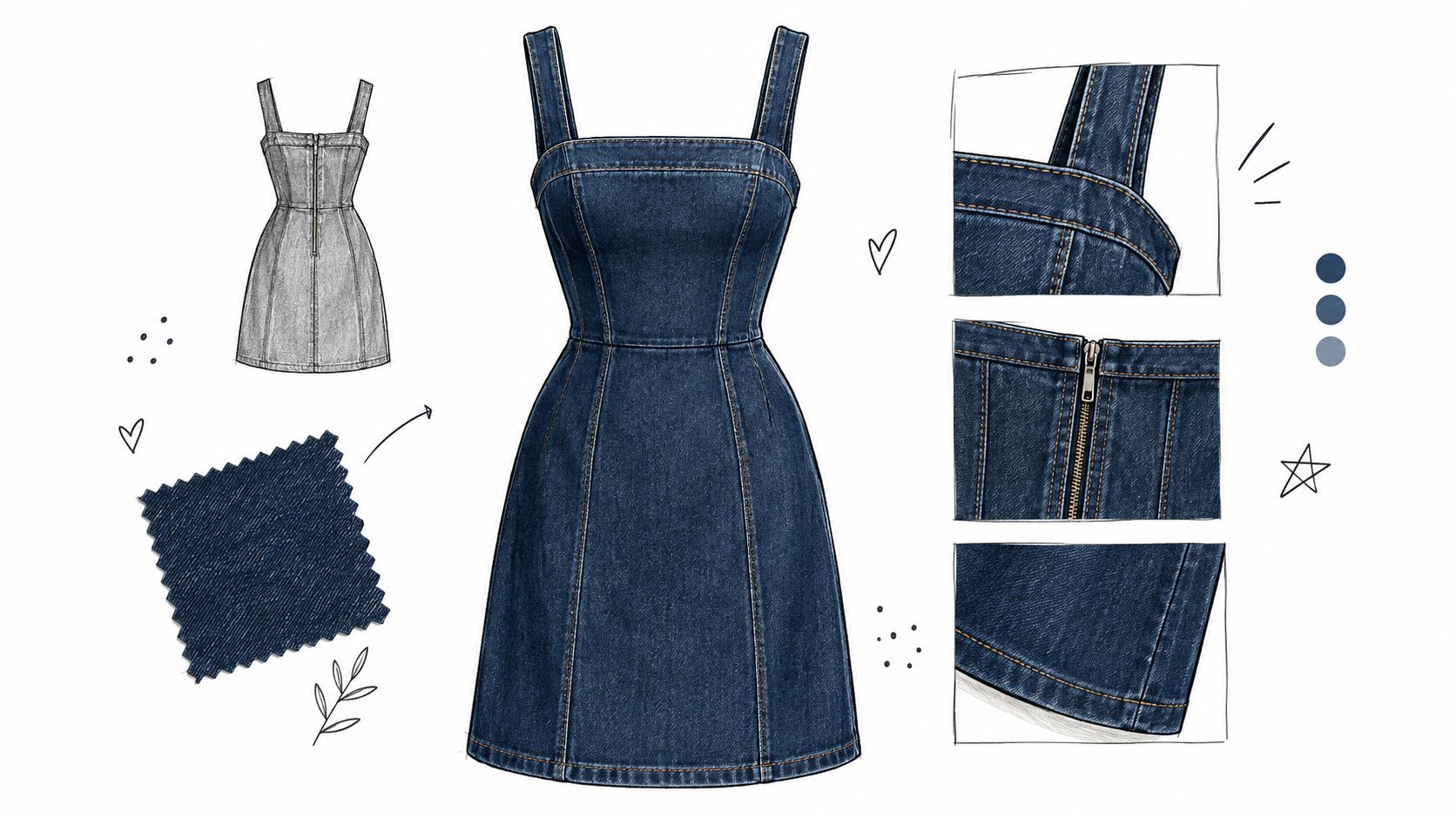
A formal denim dress is one whose design earns a venue-appropriate level of polish. That usually means an even dark indigo or black wash, a clean hem, controlled shaping, and hardware that stays quiet. A structured midi with a defined waist and elegant neckline can look composed. A pale, distressed mini with oversized pockets will read casual even if it's styled with expensive accessories.
Construction changes the conversation. A crisp collar, concealed fastening, shaped seams, and a smooth waistband suggest tailoring. Contrast stitching, exposed utility pockets, frayed hems, and aggressive fading pull the eye back toward everyday wear.
The practical test: cover the label and look at the silhouette. If the dress still looks refined without relying on the word “denim,” it has a chance at a polished event.
Denim also has enough commercial and technical depth to support this range. Global denim-fabric production reached approximately 2.7 billion meters in 2006, with worldwide supply subsequently projected to rise by 8%, while industry estimates place the broader global denim market at roughly $75 billion annually. The denim market overview covers denim broadly, not formal dresses specifically, but it helps explain why designers can work with varied weights, washes, stretch compositions, and finishes.
For shopping purposes, the takeaway is direct: stop rejecting denim as a category. Evaluate the actual cloth and cut. A formal denim dress succeeds when the fabric supports the shape and the styling respects the room.
Choosing Wash, Weight, and Construction
The fitting-room check should start with the fabric, not the accessories. Formal denim needs enough substance to hold a clean line, but too much weight can make a dress feel stiff and visibly workwear-inspired.
Start with the wash
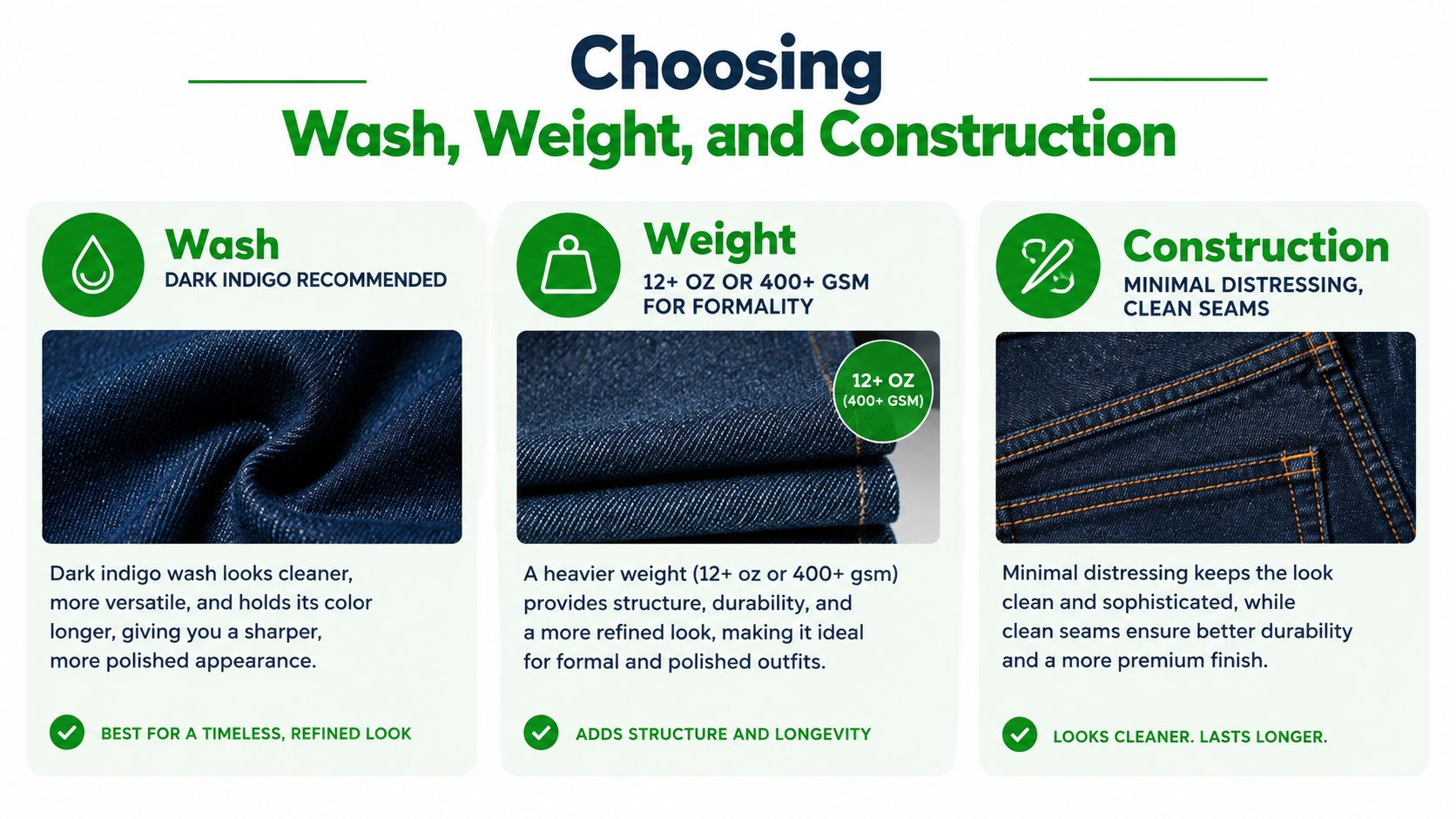
Dark indigo and black are the safest choices because they create a continuous visual line and make seams less dominant. The wash should look even across the bodice, skirt, and side seams. Heavy whiskering, distressed patches, abrasions, and high-contrast fading weaken the dress's formal register.
White denim can look polished in warm weather, but it needs especially clean construction. A well-cut white denim dress with restrained details may work for a dressier daytime setting. For evening, dark color usually requires less styling effort.
Read the weight correctly
Denim weight is measured in ounces per square yard or grams per square meter. One ounce per square yard equals approximately 33.906 grams per square meter, according to this denim-weight reference. Lightweight denim below roughly 12 ounces tends to drape more fluidly, medium-weight denim around 12 to 16 ounces balances structure and durability, and heavy denim at 16 ounces or more creates a firmer, sometimes stiffer shape.
For most formal dresses, lightweight-to-medium denim is the more useful range. It can support a defined waist or sculpted skirt without making the wearer look as though she's wearing a work jacket below the waist. Technical research broadly classifies heavy denim around 300 to 600 g/m², while stretch-denim studies examine strength, flexibility, air permeability, and recovery in cotton and elastane constructions. The textile research supports evaluating weight and stretch together rather than treating either specification as decisive on its own.
Look for moderate stretch and quiet details
A small amount of elastane can make sitting, walking, and movement more comfortable. Too much stretch can create cling and weaken the crispness that makes denim look refined. Increasing Lycra or elastane generally improves extensibility and recovery but can reduce breathability, so the best dress usually offers moderate stretch, not maximum give.
Construction finishes the job:
- Defined waistbands keep the silhouette deliberate rather than tubular.
- Precise topstitching should look even and intentional, not oversized or decorative.
- Clean hems preserve the dress's polish, especially on midi and maxi lengths.
- Minimal hardware keeps attention on the shape instead of utility details.
- Concealed or refined closures make the garment feel closer to tailoring than workwear.
A useful reference point is the difference between a clean denim dress and other denim categories. Cedar & Lily's guide to white denim jeans reinforces the same principle: color and finish change how denim behaves inside an outfit. The goal isn't to make denim anonymous. It's to make the design look considered.
Where a Denim Dress Belongs in the Dress Code
A denim dress earns its place by context. Fabric alone does not decide formality. Weight, wash, construction, and styling decide whether it reads polished enough for the room, and some rooms still call for something else. The Vogue guide to formal attire draws a clear line here: black tie sits in gown territory, and denim does not cross into it because the wash is dark.
A venue-by-venue read is the only useful one.
| Dress Code | Denim Verdict | What to Confirm |
|---|---|---|
| Black tie | Skip denim | The invitation's explicit dress-code language, gown expectation, and venue formality |
| Traditional formal | Usually skip denim | Whether the host expects floor-length or classic formal dressing |
| Business cocktail | Strong option | A dark midi, a defined, structured waist, polished shoes, and a refined outer layer |
| Creative-formal | Often works | The venue, industry culture, time of day, and whether denim is welcomed |
| Polished casual | Appropriate | The level of polish expected, especially for an office, dinner, or reception |
| Semi-formal | Can work | Hemline, wash, accessories, and the host's interpretation of semi-formal |
The safer and riskier rooms
Some categories are simple. Black tie and white tie call for different fabric, different finish, different expectations. Traditional formal weddings also deserve restraint, especially if the invitation mentions formalwear, floor-length dresses, or directly rules out denim. Jewelry cannot fix a dress that ignores the code.
Business cocktail is where a strong denim dress starts to make sense. Choose a dark indigo midi with a shaped bodice, an elegant neckline, a block heel, and a structured bag. That combination looks intentional, not apologetic. Creative-formal events, rehearsal dinners in refined venues, and gallery openings can also suit denim, but only when the dress looks disciplined rather than casual.
This is also the point where visual language matters. A denim dress works best in rooms that reward restraint, quality, and clean lines. For a closer look at that quality-first polish, see Cedar & Lily's guide to the quiet luxury aesthetic.
Rehearsal dinners depend on the couple, the setting, and the wording on the invitation. A dark midi or maxi can hold up in a polished dining room. A casual-cut mini usually falls short. For broader guidance on expected polish across event types, Cedar & Lily's formal-event dressing guide is a useful companion.
When the invitation is vague, ask the host. Confirmation looks more polished than showing up underdressed and hoping accessories can fix it.
One more filter matters. Time of day changes the read. Dark denim, sleek shoes, and a sharp jacket make more sense at night than a faded wash with relaxed sandals. The right denim dress belongs in business cocktail, creative-formal, polished casual, and some semi-formal settings. It does not belong everywhere, and that clarity makes it easier to wear well.
Styling a Denim Dress for Work to Evening
A dark denim midi or maxi can move from a morning meeting to dinner when every supporting piece raises the level of polish. The dress provides structure, but the accessories tell everyone how to read it.
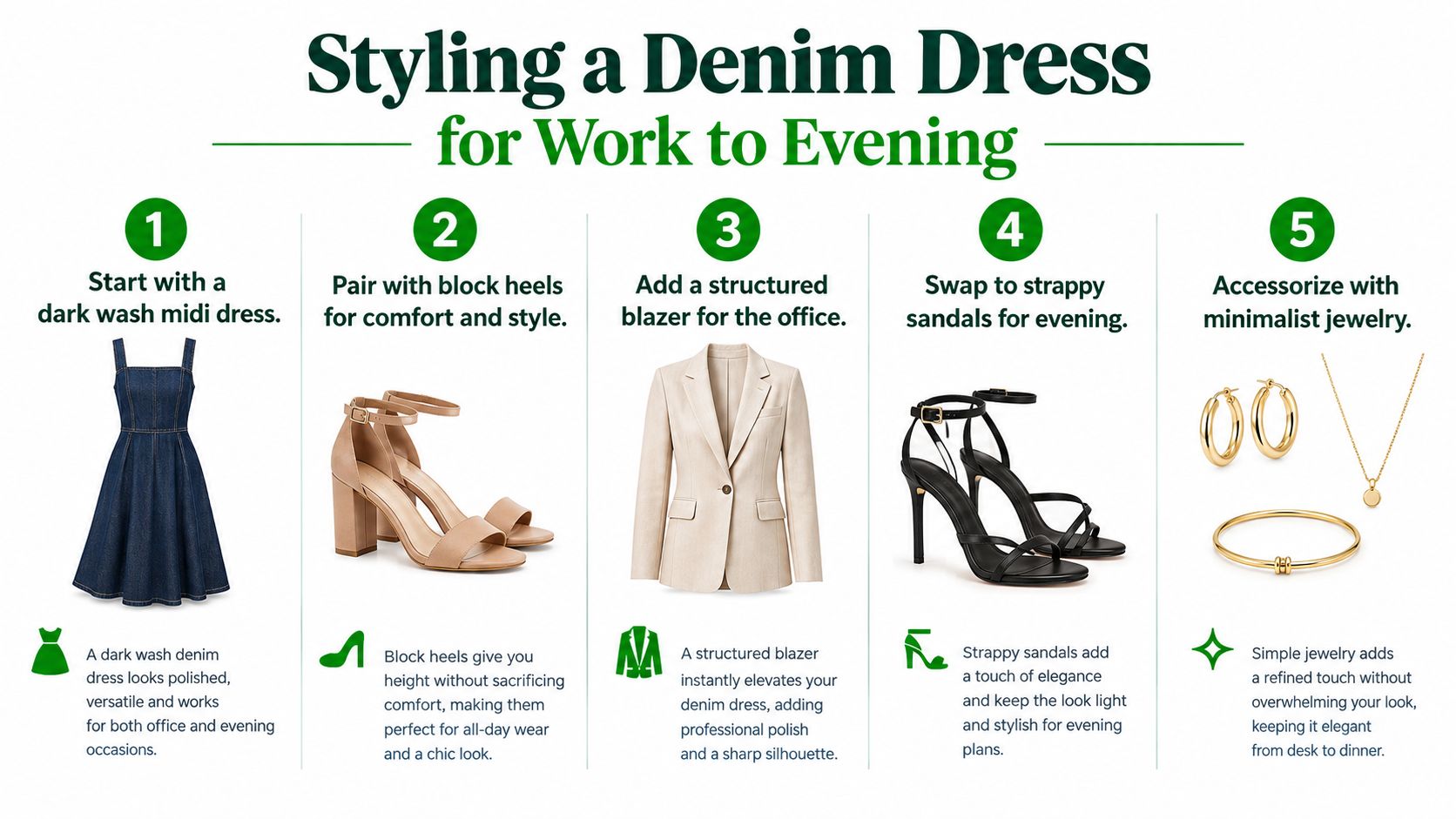
Start with the shoe. A block heel gives a stable office foundation and keeps the dress from feeling too casual. Sleek boots work in cooler weather, while pointed-toe flats provide a composed option when heels aren't practical. For evening, strappy sandals can expose the ankle and lighten the silhouette.
The office formula
The daytime outfit needs one strong vertical layer. A fitted blazer sharpens the shoulders and gives the denim a professional frame. A longline coat creates the same effect in colder weather, while a soft shoulder-wrap can add elegance without adding bulk.
The bag should be structured and quiet. A compact top-handle or firm shoulder bag in a neutral shade looks more intentional than a slouchy tote, especially once the office day ends. Jewelry should stay restrained during work hours, perhaps a slim metal earring, a clean watch, or one fine chain.
A reliable morning combination looks like this:
- Dark denim midi dress: The central piece, preferably with a defined waist and clean hem.
- Structured blazer: A structured layer that separates the dress from casual denim.
- Block heel or pointed flat: Comfortable enough for the day, polished enough for meetings.
- Structured neutral bag: Keeps the outfit organized without competing with the dress.
- Minimal jewelry: Adds finish without turning the office look into eveningwear too early.
The evening switch
The fastest change is the shoe. Swap the block heel or flat for a strappy sandal, then remove the blazer if the dress has enough shaping through the waist and shoulder. If the room is cool, a long coat or soft wrap keeps the outfit elegant.
Add one evening detail rather than several. A slightly brighter earring, a small sculptural pendant, or a compact clutch can shift the look. Avoid adding every available accessory. Denim already has visual texture, so restraint looks more expensive.
For more desk-to-dinner combinations, Cedar & Lily's day-to-night outfit guide offers a useful styling direction. The principle remains straightforward: change the frame, not the entire identity of the dress.
Sneakers, distressed denim accessories, oversized utility hardware, and casual layering pieces undo the work. They may look stylish in another context, but they pull a formal denim dress back toward weekend dressing.
Three Looks for Real Occasions
The same dress can work in several settings, but it needs a different supporting cast each time. The following combinations show where the formal denim dress earns its place and where the styling does the heavy lifting.
Rehearsal dinner
Choose a dark indigo midi or maxi with a shaped waist and a clean neckline. A pointed-toe heel gives the hemline authority, while a small structured bag keeps the look dinner-ready without feeling bridal or overly decorated.
Jewelry should be warm and simple, such as a refined drop earring or a slim bracelet. A soft wrap or longline coat carries the eye vertically and adds an evening layer without introducing another competing texture. This outfit works because every piece is quiet, but nothing looks casual.
Creative-industry reception
A gallery or design reception gives the dress more room to show personality. A black or deep indigo style with sculptural seaming, an asymmetric detail, or a strong shoulder can feel modern without relying on distressing.
Pair it with a sleek boot or architectural heel, then choose a compact bag with a firm shape. Jewelry can be more graphic here, perhaps one bold earring or a clean cuff, but the rest of the outfit should stay edited. The dress remains the focus, while the sharp toe grounds the silhouette.
Elevated-casual office event
For an office dinner, client reception, or polished team function, a medium-weight dark denim midi is the most flexible choice. Add a fitted blazer in a quiet neutral, a block heel, and a structured handbag. The combination looks credible at work but still feels special enough for an evening venue.
Keep the jewelry minimal and let the blazer establish the dress code. If the event moves outdoors, a polished coat is preferable to a casual cardigan. That single choice often decides whether the outfit looks styled or just assembled.
The fitting-room shortcut: if the dress needs a pile of accessories to look event-ready, the construction probably isn't doing enough work.
Each setting has a different threshold. The rehearsal dinner asks for softness and polish. The creative reception rewards a stronger shape. The office event needs restraint and credibility. The dress can remain similar, but the shoe, bag, and outer layer must answer the invitation.
Fit and Care That Keep Denim Looking Formal
A formal denim dress only stays formal if it keeps its shape and color. The fitting-room assessment should test weight, stretch percentage, and recovery together, not separately.
Press the fabric lightly at the waist and seat, then watch how quickly it returns. A dress with controlled stretch should allow movement without leaving a permanently relaxed outline. Pay special attention to fitted bodices, waist seams, elbows, and the seat, where bagging can make polished denim look worn.
Measure before trusting the first fit
If the dress has been washed or finished aggressively, compare measurements at the bust, waist, hip, and full length before and after laundering. Even small width changes can alter fit, while length movement can disrupt the intended hem placement and proportions.
Experimental work on 99% cotton and 1% elastane denim measured dimensional change after washing and found the greatest shrinkage in the weft direction after heavy enzyme stone washing with bleaching. The dimensional-stability study calculates change by comparing the post-wash dimension with the original dimension, making the effect measurable rather than subjective.
Protect the finish
Dark indigo dye, precision construction, and decorative finishing deserve gentle care. Cold, low-agitation laundering helps protect fit and color, while professional care may be the safer choice for a structured or heavily finished dress.
Avoid aggressive bleaching and stone-washing. They can increase dimensional risk and compromise colorfastness, particularly when the dress depends on an even dark surface. Follow the garment's care label, reshape the dress after washing, and avoid treating a formal denim piece like a pair of casual jeans.
A good care routine protects the details that create formality: a stable hem, a smooth waist, clean seams, and a consistent wash. Those details matter more than novelty after the first wear.
Shop the Look at Cedar & Lily
A formal denim dress comes down to three rules. Choose a controlled wash, choose a silhouette with real construction, and style it according to the room. That combination makes denim appropriate for business cocktail, creative-formal, rehearsal-dinner, and smart-casual settings, while traditional black tie remains outside its lane.
Cedar & Lily Clothier carries curated women's clothing, including denim dresses, dresses, blazers, outerwear, shoes, handbags, jewelry, and other finishing pieces. The Clemente Tencel Denim Dress is a useful place to begin when the goal is a softer, polished denim direction rather than overt workwear.
The online store at cedarandlilyclothier.com extends the assortment beyond Oklahoma. Local shoppers can visit the boutique at Utica Square in Tulsa or downtown Jenks to feel the fabric, check the wash, assess the fit, and receive styling help from the team. That in-person check is especially valuable with denim, because weight and recovery are difficult to judge from a product image alone.
A formal denim dress is a real option, but only when the invitation and the garment agree. Shop with the venue in mind, then build the outfit around the details that make the dress look intentional.
Cedar & Lily Clothier offers curated denim dresses and the polished shoes, bags, jewelry, and outerwear that complete an occasion-ready look. Visit Cedar & Lily Clothier at Utica Square in Tulsa or downtown Jenks for fit and fabric guidance, or shop online and reach out for styling help.