
The invitation is settled, but the dress isn't. A velvet style looks beautiful on screen, yet the raised waist raises practical questions: will the seam sit beneath the bust, will the skirt skim rather than billow, and will the fabric survive the trip to the event?
An empire waist velvet dress works when its upper-body fit is precise and its skirt has room to move. For a shopper choosing between a gala gown, a holiday midi and an evening wedding look, seam placement matters more than the reassuring promise of a forgiving cut.
Table of Contents
- What an Empire Waist Velvet Dress Is and How Velvet Shapes It
- Which Occasions Suit an Empire Waist Velvet Dress
- Fit Checks for Seam Height and Bust Proportion
- How to Style Your Empire Waist Velvet Dress
- Caring for Velvet Before, During and After the Event
- Shop Empire Waist Velvet Dresses at Cedar & Lily
- Try On Your Velvet Empire Dress in Tulsa or Jenks
What an Empire Waist Velvet Dress Is and How Velvet Shapes It
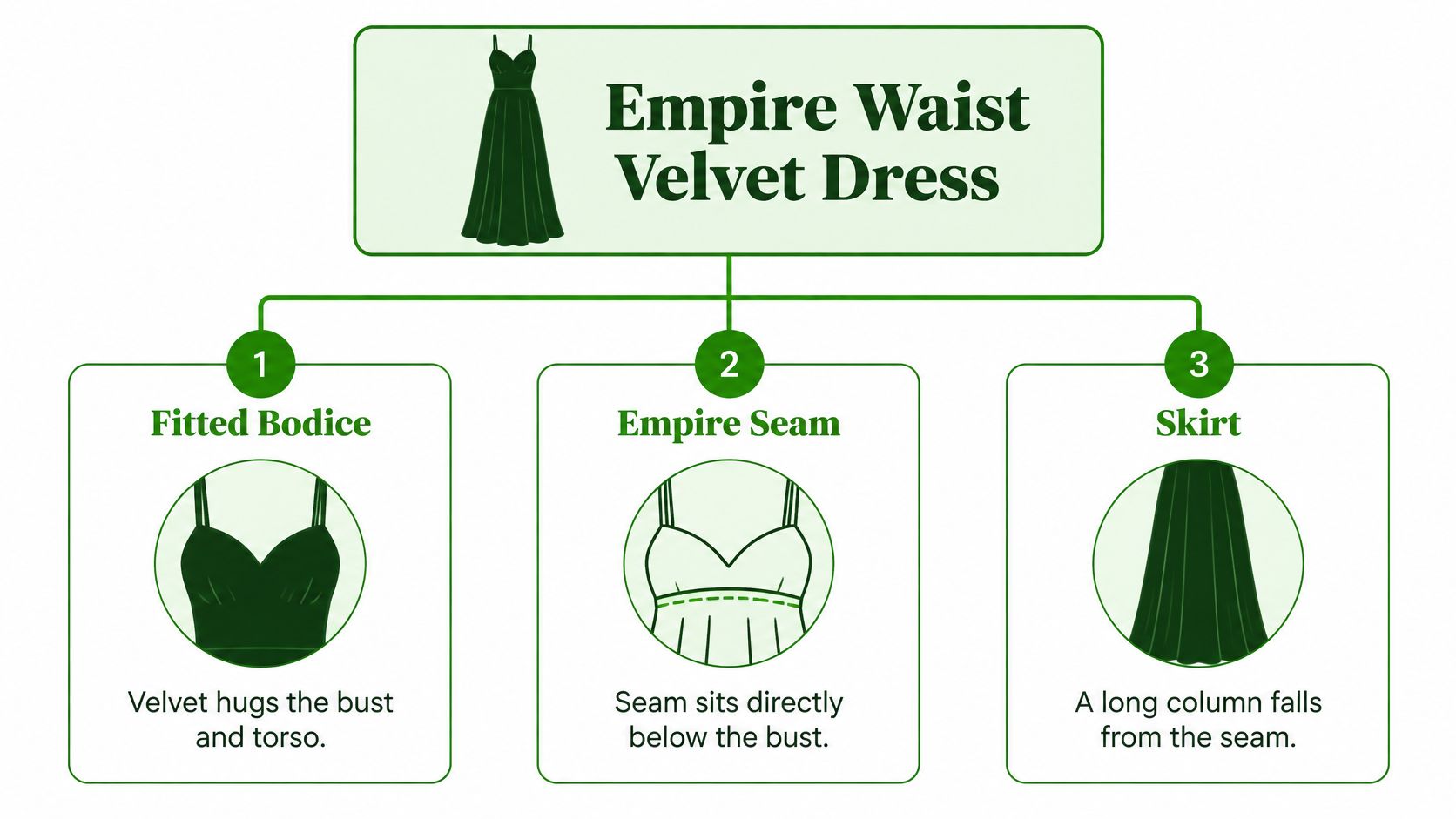
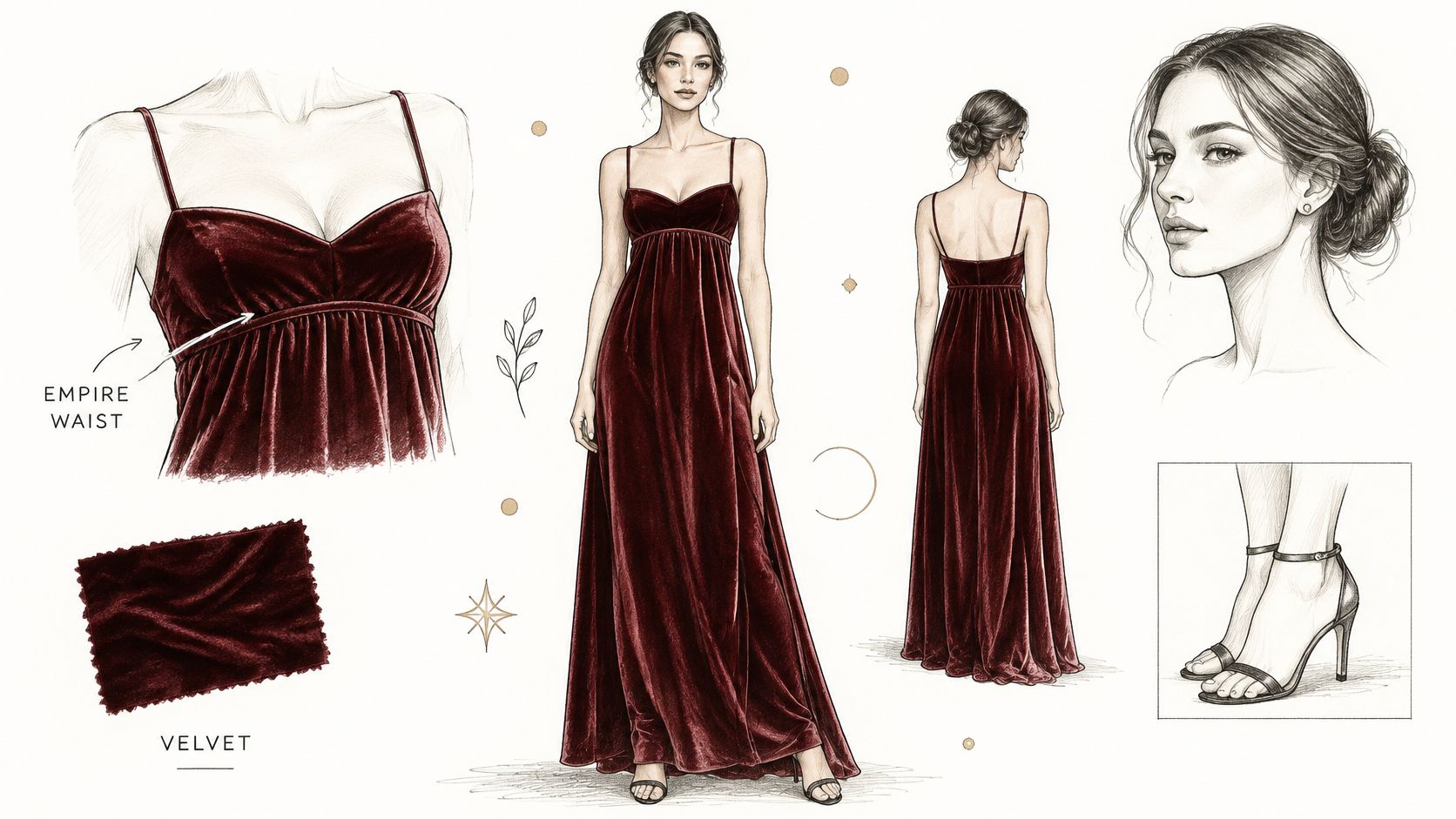
An empire waist velvet dress places its shaping seam directly below the bust, with the skirt falling from that point in a long column or controlled flare. The fitted bodice shapes the upper torso, the empire seam divides bodice from skirt, and the hem determines where that vertical line ends.
The seam works like a horizon in a painting. Its position changes the balance of everything above and below it: a higher division emphasizes the bust and lengthens the apparent lower body, while generous gathering beneath it creates more volume.
The Kingsbridge Museum costume gallery places this silhouette within the Directoire and Empire period, approximately 1795–1820, with the waistline reaching its highest position around 1816 and returning to the natural waist by about 1825. That history explains why the shape reads as Regency-inspired rather than merely vintage.
What the velvet surface changes
Woven velvet contains extra yarns raised and cut into an upright surface called pile. Light catches those fibers differently as the garment moves, which explains the depth of color and the shifting sheen.
Fashion Informed's empire-waist guide gives commonly cited woven-velvet specifications of approximately 100–400 g/m² face weight, 0.5–3.0 mm pile height and 200–600 pile loops per cm². These are textile ranges, not specifications for every dress sold as velvet.
Think of the difference between a closely cut lawn and a thick carpet. Longer, denser pile generally feels more substantial and produces stronger light-and-shadow effects; shorter pile can look smoother and less plush. Pile length alone doesn't determine drape, however. The backing, fiber blend, lining and construction also matter.
Velvet weight and pile by use on an empire silhouette
The following bands are shopping shorthand, not standardized fabric classifications.
| Velvet weight band | Face weight | Best use on this cut |
|---|---|---|
| Lightweight | Lower end of the cited range | Flowing skirts, prom and daytime movement |
| Mid-weight | Middle of the cited range | Evening dinners and holiday wear |
| Heavy | Upper end of the cited range | Gala looks and structured bodices with rich sheen |
Lighter velvet usually allows a gathered skirt to fall with less bulk. More substantial velvet can support a crisp bodice, but too much fabric beneath the seam can make the dress stand away from the body. Dense pile also makes compression marks more noticeable.
Fabric check: An empire silhouette doesn't establish that a dress is velvet. The product description needs to confirm the fabric and fiber content before the shopper judges it as a velvet option.
Which Occasions Suit an Empire Waist Velvet Dress
A winter dinner invitation, a holiday party, and a black-tie gala call for different versions of an empire waist velvet dress. Start with the event and the movement it requires, then choose a length and finish that fit. Velvet's richness suits evening and cool-season occasions, but the fabric alone does not make a dress formal.
A floor-length skirt can feel restrained at a gala. A shorter, fuller skirt with the same raised seam reads more playful at a holiday party. Neither length flatters by default; the better choice suits the setting and feels intentional without accessories having to correct a mismatch.
Empire waist velvet dress by occasion
| Occasion | Recommended length | Velvet finish |
|---|---|---|
| Gala or black tie | Floor-length or formal midi | Black or deep jewel tone, structured pile |
| Holiday party | Midi or tea length | Rich color, medium pile |
| Prom | Floor-length or midi | Saturated color with a soft drape |
| Evening wedding guest | Midi or floor-length | Muted or dark tone; avoid white and ivory |
| Winter dinner or cocktail | Knee or midi | Softer pile for daytime-to-evening wear |
Choose the event before the details
For a gala or traditional black-tie invitation, floor-length is the safer starting point. A midi can work when its finish reads as formal and the setting allows it. A casual stretch-velvet midi remains casual, even with a sheen.
Holiday parties allow more flexibility. A tea-length skirt in a rich color brings presence without the practical demands of a floor-length hem. Velvet adds warmth in appearance, but it should not replace outerwear.
Prom calls for movement as well as photographs. Check that the draped skirt clears the feet during a turn and that the bodice stays secure without constant adjustment. A dress that needs repeated fixing can distract from the event.
For an evening wedding, muted or dark velvet generally feels more appropriate than bridal-looking white or ivory. A cold-weather rehearsal dinner may be less formal than the wedding itself; the winter rehearsal dinner dressing guide offers an occasion-specific reference.
Compare actual dress options
The L'Agence- Caprice Strapless Midi Dress is a named strapless midi option to consider for occasionwear. Its product description does not establish velvet fabric or an empire seam, so assess it as a comparison rather than an exact match. Check the listed fabric and construction against the dress you need, then judge whether its length and formality suit the invitation.
Fit Checks for Seam Height and Bust Proportion
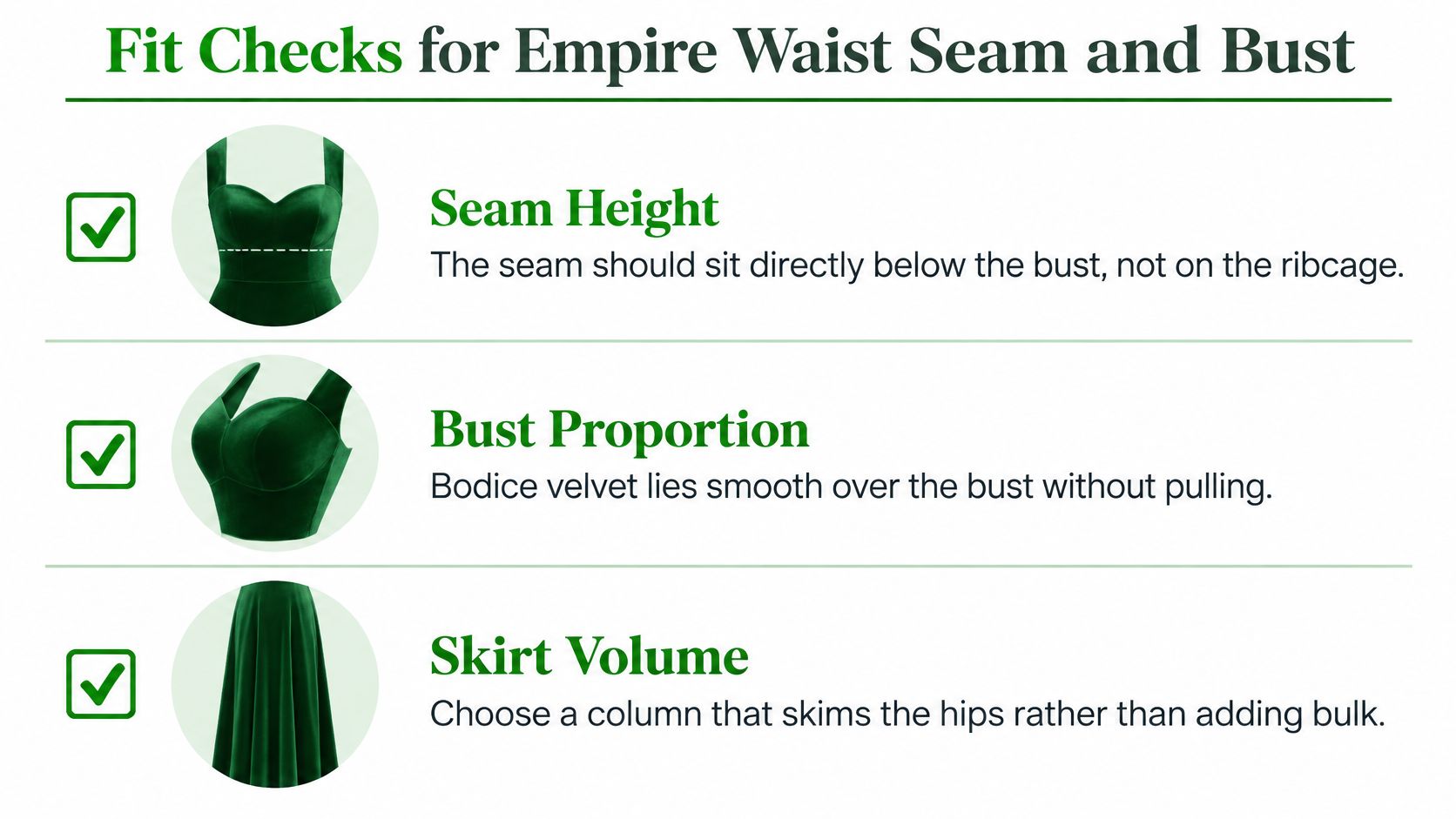
An empire waist isn't universally forgiving. Its success depends on seam height, bust proportion and skirt volume, not merely a raised waistline.
TextileTuts' empire-waist construction guide gives roughly 5–8 cm below the bust apex as a construction reference and warns that overly high placement can cross the bust or interfere with coverage. The apex means the fullest projecting point of the bust, not the lower breast crease.
That range is a starting reference, not a body-type formula. The seam must clear the breast tissue and rest comfortably beneath it; lowering it too far creates a longer bodice and weakens the intended empire proportion.
Seam placement and sizing by body type
These are fitting directions to test on the body, not guaranteed measurements for a particular figure.
| Body type | Seam placement | Size by | Check before buying |
|---|---|---|---|
| Petite | Start toward the higher end of the placement range, clearing the bust | Bust, then hem length | Long skirts can overwhelm; compare midi or tea length |
| Tall | Test a slightly deeper bodice within the reference range | Bust, then bodice length | Maxi skirts can maintain a balanced vertical line |
| Long torso | Allow enough bodice depth without approaching the natural waist | Bust and back length | The raised seam should remain visibly distinct |
| Short torso | Prioritize bust clearance over the highest possible seam | Bust and usable bodice depth | Excessively high placement can crowd the upper body |
| Fuller bust | Choose enough depth for the seam to sit beneath breast tissue | Bust, with bodice ease | Bra coverage, side exposure and gaping |
| Postpartum | Adjust placement for current bust shape and comfort | Bust and underbust, with extra ease | Stretch content and pressure beneath the bust |
A petite shopper doesn't automatically need a very high seam, and a tall shopper doesn't automatically need a lower one. Bust projection and shoulder-to-bust length can matter more than overall height.
For a fuller bust, extra skirt fabric won't solve insufficient bodice depth. For a short torso, a crowded neckline and high seam can compress the upper body visually even when the dress closes comfortably.
Measurements and movement checks
- Measure the upper body: Record bust, underbust, natural waist and shoulder-to-proposed-seam length while wearing the intended bra.
- Read the construction: Don't assume stretch. Check fiber content, any stated stretch, lining and closure before choosing a size.
- Test movement: Raise the arms, reach forward and sit. A seam that climbs onto the bust or cuts into the ribs needs attention.
- Inspect the whole outline: Check the side view and hem in a full-length mirror. Excess gathering can project over the abdomen rather than skim it.
A comfortable skirt cannot compensate for a bodice that's too small.
The body-type dressing guide offers broader proportion ideas, but the decisive test remains the actual garment. The styling team at either Oklahoma boutique can help distinguish a size issue from a cut that just isn't suitable.
How to Style Your Empire Waist Velvet Dress
For a winter dinner, a midi velvet dress can feel balanced with a low block heel and a fitted blazer. Keep the rest of the look restrained: the raised seam and velvet already give the outfit a clear focal point. Choose accessories that add contrast in texture or shape without competing with the fabric.
Footwear and jewelry
For gala and prom looks, pointed pumps or strappy heels keep a long hem visually light. Metallic finishes add brightness against dark velvet without introducing another large area of color. For holiday outfits, ankle boots or metallic block heels work well with a midi.
- Gala and prom: Pair a long skirt with pointed pumps or strappy heels and drop earrings.
- Holiday party: Combine a midi with ankle boots or metallic heels and a compact clutch.
- Evening wedding: Choose pointed pumps and a slim chain that stays within the neckline.
- Winter dinner: Wear a fitted blazer over a midi with a low block heel.
Leave breathing room around the bodice. A slim chain suits an open neckline, while drop earrings can balance a detailed one. A long pendant that lands on the empire seam may look misplaced and catch against the velvet.
Bags and layers
A structured clutch offsets a fluid skirt. A small crossbody can suit a relaxed holiday gathering, but check that its strap does not drag across the bodice or cut diagonally through a formal look.
A neutral wool coat can frame burgundy, green or navy velvet without needing an exact color match. For the blazer, check that it closes or hangs smoothly over the raised seam rather than bunching at the waist.
Styling rule: Avoid velvet layered over velvet. A thin ribbon or belt belongs at the seam only when the bodice is plain and the added line improves the proportion.
For more finishing ideas, use this outfit accessorizing guide to choose jewelry, bags and shoes that support the dress rather than crowd it.
Caring for Velvet Before, During and After the Event
Pressure bends velvet's upright pile; heat or wet pressure can set it flat, leaving a shiny or dull patch. On an empire dress, the bust, underarm and upper abdomen deserve particular attention because the garment naturally makes contact there.
The velvet fabric care guide advises against direct ironing and describes hovering steam or using a velvet board instead. Fiber content and the garment's care label remain the first checks because different velvet constructions don't tolerate identical treatment.
Store and transport without compression
- Support the dress: Use a padded hanger that carries the garment without stretching its shoulders. Heavy skirts may need additional support from the garment's hanging loops.
- Leave breathing space: Choose a breathable garment bag rather than plastic and avoid wedging the dress between other clothes.
- Travel hanging when possible: Keep the skirt extended in its bag instead of pressing it into a tightly packed case.
- Reduce event friction: Move rough straps away from the pile and smooth the skirt before sitting rather than sliding across the seat.
FASHION's velvet care guide recommends hanging rather than folding, keeping velvet from touching neighboring garments and seeking professional guidance before brushing the nap. Brushing aggressively can turn a minor mark into a larger damaged area.
For unavoidable packing, the dress-packing guide provides broader transport planning. Velvet still needs special protection from hard folds and pressure.
Let the surface recover before treating it again
A shipped dress should be unpacked and hung promptly. If the care instructions permit steaming, test an inconspicuous area, hold the steamer away from the fabric and avoid saturating the pile; then let the garment cool and dry undisturbed.
Don't place a hot steamer head against the surface or press a towel over a mark. Persistent flattening, water spots and uncertain fiber care are reasons to consult a professional cleaner rather than repeat home treatments.
Velvet symptoms, causes and fixes
The steam suggestions below apply only when the garment's care instructions permit them.
| Symptom | Likely cause | First fix |
|---|---|---|
| Shiny flat patch | Direct iron or wet pressure flattened the pile | Steam from a short distance, let cool, don't brush |
| Creases at the bust or underarm | Folded in luggage or packed tightly | Hang, steam from a short distance and allow recovery |
| Dull rubbed patch at the hip or skirt | Friction from a purse strap, seat or coat lining | Steam lightly and leave to recover; seek professional cleaning if persistent |
| Pressure marks after shipping | Packed flat or stacked against other garments | Hang, steam from a short distance and contact the boutique team if marks remain |
| Water spots | Water exposure on the pile | Professional cleaning; don't soak or rub at home |
Shop Empire Waist Velvet Dresses at Cedar & Lily
Before choosing an event dress, check its product page for fabric, lining, care instructions and the size chart. Those details matter particularly for velvet, where a photograph may show color and sheen without identifying the fabric or explaining how it will wear.
Cedar & Lily's designer assortment editorial highlights labels carried by the boutique. Its occasionwear shopping guide also describes a range that includes dresses, jumpsuits, separates, jewelry and handbags, so you can plan an outfit around the dress rather than shop for each piece in isolation.
A useful browsing path
- Start with dresses: Narrow the options by length and event formality, then read the fabric description. Color and sheen in a photograph do not confirm velvet.
- Check the construction: Look for the seam position and bodice details, then review the fiber content, stretch statement and lining. These details help you assess how the dress may sit through the bust and underbust.
- Read the care instructions: Velvet pile can show pressure or handling, so check the garment's care guidance before deciding whether it suits your plans.
- Add accessories last: Once the neckline, color and formality are settled, compare jewelry and handbags that work with the dress.
The Annabelle Maxi Dress is described in vibrant colors and comfortable fabric. The description does not confirm velvet or an empire waist, so consider it a broader occasionwear option, not an exact match.
If the product page leaves the fabric or seam placement unclear, ask the team before ordering. Include the event, preferred length, bust and underbust measurements, and whether the dress needs to travel. A clear fit question can help you judge whether the silhouette suits your proportions before the occasion.
Try On Your Velvet Empire Dress in Tulsa or Jenks
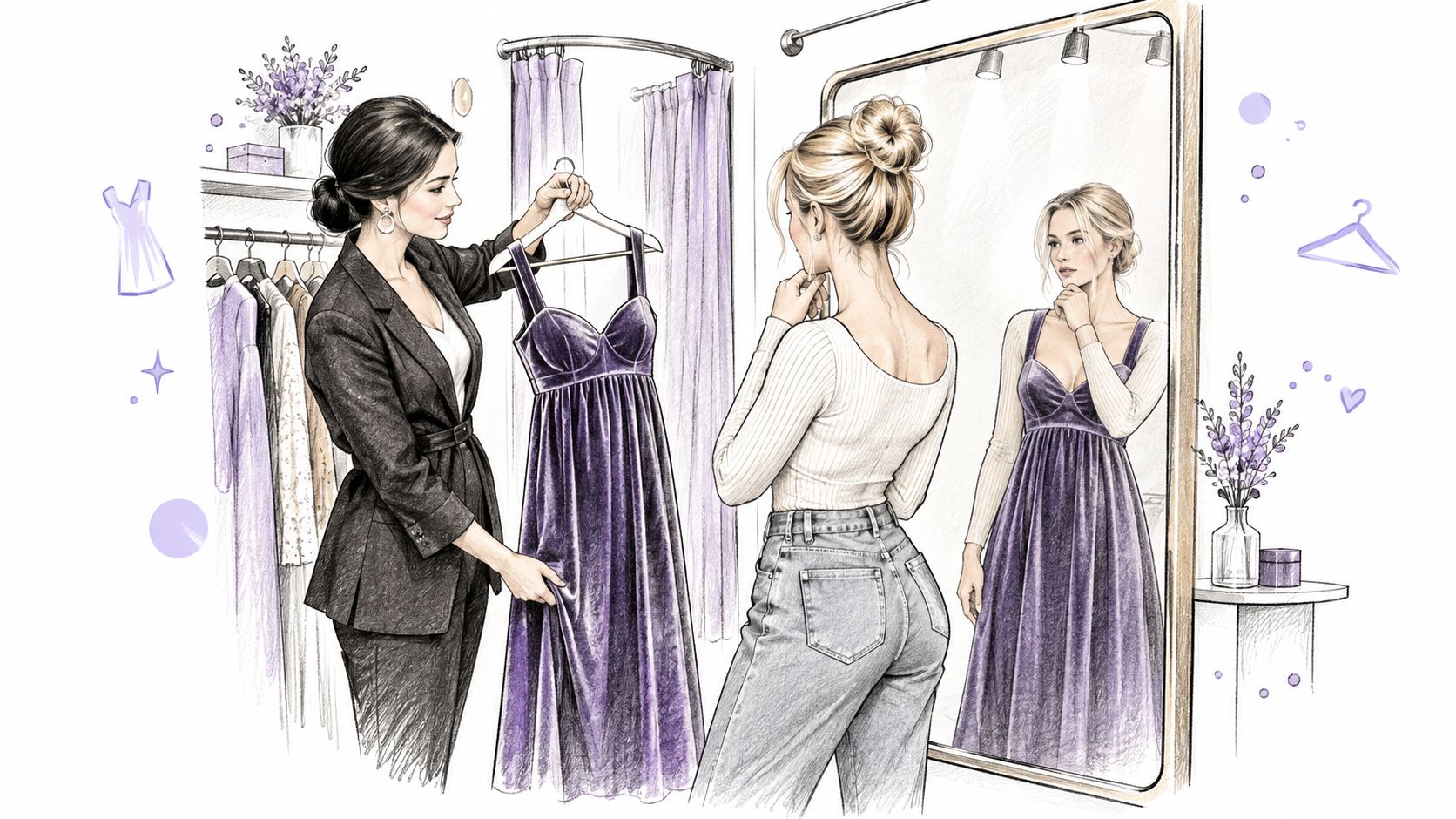
An in-person fitting makes velvet easier to judge because the shopper can compare seam placement, sheen and fabric weight while the team assesses the complete outfit. The boutique's store information page lists two Oklahoma storefronts, at Utica Square in Tulsa and in downtown Jenks, with the addresses and hours below.
Cedar & Lily Clothier storefronts
| Location | Address | Listed hours |
|---|---|---|
| Utica Square, Tulsa | 2052 Utica Square, Tulsa, OK | Tue–Sat 11 a.m.–7 p.m.; Sun noon–5 p.m. |
| Downtown Jenks | 121 E. Main St., Suite 105, Jenks, OK | Tue–Sat 11 a.m.–6 p.m. |
Listed hours can change, so shoppers should confirm before visiting. Asking about local size availability beforehand also helps make the visit more focused.
Make the fitting useful
- Bring the intended foundations: The event bra and shoes make it easier to judge coverage, posture and hem length.
- Check standing and seated: The team can assess whether the seam remains comfortable and whether the skirt falls cleanly after movement.
- Ask for a surface inspection: Directional light helps distinguish normal shading from inconsistent nap direction or pressure marks.
- Discuss alterations before committing: Hem adjustments may be straightforward; relocating an empire seam can affect the entire bodice.
The women's tailoring guide offers context for deciding whether an adjustment is worthwhile. For a specific wedding, gala or holiday event, contacting the team with the invitation details is a practical first step toward a focused fitting.
Curated designer dresses, jewelry, handbags and personal styling help are available through Cedar & Lily Clothier. Visit Utica Square in Tulsa or downtown Jenks to compare occasionwear in person, or reach out for help finding an empire-inspired silhouette with the right fabric, proportions and finish.