

A customer needs one dress that works for a morning meeting, school pick-up, and dinner later that evening, and she's tired of buying pieces that look right online but gape, pull, or ride up in real life. That's exactly where wrap denim dresses earn attention, and it's also where shoppers get tripped up. The wrap promises adjustability. Denim promises structure. Put together, they don't automatically promise a perfect fit. The waist adjusts, but the bust, shoulders, and hips don't. That's the detail that decides whether the dress gets worn weekly or returned.
Table of Contents
- What a Wrap Denim Dress Actually Is
- How a True Wrap Construction Works
- Denim Fabric Weight and Stretch Explained
- Getting the Fit Right Across Bust, Waist, and Hips
- Styling a Wrap Denim Dress From Office to Evening
- Caring for Denim So It Keeps Its Shape
- How to Buy a Wrap Denim Dress With Confidence
- Your Next Step With Cedar & Lily
What a Wrap Denim Dress Actually Is
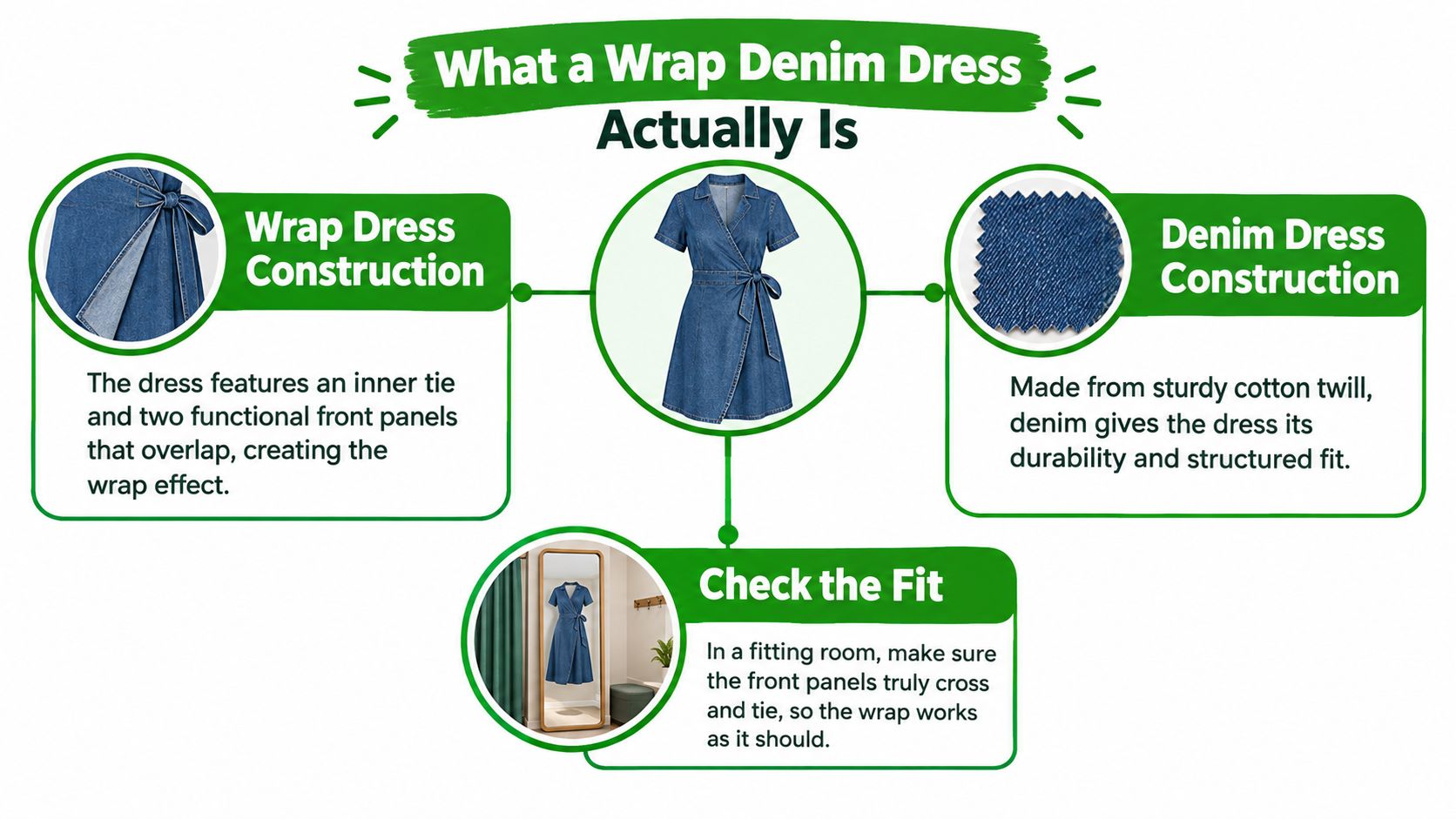
A regular customer stands in a fitting room holding two sizes, certain the smaller one should work because the label says wrap. She ties it, looks down, and finds the crossover pulling across her bust while the waist feels fine. That moment explains the garment better than any trend description. A wrap denim dress isn't a forgiving jersey dress in blue. It's a structured cotton twill dress closed by overlapping front panels and a tie.
The silhouette has proven staying power. The wrap dress became a milestone in 1974, when Diane von Furstenberg introduced a knitted jersey version with a V-neck, overlapping front panels, and a waist tie, with production reportedly reaching 25,000 dresses per week and sales exceeding 1 million units by 1976, as documented in the designer's fashion history record. Denim brings a different history, one rooted in durability that later moved into fashion and haute couture. That combination is the point. Proven closure, firmer cloth.
The Three Decisions That Matter
A shopper really makes three choices, whether she names them or not. She chooses fabric weight, which controls drape and bulk at the tie. She chooses waist placement, which controls whether the crossover lies flat or strains. She chooses styling context, because a dress that works with a blazer at the office needs enough polish to survive without it at dinner.
Readers who want the basic silhouette defined first can start with a clear explanation of what a wrap dress is, then apply the denim-specific checks below. The short version is opinionated but fair. Buy a wrap denim dress for its adjustable waist and clean line, not on the assumption that wrap means one size flatters every proportion. Denim shows proportion. It doesn't hide poor fit the way a soft knit can.
The fitting room test: If the front panels don't truly cross and tie, the dress isn't a true wrap, whatever the tag calls it.
That distinction shapes every recommendation that follows, from sizing to care to where the dress should be tried on.
How a True Wrap Construction Works
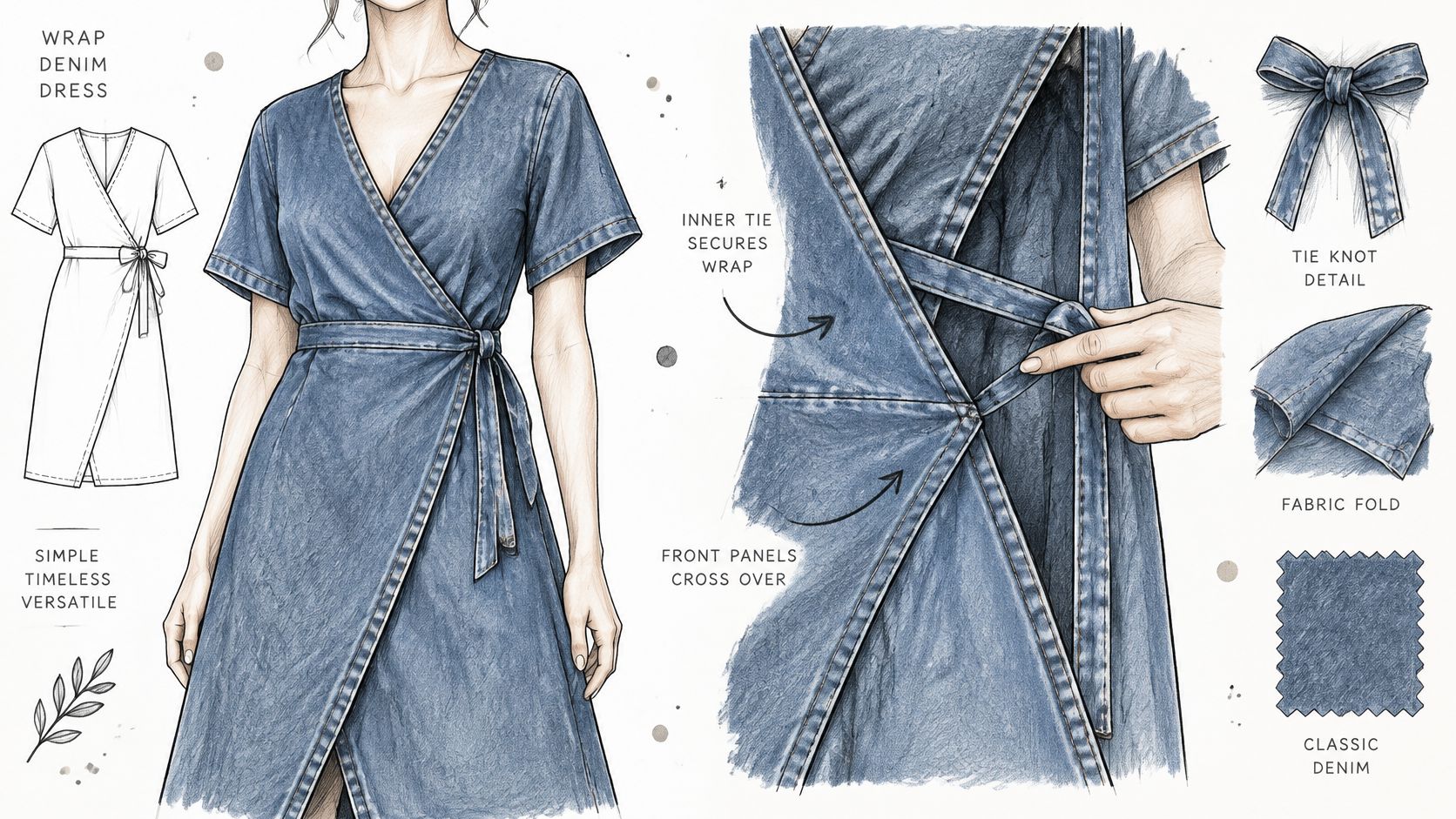
A true wrap is built from two functional front panels. One panel crosses over the other, and adjustable ties close the garment rather than relying only on a fixed seam, zipper, or buttons, as described in this breakdown of wrap dress construction. The inner tie commonly passes through a slit in the side seam. The outer tie then wraps around and secures at the waist.
That mechanism does real work. It lets the wearer change waist tension after lunch, over a thin layer, or across small fluctuations that would make a fixed-waist denim dress feel suddenly wrong. It also creates the clean diagonal line across the torso that makes the silhouette recognizable. In denim, that line looks sharper because the cloth holds an edge.
True Wrap Versus Faux Wrap
A faux wrap only imitates the look. The front is permanently sewn or snapped in place, so the wearer gets the crossover neckline without the adjustability. That isn't automatically bad. A faux wrap can feel more secure for a shopper who hates retieing or worries about the skirt opening in wind. The problem is expectation. A faux wrap shouldn't be bought for flexibility it doesn't offer.
Denim makes the difference more consequential. Museum and academic sources describe denim as a heavy, warp-faced cotton twill valued for durability, and collections include denim garments from the nineteenth century onward, as traced in this museum history of early denim. A fabric with that much presence doesn't stretch its way out of a fit problem. If the shoulder is narrow, the tie won't fix it. If the hip panel is short on coverage, tightening the waist makes it worse.
- Check the inner tie: It should anchor the under-panel so the skirt doesn't drift open while walking.
- Check the outer tie length: It should wrap and knot or bow without pulling the side seam forward.
- Check the overlap: The under-panel should extend far enough across the body that sitting doesn't expose the thigh.
A well-made wrap denim dress moves with the wearer because the closure gives at the waist while the panels stay put. A poorly judged one fights her all day, usually at the bust first.
Denim Fabric Weight and Stretch Explained
Fabric weight decides whether a wrap denim dress reads polished or stubborn. Technical references place light denim around 200 to 300 g/m² and heavier denim around 300 to 600 g/m², with finished denim spanning approximately 3.5 to 16.5 oz/yd², according to technical denim weight data. For a dress meant to go from office to evening, the practical target is roughly 200 to 350 g/m², or about 6 to 10 oz/yd², based on the same weight ranges in that technical data. That range gives the overlapping panels enough body to hold shape without the stiffness of bottom-weight cloth.
A textile reference places lightweight shirt denim at approximately 8 to 10 ounces, jeans-weight denim at 10 to 14 ounces, and structured outerwear denim at 14 ounces or more, as set out in this guide to denim fabric construction and weight. Denim is a warp-faced twill, so the diagonal line and lighter reverse side come from how the dyed warp yarns pass over the weft. Shoppers who already know their preferred jean weight have a head start, and guidance on choosing the perfect jeans helps translate that knowledge to a dress.
| Weight Range | Typical Use | Drape on a Wrap Dress | Best For |
|---|---|---|---|
| Lightweight shirt denim | Shirts and soft dresses | Fluid, low bulk at the tie | Warm days, travel, layering |
| Light to medium dress weight | Polished day dresses | Holds panel shape with easier movement | Office to evening wear |
| Jeans weight | Jeans and structured pieces | Defined, firmer crossover, thicker tie | Cooler weather, strong structure |
| Heavy structured denim | Outerwear | Stiff panels, drag at closure | Rarely ideal for a wrap dress |
Stretch Means Little Without Recovery
The word stretch on a label tells a shopper almost nothing. In a controlled study, weft yarns containing approximately 1.8%, 1.9%, 2.0%, and 2.5% spandex were compared, and increasing spandex produced a positive trend in stretchability and stretch-growth recovery while reducing fabric growth, as reported in the controlled stretch denim study. The same study reported sample-to-sample stretch differences as high as 11.11% relative to the lowest-performing construction, according to that study's results. Similar percentages, different behavior after wear.
The in-store test is simple. Stretch the fabric across the width, release it, and repeat several times at the crossover edge and waist. The cloth should return to its original dimensions without a wavy edge. Heavier denim can resist creasing and sharpen panel definition. It can also drag at the tie, reduce fluidity across the bust and hips, and make the opening pull while sitting. After two hours at a dinner table, recovery matters more than the first impression in the mirror.
Stretch that doesn't recover is just a dress slowly changing size during the day.
The recommendation is direct. Choose lightweight to medium denim for a polished wrap, and never buy stretch denim without testing whether it springs back.
Getting the Fit Right Across Bust, Waist, and Hips
The most common mistake is sizing a wrap denim dress to the waist. The tie makes the waist feel solved in the first thirty seconds, even when the bust is straining or the hip panel is too short. Denim then exposes the problem slowly, through gaping when arms lift, pulling when the wearer sits, and a hem that climbs with each step. Adjustable doesn't mean forgiving. It means one measurement flexes while the others stay fixed.
That distinction matters beyond one fitting room. Poor fit is cited by 61% of consumers as the main reason for returning clothing, according to a recent synthesis on apparel returns and fit. A wrap style lowers return risk only when the shopper sizes for the least flexible area first. For most women, that means the bust or the hips decide the size, and the tie finishes the waist.
The Fitting Room Checklist
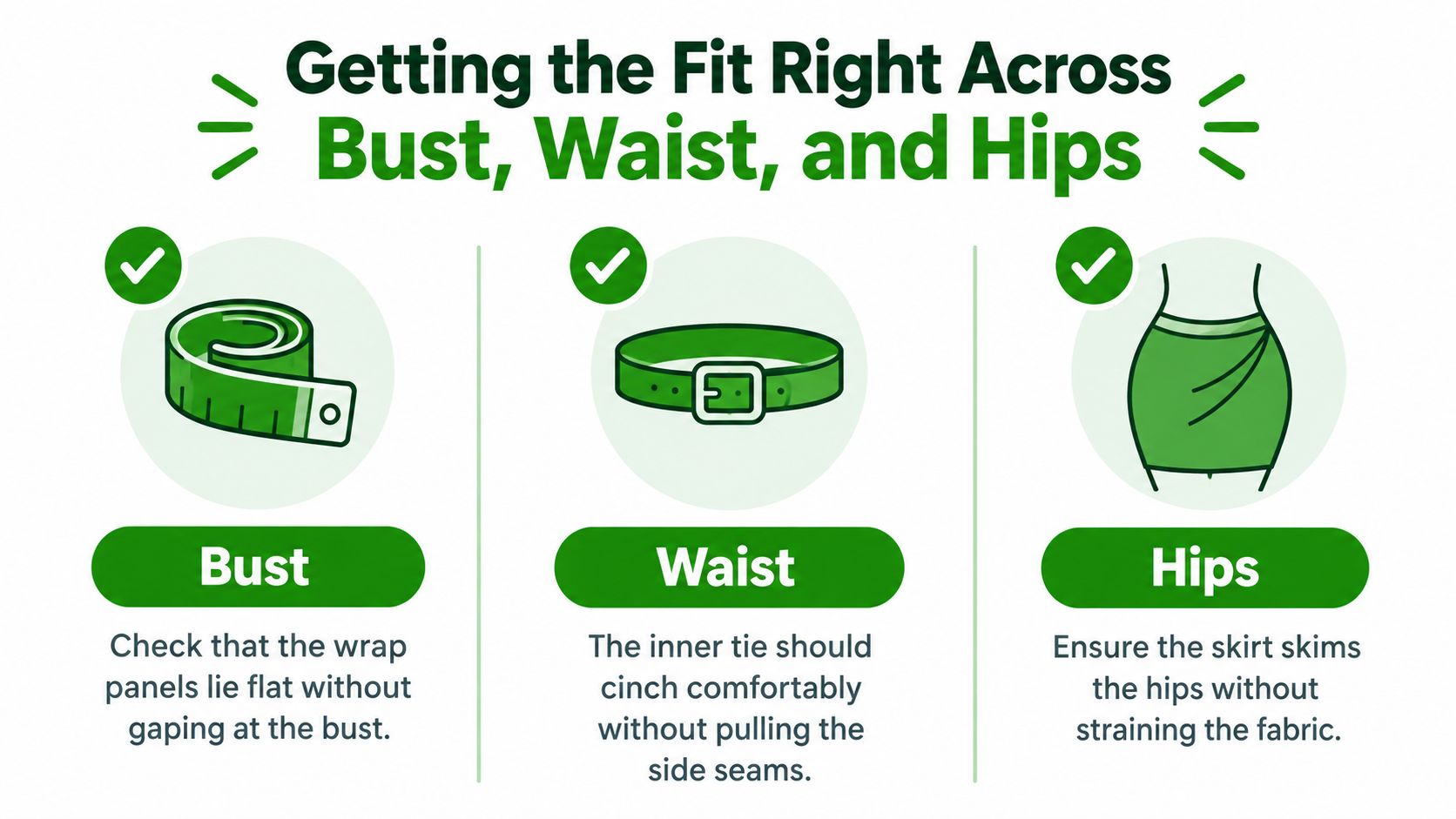
- Bust coverage first: The panels should lie flat with secure overlap, and the neckline shouldn't gape when she raises her arms or leans forward to pick up a bag.
- Waist placement second: The tie should rest near the natural waist, not climb toward the ribcage or drop onto the upper hip, a placement check emphasized in this wrap dress fit guidance.
- Hip and skirt movement third: The skirt should skim without straining, and the under-panel should stay in place while walking at a normal pace.
- Seated test last: She should sit, cross her legs the way she does, stand, and check whether the crossover still looks composed.
Tie tension deserves its own warning. Pulling the tie tighter to create waist definition can lift the fabric across the bust and strain the neckline. If the tie rides upward, the bodice may be too short or the waist anchor sits in the wrong place for her torso. A longer torso often needs a longer bodice, not a bigger overall size. A fuller bust often needs the next size up, with the waist tied closer or adjusted. Those are different problems with different fixes, and guessing between them is how good dresses get returned.
Shoppers who want proportion language before measuring can use practical guidance on dressing for body type as a starting point. Then the tape measure takes over. Bust, natural waist, and fullest hip should be recorded separately and compared with garment measurements, not just a size label. Denim's structure makes proportion visible, which is useful. Horizontal pull lines tell the truth quickly. So does a side seam that swings forward.
One contrarian rule is worth keeping. If the bust fits and the waist feels generous, that's usually fixable with tie placement or light tailoring. If the waist looks perfect and the bust pulls, no amount of tying fixes it. Size for the fixed measurement. Let the adjustable one do its job.
Styling a Wrap Denim Dress From Office to Evening
A wrap denim dress earns its closet space when one purchase covers three distinct days. The styling logic comes from the garment itself. The crossover neckline gives a finished V that takes jewelry well. The tie creates a waist that layers can either highlight or interrupt. The structured hem holds a cleaner line than a soft knit, so shoes and outer layers set the formality quickly.
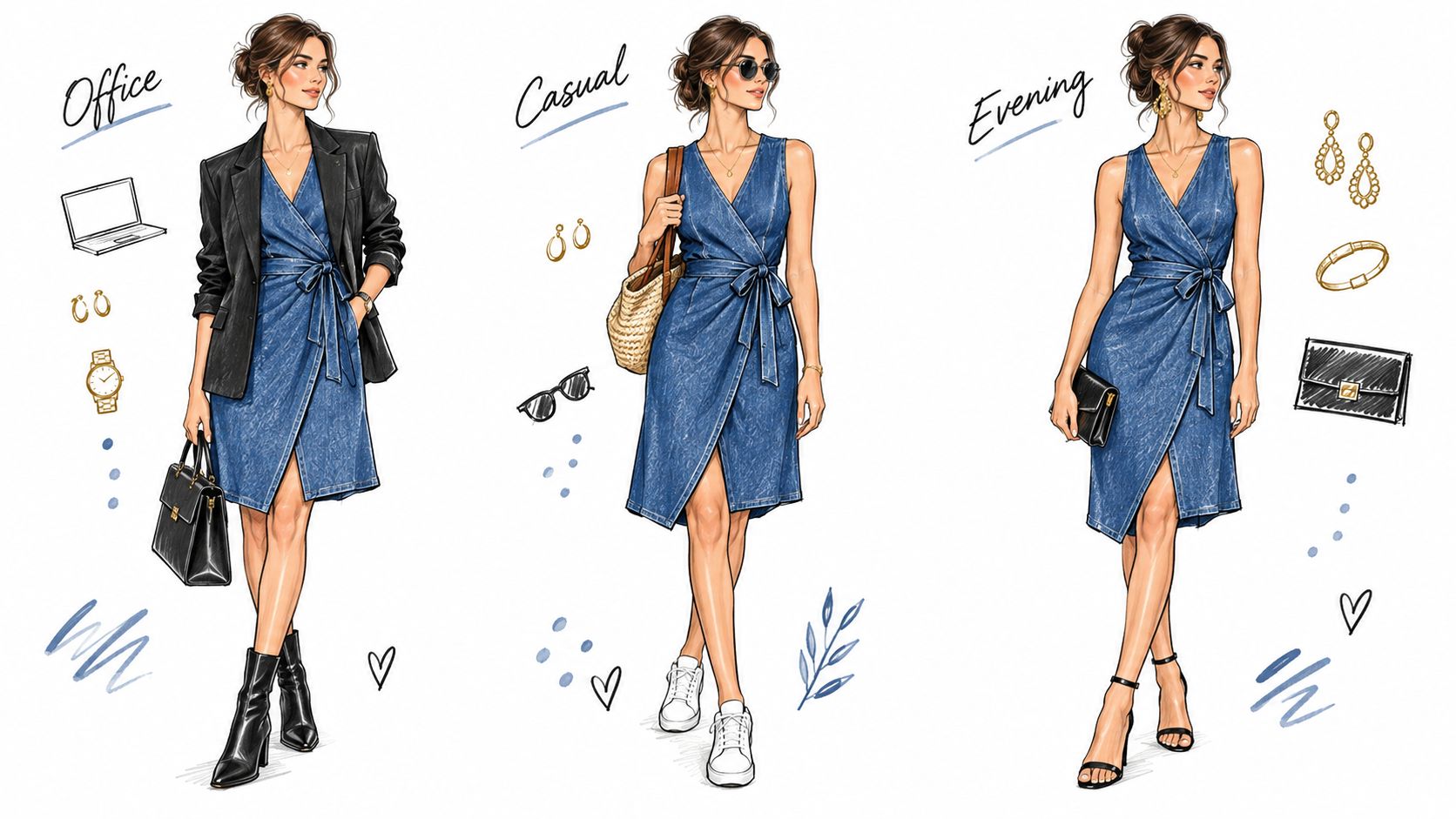
Office Formula
For work, the strongest formula is a blazer, a closed-toe boot or loafer, and simple gold jewelry. The blazer should be worn open or removed at the desk rather than belted over the tie, because stacking closures at the waist adds bulk exactly where denim is thickest. A darker, cleaner wash reads most polished here. Faded, heavily whiskered denim pushes the whole outfit casual no matter how good the blazer is. The V-neck should sit at a professional depth when seated, not just standing, which circles back to the bust fit check.
Weekend Formula
Weekend styling should relax the structure, not fight it. A soft knit draped over the shoulders, clean sneakers or a Western-influenced boot, and a slouchy bag make the same dress feel easy. Untying and retying the waist slightly looser changes the mood more than shoppers expect. This is also the version that travels well, because the tie accommodates a long lunch and the denim resists looking rumpled after a car ride. Lightweight fabric wins here. Heavy denim on a warm Oklahoma afternoon will sit in the closet, however good it looked in an air-conditioned store.
Event Formula
Evening requires the least clothing change and the most deliberate accessories. A heel, a refined earring, and a sleek clutch let the neckline and waist do the work. Hair up shows the crossover line. A stronger lip does more than adding another layer. The mistake to avoid is over-accessorizing denim until it looks like it's apologizing for being denim. It doesn't need to. A dark wrap denim dress with a clean tie and a good shoe reads intentional at a gallery opening, a birthday dinner, or a patio event.
Shoppers curious about pairing denim with denim jackets or boots can borrow proportion rules from this guide to wearing denim on denim, mainly the principle of separating washes clearly. At Utica Square in Tulsa or in downtown Jenks, a stylist can pressure-test these combinations in person, with the actual shoes and blazer the customer plans to wear. That's worth doing, because a blazer that covers the tie bow changes the proportions, and a boot shaft that meets the hem at the widest point of the calf changes the whole leg line.
One dress, three formulas only works when the wash is versatile enough for all three. Medium-dark and clean beats trendy every time.
Caring for Denim So It Keeps Its Shape
Denim care is really shape care for a wrap dress. The pieces most likely to fail aren't the skirt or sleeves. They're the waist tie, which can shrink or twist, and the crossover edge, which can lose its crisp line. Every wash decision should be judged by what it does to those two areas and to the contrast at the seams that gives denim its visual signature.
Wash Less and Wash Cold
Frequent hot washing fades the color unevenly and softens the contrast that makes the panels readable. The practical rhythm is to wash only when the dress is visibly soiled, spot-treat small marks between washes, and air the dress after wear. When washing is needed, turning the dress inside out and using cold water protects both the color and the slight stretch that makes the crossover comfortable. The ties should be untied before washing so they don't set in a twisted knot shape.
Skip the Dryer
Heat is the single biggest risk to tie length. A shrunken tie changes how far the outer panel wraps, which changes bust coverage, which is a fit problem disguised as a laundry accident. Air-drying flat or on a sturdy hanger keeps the tie at full length and helps the panels dry smooth. If the crossover edge looks soft after drying, a warm iron or steamer along the edge restores the line without pressing a hard crease into the skirt.
- Before washing: Empty pockets, untie both ties, and turn the dress inside out.
- During washing: Use cold water and a gentle cycle, and wash with similar dark colors because denim can transfer dye.
- After washing: Reshape the crossover by hand, smooth the ties flat, and dry away from direct heat.
- Between wears: Hang the dress so the panels rest in their natural crossed position.
Storage finishes the job. Folding directly across the crossover line can press a ridge into the panels that shows every time the dress is worn. Hanging by the shoulders, or rolling for travel, keeps the diagonal line clean. Judged at month six rather than delivery day, good care is the difference between a dress that still ties where it should and one that slowly migrates toward the ribcage. That isn't a fabric defect. It's a dryer habit, and it's entirely avoidable.
How to Buy a Wrap Denim Dress With Confidence
Online shopping handles part of this purchase well. Browsing silhouettes, reading fabric weights, and comparing washes are all easy on a screen. The hard part is specific to this garment. Denim hand-feel, crossover security, and tie behavior can't be judged from a photograph, and those are precisely the qualities that decide whether the dress works. Online apparel is reported as the most-returned major category at 24.4%, with size and fit cited as the leading reason by 53% of sellers, according to fashion ecommerce benchmark data on returns.
An in-store try-on removes most of that guesswork in fifteen minutes. At Cedar & Lily Clothier, fit help, fast shipping, free shipping on orders of $250 or more, and complimentary gift packaging over $100 lower the risk of either path, and the Utica Square in Tulsa and downtown Jenks storefronts let a shopper sit, walk, and retie before paying. Shoppers building around versatile staples can also use a capsule wardrobe approach to buying fewer pieces intentionally to judge whether a wrap denim dress fills a real gap.
Preparation helps both routes. She should know her bust, hip, and natural waist measurements, and bring or wear the shoes planned for the dress. Checking pre-owned and resale options can also inform wash and sizing research, and browsing Idaho Pawn & Gold Exchange clothing gives a sense of how denim pieces are described and categorized secondhand. For a polished pairing, the Selma H/R Sleek Baby Boot from L'Agence pairs sleek design with high-quality material, and it is available in 23 variants across its options. That kind of boot tests hem length directly. A dress judged only in bare feet often surprises later.
Your Next Step With Cedar & Lily
The decision now is simple. A wrap denim dress either fits the bust and hips, ties at the natural waist, and survives sitting and walking, or it doesn't, and no styling trick rescues it. Getting that verdict before purchase is the whole advantage of trying the dress with help rather than ordering two sizes and hoping.
Three next steps work equally well. She can book a styling appointment and bring the blazer or boots already in rotation. She can visit Utica Square in Tulsa or downtown Jenks to try wrap styles in person and compare fabric weights side by side. Or she can shop the current collection online, using measurements taken at home and reaching out for fit help before checkout. One well-chosen dress then covers work, weekends, and events without another round of returns.
Wrap denim dresses sit right in Cedar & Lily Clothier's strength, curated dresses and denim chosen for women who need pieces to work from desk to dinner, with personal styling help in store and online. A shopper ready to find the right weight, wash, and fit the first time can visit Cedar & Lily Clothier to shop the collection or plan a visit to Utica Square in Tulsa or downtown Jenks.