

The morning starts with a familiar compromise. A polished coat looks right over a work dress, but it leaves the shoulders cold at the curb. A technical puffer keeps the wind out, yet feels too casual for dinner. Then there's the coat that photographs beautifully, only to become a one-season novelty once the weather turns again.
The best winter coat trends for 2026 solve more than a visual brief. They need the right length, insulation, neckline, texture, and room for layering. A funnel neck can look sculptural and protect the throat. A heritage check can bring personality to office dressing. A long insulated coat can handle a cold commute without sacrificing proportion.
This guide ranks the season's most relevant silhouettes by real-world use, from city commuting and office hours to events and subfreezing conditions. The recommendations focus on coats that feel current now, remain useful later, and make sense for women shopping occasion wear, workwear, and everyday pieces.
Table of Contents
- Why This Winter Changes How You Shop for Coats
- The Silhouettes and Textures Defining 2026
- Matching Coat Trends to Your Real Winter Routine
- Styling Trending Coats from Desk to Dinner
- Investing in Timeless Pieces vs. Trend-Forward Statements
- Fit, Sizing, and Fabric Care for Lasting Wear
- Shop the Curated Winter Coat Collection
Why This Winter Changes How You Shop for Coats
A winter coat often has to perform several jobs before lunchtime. It may cover a sweater on the school run, a blazer in the office, and an evening outfit at dinner. That makes a purely visual trend list incomplete. The right choice depends on how the coat is worn, what it must protect against, and what needs to fit underneath.
The broader winter wear category was estimated at USD 343.87 billion in 2023 and is projected to reach USD 458.6 billion by 2030, with a 5.0% CAGR from 2025 to 2030, according to Grand View Research's winter wear market analysis. That forecast connects outerwear demand with changing weather patterns, winter travel, sports, and the growing expectation that apparel should combine warmth with style.
A separate estimate places the global winter coat market at USD 111.39 billion in 2023, rising to USD 115.79 billion in 2024 and reaching USD 157.8 billion by 2032, with a 3.95% CAGR from 2024 to 2032, as detailed in the winter coat market report. The category includes down, wool, synthetic fabrics, leather, shearling, parkas, trench coats, peacoats, blazers, overcoats, and puffers. That range matters because there isn't one universal winter coat answer.
Stylist's rule: A trend earns space in the wardrobe only when its shape, fabric, and warmth match the woman wearing it.
The season's strongest pieces therefore sit between fashion and function. Funnel necks, rich tactile finishes, relaxed proportions, and heritage patterns make a coat feel of the moment. Insulation, wind protection, breathable construction, and a useful length determine whether it gets worn on the coldest mornings. A considered purchase should do both.
The Silhouettes and Textures Defining 2026
The visual language of 2026 is tactile, expressive, and more deliberate than a simple color update. Funnel-neck coats have moved from runway novelty toward a recurring outerwear option, with fashion coverage identifying the shape as a key statement silhouette for the season in Elle's winter 2026 coat trend coverage. The high, architectural neckline frames the face and can reduce the need for a bulky scarf, but the fit must leave enough room for comfortable movement.
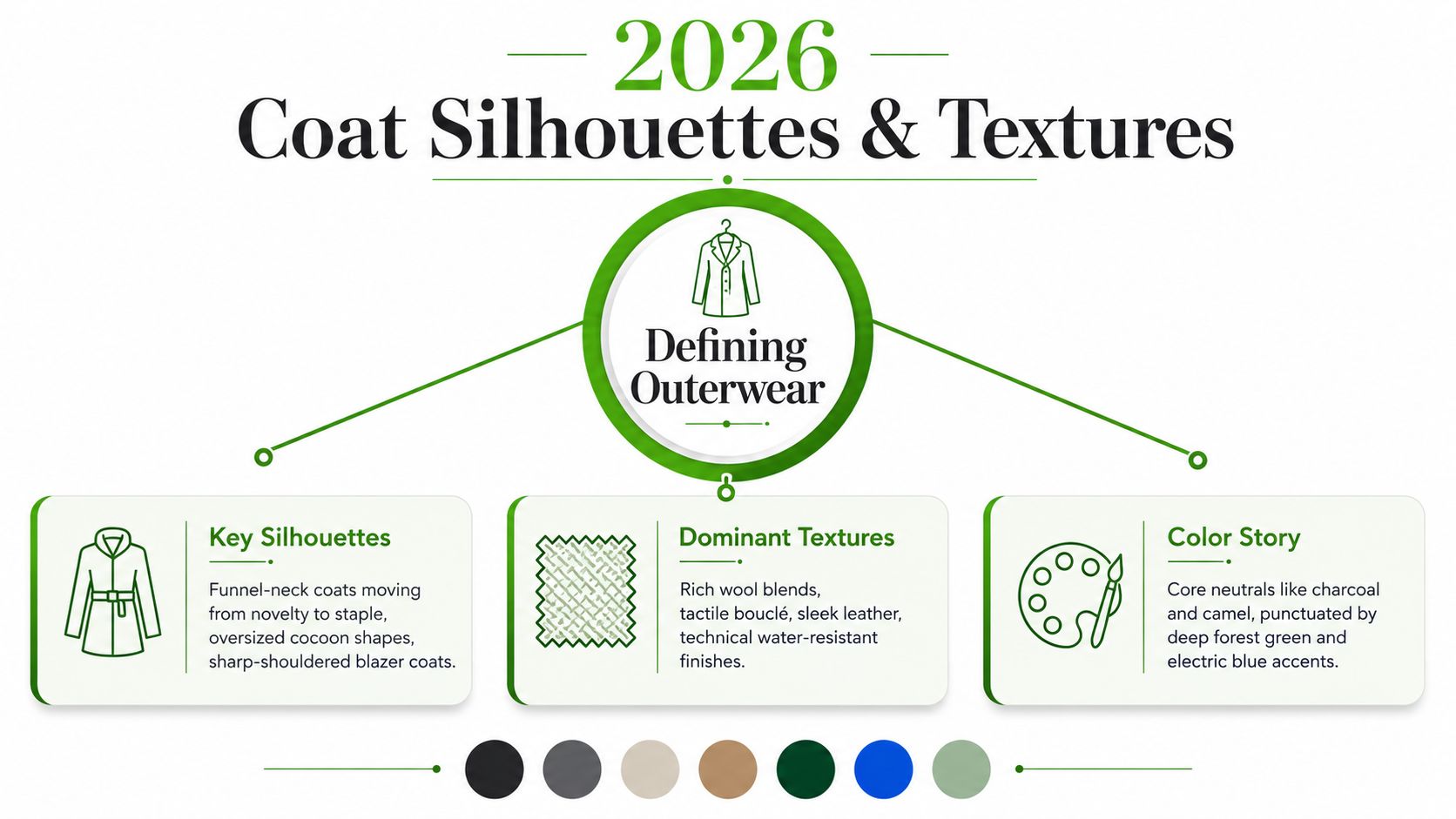
Heritage checks are another continuing direction. Harper's Bazaar's 2026 coat trend coverage describes the pattern as updated in autumn and winter collections, with momentum expected into the new year and early spring. A check coat works particularly well when the rest of the outfit is quiet. It gives denim, knitwear, and simple tailoring enough visual interest without requiring statement accessories.
Texture matters more than a loud color
Texture is doing much of the seasonal work. Coverage from Modern Opulent Gazette highlights shearling, faux fur, pony hair, calf hair, and other tactile finishes as defining materials. These surfaces change how a coat catches light, moves through a room, and feels against a restrained wardrobe.
Shearling and faux fur bring softness and occasion appeal. They suit dinners, celebrations, and outfits built around sleek dresses or well-fitted trousers. Pony hair and calf hair effects create a sharper, more fashion-forward finish, so they're best balanced with clean shapes and understated color. Wool blends remain the more dependable foundation for an office coat, especially in charcoal, camel, brown, or deep burgundy.
Translating the trend into a boutique wardrobe
At Cedar & Lily Clothier, the useful question is not whether a trend appears in an editorial. It's whether the shape works with the categories already in a woman's wardrobe, including sweaters, denim, dresses, blazers, and event pieces. A plaid layer such as the Theo-Nomia Plaid Pearly V-neck Sweater can sit beneath a simpler coat, allowing the pattern to show at the neckline without competing with a highly textured outer layer.
A funnel neck is a strong choice for someone who likes clean, modern lines. Heritage checks suit a woman who wants pattern with longevity. Faux fur and shearling are more compelling for evening dressing, while a technical puffer makes sense when the coat must carry the warmth burden. For a closer look at how tactile collars change a classic silhouette, the boutique's guide to wool coats with fur collars offers useful styling context.
Matching Coat Trends to Your Real Winter Routine
A coat for a heated car commute does not need the same construction as one for a windy platform or a below-freezing walk. Judge warmth by insulation, coverage, collar design, and weather resistance, not by the word “puffer” or a thick product photograph. A long coat with a protective collar can outperform a shorter, bulkier style. A beautiful wool coat suits a dry commute, but wet snow calls for a weather-resistant outer layer beneath or over it.
For active winter wear, technical benchmarks clarify the choice. Down coats are commonly compared around 550 to 850 fill power, while synthetic insulation is often evaluated at CLO 1.5 to 3.0, according to technical winter jacket guidance. Serious cold-weather outerwear may target 10,000 to 30,000 mm hydrostatic head for waterproofing and 8,000 to 20,000 g/m²/24 h breathability, or RET 6 to 15, to balance snow and rain protection with moisture management. These measures matter most when the coat must perform beyond the walk from a car to a doorway.
| Use Case | Best Trending Silhouette | Key Performance Feature |
|---|---|---|
| City commute | Long funnel-neck puffer or sleek insulated coat | Length, wind protection, and breathable insulation |
| Office wear | Tailored wool overcoat or heritage-check coat | Layering room, structured shoulders, and polished drape |
| Weekend travel | Lightweight hybrid coat or relaxed puffer | Warmth-to-weight balance, packability, and easy care |
| Event dressing | Faux fur, shearling, or refined textured coat | Surface appeal, comfortable movement, and coverage over dresses |
| Subfreezing conditions | Long insulated parka or high-performance puffer | Higher insulation, protected neckline, and weather-resistant shell |
The practical ranking
For a city commute, choose the long insulated silhouette first. It covers more of the body than a cropped jacket, while a funnel neck helps shield the throat from wind. Leave enough room for arm movement, particularly when walking or using public transportation.
For the office, a structured overcoat or heritage check offers the strongest mix of polish and repeat wear. Allow space for a blazer, but avoid excess volume that swallows a dress or straight-leg trouser. Wool is a style-focused layer, not a substitute for a fully weatherproof technical coat.
For weekend travel, hybrid construction makes the most sense. Analysts at IndexBox report demand for versatile, technical, and lower-maintenance women's winter coats, with hybrid transition styles gaining ground against traditional heavy coats in IndexBox's women's winter coat market analysis. Choose a coat that packs easily, dries without fuss, and leaves room for a knit underneath.
Outdoor leisure requires a different test. The coat should support movement, manage changing temperatures, and work with practical layers. Guidance on the warmest golf gear for cold rounds is useful for that kind of active winter dressing.
Cedar & Lily's guide to layering clothes for winter offers a clear outfit-based framework. Build the base and middle layers first, then choose a coat that completes the system without restricting movement or creating unnecessary bulk.
Styling Trending Coats from Desk to Dinner
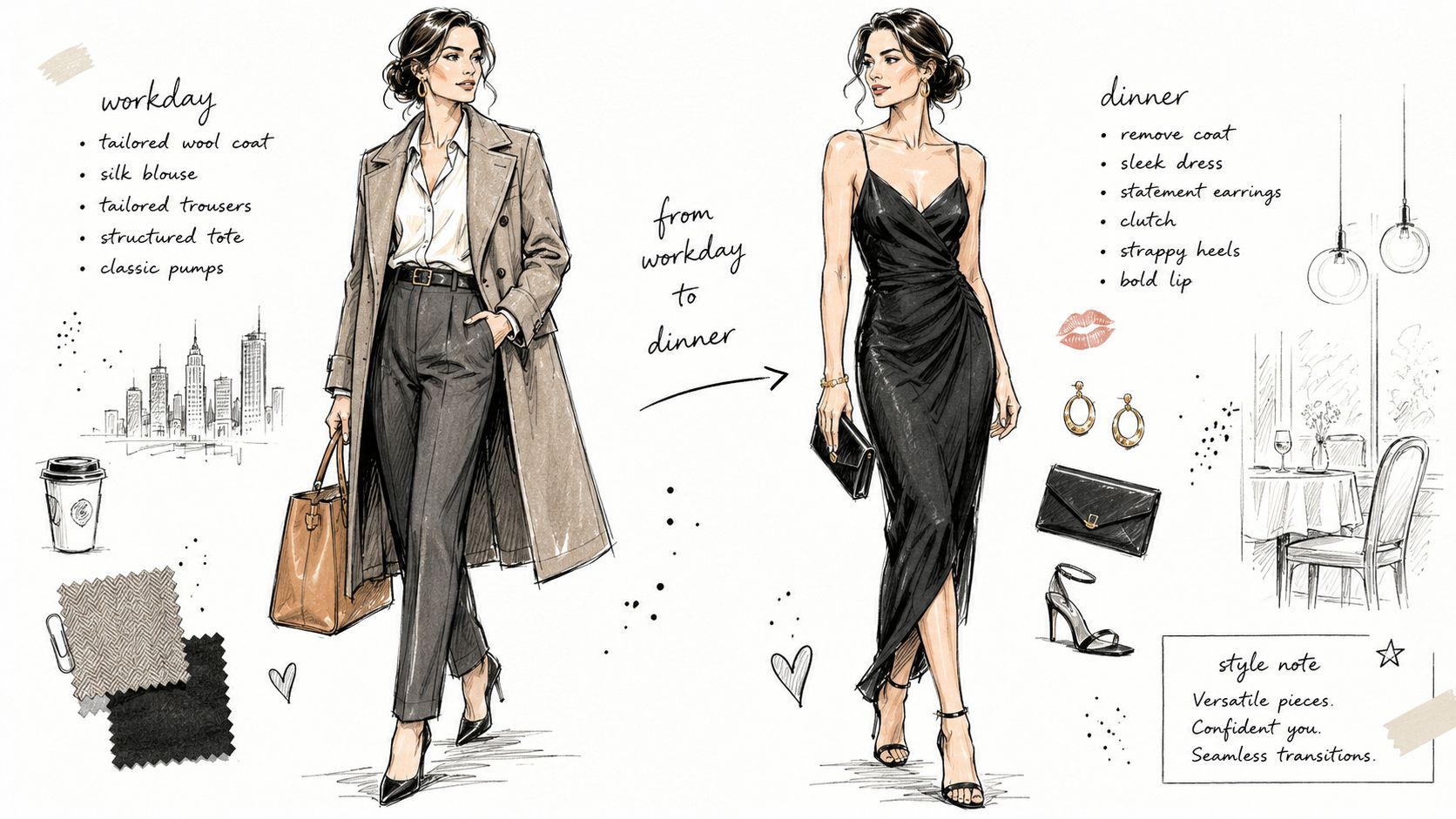
A coat becomes a smart purchase when it works with more than one outfit category. The easiest way to test that versatility is to style it with a weekday look, a relaxed weekend look, and an evening outfit before committing to the silhouette.
Workday polish
A structured overcoat or heritage check looks strongest over a slim knit, fitted trouser, and low-profile boot. Keep the inner layer close to the body so the coat's shoulder line stays clean. If the coat carries a visible pattern, repeat one quiet tone from the check in the trousers or handbag rather than adding another competing print.
The Elaine Kim Antony Trench Coat offers a natural bridge between workwear and weekend dressing. With a blouse and trouser, it reads polished. With denim and a fine-gauge sweater, the same outer layer feels more relaxed without losing its shape.
For women who wear blazers regularly, proportion matters. The coat should cover the blazer hem and allow the lapel to sit without bunching. Cedar & Lily's guide to coats to wear over blazers addresses that particular fit challenge and helps prevent a structured jacket from becoming cramped beneath outerwear.
Event dressing
Faux fur and shearling bring occasion energy to a simple dress. A short or mid-length textured coat can frame a cocktail dress, while a longer version gives a column gown or midi dress a more complete finish. The rest of the outfit should stay restrained, especially when the coat has a strong nap or contrasting collar.
The Generation Love Carla Vegan Leather and Faux Fur Combo Coat is suited to this kind of contrast. The combination of vegan leather and faux fur creates visual distinction, so it can enhance a straightforward dress or add polish to fitted black trousers and a silk-like top.
Relaxed weekends
A relaxed puffer or cape silhouette works with straight-leg denim, a substantial knit, and a practical ankle boot. The outfit needs one element that keeps the volume intentional, such as a neat shoulder bag, a defined cuff, or a streamlined trouser. Avoid pairing an oversized coat with oversized pieces everywhere else unless the wearer is deliberately choosing a dramatic silhouette.
A cape coat is especially useful for someone who dislikes restrictive sleeves, but it needs movement and a compatible sleeve underneath. A puffer is the better choice for wind, walking, and travel. The most successful weekend outfit feels easy because the coat handles the visual weight while the base layers remain simple.
Investing in Timeless Pieces vs. Trend-Forward Statements
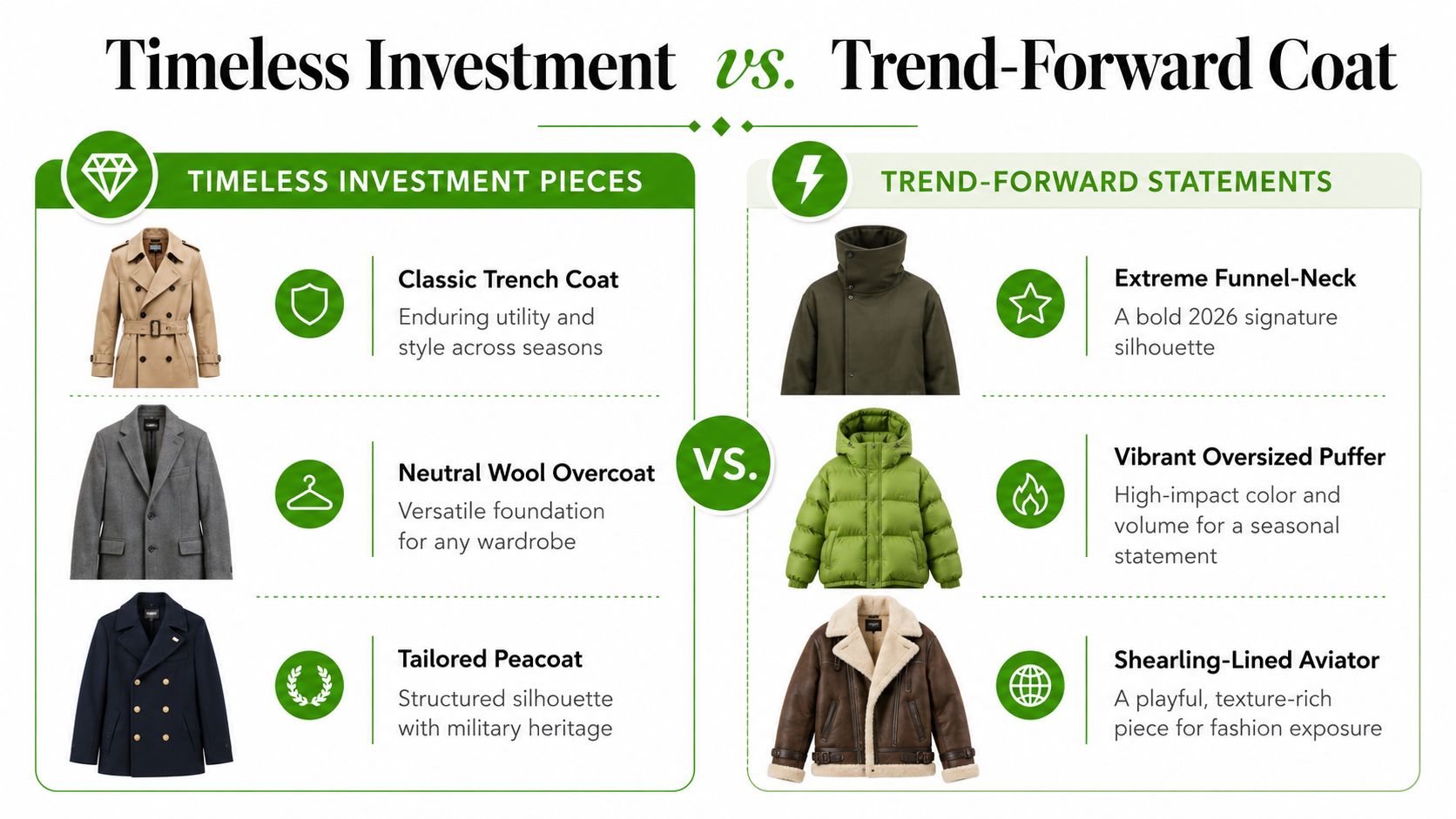
A reliable coat handles the commute, office, and dinner plans without asking you to rebuild the outfit. A second coat can bring the stronger fashion point, whether that means a sculpted neckline, unusual texture, or amplified proportion. For 2026, make the first purchase your dependable warmth layer, then choose the statement piece according to where you will wear it.
Timeless elements include classic trench proportions, neutral wool, a well-shaped peacoat, and clean tailoring. Camel, charcoal, brown, and black work with dresses, denim, and office separates. Choose fabric with substance and a length that suits your routine. A beautiful detail cannot compensate for a coat that leaves you cold or proves awkward on the commute.
Trend-forward elements include extreme funnel necks, metallic puffers, conspicuous animal prints, dramatic scarf attachments, and highly amplified volume. These styles work best when their role is clear. Use a directional coat for events, dinners, or mild-weather city days, and reserve insulated puffers or substantial wool for wind and subfreezing conditions.
A sensible buying strategy
A practical wardrobe starts with one neutral investment coat that fits over the layers you wear most. Pick its warmth and length for your commute and office schedule. Then add a second coat with texture or a directional silhouette for occasions where appearance matters more than maximum insulation.
This two-coat approach keeps 2026 trends useful rather than disposable. The first piece earns regular wear through reliable coverage and easy styling. The second refreshes familiar outfits without forcing every purchase to follow a fast-moving trend.
The capsule-wardrobe principle gives the decision a clear test. Cedar & Lily's guide to how to build a capsule wardrobe supports choosing a coat that works with several existing outfits. Before buying, name the dresses, trousers, and knitwear it will cover. The strongest statement coat is still the one you reach for often.
Fit, Sizing, and Fabric Care for Lasting Wear
A coat should be tried on with the clothes it needs to cover. A thin top gives a false sense of fit, particularly with structured styles. The correct size allows the shoulders to move, the sleeves to cover the wrist, and the front closure to lie flat without pulling.
Fit by silhouette
Oversized puffers need controlled volume. The shoulder can sit slightly relaxed, but the sleeve shouldn't swallow the hand, and the hem should remain easy to manage when seated. A longer puffer should move with the body rather than balloon away from it.
Overcoats require shoulder accuracy first. If the shoulder seam falls too far out, the entire coat can look borrowed. If it's too narrow, layering becomes uncomfortable and the lapel may distort. The body should skim rather than cling, with enough room for a sweater or blazer.
Funnel-neck coats deserve special attention around the throat. The collar should stand without pressing into the jaw, and the wearer should be able to turn her head comfortably. A beautifully sculpted neckline becomes impractical if it restricts movement or forces the wearer to leave the coat open.
Fit test: Zip or button the coat, cross the arms, sit down, and reach forward. A stylish coat still needs to behave like clothing.
Caring for seasonal materials
Wool benefits from brushing, airing, and careful storage. A lint roller can remove loose fibers, while professional cleaning before long-term storage helps the coat return fresh at the first cold spell. Shearling and faux fur should be kept away from sustained dampness and stored where the pile won't be crushed.
Technical synthetics usually benefit from following the garment's care label closely. Fabric softeners can affect performance finishes, and compressed insulation may need gentle reshaping after washing. A breathable coat only performs well when its surface and lining remain clean enough to manage moisture.
Storage is part of the purchase decision. A sturdy hanger protects shoulder shape, while a closet with enough spacing prevents faux fur and textured fabrics from flattening. Readers planning a broader wardrobe reset can also review practical guidance on how to choose closet organizers before packing away seasonal outerwear.
At Cedar & Lily Clothier's Oklahoma storefronts, shoppers can assess fit, fabric, collar height, and layering room in person. The team can help compare a polished coat with a more relaxed option rather than relying on a photograph and a size chart alone.
Shop the Curated Winter Coat Collection
The right coat depends on the life it needs to support. A structured wool or checked coat handles office dressing and dinners. A textured faux-fur or shearling style adds occasion impact. A long insulated coat earns its place through warmth, movement, and reliable coverage on difficult weather days.
Cedar & Lily Clothier carries curated designer and contemporary women's clothing, including outerwear and pieces from labels such as Vanessa Mooney and Lace the Label. The Generation Love Carla Vegan Leather and Faux Fur Combo Coat is one option for shoppers drawn to the season's contrast between sleek surfaces and tactile texture.
The collection is available online, or shoppers can visit the boutiques at Utica Square in Tulsa and downtown Jenks. Seeing a coat in person makes it easier to judge fabric weight, sleeve length, collar comfort, and how the shape works over a blazer or dress. The team also provides personal styling help, easy size exchanges, and complimentary gift packaging on qualifying purchases.
Cedar & Lily Clothier offers a considered selection of winter outerwear, contemporary designer clothing, and styling guidance for workdays, weekends, and events. Visit Cedar & Lily Clothier online, or stop by Utica Square in Tulsa or downtown Jenks to find a coat that feels current and keeps earning its place in the wardrobe.