


That moment of excitement when a gorgeous gala invitation arrives... followed almost immediately by the familiar question: what on earth do I wear? It can feel like you've been handed a secret code to crack.
The simplest answer is that your outfit needs to match the formality level on the invitation, which usually falls somewhere between the incredibly formal White Tie and the more relaxed Cocktail attire. Getting this right is your first step to walking in with absolute confidence.
Your Essential Guide to Gala Dress Codes
Think of gala dress codes as a spectrum. At one end, you have the most buttoned-up, traditional events, and at the other, you have parties with a bit more room for fun and personal expression. The invitation is your guide, and the dress code is the specific direction telling you how to arrive in perfect style.
Your first job is to figure out exactly what kind of event you’re attending. Is it a diplomatic dinner where tradition is everything, or a high-energy charity auction that calls for something a little more fashion-forward? The words "Black Tie," "Formal," or "Cocktail" aren't just gentle suggestions—they're clear instructions from your host about the night's entire mood.
The Hierarchy of Formality
At the very top of the formalwear pyramid is White Tie, the strictest and most traditional dress code of them all. Right behind it is the elegant and classic Black Tie. A step down from there, you’ll find Formal (sometimes called Black Tie Optional), which gives you a bit more breathing room. Finally, there's Cocktail Attire, which is the most common—and often the most fun—for modern galas.
To make it even clearer, here’s a quick visual breakdown of the most common dress codes you’ll see on an invitation.
As you can see, the less formal the code, the more freedom you have to play with shorter hemlines, bolder accessories, and more creative styles.
To help you quickly reference these codes, we've put together a simple table.
Gala Dress Codes At a Glance
| Dress Code | Her Attire | His Attire | Formality Level |
|---|---|---|---|
| White Tie | Floor-length ball gown, long gloves, formal jewels | Black tailcoat, white waistcoat, bow tie | Highest |
| Black Tie | Floor-length evening gown, elegant cocktail dress | Black tuxedo, black bow tie, cummerbund | Very High |
| Formal/Optional | Floor-length gown, chic cocktail dress, pantsuit | Tuxedo or a dark, well-tailored suit | High |
| Cocktail | Knee-length or midi dress, elegant separates | Dark suit, tie is often optional | Medium-High |
This chart is a great starting point for planning your look, ensuring you feel perfectly dressed for the occasion.
Understanding the small differences between these dress codes is what takes a look from just "appropriate" to absolutely impeccable. It's the secret to blending in beautifully while still letting your personal style shine.
We’re about to dive deep into each of these categories with complete outfit ideas so you know exactly what works. And remember, the grand experience starts before you even arrive; a detail like a luxury car rental for formal events can make the whole evening feel even more special. While we’re focusing on galas here, these tips are great for other special nights out, too. For more, check out our guide on what to wear to a formal event.
Decoding White Tie: The Pinnacle of Formality
If your gala invitation reads "White Tie," take a deep breath. You've just been invited to an event of the absolute highest formality. This isn't just a dress code; it's the final word in elegance, a tradition reserved for state dinners, royal functions, and the most prestigious charity balls. Think of it less as a style guide and more as a time-honored uniform.
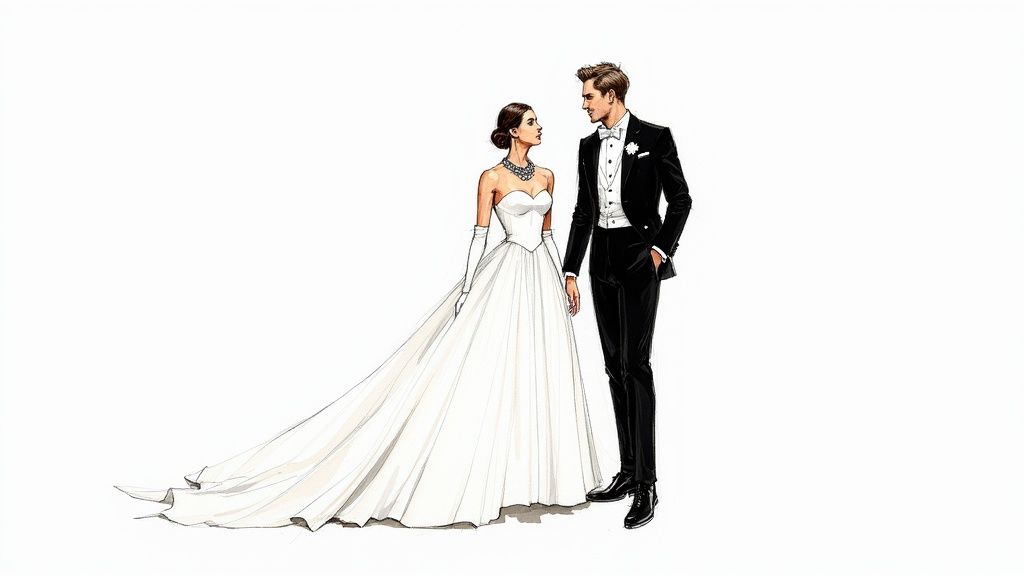
When you're figuring out what to wear, remember that the rules are incredibly specific and leave almost no room for creative license. Deviating from them is a serious faux pas. The goal here isn't to stand out with a trend, but to perfectly execute a classic, revered look.
Essential Attire for Her
For women, a White Tie look is built around a single, non-negotiable anchor: a full-length ball gown. The hemline must touch the floor, and the silhouette should feel grand—think voluminous skirts and dramatic shapes.
Fabrics should be unapologetically luxurious. We’re talking rich satins, structured brocades, crisp taffeta, or beautifully detailed lace. While you can wear any color, you can never go wrong with bold jewel tones or timeless, sophisticated hues.
Beyond the gown, a few other elements are essential to nail the look:
- Long Gloves: Elegant white gloves, either kidskin leather or satin, that extend past the elbow are a signature touch. You’ll wear them for arrivals and introductions but slip them off for dinner.
- Heirloom Jewelry: This is your moment to wear the good stuff. Diamond necklaces, chandelier earrings, and dazzling bracelets aren't just allowed; they're expected. For certain formal state functions, tiaras are even traditionally worn by married women.
- Elegant Footwear: Stick with classic, closed-toe pumps in satin or fine leather. Elegance trumps trendiness every time.
- A Refined Clutch: Your only option for a handbag is a small, decorative evening clutch, often called a minaudière. It should be just big enough to hold the absolute essentials.
While strict White Tie is rare, its influence is seen at top-tier events like the Met Gala. A recent theme exploring Black dandyism saw a huge rise in bespoke gowns and tailored tuxedos, with 68% of attendees opting for custom or culturally significant looks. It proves that even when reinterpreted, high-formality events demand thoughtful, high-effort dressing. You can see more on how these major events shape gala fashion over at Fashion Network.
Required Attire for Him
For men, the White Tie dress code is even more rigid. It’s a precise uniform that has barely changed in over a century, and any misstep is immediately obvious.
Think of a man’s White Tie outfit as a symphony—every instrument must be perfectly in place to create the right sound. One wrong note, like a black waistcoat instead of white, changes the entire composition.
Here is the exact formula for men's White Tie:
- Black Tailcoat: The foundation is a black evening tailcoat with silk facings. It’s always single-breasted and worn unbuttoned.
- White Waistcoat: A low-cut, single-breasted white waistcoat in piqué fabric is worn underneath. Crucially, it must not hang below the front of the tailcoat.
- White Shirt: The shirt requires a starched bib front, single-link cuffs for cufflinks, and a stiff, detachable wing collar.
- White Bow Tie: An absolute must is a hand-tied white bow tie, also made of piqué. A pre-tied one is a dead giveaway you’ve missed the mark.
- Trousers: These are formal black trousers with a single stripe of satin or two stripes of braid down the side. They’re held up with suspenders—never a belt.
- Patent Leather Shoes: The only acceptable footwear is black patent leather oxfords or court pumps.
Finishing touches like mother-of-pearl cufflinks and studs add that final layer of polish. Mastering White Tie is all about respecting its history and executing every detail with precision for a look of timeless, unparalleled grace.
Mastering Black Tie and Black Tie Optional
While White Tie is the absolute pinnacle of formal wear, Black Tie is the dress code you'll see far more often. It's the elegant gold standard for most evening fundraisers, awards nights, and weddings. Just think of classic Hollywood glamour—it's structured, refined, and makes any evening feel undeniably special.
Then there’s its slightly more relaxed cousin, Black Tie Optional, which can cause a bit of a wardrobe panic. Does "optional" mean you can just wear whatever you want? Not exactly. It simply offers a welcome bit of flexibility, allowing guests to choose between the traditional Black Tie route or a polished alternative that’s just as chic. Let's break down exactly what each of these common dress codes means for your outfit.
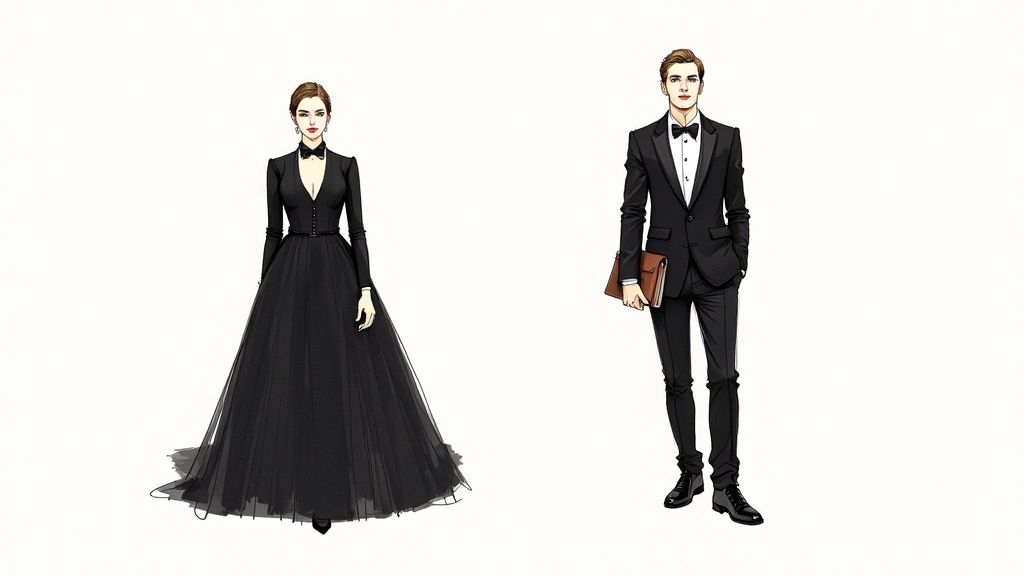
The Classic Black Tie Gala Look
When an invitation calls for "Black Tie," it’s your cue to embrace timeless evening wear. This isn’t the moment to get wildly creative; it’s about executing a classic look with elegance and grace.
For women, the cornerstone of any Black Tie outfit is the floor-length evening gown. While a very sophisticated ankle-length or midi dress might pass in some modern circles, a long gown is always the safest—and most stunning—choice.
Lean into luxurious fabrics that feel as incredible as they look:
- Silk or Satin: These materials have a gorgeous drape and a subtle sheen that looks beautiful in evening light.
- Velvet: A dream for autumn or winter galas, velvet adds a rich, opulent texture.
- Chiffon or Organza: These lighter fabrics bring an ethereal, romantic quality to your silhouette.
Your accessories should be the finishing touch, not the main event. Think an elegant clutch, fine jewelry, and classic heels. For a deeper dive, our guide on how to accessorize an outfit is full of expert tips for finding that perfect balance of sparkle and style.
For men, Black Tie is a clear-cut uniform: the tuxedo. That means a black dinner jacket (usually with satin lapels), matching trousers, a white formal shirt, a black bow tie, a cummerbund or waistcoat, and polished black patent leather shoes.
Understanding Black Tie Optional
"Black Tie Optional" is the host's gracious way of saying, "We'd love for you to go all out, but we get it if that's not practical." It gives guests an out if they don't own or want to rent a full tuxedo.
Think of Black Tie Optional as a conversation. The host suggests the ideal (a tux and gown), and guests can respond with either that ideal or a very close, respectful alternative (like a dark suit and a cocktail dress). The key is to keep the tone of the conversation formal.
This is where the rules bend a bit, giving you more choices without sacrificing the elegance of the event.
For Her: This dress code really opens up your closet. A floor-length gown is still a perfect choice, but you can also confidently wear:
- An elegant cocktail dress, especially in a midi or tea-length cut.
- A sophisticated pantsuit crafted from a luxe fabric like silk or crepe.
- Polished separates, like a silk blouse paired with a dramatic full-length skirt.
For Him: The main difference here is the suit option, but not just any suit will do. It has to be:
- Dark: Stick to black, charcoal gray, or a deep navy. No exceptions.
- Well-Tailored: The fit needs to be impeccable.
- Paired with formal accessories: A crisp white dress shirt, a conservative tie (a bow tie is still a fantastic choice!), and polished leather dress shoes are non-negotiable.
Whether you're dressing for a strict Black Tie affair or embracing the flexibility of "Optional," the goal is the same: to show up looking polished, feeling confident, and ready to have an absolutely incredible time.
Formal vs. Cocktail: What's the Real Difference?
Once you step down from the magnificent formality of White and Black Tie, you land in the much more familiar territory of Formal and Cocktail Attire. These two dress codes pop up constantly for galas, fundraisers, and swanky parties, but they often leave us wondering where, exactly, the line is drawn between them.
Here's an easy way to think about it: If Black Tie is a meticulously scripted Broadway show, Formal attire is like a well-rehearsed play with a little room to improvise. Cocktail attire? That's pure improv. It’s still a performance, but you have so much more freedom to let your personal flair shine through.
Cracking the Code for Formal Attire
A "Formal" dress code is basically a slightly more relaxed cousin of Black Tie Optional. It’s a signal for an elegant, polished evening where you still need to look refined, but the strict tuxedo-or-bust rule is gone. Honestly, this is the sweet spot for many modern galas.
For women, this opens up a whole world of gorgeous possibilities. A floor-length gown is always an impeccable choice, but it’s definitely not your only one. You can confidently pull off several other silhouettes:
- Chic Midi or Tea-Length Dresses: A beautifully cut dress that hits mid-calf can feel incredibly modern and just as sophisticated.
- Elegant Separates: Why not try a dramatic, full-length skirt paired with a delicate silk camisole or a beaded top? It’s a fantastic way to create a personalized look.
- A Dressy Pantsuit: Never underestimate the power of a perfectly tailored pantsuit in a luxe fabric like velvet or crepe. It’s a stylish and confident statement.
For the men, this is where a great dark suit becomes your absolute best friend. A sharp, well-tailored suit in charcoal, navy, or black is the perfect move. Just be sure to pair it with a crisp dress shirt, a tasteful silk tie (a bow tie is still a great option!), and polished leather dress shoes. The goal is to keep the entire look sharp and dignified.
Mastering the Art of Cocktail Attire
Cocktail attire is, without a doubt, the most popular dress code for celebratory galas and parties today. It hits that perfect note between dressed-up elegance and party-ready fun. The biggest difference? Hemlines get a little shorter, and your personal style gets to take center stage.
When an invitation calls for Cocktail attire, it’s your cue to find an outfit that’s sophisticated but still comfortable enough to mingle, hold a drink, and hit the dance floor. You want to look festive without looking like you’re on your way to a state dinner.
The heart of Cocktail attire is "festive elegance." It’s less about following a strict uniform and more about showing off your personal style in a polished, event-appropriate way.
This is where you can really have some fun with your fashion choices.
Outfit Ideas for Her:
The classic choice here is a knee-length or midi dress. This is your moment to play with vibrant colors, interesting prints, and beautiful textures—think lace, chiffon, and silk. For a modern take, something like this elegant Nha Khanh strapless cocktail dress is a perfect example of structured yet festive design. Stylish jumpsuits and sophisticated separates, like a sequin top with tailored trousers, are also fantastic options.
Outfit Ideas for Him:
A suit is still the way to go, but you have more room to experiment. A dark suit is always a safe bet, of course, but you could also opt for a suit in a slightly lighter shade, like a medium gray, especially in warmer months. This is also the time to let your personality shine through your accessories—a cool patterned pocket square, a unique tie, or even a pair of stylish loafers can complete the look perfectly.
At the end of the day, navigating these dress codes is all about understanding what the host is envisioning. Formal attire calls for timeless elegance with a modern twist, while Cocktail attire is your invitation to be chic, festive, and ready to celebrate the night in style.
Finding The Perfect Fit For You And The Season
Okay, so you’ve got the dress code down. But there are two more things that can make or break a gala look: the season and the fit. A gorgeous velvet gown is a showstopper, but it's going to look (and feel) completely wrong at a summer garden party. By the same token, even the most exquisite designer dress won’t have that wow factor if it doesn't fit you like it was made for you.
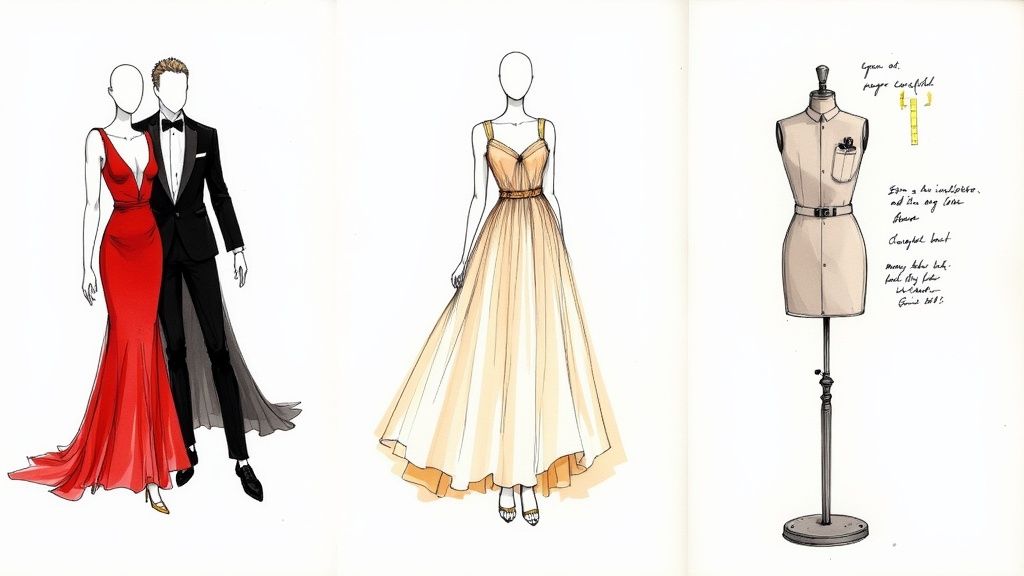
Thinking through these details ahead of time is what separates a simply "appropriate" outfit from one that feels absolutely perfect for you and the moment. It’s how you get that effortless, confident glow.
Styling for the Season
Let the time of year be your guide when it comes to fabric, color, and accessories. A winter gala just has a different vibe—and a different set of sartorial rules—than a summer event.
-
Winter Galas: This is your moment for pure opulence. Think rich, heavy fabrics like velvet, brocade, and thick satin. Jewel tones are your best friend here—emerald, sapphire, and ruby—along with classic black and stunning metallics. Elegant long sleeves or a glamorous faux fur wrap add both warmth and drama.
-
Summer Galas: Keep things light and airy. Look for breathable materials like chiffon, organza, or silk crepe. Pastel shades, vibrant florals, and crisp whites feel so fresh and right for the season. Don't be afraid of strapless necklines, delicate spaghetti straps, or even a few tasteful cutouts.
You can even see these trends play out in real time. Search data shows that interest in formalwear like 'evening gowns' spikes every January and September, right in line with awards season and fashion week. It's fun to see how designers respond to those peak moments!
The Non-Negotiable: Tailoring and Timing
I can't stress this enough: an impeccable fit is everything for formal wear. Off-the-rack dresses are made for a standard model, not for your unique, beautiful body. A great tailor is the secret weapon behind any truly stunning gala outfit. They can take a dress from "good" to absolutely breathtaking.
Think of tailoring as the final, most important accessory for your gala look. It’s the invisible element that ensures every seam, hem, and strap works in perfect harmony with your silhouette, creating a polished, high-end finish.
The right alterations—from hemming the length to work with your shoes to adjusting the bust for a seamless line—make all the difference. But this kind of magic takes time, which means you need a plan.
Your Gala Outfit Timeline
Nothing kills the excitement of a big event like last-minute stress. If you follow this timeline, getting ready will be a fun, relaxing part of the experience.
- 4-6 Weeks Out: This is the sweet spot for buying your outfit. It gives you plenty of breathing room for shipping and any potential returns. At Cedar & Lily, we make it easy with fast shipping and free delivery on orders over $250.
- 3-4 Weeks Out: Time to schedule your first fitting with a tailor you trust. Be sure to bring the exact shoes and undergarments you plan to wear! This is so important, as they completely change the hemline and how the dress hangs.
- 1-2 Weeks Out: Go in for your final fitting. This is just to check the first round of alterations and make any tiny, last-minute tweaks. It's also the perfect time to lock in your accessories, hair, and makeup ideas.
- The Week Of: Pick up your perfectly tailored outfit! Give it a light steam if needed and hang it somewhere it can breathe. Now, all that's left to do is relax and get excited for the big night.
Of course, knowing what silhouettes flatter you from the start is a huge advantage. For a little extra guidance, take a look at our guide on how to dress for your body type.
Your Gala Attire Questions Answered
Even after decoding the main dress codes, a few little questions always seem to pop up right when you’re about to decide on a look. Choosing what to wear to a gala can feel like a high-stakes puzzle, but I promise, a few clear answers are all you need to feel completely confident.
Let’s tackle some of the most common styling questions I hear all the time. Think of this as our one-on-one chat to smooth out any last-minute uncertainties, so you can walk into that ballroom feeling nothing short of fabulous.
Can I Wear A Black Dress To A Gala?
Yes, a thousand times yes! A beautiful black dress is almost always a perfect, sophisticated choice for a gala, especially for Black Tie, Formal, or Cocktail events. The secret is simply matching the style of the dress to the evening's level of formality.
For a strict Black Tie affair, you'll want a floor-length black gown in a truly luxurious fabric—think silk, velvet, or a substantial crepe that holds its shape beautifully. For a Cocktail gala, a chic little black dress (LBD) in an elevated material is absolutely spot-on.
A simple black dress is also the perfect canvas for stunning accessories. This is your moment for dramatic chandelier earrings, a shimmering metallic clutch, or a vibrant pop of color with your shoes. The only real exception is a true White Tie event; tradition strongly favors colorful gowns, unless your black dress is exceptionally grand and ornate.
What Kind Of Shoes Should I Wear?
Ah, the age-old dilemma: gala footwear is a delicate dance between elegance and pure survival. You'll likely be on your feet for hours, mingling and hopefully dancing the night away, so your shoes need to complete your look without becoming instruments of torture.
For the most formal events like White Tie and Black Tie, classic heels are the standard.
- Closed-toe pumps in satin or a fine leather are always a flawless choice.
- Elegant strappy stilettos or other delicate heeled sandals work beautifully, too.
- It's best to avoid anything that feels too casual, like wedges, chunky platforms, or your everyday block heels.
For Formal or Cocktail galas, you have a bit more freedom. Depending on your outfit, dressy block heels, embellished mules, or even a pair of very chic pointed-toe flats can be perfectly appropriate.
A little pro tip from years of experience: always break in your shoes before the event. Wear them around your house for a few days to make sure there are no surprises. Many seasoned gala-goers I know also tuck a pair of foldable flats into their clutch for late-night relief on the dance floor—a total game-changer.
What Is The Difference Between Black Tie And Formal?
This is easily one of the most common points of confusion, and it’s a great question. The main difference between "Black Tie" and "Formal" really comes down to how strict the rules are, especially for the men.
Think of Black Tie as a specific uniform. It calls for a very precise look: a tuxedo, a black bow tie, a cummerbund or waistcoat, and patent leather shoes. For women, the tradition is a floor-length evening gown. There’s very little wiggle room here.
"Formal," on the other hand, is often just another way of saying "Black Tie Optional." This code is much more flexible. Men are absolutely welcome to wear a tuxedo, but they can also opt for a dark, impeccably tailored suit with a conservative tie. For women, this opens up a world of possibilities. A long gown is still perfect, but so are dressy cocktail-length dresses, chic pantsuits, or elegant separates like a silk top paired with a formal skirt.
How Should I Accessorize My Outfit?
Accessories are where your personality truly shines through. They’re the final touches that make your look uniquely yours. The goal is to enhance your outfit, not overwhelm it, and a great rule of thumb is to let one piece be the star of the show.
If your gown is already a showstopper—covered in sequins, beading, or intricate embroidery—keep your jewelry simple and refined. A pair of diamond or crystal studs and a delicate bracelet are often all you need.
On the other hand, if you're wearing a beautiful but simple, solid-colored dress, you have the perfect backdrop for a statement. This is your chance to wear that bold necklace, those dramatic earrings, or a fabulous stack of sparkling bangles.
Your evening bag is just as important. It should always be small and elegant—your everyday purse simply won't do.
- Clutch: This is the go-to style. Look for one in satin, metallic leather, or a beaded fabric that complements your dress.
- Minaudière: A small, decorative hard-cased clutch is another gorgeous and sophisticated option.
Finally, a complementary wrap, pashmina, or a tailored bolero is both a smart and practical addition. It adds another layer of texture to your look and will be a lifesaver in a chilly, air-conditioned venue.
At Cedar & Lily Clothier, we believe finding the perfect gala look should be an exciting and joyful experience. Our curated collection of event-ready dresses and our concierge-level service are here to help you feel confident and beautiful for any special occasion. Explore our new arrivals and enjoy fast, free shipping on orders over $250.