

Black Tie Optional means the host wants the room to feel formal, with tuxedos and floor-length gowns encouraged, but a dark suit or an elegant cocktail dress is still considered appropriate. For women, that usually means your best choice is either a long evening look or a polished midi or knee-length dress that still reads unmistakably dressy.
You're probably staring at an invitation right now, excited for the event and mildly annoyed by two little words that somehow make getting dressed harder. That reaction makes sense. “Optional” sounds casual, but in this dress code, it isn't. It's a polished, elevated code with some grace built in, and once you understand that, the outfit decision gets much easier.
Decoding the Dress Code on Your Invitation
You open the envelope, spot “Black Tie Optional,” and pause. For a lot of women, those two words create more confusion than clarity. The answer is simple. Read it as a request for a refined evening look with some flexibility in the exact silhouette.
The host is setting the tone for the room. Expect a formal setting, polished guests, and clothes that look intentional from head to toe. Vogue's explanation of black tie optional points to the etiquette logic behind the phrase: hosts want the occasion to feel elegant while leaving guests room if they do not own the most traditional version of black tie attire.
What the host is really telling you
Black Tie Optional usually signals three things.
- The event is formal enough to dress for the evening. Rich fabric, clean lines, beautiful shoes, and jewelry that feels considered all make sense here.
- The host wants an elegant visual standard. Your outfit should contribute to that polished atmosphere, whether you choose a gown, a sleek midi, or a precisely cut set.
- You have flexibility, not a free pass. The freedom is in the exact piece you choose, not in how casual you can get away with looking.
That distinction is the one that saves people from getting it wrong.
For women, the safest approach is to choose something that reads unmistakably dressy in fabrication and finish. Satin, silk, velvet, crepe, chiffon overlays, strong tailoring, and a graceful drape all work. A breezy sundress, a cotton floral mini, or the dress you wear to every daytime wedding does not.
Regional and venue context matter too, and this is the part many dress code guides skip. A Black Tie Optional evening wedding at a Manhattan hotel usually calls for a sleeker, more formal interpretation than the same wording at a mountain resort in Colorado or a garden venue in the South. In a grand ballroom, a floor-length gown or a dramatic midi often feels exactly right. At a vineyard, coastal club, or destination property, a refined midi in a luxe fabric may look more appropriate than a heavily embellished gown. Match the setting without lowering the level of polish.
Why this dress code exists at all
Black Tie Optional exists because good hosts want the event to look beautiful without making guests feel boxed in by rigid rules or unnecessary expense. It preserves the ceremony of formal dressing while allowing women to choose the silhouette that suits their body, their closet, and the venue.
Use this rule. Dress for the room the host is trying to create, then refine your choice based on location, season, and time of day.
If you need a useful point of comparison, Consult PlanSeats for cocktail attire, then go a step more formal and more evening-specific. If you still want help judging the overall finish your look needs, our guide to what to wear to a formal event will help you choose with confidence.
Black Tie Optional vs Other Formal Dress Codes
Black Tie Optional sits in the middle of the formalwear ladder. It's not as strict as Black Tie, and it's not as relaxed as Cocktail. That middle position is exactly why people overthink it.
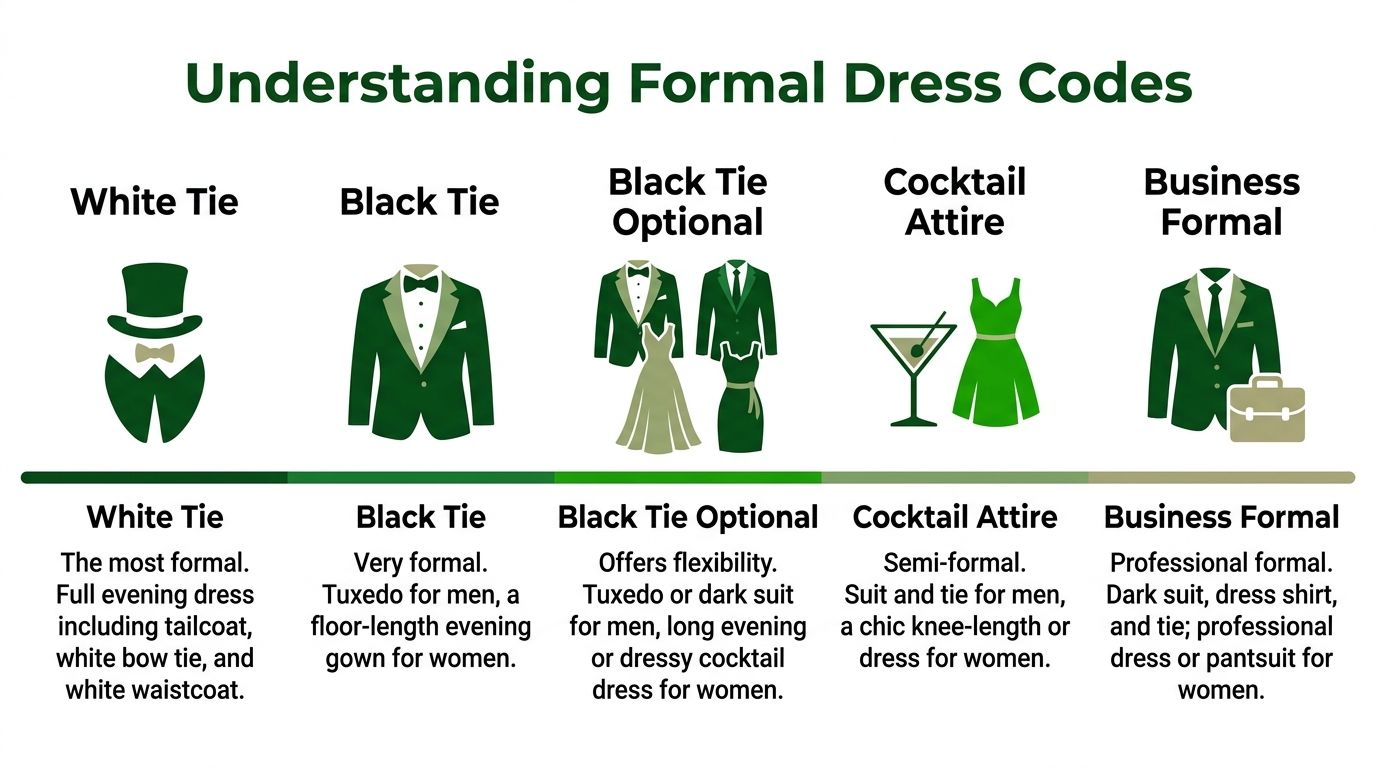
The cleanest way to understand what is Black Tie Optional is to compare it directly with the codes around it. The Knot describes it as a hybrid between strict black tie and formal attire, and for women that means the hemline opens up a bit: floor-length gowns are still right, but dressier midi dresses and dressy pantsuits can also work, as long as the fabric stays luxurious in feel, like satin, velvet, or silk, as outlined in The Knot's dress code guide.
The easiest comparison
| Dress code | Hemline | Fabric | Accessories | Overall read |
|---|---|---|---|---|
| Black Tie | Floor-length is the safest choice | Formal evening fabrics | Refined, often more dramatic | High-formality eveningwear |
| Black Tie Optional | Long gown, midi, or polished knee-length | Luxe fabrics only | Elegant and intentional | Formal with controlled flexibility |
| Formal | Midi to long | Dressy but slightly broader | Polished, not necessarily evening-specific | Dressy and sophisticated |
| Cocktail | Knee-length or midi | Can be dressy, but less ceremonial | Stylish, lighter touch | Social, festive, less formal |
The key difference is not just hemline. It's finish.
A cocktail dress can be short and chic. A Black Tie Optional dress can also be shorter than a gown, but it must still look like it belongs in an evening setting. The fabric, structure, shoe, bag, and jewelry all need to pull their weight.
Where women usually get it wrong
Most mistakes come from reading the word optional too casually. Here's where outfits slip:
- Too casual in fabric. Linen, cotton poplin, jersey, or anything that reads daytime will fall flat.
- Too playful in silhouette. Ruffles, cutouts, puff sleeves, or flirty party styling can drift into cocktail territory fast.
- Too informal in accessories. Casual sandals, oversized daytime bags, and relaxed hair undermine the whole look.
- Too much “wedding guest” and not enough “evening event.” These aren't the same thing.
Black Tie Optional should never look accidental. It should look chosen.
A better way to decide
Ask one question: if you stood next to someone in a floor-length gown, would your outfit still look elegant enough to belong in the same room?
If the answer is yes, you're on track.
If you want a wider breakdown of how invitations stack up against each other, this guide to event dress codes is useful for seeing where Black Tie Optional sits.
Perfecting Your Black Tie Optional Outfit
The guesswork ends. A strong Black Tie Optional outfit is built from the same idea every time: evening polish first, personal style second.
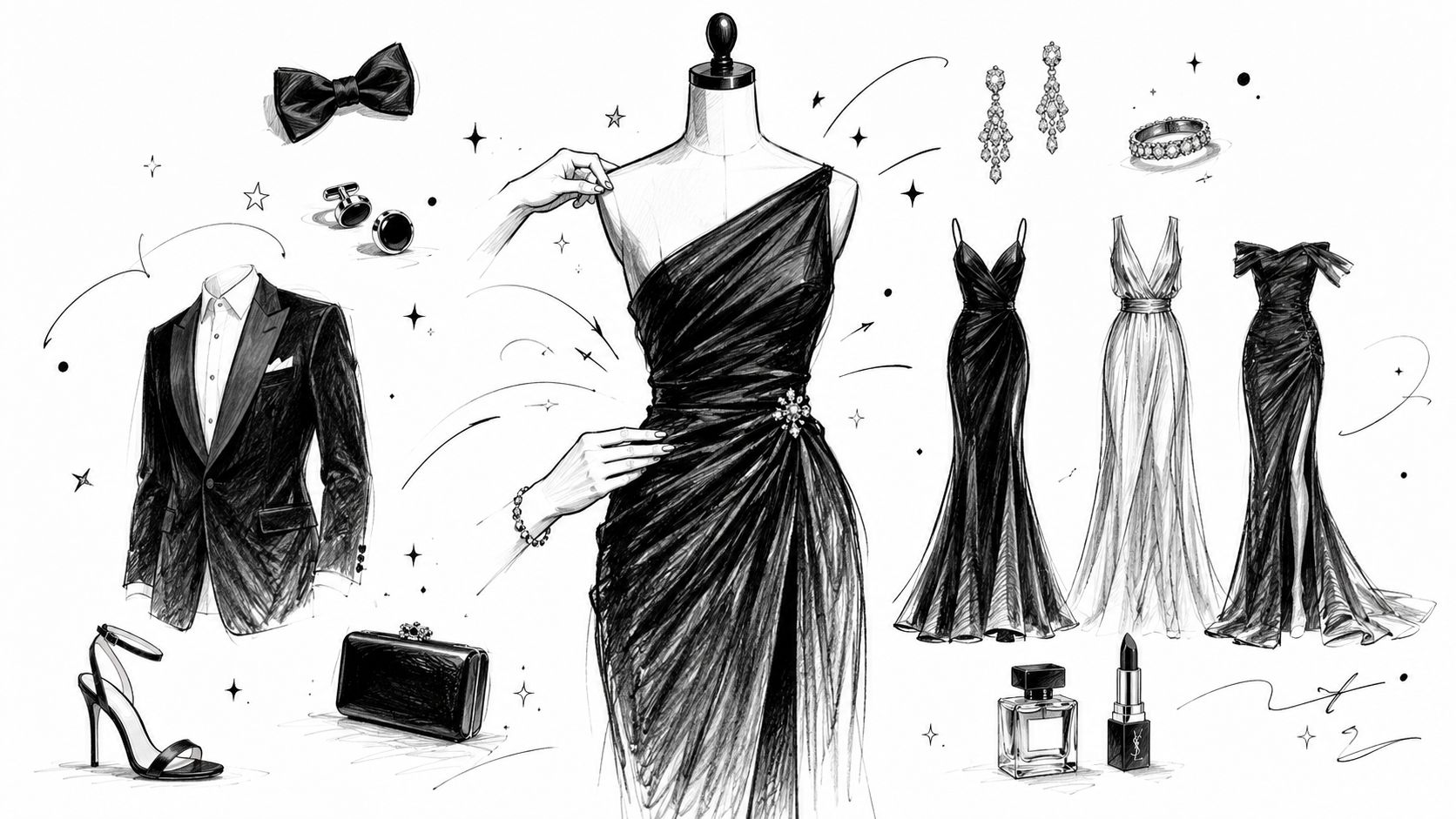
For women, the preferred route is still a floor-length evening gown. But the code also allows elegant cocktail dresses that are midi or knee-length, provided they're dressy and show the ankles, according to Tuxedo by Sarno's black tie optional guidance. That means you have options, but not infinite options.
Start with the dress
If you want the easiest win, wear a long dress. It instantly settles the formality question and lets you focus on fit, color, and accessories.
A floor-length gown works especially well when the venue is grand, the invitation feels formal, or the event begins in the evening. Look for clean lines, rich color, and movement. Satin column dresses, draped crepe gowns, velvet in colder months, and softly structured one-shoulder silhouettes all work beautifully.
If you prefer something shorter, choose a midi or polished knee-length dress with real presence. That means:
- Choose structure or drape. Bias-cut satin, sculpted crepe, or structured jacquard conveys formality.
- Keep the color grounded. Jewel tones, black, navy, deep green, rich plum, metallic neutrals, and soft refined tones work better than loud novelty shades.
- Watch the cutouts. A little modernity is fine. Too much skin turns formal into partywear.
Elegant separates can work
A lot of women forget this, but separates can look exceptional at a Black Tie Optional event if they're intentional.
Try combinations like:
- A silk blouse with a full satin skirt
- Wide-leg evening trousers with a sculptural top
- A fitted blazer over a fluid column skirt
- A dressy pantsuit in a luxe fabric
This route is excellent if dresses never feel like you. The outfit still has to read formal, though. Crisp black suiting with sharp shoulders and elegant jewelry looks chic. Officewear with a heel does not.
If your separates could pass for workwear with a different shoe, they're not formal enough.
Shoes, bags, and jewelry matter more than you think
This dress code is often won or lost at the accessory level.
For shoes, go with evening sandals, satin pumps, sleek leather heels, or pointed flats if they look refined enough. Skip anything chunky, overly casual, or beach-adjacent. The same goes for bags. Carry a clutch or a small structured evening bag, not your daily tote.
Jewelry should look deliberate. Statement earrings, a cuff, a fine necklace, or a stack of elegant bangles can all work. You do not need to wear everything at once. Formal style looks better when one element leads and the rest support it.
Here's a helpful visual reference for building the full effect from garment to finishing details:
Three outfit formulas that rarely fail
-
The safest choice
A long satin or crepe gown, metallic heel, clutch, and earrings. Elegant every time. -
The modern city choice
A sleek midi dress, well-fitting outer layer, sharp heel, and sculptural jewelry. Elegant without feeling stiff. -
The fashion-forward choice
A dressy pantsuit or dramatic separates in luxe fabric, paired with formal accessories and polished beauty styling.
Hair and makeup should support the outfit. A smooth bun, soft waves, or a clean blowout all work. Keep the finish polished. Black Tie Optional is not the night for rushed hair and your everyday makeup routine.
Navigating Modern Nuances and Etiquette
A Black Tie Optional invitation for a museum wedding in New York does not ask the same thing as one for an outdoor celebration in Oklahoma. The words may match. The room rarely does.
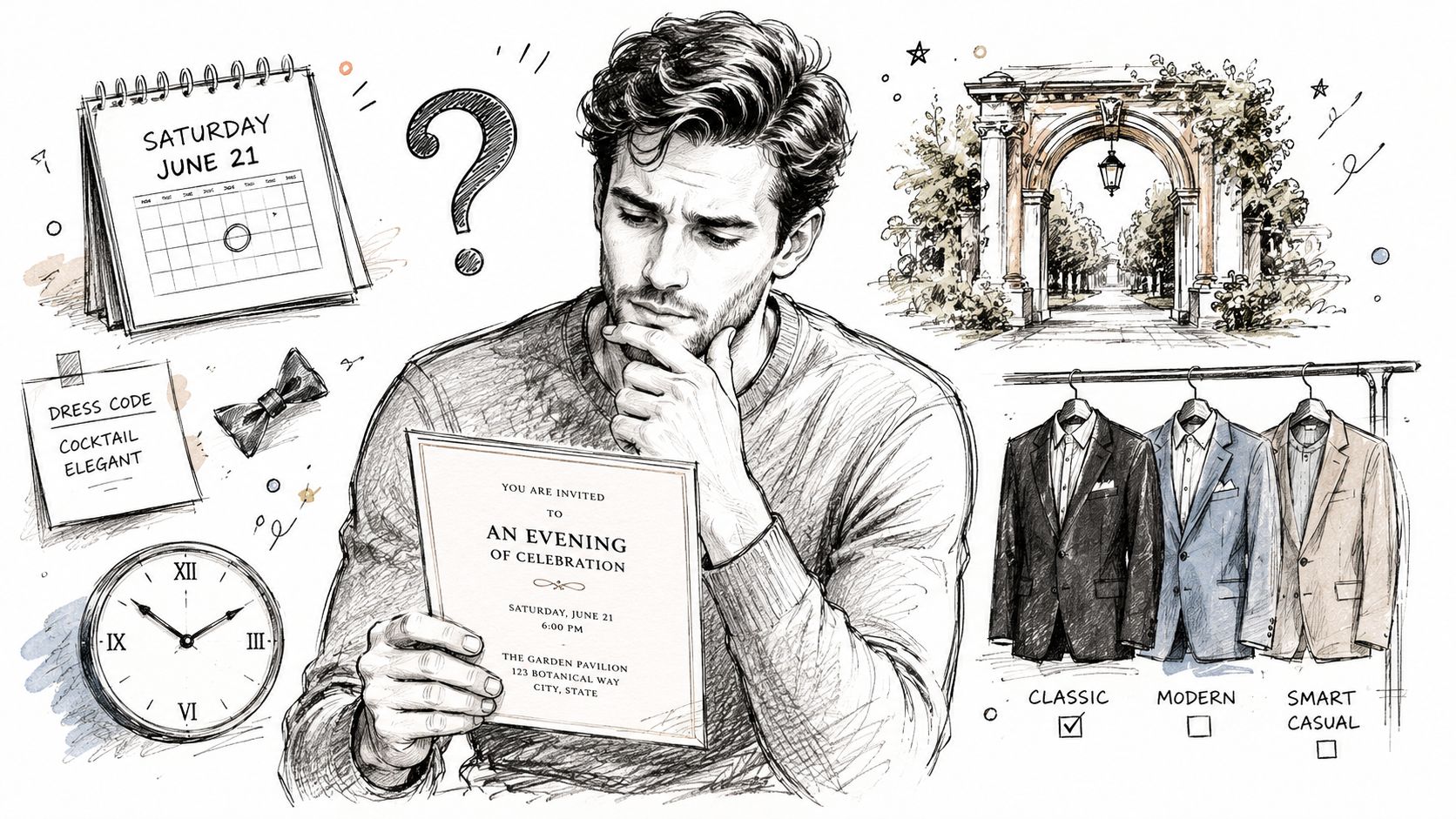
For women, confidence comes from clarity. You do not need to guess blindly. Read the invitation, then read the setting.
Venue sets the real level of formality
A ballroom, private club, luxury hotel, or museum usually calls for the dressier end of Black Tie Optional. Floor-length dresses feel natural there. A sharply cut midi in silk, satin, crepe, or another evening fabric can also work beautifully. A dress that feels sweet or daytime usually falls short.
A barn, vineyard, garden tent, or coastal venue changes the picture. The host may want a polished look without the full ballroom effect. You still need presence. You just want it with a little more ease and practicality.
Use the venue as your filter:
- Grand interior spaces call for stronger formal dressing
- Styled rustic venues suit refined pieces with softness and movement
- Outdoor settings need elegance that also makes sense for grass, gravel, wind, or heat
Venue photos help more than the dress code line. If you want a clearer visual benchmark before you buy, our guide on where to buy formal dresses online will save you time.
Time changes the finish
Black Tie Optional still points toward evening. If the event starts in late afternoon and builds into a candlelit dinner and dancing, dress for the later mood. Richer color, more lustrous fabric, and sharper finishing details make sense.
Daylight matters too. A formal garden ceremony at two o'clock can still support a long dress, but the styling should feel lighter and cleaner than a midnight gala look.
Region matters more than many guides admit
This is the part many generic dress code articles skip. Regional style changes how formalwear is interpreted, especially for weddings.
In some cities, guests treat Black Tie Optional almost exactly like black tie. In other places, the same wording leaves more room for a chic midi, dressy separates, or a beautifully fitted set. Neither approach is wrong. The mistake is dressing for a Manhattan ballroom when the event is clearly a polished ranch celebration, or dressing too casually for a formal downtown reception because the word "optional" made you relax too much.
Look at the clues around the invitation. The paper stock, typography, venue, ceremony time, floral direction, and overall styling all point somewhere. If the celebration includes highly produced guest experiences, such as creating viral photo booth moments, expect a visually polished atmosphere and dress to match it.
Ask yourself a better question than “Can I get away with this?” Ask, “What would look correct in this room?”
Asking the host without being a burden
Yes, you can ask. Ask neatly.
Skip the photo collage and the long text thread. Send one clear question: “Would you say guests are wearing mostly long gowns and very formal looks, or polished cocktail and midi dresses?” That gives you a useful answer and respects the host's time.
Shopping Smart for Your Event at Cedar & Lily
The worst formalwear purchase is the one that solves a single event and then sits in your closet for years.
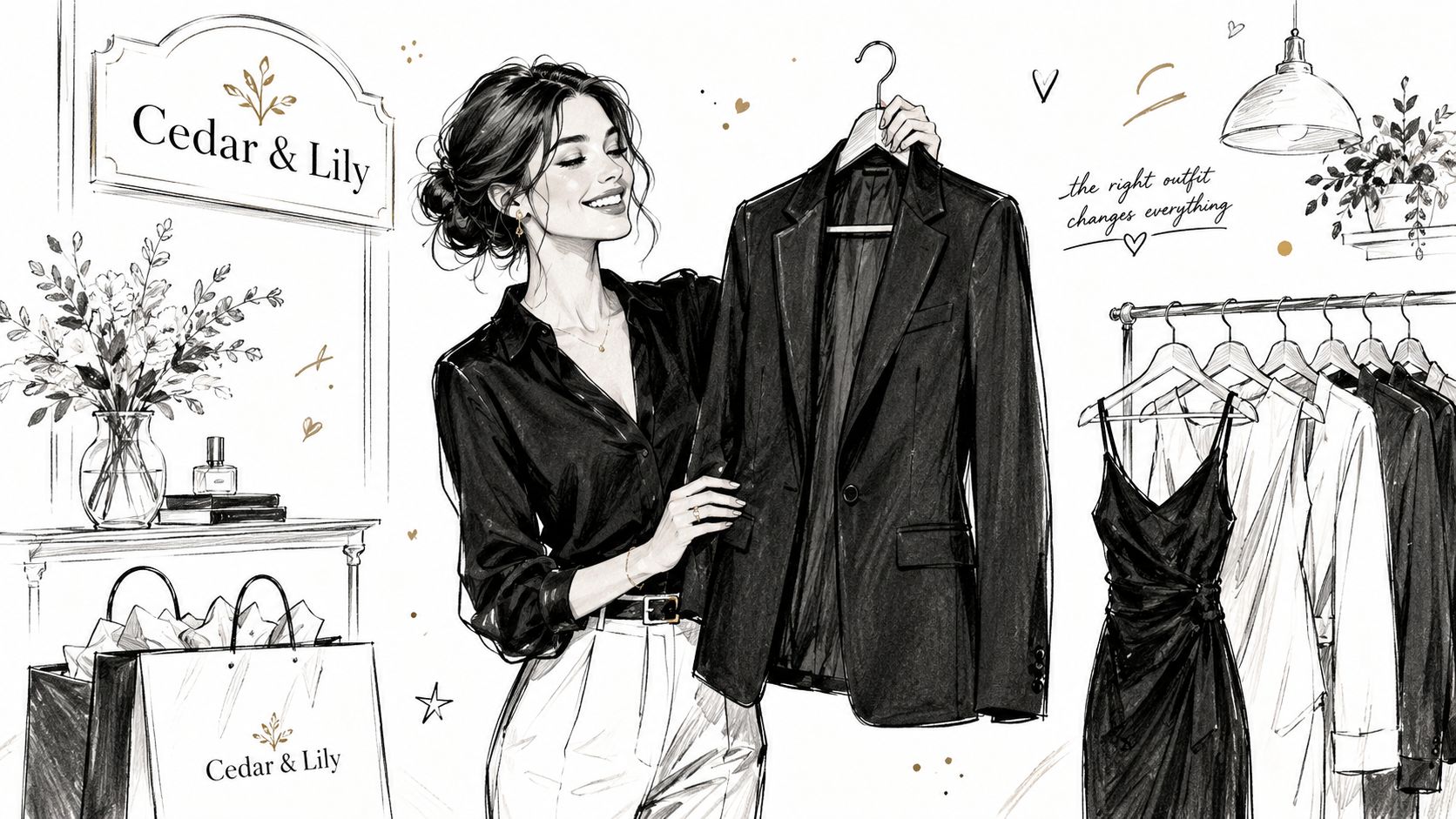
Black tie optional gives you room to shop with better judgment. You do not need a one-night statement piece that photographs well and feels wrong everywhere else. You need an event look with real range, especially if your calendar includes weddings in different regions, charity dinners, holiday galas, or formal dinners at country clubs, hotels, and city venues. The right piece should work in more than one setting with a simple change of jewelry, shoes, or outer layer.
Buy for repeat wear
At Cedar & Lily, the strongest occasion purchases usually fall into four categories:
- A refined midi in a rich fabric for formal weddings, cocktail-attire evenings, and dressed-up dinners
- A long dress with clean lines for events that call for more presence without feeling overdone
- An elegant set of separates that gives you more than one outfit option
- A sharply cut blazer that brings structure and polish to evening looks
That is how a smart occasion wardrobe gets built. A few excellent pieces will serve you better than a rack of almost-right dresses.
What makes a piece worth buying
Use a simple filter before you check out.
| Test | What to look for | What to avoid |
|---|---|---|
| Fabric | Satin, velvet, silk-like finish, substantial crepe, elegant texture | Thin jersey, casual cotton, linen |
| Silhouette | Clean lines, intentional drape, a defined shape | Overly trendy cuts that date fast |
| Repeat value | Easy to restyle with shoes, wrap, blazer, jewelry | One-night novelty pieces |
Fit decides whether a dress looks expensive or disappointing. If the bust pulls, the hem lands awkwardly, or the waist sits in the wrong place, leave it behind. Formal dressing is not the place to negotiate with a bad fit.
Style note: If you can already see three ways to wear it, it is probably a good buy.
Shop with the room in mind
Cedar & Lily stands apart from generic formalwear shopping. You are not just buying a dress code answer. You are choosing a piece that feels right for the venue, the city, the season, and the kind of event you attend.
A glossy hotel wedding in Chicago asks for something different than an outdoor formal celebration in Texas. A sleek black midi in heavy crepe may feel perfect for one and too restrained for the other. A romantic floor-length dress may be exactly right in one room and too soft in a modern downtown setting. Shopping well means matching the mood, not chasing the loudest trend.
If you want a clearer sense of which stores are strongest for occasionwear, this guide on where to buy formal dresses online is a useful place to start.
Panic shopping usually ends with a compromise. Careful shopping gives you pieces you will reach for again, and confidence the moment the next invitation arrives.
Your Confident and Elegant Conclusion
Black Tie Optional is not vague once you stop interpreting it strictly. It's a formal dress code with built-in flexibility. The host wants elegance. You're allowed some freedom in how you deliver it.
For a modern woman, that means choosing an outfit with evening presence. A floor-length gown is always a strong answer. An elegant midi or knee-length dress can also be right if the fabric, styling, and accessories carry real polish. A dressy pantsuit or refined separates can work beautifully when they look intentional and polished.
The smarter approach is simple:
- Respect the event
- Read the venue
- Dress for the evening
- Choose polish over trend
- Aim slightly more formal if you're unsure
That last one is the easiest rule to trust. At a Black Tie Optional event, no one regrets looking elegant.
You do not need to decode the invitation like it's a secret message. You need to recognize the mood the host is asking for, then meet it with confidence. When your outfit has the right fabric, a flattering fit, and a finished point of view, you'll feel that immediately. You won't spend the night wondering if you got it wrong.
And that's really the goal. Not perfection. Presence. You should walk in looking like you belong there, because you do.
If you're ready to find an event look that feels polished, modern, and wearable again, explore the curated occasionwear at Cedar & Lily Clothier. Their collection is ideal for women who want elegant dresses, standout separates, and boutique-level style guidance without the usual formalwear stress.