

Low-rise jeans outfits don't need crop tops, exposed underwear, or a full Y2K costume. The strongest version of the trend is more practical: relaxed denim, deliberate waist placement, and tops that create a clean line without fighting the jeans. The central question isn't whether low rise is back. It's which silhouette can move through coffee, work, dinner, and a fitting room without looking uncomfortable.
Table of Contents
- Why the Low Rise Jeans Comeback Looks Different This Time
- What Low Rise Actually Means and How It Should Fit
- Daytime Low Rise Jeans Outfits You Can Wear Right Now
- Dressing Low Rise Jeans Up for Date Night and Evenings
- Transitional Season Layering With Low Rise Denim
- Fit Fixes and Quick Confidence Checklist Before You Buy
- Try Them On In Person and Build the Outfit From There
Why the Low Rise Jeans Comeback Looks Different This Time
The 2026 low-rise revival is a proportion correction, not a Y2K costume. The strongest outfits use straight, relaxed, wide-leg, barrel, and softly puddled denim, then balance the lower waistband with a deliberate top and a clean outer layer. Start with the silhouette you need for your wardrobe category, whether that means polished workwear, relaxed weekend dressing, or an evening outfit.
Designers in the mid-to-late 1990s first pushed waistbands lower on the runway before the cut entered the mainstream in the early 2000s. By 2003, one sourced retail-data claim reported that nearly 70% of women's jeans sold in the United States were low rise, showing how fully the shape had entered everyday fashion before high-waisted jeans took over in the mid-2010s. The overview of low-rise denim's evolution outlines that shift.
The 2026 version has a calmer finish. Soft denim, longer-looking legs, neat tucks, and structured layers make the waistband look intentional instead of provocative. For a weekend category, pair barrel-leg denim with a fitted knit. For workwear, use a longline tee beneath a blazer. For dinner, choose a cleaner leg and a sharper jacket. The proportion does the work.
The numbers confirm a real revival
Current coverage reports low-rise jeans averaging 44,000 weekly Google searches, with searches up 28% year over year, social buzz up 49%, and market adoption up 4% in 30 days. The same report recorded 135.2 million TikTok views for #lowrisejeans. Other sourced observations recorded a month with searches up 57% year over year, while one brand's low-rise denim sales grew 500% in 2025 compared with 2024. Those figures appear in this reported analysis of the low-rise revival.
That momentum does not make the cut universal. It makes fit analysis worthwhile. Hourglass, pear, and rectangle proportions can all wear low rise when the waistband, hip ease, leg shape, and top length work together.
Treat a modern low-rise outfit as a fit-engineering exercise. Give the leg enough room to balance the lower waistband, then define the shape with a fitted top or a clean vertical layer. If you need fall layers for work or weekends, review the boutique's fall fashion guidance before visiting Cedar & Lily Clothier in Tulsa or Jenks. Bring one wardrobe category in mind, try the jeans on in person, and build the rest of the outfit around the pair that holds its shape.
What Low Rise Actually Means and How It Should Fit
In the fitting room, check the measured rise before trusting the name on the tag. Low rise places the waistband below the natural waist, resting on or just above the hips. One denim fit guide places low-rise construction below 8 inches, while style guidance commonly puts the waistband around 2 to 3 inches below the navel, depending on the garment and the wearer's proportions. This low-rise denim fit guide also distinguishes the rise measurement from where the jeans sit on the body.
Labels vary. Some jeans called low rise sit closer to mid rise, so use the tape measurement and the mirror together. For a practical wardrobe decision, start with the category you need, such as relaxed weekend denim, a polished straight leg, or a subtly flared pair for evening outfits.
Rise Check in the Fitting Room
| Rise Type | Inseam Range (in) | Sits At | Best For |
|---|---|---|---|
| Low rise | Varies by leg shape and garment | Below the natural waist, around the hips | Relaxed, straight, wide-leg, and subtly flared silhouettes |
| Mid rise | Varies by leg shape and garment | Between the hips and natural waist | Shoppers wanting moderate coverage and flexible styling |
| High rise | Varies by leg shape and garment | At or near the natural waist | Waist definition, fuller coverage, and tucked-in outfits |
Use four checkpoints before deciding whether the pair belongs in your wardrobe:
- Waistband contact. The waistband should hug the body without digging or folding. A gap at the back often signals a mismatch between the waist and hip measurements, rather than a need to tighten the belt.
- Front closure. The zipper and fly should lie flat while standing and sitting. Rippling at the fly usually points to an unsuitable front rise or too little room through the hips.
- Seat and back yoke. The back yoke should not pull sharply, and the seat should skim the body without strain. Horizontal wrinkles usually show tension through the hips.
- Movement. Sit, walk, and bend. A standing mirror cannot show whether the waistband stays secure or demands constant adjustment.
Practical rule: A lower waistband needs more room through the hip and leg. Tight-and-low rarely looks polished, and it usually feels uncomfortable too.
Start with relaxed baggy, straight-leg, or subtly flared shapes. They distribute visual weight below the waist and give the lower rise room to look deliberate. For a shorter torso, try a slightly curved waistband or a rise that sits below the navel without dropping to the hip bone. A longer torso can often carry a lower rise with a fitted top ending at the waistband.
If the measurement feels too exposed for your wardrobe, compare it with this mid-rise denim guide. The comparison helps identify whether you want true low rise or a lower mid-rise cut. Take that decision into a Cedar & Lily Clothier visit in Tulsa or Jenks, then test the rise with the wardrobe category you plan to wear. A waistband that works with your chosen top length is the right starting point.
Daytime Low Rise Jeans Outfits You Can Wear Right Now
The 2026 low-rise revival is not a Y2K costume. It is a proportion problem. A low waistband needs a clear counterpoint above it, whether that means a defined shoulder, a close-fitting top, or controlled volume through the jacket. Choose the outfit by wardrobe category and occasion, then take that formula into a Cedar & Lily Clothier visit in Tulsa or Jenks instead of copying an isolated mood board.
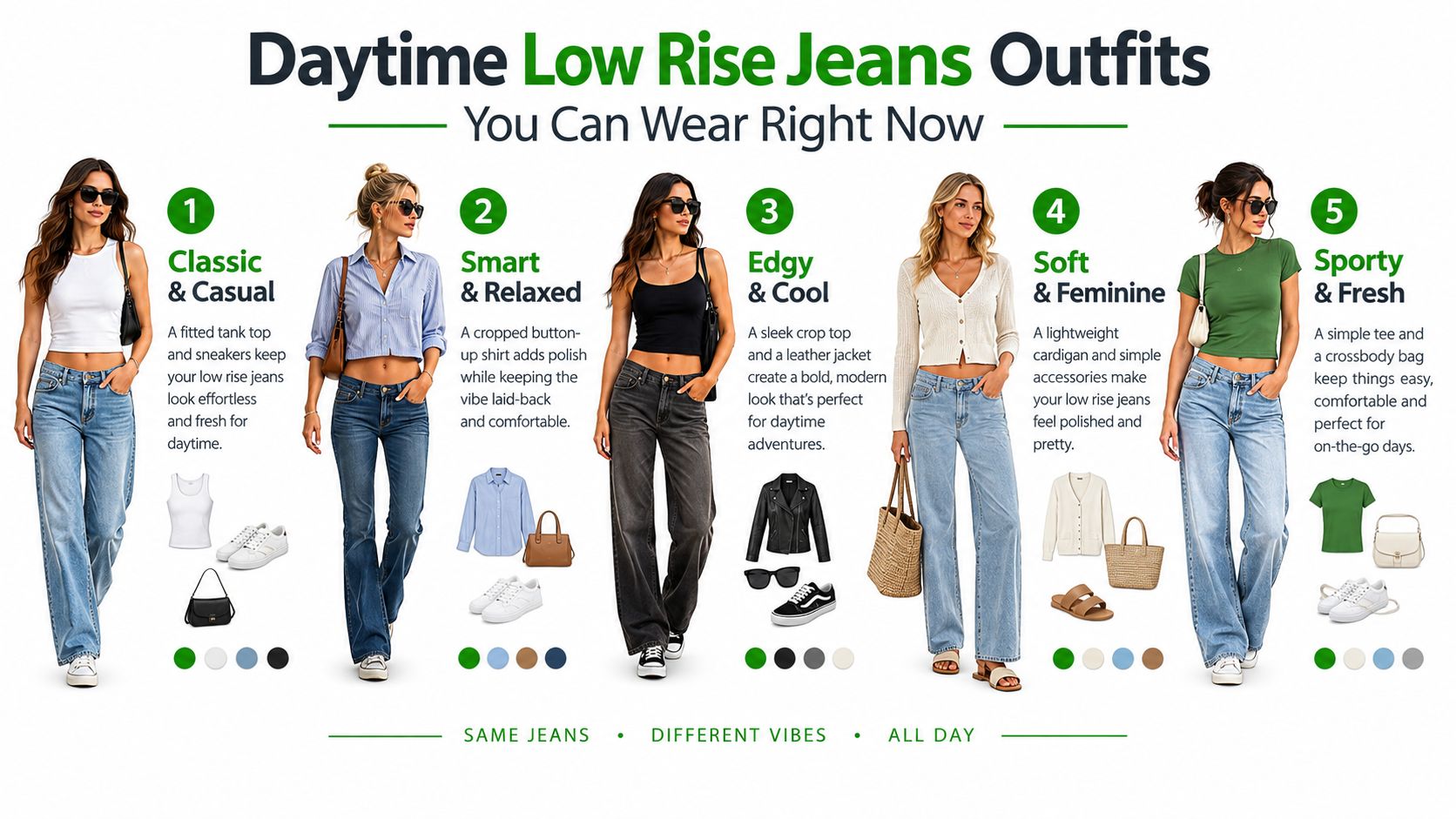
Five formulas for casual wardrobes
Coffee and errands. Tuck the front of a slub cotton tee into relaxed or barrel-leg denim, then add an oversized blazer, low-profile loafer, and clean leather belt. The blazer supplies coverage and structure. The partial tuck keeps the hips visible, making this the easiest formula for a loose shape.
Weekend brunch. Pair straight-leg low-rise denim with a fitted ribbed tank, an open linen overshirt, and a cushioned sneaker. The tank defines the upper body while the overshirt adds movement and coverage. Keep its hem around the hip. A shirt that reaches the upper thigh hides the waistband and weakens the proportion.
Casual office. Button a cropped knit cardigan as a top and wear it with high-cuff straight-leg denim and a ballet flat. The cardigan should meet the waistband or stop just above it, so the outfit looks intentional without showing a bare midriff. Finish with a slim watch and small earrings for a polished workday category.
Longline and wide-leg. A fitted long-sleeve tee tucked into wide-leg low-rise jeans gives the lower half room while keeping the waist visible. Add a woven belt and chunky dad sneaker to place weight where the wide leg needs it. Keep the tee close to the body. The jeans should provide the deliberate volume.
Museum or market day. Wear a striped boatneck with vintage-wash low-rise denim, an ankle boot, and a compact crossbody bag. The boatneck directs attention toward the shoulders and face, balancing the lower waistband. A small cuff exposes the boot and keeps the wash from making the lower half look heavy.
The top-length decision
Top length determines whether low-rise denim looks styled or accidental. A fitted piece that grazes the waistband creates a clean meeting point. A loose top needs a front tuck, half-tuck, or jacket to contain it. A long, shapeless top creates a heavy middle and makes the legs look shorter.
Shorter tops still work when coverage matters. Add a structured blazer or hip-length jacket, then use this guide to wearing cropped tops to judge the whole outfit, not just the amount of exposed skin. The goal is balance between hem, waistband, and outer layer.
Build these combinations in person. At Cedar & Lily Clothier, place the tee, cardigan, overshirt, belt, and shoe together before deciding. Each piece has to support the same proportion. That is how a daytime low-rise outfit becomes wearable, not merely photogenic.
Dressing Low Rise Jeans Up for Date Night and Evenings
Evening low-rise jeans should look sleek, not revealing for the sake of it. The strongest outfits use a long, clean leg line and one polished focal point near the face or neckline. Bare midriff styling is optional, and usually unnecessary.
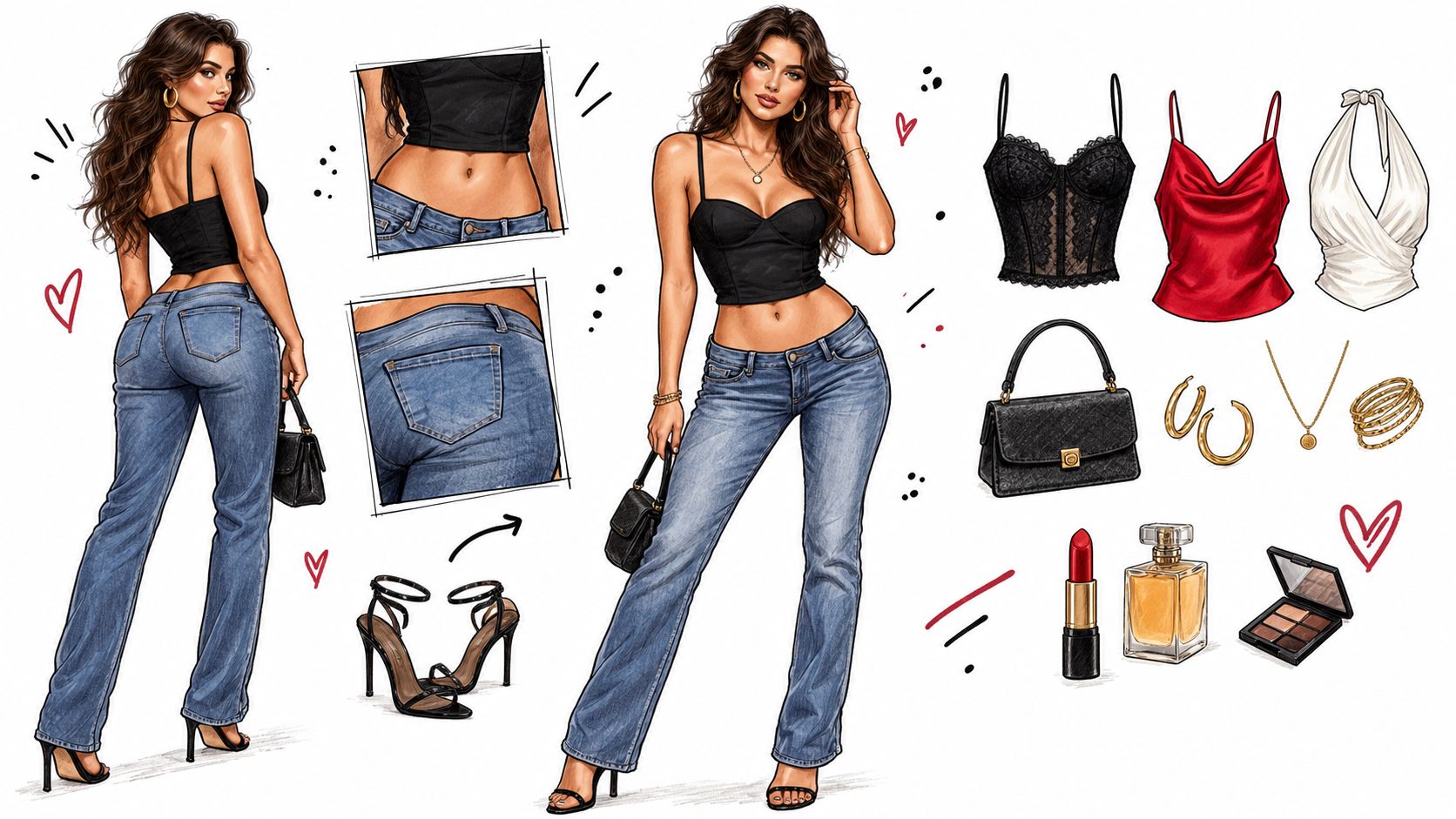
A slinky satin cami loosely tucked into straight or subtly flared denim works well under a cropped fitted blazer. The cami brings sheen, the blazer gives the shoulder definition, and the tuck keeps the waist visible without making the look feel rigid. A pointed-toe heel or ankle boot extends the leg from the lower waistband more effectively than a bulky rounded shoe.
Three evening combinations
A fitted long-sleeve bodysuit paired with low-rise denim, pointed-toe heeled boots, and a statement belt creates the sharpest option. The bodysuit prevents bunching under the belt, while the boot creates a continuous line through the ankle. Small sculptural earrings or a pendant at the collarbone draw attention upward.
A soft knit top half-tucked with strappy sandals and a small shoulder bag feels gentler. The knit should have enough structure to hold the tuck without collapsing into the waistband. A delicate necklace and slim bracelet are better than heavy jewelry at the hip, where a large accessory can make the lower half look crowded.
A satin cami, cropped fitted blazer, pointed boot, and compact clutch suits a dinner reservation or evening event. The hem of the blazer should stop near the waistband or slightly below the hip. A long blazer can work too, but only when the denim has a clean, narrow leg and the jacket remains structured.
The hem deserves attention. A slight front break can look intentional with a boot, but a clean hem grazing the ankle bone is the safer choice for dressier denim. Too much bunching makes the outfit read casual and can visually shorten the leg.
For a buyer working within under-$200 or under-$300 price bands, the most useful strategy is to spend on the piece that carries the outfit. A polished blazer, a well-cut boot, or a satin top can make a simpler denim pair feel evening-ready. Jewelry and a small bag can then provide the finish without adding bulk at the waistband.
The same approach applies to date-night dressing guidance. The outfit should lead with texture, line, and finish, not with how much skin the jeans reveal.
Transitional Season Layering With Low Rise Denim
Cool weather exposes weak proportions quickly. A sweater hanging over a low waistband can erase the shape, while a lightweight top can leave the midsection feeling underdressed. The solution is to choose layers by their endpoint.
An oversized blazer works with a fitted tee, slim knit, or buttoned cardigan underneath. It can finish at the hip for a compact silhouette or reach mid-thigh when the denim has a straighter, cleaner leg. A cropped jacket should meet the waistband rather than stop at an awkward point across the stomach.
A quilted or puffer vest gives warmth without covering the entire outfit. It works best over a close-fitting long-sleeve tee or fine-gauge knit, especially with straight-leg jeans. A vest that ends at the hip keeps the waistband visible and adds insulation without creating a long block through the torso.
Boots by hem shape
- Straight leg: An ankle boot keeps the hem clean and shows where the leg ends.
- Bootcut: A knee-high boot can disappear beneath the flare, creating a continuous lower line.
- Wide low rise: A chunky lug sole gives the wider leg enough visual weight and prevents the shoe from looking undersized.
A fine-gauge turtleneck can be fully tucked when the waistband is secure and the denim has enough room at the hips. With a chunkier sweater, a French tuck is more effective than a full tuck because it defines the front without adding a thick roll around the body. Mid-weight rigid denim and brushed twill hold their shape in cool weather better than lightweight jeggings, which can collapse around the knee and seat.
Two useful weather scenarios
For a 55-degree rainy day, a fitted ribbed top, straight-leg low-rise denim, a hip-length quilted vest, a water-resistant ankle boot, and a compact crossbody keep the outfit practical. The vest supplies warmth while the boot anchors the hem, and the close-fitting base layer prevents excess fabric under the outer layer.
For a 45-degree crisp evening, a fine-gauge turtleneck, wide-leg low-rise denim, an oversized blazer reaching the hip or mid-thigh, and a chunky lug-sole boot offer stronger insulation. A belt defines the waist, while the blazer supplies coverage without requiring the knit to be tucked tightly.
The layer should support the jeans, not compete with them. If the jacket is oversized, the top underneath should be neat. If the knit is substantial, the outer layer should have enough structure to contain it.
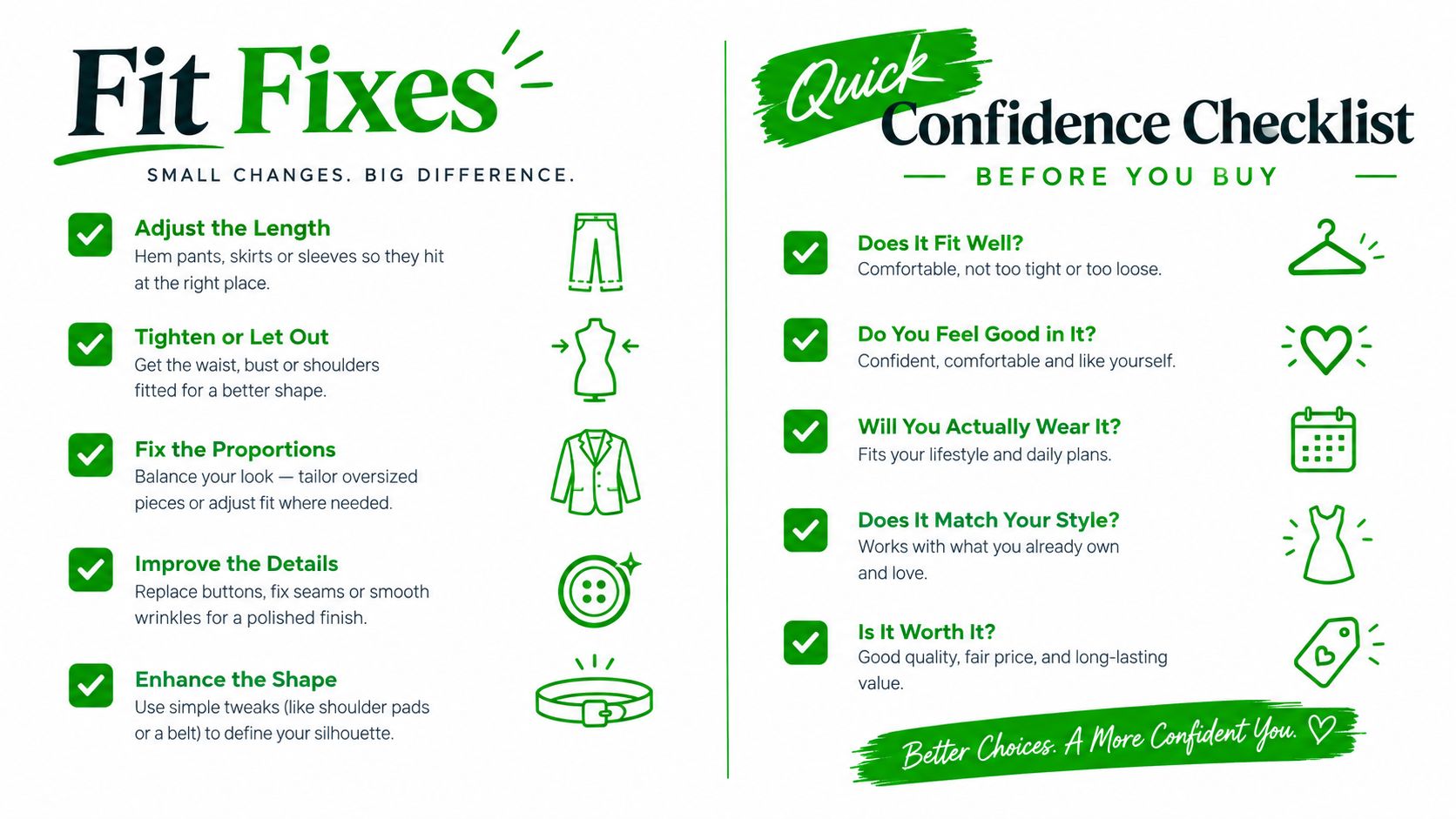
Fit Fixes and Quick Confidence Checklist Before You Buy
The fitting room should answer practical questions before a shopper considers color or wash. Low-rise denim is wearable when the waistband stays in place, the seat skims, and the leg shape works with the shoes already in the wardrobe.
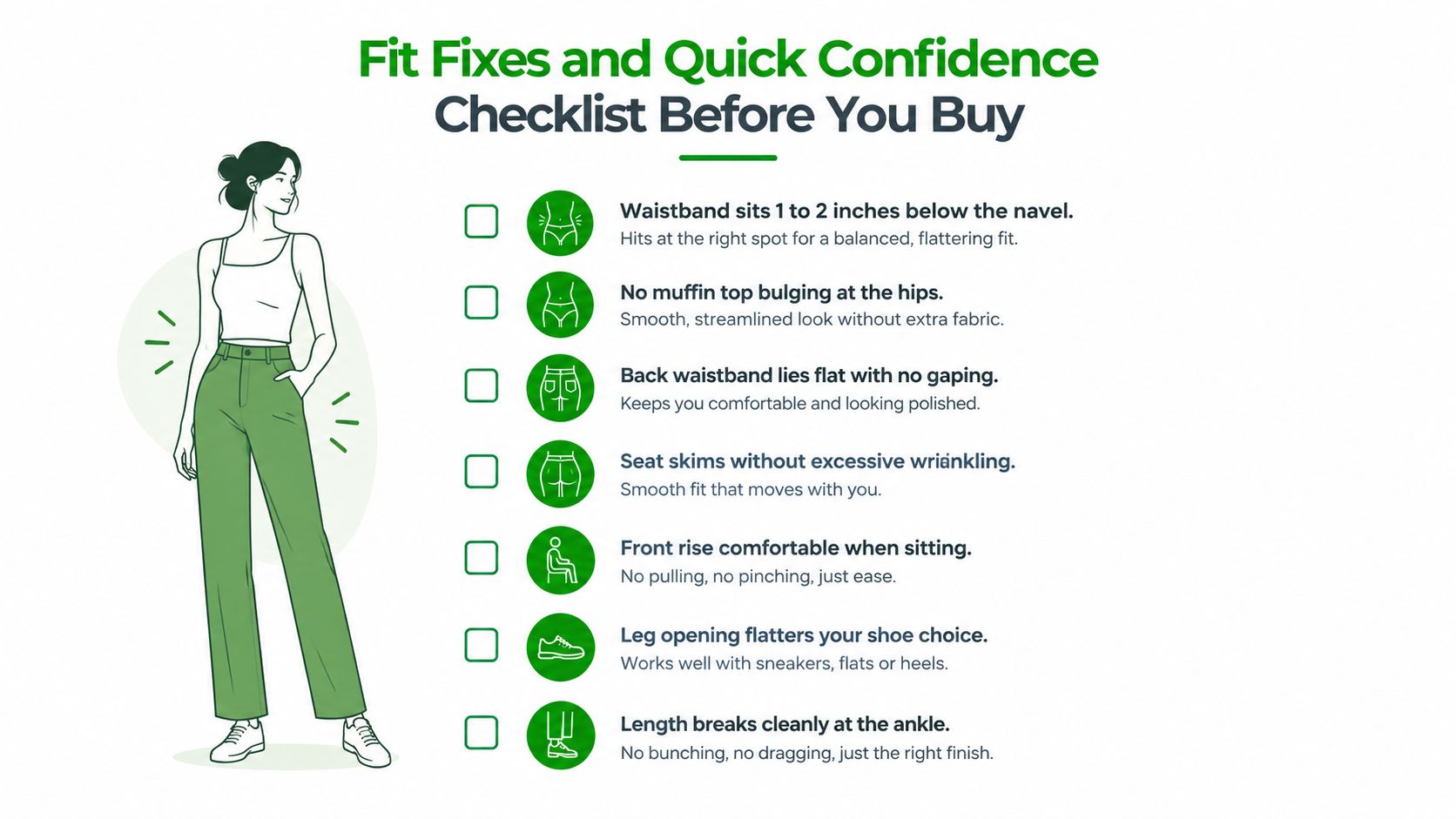
The fitting-room checklist
- Waistband position: The front should sit around 1 to 2 inches below the navel, without dropping so low that the waistband rests directly on the hip bone.
- Hip line: There shouldn't be bulging at the hips or a sharp horizontal indentation under the waistband. If the waistband fits but the hips feel strained, the cut is wrong or the size needs to change.
- Back coverage: The back rise should cover the lower back comfortably and stay flat rather than exposing a gap when the shopper bends.
- Seat fit: The seat should skim the body. Excessive wrinkling can indicate too much fabric, while strain across the pockets signals insufficient room.
- Front rise: Sitting should feel easy. A front rise that pinches when seated won't become comfortable through styling.
- Leg opening: The opening should suit the shoe. A wide hem needs a substantial sneaker or boot, while a narrow straight leg can handle a ballet flat.
- Hem length: The hem should break cleanly at the ankle or fall with deliberate volume. Bunching at the knee or ankle usually means a different inseam or leg shape is needed.
Size up or change the cut
A waistband gap can sometimes be corrected with a tailor's dart, but a large gap means the pattern isn't matching the body. A belt can secure a minor issue, though it shouldn't be used to compensate for denim that slides or folds.
Tight thighs call for more room through the hip and leg, not just a larger waistband. A stretch denim blend can help when the cut is otherwise right, but a straight or wide-leg shape is usually the better correction. A short rise that pulls when seated needs a longer rise, not a smaller size. A knee break that collapses can signal excess fabric or an incompatible leg shape.
Quick shape guide
Hourglass proportions often benefit from a straight leg or subtle flare with a waistband that follows the curve without cutting in. Pear proportions tend to look balanced in relaxed straight or wide-leg denim, especially with a fitted or structured top. Apple proportions can work with a softer low rise, a neat longer layer, and a leg that doesn't cling at the middle. Rectangle proportions can use a belt, curved waistband, or barrel shape to create definition.
The final confidence test is simple: check the front, sit down, inspect the back waistband, place both hands in the pockets, and try the jeans with a representative top. The guide to choosing the perfect jeans supports this broader approach because fit is a combination of measurements, movement, and proportion.
Try Them On In Person and Build the Outfit From There
Ordering several sizes online can be useful for familiar denim, but low rise deserves a fitting-room session. The waistband sits in a more sensitive position, and the difference between straight, slight flare, and slouchy barrel can change the entire outfit even when the labeled size stays the same.
A prepared shopper can bring two fitted tees, one tucked blouse, and the belt worn most often. Those familiar pieces reveal whether the jeans can support an actual wardrobe rather than only a styled product photograph. Each cut should be tested while standing, walking, sitting, and squatting, with special attention to back-waist gaping and seat comfort.
The winning pair should then be styled immediately with an ankle boot, a denim jacket, and a second layering piece. That quick outfit test answers the questions a mirror alone cannot: does the hem work with the shoe, does the top meet the waistband cleanly, and does the jacket preserve the intended line?
The boutique team can pull another size, compare a different leg shape, pin a hem, or suggest a tailor while the decision is still easy to adjust. Shoppers in Tulsa can visit Utica Square, while shoppers in Jenks can use the downtown storefront for the same hands-on process. That personal check is especially valuable for women building polished work-to-weekend outfits rather than chasing a single trend.
The assortment includes curated contemporary and designer pieces, including Vanessa Mooney and Lace the Label, alongside denim, tops, blazers, shoes, belts, and evening-ready layers. Cedar & Lily Clothier is a retailer, not a manufacturer of its own line, so the useful service is the edit, the fitting guidance, and the ability to build the outfit around the right pair.
Cedar & Lily Clothier offers curated denim, contemporary tops, structured layers, accessories, and styling help for low rise jeans outfits online and in person. Shoppers can visit Utica Square in Tulsa or downtown Jenks to compare silhouettes, test the fit, and leave with an outfit that works beyond the fitting room.