


The invitation is on the calendar, the venue looks beautiful, and the closet is full of clothes that suddenly feel wrong. A wedding, gala, prom, or formal dinner calls for something more considered than an everyday dress, but an overly dramatic purchase can become difficult to wear again. A lace sequin dress solves that tension by pairing the light-catching energy of sequins with the refined texture and long luxury history of lace.
The right style should feel polished when the evening begins, comfortable enough for dinner and conversation, and versatile enough to return for another occasion. Cedar & Lily Clothier curates contemporary and designer women's clothing, including pieces from Vanessa Mooney and Lace the Label, for shoppers who want occasion dressing with a practical point of view. The following guide covers the details that make a lace-and-sequin dress work, from construction and silhouette to styling, care, and repeat wear.
Table of Contents
- Finding Your Perfect Occasion Dress
- Understanding Lace and Sequin Construction
- Choosing the Right Silhouette and Length
- The Enduring Allure of Sequined Lace
- Styling for Prom, Weddings, and Galas
- Essential Care and Storage Tips
- Shop the Collection at Cedar & Lily Clothier
Finding Your Perfect Occasion Dress
A shopper preparing for a formal event often starts with the same problem. Several dresses may look attractive on a hanger, yet none answers every question: Is it formal enough? Will it feel comfortable after several hours? Can it work for more than one invitation? A lace sequin dress earns consideration because its surface already provides dimension, while the lace keeps the effect from looking like plain novelty sparkle.
The most successful choice depends on the event and the wearer's priorities. A dress with restrained sequin placement can feel elegant at a wedding, while a denser reflective surface may suit a gala or evening celebration. The color matters too. Deep neutrals and jewel tones usually create a quieter impression, while metallic surfaces make the garment more overtly festive.
Practical rule: Let the dress establish the mood, then use accessories to clarify the dress code rather than compete with the fabric.
A polished occasion wardrobe needs more than visual impact. The wearer should check the neckline, lining, sleeve length, fastening, and ease through the hips before deciding. Lace and sequins can make a garment feel substantial, so movement matters. Sitting, walking, lifting the arms, and getting in and out of a car are useful tests during a fitting.
For shoppers comparing options, Cedar & Lily's guidance on occasion dresses for women offers a helpful starting point for thinking through event formality and personal style. The boutique's team can also help distinguish a dress that looks spectacular in a photograph from one that feels effortless in person.
A lace sequin dress works particularly well when the shopper wants one memorable piece rather than a closet of single-use outfits. A softer silhouette can return for weddings and dinners, while a more dramatic floor-length style can anchor a black-tie wardrobe. The best purchase is the one that makes the wearer feel composed before she ever steps into the room.
Understanding Lace and Sequin Construction
A lace sequin dress is a layered textile system, not a single flat fabric. That structure affects comfort, drape, weight, and how well the garment holds up through repeated wear.
The outer shell may be lace or mesh carrying embroidered sequins. A separate lining or underlayer provides opacity, controls the fall, and creates a smoother surface against the skin. On pieces such as the Cami NYC Zoya Sequin Dress in the Cedar & Lily collection, check the product page for the self and lining breakdown. A polyester shell with a small amount of spandex in the lining is typical for this category.
Each layer has a specific job:
- Outer lace or mesh: Creates transparency, pattern, and texture. It may have limited stretch and can catch on rough surfaces.
- Sequin attachment: Adds reflection and visual weight. Sequins can be embroidered, bonded, knitted in, or heat-transferred onto a base fabric, and each method changes how the dress bends and weighs.
- Lining: Reduces transparency, limits direct contact between skin and embellishment, and helps the dress keep a cleaner line.
- Stretch content: A small amount in the lining or secondary layer can improve movement and recovery without making the embellished shell highly elastic.
A sequin is a small reflective disc with a hole for fixing. Depending on the construction, sequins may be attached to mesh, tulle, lace, satin, jersey, or raschel. Firmly attached discs can create a more structured surface, while a softer base may move more easily but need gentler handling.
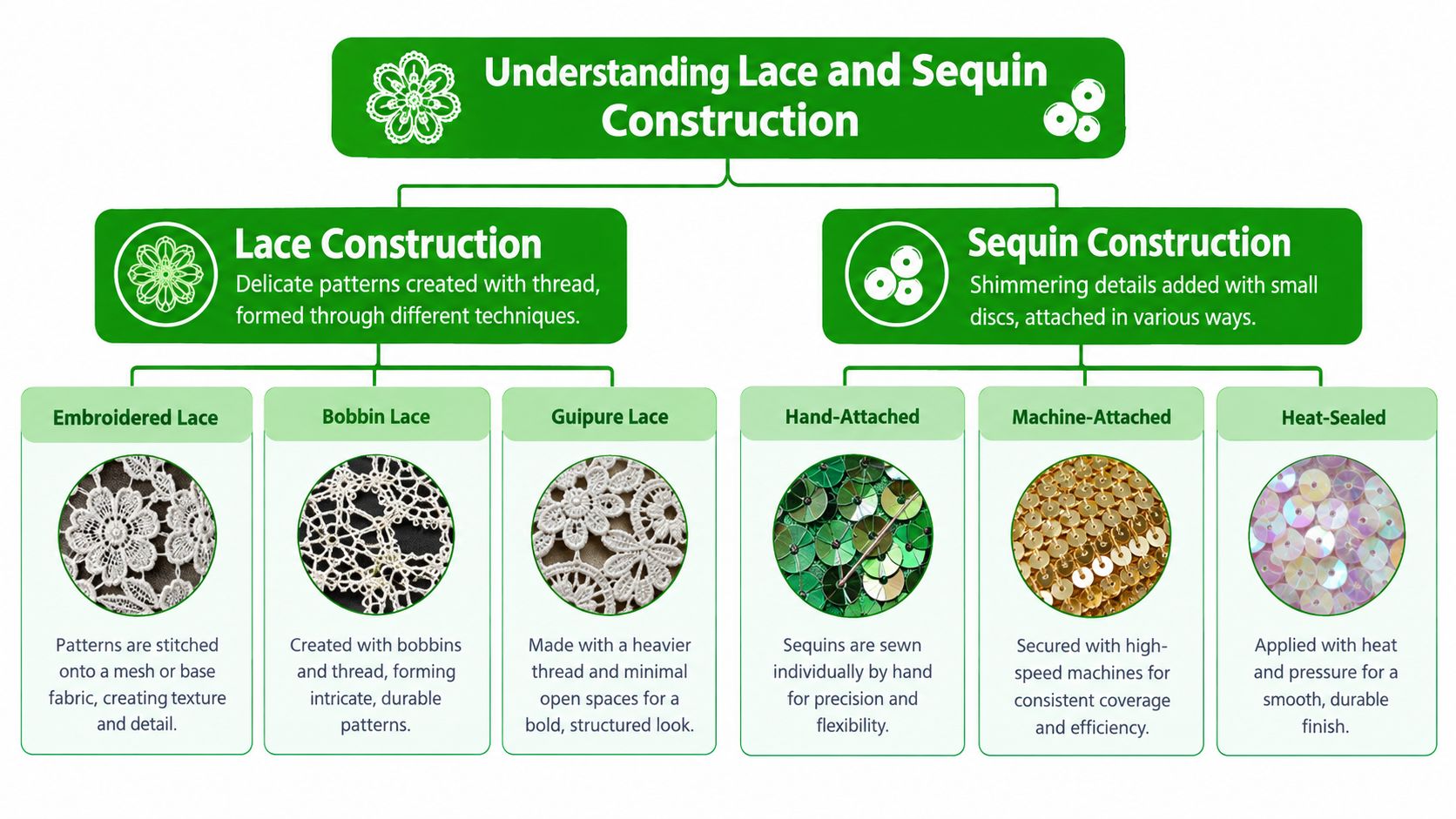
Construction also determines care. Thread-attached sequins can loosen when they snag on jewelry, rough chairs, or textured bags, so inspect exposed areas before and after wearing the dress. Avoid pulling at individual discs, and follow the garment's care label rather than assuming the shell and lining can be treated alike.
The lining deserves close attention. A smooth, well-fitted underlayer can separate a wearable dress from one that scratches, clings, or twists. Check whether it lies flat, whether seams pull as the body moves, and whether the embellished shell hangs evenly over it.
For more context on the relationship between sparkle and textile detail, Cedar & Lily's article on dresses with paillettes offers useful style guidance. The practical lesson is clear: quality comes from how the layers work together, not from sequin density alone.
Choosing the Right Silhouette and Length
Length changes the entire message of a lace sequin dress. It also changes how easily the wearer can move, sit, dance, and restyle the garment.
A mini feels youthful and energetic. It works best when the event allows a shorter hem and the dress has enough structure to balance its decorative surface. A simple shoe and restrained jewelry keep a sequin mini from looking overly busy. For a cocktail party or less traditional celebration, this length can feel confident without requiring a full evening-gown approach.
A midi offers the widest range for many wardrobes. It can look refined at a wedding, polished at a dinner, and more approachable when paired with a fitted jacket or simpler footwear. The hem should fall at a flattering point on the leg, and the wearer should check whether the lining moves freely when walking. Cedar & Lily's explanation of what a midi dress is can help shoppers assess proportion before trying on embellished styles.
A maxi brings the greatest formality. Floor-length or near-floor-length lace and sequin dresses suit galas and black-tie settings, especially when the neckline and coverage remain elegant. The additional fabric can create beautiful movement, but it also makes hem length and footwear height more important.
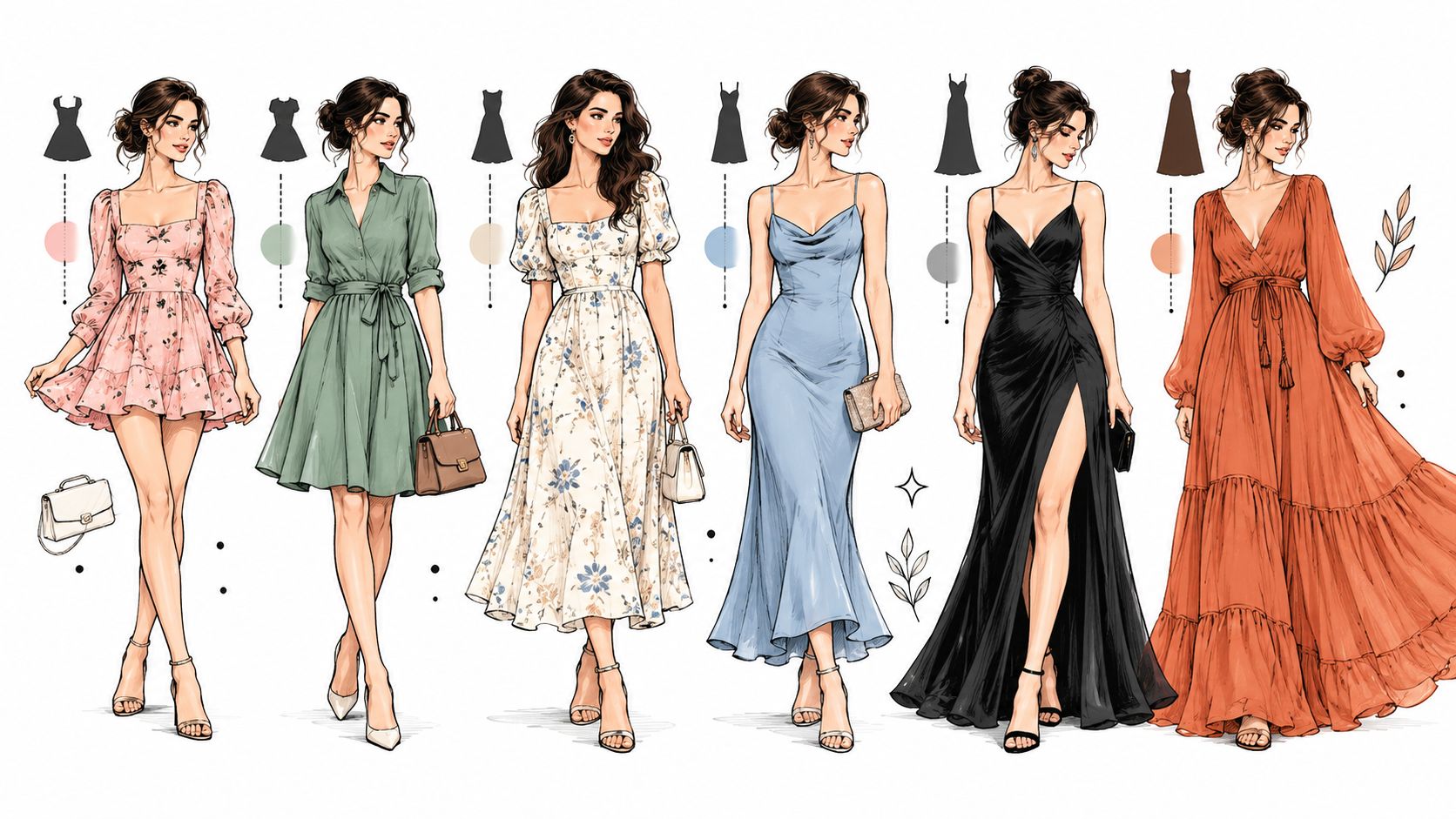
Fit deserves equal attention. A body-conscious cut highlights curves and creates a dramatic effect, but it must have enough ease through the seat and underarm to remain comfortable. An A-line shape gives the skirt more fluidity and can feel easier for long events. A wrap-inspired bodice may offer adjustable definition, while a straighter column creates a sleek, uninterrupted line.
| Silhouette | Best impression | What to check |
|---|---|---|
| Mini | Playful and modern | Hem security, lining comfort, ease when seated |
| Midi | Flexible and polished | Leg proportion, walking ease, lining movement |
| Maxi | Formal and commanding | Hem length, shoe height, fastening, train clearance |
Sequin density also affects proportion. Dense embellishment can make a fitted dress feel more assertive, while selective sparkle over lace can look lighter and more delicate. The strongest choice is the one that matches the event's formality and lets the wearer move naturally.
The Enduring Allure of Sequined Lace
A lace sequin dress can make a formal entrance without looking like a one-night novelty. Lace has carried luxury weight since emerging in Europe during the late 15th and 16th centuries. By the 17th and 18th centuries, courts were spending heavily on it as part of elite clothing.
During the 19th century, machine production made lace more accessible and expanded its use in lingerie, bridal wear, and evening clothing. Its broader availability did not remove its refined character. Instead, lace became adaptable, appearing in both highly crafted garments and more accessible occasion pieces.
Its influence continued through the 20th century, including renewed popularity in the 1950s and 1980s. Designers used machine-made lace in haute couture as well, keeping it relevant as a foundation for polished event dressing. That history explains the fabric's strong partnership with sequins. Lace softens reflected light, introduces pattern, and gives the surface texture that balances concentrated shine.
Construction matters here. A lace sequin dress is a layered textile system, with lace providing the patterned base and sequins attached over selected areas or across the full surface. The result can feel richly dimensional, but the attachments and exposed threadwork require more careful handling than a plain evening fabric.
The combination also occupies useful middle ground. At a wedding, lace can suit a romantic setting without relying on excessive decoration. At a gala, it makes high shine appear deliberate rather than flat. For a formal dinner, a restrained neckline and selective sequin placement can keep the dress polished and luxurious.
Texture supports repeat wear. A design built around lace, proportion, and controlled sparkle depends less on a passing trend than a novelty garment with decoration but little structure. Change the shoes, jacket, jewelry, or hair, and the impression shifts while the fabric remains the visual foundation. That versatility makes careful construction and proper care worthwhile.
Styling for Prom, Weddings, and Galas
A lace sequin dress already acts as the focal point, so styling should add polish without creating competition. The right accessories depend on the setting, the dress length, and the amount of surface decoration.
For a prom or formal school event, a strappy heel or refined sandal keeps the look youthful and light. A small shoulder bag or compact clutch provides function without interrupting the dress. Jewelry should follow the neckline. A pair of delicate drops may be enough for a decorated bodice, while a simpler neckline can accommodate a slightly more noticeable earring.
For a wedding, the setting guides the balance. Delicate sandals suit a garden or daytime celebration, while a more polished heel works for an evening reception. A cropped jacket or elegant wrap can provide coverage without hiding the lace. The wearer should avoid accessories that pull at open lace or snag the sequin surface during greetings and dancing.
For a gala, the styling can become more formal. A floor-length silhouette pairs naturally with sleek heels, a compact evening bag, and carefully chosen jewelry. A single refined bracelet or a clean drop earring generally looks more intentional than several competing statement pieces.
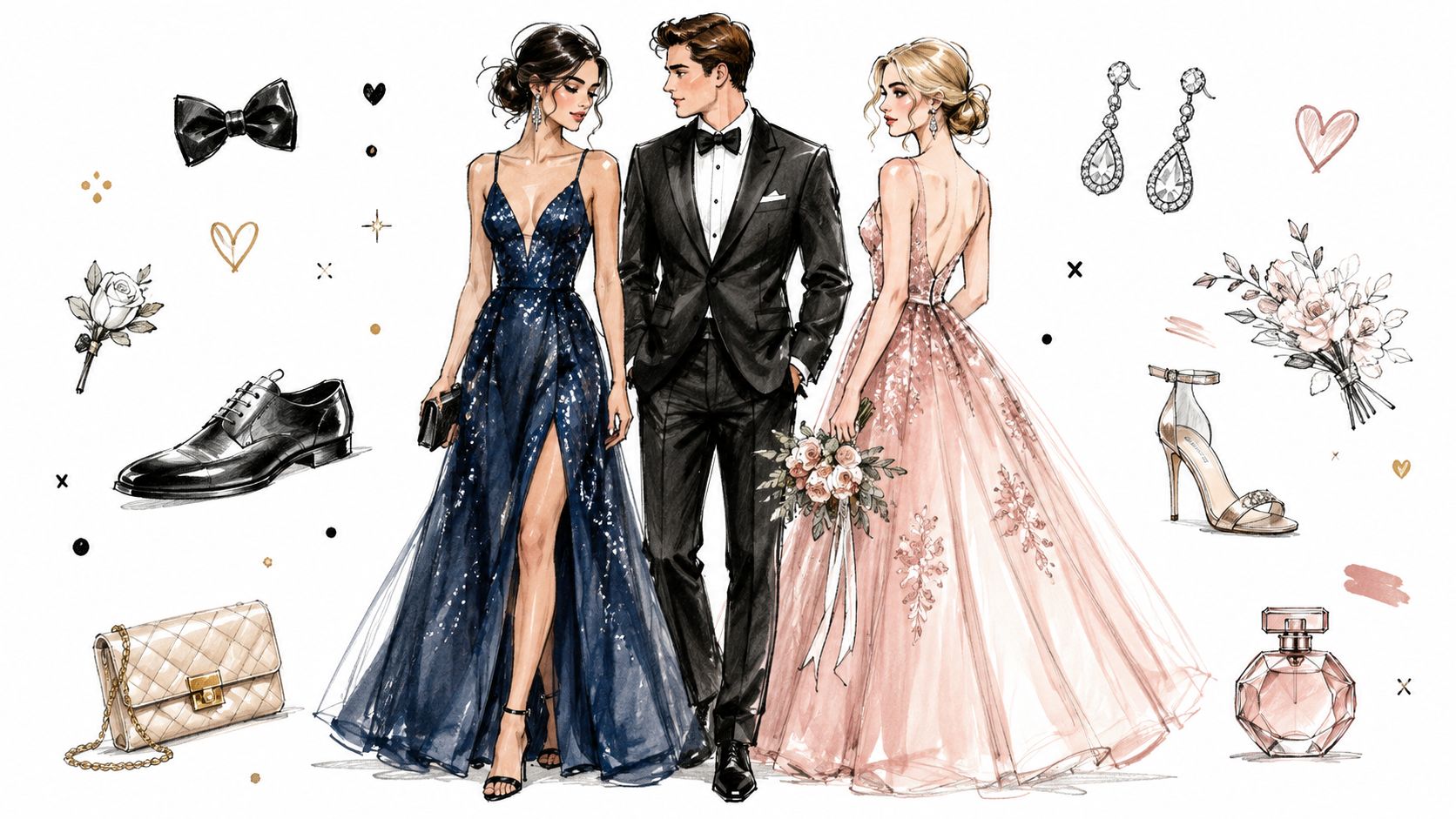
Hair and makeup should support the dress's scale. A sleek low style exposes an ornate neckline, while softly controlled waves can complement romantic lace. Makeup can echo the color family of the dress rather than matching its sparkle. A polished complexion, defined eyes, or a clear lip usually keeps the face present without adding another highly reflective element.
The boutique's advice on what to wear to a formal event can help refine the outfit around the invitation's dress code. Before leaving home, the wearer should check the full look under indoor and evening light, walk several steps, sit down, and confirm that the bag and jewelry don't catch on the fabric.
Essential Care and Storage Tips
A lace-sequin dress is a layered textile system, so care must protect both the visible decoration and the base beneath it. Sequins are commonly attached to mesh or tulle with thread. Friction, twisting, and repeated movement can stress those anchors, while rough handling may catch lace motifs or distort the lining.
The care label takes priority. Use this practical baseline:
- Read the label first. If the garment specifies professional cleaning, follow that instruction. Our fitting-room rule is simple: do not test an ordinary wash cycle on a dress labeled for professional care.
- Use gentle handling. If hand washing is permitted, use cool water and a gentle non-biological detergent. Avoid twisting, scrubbing, or wringing. Support the dress from underneath as you lift it from the water.
- Protect the surface. If machine washing is explicitly allowed, place the dress in a muslin bag or pillowcase and select the gentlest approved setting. Keep it separate from items with hooks, zippers, or rough trims.
- Avoid direct heat. Sequins may crack or warp, and heat can affect mesh, tulle, adhesive details, and other delicate layers. Do not iron unless the label permits it. If ironing is approved, turn the garment inside out and use the specified temperature.
- Choose professional cleaning for high-risk garments. Beaded or heavily sequined dresses are safer with professional care when agitation could loosen hand-attached details. Ask the cleaner to inspect the embellishment and construction before treatment.
Dry the dress according to its label, away from radiators and strong direct heat. Store it only when fully dry.
Between events, hang the dress away from hooks, rough hardware, and exposed zippers. A broad, supportive hanger helps limit distortion in heavier garments. A breathable garment cover keeps neighboring clothing from catching the lace without compressing the sequin surface.
Repairs and alterations require an experienced hand. Preserve original stitch paths, handle motif edges carefully, and avoid cutting through densely embellished zones. Hemming, zipper work, and reshaping should account for the alignment of lace panels, seams, and thread attachments.
Shop the Collection at Cedar & Lily Clothier
Finding the right lace sequin dress is easier when the shopper can assess the garment in person. Fit, lining, sequin density, neckline coverage, and hem movement are difficult to judge from a product image alone. A fitting makes it possible to see whether the shell sits smoothly over the lining and whether the dress remains comfortable while walking and sitting.
Cedar & Lily Clothier is a women's clothing boutique with two Oklahoma storefronts, Utica Square in Tulsa and downtown Jenks, plus an online store at cedarandlilyclothier.com. The assortment includes curated designer and contemporary brands such as Vanessa Mooney and Lace the Label, along with occasion dresses, separates, accessories, and pieces suited to work-to-weekend wardrobes. The boutique carries selected merchandise rather than manufacturing its own line.
Online shoppers can review product details and fit information before ordering. The Cami NYC Zoya Sequin Dress is one example of a sequin-focused occasion option available through the store. Shoppers can also contact the team for styling guidance when an event, preferred silhouette, or desired level of coverage calls for a more personalized recommendation.
In person, customers can compare color, fabric, lining, and movement at either Oklahoma location. The experience is especially useful for a garment with a layered construction, since the wearer can evaluate comfort before committing. Online orders also offer convenient delivery, while complimentary gift packaging is available on orders over $100, making the store a practical option for occasion gifting as well as personal shopping.
Cedar & Lily Clothier offers curated occasion dresses, fit guidance, and personal styling online and at Utica Square in Tulsa and downtown Jenks. Shop the Cedar & Lily Clothier collection online or visit a boutique to find a lace sequin dress that feels polished, comfortable, and ready to wear again.