


You're standing in front of the closet with a jumpsuit on its hanger and a calendar full of questions. Will it look polished enough for Monday's meeting, relaxed enough for Saturday errands, or dressed up enough for dinner? The right answer depends less on adding accessories and more on choosing the correct cut, fabric, fit, and occasion formula.
A jumpsuit can be the closest thing to a one-and-done outfit. One fabric decision replaces the usual top-and-bottom matching, while the continuous silhouette creates a deliberate look with very little effort. The catch is that a jumpsuit has nowhere to hide a poor fit. Torso length, rise, waist placement, and hemline decide whether it looks sleek or sloppy.
The outfit ideas below give a practical roadmap for work, weekends, date nights, weddings, cocktail events, and formal occasions. Each formula focuses on what should be purchased, what should be layered over it, and which proportion makes the outfit work. For shoppers building a flexible wardrobe, the principles also pair naturally with a capsule wardrobe approach.
Table of Contents
- Why a Jumpsuit Is the One-Piece Answer to Your Week
- A Brief History and Why It Matters for Styling
- How to Choose a Jumpsuit That Actually Fits
- Everyday Formulas for Work, Weekend, and Date Night
- Event-Ready Jumpsuits From Cocktail to Gala
- Seasonal Styling and Layering Moves
- Accessories That Finish the Look
- Fit Tweaks, Alterations, and Shopping With Confidence
Why a Jumpsuit Is the One-Piece Answer to Your Week
The strongest jumpsuit outfit ideas begin with the event, not the accessory drawer. A structured crepe jumpsuit can carry a Monday meeting with a blazer and pointed mule, while a relaxed cotton-linen style needs only a sneaker and a tote for the weekend. The garment stays the same category, but its message changes through texture, structure, and proportion.
That versatility comes from the jumpsuit's original design logic. It offers coverage, movement, and a clean line, so it already looks intentional before a belt or necklace enters the picture. A single piece also removes common outfit problems, such as a shirt lifting above the waistband or two separate hems competing for attention.
Practical rule: Choose the occasion first, then choose the jumpsuit's fabric and leg shape. Accessories should finish the decision, not rescue the wrong one.
For work, the safest direction is a neutral color, a defined waist, and a straight or tapered leg. For a weekend, utility details, breathable fabric, and an easier neckline make more sense. Date night benefits from drape, an exposed shoulder, or a controlled wrap shape, while events call for fabric with enough surface interest to stand on its own.
The next decision is fit. A jumpsuit can look effortless only when the torso and rise allow the wearer to sit, walk, and reach without pulling. Once that foundation is right, a jacket, shoe change, or evening bag can shift the same piece into a new role.
A useful wardrobe doesn't need a dozen novelty silhouettes. It needs a few well-chosen one-piece options that fit the reader's actual week. The sections ahead cover the history behind the shape, the fitting-room checks that matter, named outfit formulas, seasonal layers, and practical adjustments that make shopping more confident.
A Brief History and Why It Matters for Styling
The jumpsuit began as functional clothing, not party dressing. It was first created in 1919 for parachuters and aviators, with a shape built around movement, coverage, and utility. That origin still explains why the garment works so well today, especially when an outfit needs to feel practical rather than precious. Vogue's jumpsuit history traces the silhouette through its later fashion reinterpretations, including Elsa Schiaparelli's 1930s versions and its appearance in Vogue in 1964.
Each era left behind a useful styling lesson. The early utility versions show why a defined waist keeps a covered silhouette from looking shapeless. The 1970s established the jumpsuit as a fashion staple, bringing wider legs, movement, and evening appeal into the mainstream. The 1990s offered a quieter lesson, clean lines and restraint, while modern tailoring combines structure with softer fabrics and easier proportions.
The category's continued appeal is also visible in recent shopping interest. After an episode featuring jumpsuits, Lyst reported a 61% spike in UK searches, while Liketoknow reported a 945% increase in clicks to jumpsuits earlier that same year, as reported by the BBC's coverage of the jumpsuit's fashion history.
The lesson for a shopper is simple. A jumpsuit succeeds because it can shift from utility to elegance without losing its recognizable line. That's why occasion should guide the purchase, not a passing detail such as a belt or statement shoe. For a broader view of enduring wardrobe choices, Cedar & Lily readers can also explore timeless fashion for women.
How to Choose a Jumpsuit That Actually Fits
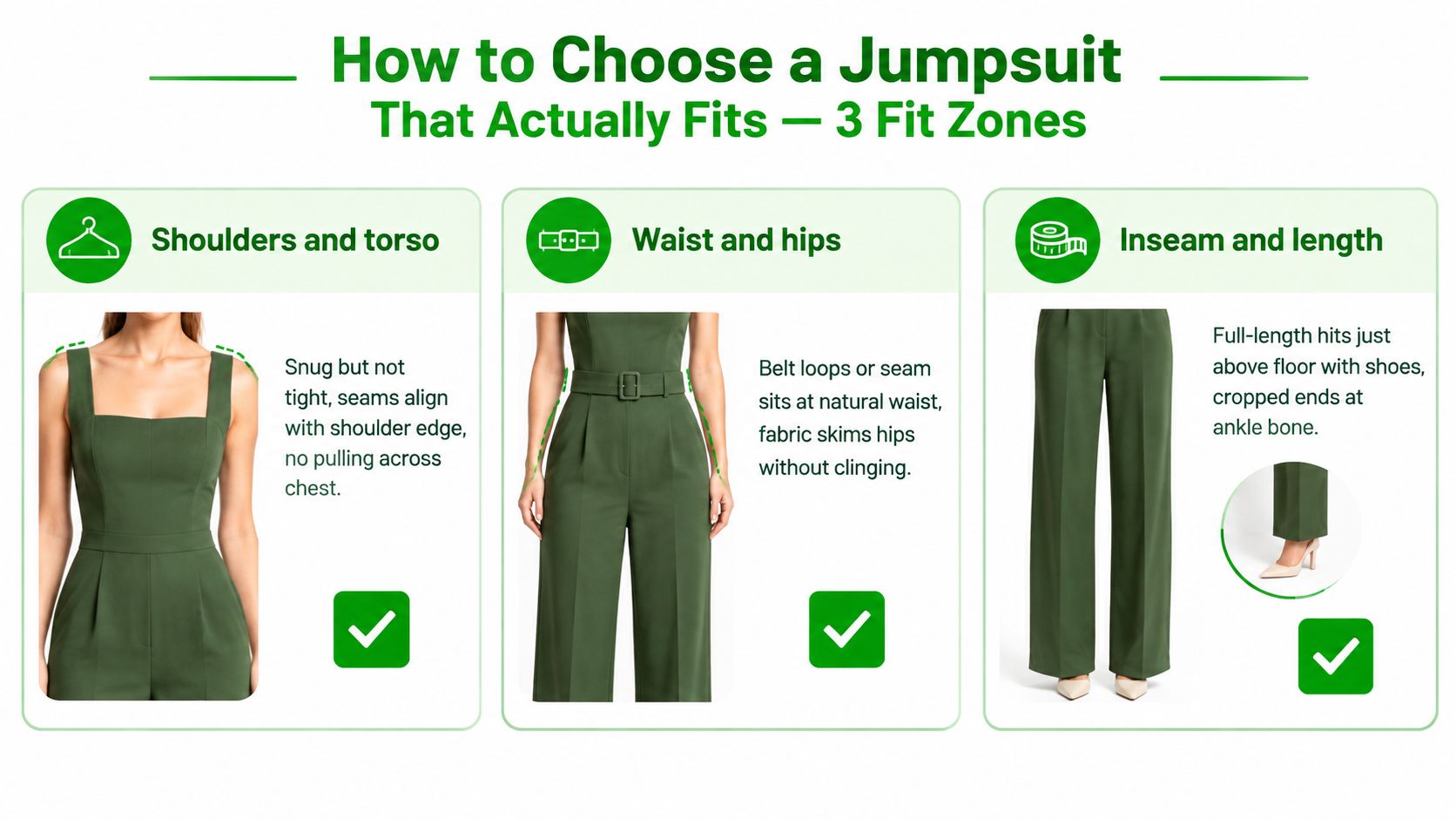
A jumpsuit needs to pass three fit checks before styling begins: shoulders and torso, waist and hips, and inseam and hem. These areas work together, but the torso and rise deserve the closest attention because a one-piece garment can't compensate for a vertical mismatch with a tucked shirt or a different waistband.
Start at the shoulders. Seams should sit at the shoulder edge, straps shouldn't dig, and the fabric shouldn't pull across the chest or back. Stand, sit, and raise both arms. If the garment creates drag lines from the crotch toward the shoulders, the rise is too short or the torso is too small. If the crotch hangs low and the waist drops below its natural position, the torso is too long.
The waist seam should rest at the natural waist when the jumpsuit is designed to have one. A belt can emphasize that line, but it can't correct a torso that's too short. Fit the bust and hips first, then check the vertical length from the shoulder or high-point neck to the crotch seam, as recommended by this jumpsuit sizing guide.
Fabric and silhouette decisions
Fabric determines how forgiving the finished outfit will be. Ponte and structured cotton hold a clean line, crepe looks polished without excessive fuss, and Tencel brings soft movement to casual shapes. Thin, clingy knits can expose every tension point, while low-quality polyester may wrinkle quickly and lose its polish during the day.
Choose the leg shape according to the visual result, not a rigid body-type rule.
- Column cuts create a long, uninterrupted line and suit shoppers who want a sleek, minimal effect.
- Wide legs balance fitted shoulders and create movement, but they need a clean hem and enough structure to avoid looking bulky.
- Tapered legs keep the lower half narrow and can be especially useful for petite shoppers.
- Wrap fronts follow the torso and offer adjustable waist definition, making them practical for curves when the bust stays secure.
The final fitting-room test
The hem should fall cleanly near the top of the foot, with the shoe tips visible rather than disappearing under pooled fabric. Major fashion sizing guides often use an inside-leg length of about 32 inches, or 81 cm, while other charts offer full-length, tall, and capri options, as shown in women's jumpsuit size guidance.
Before buying, put on the jacket intended for the outfit, add the shoe height, and check the mirror from the front and side. Look for three red flags: fabric bunching at the crotch, gaping at the chest or back, and straps that dig into the shoulders. If any of those remain after a size change, the style isn't the right pattern for that body.
For additional proportion guidance, this practical body-shape dressing guide can help shoppers compare silhouette choices without reducing fit to a label.
Everyday Formulas for Work, Weekend, and Date Night
A reliable wardrobe formula should be easy to remember and flexible enough to adapt to what's already in the closet. The three options below use different textures and levels of structure, so each one answers a distinct need.
Monday Meeting
Choose a structured crepe jumpsuit in black, navy, charcoal, or another quiet neutral. Add a tailored blazer that ends around the hip or slightly above it, then finish with a pointed-toe mule, a structured work bag, and restrained jewelry.
The blazer adds shoulder structure while the pointed toe preserves the jumpsuit's vertical line. A defined waist keeps the outfit from reading like a uniform, but the rest of the styling should stay clean. For a particularly polished version, a straight leg works better than an oversized wide leg because it keeps the hem controlled around office footwear.
Saturday Market
A utility linen-blend jumpsuit makes the most sense for a casual day. A cropped cardigan, white sneaker, soft crossbody, and simple sunglasses provide contrast without fighting the garment's practical character.
The cropped cardigan is important because a long, loose layer over a relaxed jumpsuit can create too much fabric at the center of the body. A sneaker keeps the outfit grounded, while a crossbody adds function and gives the waist area visual definition without requiring a belt.
Dinner for Two
For date night, a draped jersey jumpsuit with a wrap or V-neck creates movement around the face and torso. Add a leather moto jacket, a block-heel sandal, and a compact shoulder bag or small clutch.
The soft jersey contrasts with the jacket's firm surface, so the outfit feels considered without looking overworked. The block heel adds height while remaining stable, especially for outdoor dining or uneven pavement. The best color strategy for all three formulas is one statement color, with everything else neutral.
| Occasion | Jumpsuit Cut | Layer | Footwear | Why It Works |
|---|---|---|---|---|
| Monday Meeting | Structured crepe, straight leg | Tailored blazer | Pointed-toe mule | Clean lines keep the outfit professional |
| Saturday Market | Utility linen-blend, relaxed leg | Cropped cardigan | White sneaker | Short layering controls volume |
| Dinner for Two | Draped jersey, wrap or V-neck | Leather moto jacket | Block-heel sandal | Soft drape and firm texture create contrast |
For more evening outfit direction, date-night dressing guidance can help refine the balance between polish and ease. The formula remains simple: let the jumpsuit carry the silhouette, then use one layer and one strong shoe decision to set the mood.
Event-Ready Jumpsuits From Cocktail to Gala
For events, fabric dictates dress code before silhouette does. A wide leg can look casual in washed cotton and formal in satin, while a fitted shape can look underdressed if the fabric lacks depth. The buyer should inspect the surface, drape, lining, and finish before deciding whether a jumpsuit belongs at cocktail hour or a gala.
A defined waist is the essential evening move. It can come from a seam, wrap construction, or a belt, but the waist should be visible so the one-piece shape doesn't lose its proportion under evening lighting.
Cocktail dressing
A satin or crepe-back satin jumpsuit works for cocktail events when the neckline remains controlled and the hem is clean. Add medium-scale earrings, a slim metallic bracelet, and a block heel for an outdoor venue. The bag should be a compact clutch, not a large daytime shape.
A beaded mesh overlay can add interest without requiring excessive jewelry. In that case, keep the necklace quiet and let the surface detail do the work.
Black-tie optional
For black-tie optional dressing, matte crepe, velvet, or silk-blend fabric gives the jumpsuit enough authority. A structured, straight or wide-leg silhouette works best with a cinched belt or defined waist seam, pointed stilettos for a carpeted room, and a structured clutch.
The jewelry scale should rise with the fabric's depth. A single statement cuff or sculptural earring is stronger than several competing pieces. If the neckline is high, the earrings should lead. If the neckline is open, a simple pendant can provide balance.
Gala dressing
Full sequins or embellished chiffon belong in the gala conversation. The jumpsuit should be the focus, supported by a minaudière, refined earrings, and a stiletto when the venue is indoors and the floor is even. Outdoor venues call for a stable block heel instead, because elegance loses its effect when the wearer can't move comfortably.
| Dress Code | Fabric | Hemline | Footwear | Bag |
|---|---|---|---|---|
| Cocktail | Satin, crepe-back satin, beaded mesh | Near the top of the foot | Block heel or refined sandal | Compact clutch |
| Black-tie optional | Matte crepe, velvet, silk-blend | Full length with clean drape | Pointed stiletto or polished heel | Structured clutch |
| Gala | Sequins or embellished chiffon | Full length, free of pooling | Stiletto indoors, block heel outdoors | Minaudière |
A jumpsuit can meet formal expectations, but the surrounding details must agree. This event dress-code guide offers a useful reference for matching the outfit's level of polish to the invitation. The safest final check is practical: sit down, walk several steps, and confirm that the hem doesn't catch under the shoe.
Seasonal Styling and Layering Moves
The best year-round jumpsuit is made from a fabric that can accept layers without becoming bulky. Midweight ponte, cotton-linen blends, and crepe travel well across seasons because they hold their shape while allowing different textures over and under them. Thin viscose and sleeveless linen are better retired when colder weather arrives, unless the garment is being used as a base layer under substantial outerwear.
Spring
Use a trench coat over a crepe or cotton-blend jumpsuit, then add ballet flats and a silk scarf at the neck. The trench should either end above the widest part of the jumpsuit leg or extend in a clean line past it. A coat that stops at an awkward mid-thigh point can make the body look divided.
Summer
Let the jumpsuit show bare arms, then add a woven tote, raffia slide, and wide-brim hat. Cotton-linen works especially well here because the fabric supports a relaxed silhouette without looking overly casual. The hem should remain light and clear of the foot, so a flat slide doesn't disappear beneath the leg.
Fall
Add a cropped leather jacket, ankle boots, and a gold pendant over a thin knit worn underneath. The cropped jacket keeps the waist visible, while the boot should meet the hem without leaving an accidental band of exposed ankle. A V-neck jumpsuit gives the pendant and knit neckline room to sit without crowding the face.
Winter
Layer a turtleneck beneath a V-neck jumpsuit, then add a long wool coat and a tall boot. A wider leather belt can replace a narrow daytime belt, but it should sit at the natural waist rather than compressing the torso. The eye should move from the face to the waist and then down the uninterrupted leg line.
Seasonal dressing succeeds when each layer respects the garment's original proportions. The shoe, hem, neckline, and outer layer should look like one decision, not four separate fixes.
Accessories That Finish the Look
Accessories should clarify the jumpsuit's role. They shouldn't create a costume around it.
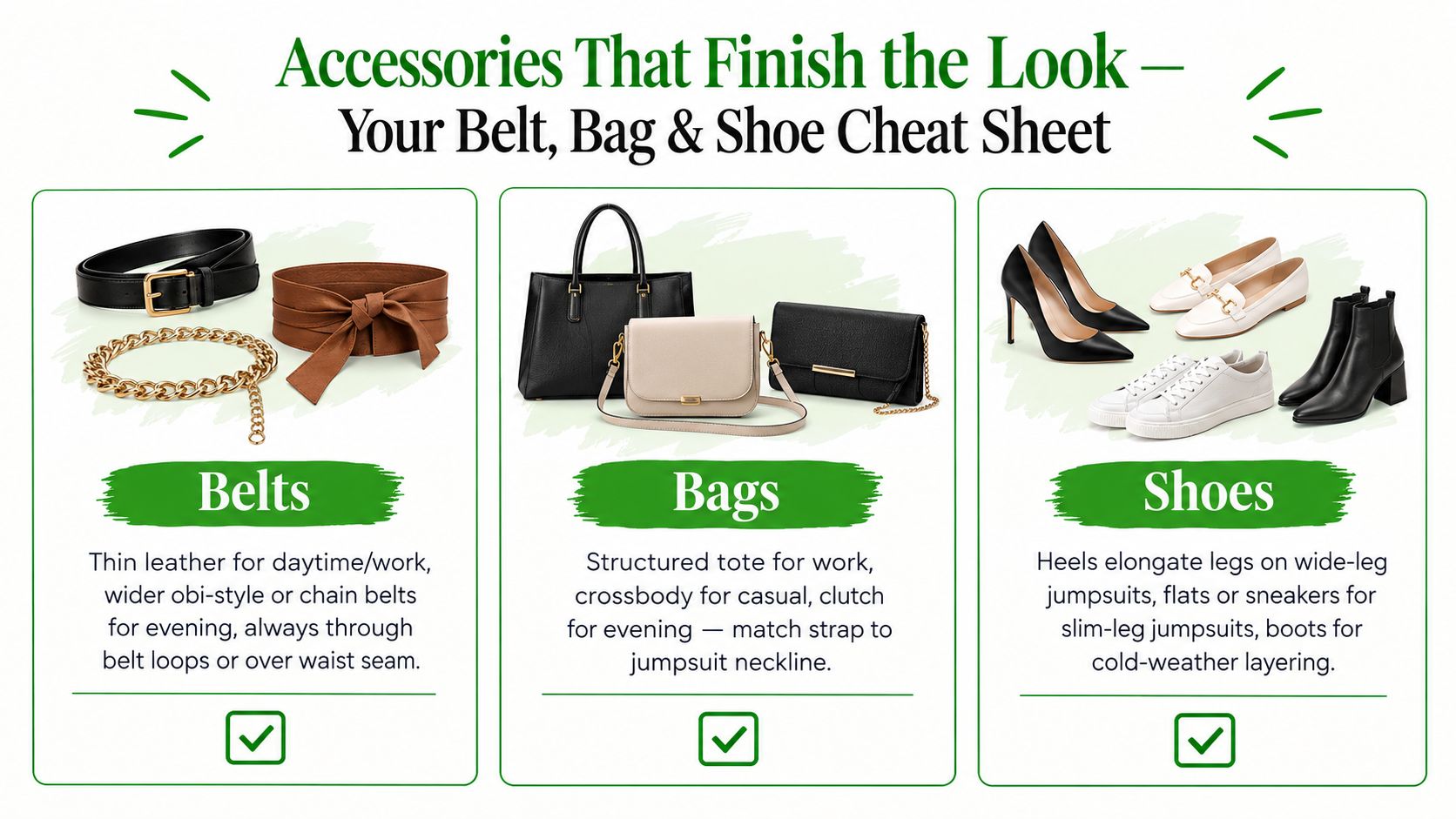
Belts come first. A thin leather belt suits daytime and work, while an obi-style or chain belt brings more presence to evening dressing. It should sit at the natural waist or just above the navel, and it should follow a built-in seam or belt loop whenever possible. If the jumpsuit's waist is already strongly shaped, the belt can be skipped.
Bags set the level of formality. A structured top-handle or small shoulder bag supports a dressier jumpsuit, while a roomy tote, soft hobo, or relaxed clutch suits casual styling. The strap should also respect the neckline. A long crossbody strap crossing a draped bust can interrupt the line, while a short shoulder bag keeps the upper half cleaner.
Match the shoe to the leg
Footwear should support the hem rather than compete with it.
- Work: Pointed flats, loafers, and pointed mules keep the look composed without requiring a high heel.
- Weekend: Clean sneakers and chunky sandals suit utility, cotton, and linen-blend jumpsuits.
- Date night: Strappy heels or heeled boots add polish and create a stronger transition from day.
- Events: Use a refined heel or stiletto when the floor allows it, and a block heel for outdoor stability.
Styling guidance recommends a hem near the top of the foot with the shoe tips visible, as explained in this footwear and jumpsuit guide. That small detail keeps the leg line intentional.
Keep jewelry deliberate
Daytime needs little more than studs and a watch. Evening can support layered chains, a single statement cuff, or larger earrings, but not every option at once. Outerwear follows the same principle. Cropped denim and leather jackets work for casual outfits, while long wool coats and sleek dusters suit elevated jumpsuits.

Fit Tweaks, Alterations, and Shopping With Confidence
A jumpsuit often needs a more personal fit check than a dress because the garment has to align vertically from shoulder to crotch as well as across the bust, waist, and hips. Petite, tall, and curvy shoppers can all wear the silhouette successfully, but each group should inspect different pressure points.
Petite proportions
Petite shoppers should start with cropped or ankle-length options and avoid excess fabric pooling. A tapered leg often looks cleaner than an extremely wide leg unless the wide-leg style has a controlled hem and a clear waist. A hem adjustment of 0.75 to 1.5 inches can preserve the shape when the garment is only slightly too long, but the tailor should check the original hem finish before altering.
The torso deserves equal attention. If the waist sits too low, shortening the long torso section may be more effective than removing length from the leg.
Curves and bust fit
Curvy shoppers should look for ties, wrap fronts, or shaped seams that follow the torso without pulling. The back shouldn't gape, and the bust shouldn't force the neckline open when the wearer sits. A small waist adjustment can improve the entire silhouette, but a too-short rise will remain uncomfortable no matter how neatly the waist is taken in.
Tall frames
Tall shoppers can use wide-leg and full-length styles to their advantage, provided the shoulder seams sit directly on the shoulder bone. The most important check is torso length. A garment that looks fine while standing may pull across the rise when seated, so the fitting room test needs both positions.
| Fit Concern | Recommended Alteration |
|---|---|
| Waist sits away from the body | Take in the waist while preserving the original seam |
| Hem pools over the shoe | Hem to the intended footwear and retain the clean finish |
| Torso feels too long | Shorten the torso section through a qualified alteration |
| Straps or sleeves sit incorrectly | Adjust strap or sleeve length for secure placement |
| Back gapes | Refine the back or waist only after confirming the torso length |
| Rise pulls while sitting | Try a longer torso pattern rather than forcing the waist adjustment |
A shopper should know the key measurements before ordering, including bust, waist, hip, torso, and inseam. The jumpsuit should be tried with the shoes intended for the outfit, because a hem that works with a flat may need adjustment for a heel. The waist seam should sit at the natural waist, and the garment should not pull between crotch and shoulders while standing or sitting, as outlined by this jumpsuit fit guidance.
Cedar & Lily Clothier carries curated jumpsuits and one-piece styles online and at its two Oklahoma storefronts, Utica Square in Tulsa and downtown Jenks. The collection includes options for workwear, elevated evening dressing, and easier weekend outfits, with brands such as Vanessa Mooney and Lace the Label represented in the broader assortment. Cedar & Lily Clothier is a retailer, not a manufacturer, so shoppers can focus on comparing the fit and finish of selected designer and contemporary pieces.
The team can help shoppers assess torso length, hem placement, neckline balance, and layer proportions in person. A fitting-room visit also lets shoppers see how the fabric moves, test the intended shoes, and ask about alterations before committing to an online order.
Cedar & Lily Clothier offers curated jumpsuits for work, weekends, date nights, and formal events, with styling help available at Utica Square in Tulsa, downtown Jenks, and online. Visit Cedar & Lily Clothier to shop the collection, or reach out to the team for help choosing a jumpsuit that fits the occasion and the wearer.