


Adding a belt to a dress is one of the easiest and most impactful styling tricks I know. It's the secret to defining your silhouette and pulling your entire look together with a single, thoughtful accessory.
The magic happens when you place the belt at the narrowest part of your torso, which for most of us is our natural waist. This simple act instantly creates a more flattering shape and gives even the most basic dress a polished, intentional feel.
Why a Belt Is a Dress's Best Friend
Think of a belt as the finishing touch that speaks volumes. It’s not just there to hold things in place; it’s a strategic move that can completely redefine an outfit. I often tell clients to think of it as the punctuation for their look—it has the power to give structure to a flowy maxi dress, create a waistline on a simple shift, or inject your personality with a pop of color or a beautiful buckle.
A well-chosen belt truly is a wardrobe workhorse. Here’s why I love them:
- It Creates a Classic Hourglass Shape: By cinching the fabric right at your natural waist, a belt immediately highlights or creates that timeless, flattering hourglass curve.
- It Adds a Point of Interest: A belt breaks up the monotony of a single-color or single-pattern dress, drawing the eye in. A unique texture, a bold color, or a statement buckle can turn a simple dress into something special.
- It Plays with Proportions: Want to make your legs look longer? Place your belt just slightly above your natural waist. Need to balance a longer torso? A belt worn a little lower can work wonders.
- It Makes Your Wardrobe Work Harder: This is the best part. A belt lets you style the same dress in so many different ways. A casual woven belt creates a perfect daytime brunch look, but swap it for a sleek metallic one, and that same dress is ready for a night out.
The Lasting Power of a Well-Placed Belt
Belting a dress isn't some fleeting trend. It's a classic styling technique that we’ve seen throughout fashion history, from the wide, dramatic cinch belts of the 1950s to the skinny belts that defined the early 2000s.
And it's not just a feeling—the numbers back it up. The global belt market is valued at a massive $10.2 billion as of 2025, showing just how essential this accessory is. Even more telling, the market for dress belts specifically is projected to grow from $5.1 billion in 2024 to $7.6 billion by 2033. This isn't just a style choice; it's a major part of the fashion industry. For a deeper dive into these trends, BuckleMyBelt.com offers some great industry insights.
The beauty of a belt is that it serves as an accessory—like jewelry or a scarf—and can add interest to help create a cohesive outfit. It’s a simple way to make your look feel more deliberate and put-together.
Ultimately, learning how to pair the right belt with the right dress unlocks a whole new world of styling possibilities right in your own closet. It's a simple, affordable way to experiment with your look, flatter your figure, and show off your unique style without having to buy a whole new outfit.
To get you started, here’s a quick-reference guide that breaks down some of our go-to pairings at Cedar & Lily. Think of this as your foundation for belting dresses with confidence.
Quick Guide to Belt and Dress Pairings
| Dress Silhouette | Recommended Belt Type | Styling Goal |
|---|---|---|
| Shift Dress | Skinny or narrow belt | To create a waistline without adding bulk. |
| Fit-and-Flare | Medium-width classic belt | To accentuate the existing nipped-in waist. |
| Wrap Dress | D-ring or woven belt | To replace the self-tie for added texture and style. |
| Maxi Dress | Wide leather or corset belt | To add structure and prevent being overwhelmed by fabric. |
| Midi Dress | Braided or chain belt | To add visual interest and break up the length. |
| Mini Dress | Thin metallic or embellished belt | To add a touch of polish and define the shape. |
This table is just a starting point, of course. The most important rule is to experiment and find what makes you feel amazing. Now, let’s get into the details of how to make each of these pairings work for you.
Pairing the Perfect Belt with Your Dress Silhouette
The secret to a beautifully belted dress is simple: work with the dress, not against it. Think of a belt as a way to enhance the dress's original shape, not fight it. The right pairing can take a simple garment and turn it into a thoughtful, pulled-together look where every piece works in harmony to flatter your shape.
Take a flowy maxi or a breezy bohemian midi dress. These styles often have a lot of beautiful volume, but you don't want to get lost in it. A soft fabric sash or a braided leather belt tied gently at your natural waist is the perfect solution. It softly cinches the fabric to give you some definition without creating any harsh lines, keeping that relaxed, effortless vibe intact.
For Structured and Shapeless Styles
On the other hand, a more structured dress calls for a different kind of partner. A classic shift dress, with its straight, clean lines, can sometimes skim right over your curves. This is where a slim, minimalist belt works its magic. It instantly carves out a waistline, giving your eye a place to land and adding a touch of polish to an otherwise simple silhouette.
The fit-and-flare dress is probably the easiest of all. It’s practically made for a belt since the shape already highlights your waist. Adding a medium-width belt here is like the perfect exclamation point on a sentence—it just completes the look by accentuating the dress's built-in structure. It’s a combination that always feels timeless and intentional.
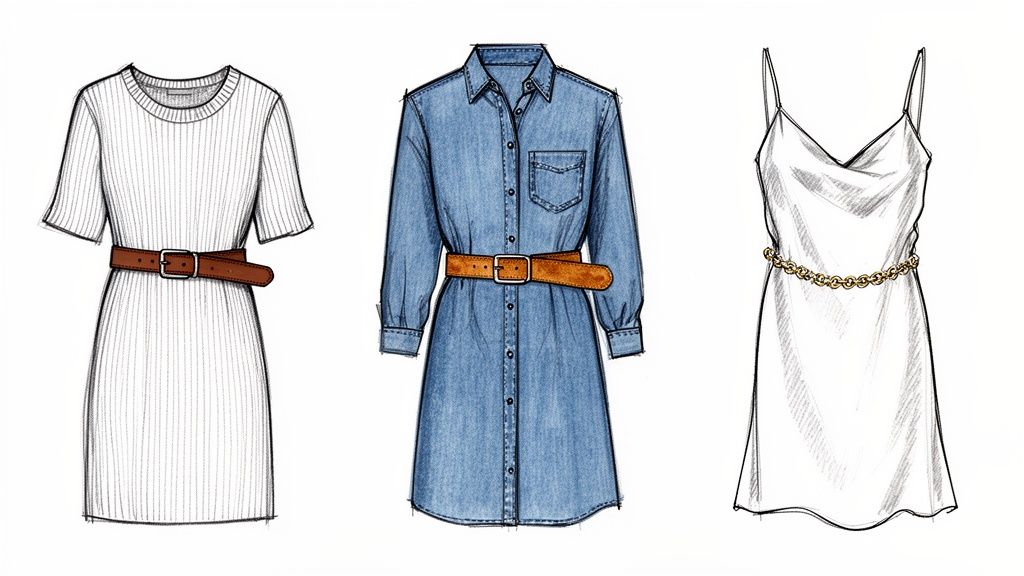
Stylist Tip: Don't shy away from belting a cozy, shapeless sweater dress! A belt in a contrasting color will draw the eye inward and create the illusion of a waist. For a little extra flair, try a metallic chain belt to add an unexpected touch of glamour to the soft, knitted texture.
Of course, finding the right dress silhouette to begin with is half the battle. If you're looking for a great starting point, this guide on finding dresses for different body types is a fantastic resource for building a flattering foundation.
Making a Strategic Choice
Choosing a belt isn’t just about aesthetics; it’s a strategic decision that can either define your waist or create the illusion of longer legs. This little chart is a great visual for figuring out which belt to grab based on your goal for the day.
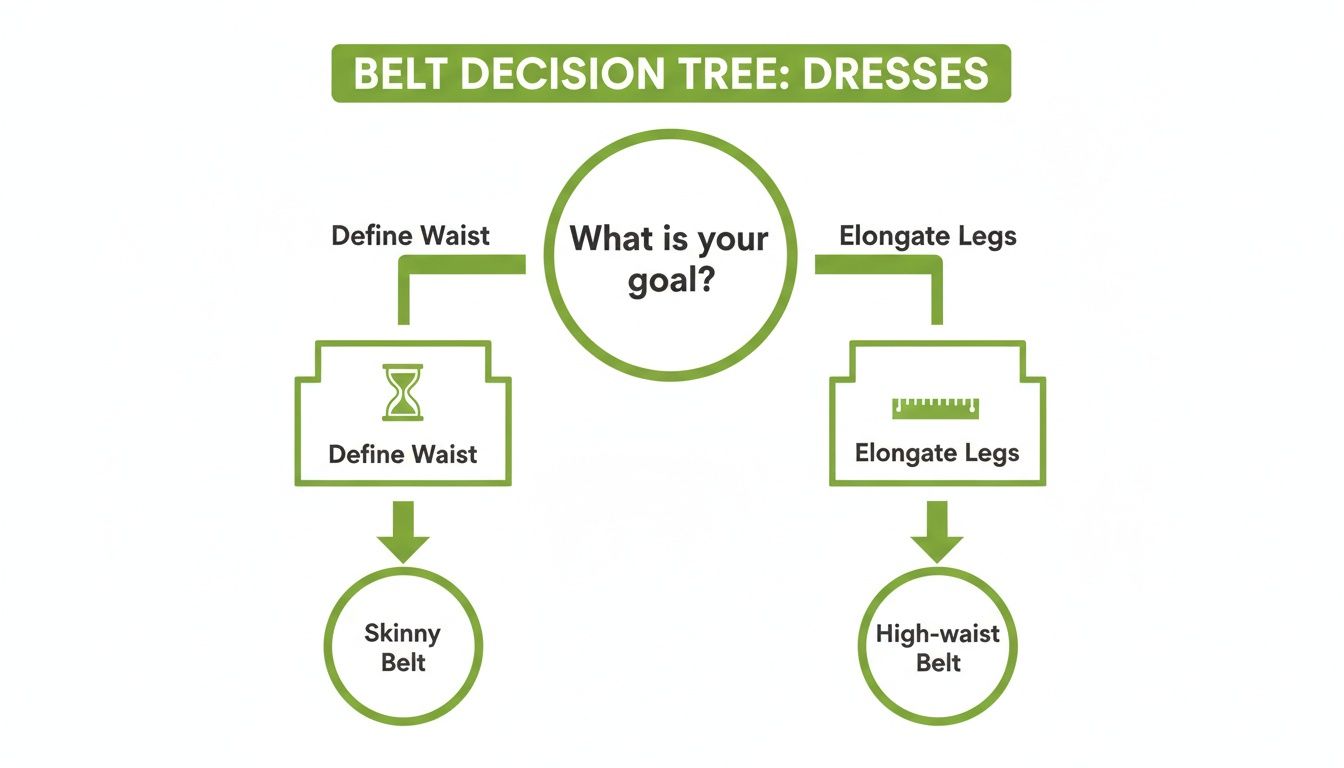
As you can see, a skinny belt is your best friend when you want to define your waist without adding any bulk. And for making your legs look a mile long? Placing your belt a little higher than your natural waist is the oldest trick in the book for a reason.
Working with different silhouettes is the first real step to mastering the art of the belt. For more personalized advice, our own guide on how to dress for your body type is packed with tips to help you find what makes you feel your absolute best.
Finding the Sweet Spot with Placement and Proportion
Where you place your belt can completely change an outfit’s story. It’s not just about cinching your waist; it’s about strategically playing with lines and proportions to create the most flattering silhouette you can imagine. Honestly, this is the real secret to mastering how to wear belts with dresses.
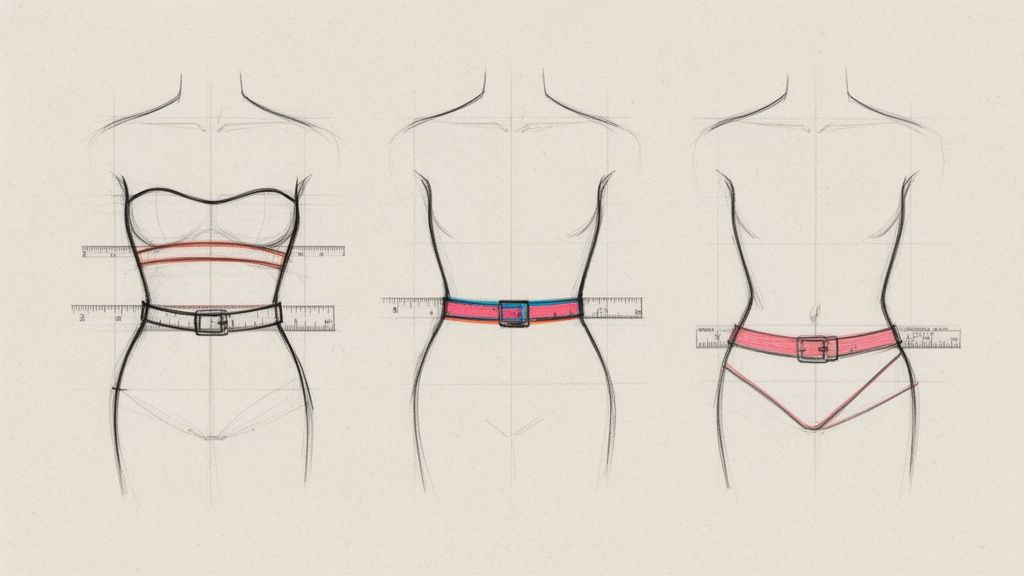
The most universally flattering spot is your natural waist—that sweet spot that’s the narrowest part of your torso, usually right above your belly button. Placing a belt here gives you that classic hourglass effect that works for nearly every body type and dress style, from fit-and-flare to a simple A-line. It’s a foolproof method for defining your shape and my go-to recommendation.
Strategic Placement for Different Effects
But your natural waist isn't the only option. Shifting the belt's position can achieve entirely different style goals and vibes.
- High Waist Placement: Try positioning a belt just under the bustline to create an empire waist. This is a fantastic trick for elongating your lower body, making your legs appear miles long. It’s a perfect move for petite figures or when you’re styling a flowing maxi dress for a graceful, almost statuesque look.
- Low-Slung on the Hips: For a more relaxed, bohemian feel, a belt worn loosely around the hips can work wonders with certain dresses. This placement looks best with straighter silhouettes or drop-waist styles, adding a casual, effortless touch that feels very of-the-moment.
Belting isn’t just an art form; it’s a huge part of the fashion economy. The market for fashion belts is projected to grow from $14.91 billion to an incredible $30.81 billion by 2032. This just shows how a simple accessory can make a massive impact on both personal style and global commerce.
Balancing Belt Width with Your Frame
Proportion is just as crucial as placement. The width of your belt should complement both your body frame and the dress’s fabric. A delicate chain belt, for example, would be completely lost on a chunky cable-knit sweater dress, while a wide, dramatic corset belt might totally overpower a slinky silk slip.
The key is always balance. Think of it this way: the heavier the fabric of your dress, the more substantial your belt can be. A structured wool dress can absolutely handle a wider leather belt, but a lightweight cotton sundress pairs much better with something slimmer and more delicate. Getting the width right ensures your belt enhances your look rather than distracting from it.
And for a perfect fit every time, knowing your measurements is a must. We put together a helpful guide that walks you through exactly how to choose the right belt size to ensure your new favorite accessory sits perfectly.
Styling Your Belted Dress for Any Occasion
A single dress can live so many different lives, and honestly, the right belt is often the secret to its transformation. Once you know how to pair belts with dresses for different events, you unlock this incredible versatility in your wardrobe. It’s like turning a piece you already love into something entirely new for any setting on your calendar.
The real goal is to match the belt's material, structure, and overall vibe to the dress code of the occasion. This one small adjustment ensures your outfit feels intentional and perfectly polished, whether you're heading to the office or a cocktail party.
Polished and Professional for the Office
When you’re dressing for a professional setting, it’s all about structure and sophistication. A classic leather belt in a neutral like black, tan, or navy is an absolute must-have. When you pair it with a simple shirt dress or a structured sheath, it instantly pulls the whole look together and signals you mean business.
I especially love seeing a blazer dress cinched with a sleek patent leather belt for a powerful desk-to-dinner look. It not only defines your waist but adds this subtle, polished gloss that feels both modern and authoritative. The key is to choose a belt with minimal hardware and a clean finish to keep the look sharp and uncluttered.
Casual Chic for Weekend Brunch
Weekends call for a more relaxed, playful approach. This is the perfect time to experiment with texture and softer materials. Just imagine a breezy cotton sundress paired with a beautiful woven or braided leather belt—it adds a touch of bohemian charm that feels completely effortless and so stylish.
You can also play around with placement for a more casual feel. A fabric sash tied loosely over a linen dress gives off a relaxed, vacation-ready vibe that’s just perfect for a sunny afternoon. The goal for casual wear is comfort and personality, so don’t be afraid to choose belts with a little more character.
Stylist Tip: For casual outfits, your belt doesn't have to match your shoes perfectly. In fact, creating a slight contrast can make your look feel more modern and less "matchy-matchy." Try pairing a tan woven belt with white sneakers for a fresh, contemporary combination.
Elegant Ensembles for Evening Events
When the occasion is formal, your belt should be treated like a piece of jewelry. This is where metallics and embellishments get to shine. A simple, elegant black dress can be completely transformed into a show-stopper with just the addition of a delicate gold or silver chain belt. It’s such a simple but impactful touch.
For a gala or a formal wedding, think about an embellished belt with subtle crystals or pearls. It can add a touch of glamour without overwhelming your dress. These high-shine elements catch the light so beautifully and create a sophisticated focal point.
- For a Gala: Pair a sleek column gown with a thin, metallic belt to define your waist and add a touch of sophisticated sparkle.
- For a Cocktail Party: A little black dress styled with a decorative chain belt looks instantly more festive and chic.
- For a Wedding Guest Look: A floral midi dress gets a polished upgrade with a slim leather belt in a complementary color.
By thinking about the event's tone, you can select a belt that not only completes your outfit but truly elevates it. For more inspiration on finishing your look, check out our guide on how to accessorize an outfit.
Coordinating Color, Fabric, and Texture
This is where the real magic happens. Once you’ve nailed the placement and proportions, coordinating your belt’s color, fabric, and texture with your dress is what creates that truly intentional, polished look. It’s your chance to either craft a seamless, harmonious outfit or introduce a bold, eye-catching moment.
One of the most timeless approaches is going monochromatic. Choosing a belt in the exact same shade as your dress creates a clean, unbroken line. I love this technique because it’s incredibly elongating and sophisticated—perfect for when you want a refined finish without any visual interruption.
Using Color to Create an Impact
As chic as a monochromatic look is, a belt is also the perfect accessory for bringing in a pop of color. Imagine a simple navy blue sheath dress. Adding a vibrant yellow or even a crisp white belt can completely transform its personality, making it feel fresh and modern. It’s such an easy way to inject a little energy into a neutral outfit.
Working with a printed dress? A belt can act as a beautiful anchor. The secret is to pull one of the less dominant colors from the print and find a belt to match. This small detail ties the entire look together, making it feel cohesive and thoughtfully styled, not just thrown together.
A well-chosen belt should look like an integral part of the outfit, not an afterthought. Whether it’s providing a pop of color or a textural contrast, its purpose is to enhance the dress and complete your overall vision.
The Power of Playing with Texture
Texture is where you can truly show off your styling prowess. The contrast between a belt's material and a dress's fabric adds incredible depth and visual interest. Honestly, this interplay of textures is what elevates an outfit from good to great.
Think about a soft, ribbed knit sweater dress. Adding a smooth, structured leather belt provides a beautiful contrast that feels both polished and cozy. The sleekness of the leather gives just the right amount of structure to the softness of the knit.
Another combination I love is a suede belt with a denim shirtdress. The soft nap of the suede against the sturdy twill of the denim adds a touch of warmth and a slightly bohemian flair. These are the subtle details that keep an outfit from feeling flat.
To help you get started, here’s a quick guide for creating some stylish pairings.
Fabric and Texture Pairing Cheatsheet
Here's a quick reference to take the guesswork out of mixing materials. Creating textural contrast is one of the fastest ways to make an outfit feel more luxurious and interesting.
| Dress Fabric | Complementary Belt Texture | Avoid |
|---|---|---|
| Knit or Wool | Smooth or patent leather, wide elastic | A knit belt that blends in too much. |
| Denim | Suede, braided leather, woven fabric | Anything too delicate or overly embellished. |
| Satin or Silk | Metallic chain, embellished fabric, velvet | A heavy, bulky leather belt that weighs it down. |
| Cotton or Linen | Woven fabric, canvas, braided rope | A very formal patent leather or jewel-encrusted belt. |
Don't be afraid to experiment with these combinations. They'll give you the confidence to express your personal style, whether you’re aiming for subtle elegance or a bold, fashion-forward statement.
Common Questions About Belting Dresses
Even after you've mastered the basics, questions always pop up when you're standing in front of the mirror, belt in hand. Learning how to wear belts with dresses is really a fun process of trying things out, but having a little guidance for those common dilemmas can make all the difference.
Let's walk through some of the questions we hear most often from our clients here at the boutique.
Finding the Right Fit for You
One of the biggest concerns is always about proportion—how do you choose the right belt width for your body? It's simpler than you think. If you have a more petite frame, stick to skinny or medium-width belts (anything under 1.5 inches is a great starting point) so the accessory doesn't overwhelm your figure. For our taller clients or those with a longer torso, you can absolutely embrace a wider, more dramatic belt to make a beautiful statement.
Styling Tricky Dress Types
What about those dresses that come with their own fabric tie-belt? We see this as a perfect opportunity for a quick style upgrade. Simply untie and remove the sash it came with and swap it for a beautiful leather belt or even a chic chain style. That one small change instantly makes the entire dress feel more intentional and luxurious.
Styling a shapeless or oversized dress can also feel like a challenge. A belt is truly your best friend here because it creates a waist and gives the dress a whole new silhouette. For a cozy, loose-fitting sweater dress, try placing a medium-width belt at your natural waist. Gently blouse the fabric over the top, and you’ve got an effortlessly chic look.
The secret is to make the belt look like a deliberate choice. It should either be a focal point with a pop of color or interesting texture, or it can blend in seamlessly to define your shape without stealing the show. An intentional belt always looks more polished.
Perfecting the Finishing Touches
So, you've found the perfect belt and dress pairing. What do you do with the end of the belt—that little "tail"—especially on skinnier styles? You have a few great options:
- The Classic Tuck: This is the cleanest look. Just slide the end of the belt under the strap itself right after it goes through the buckle.
- The Loop-Back: For a little extra detail, loop the tail back around and tuck it under the belt, creating a small, neat knot-like effect.
- The Effortless Dangle: If you're going for a more relaxed, undone vibe (especially with casual dresses), just let a longer tail hang loose.
Once you start building a beautiful collection of belts, you’ll want to keep them looking their best. Learning the best way to store belts is a game-changer for keeping them in perfect shape for years to come.
At Cedar & Lily Clothier, we believe the right accessory truly completes an outfit. Explore our curated collection of belts and dresses to find your perfect pairing. Shop our New Arrivals today.