


The usual advice is simple: add a turtleneck, pull on boots, and finish with a long coat. That formula can look polished, but it doesn't solve the core challenge. How to wear a denim jumpsuit in winter is a question of insulation, proportion, and movement. Add the wrong layers and you'll feel cold, lose your waist, and end up hiding the jumpsuit under a stiff coat.
The better approach treats the jumpsuit as a structured outer foundation, not a complete winter outfit. Build warmth underneath it, preserve its shape through the middle, and use outerwear that blocks wind without crushing the layers below. That's how you stay comfortable in freezing weather while still looking like you chose the outfit deliberately.
Why Your Denim Jumpsuit Belongs in Winter Rotation
Denim jumpsuits are often retired once temperatures fall. That's a mistake. Denim has a sturdy structure and moderate wind resistance, so it can work as a practical winter shell when you build the insulation around it. The weakness isn't the jumpsuit's silhouette. Standard cotton denim absorbs moisture and doesn't provide enough insulation on its own, especially in cold conditions.
The styling rule is straightforward: warmth comes from the system, not the denim alone. A neutral base layer sits next to your skin, an insulating mid-layer traps heat, and a wind-blocking coat protects the entire outfit. Guidance on cold-weather denim recommends heavyweight fabric around 12 to 16 ounces for greater protection than lightweight denim, with thermal or lined layers once temperatures reach approximately 32°F or 0°C. See the cold-weather guidance on denim warmth for the fabric and insulation context.

Make the jumpsuit the visible layer
A denim jumpsuit already has visual authority. It offers a continuous line through the torso and legs, which means you don't need a pile of accessories to make the outfit interesting. A fine merino mock-neck, fitted thermal leggings, and a clean wool coat can supply the warmth while allowing the jumpsuit's collar, pockets, and waist to remain visible.
Choose the jumpsuit based on construction. Heavyweight, brushed, lined, or densely woven denim will feel more substantial than a lightweight fashion denim, but even a thick jumpsuit shouldn't replace insulation underneath. If the fabric is unlined, plan for a base layer and a coat that covers the torso and thighs.
Use contrast to avoid a workwear costume
Winter styling works best when you balance the jumpsuit's utility character with refined pieces. A dark denim version looks sharper with a narrow leather belt, a long wool coat, and polished boots. A relaxed blue version can handle lug-sole boots, a ribbed hat, and a shorter insulated jacket.
Don't add bulk everywhere. If the jumpsuit has a wide leg, keep the upper layers clean and close to the body. If the torso is fitted, choose a coat with enough room through the shoulders and hips. The outfit should look layered, not inflated.
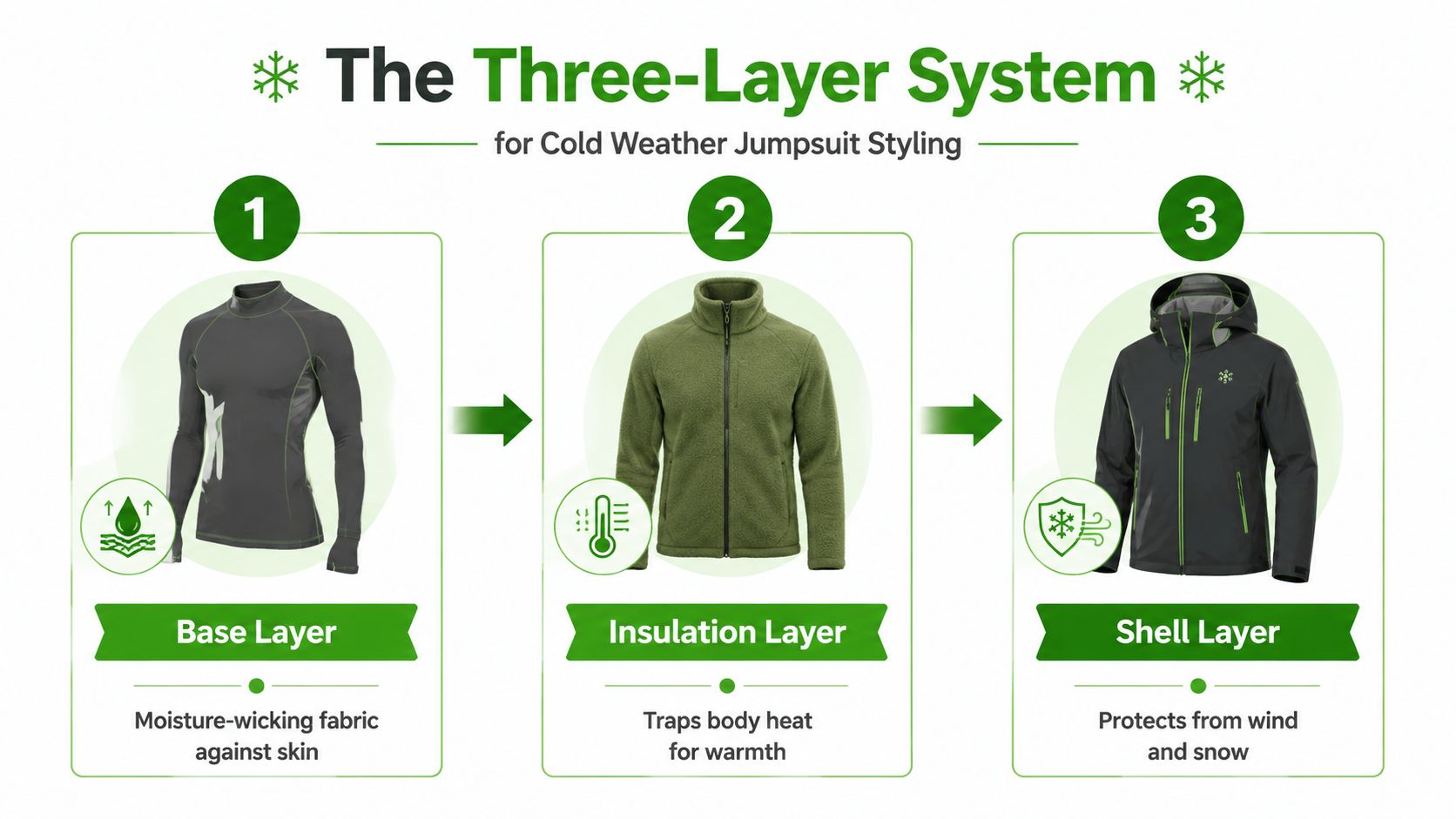
The Three-Layer System for Cold Weather Jumpsuit Styling
A denim jumpsuit becomes winter-ready when each layer has a distinct job. The technical model is a close-fitting moisture-wicking base, an insulating middle layer, and a windproof or water-resistant shell. The base manages moisture, the middle layer retains heat, and the shell reduces heat loss caused by wind and precipitation, as explained in REI's layering guidance.
Start with a smooth base layer
Your base should sit close to the skin without cutting into your body. Choose a thin thermal top with long sleeves and, for severe cold, thermal leggings beneath the jumpsuit. Merino wool and purpose-made synthetic performance fabrics are better choices than cotton because cotton holds moisture against the body and can leave you chilled.
A black, charcoal, cream, or soft gray base layer will disappear beneath most denim washes. A mock-neck is especially useful because it frames the collar without creating the bulk of a heavy turtleneck. Avoid loose hems, thick cuffs, and textured knits under a fitted jumpsuit. They create ridges across the torso and make the front closure sit awkwardly.
Add insulation without crushing the waist
The middle layer does most of the heat-retention work. Use a slim fleece, fine-gauge wool sweater, lightweight down vest, or fitted insulated vest. The key is low bulk with enough loft. A thick cable-knit sweater may look warm on its own, but under denim it can restrict your arms, flatten the torso, and erase the jumpsuit's waist.
A cropped fleece or vest can work well because it ends near the natural waist instead of creating a long, bulky column. If you prefer a sweater, choose one thin enough to slide beneath the jumpsuit smoothly. You can also wear the vest over the jumpsuit when the weather is milder, but make sure it doesn't cover the belt area so completely that the outfit loses its shape.
Finish with a roomy shell
The coat must fit over the jumpsuit and its insulation without compressing either layer. A long wool coat, insulated parka, or weather-resistant shell works better than a narrow blazer when wind and precipitation are involved. Look for ease through the shoulders, upper arms, waist, and hips. You should be able to sit, zip the coat, and move your arms freely.
Practical rule: If your coat presses the sweater or vest flat, it's too small for the layering job.
A long coat protects more of the jumpsuit and keeps the whole silhouette continuous. A shorter coat can work with a tapered or cropped leg, but it needs a defined hem and a strong boot pairing. For additional ideas, use this winter clothing layering guide when testing combinations in your own wardrobe.
Outerwear and Knit Pairings That Preserve Your Silhouette
The most useful winter outfit isn't the one with the thickest coat. It's the one that keeps you warm while allowing the jumpsuit to remain recognizable. Much of the common advice repeats turtlenecks, boots, scarves, blazers, belts, and long coats without addressing the difficult part, how to prevent bulk from swallowing the waist and leg line. The denim jumpsuit styling discussion from iDiva points toward layering ideas, but fit decisions determine whether those ideas work in real cold.
For the office
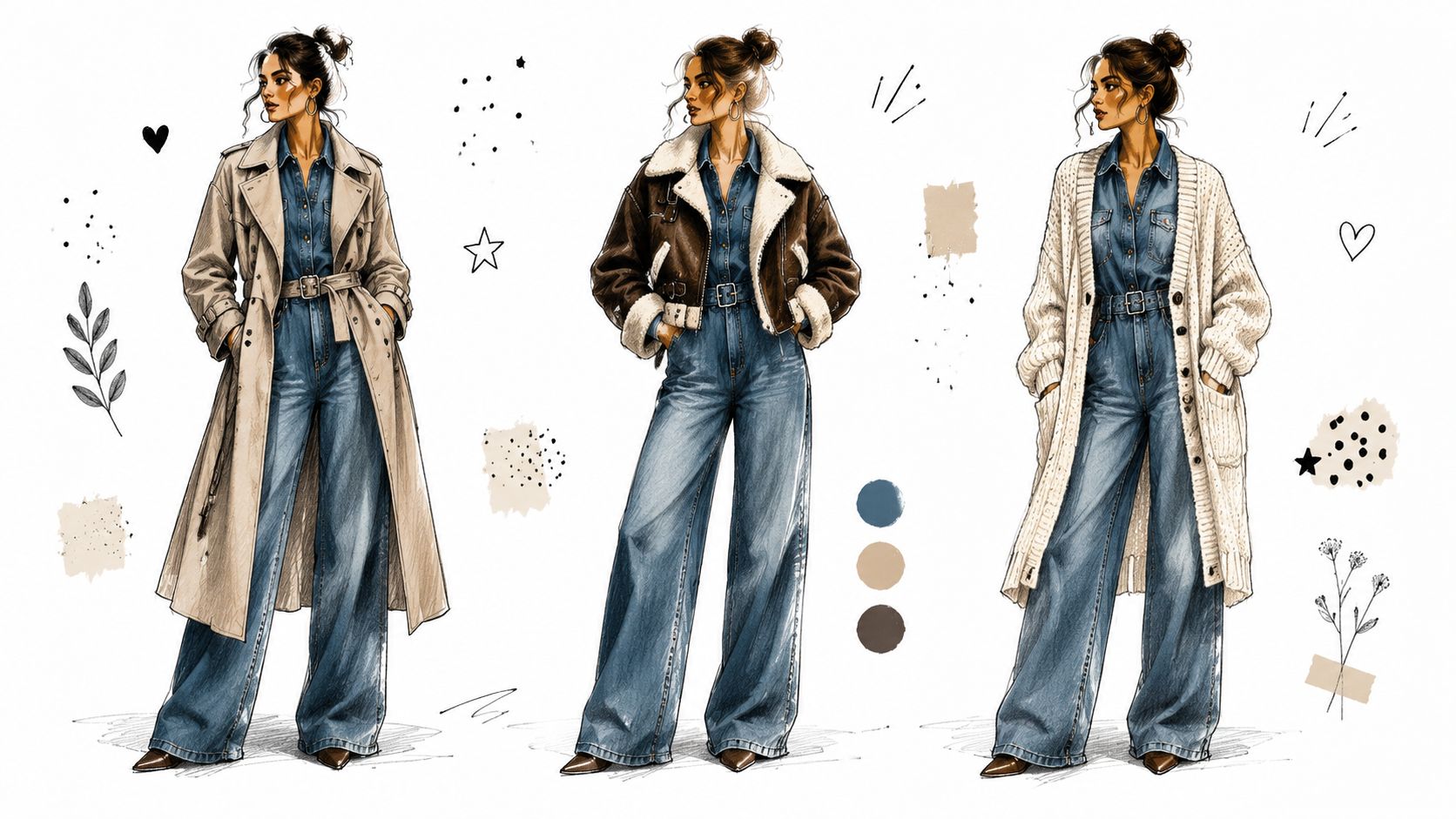
Wear a thin thermal top under a dark denim jumpsuit, then add a longline wool coat. Keep the neckline clean with a fine-gauge mock-neck or narrow turtleneck, and use a belt over the jumpsuit if the waist needs definition. The coat should fall straight rather than ballooning at the hip, and the jumpsuit's hem should meet a sleek boot without excessive fabric pooling.
This combination looks professional because the wool coat adds refinement while the denim supplies structure. Leave the coat open indoors so the jumpsuit stays visible. If your office is drafty, a slim insulated vest beneath the coat adds warmth without changing the exterior proportions.
For dinner or evening plans
A cropped faux-fur jacket over a fine-gauge turtleneck gives the jumpsuit a more deliberate evening direction. The short jacket highlights the waist and keeps the legs visually long, especially with a tapered or straight jumpsuit. Choose a refined ankle boot, sculptural earrings, and a compact bag rather than adding several competing layers.
Faux fur brings texture, so the knit underneath should stay smooth. A thick sweater plus a plush jacket creates too much volume around the shoulders and bust. The coat can be dramatic, but the layers beneath it should remain disciplined.
For weekends
An insulated vest over a fitted sweater is the relaxed option I'd choose for errands, travel, or casual lunches. The vest adds warmth through the core while leaving the jumpsuit's sleeves and leg line visible. Pick a vest that ends around the waist or upper hip, then add lug boots and a compact crossbody.
A soft fleece can replace the sweater, but avoid a sweatshirt with a thick hood beneath the jumpsuit. The hood gathers at the neckline and pushes the collar forward. If you want a hood, wear it on the outer layer instead.
Stylist's verdict: A slim mid-layer under the jumpsuit usually looks sharper than a thick knit over it.
For a coat that needs to sit over substantial tailoring or layered clothing, review these coat proportions for wearing over blazers. The same fit principle applies here, the outer layer needs room without losing its line.
Boots and Accessories That Complete the Winter Look
Boots decide whether the jumpsuit looks polished, rugged, or visually interrupted. Match the boot to the leg shape first, then use accessories to control warmth and proportion. A wide-leg jumpsuit needs a boot with enough presence underneath it, while a cropped or tapered leg benefits from a cleaner ankle line.
Choose boots by the hem
Knee-high leather boots are the sleekest choice beneath a wide or relaxed leg. Let the jumpsuit fall over the shaft so the boot disappears into the hem. This creates a long, uninterrupted line and adds warmth around the lower leg.
Lug-sole combat boots suit a casual, roomy jumpsuit. Their weight balances substantial denim and makes a relaxed silhouette look intentional. Keep the rest of the accessories controlled, because a heavy boot, utility pockets, and an oversized coat can quickly become too literal.
Chelsea boots are the most adaptable option for tapered or cropped legs. Their clean ankle shape works with office outfits, weekend layers, and darker denim. If the hem stops at an awkward point, choose a boot in a similar color to your tights or socks to reduce visual interruption.
Here's a useful place to browse additional outfit ideas from Dirt Cheap Headwear when you're deciding how hats and casual accessories can shift the mood.
Let accessories manage proportion
Wear a wide leather belt over the jumpsuit and beneath an open coat when you want waist definition without putting another bulky layer underneath. A structured handbag offsets denim's workwear character, while a soft scarf adds warmth around the neck without changing the jumpsuit's fit.
A beanie works best with a relaxed jumpsuit and lug boots. For a sharper outfit, choose a structured wool hat or a neat ribbed cap. Leather gloves bring polish and practical warmth, while a scarf should echo either the coat or the base layer rather than introducing another unrelated color.
Use this guide to accessorizing an outfit for a closer look at balancing jewelry, bags, belts, and finishing details. Keep statement jewelry near the face when the coat covers most of the jumpsuit. One strong pair of earrings usually does more than several layered necklaces competing with a high neckline.
Choosing the Right Denim Weight and Fit for Cold Climates
Shop for the fabric before you shop for the wash. Heavyweight denim around 12 to 16 ounces offers more cold-weather protection than lightweight denim, but fabric weight alone won't make an unlined jumpsuit comfortable in freezing conditions. You still need the base, insulation, and outer shell described earlier.
Brushed denim deserves special attention. Testing reports approximately 30% less heat loss than untreated denim, body temperatures around 2 to 3 degrees warmer in below-freezing conditions, and Rct insulation scores of 0.25 to 0.35 m²K/W, compared with 0.12 to 0.18 m²K/W for unbrushed denim. Those results come from brushed denim winter-garment testing, and they support a practical buying decision: choose brushed, lined, or heavyweight denim when cold-weather wear is a priority.
Fit for layers, not just the hanger
A slightly relaxed jumpsuit usually performs better than a tightly fitted one because it leaves room for a thermal top without compressing it. That doesn't mean sizing up indiscriminately. Extra fabric at the shoulder, waist, or hip can create drooping and obscure the shape. Look for intentional ease, a functional rise, and enough room to bend your arms and sit comfortably.
Stretch can help with movement, especially when you're wearing layers beneath rigid denim. A completely rigid jumpsuit may look crisp but feel restrictive once you add insulation. Check the inseam with your intended boots. A wide leg needs enough length to skim over the boot, while a cropped leg should end at a deliberate point above the ankle.
For readers building a more directional denim wardrobe, this guide to how to style double denim offers useful ideas about balancing washes and textures. Apply the same discipline here, but keep the winter layers visually quiet.
Common Layering Mistakes and How to Fix Them
The first mistake is buying an outer coat that fits the jumpsuit alone but not the complete outfit. A shell that compresses the sweater or vest reduces the air space those layers need. A peer-reviewed benchmark on three-layer cold-protective clothing found greater insulation when the middle and outer layers were larger, and ISO-based calculations estimate system insulation by combining the individual garments. Review the three-layer clothing fit study before choosing a very fitted coat.
Fix the problems you can feel immediately
- Cotton against the skin: Replace a cotton tee with a close-fitting merino or synthetic thermal layer. Cotton retains moisture, which can make you feel colder.
- A bulky middle: Swap a thick sweater for fine-gauge wool, fleece, or a slim insulated vest. Your arms should move without the denim pulling across the shoulders.
- A compressed shell: Try the coat over every intended layer before leaving home. If the zipper strains or the sleeves bind, choose a roomier cut.
- An undefined waist: Put the belt over the jumpsuit, beneath an open coat, rather than adding another thick layer at the waist.
- Cold extremities: Add wool socks, gloves, and a hat. A warm torso won't compensate for exposed hands, feet, and head.
- An awkward hem: Test the jumpsuit with the actual boots you'll wear. Change the boot height before changing the entire outfit.
Before you go outside: Check the base layer, confirm the mid-layer can move, zip the coat comfortably, define the waist, and cover your extremities.
A successful winter jumpsuit outfit should pass both tests. It needs to retain warmth outdoors and keep a clean silhouette indoors. If one layer makes you tug, overheat, or lose the jumpsuit's shape, remove that layer and replace it with a thinner, more purposeful alternative.
Cedar & Lily Clothier offers curated jumpsuits, denim, coats, boots, belts, handbags, hats, and jewelry, with personal styling guidance for building polished winter layers. Visit Cedar & Lily Clothier to find pieces that keep your denim jumpsuit visible, defined, and ready for cold-weather dressing.