

Most advice about how to style white jeans still treats them as a spring-and-summer novelty. That's outdated. White denim works in January, at the office, for brunch, and at dinner, provided you choose the right weight, silhouette, and supporting textures.
The mistake isn't wearing white after Labor Day. It's wearing a flimsy, transparent pair with the wrong rise, a sloppy hem, or accessories that make the outfit look accidental. Treat white jeans as a statement neutral, then let fit and contrast do the work.
Why White Jeans Deserve a Year-Round Spot in Your Closet
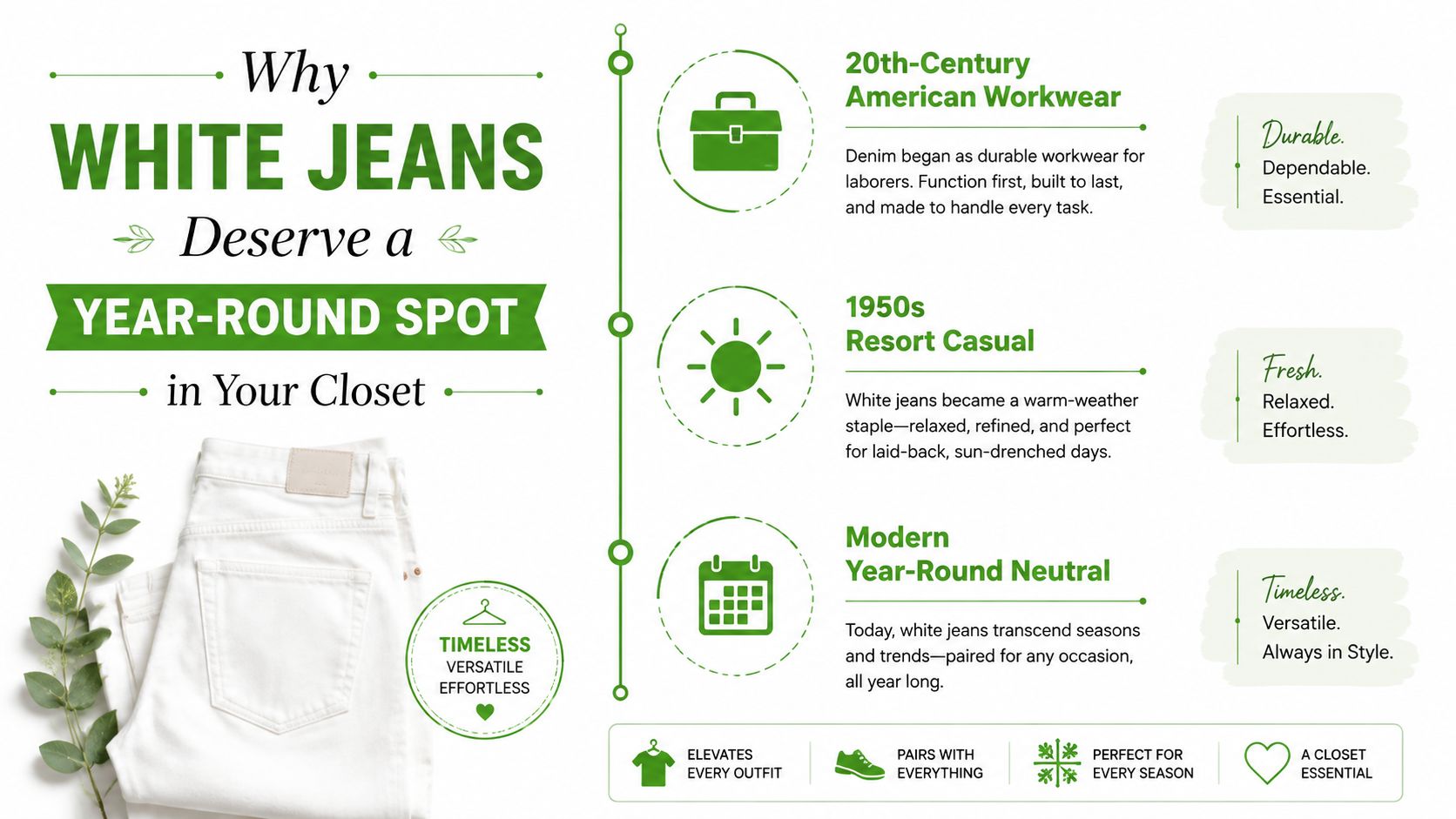
The “no white after Labor Day” rule belongs to an older dress code, not your current wardrobe. In the United States, white clothing became associated with leisure, vacation, and affluence, which helped give white jeans their warm-weather reputation. That history explains why they look natural with linen, cotton, lightweight knits, and resort-inspired colors, but it doesn't make them unsuitable for colder months. Buro 24/7's history of white jeans traces how the garment moved from a seasonal convention toward a deliberate fashion statement.
White jeans became a distinct fashion category in the late 1950s and early 1960s, when Lee launched the “Lee Westerner” in 1959 and Levi's introduced a white line in 1961. Pen Online's history of white denim explains why the style has long been connected with crisp shirts, blazers, structured shoes, and neat proportions. The original appeal was cleaner and more polished than standard blue denim, so polished styling isn't a modern invention. It's built into the garment's identity.
Let fabric, not the calendar, set the season
For summer, choose white jeans with cotton shirts, linen jackets, woven bags, and flat sandals. For fall, switch to suede loafers, camel layers, and textured knits. In winter, a heavier pair with a wool coat, leather boots, or a burgundy blazer feels as intentional as cream trousers.
The color behaves like soft beige chinos or ivory tailoring, but it has a sharper, more modern edge. You don't need to build an entire outfit around the season. You need to change the fabric weight, shoe, and outer layer.
Current styling guidance is also moving toward ivory, cream, and relaxed silhouettes, including straight, wide-leg, and barrel shapes. Recent white-denim trend coverage supports the practical conclusion: white jeans earn year-round status when their texture and tone suit the weather.
Stylist's rule: If the denim looks substantial and the outer layer has structure, white jeans can work long after summer.
Choosing the Right Fit, Fabric, and Rise
Start with the jeans, not the outfit. White denim exposes poor construction faster than blue denim, so a flattering pair needs a snug waistband, enough structure, and clean opacity. The waistband should sit securely without digging. Denim tends to relax with wear, and an overly loose pair can lead to constant pulling and bagging around the pockets, as explained in this white-denim fit guide.
Choose thicker, structured denim over thin summer fabric. It hangs away from the body, reduces cling, and helps limit show-through. If you're between sizes, sizing up can create a better drape and lower the risk of transparency. Look for a lined or reinforced waistband if you frequently tuck shirts, since it keeps the front cleaner and prevents thin tops from bunching.
Match the rise to the job
A high rise is the strongest choice for tucked shirts, blazers, and elongated proportions. It gives you a clear waistline and creates a polished base for workwear. A mid-rise is the dependable default when you want comfort and versatility without making the waist the focal point.
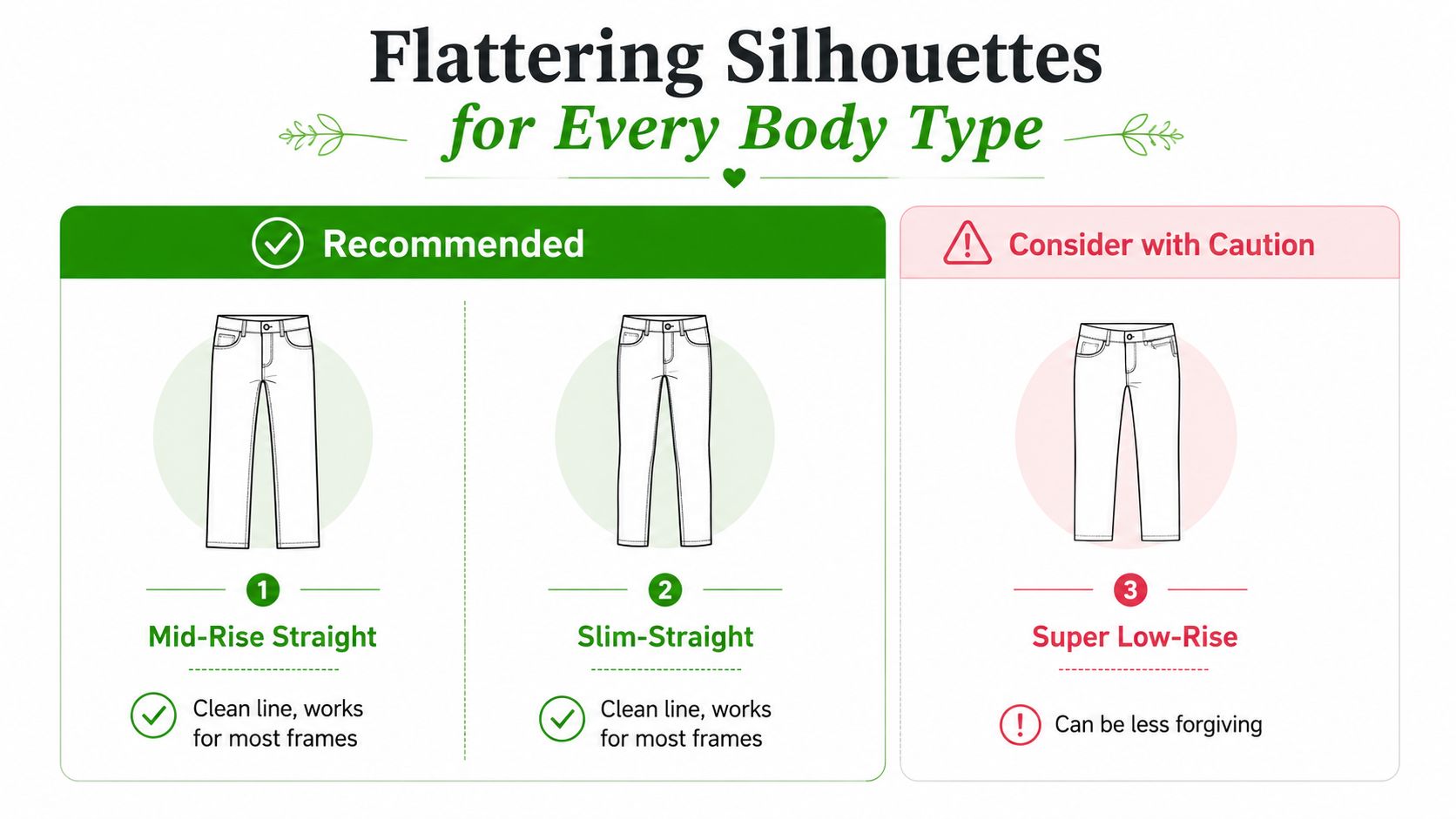
Low-rise white jeans are a trend-led choice. They can look current with a fitted top, cropped jacket, or relaxed button-down, but they offer less coverage and are harder to style for professional settings. Don't buy them as your only pair.
Leg shape matters just as much. Skinny and cigarette cuts create a narrow line, but straight-leg, wide-leg, and barrel silhouettes feel fresher and give you more room to work with boots, loafers, and layered tops. Cropped hems suit petite proportions and ankle boots. Full-length hems look most polished with a deliberate break and a shoe that supports the length.
| Goal | Best Rise | Leg Shape | Fabric Weight | Hem Break |
|---|---|---|---|---|
| Tucked office outfit | High rise | Straight or trouser wide-leg | Structured, substantial denim | Full break |
| Everyday versatility | Mid rise | Slim-straight or straight | Medium to substantial denim | No break with sneakers |
| Elongated evening look | High rise | Full-length wide-leg | Structured denim | Full length with heels |
| Petite-friendly proportion | Mid or high rise | Cropped straight or kick flare | Medium-weight denim | Ankle grazing |
| Trend-led styling | Low or mid rise | Relaxed barrel or wide-leg | Structured denim | Clean, intentional hem |
For a practical try-on, sit, squat, and walk. Check whether the waistband rolls, whether the pockets pull open, and whether the fabric becomes visibly sheer across the seat or upper thigh. Also test the pocket area for the “pocket emoji” effect, where pocket bags or seams become too visible through the denim. This guide to white jeans for women offers further fit-focused guidance before you commit to a pair.
Work-to-Dinner Outfit Formulas
White jeans can handle a professional day if you give them enough structure. Skip distressed hems, thin jersey tops, and casual canvas shoes. A blazer, polished knit, or architectural top makes the denim look purposeful.
Formula one, the tailored contrast
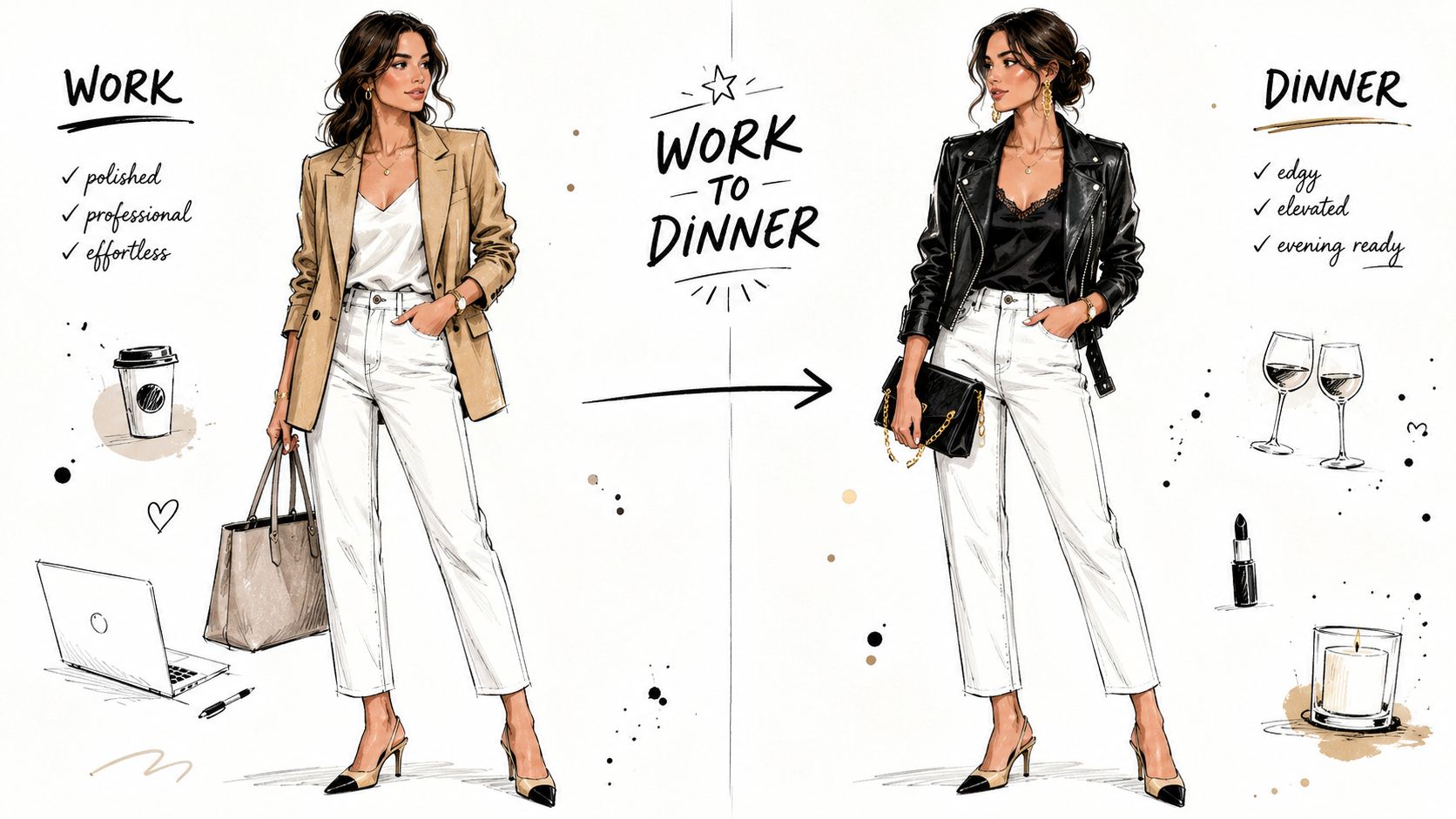
Wear straight-leg white jeans with a camel or charcoal blazer, a silk shell, and pointed-toe slingbacks with a low or moderate heel. Keep the belt narrow and choose a structured handbag in black, cognac, or deep brown. This combination works because the blazer supplies authority while the white denim keeps the outfit modern.
For dinner, replace the blazer with a black leather jacket. Keep the slingbacks if you want refinement, or switch to pointed-toe heeled mules. Add a red lip and one visible piece of jewelry, not several competing statement pieces.
Formula two, the polished knit
Tuck a fine merino turtleneck into straight-leg white jeans and add loafers. Navy, black, chocolate, or forest green gives the look depth without making it severe. A slim watch and a structured tote finish the meeting version.
After work, change into heeled mules and add a substantial gold chain. You don't need a new outfit. The heel changes the posture, while the chain brings enough evening shine to make the knit feel deliberate.
A concise visual transition can help you judge proportions before trying the formulas yourself.
Formula three, the presentation-to-cocktails option
Choose a structured bustier or corset-inspired top under a long-line blazer. Keep the jeans full length and add white booties or pointed boots to continue the clean vertical line. The blazer should cover enough of the hip to balance the fitted top and keep the outfit appropriate for presentations.
For cocktails, remove the blazer and add statement earrings. Swap the work tote for a compact shoulder bag, then let the top become the focal point. This formula only works when the jeans are crisp and the footwear is sleek, so avoid heavily distressed denim or bulky casual sneakers.
Weekend Brunch and Date Night Looks
Start with one pair of straight-leg white jeans and let the day evolve around it. For brunch, wear a relaxed oatmeal knit with a cognac leather belt and low-profile loafers. White sneakers work too, but keep them clean and simple so the outfit stays polished rather than sporty.
Add oversized tortoiseshell sunglasses and a woven tote. The oatmeal knit softens the white denim, while cognac introduces warmth and gives the outfit a clear center. If the morning is cool, layer a trench coat or oversized shirt jacket over the knit. Leave the outer layer open so the belt and waistline remain visible.
For more ideas that suit a casual daytime setting, see this brunch outfit guide.
The afternoon edit
Don't change the jeans at midday. Change the pieces that alter the mood. Replace the oatmeal knit with a silk camisole in espresso or emerald, then add a cropped black leather jacket. The cropped proportion keeps the waist visible and stops the jacket from overwhelming a straight-leg silhouette.
Trade the loafers or sneakers for pointed-toe heeled mules or strappy sandals. If you're wearing a trench, remove it rather than adding another layer. The evening version needs less volume and more surface interest.
Your accessory changes should be just as deliberate:
- Bag: Replace the woven tote with a small structured shoulder bag.
- Jewelry: Trade small daytime earrings for gold hoops.
- Makeup: Add a red lip instead of piling on additional hardware.
- Belt: Keep the cognac belt if the bag or shoes repeat its color, otherwise use a slim black belt.
The denim weight matters here. A substantial pair keeps its shape through a full day, while a flimsy pair can look tired by dinner. For a cool morning, the knit or trench supplies warmth. For the evening, silk, leather, and a sharper shoe supply polish without forcing you to pack a second pair of trousers.
Color Pairings, Textures, and Shoe Rules
Style white jeans as a neutral first. Then decide whether you want warmth, cool contrast, or a bright focal point. A color theory guide for fashion can help you understand why certain combinations feel balanced, but your quickest decision is visual: choose one dominant mood and repeat one accessory color.
Warm neutrals create softness
Camel, cognac, terracotta, rust, cream, stone, and chocolate brown make white denim look relaxed and expensive. Use chunky cable knits or ribbed sweaters in colder weather. In warmer months, choose linen, cotton poplin, or suede accessories. A brown belt and matching leather shoe often provide enough contrast without adding another strong color.
Monochrome can also work, but pure white on pure white needs texture. Pair denim with a cotton shirt, linen blazer, ribbed knit, or softly brushed jacket. If every piece has the same finish, the outfit can look flat and clinical.
Cool tones sharpen the look
Navy, black, forest green, slate, icy blue, and charcoal create a cleaner, higher-contrast outfit. Use leather for evening, denim-on-denim for casual polish, and fine merino or cashmere for work. Black accessories anchor the palette, while silver jewelry keeps the result cool and modern.
Bright colors should appear intentionally. Cherry red, cobalt, and emerald stand out against white, so use one as the top or jacket color and keep the rest restrained. A bright bag can work too, but don't add a bright top, bright shoes, and bright jewelry at the same time.
| Outfit Vibe | Top Color | Texture Pairing | Shoe Choice |
|---|---|---|---|
| Relaxed daytime | Oatmeal, camel, or soft blue | Ribbed knit or cotton | Loafers or clean sneakers |
| Polished office | Navy, charcoal, or black | Silk shell and tailored wool | Slingbacks or loafers |
| Warm-weather ease | Terracotta, cream, or pale blue | Linen and woven accessories | Flat leather sandals |
| Evening contrast | Espresso, emerald, or black | Silk, satin, or leather | Heeled mules or strappy sandals |
| Weekend statement | Cherry, cobalt, or forest | Cotton, suede, or denim | Western boots or ankle boots |
Shoe shape sets the tone. Ankle boots feel casual, knee-high boots add drama, and Western boots bring weekend energy. Heel height determines the occasion, but color determines whether the outfit feels grounded. Tan and cognac soften white jeans, black creates definition, and white or ivory shoes extend a tonal line.
Practical rule: Build the outfit from one color family, one texture contrast, and one deliberate shoe choice. That's enough.
Flattering Silhouettes for Every Body Type
There isn't one universally correct white-jean cut. The right choice depends on where you want the eye to travel, how much structure you prefer, and whether your outfit needs length or volume.
| Proportion or preference | Strong starting point | Why it works | Avoid |
|---|---|---|---|
| Most frames | Mid-rise straight or slim-straight | Creates a clean line without excessive cling | A loose waist that causes pocket bagging |
| Broader shoulders | High-rise wide-leg | Balances the upper body and lengthens the lower line | A narrow leg with a very bulky top |
| Curvier proportions | Contoured high-rise with stretch and slight bootcut | Follows the waist and creates a gentle balance through the leg | Rigid fabric that cuts into the waist |
| Petite frame | Cropped straight or kick flare | Shows the ankle and protects proportion | Full length pooling over flat shoes |
| Apple shape | Rigid high-rise wide-leg with a tucked or half-tucked top | Adds structure and gives the outfit a defined center | A low rise paired with an untucked oversized top |
| Tall frame | Full-length wide-leg or relaxed baggy cut | Uses length without overwhelming the body | An overly short crop that interrupts the line |
Hem length changes the proportion
Ankle length is the most flexible. It works with loafers, sneakers, ankle boots, and heels without requiring much alteration. Full length looks strongest when the hem reaches the shoe rather than hovering awkwardly above it. Wear it with heels or a substantial boot, and avoid excessive pooling.
Cropped styles can be excellent on petite frames, especially with a nude pointed-toe shoe that continues the leg visually. A single cuff can work on a tall frame wearing a relaxed fit, but don't keep rolling the hem until the jeans look accidental.
The universal mistake is choosing a size that clings. White denim should skim, not strain. If you're deciding between two silhouettes, choose the one that lets the fabric fall cleanly from the hip and keeps the pocket area quiet.
Care Tips and Styling Mistakes to Avoid
White jeans need more attention than blue denim because stains, pocket outlines, and grayness show immediately. Start with the care instructions on the garment, then use a consistent routine rather than aggressive cleaning.
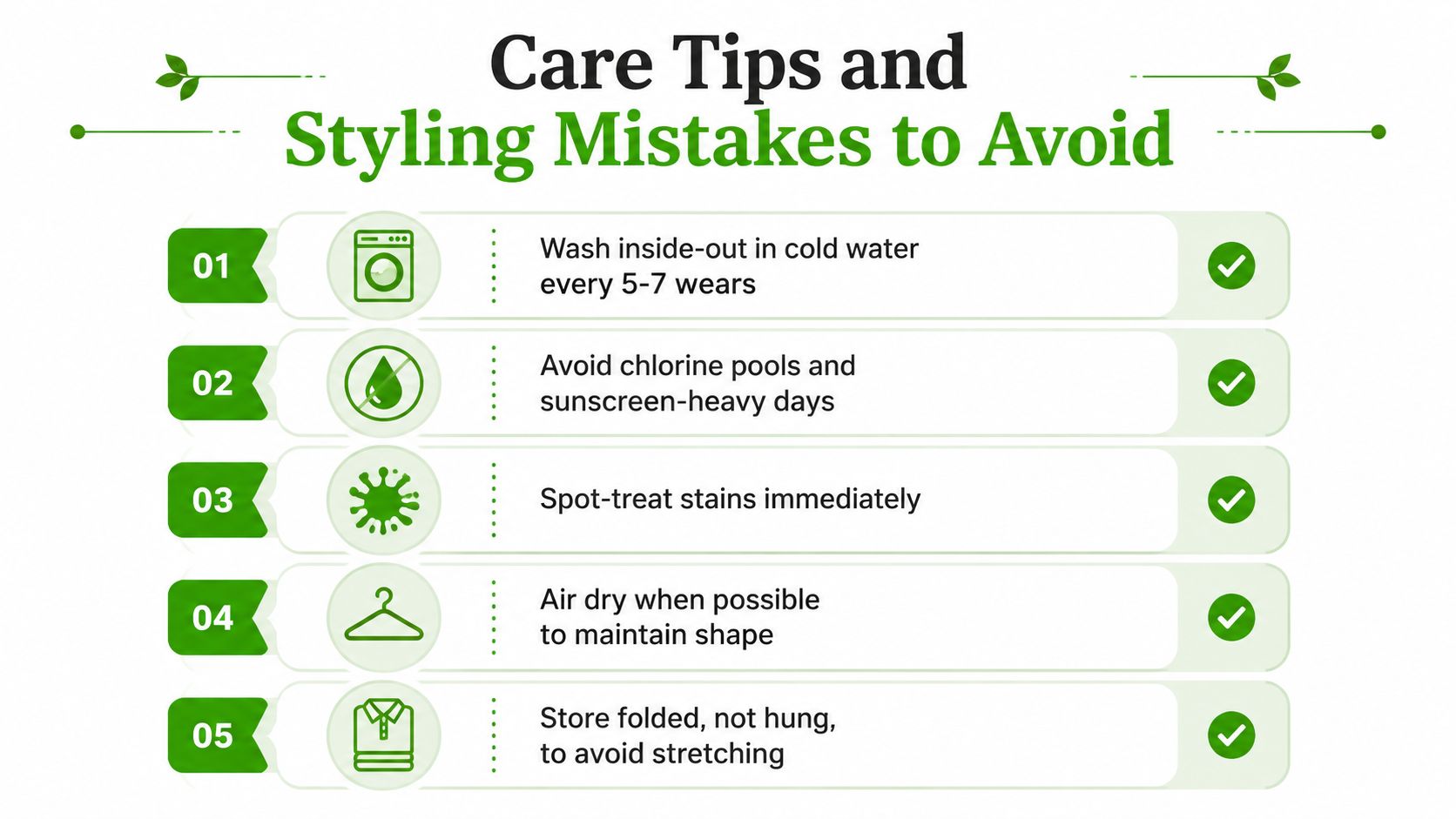
Turn the jeans inside out before washing them in cold water every five to seven wears, a care recommendation outlined in the required white-jean care infographic guidance. Avoid chlorine pools and sunscreen-heavy days when possible, since both can contribute to yellowing or uneven discoloration. Spot-treat marks promptly with an oxygen-based cleaner that's suitable for the fabric, then air-dry away from direct sun.
Fix the styling problems before they become habits
- Visible underwear: Wear nude underwear rather than white underwear, which can still show beneath white denim.
- Sheer tops: Choose a substantial camisole or opaque base layer when the top is thin. White jeans already need visual control below the waist.
- Dingy cream pairings: If your top is ivory or cream, compare the tones in daylight. If they clash, add camel, brown, or black between them with a belt or jacket.
- Office distressing: Save dramatic rips and raw, uneven hems for casual settings. Choose a clean, intact pair for work.
- Bleeding belts: Test dark leather belts against a hidden section of denim before wearing them. Cheap or heavily dyed leather can transfer color.
- Too much hardware: White denim gives accessories a bright background, so excessive metallic buckles, chains, and studs can compete with the clean palette. Keep one intentional metal finish.
Store white jeans folded instead of hung by the waistband when possible. Folding helps preserve the rise and reduces unnecessary stretching. These small habits matter because white jeans reward precision. When the denim stays bright, opaque, and properly shaped, the outfit looks considered even when the formula is simple.
Cedar & Lily Clothier offers curated denim, blazers, tops, shoes, handbags, belts, and event-ready pieces that make white jeans easier to carry from desk to dinner. Visit Cedar & Lily Clothier to find polished wardrobe staples and get fit guidance for a year-round white-denim outfit.