


You're dressed for the event, your hair is finished, and the outfit looks right until you face the mirror. The single necklace you chose feels strangely lonely, while the rest of your jewelry box waits nearby with plenty of untapped potential. The answer usually isn't a new outfit. It's a more deliberate composition.
Learning how to layer jewelry gives each piece a role. One necklace creates a point of interest, but several thoughtfully spaced pieces can define a neckline, balance a silhouette, and make a familiar tee feel styled rather than worn. The same principle applies to rings, bracelets, and earrings, although each area needs its own approach.
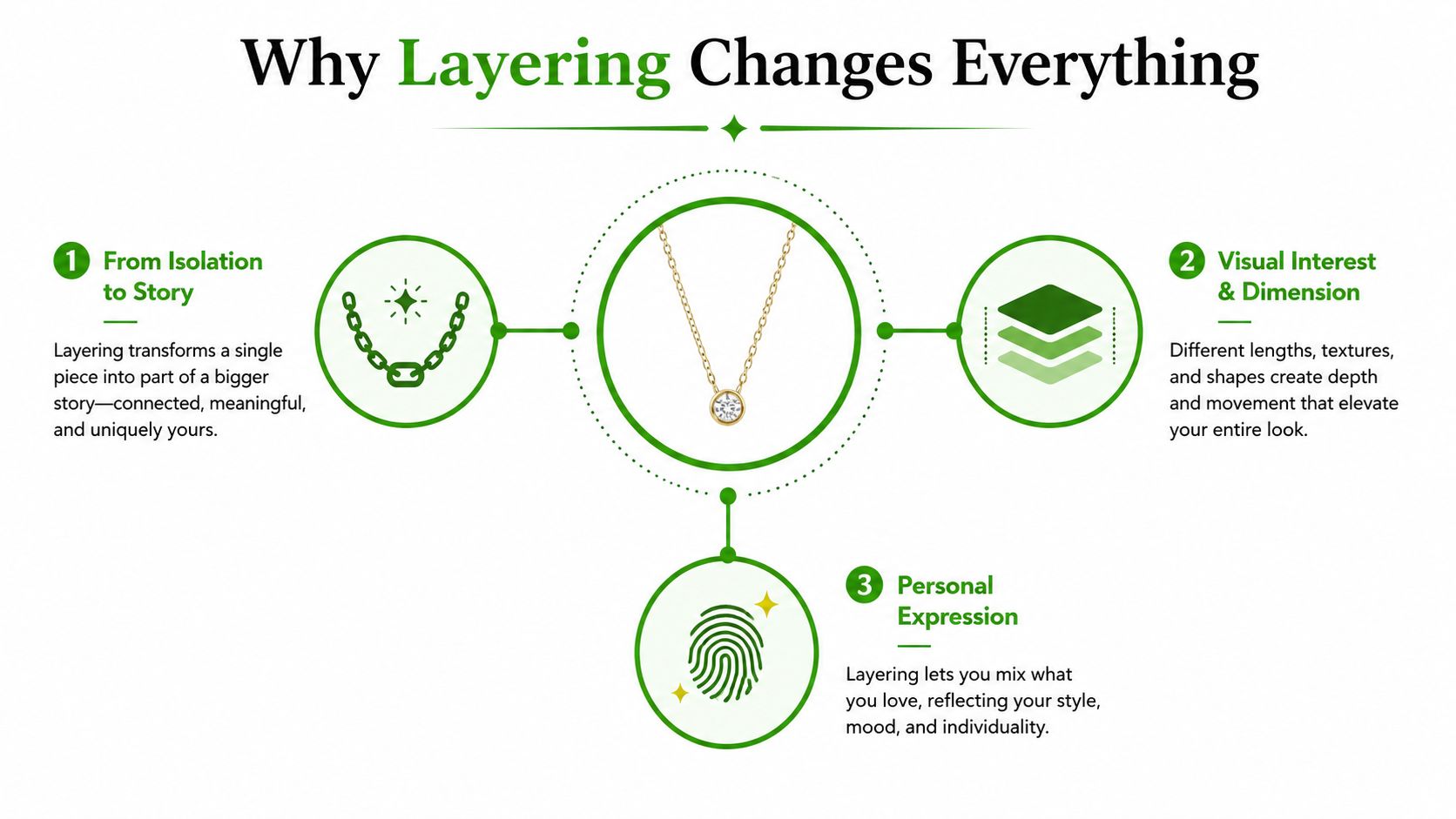
Why Layering Changes Everything
A layered look adds depth where an outfit may feel flat. A fine chain can soften a structured blazer, a pendant can draw the eye through a deep neckline, and a refined combination of earrings and bracelets can give a minimalist dress enough polish for an evening occasion. Jewelry stops behaving like a collection of isolated purchases and starts working as part of the outfit's visual story.
That shift matters because the strongest stacks aren't made by wearing everything you own. They're edited around scale, rhythm, and a metal story. Scale determines whether a piece feels delicate or dominant. Rhythm comes from repeating or alternating lengths, shapes, and textures. A metal story gives the eye a thread to follow, whether you stay with yellow gold, keep the look cool with silver, or mix both through a deliberate connecting detail.
Stylist's rule: A stack should look edited from a distance and interesting up close.
The commercial momentum behind layered jewelry also reflects how people shop now. The global fine jewelry market was valued at about $218.1 billion in 2022, up from $200.5 billion in 2021, and it's projected to reach $320.8 billion by 2030, with a 5.2% CAGR from 2023 to 2030, according to global fine jewelry market data. Online fine jewelry sales grew at a 17% CAGR between 2020 and 2022, compared with 8% growth for brick-and-mortar sales, helping layered combinations spread through digital retail and social discovery. The numbers don't tell you what to wear, but they do show why mix-and-match jewelry has become a lasting styling language rather than a passing trick.
You can learn the skill by looking at the outfit first. If the neckline is open, create a controlled cascade. If the dress is ornate, reduce the number of competing focal points. If your hands are the main feature, build a ring story that leaves room for movement. There's no special talent required, only a willingness to test proportion before you leave the house. For more outfit-wide ideas, Cedar & Lily's guide to accessorizing an outfit offers a useful starting point.
Necklace Layering From Choker to Statement
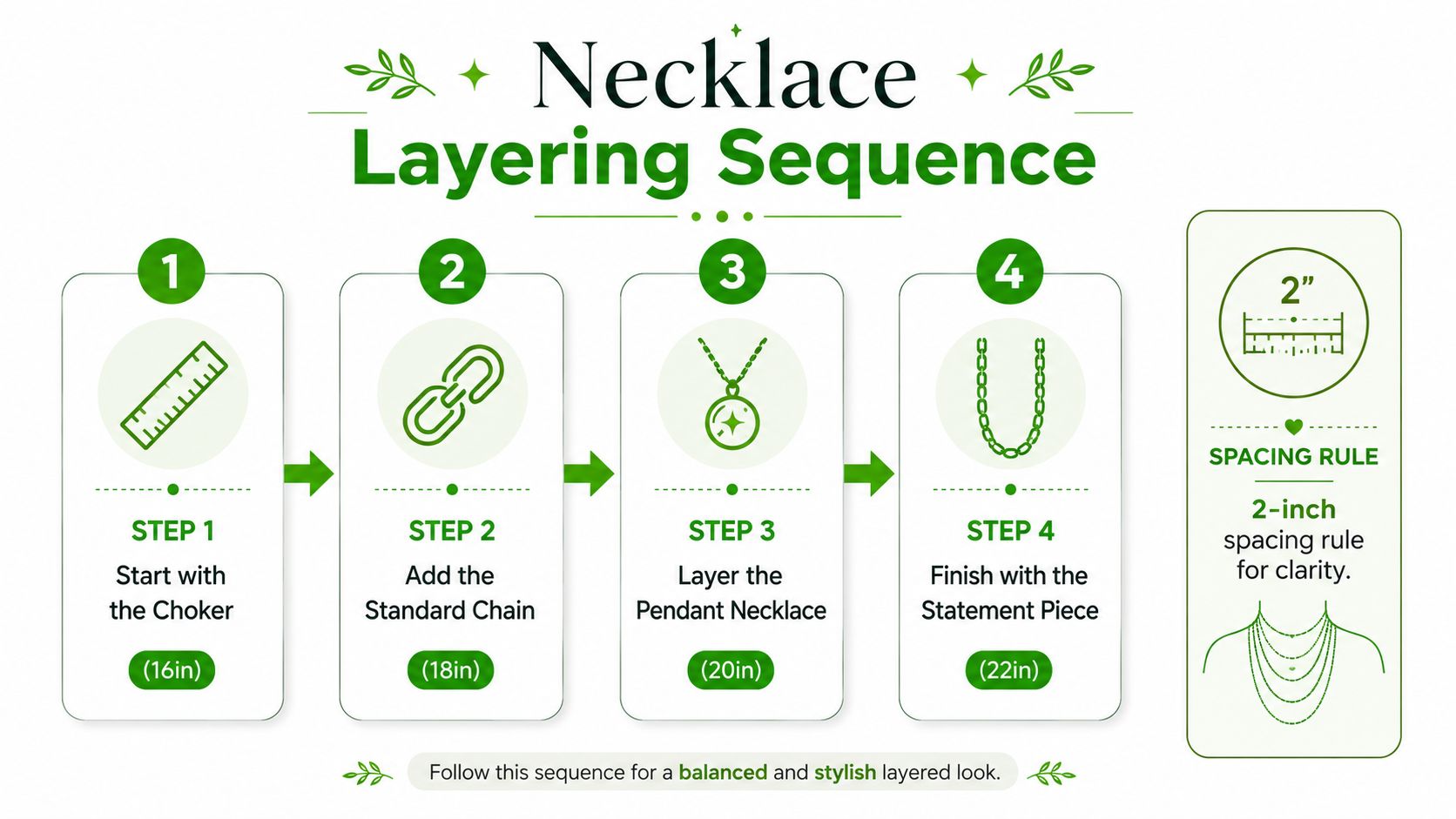
Necklaces are the easiest place to begin because length creates an obvious visual ladder. Start with the shortest piece, then move outward so each chain has a clear landing point. A practical benchmark is to separate necklace layers by about 1 to 2 inches, or roughly 2.5 to 5 centimeters, which helps each piece read independently and reduces tangling, as explained in Brilliant Earth's necklace layering guidance.
Build the cascade
Use this sequence as a starting point, then adjust it for your neckline:
- Begin with the shortest base. A choker-style piece can sit close to the throat, but it shouldn't feel tight or crowded. A delicate collar-length chain works especially well with an open scoop or sweetheart neckline.
- Add a standard chain. Move to a clearly longer chain rather than choosing two pieces that sit on the same collarbone line. A slim cable chain is a strong companion to a textured paperclip chain because the surfaces create contrast without requiring a dramatic pendant.
- Place one focal pendant. Let one pendant earn the viewer's attention. A medallion, pearl drop, gemstone, or sculptural charm should sit on the middle or lower tier, while the shorter chains support it.
- Finish only if the outfit needs it. A long chain or lariat can extend the line, but it shouldn't be added just because there's space. A dramatic dress often needs fewer pieces, not more.
A pendant's size should relate to both your frame and the neckline. A small pendant can disappear against a heavy knit, while an oversized pendant can overwhelm a petite frame or compete with a detailed blouse. Keep the visual weight concentrated in one place. If the anchor chain is substantial, choose lighter companions above it and below it rather than adding another thick link style.
Make mixed metals look intentional
Mixing gold and silver works when the relationship looks planned. Use two pieces in one warm metal and one cool-metal accent, or connect the metals through a gemstone, bead, or charm that carries both tones. Texture helps too. Pair a paperclip chain with a fine cable chain, or place a beaded strand between two metal chains to interrupt repetition.
Build the arrangement on a flat surface before putting it on. Lay the shortest chain at the top, spread each length below it, and check whether the pendant lands where you want it. This quick test exposes crowded clasps, similar lengths, and competing focal pieces before you're standing in a dressing room.
For a deeper guide to choosing lengths for your proportions and wardrobe, use Cedar & Lily's necklace length guide.
Ring Stacking for a Balanced Look
At Cedar & Lily, ring stacks should suit the moment before they follow a formula. For a daytime client meeting, a signet and slim band look composed. For dinner, one gemstone ring can bring more presence without turning every finger into a focal point.
Start with structure
Choose one anchor for your dominant hand, such as a substantial band, signet, or gemstone ring. Place it on a finger with room around it, often the index or middle finger, then build with slimmer pieces instead of adding another heavy design. An expert benchmark recommends an anchor band around 2.0 to 2.8 millimeters wide, followed by neighboring rings in 0.3 to 0.5 millimeter width increments, according to JewelTrendPro's ring-stacking guidance. The gradual shift keeps the stack cohesive.
Vary the surfaces as you move outward. A plain slim band beside a brushed or twisted ring creates rhythm, while one gemstone ring supplies the sparkle. The same guidance recommends keeping only up to two gemstone rings in a stack and limiting them to under 0.50 CTW unless the setting is especially secure. That restraint makes the arrangement easier to wear.
Let your hands set the limit
Long fingers can carry a fuller arrangement. Shorter fingers usually look cleaner with a compact stack and a slim pinky band. Spread rings across several fingers rather than crowding one, and leave at least one finger bare when a watch, bracelet, or statement cuff is already part of the outfit.
For a workday, two coordinated stacks look more polished than filling every finger. Evening dressing allows more drama, but choose one dominant hand feature and keep the other quieter. Mixed metals can work within one hand when the finishes look deliberate. Across both hands, unrelated finishes can make the outfit feel scattered.
Comfort check: Make a fist, reach for your bag, and type a few lines before committing to the full stack.
Use the knuckle test before leaving the house. If more than two rings need force to pass the knuckle, or if the clearance drops below 1 to 1.5 millimeters, the arrangement may be overloaded, according to the ring-stacking fit guidance. Remove the piece causing pressure first. Your rings should move with you through a meeting, dinner, or commute, not sit perfectly only for the mirror check.
Bracelets and Earrings Working Together
Treat your wrist and ears as one styling decision. If you place a bold cuff on one wrist, the earrings need to acknowledge that weight without creating a second, competing event near your face.
Start at the wrist. Use one anchor, such as a watch, structured cuff, or substantial bangle, then add a slimmer bracelet only if the pieces have room to move. If you prefer a less symmetrical look, keep the anchor on one wrist and place a single fine chain bracelet on the opposite side. A delicate chain bracelet gives you more freedom with earrings because it won't compete with a sculptural shoulder-grazing pair.
Match visual weight
A chunky cuff pairs well with simple studs or small huggies. The clean earring shape gives the face a finished look without placing bold volume at both ends of the body. If the wrist stack is fine and airy, you can bring more presence to the ear with a longer drop, a slim hoop, or a carefully edited lobe stack.
For multiple piercings, put the largest earring in the lowest position and graduate upward through smaller pieces. You can reverse that arrangement if the top piercing carries a distinctive statement stud and the lower openings hold tiny accents. The shape should guide the eye rather than form a crowded vertical wall.
Keep one visual language
Repeat a finish, silhouette, or detail between wrist and ear. A gold cuff can echo a gold hoop. A pearl bracelet can connect to pearl accents in a drop earring. You don't need identical pieces, but you do need a visible relationship.
Balance rule: Match the boldest piece on your wrist to the boldest piece on your ear, then let every other item support it.
For a different take on expressive, small-scale pieces, browse shop tattoo studio jewelry from Fountainhead New York. The assortment is a useful reference when you want a personal detail to sit alongside polished everyday metals without making the entire look feel formal.
Matching Layered Jewelry to the Neckline
Your neckline decides where the necklace should live. Don't force the same cascade onto every top. A stack that looks elegant over bare skin can disappear against a crewneck or become tangled visually with a turtleneck.
| Neckline | Best Chain Lengths | Focal Piece | Skip This |
|---|---|---|---|
| Crewneck | 18 to 20 inches, plus a longer chain | Mid-length pendant below the collarbone | A tight choker that fights the fabric |
| V-neck | Two to three graduated pieces inside the V | Pendant that follows the V shape | A short chain that sits across the neckline |
| Scoop or sweetheart | Choker-style piece plus a 20-inch chain | Compact pendant or close-set detail | A pendant floating awkwardly in the open center |
| Button-down or turtleneck | Long chains from 26 to 30 inches | Bold pendant or clean lariat | Several short chains hidden by the fabric |
Crewnecks and open necklines
A crewneck already creates a strong horizontal boundary, so skip the choker. Start with a mid-length pendant that rests just below the collarbone, then add a longer chain for depth. Choose a pendant with enough contrast to stand against the shirt, but don't use several pieces that land at the same height.
A V-neck deserves a necklace arrangement that respects its direction. Use two or three graduated pieces that fall inside the V, with the longest pendant ending above the bust rather than dropping into the fabric. A lariat can work beautifully here because it reinforces the vertical line, but the top portion should remain light.
Scoop, sweetheart, and high necklines
Scoop and sweetheart necklines offer open space across the upper chest. A close-fitting necklace paired with a longer chain fills that space without leaving an awkward gap between the jewelry and the dress. If the bodice carries lace, beading, or a strong print, reduce the texture in the necklace stack.
A button-down and a turtleneck need a different approach. Treat the fabric as a backdrop and go long. One bold pendant or a lariat creates a clean vertical path over the shirt, while multiple short chains can vanish into the collar or look cramped above it.
Strapless dressing has its own proportion challenges, especially when the shoulders and décolletage are the focus. Cedar & Lily's guide to jewelry for a strapless dress can help you decide whether the neckline needs a necklace at all.
Layering Looks for Work, Weekend, and the Gala
The occasion should control the number of layers, not your jewelry box. A polished office stack has a different job from a weekend combination, and evening dressing rewards restraint when the clothing already carries drama.
Work
Pair a sleek blouse with one 18-inch pendant and a slim chain at 22 inches. The shorter piece gives the collar structure, while the longer chain adds interest without filling the entire opening. Keep the metals consistent across your earrings and necklace so the outfit reads cleanly in a meeting.
Do keep the pendant refined and easy to see. Don't add a third necklace that competes with the collar, scarf, or blouse buttons. For work, one focal pendant is enough.
Weekend brunch
A relaxed tee and denim can carry more personality. Try a mixed-metal trio with a close-fitting chain, a 20-inch medallion, and a 26-inch bar pendant. Vary the textures, perhaps pairing a paperclip chain with a satellite chain, and make sure the pendants don't land together.
The weekend is the right moment for an intentional mismatch. Do let one charm or medallion add character. Don't make every piece delicate if the tee and denim are visually casual, because the jewelry may look too timid against them.
Prom or a wedding
A slip dress pairs naturally with a delicate lariat, a mid-length crystal or pearl strand, and shoulder-grazing earrings. Echo one detail from the dress, such as a pearl sheen, crystal sparkle, or warm metallic finish. That connection makes the jewelry feel chosen for the garment rather than pulled from a general collection.
Do let the earrings provide the drama if the neckline already has a necklace. Don't wear a necklace and statement earrings at the same volume. Your face, neckline, and dress should still have breathing room.
Gala or black tie
A strapless gown often needs less layering than you expect. A collarbone-hugging diamond riviere, drop earrings, and a single tennis bracelet create a complete look without covering the gown's clean line. Let the dress provide the architecture.
Evening edit: Keep the strongest piece in each zone, then remove anything that merely fills space.
Do allow the neckline to remain visible. Don't stack more than three pieces in one zone, especially when the dress includes shine, draping, or embellishment. Formal jewelry should look intentional from across the room and precise when someone stands close.
Common Mistakes and How to Care for Your Stack
Most layering problems come from adding a piece without checking what it's doing. Stop treating empty space as an instruction to add more jewelry. Empty space can be the detail that makes the focal piece visible.
Use this stop-doing checklist
- Stop placing chains on one collarbone line. Separate their lengths so each one has a distinct path. This matters most with open necklines, where similar chains quickly turn into visual clutter.
- Stop wearing three statement pendants together. Choose one pendant as the focal point and let the others provide scale or texture. If the outfit already has a bold print, reduce the necklace drama further.
- Stop mixing clasp thicknesses on one wrist. A heavy clasp beside fine chainwork can catch, twist, and look accidental. Anchor the wrist with one structured item, then add pieces that can move comfortably around it.
- Stop covering every finger. Index fingers often need more freedom for bags, phones, and fastenings. Leave one finger bare and use a smaller accent on another hand instead of forcing the entire collection into one arrangement.
- Stop wearing delicate chains over bulky turtlenecks. The fine links disappear against the knit. Choose one longer, stronger chain with a pendant that can hold its own against the fabric.
Care keeps the edit wearable. Remove jewelry before showering, applying perfume, or exercising. Store necklaces flat on a velvet panel, keep bracelets standing in a tray, and place rings in a divided insert so pieces don't scratch or tangle. After wearing the stack, wipe each item with a polishing cloth to reduce residue and prevent tarnish transfer between metals.
Rotate heavy statement pieces with delicate chains. This reduces stress on jump rings and keeps fine links from carrying more weight than they should. Your stack is a curated edit, not a collection dump. The right combination should make getting dressed easier, not give you another problem to solve.
Cedar & Lily Clothier offers curated jewelry alongside dresses, tops, denim, blazers, and event-ready pieces, making it easier to build a coordinated stack around the outfit you plan to wear. Visit Cedar & Lily Clothier online or at its Oklahoma storefronts for polished work-to-weekend styling and special-occasion dressing.