


The invitation lands in your inbox at 4:47 p.m. It says dinner, formal attire, cocktails at seven. You feel two things at once. Excitement, because getting dressed for an evening event is fun. Uncertainty, because “formal” can mean a sweeping gown, a sleek cocktail dress, or something in between depending on the host, venue, and crowd.
Most women don't need more fashion theory. They need a clear answer. If you're standing in front of your closet wondering whether your black column dress is enough, whether a jumpsuit is too risky, or whether you need gloves because the event sounds grand, you're asking the right questions.
Formal dinner attire for women has always had rules. It also has more range now than many old-school guides admit. That's the good news. You do not have to dress like a museum exhibit to look polished, expensive, and perfectly appropriate.
The smarter approach is to read the room, decode the dress code, and then choose the most elegant version of yourself. Sometimes that means a floor-length gown. Sometimes it means a sharply cut jumpsuit with immaculate heels and restrained jewelry. The difference is never just the garment. It's the finish, the fabric, and the fit.
The Invitation Arrives Now What to Wear
A client once described the formal invitation problem perfectly. She had a work dinner at a private club, a charity event the following month, and a winter anniversary dinner hosted by friends who love over-the-top elegance. Three invitations. Three versions of “formal.” One closet.
That's where most wardrobe stress starts. Not because you don't own beautiful clothes, but because the wording on invitations is often lazy while the expectations in the room are not. “Formal attire,” “black tie preferred,” and “festive formal” are not interchangeable in real life, even if hosts use them that way.
Practical rule: Dress for the highest likely interpretation of the code, then refine for the venue.
If the dinner is in a grand hotel, historic club, embassy-style setting, or gala environment, lean more formal. If it's at an upscale restaurant or a corporate dinner with a polished guest list, you can often be more modern. That's where elegant jumpsuits, tuxedo-inspired dressing, and refined separates become smart rather than rebellious.
Start with the venue, not the hanger
Before you touch your closet, answer these questions:
- What's the setting: Ballroom, private dining room, rooftop, estate, museum, or restaurant all suggest different levels of drama.
- Who's hosting: A nonprofit board, corporate leadership team, wedding couple, or social host will each have a different baseline.
- What happens after dinner: If there's dancing, speeches, photos, or a receiving line, your outfit needs structure and stamina.
Your goal isn't to impress strangers with trend knowledge. Your goal is to look correct, composed, and memorable in the right way. That means choosing a look that respects tradition without feeling trapped by it.
The modern answer
If you've been told all formal dinner attire women should default to a gown, I'm going to push back. A gown is often the safest answer. It is not the only chic answer.
The modern professional woman needs options that move from seated dinner to conversation to photos without fuss. That's why I recommend building a formal wardrobe around two categories. One classic evening piece, and one modern well-fitted option. If you own both, almost every formal invitation becomes manageable.
Decoding Formal Dinner Dress Codes
Dress codes exist for a reason. They create visual harmony in the room and signal respect for the occasion. The problem is that most invitations tell you the category, but not the interpretation. You need to know the hierarchy.
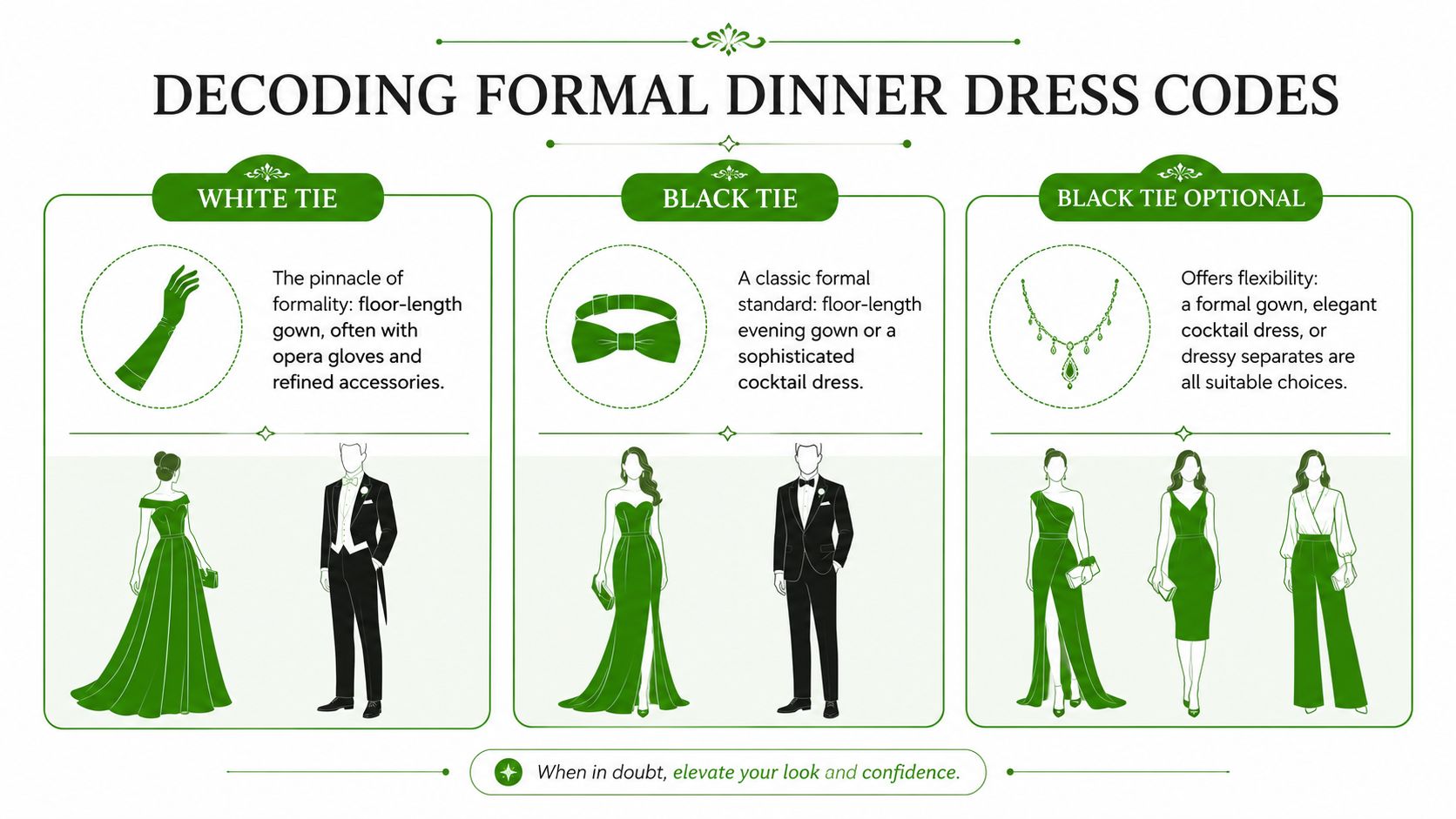
White tie means full evening dress
White tie is the highest level of formality. For women, that means a full-length ball or evening gown and evening gloves that extend to at least the elbow, as outlined in this white tie dress code guide. This is not the place for improvising with a short hemline, linen-blend fabric, or anything that reads minimalist to the point of casualness.
If your invitation suggests a state dinner, royal-level ceremony, or very old-world formal event, follow the code exactly. White tie rewards discipline. It does not reward creative reinterpretation.
The stricter the code, the less your outfit should argue with tradition.
Black tie means elevated eveningwear
Black tie is still formal, but less rigid. A floor-length evening gown is the strongest choice. An ankle-length dress can also work beautifully when the fabric and cut feel distinctly evening. Think satin, crepe, velvet, or another material with visual weight and polish.
Women sometimes go wrong by confusing “pretty” with “formal.” A floral midi in a daytime fabric may be lovely. It still won't hold the room the way an evening silhouette will.
Black tie optional gives you room to be strategic
Black tie optional is where modern dressing gets interesting. You can absolutely wear a long gown, and that's never a mistake. But this code also gives you flexibility to choose an elegant cocktail-length dress, a formal ankle-length design, or a precisely cut alternative if the setting supports it.
This is often the best category for a professional woman who wants to look polished without looking costumed. If the event is dinner-focused rather than red-carpet-focused, that nuance matters.
Formal and cocktail require context
A simple “formal” request usually means evening-appropriate, refined, and dressed up, but not necessarily at white tie or strict black tie level. Cocktail sits a step below that. The challenge is that many hosts blur the language.
If you need a broader event-by-event framework, Cedar & Lily's guide to event dress codes is a useful reference point for translating invitation language into real outfits.
Formal Dress Code Cheat Sheet
| Dress Code | What It Means | Outfit Essentials |
|---|---|---|
| White Tie | The most formal evening standard | Full-length ball or evening gown, elbow-length or longer evening gloves, refined jewelry, formal evening shoes |
| Black Tie | Classic formal eveningwear | Floor-length gown or elegant ankle-length evening dress, polished heels, clutch, elevated jewelry |
| Black Tie Optional | Formal with flexibility | Long gown, sophisticated cocktail dress, or dressy tailored alternative with evening accessories |
| Formal/Cocktail | Dressy and polished, less rigid | Ankle-length or below-the-knee dress, sleek heels, elegant bag, thoughtful styling |
My recommendation
When in doubt, don't underdress. But also don't assume formal means outdated. The code tells you the floor. Your styling tells everyone else you understand the assignment.
The Timeless Elegance of the Evening Gown
A great evening gown solves most formal dress code questions in one move. It creates length, reads intentional from across the room, and instantly signals that you understood the occasion. That's why it remains the backbone of formal dinner attire for women.
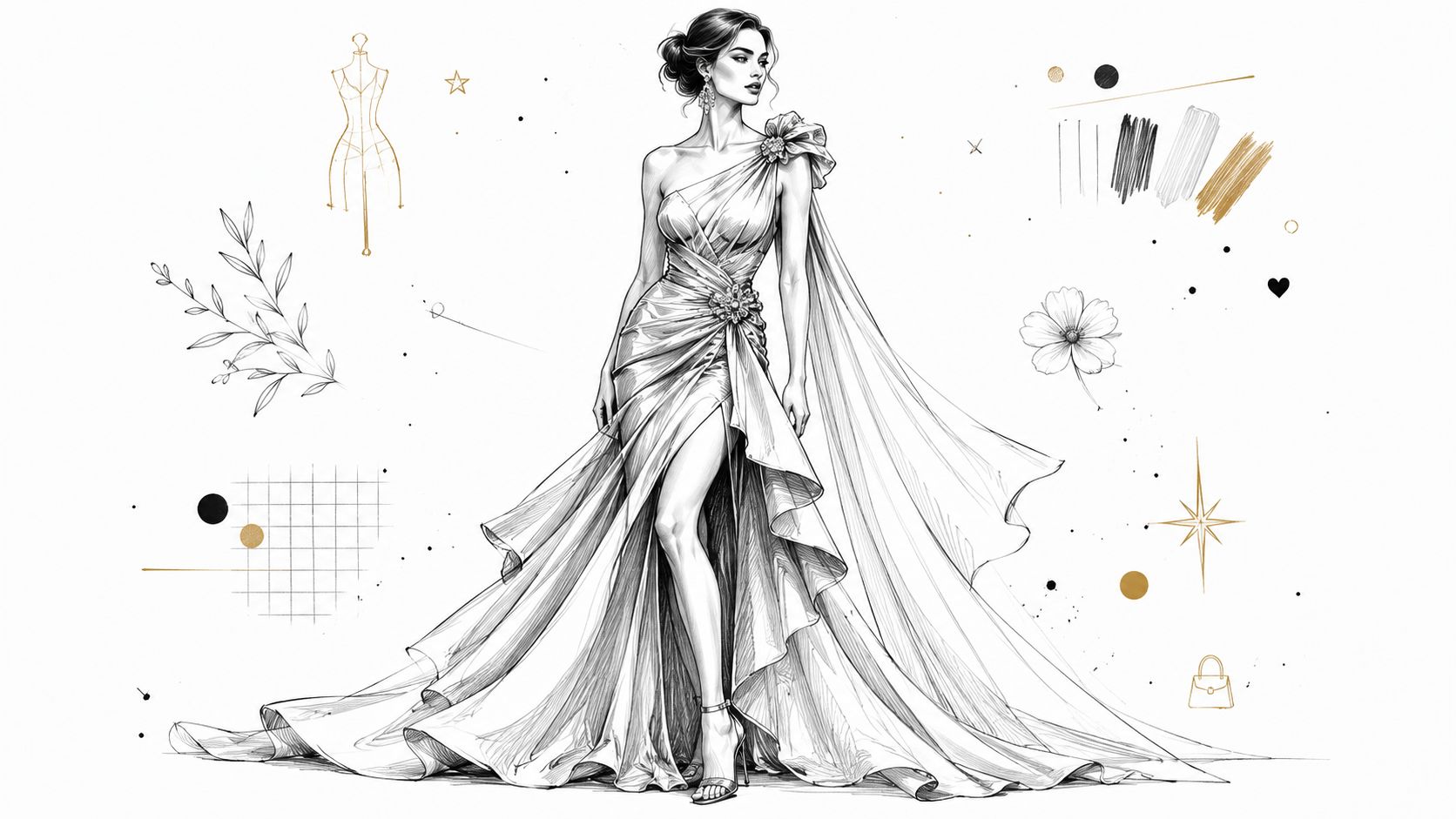
There's history behind that instinct. During the 1850s, evening dress for women was clearly separated from daytime wear by a bodice that bared the chest and shoulders and by shorter sleeves, according to FIT's fashion history overview of the 1850s. That evening silhouette shaped formalwear for generations. You can still see its influence every time a modern gown exposes the shoulder line and lets the body read longer and cleaner than daytime clothing does.
Choose the silhouette before the details
Most women shop in the wrong order. They start with embellishment, color, or neckline. Start with silhouette.
- A-line gowns are the easiest win. They define the waist and release over the hips without clinging.
- Sheath or column gowns look sharp, architectural, and expensive. They suit women who prefer clean lines over volume.
- Mermaid or fit-and-flare gowns can be dramatic and glamorous, but they need excellent fit. If you'll be sitting through a long dinner, don't choose one that restricts your stride or your breathing.
If you want one gown that works repeatedly, a column or soft A-line shape will always give you the most mileage.
Fabric is what makes a gown formal
A formal silhouette in the wrong fabric falls flat. The gown should hold its shape, catch the light well, and feel distinct from daywear. Satin gives shine and presence. Velvet adds depth for cooler seasons. Crepe de chine drapes beautifully and feels elegant without being fussy.
This visual guide can help you sharpen your eye for formal proportion and line.
Length and neckline matter more than trends
For formal dinners, floor-length is still the cleanest answer. An ankle-length gown can work when the cut is sleek and the styling is deliberate. A hem that lands awkwardly at mid-calf often looks indecisive.
Necklines should support the mood of the evening. A one-shoulder gown feels sculptural. A strapless or off-the-shoulder neckline feels classic. A high-neck gown can look striking if the fabric is rich and the shape is lean.
A formal gown should look elegant seated, not just standing in your bedroom mirror.
That's a non-negotiable rule. You'll spend a good part of the evening at a table, in conversation, moving in and out of a chair. Test the gown before the event. Sit. Walk. Lift a glass. Cross your legs. If the dress fights you, it's not the dress.
For readers comparing silhouettes and hemlines for evening events, Cedar & Lily also has a focused black tie gown guide worth browsing.
Chic Alternatives The Rise of Jumpsuits and Separates
Let's answer the question directly. No, you do not always have to wear a dress.
That idea lingers because older formalwear advice still treats gowns as the only respectable choice. But fashion has moved forward, and smart women have every reason to claim that ground. Vogue explicitly validates sharply structured suits and jumpsuits as suitable alternatives for formal events in its guide to formal attire. That matters because it reflects how modern evening dressing functions, especially for women who want structure, comfort, and authority in one look.
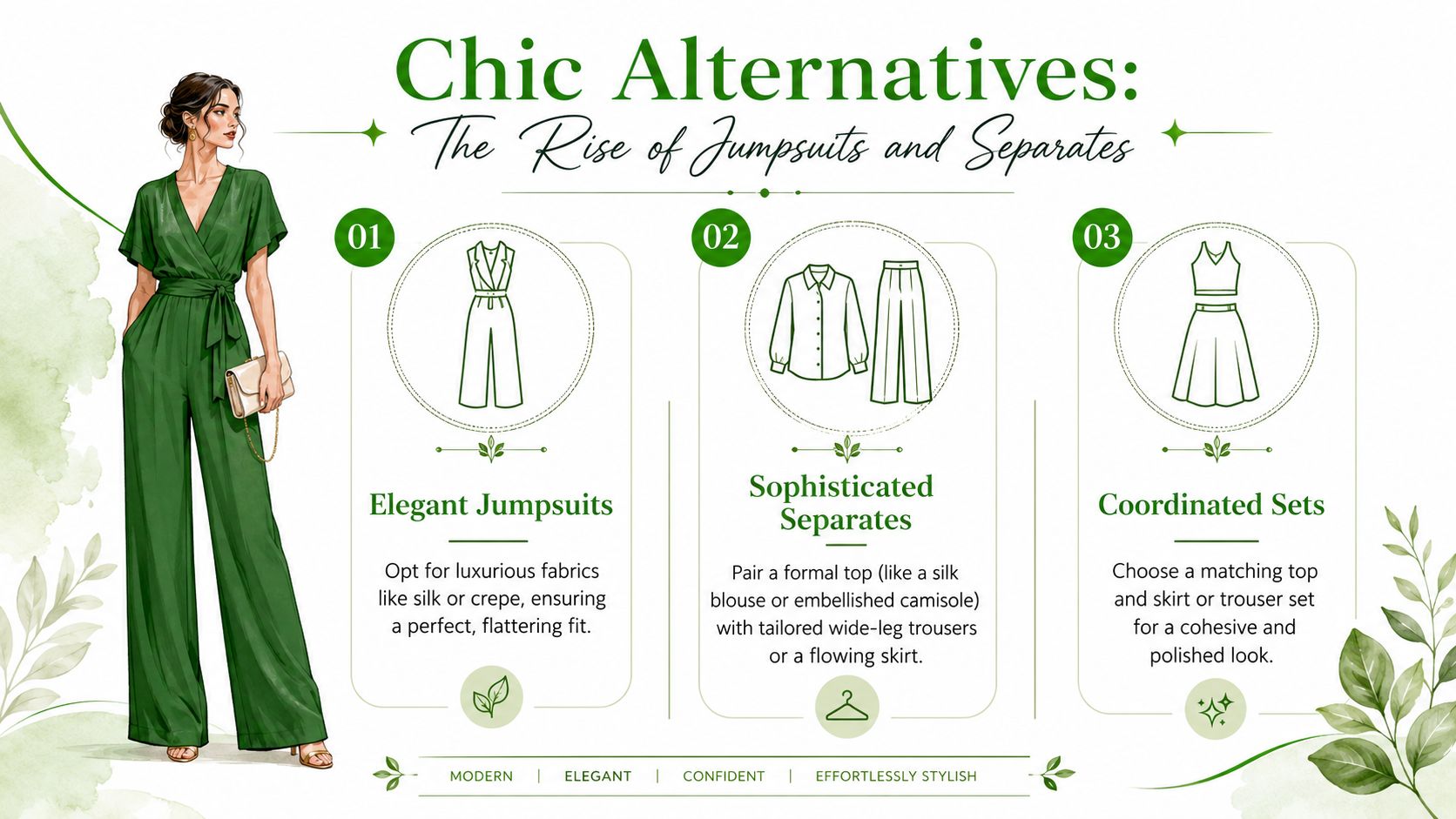
When a jumpsuit works
A formal jumpsuit works when the event is elegant but not rigidly ceremonial. Think black tie optional dinners, corporate galas, benefit events, private club dinners, or upscale restaurant celebrations. It works especially well if the cut is long, the fabric is fluid or structured in the right way, and the styling is undeniably evening.
A good jumpsuit should have at least one of these qualities:
- Strong tailoring that defines the waist or elongates the torso
- Evening fabric such as crepe, satin, or another polished textile
- Clean, uninterrupted lines through the leg
- A neckline with intent, whether that's asymmetric, halter, square, or softly draped
If it resembles officewear with better earrings, skip it.
Separates can look formal if they read as one statement
Separates demand more discipline than a gown or jumpsuit. They can look brilliant, but they can also look like you got dressed in a hurry. The key is cohesion.
A silk blouse with wide-leg trousers can absolutely work. So can a matching top and skirt set. A liquid satin shell under a well-fitting evening trouser can be elegant. What you cannot do is combine random dressy pieces and hope accessories save them.
The outfit has to read as a complete evening look before you add the clutch.
That means the palette should be tight, the fabrication should feel luxurious, and the trousers or skirt should skim beautifully. Wide-leg trousers in a formal fabric often outperform skinny cuts because they create movement and presence.
My opinion on suits
A tuxedo-inspired suit is one of the chicest things a woman can wear to dinner. It projects confidence, and it photographs beautifully. But it needs precision. The jacket must fit through the shoulders. The trouser length must be perfect. The blouse or camisole underneath should support the mood, not dilute it.
If you want this route to feel feminine rather than corporate, focus on contrast. Sharp jacket, soft drape. Strong shoulder, fluid pant. Clean lapel, luminous skin, elegant heel.
For practical styling ideas, Cedar & Lily's jumpsuit guide offers useful direction on proportion and finishing.
The pieces I'd actually recommend
For modern formal dinner attire women can rely on, I'd narrow alternatives to these:
- An event jumpsuit in black, navy, or a deep jewel tone with a full-length leg
- A matching evening set with a refined top and skirt or trouser
- A well-fitting tuxedo-style suit in a matte or softly lustrous fabric
Brands known for event-ready dressing, including labels like Elliatt, often get this category right because they understand that women want elegance without stiffness. That balance is exactly why these options belong in the formal conversation now.
Perfecting the Look with Accessories and Styling
Accessories decide whether your outfit looks finished or merely expensive. You can wear a beautiful gown or jumpsuit and still miss the mark if the shoes are clunky, the bag is oversized, or the jewelry fights the neckline.
Build around one focal point
Don't wear statement earrings, a statement necklace, stacked bracelets, and a heavily embellished bag all at once. Pick the lead voice.
Use this simple rule:
- If the neckline is dramatic, go lighter on the necklace and stronger on earrings.
- If the dress is embellished, choose quieter jewelry.
- If the outfit is clean and minimal, one statement piece can add tension and interest.
That restraint is what makes formal styling look expensive.
Choose an evening bag, not your daytime handbag
A formal dinner calls for a compact bag. A clutch is the classic answer because it keeps the silhouette sleek and doesn't interrupt the line of the outfit. A small top-handle bag can also work if it's refined enough for evening.
Look for satin, crystal detail, metallic leather, or a smooth structured finish. Avoid giant logos and oversized carryalls. They kill the mood immediately.
Shoes should support the night
The right shoe depends on the venue and your tolerance, not on fantasy. A stiletto is elegant. A polished kitten heel can be just as chic for a long evening. An embellished flat can work if the rest of the look is elevated and the shoe itself feels formal.
Checklist for choosing shoes:
- Match the hem: The shoe should work with the exact gown or trouser length.
- Test the floor: Marble, grass, carpet, and stairs all change what's practical.
- Plan for standing: Cocktails before dinner often mean more standing than you expect.
Add seasonal intelligence
Formal style should respect the season. Velvet and richer textures look right in cooler months. Satin and crepe transition well year-round. If the evening is chilly, bring a wrap or a structured evening coat instead of throwing on a casual blazer at the last minute.
Don't ignore metal tone and finish
If you wear stainless steel jewelry, pay attention to how polished and intentional it looks with formalwear. For a practical breakdown of layering, finish, and outfit pairing, I like this expert advice for styling stainless steel because it's grounded in wearability rather than trends.
Your accessories should sharpen the outfit, not compete for attention.
One more thing. Grooming counts as styling. Press the garment. Steam the hem. Clean the heels. Formalwear asks for discipline. The details are where confidence shows up.
Find Your Fit at Cedar & Lily
Most formalwear problems are not really style problems. They're fit problems. A gown in the right fabric can still fail if the bust shifts, the straps fall, or the hem pools awkwardly. A jumpsuit can look powerful on the hanger and completely wrong once the torso length is off. That's why fit is the first standard I use when advising any client on evening dressing.
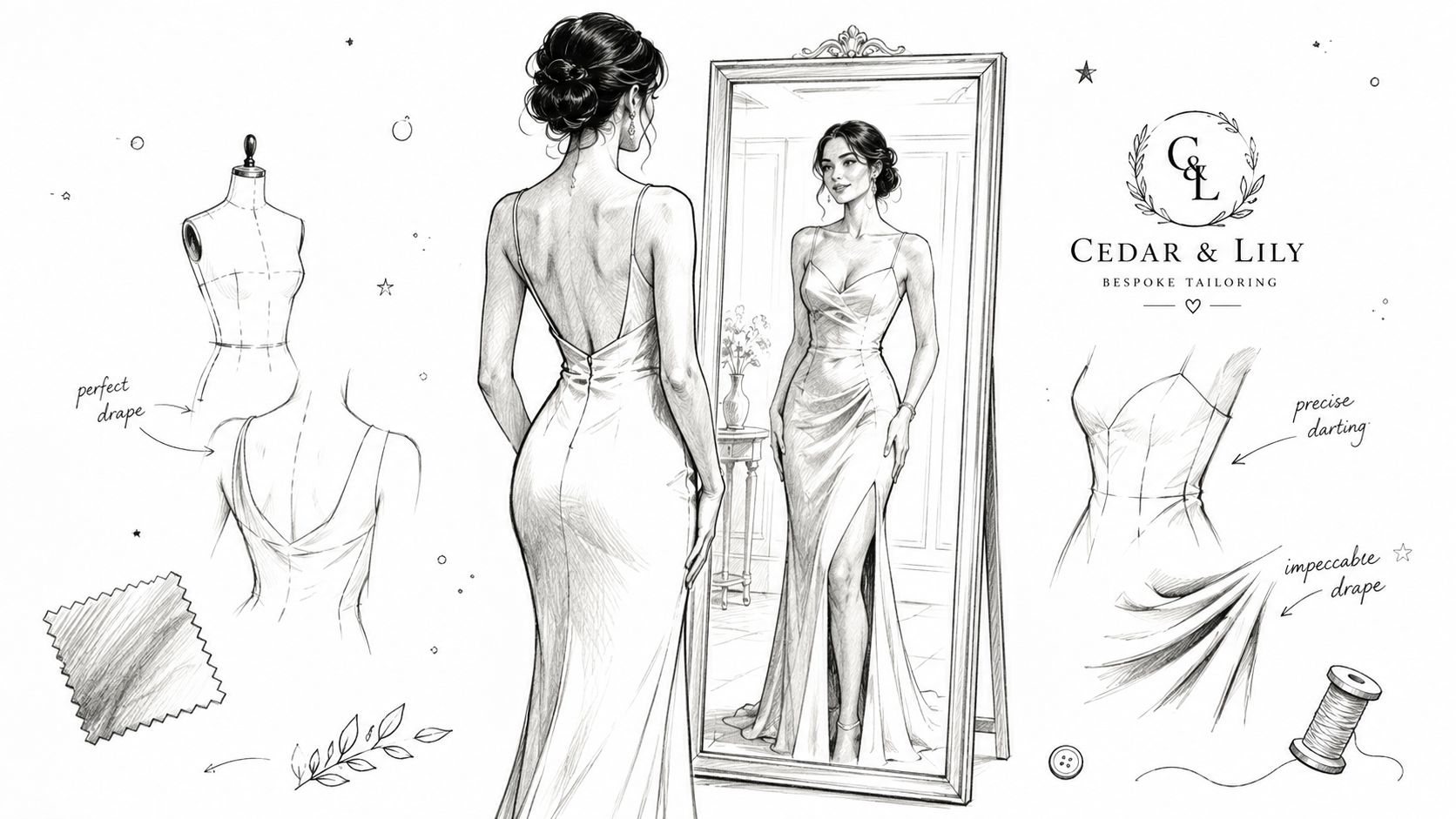
What to prioritize when you shop
Don't buy formalwear based on wishful thinking. Buy for the body you're dressing now, then tailor with intention.
Focus on these checkpoints:
- Shoulders and bust first: These are harder to fix later than a hem or waist.
- Torso length in jumpsuits: If the rise pulls, the whole look suffers.
- Seat and hip skim in trousers or columns: The line should glide, not strain.
- Hem strategy: Bring the shoes you'll wear.
If you're shopping online, look for retailers that offer fit guidance, easy exchanges, and enough assortment to compare silhouettes rather than forcing one idea of formal dressing.
A curated route is easier than endless scrolling
A boutique approach is especially helpful. Cedar & Lily Clothier offers a curated mix of dresses, jumpsuits, blazers, handbags, and jewelry, along with concierge-style support and fit guidance, which makes it a practical option for women trying to solve a real event wardrobe need instead of collecting random pieces. That matters when you want one polished answer, not twenty tabs open and a return pile on your floor.
The boutique's assortment is especially useful for the woman who needs flexibility. Maybe you want a gown for one event and a tailored jumpsuit for the next. Maybe you need something that can stretch from a gala-adjacent dinner to a polished holiday evening. A curated edit makes those comparisons easier.
The final standard
The most successful formal look is not the most dramatic one. It's the one that lets you walk in, sit down, greet people, and enjoy the night without adjusting yourself every ten minutes.
That's the bridge between traditional etiquette and modern style. You can honor the code and still dress like yourself. You can choose a gown and look timeless. You can choose a jumpsuit or separates and look just as intentional. What matters is that the garment is formal enough, the styling is disciplined, and the fit is exact.
If you're shopping for a formal dinner, gala, or polished evening event, explore Cedar & Lily Clothier for dresses, jumpsuits, precision-fit separates, and accessories that fit a modern, event-ready wardrobe.