


Outside of Christmas, the change of seasons produces the highest volume of consumers shopping for apparel and accessories. Fall transition outfits work best when they rely on two to three flexible layers, not a complete replacement wardrobe.
That finding changes how I approach autumn dressing with Oklahoma clients. The fall transition isn't a quiet pause between summer and winter. It's a high-intent wardrobe moment shaped by real temperature swings, changing routines, and the need for clothes that can move from a cool morning to a warm afternoon without losing polish.
A crisp sweater-and-jeans formula sounds easy until the forecast refuses to cooperate. You leave home wanting a jacket, spend lunch wishing you'd worn less, then need another layer by dinner. The answer isn't buying every new fall piece that appears online. It's choosing breathable foundations, removable layers, and silhouettes that still look composed when one garment comes off.
Why Fall Transition Season Is Your Biggest Wardrobe Opportunity
Google's consumer-insights coverage identifies the change of seasons, outside of Christmas, as the period that brings the highest volume of consumers into the market for apparel and accessories (Google's seasonal fashion demand analysis). That pattern makes fall a practical time to assess your wardrobe. The goal is to prepare for changing conditions, not replace every summer piece.
Autumn dressing has long relied on protective layers, warmer textiles, and garments that combine across temperatures. Classic references often include ankle boots and wool coats, along with coats, skirts, and heavier fabrics (the history of classic autumn wardrobe pieces). Those pieces can add seasonal direction, but they do not need to define every outfit.
The opportunity is flexibility, not volume
A fall wardrobe usually needs to solve several problems at once:
- Work dressing: A blazer, knit top, or fitted trouser should look professional without becoming uncomfortable indoors.
- Weekend dressing: Denim, button-ups, and closed-toe shoes need to handle errands, lunch, and time outside.
- Evening dressing: Dinner and event outfits need added warmth after sunset while still looking appropriate for fall.
- Travel dressing: A compact set of clothes must adapt to different temperatures and activities.
Treating each need as a separate shopping list creates unnecessary volume. A lightweight blazer can sharpen denim, finish a casual dress, or add structure over a spring top. A midi dress can pair with loafers during a warm afternoon, then work with boots and a coat after dark.
Practical rule: If a new fall purchase suits only one temperature range or one occasion, question it before buying.
Oklahoma weather requires a different strategy
Oklahoma fall weather can shift from summer heat to genuine chill within the same week. A sweater may suit the morning, while the afternoon calls for breathable clothing. Stable, cool-weather formulas often fail here because they make the warm part of the day harder to manage.
Start with removable warmth. Keep summer dresses, lightweight skirts, sleeveless tops, and breathable trousers in rotation. Add fall character with a blazer, denim jacket, ankle boots, scarf, or structured handbag, then remove those pieces when the temperature rises. For broader regional planning, an expert autumn travel guide can help match clothing to destination, activities, and weather.
Seasonal inspiration works best when it supports what you already own. Browse fall fashion trends for direction, then choose versions you can remove, swap, or restyle. The strongest transition outfits remain useful on a warm Tuesday, a cool Friday night, and the unpredictable days between them.
The Layering System That Actually Works for Changing Temperatures
A reliable fall outfit needs a job description for every layer. Textile research on layered clothing assemblies shows that layering can raise the temperature and insulation of the clothing microclimate, while a field study found that a 0.1 clo increase in clothing insulation corresponded with about a 0.5°C decline in neutral temperature (textile research on layered clothing assemblies). Small clothing changes can noticeably affect comfort.
Build from the skin outward
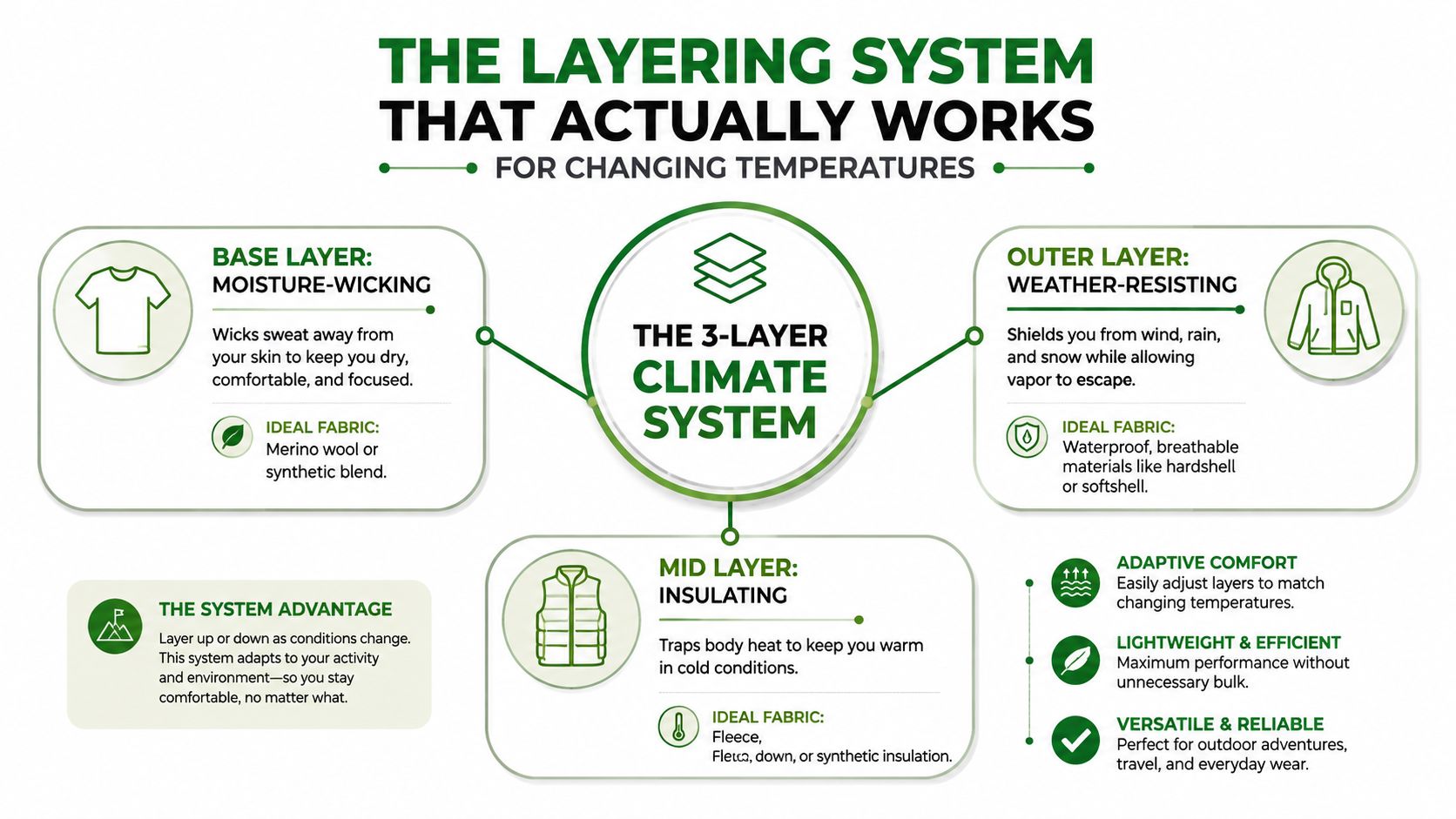
Use three layers, but keep each one purposeful:
- Base layer: A fitted, moisture-managing piece sits next to the skin. Merino wool, bamboo, or a technical synthetic blend can regulate moisture more effectively than cotton in cool, damp conditions.
- Mid-layer: A lightweight knit, cardigan, vest, or fine-gauge sweater adds insulation. It should provide warmth without restricting your arms or creating excess fabric under a jacket.
- Outer layer: A blazer, denim jacket, barn jacket, trench, or lightweight coat protects against cooler air and wind while giving the outfit its visible shape.
Cotton can feel pleasant in dry warmth, but it isn't my first choice as a base layer when the air is cool and damp. It holds moisture close to the body, which can make a morning commute feel clammy and leave you colder once your activity changes.
Keep the silhouette mobile
The layer closest to your body should be thin and smooth. Put most of the visual volume in the outer layer, where it can be removed without collapsing the outfit underneath. A fitted tee under a fine knit and a relaxed blazer usually looks more intentional than a bulky sweatshirt under a stiff jacket.
Neutral technical guidance suggests that two to three layers are generally sufficient for fall, and climate-comfort literature indicates that upper-body clothing commonly clusters around three layers in colder conditions, with lower-body dressing often using two layers (guidance on clothing layers and thermal comfort). Adding more can create bulk without delivering proportional comfort.
| Layer | Primary Function | Best Fabrics | Common Mistakes to Avoid |
|---|---|---|---|
| Base | Manage moisture and maintain mobility | Merino wool, bamboo, technical synthetics | Using absorbent cotton in damp conditions |
| Mid | Add light insulation | Fine-gauge knit, wool blend, technical fleece | Choosing a thick piece that bunches under outerwear |
| Outer | Shield from cooler air and wind | Structured denim, lightweight wool, technical woven fabric | Selecting a heavy coat before the weather requires it |
A simple morning checkpoint helps: if you need more than three upper-body layers before noon, adjust the fabric weight or proportions. The transitional dressing guide from The Lavender Lobster offers another useful source of outfit ideas, but the same test applies to every look. You should be able to remove one layer and still have a complete outfit.
For more advanced cold-weather combinations, Cedar & Lily's guide to how to layer clothes for winter can be useful, but fall dressing should stay lighter and more adjustable.
Three Fall Transition Outfit Formulas for Real Life
The easiest way to use a layering system is to attach it to a real schedule. These three fall transition outfits cover a polished office day, an event evening, and a casual weekend without requiring a separate wardrobe for each.
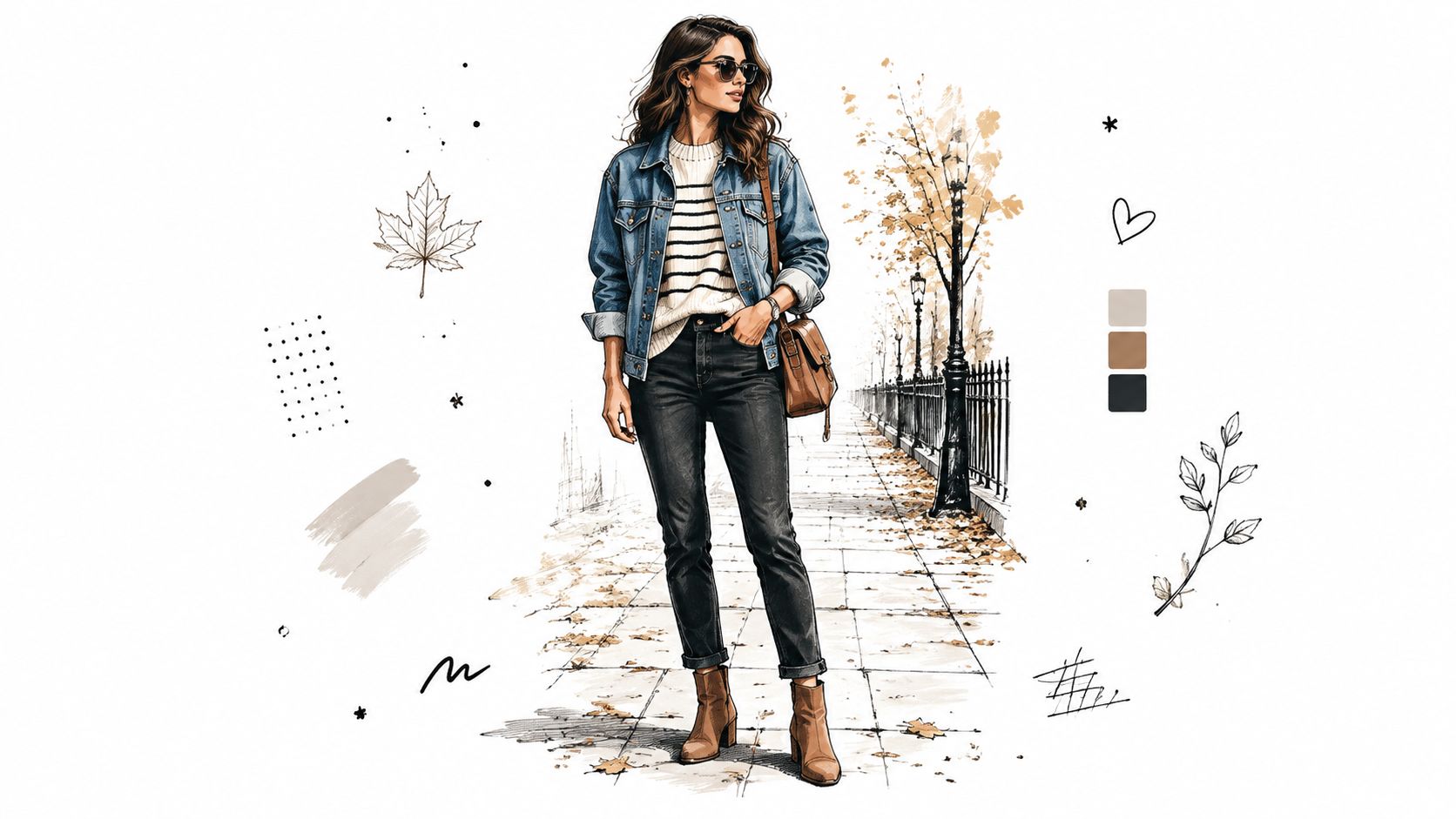
The work-to-dinner formula
Start with trousers, a lightweight knit, and a blazer. Choose a knit that sits close to the body and trousers with enough room for movement. The blazer gives the look professional structure in the office, while a change from daytime flats to ankle boots or a more defined lip can make the same outfit ready for dinner.
This formula works particularly well when the office is cool but the walk or drive home is warmer. Carry the blazer rather than wearing it once the afternoon heats up. For dinner, put it back on and add a belt or small structured bag if the outfit needs more definition.
The event-ready formula
A mid-weight midi dress, well-fitted coat, heeled ankle boots, and a structured handbag create a composed look for a wedding, dinner, or evening gathering. The dress provides a complete base, so you don't need several visible layers. The coat adds warmth and polish without forcing the outfit into heavy winter styling.
Choose a dress with enough substance to handle cooler air, but avoid a thick knit if the event involves indoor travel or warm venues. A removable wrap, refined scarf, or cropped jacket can provide extra coverage without hiding the dress entirely.
Styling decision: For an occasion look, let one piece carry the visual interest. Keep the coat, shoes, and handbag quiet if the dress has pattern or texture.
The casual-chic weekend formula
Layer a relaxed button-up over a fitted tee, then add dark denim and ankle boots. The button-up can be worn open during a warm afternoon, tied around the waist for errands, or buttoned when the wind picks up. Dark denim and closed-toe boots give the outfit autumn structure without requiring a heavy sweater.
This combination handles school drop-off, shopping, and an outdoor lunch because every layer can change independently. A leather or denim jacket can replace the button-up later in the season, while a scarf adds warmth without changing the base outfit.
For more adaptable combinations, use these fall outfit ideas for women as a starting point, then check whether each look still works after removing its outer layer.
The visual difference between these formulas is intentional. The work outfit relies on tailoring, the event outfit uses a complete dress foundation, and the weekend outfit depends on relaxed layering. All three solve the same weather problem through different proportions.
Fabric and Color Choices That Handle Unpredictable Fall Weather
The most common mistake is buying an entirely new seasonal wardrobe before checking what your current clothes can do. A sleeveless summer dress may still work with a blazer and boots. A lightweight trouser may be more useful during a warm September afternoon than a new heavy corduroy pair. Flexibility starts with fabric and styling, not a calendar date.
Choose weight with purpose
Lightweight knits work well as mid-layers because they add warmth without overwhelming the rest of the outfit. Cotton blends can breathe during warmer stretches, while blended wool often offers a useful balance between insulation and airflow. Structured denim provides shape and moderate protection, especially as an outer layer over a tee or dress.
Heavy fleece and thick cotton can become uncomfortable when temperatures rise. Purely delicate fabrics can also fail once the evening cools. Look for materials that hold their shape, layer smoothly, and don't require you to build the entire outfit around them.
A practical fabric rotation looks like this:
- Fine knits: Wear over tees, under blazers, or across the shoulders when the temperature changes.
- Wool blends: Reserve for cooler days or outer layers where insulation matters more.
- Cotton blends: Use for breathable shirts, dresses, and casual layers.
- Denim: Choose a structured jacket or dark jean when you need shape and versatility.
- Technical blends: Consider them for base layers when moisture and activity are part of the day.
Use color as a removable seasonal signal
Neutral foundations make outfit changes easier. Navy, camel, charcoal, cream, denim, and black can move between work, weekend, and evening settings without making the wardrobe feel overly seasonal. Add autumn character through a scarf, handbag, knit layer, or shoe rather than committing every garment to deep winter tones.
Historical fashion coverage shows that the recurring fall formula has long relied on coats, skirts, layering pieces, and warmer textiles, which helps explain why blazers, outerwear, denim, and knitwear continue to feel relevant (historical continuity in autumn fashion). The point isn't to copy an old look. It's to recognize that practical clothing logic survives because it works.
A warm accent can refresh a neutral outfit, but it shouldn't make the look unusable on a bright afternoon. Keep the foundation light, then let texture and one seasonal color do the work.
Building a Flexible Fall Capsule and Packing for Short Trips
A useful fall capsule is a small group of interchangeable pieces that respond to temperature changes throughout the day. Oklahoma weather can move from summer heat to a cool evening within the same week, so choose garments that work across several conditions. Prioritize pieces with at least two roles, such as a blazer worn over a dress or with trousers, and boots that suit denim as well as an event outfit.
Select the wardrobe spine
Begin with a blazer, lightweight knit, structured coat, dark denim, midi dress, and versatile footwear. Add tops and bottoms in a restrained color palette, then test how each item layers. A sleeve that bunches under a jacket or a waistband that feels tight beneath a knit will limit wear, even if the piece looks attractive on its own.
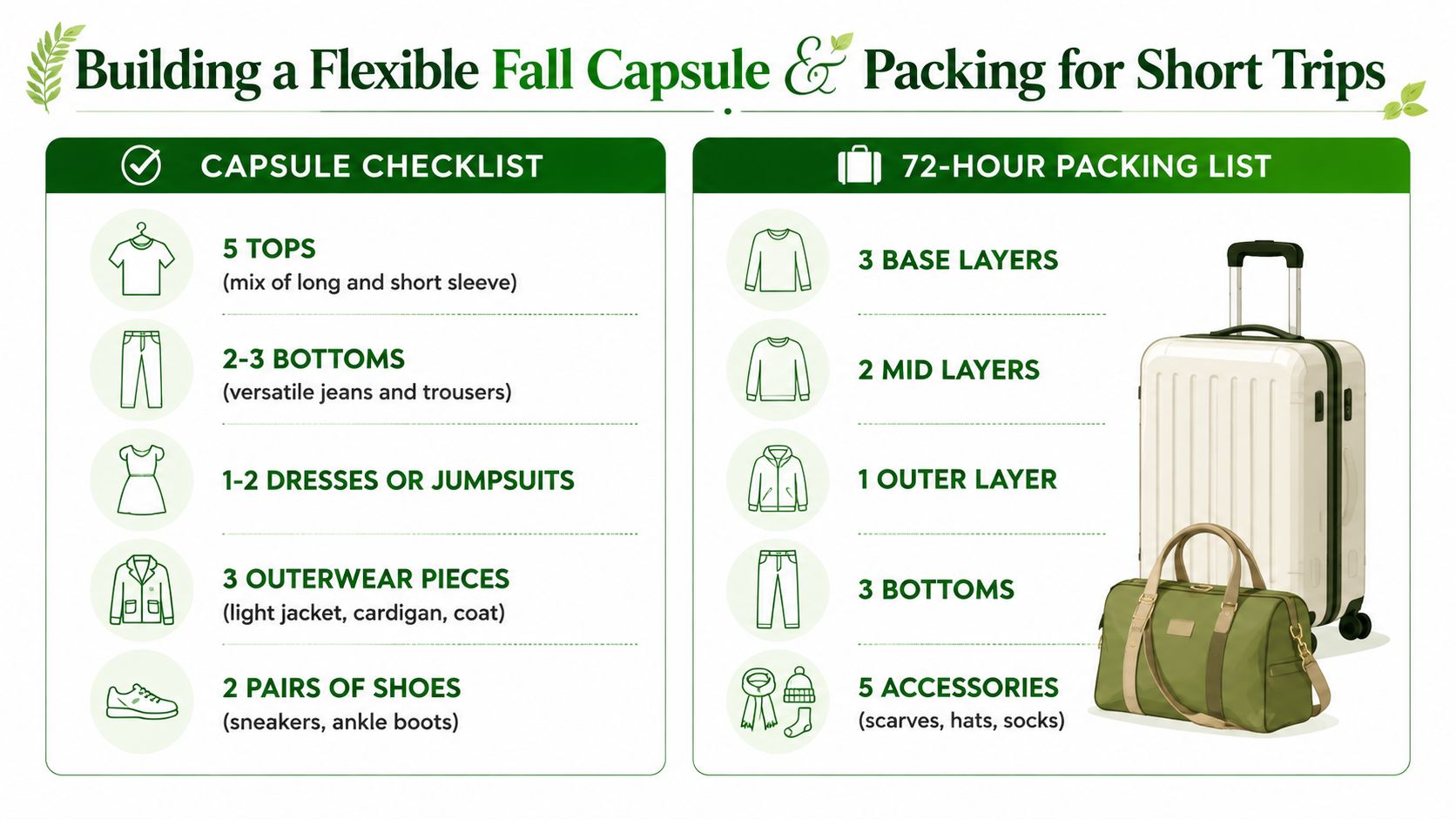
A flexible capsule can include:
- Tops: A fitted base, a relaxed button-up, and a lightweight knit.
- Bottoms: Dark denim plus a well-fitted trouser or skirt.
- One-piece dressing: A midi dress or jumpsuit that can take a jacket.
- Outerwear: A blazer, lighter jacket, and coat for different conditions.
- Shoes: Sneakers or loafers for mild days, plus ankle boots for cooler plans.
- Accessories: A belt, structured bag, scarf, and understated jewelry.
Interchangeability matters more than the exact count. If one top works with only one bottom, it is taking up space without giving the capsule enough flexibility.
Pack by layers, not by complete looks
For a short trip, place the most adaptable garments at the center of the suitcase. Pack base layers that can stand alone, mid-layers for indoor or outdoor changes, and one outer layer for the coolest part of the itinerary.
Lay out every item and ask three questions:
- Can I wear it with at least two other pieces?
- Can I remove a layer without making the outfit look unfinished?
- Can the shoes handle the planned walking and evening setting?
A spring dress with a blazer can cover daytime sightseeing and dinner. Dark denim with a knit can work for travel and a casual evening. One pair of polished boots may replace several less versatile shoes, though only if they remain comfortable for the planned walking.
The strongest capsule prevents a last-minute purchase when the forecast shifts. That flexibility matters more than packing the fewest garments.
Finishing Touches and Where to Shop for Polished Fall Transition Looks
Accessories decide whether a layered outfit looks intentional or merely accumulated. When several garments have practical jobs, the finishing pieces establish proportion, direction, and occasion.
Let shoes set the tone
Ankle boots make a summer dress feel more grounded without adding a heavy upper layer. Loafers keep dress trousers polished during warmer afternoons, while sleek sneakers can relax a blazer-and-denim combination. For events, a heeled boot adds height and evening authority without the exposed foot of a sandal.
Match the shoe's visual weight to the outer layer. A substantial coat paired with a delicate flat can look unbalanced, while a lightweight blazer works well with a refined loafer or slim boot. Comfort still matters, especially for Oklahoma days that involve driving, walking, and standing at several stops.
Use accessories to control proportion
A belt can define the waist when a blazer or coat runs loose. A structured handbag adds shape to softer knits, and a scarf introduces color without committing you to a full seasonal palette. Jewelry should support the neckline and fabric rather than compete with them. A fine chain suits a simple knit, while a more expressive earring can finish a restrained dress.
The same principle applies to oversized pieces. If the jacket is generous, keep the base and bottom cleaner. If the trousers are wide, choose a closer-fitting knit or tuck the shirt to preserve shape.
Fit matters more once you layer
Size charts can't show how a blazer sits over a knit, how a coat closes over a dress, or whether a sleeve restricts movement when you reach for a steering wheel. Try the full combination together. Check the shoulder seam, arm mobility, hem placement, and whether the outfit still looks balanced with the outer layer removed.
For shoppers who want hands-on guidance, Cedar & Lily Clothier offers curated dresses, tops, denim, blazers, outerwear, jumpsuits, and accessories, including labels such as Favorite Daughter and Elliatt. Its Oklahoma storefronts in Jenks and Tulsa's Utica Square provide local fit assistance, while the online shop supports customers who need polished work-to-weekend or event-ready pieces. The retailer also lists fast shipping, free shipping on orders over $250, and complimentary gift packaging on orders over $100, details that may matter when a wardrobe need or occasion arrives quickly.
A refined fall wardrobe doesn't require every garment to announce the season. It needs a dependable base, removable warmth, appropriate footwear, and proportions that hold together through the day. Try each purchase against your actual schedule, not an imagined crisp-weather fantasy.
Visit Cedar & Lily Clothier to find polished layers, dresses, denim, blazers, shoes, and accessories suited to flexible fall transition outfits. If you're in Oklahoma, stop by the Jenks or Tulsa Utica Square storefronts for fit guidance, or shop online for pieces that can carry you from warm afternoons to cool evenings.