


The invitation says evening cocktails, the calendar says Oklahoma summer, and the dress under consideration is white. An elegant white cocktail dress can be exactly right, provided the occasion welcomes the color and the cut looks like evening wear rather than bridalwear. For cocktails, polished dinners, and festive parties, white is a confident choice. For a wedding guest, it's a no unless the couple explicitly requests it.
The best purchase starts with that distinction, not a favorite neckline. Once the occasion is settled, the right hem, substantial lining, and a deliberately non-white accessory make the decision much easier.
Table of Contents
- When a White Cocktail Dress Is the Right Call
- How to Choose Silhouette Neckline and Fabric
- Measure for a White Dress That Fits
- Shoes Jewelry and Seasonal Pairings
- Keep White Cocktail Fabric Looking Fresh
- Shop the Edit or Book a Styling Visit
When a White Cocktail Dress Is the Right Call
White belongs at cocktails, not automatically at every celebration. A hotel reception, summer dinner, or gala with a cocktail dress code gives a white dress room to look crisp and intentional. A wedding invitation requires a different decision, even when the reception takes place in the same kind of room.
For wedding guests, Vogue's white-dress etiquette guidance advises against all-white dresses, especially those with bridal-looking lace, unless the couple requests white. Its useful print test is equally clear: a white base with color mainly in the pattern can still read as white, while a clearly colored base with white incorporated into the print is less risky. The invitation and wedding website remain the controlling instructions.
Ivory and very pale beige deserve the same caution. Emily Post's wedding-guest guidance notes that these shades can read as white, so a warmer color name isn't a reliable escape from the rule.
White cocktail dress by occasion
Cocktail dressing was built for the transition between daytime and evening social life. The Metropolitan Museum of Art's history of cocktail dressing places traditional cocktail gatherings between 6 and 8 p.m., a useful context for the evening-cocktail row below.
| Occasion | Wear white? | Best hem | Avoid | Non-bridal signal |
|---|---|---|---|---|
| Evening cocktail, about 6 to 8 p.m. | Yes | Knee, just above to just below | Bridal lace and a train | Tailored sheath plus metallic jewelry |
| Gala or black-tie optional | Yes if the invitation calls for cocktail rather than a gown | Tea length or midi | Floor-length train | Matte column and colored shoes |
| Black tie | Yes outside wedding-guest restrictions, with a long evening dress | Floor length, not a mini | A short party hem | Longer satin without a train |
| Wedding guest | No, unless the couple requests white | Not applicable without that request | All-white, ivory, lace, or tulle | A non-white base with white only in the print |
| Rehearsal or engagement party | Only if the hosts approve | Knee or midi | Gown construction and a veil-like headpiece | Host approval, then a colored accessory |
| Summer garden or daytime party | Yes | Knee or midi in a breathable cloth | Heavy satin in heat | Chiffon or a linen-look fabric and sandals |
| Festive party or New Year's Eve | Yes | Mini | An overly formal train | Shorter hem and statement earrings |
| Office to dinner | Yes | Knee sheath | Sheer, unlined white | Blazer over the dress and a closed-toe heel |
A gala isn't a dress code by itself. Some hosts want cocktail attire; others expect gowns. The actual wording matters more than the event's glamorous name, and Cedar & Lily Clothier's guide to cocktail attire for women helps distinguish the category from more formal evening dressing.
Keep the bridal signals out
For a distinctly non-bridal result, favor a sharp sheath, matte surface, restrained construction, and visible color somewhere in the outfit. Heavy white lace, tulle, trains, corset construction, and a veil-like headpiece create a different impression, particularly when combined.
No single detail necessarily makes a dress bridal. The problem is accumulation: a romantic white bodice, a floating skirt, delicate white shoes, and a white bag can collectively suggest a ceremony rather than cocktails.
Occasion rule: Accessories can change the mood of a white dress. They can't make an unapproved white wedding-guest outfit appropriate.
For wedding-adjacent celebrations, asking the host is better than guessing. For everything else, circle the relevant occasion row before shopping by length. That simple decision prevents a beautiful dress from becoming the wrong purchase.
How to Choose Silhouette Neckline and Fabric
A dress should suit the room before it suits a trend. Once the occasion is settled, there's no reason to restart the decision every time an appealing mini or dramatic neckline appears.
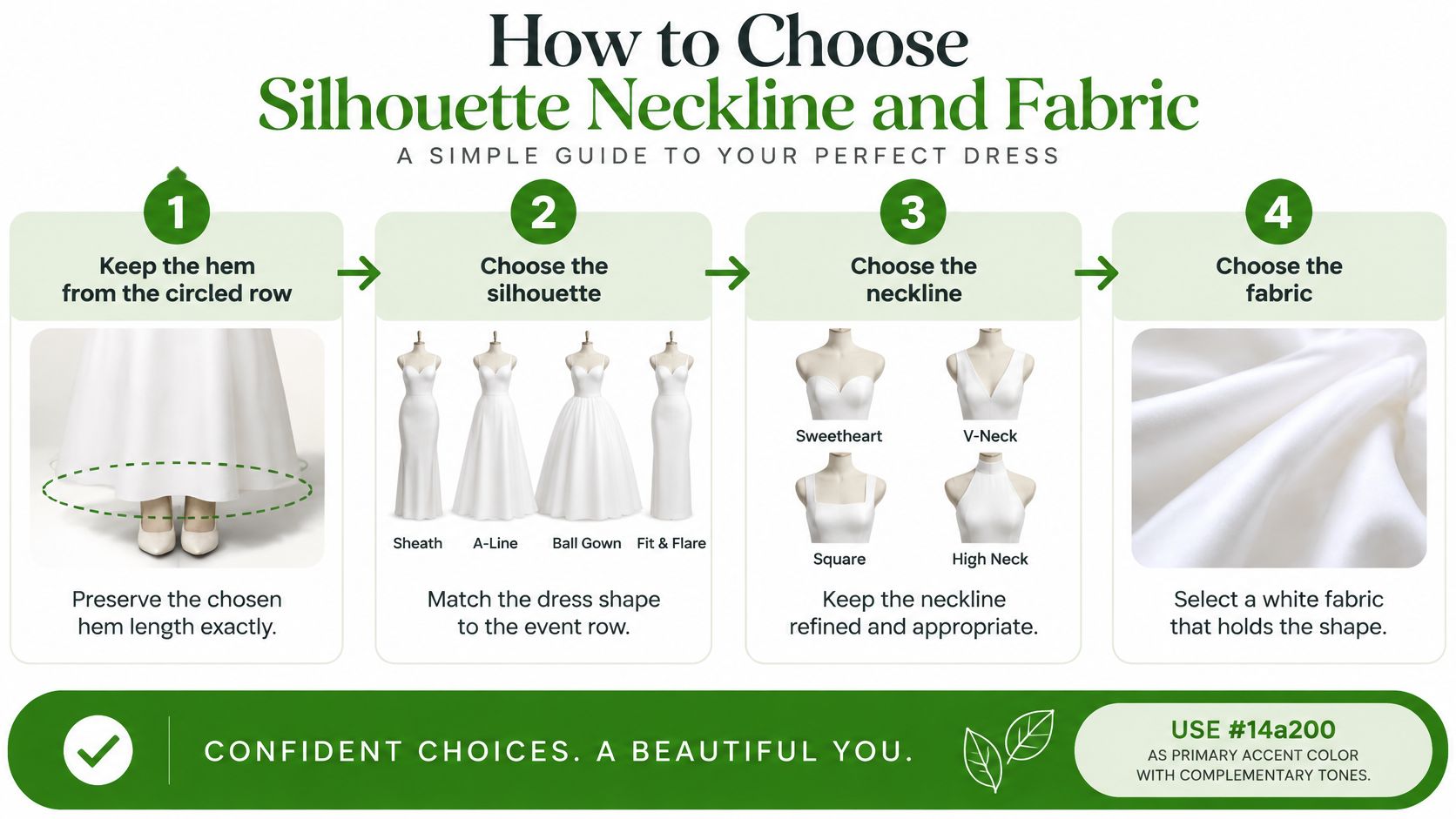
Vetir's cocktail-dress guide identifies the classic knee-length range, a mid-calf midi, and tea length between calf and ankle as distinct options, reserves minis for festive settings, and recommends greater formality for events beginning after 6 p.m. Those distinctions support a practical order: hem first, silhouette next, then neckline and cloth.
A deliberate path to the dress
- Keep the chosen hem. A festive mini isn't a substitute for the more composed length selected for a professional reception. For a midi, assess the proportion with the intended heel rather than barefoot in a fitting room.
- Choose the silhouette for the room. A fitted sheath or clean column works well for hotel cocktails and a dressier gala setting. A softer A-line or slip gives a garden party an easier mood, while a fitted mini belongs at a clearly celebratory evening event. The important distinction is controlled versus relaxed, not flattering versus unflattering.
- Make the neckline compatible with real coverage. A high neck, bateau, or modest V offers a straightforward solution for conservative venues and work-to-dinner plans. A deeper V or strapless neckline needs an evening invitation and an undergarment solution that stays invisible through white. A dress that requires constant adjustment isn't the right dress for a long reception.
- Select fabric for structure, weather, and photographs. Matte crepe and structured weaves create a clean, less ceremonial impression. Silk satin and faille can look beautiful for evening, but sheen makes pulling and uneven seams easier to notice. Chiffon and lighter cloths are more comfortable choices for Oklahoma heat; heavy lace and tulle are poor starting points when the aim is non-bridal cocktail wear.
- Inspect opacity before considering size. Check the fabric in natural light and under a phone flash, and confirm where the lining ends. A substantial outer fabric can still reveal pocket bags, seam allowances, or contrasting underwear.
Compare actual dresses, not imagined fixes
For a festive short-hem option, the Majorelle Mini Dress by Especia is a concrete starting point. Its catalog description identifies an elegant design and flattering silhouette; color, fabric composition, lining, and event suitability should be checked on the actual garment rather than assumed from its name.
Cedar & Lily Clothier carries LoveShackFancy and Lace the Label alongside other curated designer and contemporary lines. At Utica Square in Tulsa or downtown Jenks, shoppers can compare fabric hand, lining, and movement with the team rather than choosing from photographs alone.
The boutique's guide to dressing for body type can help clarify silhouette preferences, but proportions shouldn't override the invitation. Hem and fabric come before size. Neither a smaller label nor clever styling can correct the wrong material for the occasion.
Measure for a White Dress That Fits
The most useful fitting-room information isn't a usual size. It's the relationship between the fullest bust, natural waist, and fullest hip, measured in the undergarments intended for the event.
White makes a rushed fit decision particularly unforgiving. A strained seam, a twisted lining, or fabric caught across the hip can interrupt an otherwise clean silhouette.
Take measurements before choosing the label
- Start with event undergarments. The intended bra and any smoothing layer affect how the bodice sits. Measuring over a bulky sweater creates a different problem before the dress even arrives.
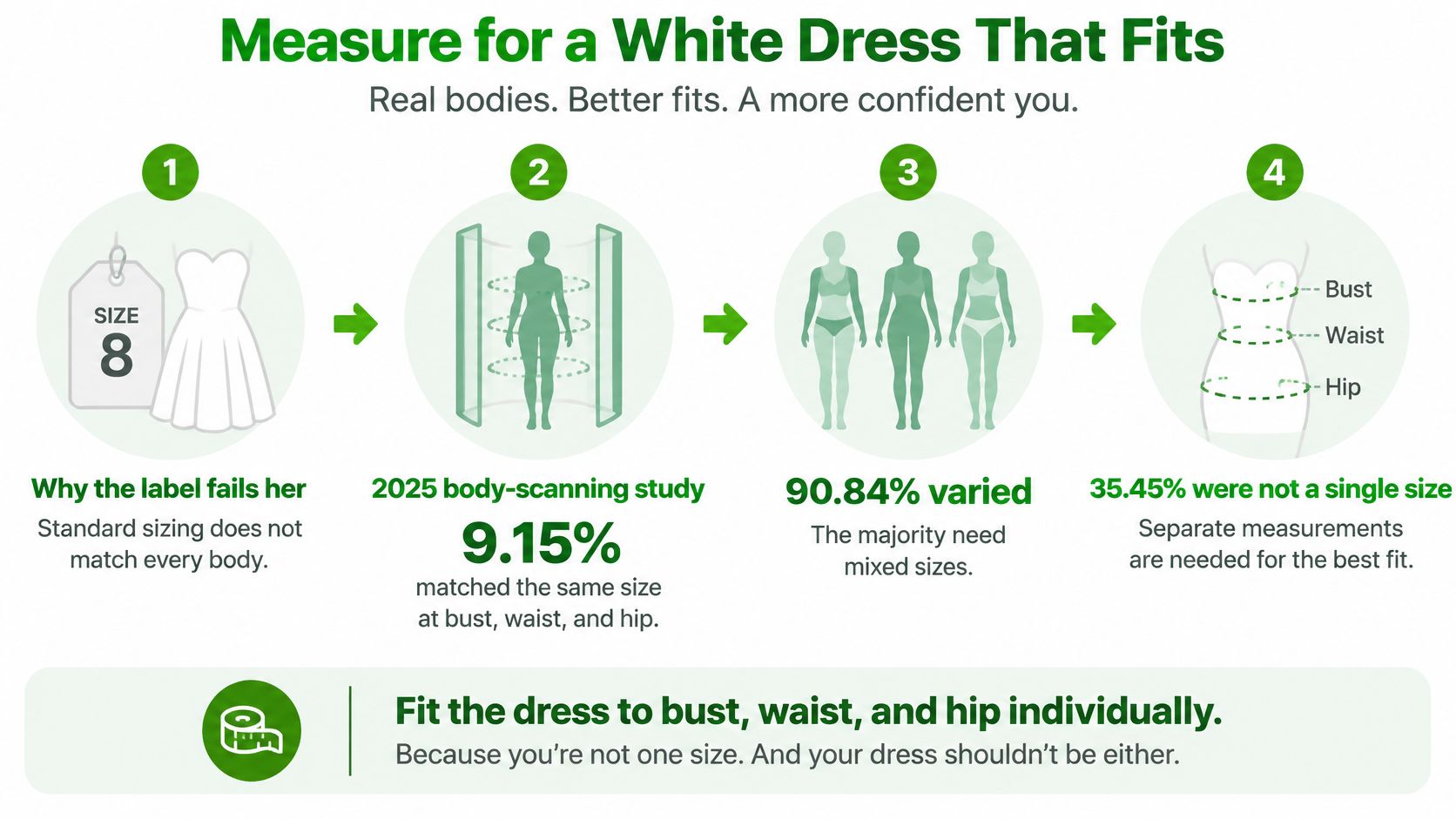
- Measure the fullest bust, natural waist, and fullest hip. Use a flexible tape, keep it level, and let it rest against the body without digging in. Record the measurements rather than relying on memory.
- Compare every measurement with the garment's chart. The relevant chart belongs to that dress or brand, not a previously successful purchase. Cedar & Lily Clothier's dress size chart guidance provides a useful starting point for interpreting the comparison.
- Choose for the largest required zone. When the bust and waist suggest different sizes, the tighter area needs accommodation first. A fitted sheath also needs room through the hip for sitting and walking, not just standing.
- Interpret the chart alongside construction. Stretch, lining, seam placement, and closure position determine how a numerical match feels. A body-measurement chart and finished-garment measurements aren't interchangeable.
- Check the foundation before discussing alterations. The shoulder line, armhole, and zipper should lie smoothly. Persistent pulling or distortion in those areas is a reason to try another cut, not assume that taking in a side seam will solve everything.
Why a familiar size can fail
A 2025 body-scanning study published in Scientific Reports found that only 9.15% of participants were consistent across bust, waist, and hip sizing, 90.84% showed size variation, and 35.45% weren't adequately accommodated by the existing sizing scheme; the apparel-fit discussion also uses approximately ±3 cm as an acceptable-match benchmark. That benchmark is a comparison tool, not permission to accept a tight bodice or eliminate the ease a woven dress needs.
The retail problem is broader than any particular dress. In Vogue Business's sizing survey, poor fit deterred 43% of respondents, inconsistent sizing deterred 36%, and 91% said their size changes by brand; inconsistent sizing deterred 46% of plus-size respondents, compared with 34% of mid-size and 25% of straight-size respondents.
A smooth fit matters more than the number printed inside the dress.
Before committing, the shopper should sit, reach forward, and walk. Photographs can reveal cling that's easy to miss in a mirror, while sitting exposes pocketing and excessive wrinkling. Cedar & Lily Clothier's team can help record measurements and assess fit at Utica Square or Jenks before a purchase becomes an alteration project.
Shoes Jewelry and Seasonal Pairings
The event clock, Oklahoma weather, and venue should determine the accessories before the jewelry tray does. An elegant white cocktail dress doesn't need elaborate styling. It needs a few choices that make the occasion unmistakable.
Summer rooftop cocktails
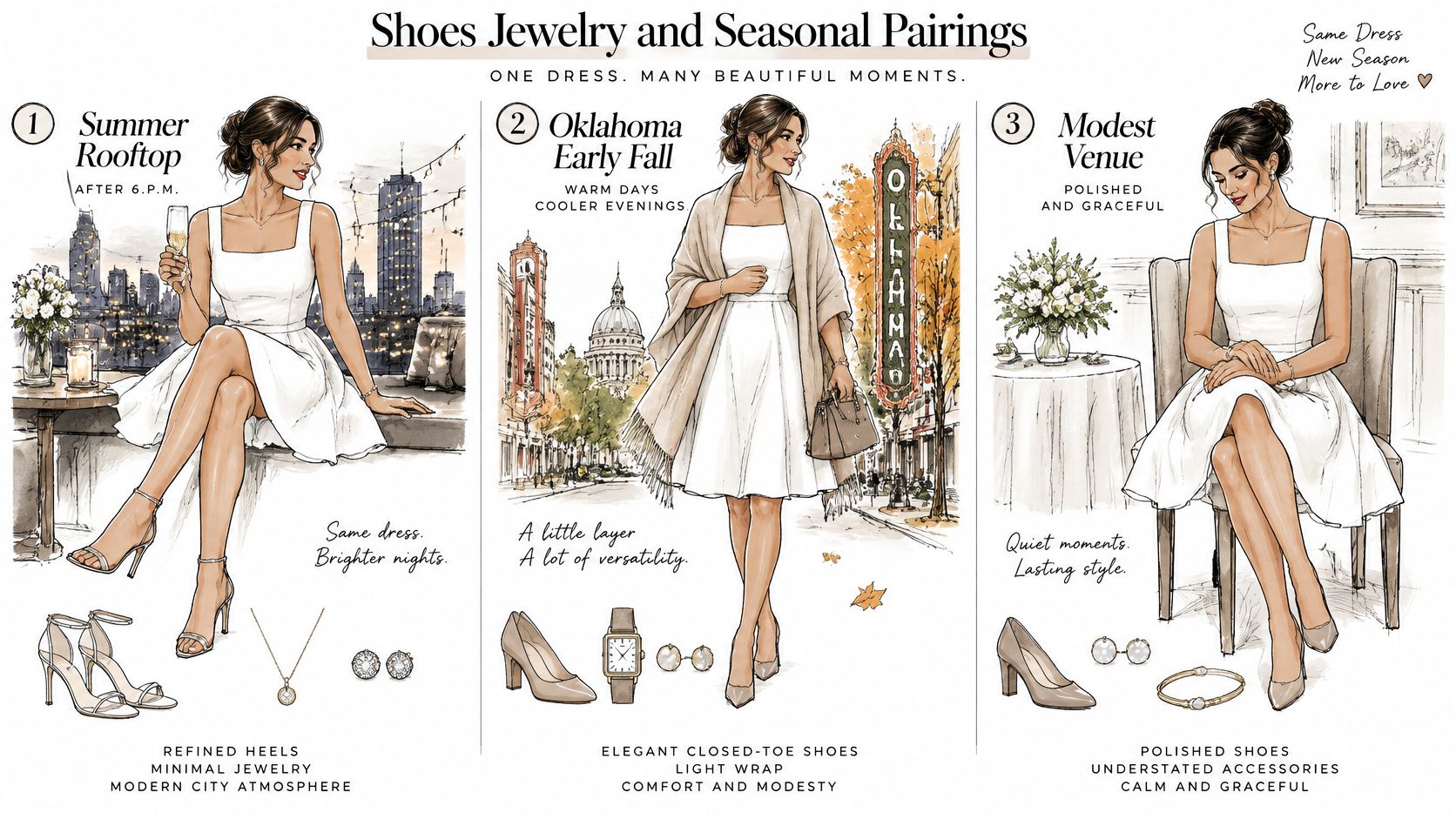
For a warm rooftop evening, a breathable dress works with a skin-toned or metallic sandal and small gold earrings. The effect should feel light, not beach-bound: a neat heel and compact bag make the difference.
A slim heel suits a paved terrace, but a lawn or gravel approach calls for a more stable base. Shoes should be chosen for the route into the party as well as the photographs taken once the guest arrives.
A deep green or blue clutch adds useful contrast without competing with the dress. There's no need to introduce another statement if the neckline or fabric already has movement.
Winter gala arrival
For a winter black-tie-optional gala, a composed crepe dress, closed-toe heel, and fitted jacket create a complete arrival outfit. A jacket that sits cleanly over the bodice looks more intentional than an improvised layer carried all evening.
A gemstone necklace can provide the focal point when the neckline leaves space for it. If the dress already has a detailed neckline, earrings are the cleaner choice, with the necklace left out.
Office holiday dinner
A knee sheath under a blazer can move from the office into dinner without looking like a complete costume change. In a conservative workplace, statement earrings can stay in the bag until the working part of the day ends.
The closed-toe heel should be comfortable enough for standing conversations. A party shoe that shortens the evening isn't an upgrade, however attractive it looks beside the dress.
For more detail on balancing focal points, Cedar & Lily Clothier's outfit-accessorizing guide offers a practical companion to the fitting-room decision.
Finish with restraint
- Keep a single jewelry finish. Gold or silver gives the outfit coherence without requiring matching sets.
- Leave a detailed neckline alone. A strong collar, asymmetric edge, or embellished bodice doesn't need a necklace competing for attention.
- Break up the white deliberately. A black, gold, or deep-colored clutch is an easy solution. White shoes, white earrings, and a white bag together create a more ceremonial impression.
- Check venue expectations separately. Some churches and conservative courthouse settings call for covered shoulders or a light layer. An evening lounge may welcome a lower neckline, but the invitation still matters.
Cedar & Lily Clothier's accessories assortment includes handbags, jewelry, hats, and belts, allowing a colored accent to be compared against the actual cloth. The final styling decision should be specific: the outfit's non-white anchor is the bag, the shoes, or the jewelry, not an unresolved idea.
Keep White Cocktail Fabric Looking Fresh
A mark on white fabric needs a controlled response, not an enthusiastic scrub. The immediate task is to avoid spreading the stain or damaging the surface while deciding what the fiber can tolerate.
The response should stay conservative, especially during an event. A small mark is easier to assess later than a large water ring or a patch of abraded satin.
The first response
- Identify the mark. Decide whether it's oily, solid, liquid, or perspiration-related before adding anything.
- Lift or blot. Lift solid particles gently; blot liquids with a clean white cloth. Circular rubbing can spread oil and work particles into the weave.
- Test any cleaner discreetly. An inside seam is the place to check for color change, altered sheen, or damage, provided the care instructions permit treatment.
- Read the fiber-care label. The label determines whether washing is appropriate and whether professional cleaning is required.
- Keep heat and improvised chemicals away. Bleach, ammonia, vinegar, and chemical mixtures don't belong on an unknown blend. Heat can set protein or cosmetic stains.
First response by stain on white cocktail fabric
The textile-cleaning study and pilot results found that gel application suited solid stains, ultrasonic emulsification worked better for liquids, and combined methods performed best; its pilot reported 87.5% success for diluted dish soap on dirt, 54.6% for baking-soda paste on oil, and 66.7% for baking-soda paste on perspiration/deodorant. These results describe tested methods, not a universal recipe for an occasion dress.
| Stain | First move | Do not | What research found |
|---|---|---|---|
| Solid dirt | Lift particles, then test a label-permitted cleaner on an inside seam | Rub in circles | Gel application was better suited to solid stains; the pilot dish-soap result above was specific to dirt |
| Oil | Blot without spreading | Apply heat or friction | Baking-soda paste was less reliable than targeted treatment |
| Liquid | Blot from the edge inward | Soak the spot wider | Ultrasonic methods outperformed gel on liquid stains in testing |
| Perspiration | Blot and follow the fiber label | Apply bleach, ammonia, vinegar, or mixed chemicals | Some targeted treatments performed better than baking-soda paste, but aren't a home recipe |
The practical distinction is between safe first aid and actual cleaning. Blotting can limit a fresh spill. It doesn't establish that the garment can tolerate detergent, soaking, stain remover, or a washing machine.
Care boundary: Silk, acetate, beading, and specialty finishes shouldn't become experiments during a party.
For the event, a clean, white-safe blotting cloth is enough. An unfamiliar stain-removal product introduced in a restroom can create a larger problem than the original splash.
Afterward, hang the dress to air in a clean space, away from direct heat, and inspect the neckline, underarms, and hem. Silk, satin, embellished, and unlabeled pieces are better taken to a professional cleaner than placed in a home machine. The cleaner should be told what caused the mark and whether any treatment has already been attempted.
Shop the Edit or Book a Styling Visit
The invitation sets the etiquette; the fitting room settles the details. For a white cocktail dress, check the hem, fabric, and overall formality together. The dress should suit the event without reading as bridal.
Cedar & Lily Clothier is a women's boutique with stores in Jenks and Tulsa's Utica Square, plus an online shop. Its curated designer selection includes LoveShackFancy and Lace the Label. Dresses are available in mini, midi, and maxi lengths, so you can compare how each hem changes the look.
Arrive with a decision, not a vague brief
Bring the invitation's exact dress code. “Cocktail attire at an indoor evening fundraiser” gives a stylist more to work with than “gala,” which can mean different things at different events.
A focused visit also depends on the outfit you plan to wear. Bring the undergarments and shoes you expect to pair with the dress, then assess the fit while standing and sitting. Keep alterations in mind: a hem adjustment is a different commitment from changing the bodice.
- Bring the dress code. A screenshot of the invitation or event website clarifies the formality.
- Bring the intended undergarments. Check coverage and fit as they'll be worn.
- Bring the likely shoes. Judge the hem and walking comfort together.
- Name the setting. An outdoor arrival, seated dinner, or standing reception calls for different practical choices.
- Set an alteration boundary. Decide what adjustments you're willing to make before settling on a dress.
Choose the shopping route that resolves uncertainty
At a store, you can compare fabric and fit in person and ask for styling guidance. If you're shopping from a distance, Cedar & Lily's virtual styling session guidance can help you arrange assistance.
Online orders are available through the boutique's website, with free shipping on orders of $250 or more. The Story Dress is available for pickup at the Jenks store and is usually ready in 24 hours. That pickup detail applies to this dress, not every item.
Before buying, make sure the dress code, fit, and finishing choices work as a whole. A white dress that looks right on its own still needs the right undergarments, shoes, and degree of formality for the event.
If you're choosing between a structured line and a softer silhouette, bring the invitation and shoes to a store visit. Those details give the stylist a clear starting point.
Cedar & Lily Clothier offers a curated selection of occasionwear and fit guidance. Visit a store in Jenks or Tulsa's Utica Square, or shop Cedar & Lily Clothier online with the dress code in mind.