

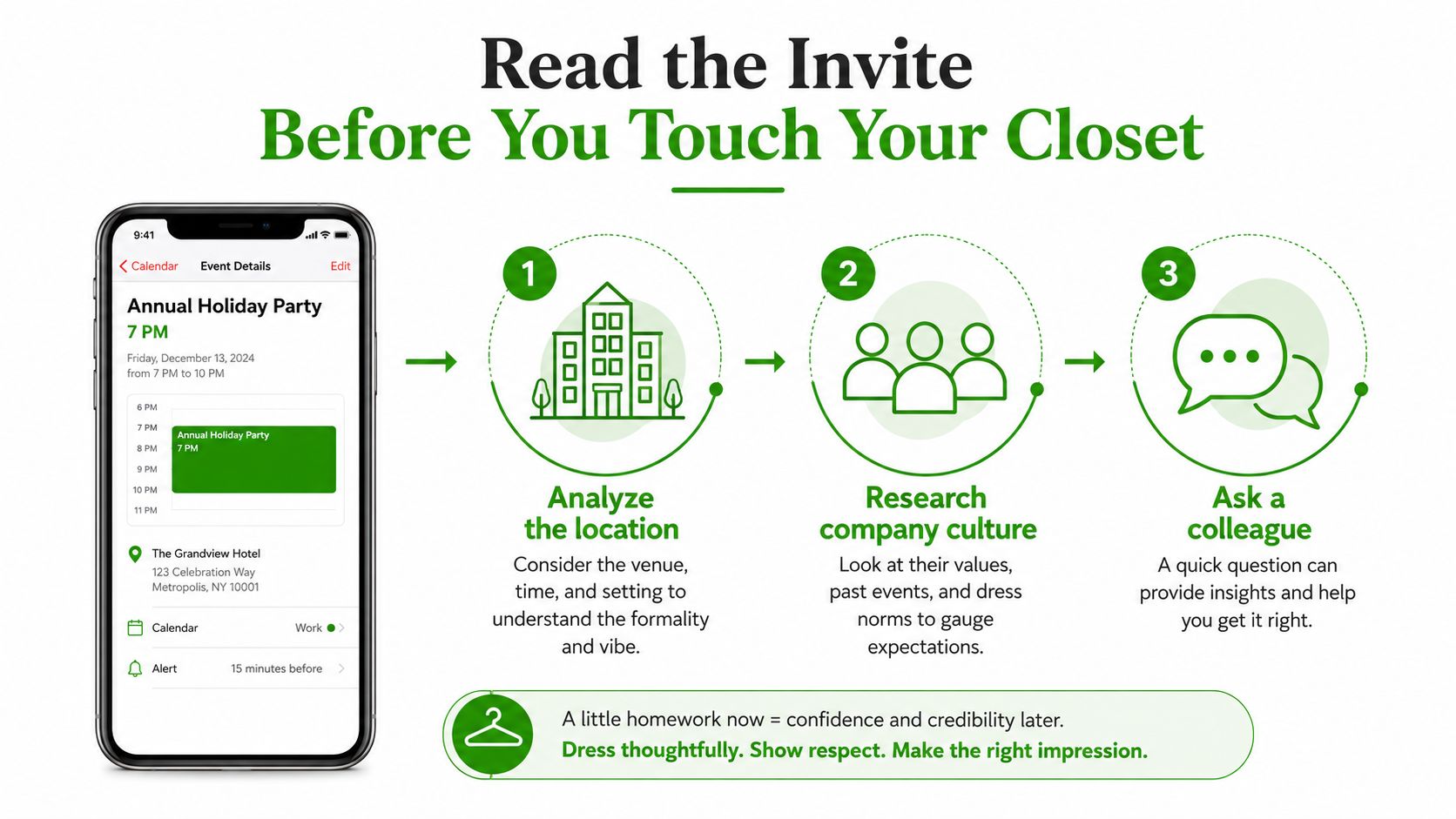
You've opened a calendar invite that says only “Annual Holiday Party, 7 PM”. There's no dress code, no useful description, and the address leads to a generic hotel ballroom. Your closet is full, but nothing suddenly looks right. That's the dress office party problem: you're not choosing clothes first, you're decoding an ambiguous event.
The safest answer isn't automatically a black dress or a conservative suit. It's a polished outfit that can move between work, networking, dinner, and drinks without looking either underdressed or ready for a nightclub. Formal clothing tends to be judged as more suitable than smart or casual clothing in professional event settings, with attire choice showing a strong effect in a controlled study (research on attire perception). Use that principle, then adjust for your company and venue.
Read the Invite Before You Touch Your Closet
Before you pull out a dress, read the event like a stylist. The wrong starting assumption creates every later mistake, from choosing a dramatic maxi for a casual coworking gathering to wearing office trousers at a formal ballroom dinner.
Start with the venue
The location gives you the first formality signal.
- Rooftop bar: Expect an evening look with movement and personality. A satin midi, well-fitted jumpsuit, or sleek trousers with a statement blouse works better than a rigid corporate suit.
- Banquet hall: Move toward business cocktail or corporate formal. Choose a refined dress, well-fitted suit, or polished separates with dress shoes and a structured bag.
- CEO's home: Dress with restraint. A polished midi, fine knit dress, or well-fitted trousers with a silk shell usually feels more appropriate than overtly glamorous eveningwear.
- Coworking lobby: Choose smart festive or relaxed creative. A strong blazer, refined knit, polished flats, and a subtle shine can look intentional without suggesting a gala.
The broader history explains why this middle ground exists. Workplace clothing shifted from strict formality toward flexible business attire, with business casual and Casual Fridays becoming common in the late 20th century. By June 1997, 83% of surveyed U.S. companies had some form of casual dress policy, according to the documented history of business attire from ADP's overview of workplace dress. Office-party dressing grew from that same movement, so it sits between business clothing and social occasion wear.
Check real people, then parse the wording
Next, spend 90 seconds scrolling through last year's tagged event photos on LinkedIn or Instagram. Look at leadership first, then colleagues. Your manager's actual outfit tells you more than an old employee handbook, especially in companies where dress expectations vary by team.
The invitation's wording gives the final clue:
- “Cocktail attire” means business cocktail, with a polished dress, well-fitted jumpsuit, or refined suit.
- “Festive” means smart festive. Add jewel tones, velvet, satin, metallic accessories, or one controlled statement detail.
- “Come as you are” means relaxed creative, but not careless. Wear your sharpest version of a normal work look.
- Silence means use the venue and photos together. If both are unclear, choose business cocktail with a blazer you can remove.
For a broader explanation of how phrases such as cocktail, business casual, and festive differ, consult this guide to event dress codes. Event examples can also help you see how setting changes the expectation, including the Ultra Smile DentalSpa events page.
Pick one of four buckets before opening your wardrobe:
- Corporate formal: Structured, restrained, and refined.
- Business cocktail: Dressy, sleek, and appropriate for leadership-facing events.
- Smart festive: Seasonal texture or color with controlled polish.
- Relaxed creative: Personal, comfortable, and visibly considered.
Every later decision depends on this choice, including hemline, fabric, shoe height, jewelry, and makeup.
Pick the Right Silhouette and Fabric
Length matters, but fabric decides whether that length looks professional, festive, or too casual. A mini in structured ponte can look polished. The same hem in thin jersey can look like nightlife clothing. A midi in satin-back crepe can move from a conference room to dinner. A stiff maxi can overwhelm a small room and a smaller frame.
Mini, midi, or maxi
The mini reads young and social. It works best in smart festive or relaxed creative settings, especially with opaque tights, a sleeve, or a higher neckline. Choose crepe or structured ponte so the hem holds its shape. A shorter hem needs balancing coverage, so add a blazer or choose a long sleeve rather than combining a mini with a low neckline and bare shoulders.
The midi is your safest middle ground and works in roughly 70% of office-party situations, a stylistic rule of thumb rather than a measured statistic. It suits corporate formal, business cocktail, and smart festive events because it looks intentional without demanding gala-level styling. Choose satin-back crepe, a silk blend, or a fine knit that skims instead of clinging.
The maxi looks deliberate and evening-ready. It wins at a banquet hall or formal corporate party, especially in fluid jersey or chiffon that moves as you walk. In a cocktail-height room, however, a maxi can swallow a small-framed person. Keep the neckline clean, the waist defined, and the accessories restrained.
| Dress Code Bucket | Winning Length | Best Fabrics | Avoid |
|---|---|---|---|
| Corporate formal | Midi | Crepe, fine knit, wool-blend suiting | Thin jersey, loud sequins |
| Business cocktail | Midi or refined maxi | Satin-back crepe, silk blend, fluid chiffon | Casual cotton, bulky knits |
| Smart festive | Midi or controlled mini | Velvet, satin, structured ponte | Head-to-toe sparkle |
| Relaxed creative | Mini, midi, or tailored jumpsuit | Lightweight crepe, fine knit, silk blend | Stiff formal fabrics |
Use the shape guidance in this body-type dressing guide to refine proportions, but don't let body-shape rules override comfort or movement.
Match the surface to the room
Matte fabrics earn their place in daytime events and fluorescent-lit offices because they look controlled rather than flashy. Satin and subtle sheen perform better in evening rooms with warm lighting, where the fabric can catch light without becoming the entire outfit.
Reserve velvet for cold-weather and December parties. Treat sequins as a single statement piece, such as a sequin skirt with a plain blazer or a restrained embellished top with fitted trousers. Don't wear sparkle everywhere at once.
Stylist's rule: Match fabric weight to the season, sheen to the lighting, and length to the dress code bucket you chose first.
Layer for Workplace Appropriateness
You arrive at an office party where the invitation says only “festive.” Start with the base outfit, then build a layer that gives you control over coverage, temperature, and the room's level of formality.
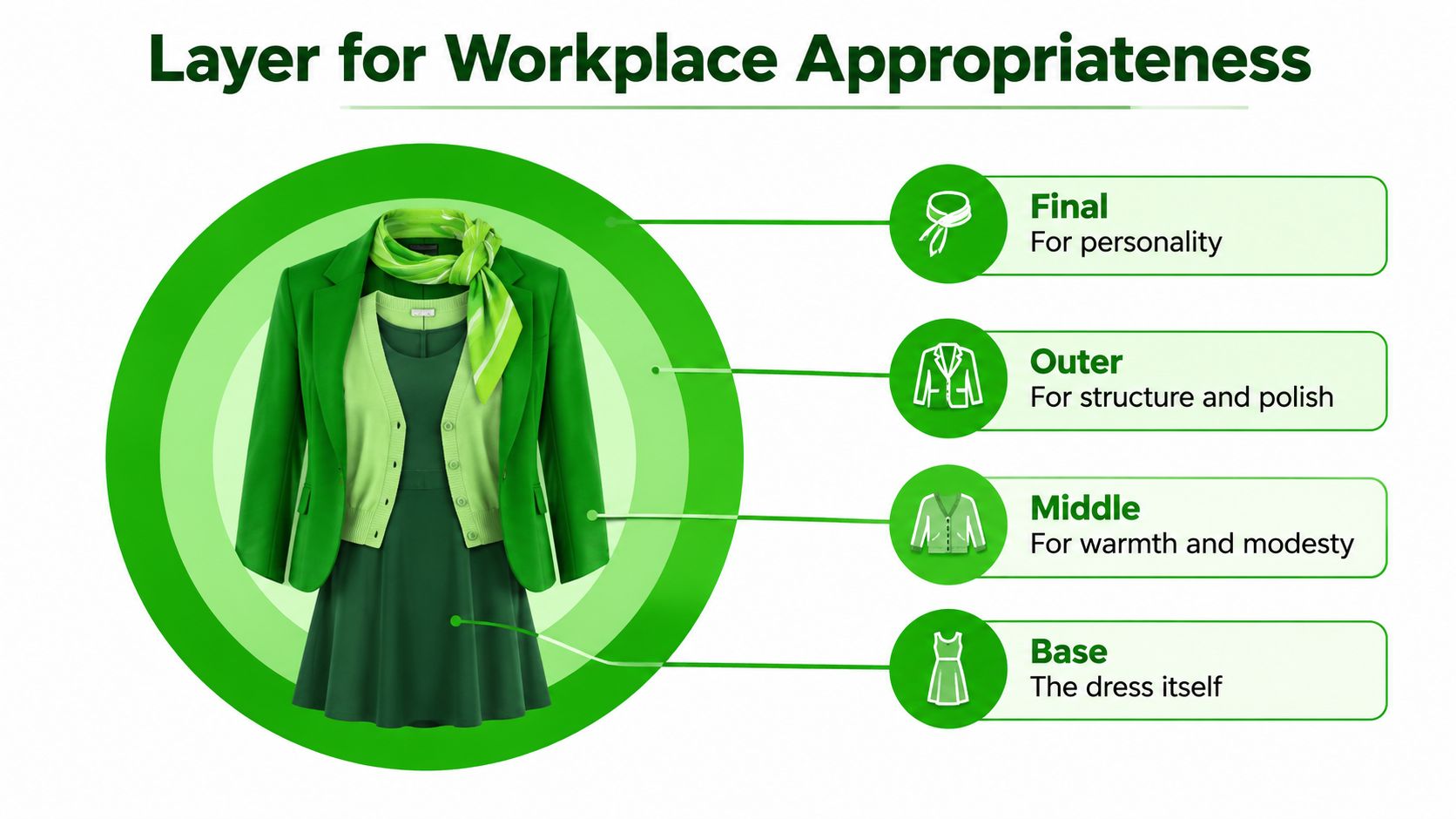
Build from the base outward
Check the dress, jumpsuit, or separates before adding anything. The shoulders should sit correctly, the neckline should stay in place, and the fabric should not pull across your waist or hips when you sit. If the outfit moves well on its own, choose the layer that adds structure.
A fitted blazer or cropped tuxedo jacket remains the most reliable workplace layer. Wool, crepe, and velvet look dressier than the knit cardigan you might reach for automatically. The blazer covers shoulders and upper arms, sharpens the outline, and can come off once the room warms up.
For a sheer neckline or sleeveless cut, add a fine-knit shell or silk shell underneath. Keep the tone close to your skin so it disappears into the outfit rather than reading as an obvious undershirt. A silk camisole also handles a plunging neckline more cleanly than a visible tank top.
Match outerwear to the outfit's length. A midi dress works with a mid-thigh wool coat. A maxi needs a long coat or a cropped jacket. A parka over satin creates visual conflict and makes the combination look accidental.
Use layers to change the read
A sleeveless midi looks office-ready under a fitted blazer, then shifts toward party dressing when the jacket comes off. A silk camisole makes a plunging neckline easier to wear at work. For a cold venue, choose a fine merino layer. It prevents goosebumps without the bulk of a heavy cardigan.
Clothing fit affects self-evaluation, confidence, and psychological well-being. A research summary connected better fit with those outcomes among 502 fashion consumers (fit and confidence research summary). Test the complete outfit in motion before the event, including every layer.
Watch the embedded styling guidance, then plan the outfit in reverse. Decide what you will remove, where you will put it, and whether the base still looks finished without it. If the answer is no, choose a lighter or more integrated layer.
Shoes, Accessories, Hair, and Makeup
Your extras should support the formality you already chose, not create a new dress code. A formal midi with casual sneakers can look deliberately creative, but it can also look unfinished if the rest of the event is corporate. Make one clear styling decision and let the accessories reinforce it.
Choose practical polish
For corporate settings, wear low-block-heel pumps or sleek ankle boots. They look professional and remain manageable on hard floors. Creative offices give you more room for kitten heels or polished flats. Casual-tech venues can support strappy sandals, heeled mules, or a sharp low-profile sneaker when the outfit itself has enough tailoring.
Bags should hold your essentials without looking like you're arriving from the gym. A structured mini or top-handle bag reads polished. A soft clutch suits an evening-leaning party. Skip oversized totes and gym-bag silhouettes.
Jewelry needs one rule: choose one hero piece. Make that earrings or a pendant, then keep everything else quiet. Small gold or silver huggies and a simple chain will finish most outfits more effectively than a stacked bracelet collection. Belt a loose dress only if the belt creates a clean silhouette. If it cuts the body awkwardly, leave it off.
Keep beauty intentional, not overworked
Hair looks strongest in a soft blowout, low chignon, or polished ponytail. Avoid anything so stiff or heavily curled that it competes with the outfit. Makeup should match your energy rather than mimic the venue. Use a clean base, define one feature with either a lip or an eye, and add a setting step that can survive dinner and conversation.
If you prefer a low-maintenance face, this resource on natural skincare for glowing skin can help you build a fresh base before makeup. The two accessories that almost always work are small metal huggies and a simple structured bag. The two that usually don't are novelty clutches and ankle bracelets competing with statement shoes.
For more outfit-finishing ideas, use this practical guide to accessorizing an outfit. Keep the final look easy to carry, easy to sit in, and easy to maintain.
Three Outfits for Three Office Cultures
The same dress can look conservative, creative, or too casual depending on the jacket, shoes, and finish around it. Start with the behavior of the office, not just its industry label. A finance team at a modern company may dress differently from a marketing team inside a traditional corporation.
The corporate office
Choose a midi-length knit or crepe dress in black, navy, or burgundy. Add a fitted wool blazer, low block-heel pumps, and opaque tights if the weather calls for them. Finish with a structured mini bag, small gold huggies, a low chignon, and a clean red or nude lip.
If the invitation specifically leans cocktail, swap the everyday blazer for a satin-trimmed jacket. That small change adds evening polish without turning the outfit into formalwear.
The creative office
An agency, media company, or design studio can carry more personality. Try a midi slip dress in a jewel tone or subtle print, then add a cropped leather jacket or longline cardigan. Low-heeled ankle boots, stacked thin rings, soft waves, and a bronze smoky eye complete the look.
Choose fabric with movement, such as satin, silk, or lightweight crepe. Stiff fabric can make a creative outfit look overly corporate, while too much decoration can make it look costume-like. A single strong color, print, or texture is enough.
The casual-tech office
A startup, software company, or product team often sits between relaxed and intentional. Wear a well-fitted jumpsuit or midi dress in a fresh neutral with white sneakers or chunky loafers. Add a crossbody bag, minimal jewelry, natural hair or a polished bun, and tinted moisturizer with mascara.
The outfit should look easy, but every piece needs clean lines and good fit. A useful companion to the clothing decision is this guide to navigating workplace drinking, because the most successful office-party look supports the whole evening, not just the arrival photo.
Same pieces can flex across industries when the fabric and fit stay sharp. Change the shoe and outer layer first, then reassess whether the outfit still belongs in the room.
Your Night-Before Prep Checklist
Run the full checklist 24 hours before the party. You're looking for problems that only appear when clothes move, not when they hang neatly in a wardrobe.
Test the entire outfit
Put on the dress or separates, shoes, jewelry, and the outer layer you'll wear to arrive. Sit, stand, walk, reach for a glass, and look in a mirror. Anything that tugs, rides up, gaps, slips, or needs constant adjustment gets replaced now, not in the car.
Use the sit-and-stand test with a desk chair or dining chair. Stay seated for two minutes and check whether the hem climbs too high, the neckline opens, or a slit flares. If you can't relax in the outfit at home, you won't relax while speaking with your manager.
Prepare for the unexpected
Lay out a backup option. That might be a blazer swap, a different shoe, or a camisole for a neckline that suddenly feels too open. Your backup should solve a specific risk, not become a second full wardrobe.
Pack the small items that protect your evening:
- Beauty fixes: Lip color, blotting sheets, hair ties, pins, and mints.
- Practical essentials: Phone charger, event details, keys, and any transit information.
- Weather protection: A suitable coat, scarf, or warm layer that matches the outfit's proportions.
- Emergency options: A spare camisole, tights, or comfortable shoes if the venue requires more walking.
Finish with a daylight check
Steam the outfit or use a steam-filled bathroom, then inspect the shoe soles for scuffs. Photograph the complete look in daylight so you can judge the proportions without the flattering distortion of a dim bedroom mirror.
Confirm the start time, address, parking or transit, and whether the organizer has added a clearer dress code. Screenshot the invitation and save this checklist on your phone. Your final decision should leave you free to talk, eat, sit, and move, which is exactly what a dress office party outfit needs to do.
Cedar & Lily Clothier offers curated dresses, jumpsuits, blazers, outerwear, and accessories for polished looks that move from desk to dinner. Visit Cedar & Lily Clothier to explore event-ready pieces online or get fit guidance in its Oklahoma stores.