


So, you've invested in a beautiful cashmere sweater and now comes the nerve-wracking part: how do you clean it without ruining it? The big question on everyone's mind is always, can you dry clean cashmere?
Yes, you absolutely can dry clean cashmere, and honestly, sometimes it's the smartest move you can make. But think of it less like a weekly routine and more like calling in the specialists for a specific job.
The Real Answer to Dry Cleaning Cashmere
Choosing between dry cleaning and hand washing often feels like you're defusing a bomb, but it's much simpler than it seems. It’s not about which method is “better” in general, but which one is right for your specific garment, right now.
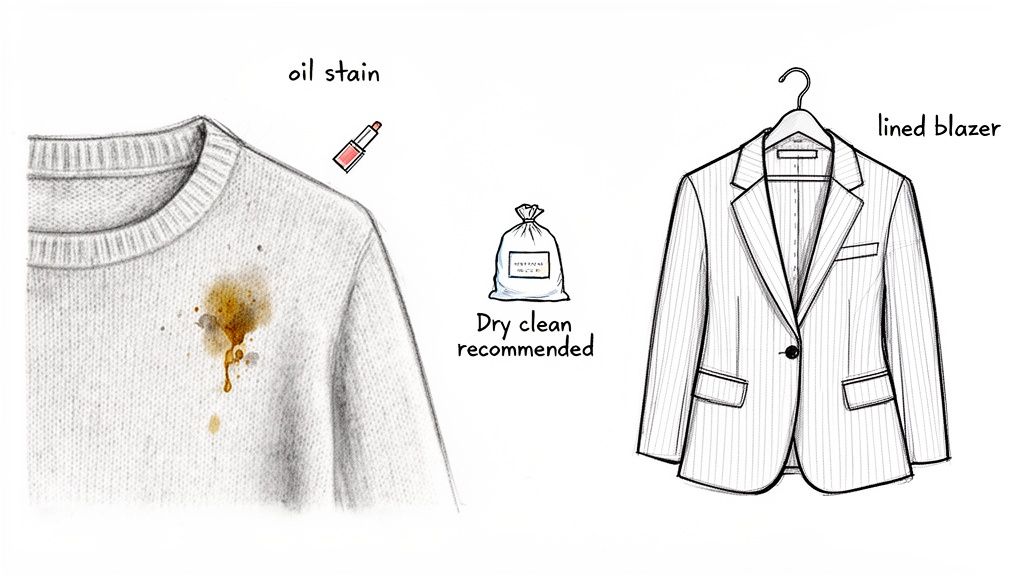
Dry cleaning is your go-to for serious problems: a stubborn, oil-based stain, a structured cashmere blazer that would turn into a shapeless blob in water, or a deep, end-of-season clean before you pack it away.
But here's the catch—frequent trips to the dry cleaner can be a bit rough on those delicate fibers. The chemical solvents they use are fantastic at removing grime, but over time, they can also strip cashmere of its natural lanolin oils. Those oils are what give cashmere its signature, cloud-like softness. When they're gone, your favorite sweater can start to feel a little less luxurious and even a bit brittle.
Hand Washing vs. Dry Cleaning: The Trade-Off
At its core, the decision comes down to a simple trade-off. You're balancing the unmatched, stain-fighting power of a professional cleaner against the gentle, softness-preserving touch of a good old-fashioned hand wash.
For everyday dust, light odors, or just a simple refresh, hand washing is the undisputed champion. It keeps your cashmere feeling just as soft as the day you bought it. But for a dreaded red wine spill or a tailored coat that needs to hold its shape? The dry cleaner is your best friend.
This decision tree gives you a quick visual guide for when to choose one over the other.
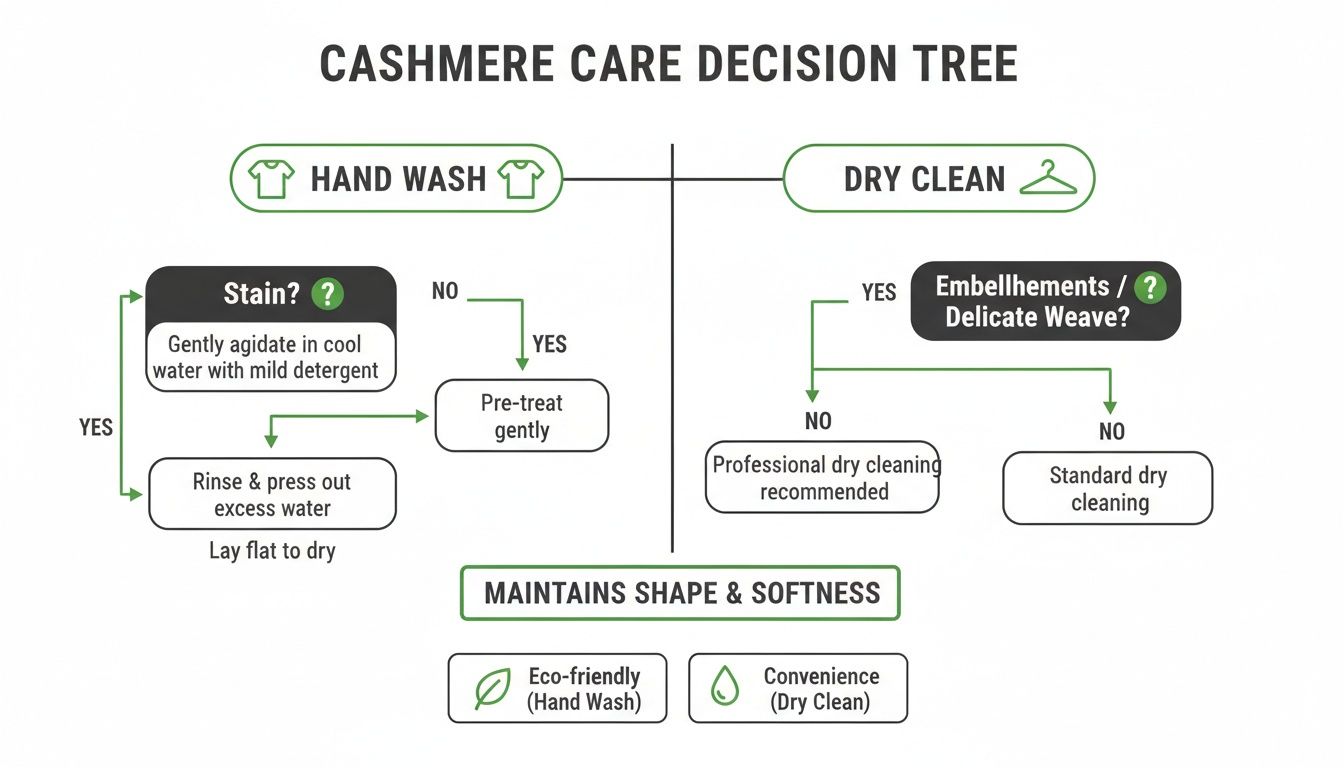
To make it even simpler, here's a quick comparison to help you decide on the fly.
Cashmere Care At a Glance: Dry Cleaning vs. Hand Washing
This table breaks down the best use cases for each method, so you can make a confident choice every time.
| Care Method | Best For | Potential Risks | Our Recommendation |
|---|---|---|---|
| Dry Cleaning | Tough, oil-based stains (grease, makeup); structured garments (coats, blazers); deep end-of-season cleaning. | Harsh chemicals can strip natural oils, leading to brittleness and loss of softness over time. Potential for shrinkage if done improperly. | Use it strategically as a powerful cleaning treatment, not for routine care. Find a cleaner you trust who has experience with delicates. |
| Hand Washing | Routine cleaning (removing light dirt, dust, odors); refreshing sweaters between wears; maintaining softness and loft. | Risk of stretching, shrinking, or felting if water is too hot or the garment is handled too aggressively. Time-consuming process. | The best default method for most unstructured cashmere items. Gentle, preserves softness, and gives you full control. |
Ultimately, one method is for preservation (hand washing), and the other is for restoration (dry cleaning). Understanding that difference is the secret to a long, happy life with your favorite cashmere pieces.
Think of dry cleaning as a strategic intervention, not a routine. Use it only when you have a problem that hand washing can't solve, like a nasty stain or the need to preserve the sharp lines of a lined coat.
By choosing wisely, you get the best of both worlds: professional, deep-cleaning results when you desperately need them and that incredible, long-lasting softness for years to come.
What Makes Cashmere So Delicate
To really get why we handle cashmere with kid gloves—and why the answer to “can you dry clean it?” isn’t a simple yes or no—you have to understand what makes it so special. Cashmere isn't just a type of wool. It's the ultra-fine undercoat from very specific breeds of goats, and each fiber is incredibly thin, usually around 14-19 microns. That’s way finer than most sheep's wool, and even thinner than a human hair.
I always tell people to think of cashmere fibers like their own hair, but even more fragile. Just like harsh chemicals can strip your hair, leaving it brittle and dull, the wrong cleaning process can do the exact same thing to your favorite sweater.
The Science of Softness
Here’s the secret to cashmere's amazing warmth: the fibers are hollow. This structure is a marvel of nature, creating tons of tiny air pockets that trap heat without adding any bulk or weight. It’s what makes cashmere so insulating yet feather-light.
On top of that, these fibers have a microscopic coating of a natural oil called lanolin. This is cashmere's built-in conditioner, giving it that legendary, buttery-soft feel. It protects the fibers and keeps them silky smooth.
When you take that piece to a traditional dry cleaner, you're introducing chemical solvents to this perfect little ecosystem.
The biggest risk with old-school dry cleaning is that those chemical solvents, while great at lifting stains, are notorious for stripping away the natural lanolin. Without it, the fibers are left exposed and can quickly become harsh, brittle, and lose that signature softness for good.
Traditional vs Modern Dry Cleaning Solvents
It's important to know that not all dry cleaning is the same. For decades, the industry relied heavily on a solvent called perchloroethylene, or "perc." It’s a powerful cleaner, but it’s incredibly harsh on delicate natural fibers and can really do a number on cashmere by aggressively stripping that precious lanolin.
Thankfully, the industry has evolved. Many modern, high-quality cleaners have moved on to much gentler alternatives, like hydrocarbon or silicone-based solvents. These newer methods clean your garments effectively without being so brutal on the fibers, which helps preserve that lanolin and keep your sweater feeling like new.
Knowing the difference is key when you're deciding whether to dry clean a piece. Don't be afraid to ask your cleaner what kind of solvents they use—it’s the best way to protect your investment. Of course, proper care goes way beyond just cleaning. It also involves knowing how to store cashmere sweaters to protect them from pests and stretching. If you're curious about why different materials need such specific care routines, it can be fascinating to explore the world of sustainable clothing and vegan natural fibers.
When Dry Cleaning Is the Smartest Choice
While hand-washing is your cashmere’s best friend for day-to-day care, some situations absolutely call for a professional. Think of dry cleaning less as a routine and more as a powerful tool you pull out when the stakes are high. It's the right move when you need a level of precision that soap and water just can't deliver.
The number one reason to head to the cleaner? Stubborn, oil-based stains. That little drip of salad dressing, a smudge of lipstick, or a splash of buttery sauce can latch onto cashmere fibers in a way that water simply rolls off of. Dry cleaning solvents are engineered to break down and dissolve these specific types of oils, lifting the stain clean away without any harsh scrubbing.
Preserving Garment Structure
Beyond tough stains, dry cleaning is non-negotiable for any structured cashmere piece. We're talking about tailored blazers, lined coats, or any jacket with internal padding. Dunking one of these in water would be a disaster. The lining would almost certainly shrink at a different rate than the cashmere, completely warping the garment and destroying its carefully crafted shape for good.
- Tailored Blazers: Hand washing would make the lapels and shoulders go soft, losing all their crisp, sharp lines.
- Lined Coats: The inner lining and outer cashmere shell would pull against each other, creating weird lumps and bunching.
- Intricate Knits: Garments with complex cable patterns or delicate embellishments are far safer with a pro who knows how to handle them.
This is where a good dry cleaner really proves their worth—by preserving the very architecture of your most sophisticated garments. For a deeper dive into how professionals handle different delicate materials, this expert guidance on cleaning suede sneakers, including dry cleaning offers some great parallel insights.
End-of-Season Deep Cleaning
Finally, I always recommend a professional cleaning as an end-of-season ritual before you pack your sweaters away for the summer. Even invisible traces of skin oils or tiny spills can oxidize over time, turning into yellowed spots and attracting pests like moths. A thorough dry cleaning session hits the reset button, ensuring your garment is perfectly clean and neutralizing any hidden threats before it goes into storage.
It's interesting to see how care labels have evolved. Years ago, luxury brands often slapped a "dry clean only" tag on everything just to be safe, back when gentle at-home detergents weren't as common. Today, the advice is much more balanced. Most brands now encourage hand washing for regular upkeep but recommend professional cleaning for specific problems—a much smarter approach that gives you the best of both worlds.
While knowing how to dry clean cashmere is a lifesaver for those big emergencies, truly mastering at-home hand washing is the secret to keeping it feeling brand new for decades. This gentle method is, without a doubt, the best way to handle routine care. It puts you in control, letting you maintain that incredible softness without ever touching harsh chemicals.
Honestly, once you get the hang of it, it becomes a kind of peaceful, satisfying ritual.
The whole thing boils down to a few simple rules: use cool water, handle with care, and never, ever agitate the fibers. Think of it like watering a delicate orchid—you wouldn't just blast it with a fire hose, right? Your cashmere deserves that same gentle respect.
Your Step-by-Step Hand Washing Guide
Ready to become your own cashmere expert? Just follow these steps, and I promise your favorite sweater will come out clean, soft, and perfectly shaped every single time. It's so much safer than a washing machine, even though some brands are now making more durable options. (If you're curious, we have a whole guide on machine-washable cashmere and its special care needs.)
-
Prepare the Bath: Grab a clean sink or basin and fill it with cool to lukewarm water. Never hot! High temperatures are the enemy—they'll shrink and felt the fibers in an instant. Add just a tiny bit of a pH-neutral cashmere shampoo (or even a gentle baby shampoo) and swish it around to make a light, sudsy bath.
-
Submerge and Soak: Turn your sweater inside out to protect its best side. Gently place it in the water, making sure it's fully submerged, and softly squeeze the suds through the material. Now, just let it soak for about 20-30 minutes. No rubbing, twisting, or scrubbing—that kind of friction will only damage those precious fibers.
-
Rinse Gently: Let the soapy water drain out and refill the basin with fresh, cool water. Carefully press the sweater against the side of the basin to push the soap out. You’ll probably need to repeat this a couple of times until the water runs clear.
If there's one mistake people always make, it's wringing out the sweater. That aggressive twisting is the fastest way to stretch the fibers and ruin the shape for good. Always, always squeeze—never wring.
The All-Important Drying Process
How you dry your cashmere is just as critical as how you wash it. The name of the game is removing water without stretching or distorting the garment.
First, gently squeeze out as much excess water as you can. Next, lay a big, clean, dry towel flat on the floor or a counter and place your sweater on top of it. Carefully roll the towel up with the sweater inside, pressing down firmly as you go to absorb the moisture. You might even need to do this a second time with another dry towel.
Finally, unroll everything and lay the damp sweater flat on a fresh, dry towel or a mesh drying rack. Take a moment to gently reshape it to its original dimensions, paying special attention to the shoulders, sleeves, and hem. Let it air-dry completely, far away from direct sunlight or heat, which can cause fading and damage. And whatever you do, never hang a wet cashmere sweater. The weight of the water will pull it out of shape permanently.
How to Talk to Your Dry Cleaner
Handing over your favorite cashmere sweater to a stranger shouldn't feel like a leap of faith. The right dry cleaner is more like a partner in crime, helping you preserve your best pieces for years to come. A quick, smart conversation can make all the difference, so don’t just drop your clothes and run—take a minute to be an advocate for your wardrobe.
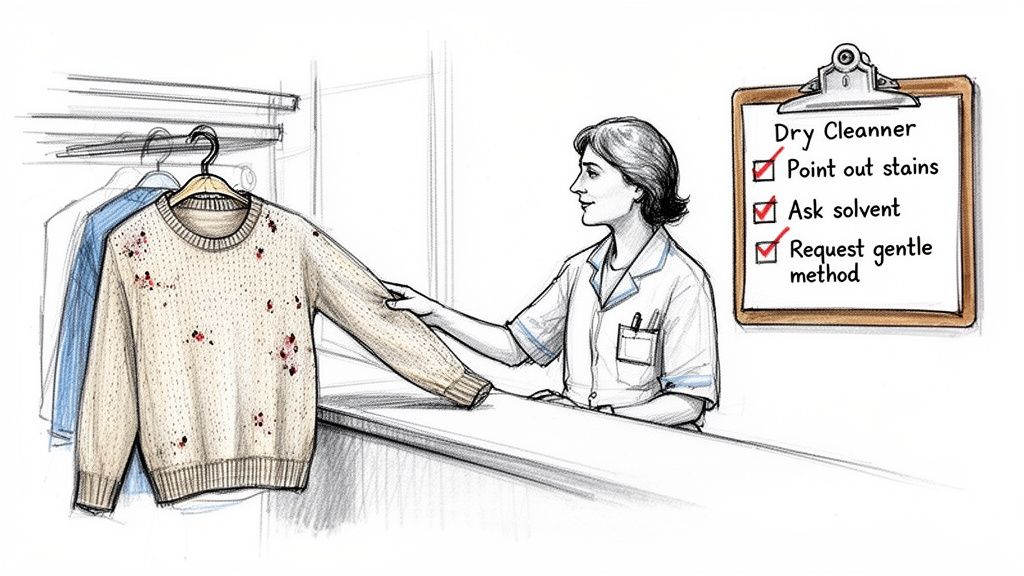
Think of it like telling a chef about a food allergy; the more details you give, the better the final result. Before you even head out the door, give your sweater a once-over. Pinpoint every single spot or stain, no matter how tiny it seems.
This little bit of prep work prevents any nasty surprises later and sets your cleaner up for a win.
Your Pre-Cleaning Checklist
Make a mental map of any trouble spots on your garment. If you happen to remember what caused a particular stain, definitely share that information. Knowing whether they're dealing with a coffee spill versus a drop of salad dressing helps them grab the right tool for the job from the get-go.
- Point Out Every Stain: Walk them through each specific spot. What looks like a faint smudge to you might need a totally different treatment than a more obvious blemish.
- Identify the Source: This is the single most helpful thing you can do. If you know it was red wine, makeup, or grease, tell them!
- Mention Invisible Spills: Did you splash a little white wine or clear soda on your sleeve? These sugar-based spills often dry clear but will caramelize under the heat of the cleaning process, leaving behind a permanent yellow stain. Give your cleaner a heads-up.
The Key Questions to Ask
Once you’ve shared what you know, it’s their turn. Asking about their process isn’t about being difficult—it’s about being a savvy consumer who understands that cashmere needs a gentle touch.
A great dry cleaner will welcome your questions and be happy to explain how they work. If they seem annoyed or can't give you a straight answer, that's a huge red flag.
Ask them directly: "What kind of solvent do you use for delicates like cashmere?" If they mention older, aggressive solvents like perc, you might want to keep looking for a specialist. Ideally, you want to hear them talk about gentler options like hydrocarbon or GreenEarth, which are much kinder to natural fibers. Your goal isn't just to ask if they can dry clean cashmere, but how they do it.
Trusting a professional with garment care is more popular than ever. The dry cleaning market is expected to balloon from USD 78.31 billion in 2024 to nearly USD 159.95 billion by 2034. With that growth, many cleaners stick to traditional solvent methods because they're fast and predictable, which is why your communication is so critical. You can explore more about these market trends and their impact on what's available to consumers.
Your Cashmere Care Questions Answered
Even after you’ve got the basics down, a few specific questions always seem to pop up when you're dealing with luxury knits. We get it. That's why we've put together some direct answers to the most common concerns, creating a quick reference for everything from pesky pilling to proper storage.
Think of this as your go-to guide for keeping your cashmere beautiful for the long haul.
How Often Should I Really Clean My Cashmere?
When it comes to cashmere, the golden rule is simple: less is more. These incredible natural fibers are surprisingly breathable and have antimicrobial properties, which means they don't need a deep clean after every single wear.
As a rule of thumb, plan to clean your cashmere after wearing it three to five times, or only when it’s actually dirty. Honestly, over-cleaning is one of the fastest ways to wear out those delicate fibers and strip them of their natural, buttery softness.
Most of the time, just airing out your sweater or scarf between wears is more than enough to keep it feeling fresh. For more structured pieces like a coat or blazer, a single professional cleaning at the end of the season, right before you store it, is usually all it needs.
Is Using a Washing Machine Ever Okay?
We really have to advise against using a washing machine unless the care label explicitly gives you the green light. Even if you use the gentlest "wool" or "hand wash" cycle, the tumbling and agitation can be far too aggressive for such a delicate material.
All that spinning can cause the fine fibers to felt together, shrink, or lose their beautiful shape for good. While it might seem like a convenient shortcut, the risk of irreversible damage is just too high to take.
If you find yourself in a situation where you absolutely must use a machine, take every single precaution. Place the garment in a mesh laundry bag, use a specialized wool detergent, select the coldest water setting, and choose the lowest spin cycle possible. Still, hand washing will always be the safest bet for at-home care.
What Do I Do About Those Annoying Pills?
First off, don't panic! Pilling is completely normal for cashmere and is not a sign of poor quality. These tiny fiber balls are just a natural result of friction in high-contact areas, like under the arms or where your purse strap constantly rubs.
The best way to get rid of them is with a tool designed specifically for the job, like a cashmere comb or an electric fabric shaver. Whatever you do, never pull or pick at the pills with your fingers—that’s an easy way to snag the yarn and create a hole.
To de-pill correctly, lay your garment flat on a firm surface. Then, gently glide the comb or shaver across the fabric in one smooth direction. A little bit of regular, gentle maintenance will keep your knitwear looking smooth and brand new.
What Is the Best Way to Store Cashmere?
Proper storage is absolutely non-negotiable if you want to protect your investment. The very first step is making sure your garment is completely clean before you put it away for the season. Any lingering body oils or tiny food spills can be a magnet for pests like moths.
And please, never hang your cashmere sweaters. The weight of the garment itself, combined with gravity, will stretch out the shoulders and warp the overall shape over time.
Instead, here are the best practices for keeping your cashmere safe in storage:
- Fold Neatly: Always take a moment to fold your cashmere items carefully.
- Use Breathable Bags: Store folded items inside breathable cotton or linen storage bags. Stay away from plastic containers, which can trap moisture and lead to mildew.
- Add Natural Repellents: For long-term storage, tuck in a few natural moth deterrents like cedar blocks or lavender sachets.
- Choose the Right Spot: Find a cool, dark, and dry place, like a closet shelf or a dresser drawer.
Following these simple steps will ensure your cashmere stays in perfect condition, season after season. For an even more detailed walkthrough, be sure to check out our complete guide on how to care for cashmere.
At Cedar & Lily Clothier, we believe that true luxury should last a lifetime. Explore our curated collection of timeless cashmere and designer pieces, all chosen to elevate your wardrobe for years to come.