


A fitting room can make a wrap dress look like either the smartest purchase in the boutique or a garment destined for the back of the closet. The difference usually isn't the print. It's whether the waist lands correctly, the neckline stays put, and the fabric behaves after a full day of sitting, walking, and reaching.
The best wrap dresses solve a wardrobe problem. They adjust when the body changes, look composed without elaborate styling, and move from work to dinner with a change of shoes. Cedar & Lily Clothier carries curated designer and contemporary clothing online and at its Oklahoma storefronts in Tulsa's Utica Square and downtown Jenks, where fit and fabric can be assessed in person.
Table of Contents
- Why the Wrap Dress Earns a Spot in Every Closet
- What Makes a Wrap Dress a Wrap Dress
- Choosing the Right Cut for Your Body and Occasion
- Fabric Guide for the Best Wrap Dresses
- Fit and Sizing the Right Way
- Styling One Wrap Dress Three Ways
- Care and Storage That Extend the Life of a Wrap Dress
- Shop Wrap Dresses with Confidence
Why the Wrap Dress Earns a Spot in Every Closet
A client once stood in a fitting room holding two dresses. One pulled across her back whenever she moved her arms. The other looked lovely from the front but slid off one shoulder each time she reached for her handbag. A wrap dress solved neither problem automatically, but the right one gave the stylist room to adjust the waist, control the neckline, and test the overlap before the decision came down to color.
That's the standard worth using. Before choosing a floral print, hemline, or sleeve, a strong wrap dress needs to perform three jobs.
The three jobs that matter
- It adjusts to the body on the day. A real waist tie can accommodate a bloat day, a different bra, or the natural changes that happen between morning and evening.
- It looks polished without constant correction. A clean V-neck, stable crossover, and waist placement that follows the body create enough structure for a client lunch or a presentation.
- It earns more than one occasion. With pointed flats, it can handle the office. With sandals or heels, it can move into dinner, a wedding, or a weekend gathering.
The modern silhouette became a major fashion milestone in 1974, when Diane von Furstenberg introduced her signature jersey wrap dress in the U.S. market. It launched at about $80, and sources report that around 25,000 dresses were produced per week in the first year, with sales reaching 1 million by 1976 and later lifetime estimates above 5 million units. Those figures are documented in the history of Diane von Furstenberg's wrap dress.
Fitting-room rule: A wrap dress deserves closet space when it provides adjustment, coverage, and occasion range, not merely a flattering photograph.
That combination explains the dress's staying power. It belongs beside reliable trousers and a blazer because it handles real mornings, real bodies, and real calendars. The most useful starting point for shoppers who want the construction explained in plain language is this guide to what a wrap dress is.
What Makes a Wrap Dress a Wrap Dress
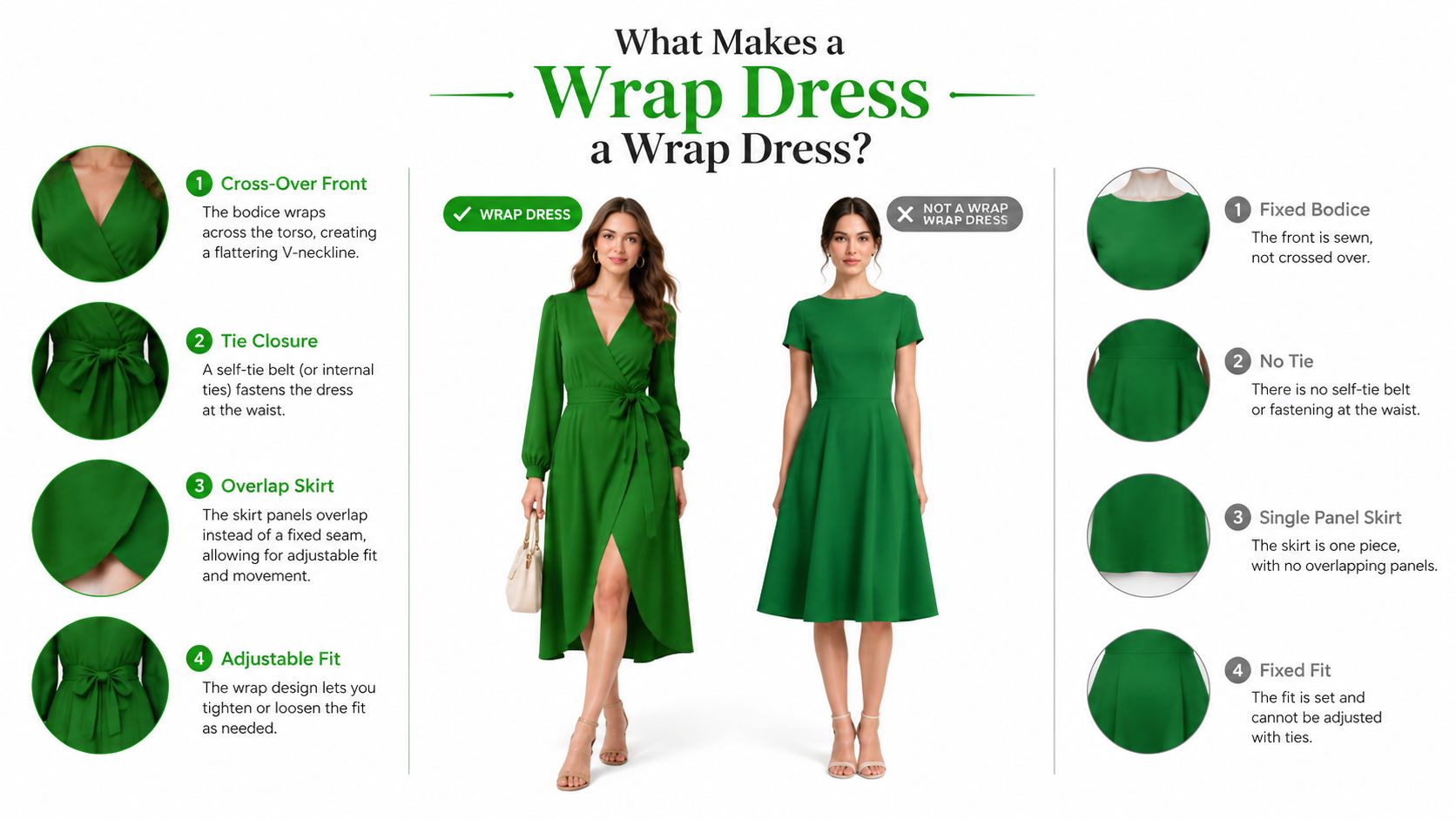
A true wrap dress has two functional front panels that cross over the body and secure with ties, snaps, or hooks. One tie often passes through a slit at the side seam, while the outer tie fastens around the waist. That construction lets the wearer define the waist rather than accepting a fixed seam, as described in this explanation of true wrap-dress construction.
A faux wrap copies the visual effect. The V-neck and waist detail look wrapped, but the bodice is sewn closed. That makes a faux wrap easier to pull on and less likely to loosen during the day, but it won't provide the same adjustment after lunch or when the body needs more room.
Read the closure before buying
A product page should reveal more than a flattering model image. Look for:
- An interior tie or snap: This keeps the underlap anchored and prevents the whole front from shifting.
- An exterior sash: This supplies adjustability and defines where the waist sits.
- Hidden hooks: These create a cleaner finish when a visible tie would feel too casual.
- A stitched waist seam or anchor: This shows where the designer expects the tie to sit and helps shoppers judge whether the proportions suit their torso.
The neckline changes the dress's personality. A shallow V works neatly for the office, especially under a blazer or cardigan. A deeper plunge suits evening dressing but may require a camisole, bandeau, fashion tape, or a discreet snap. A surplice neckline, which drapes across the chest rather than meeting in a sharp point, can look elegant when the fabric is stable and the crossover has enough support.
Before ordering, shoppers should inspect the tie length, overlap width, neckline depth, and waist anchor in the product photographs. Those details determine whether the dress will feel adjustable or merely look adjustable.
Choosing the Right Cut for Your Body and Occasion
The most useful cut isn't determined by a label such as hourglass or pear. It's determined by where the garment places visual weight, where the waist tie lands, and what the calendar requires.
A shorter torso usually benefits from a higher waist seam and a shorter bodice. That lets the skirt become the dominant panel instead of compressing the upper body. A longer torso or fuller bust often looks more balanced with a deeper V and a wider tie positioned under the bust rather than directly across the natural waist. This can reduce the tendency of the front to ride upward.
For fuller busts, the neckline needs both openness and control. The wrap should lie smoothly across the chest without pulling, and a neckline anchor may be necessary when the V shifts during movement.
| Wrap Dress Cut | Best For | Occasion |
|---|---|---|
| Higher waist seam, shorter bodice | Shorter torsos | Day, travel, warm-weather dressing |
| Deeper V with a wider under-bust tie | Longer torsos or fuller busts | Dinner, events, elevated daytime |
| Cap sleeves | Warm-weather comfort | Outdoor celebrations and weddings |
| Three-quarter sleeves | Transitional coverage | Office wear and lunches |
| Long bishop sleeves | Cooler-weather drama | Evening events |
| A-line skirt | Walking and ease | Travel, daytime, casual occasions |
| Straight skirt | A column-like silhouette | Office, dinners, polished events |
| Tiered skirt | Extra movement and volume | Celebrations and relaxed occasions |
Let the hemline answer the invitation
An above-the-knee hem works well for day and travel when paired with flats, sneakers, or ankle boots. A mid-calf length reads more conservative for offices and mother-of-the-bride events. An ankle-length wrap brings the strongest evening presence, especially in a fluid fabric with a controlled neckline.
The waist placement should follow the body, not the trend cycle. Patternmaking guidance recommends measuring from the neckline to the waist at both the center front and center back, then adjusting the pattern so the waist corresponds with the natural waist position. Shoppers interested in proportion beyond dresses can also use this body-proportion dressing guide as a reference.
The cut serves the calendar as much as the mirror. A tiered maxi may be beautiful, but it won't be the most useful choice for a crowded workday. A straight midi may look impeccable at a meeting, yet an A-line skirt will usually win when the day includes stairs, travel, or dancing.
Fabric Guide for the Best Wrap Dresses
Fabric determines whether a wrap dress skims the body, clings at the waist, swings as you walk, or keeps a defined shape. The same neckline and tie can produce very different results in fluid viscose and structured knit.
A mid-weight jersey is the dependable choice for travel and long days. It moves with the body, resists ordinary wrinkling, and makes tying straightforward. Because it can cling at the bust or waist, choose generous overlap and consider a smoothing underlayer.
Matte crepe has a low-shine surface and a controlled fall. It travels well and suits offices, dinners, and events where you want polish without a glossy finish. It offers less stretch than jersey, so the bust and waist measurements need to be accurate.
Viscose or rayon challis gives the fullest movement of these fabrics. It works beautifully in warm weather and relaxed settings, but a fluid wrap needs careful grain placement and secure closure details. Technical guidance explains that bias-cut panels can stretch and distort. Keeping the front neckline on the straight grain, while using bias where movement matters, helps preserve the V shape and keeps fit more consistent. See the technical guidance on grain direction in wrap dresses.
| Fabric | Drape | Season | Wrinkle Behavior | Best For |
|---|---|---|---|---|
| Mid-weight jersey | Soft, body-following | Travel and warm weather | Usually forgiving | Long days and easy packing |
| Matte crepe | Controlled, polished | Office and events | Travels well | Workwear and occasion dressing |
| Viscose or rayon challis | Fluid, swinging | Warm weather | Can crease and shift | Casual days and resort dressing |
| Cotton poplin | Crisp, holds shape | Warm weather and daytime | Can emerge lived-in from packing | Casual daytime |
| Structured knit or ponte | Firm, supportive | Cooler months | Resists casual rumpling | Structured looks and layering |
Cotton poplin feels fresher and more architectural than jersey. It suits daytime dressing, though a suitcase or long car ride can leave it visibly creased. Structured knit provides the strongest visual control and pairs well with boots, tights, and jackets in cooler months.
Fabric choice also affects maintenance. For delicate, smooth materials, satin dressing gown care advice provides useful guidance on avoiding rough handling and unsuitable washing. Cedar & Lily staff can place similar dresses in different fibers side by side, allowing shoppers to compare their weight, movement, and surface before deciding.
Use this rule: jersey or viscose for travel and heat, crepe for office and events, cotton for casual daytime, and ponte or heavier knit for cooler weather. For more warm-weather comparisons, consult this summer dress fabric guide.
Fit and Sizing the Right Way
A wrap dress should be judged in motion, not only while standing still. The most reliable fitting process has three checks: waist placement, neckline coverage, and overlap security.
Start at the waist
The tie should sit at the narrowest part of the torso, not below the ribcage and not floating above the hip bone. A small shift changes the visual proportion of the entire dress, particularly on shorter or longer torsos.
Sit down, stand up, and turn sideways. If the tie climbs toward the ribs, the bodice may be too short or the waist anchor may be misplaced. If it drops toward the hips, the dress may need a different cut rather than a tighter knot.
Check the V
The V should rest at a comfortable point on the chest, roughly where a pendant might naturally fall. Too high can make the upper body look closed in. Too deep can turn every movement into a neckline adjustment.
A camisole, tank, or bandeau adds coverage without changing the dress. A discreet press snap at the bust can secure a true wrap, while a faux wrap with an interior snap may be the better choice for a shopper who wants a permanently controlled neckline.
Test the overlap at the hips
Pull the front panels gently apart at the widest point of the hips. Daylight means the overlap isn't giving enough coverage for walking, stairs, or sitting. The solution may be sizing down if the bust still fits, selecting a fuller-skirted cut, or choosing a faux wrap with a built-in closure.
Practical fixes include:
- Interior waist tack: A small stitch keeps the tie from wandering.
- Press snap at the bust: This prevents sudden opening without changing the outer line.
- Hem tape: A discreet strip can keep the desired length in place.
- Neckline anchor: Fuller busts may need additional support where the V begins.
A shopper comparing sizes can use the dress size chart, then test all three movements in person. Cedar & Lily offers free in-store try-ons and one-on-one fit advice, so the shopper can assess the neckline, overlap, sleeve length, and waist position before committing.
Styling One Wrap Dress Three Ways
A solid, knee-length wrap dress in neutral crepe is one of the easiest wardrobe exercises because the dress stays constant while the accessories change its purpose.
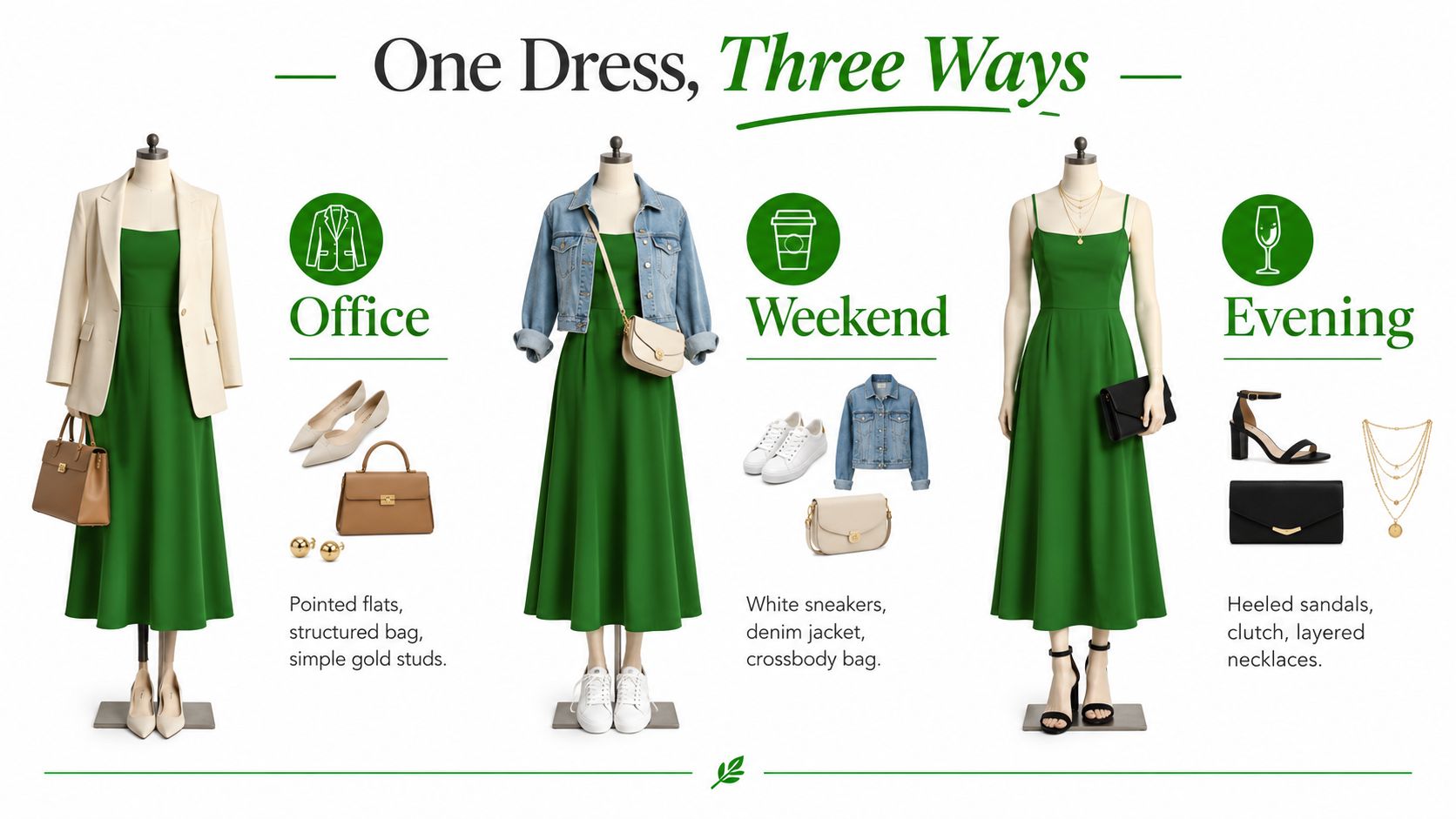
For the office, pointed-toe flats or low block heels sharpen the line without making the outfit feel overdone. A structured shoulder bag and simple studs keep attention on the clean neckline. In cooler months, a cropped blazer adds shape, while a thin merino cardigan creates a softer layer without swallowing the waist.
Weekend styling should loosen the mood, not the fit. White sneakers or ankle boots make the dress practical for errands and lunch. A denim jacket supplies contrast, and a crossbody bag keeps both hands free. A single statement earring works better than a necklace when the wrap already creates a strong V.
The event version
Strappy heeled sandals change the posture immediately. An updo exposes the neckline, drop earrings bring light to the face, and a clutch finishes the look without adding bulk at the waist. After sundown, a soft pashmina feels romantic, while a classic tuxedo jacket gives the same dress a cleaner, more formal edge.
The styling logic is straightforward. The office needs structure, the weekend needs ease, and the event needs height and polish. A wrap dress earns its keep when all three versions feel intentional rather than improvised.
A wrap dress can also make a practical present for a friend building a wardrobe. Cedar & Lily offers gift packaging online, so the garment can arrive ready to give with a personal note.
Care and Storage That Extend the Life of a Wrap Dress
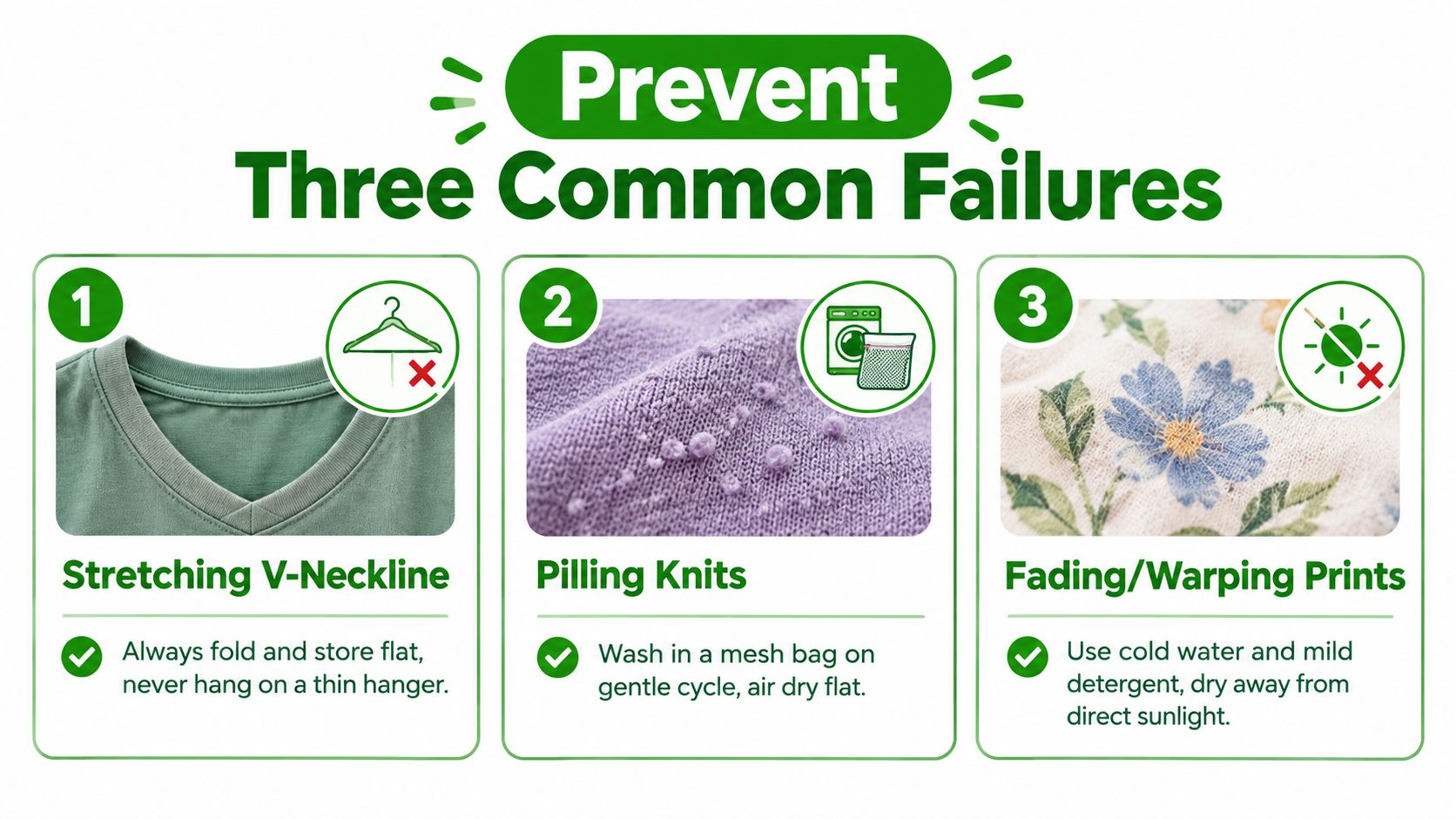
Wrap dresses usually lose their polish through three avoidable failures: a stretched V-neckline, pilling caused by friction, or a print that fades and warps after harsh washing. Each problem has a specific prevention method.
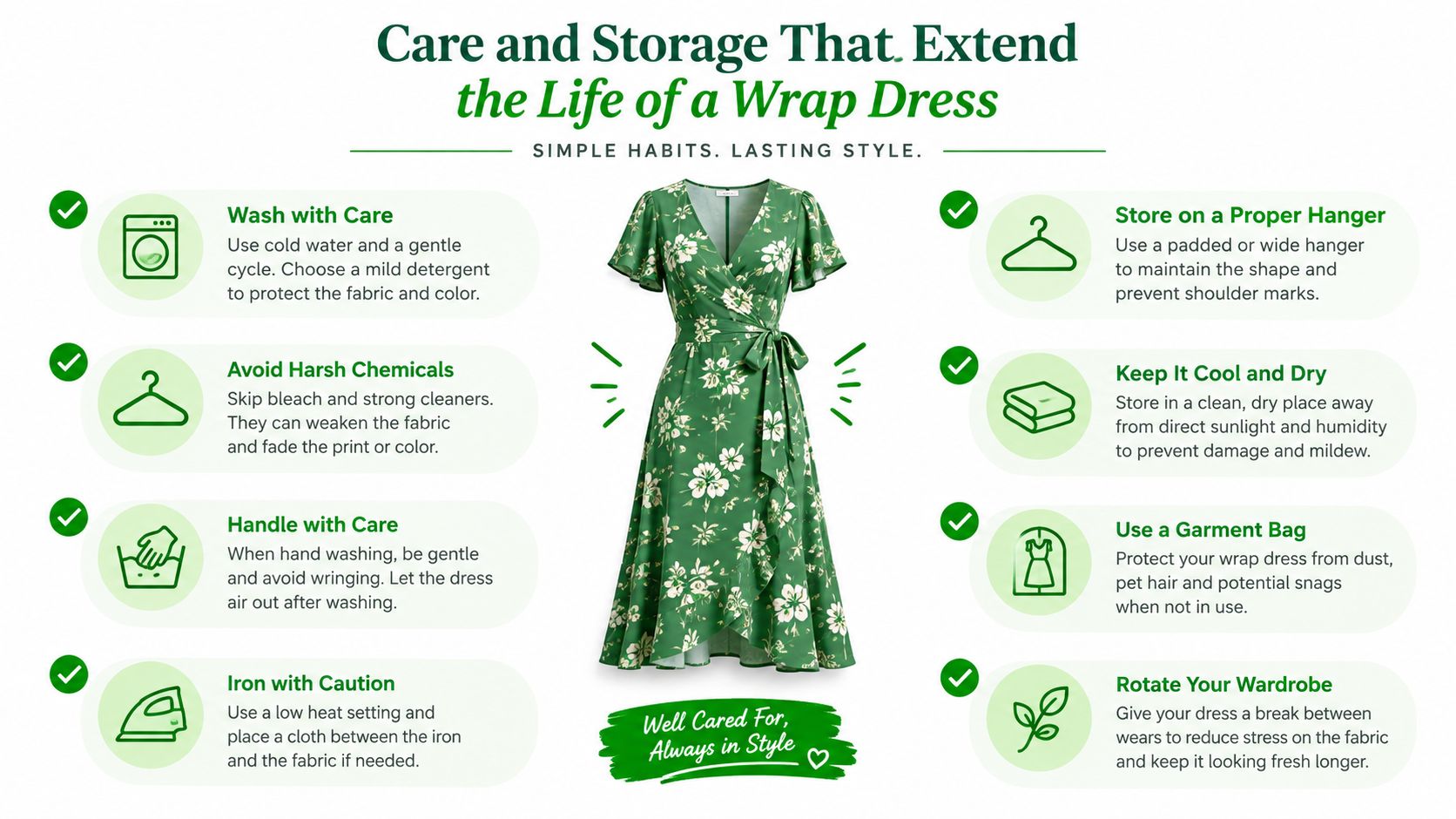
Jersey and modal benefit from a cold, gentle cycle in a mesh bag, followed by flat drying. That keeps the neckband from carrying the garment's weight while wet. Crepe and viscose need gentler handling, such as hand-washing or a delicate machine cycle, followed by a short low tumble to relax wrinkles before line-drying.
Cotton can tolerate more washing, but printed cotton should be pressed while slightly damp with a press cloth. That protects the surface and reduces the chance of a print looking tired after repeated care.
Protect the closures and the fold
Snaps should be wiped dry after washing so moisture doesn't linger around the hardware. Ties should be loosely looped rather than knotted, which prevents sharp creases at the waist.
Fold wrap dresses in drawers or roll them for travel instead of placing them on thin wire hangers. If hanging is necessary, use a broad, supportive hanger and avoid storing the garment by its neckline. Tissue between layers helps reduce friction and deep packing marks.
Storage habit: Fold the dress from the shoulders and keep the ties loose. A tight knot and a narrow hanger both create stress in the places that need to stay smooth.
Care routines for other delicate personal items follow the same principle, protect the material according to its structure. This professional hair extension care routine offers a useful example of why gentle handling, suitable products, and reduced friction preserve appearance over time.
The care label remains the final authority for a specific fiber blend. Still, the practical goal stays consistent: cool water for color, low friction for knits, flat drying for stretch, and folded storage for vulnerable necklines.
Shop Wrap Dresses with Confidence
A wrap dress should solve a dressing problem before it enters your wardrobe. Online, check how the bust, waist, neckline, and hip overlap will work together. A size chart gives measurements, but it cannot show whether the neckline stays secure when you sit, walk, or reach.
Send your measurements, the occasion, and your preferred coverage to the Cedar & Lily Clothier team before ordering. A stylist can recommend a size and cut based on those details, rather than directing you to buy your usual size. That advice matters most when you need a forgiving waist, a higher neckline, or enough overlap to prevent gaping.
For shoppers near Tulsa or Jenks, an in-store fitting gives the clearest answer. Sit down, walk, raise your arms, check the bust closure, and assess the sleeve length with the shoes you plan to wear. The boutique carries curated designer and contemporary brands, with options changing by occasion and season.
Online support can be personal
Online ordering suits shoppers who already know the fabric and silhouette they prefer. Fast shipping can help with a last-minute wedding or travel need, while gift packaging and handwritten notes prepare the dress for giving. Confirm the exchange process and return window before checkout, then order with a specific fit question in mind.
A fashion apparel chatbot can provide conversational help while you browse. For body-specific concerns, ask the stylist directly about neckline security, waist placement, and hip overlap.
For a colorful occasion dress, consider the Farm Rio Blossom Tapestry Midi Wrap Dress. If you prefer a softer, relaxed silhouette, ask the team about current wrap styles and comparable fabrics in stock.
Match the purchase to the problem you want the dress to solve. Choose adjustable ties for a waist that needs flexibility. Choose an anchor or controlled surplice for a neckline you will not need to monitor. For desk-to-dinner wear, select a fabric and hemline that suit both settings.
Cedar & Lily Clothier offers curated wrap dresses and occasion-ready styling online, at Utica Square in Tulsa, and in downtown Jenks. Shop the Cedar & Lily Clothier collection, visit a boutique for a personal fitting, or contact the team for help choosing a wrap dress that fits your body and calendar.